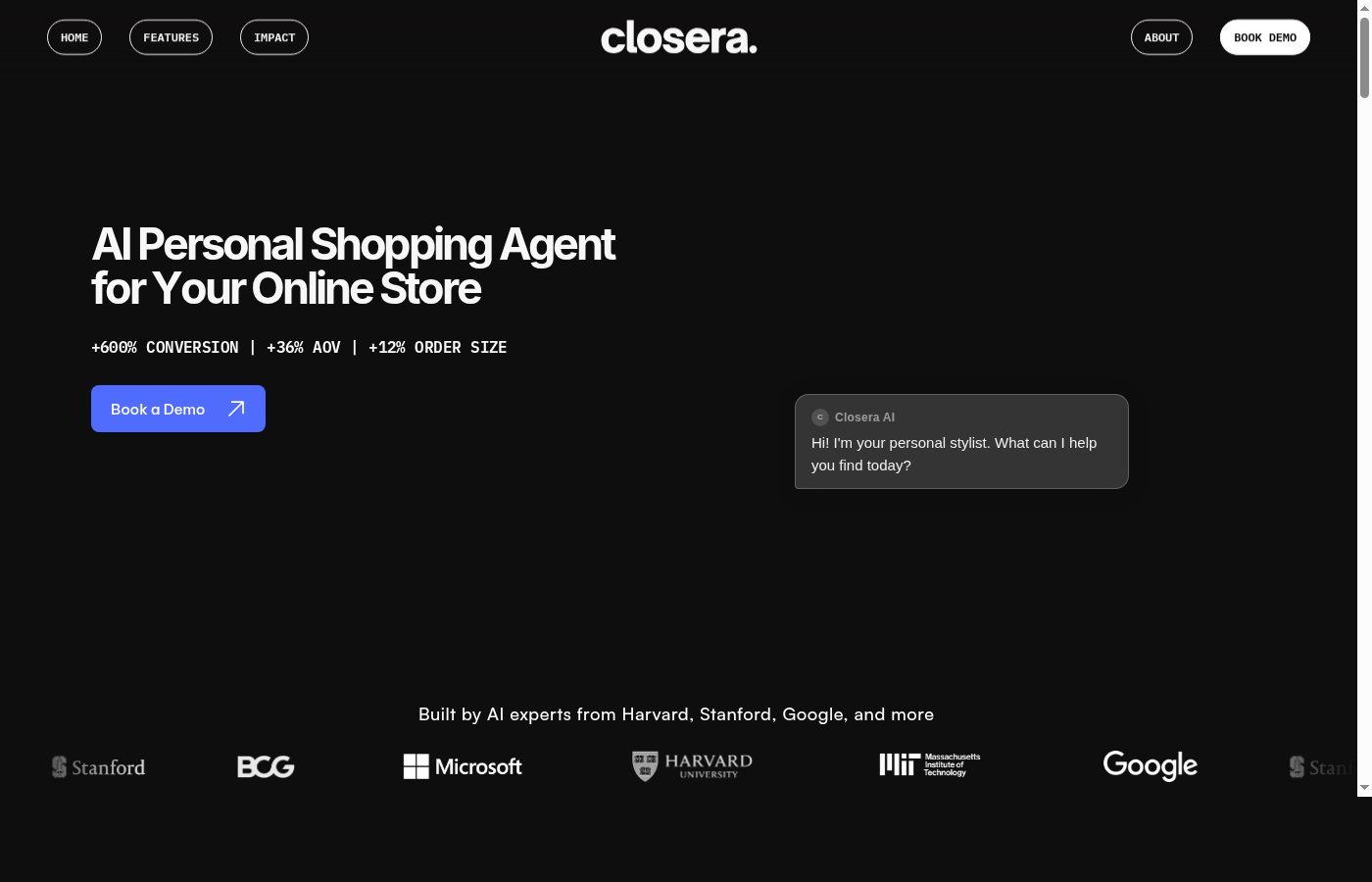
Closera is an artificial intelligence platform built specifically for commercial real estate brokerages, focusing on the rapid generation of property marketing collateral. According to the BestCRE Master Database, the primary use case for the software is producing offering memorandums (OMs), broker opinions of value (BOVs), and marketing materials in minutes. Classified as a Tier 2 CRE-Native application, the software aims to reduce the administrative burden associated with pitching and listing commercial properties.
Brokerages historically spend days formatting financials, property descriptions, and market data into presentable PDFs or web pages. As of August 2026, analysis indicates that Closera attacks this bottleneck by applying generative AI to structure and format these inputs automatically. The platform operates in a highly competitive category, sitting alongside general-purpose AI writing tools and presentation software. However, Closera differentiates itself by focusing exclusively on the specific document types required by CRE professionals. Rather than asking a broker to engineer prompts for a generic language model, the system is structured around the standard components of an OM or BOV. The core value proposition relies on the assumption that saving hours of analyst time on document formatting justifies the adoption of a specialized tool over cheaper, general-purpose alternatives.
What Closera does and how it works
Closera functions as an automated document assembly engine tailored for commercial real estate transactions. Users begin by inputting core property data, which typically includes rent rolls, historical operating expenses, property photos, and basic physical characteristics. The system then processes these inputs through its AI models to generate the narrative sections of an offering memorandum or a broker opinion of value. This includes drafting the executive summary, property description, and location overview based entirely on the structured data provided by the user.
The platform includes templating features that allow brokerages to maintain brand consistency across their marketing materials. Once the AI generates the initial draft, users interact with a document editor to refine the text, adjust financial tables, and swap images. Analysis suggests that the workflow is designed to replace the traditional process of manually copying and pasting data from Excel into InDesign or Word templates. By centralizing the data ingestion and document formatting steps, the software attempts to shorten the cycle time from winning a listing to taking it to market.
Beyond OMs and BOVs, the system generates supplementary marketing collateral. This includes email blast copy, social media captions, and property flyers derived from the master property record. The mechanics rely heavily on the quality of the initial data entered by the broker or analyst. If the rent roll is incomplete or the expense history is inaccurate, the resulting BOV will reflect those deficiencies. Therefore, while the software accelerates document creation, it does not eliminate the need for human underwriting and data verification before distributing materials to potential buyers or clients.
9AI Framework: the score, dimension by dimension
CRE Relevance: 9/10
As a Tier 2 CRE-Native application, Closera is built entirely around the workflows of commercial real estate brokerages. Unlike general-purpose AI writers that require extensive prompt engineering to understand cap rates, net operating income, or tenant improvements, this platform is pre-configured for these concepts. The interface and output templates are specifically designed for offering memorandums and broker opinions of value, which are highly specialized documents unique to this industry. Analysis shows that this narrow focus significantly reduces the friction typically associated with adopting AI in a brokerage setting. Users do not need to explain commercial real estate terminology to the system. In practice: Brokers can generate industry-standard documents without teaching the software basic real estate finance concepts.
Data Quality and Sources: 7/10
The quality of the output generated by Closera is directly proportional to the accuracy of the data supplied by the user. Because the system relies on user-uploaded rent rolls, financials, and property details to draft BOVs and OMs, it cannot independently verify the truthfulness of the inputs. Analysis indicates that while the AI effectively structures and formats the provided information, it does not pull proprietary market comps or verify zoning data on its own. The platform assumes the broker has already conducted the necessary underwriting and market research before initiating the document creation process. In practice: Analysts must still rigorously audit their financial inputs before relying on the platform to generate client-facing valuation documents.
Ease of Adoption: 8/10
Implementing Closera requires minimal technical expertise, as the platform operates primarily as a web-based document generator. The user interface guides brokers through a structured intake process, asking for specific property details and financial metrics. Because the templates are pre-built for standard CRE marketing materials, the learning curve is substantially lower than mastering complex design software like Adobe InDesign. Analysis suggests that teams can begin producing viable drafts within their first few sessions. However, configuring the platform to perfectly match a brokerage’s highly specific custom branding guidelines may require initial setup time and coordination with the vendor. In practice: Most brokerage teams can transition from manual drafting to AI-assisted generation within a matter of days.
Output Accuracy: 7/10
Generative AI models are prone to occasional hallucinations or phrasing inconsistencies, and Closera is not immune to these limitations. While the software excels at formatting financial tables and drafting boilerplate location descriptions, the narrative text requires careful review. Analysis of similar AI writing tools suggests that users must verify that the generated property descriptions accurately reflect the physical reality of the asset and do not exaggerate features. The financial summaries are generally accurate provided the input data is correct, but the qualitative text must be treated as a first draft rather than a final product. In practice: Brokers must allocate time to proofread and edit the AI-generated text before publishing any marketing materials.
Integration and Workflow Fit: 6/10
As a Tier 2 startup, Closera’s ability to connect with the broader commercial real estate technology stack remains developing. Analysis suggests that while the platform excels as a standalone document generator, users may need to manually export data from their CRM or underwriting software to feed into the system. There is limited evidence of deep, native integrations with enterprise-grade property management or financial modeling tools. Consequently, analysts will likely find themselves downloading CSV files from one platform and uploading them into another to initiate the marketing process. In practice: Users should expect a standalone workflow that requires manual data transfer rather than an automated pipeline from their existing CRM.
Pricing Transparency: 4/10
Closera does not publish its pricing tiers publicly, operating instead on a custom pricing model. According to the BestCRE Master Database, prospective buyers must engage with the sales team to receive a quote tailored to their brokerage size and usage volume. This lack of transparency makes it difficult for independent analysts or small boutique firms to evaluate the software’s return on investment prior to a demo. Analysis indicates that custom pricing often scales based on the number of seats or the volume of OMs and BOVs generated monthly. In practice: Buyers must invest time in the sales process to discover if the platform fits within their marketing budget.
Support and Reliability: 6/10
Classified as a Tier 2 vendor, Closera operates with the typical support constraints of an emerging startup. While the company is highly focused on its core brokerage user base, it may lack the 24/7 global support infrastructure found in enterprise legacy systems. Analysis suggests that users can expect responsive, personalized assistance during standard business hours, likely interacting directly with the product team. However, weekend support or immediate troubleshooting for urgent, late-night OM deadlines may be limited. The platform’s reliability is generally stable for document generation, but buyers must accept the support realities of a younger company. In practice: Teams should plan their critical document generation during business hours when support staff is readily available.
Innovation and Roadmap: 7/10
The product roadmap for Closera appears focused on deepening its AI generation capabilities specifically for brokerages. Analysis of the current feature set suggests future updates will likely target faster processing times, more sophisticated design templates, and potentially automated data extraction from messy financial documents. As a Tier 2 startup, the company has the agility to push updates frequently, responding directly to broker feedback. However, the long-term viability of the roadmap depends on the company’s ability to maintain its niche advantage against rapidly advancing general-purpose AI models that are constantly improving their context windows. In practice: Buyers are investing in a fast-moving product that will likely introduce new AI features at a rapid pace.
Market Reputation: 6/10
Closera is building a reputation as a specialized, time-saving utility for commercial real estate brokers, but it remains an unproven startup in the broader market. It has not yet achieved the ubiquitous name recognition of established tools like Matterport. Analysis indicates that early adopters appreciate the platform’s focus on CRE-specific documents, which provides a clear advantage over generic AI writers. However, as a Tier 2 vendor, it lacks a long track record of enterprise deployments. The company must still prove it can scale its user base and maintain performance as transaction volumes increase across a larger client base. In practice: Adopters are taking a calculated risk on a specialized startup rather than buying an established industry standard.
Who should use Closera
Closera is optimized for transaction-focused teams that spend excessive time formatting documents rather than calling clients. The platform provides the highest value to organizations that lack dedicated, in-house graphic design departments.
- Investment sales brokers who need to quickly turn around BOVs to win listings.
- Boutique brokerages seeking to produce institutional-quality OMs without hiring graphic designers.
- Marketing coordinators at mid-sized firms struggling to manage high volumes of property flyers and email blasts.
- Junior analysts who currently spend hours manually transferring Excel data into presentation templates.
Who should look elsewhere
Firms with highly rigid, complex branding requirements or those relying on deeply integrated enterprise tech stacks may find the platform limiting. It is not a substitute for underwriting software or a CRM.
- Enterprise brokerages with proprietary, heavily customized automated marketing systems already in place.
- Analysts looking for an AI tool to perform complex financial modeling or cash flow projections.
- Firms that refuse to use cloud-based software for confidential client financial data.
Pricing and ROI
Closera operates strictly on a custom pricing model, meaning exact costs are not published on their website. Prospective buyers must contact the sales team to receive a quote, which analysis suggests is likely based on the number of user seats, the volume of documents generated, or the size of the brokerage. Because pricing is not published, evaluating the immediate financial commitment requires engaging in a sales process.
To calculate the return on investment, brokerages must measure the cost of the software against the labor hours saved during document production. If a junior analyst or marketing coordinator currently spends ten hours formatting a single offering memorandum in InDesign, and Closera reduces that time to two hours of data entry and proofreading, the firm saves eight hours of labor per listing. Assuming an analyst’s fully loaded cost is $50 per hour, the platform saves $400 per OM. If a boutique firm produces five OMs and ten BOVs per month, the labor savings quickly reach thousands of dollars. The ROI is realized only if the brokerage redirects those saved hours into revenue-generating activities, such as prospecting or underwriting additional deals, rather than simply absorbing the free time.
Integration and CRE tech stack fit
Fitting Closera into an existing commercial real estate technology stack requires manual effort. As a Tier 2 application, the platform currently functions primarily as a standalone destination rather than a deeply integrated node within a broader ecosystem. Analysis indicates that users will not find native, push-button integrations with major industry CRMs or complex financial modeling platforms.
Instead, the workflow relies on data export and import. Analysts must finalize their rent rolls and operating expenses in Excel, and then upload those files or manually input the data into Closera’s interface. Once the offering memorandum or broker opinion of value is generated, the final product is exported as a PDF or web link for distribution. While this lack of connectivity prevents the software from automatically pulling live property data from a CRM, it also simplifies the initial deployment. Brokerages do not need IT departments to configure API keys or map custom data fields. The platform sits adjacent to the core tech stack, utilized specifically at the moment a property is ready to be pitched or marketed.
Competitive landscape
Closera competes in a crowded landscape of both specialized real estate software and general-purpose AI tools. For pure text generation, brokers often turn to Jasper AI (BestCRE Score: 89) or Copy.ai (BestCRE Score: 87). These platforms excel at drafting email blasts and property descriptions but lack native understanding of commercial real estate financials and do not format BOVs or OMs. Beautiful.ai (BestCRE Score: 89) offers superior presentation design capabilities and faster slide creation than traditional software, but it still requires the user to manually structure the real estate narrative.
Within the CRE-specific ecosystem, Closera competes with established marketing and deal management platforms that provide highly structured, automated OM and flyer generation. For custom app creation and internal property portals, Glide Apps (BestCRE Score: 87) allows firms to build bespoke property databases, but it is not designed for generating printable marketing PDFs. Dan AI (BestCRE Score: 87) offers CRE-specific AI chat capabilities, but focuses more on market research and conversational queries rather than end-to-end document assembly. Matterport (BestCRE Score: 92) dominates the visual marketing space but does not generate financial documents. Ultimately, Closera distinguishes itself by combining the generative text capabilities of a Jasper AI with the document structure of a traditional marketing platform, specifically targeting the bottleneck of BOV and OM creation.
The bottom line
Closera is a highly practical utility for commercial real estate brokerages looking to accelerate their marketing output. By focusing exclusively on offering memorandums, broker opinions of value, and property marketing materials, it eliminates the prompt engineering required by generic AI tools. The platform is not a magic solution; analysts must still ensure the accuracy of their financial inputs, and the generated text requires human review to correct inevitable AI phrasing quirks. Furthermore, the lack of published pricing and limited integrations require buyers to carefully evaluate the cost and workflow friction. However, for boutique firms and mid-sized brokerages spending excessive hours formatting PDFs in InDesign, the labor savings are undeniable. If your team is bottlenecked by document production rather than deal origination, Closera is a recommended purchase to modernize your listing process.
Frequently asked questions
Does Closera integrate with my existing CRM?
Analysis indicates that Closera operates primarily as a standalone platform rather than a deeply connected node. Users typically need to manually export data from their existing customer relationship management systems and upload it into the software to generate marketing materials, as native integrations are currently limited.
Can the AI underwrite a property automatically?
No, the software cannot underwrite a property automatically. The platform formats and structures data into OMs and BOVs, but it relies entirely on the analyst to provide accurate financial inputs, rent rolls, and operating expenses. Users must complete their financial modeling before using the tool.
How much does Closera cost?
Pricing is not published on the official website. The company uses a custom pricing model, requiring prospective buyers to contact their sales team directly for a quote. Analysis suggests these costs are likely scaled based on firm size, the number of user seats, or total document volume.
Do I need graphic design experience to use it?
No graphic design experience is necessary to operate the platform. The software uses pre-built templates and artificial intelligence to format documents automatically. This approach replaces the need for complex design tools like Adobe InDesign, allowing brokers to produce standard marketing materials with basic data entry skills.
Can it generate content for social media and emails?
Yes, the platform extends beyond standard offering memorandums. In addition to OMs and BOVs, the system can generate supplementary marketing collateral. This includes drafting email blast copy and social media captions based on the master property data, helping teams distribute their listings across multiple digital channels.
Is the generated text ready to publish immediately?
No, the generated text should not be published immediately without review. While the artificial intelligence drafts executive summaries and property descriptions quickly, users must carefully review and edit the text. This ensures the narrative accurately reflects the physical asset and corrects any phrasing inconsistencies before client distribution.