Leni AI operates as a commercial real estate artificial intelligence analyst designed specifically for property management and operations, functioning primarily by integrating directly with enterprise systems like Yardi and RealPage. Classified in the BestCRE Master Database as a Tier 2, CRE-Native application, the software attempts to bridge the gap between static property management databases and dynamic, conversational query interfaces. Rather than replacing core accounting or property management software, Leni AI sits on top of these existing databases to parse rent rolls, evaluate lease expirations, and extract operational insights without requiring users to manually export data into spreadsheets. As of August 2026, the property management software category is heavily contested by established platforms adding their own intelligence layers, making third-party overlay tools a distinct but challenging sub-category for buyers to evaluate.
The core value proposition analyzed here is whether a dedicated AI overlay provides enough operational efficiency to justify an additional enterprise contract alongside expensive primary systems. BestCRE approaches this evaluation by examining how well Leni AI handles the complexities of commercial real estate data structures, which are notoriously messy and inconsistent across different portfolios. Because the company targets institutional operators and asset managers, expectations for data security, integration stability, and output precision are exceptionally high. Our analysis indicates that while the concept addresses a genuine pain point for asset managers tired of navigating clunky legacy interfaces, the practical execution relies entirely on the cleanliness of the underlying Yardi or RealPage data. Buyers must weigh the utility of conversational data retrieval against the reality of enterprise software deployment timelines.
What Leni AI does and how it works
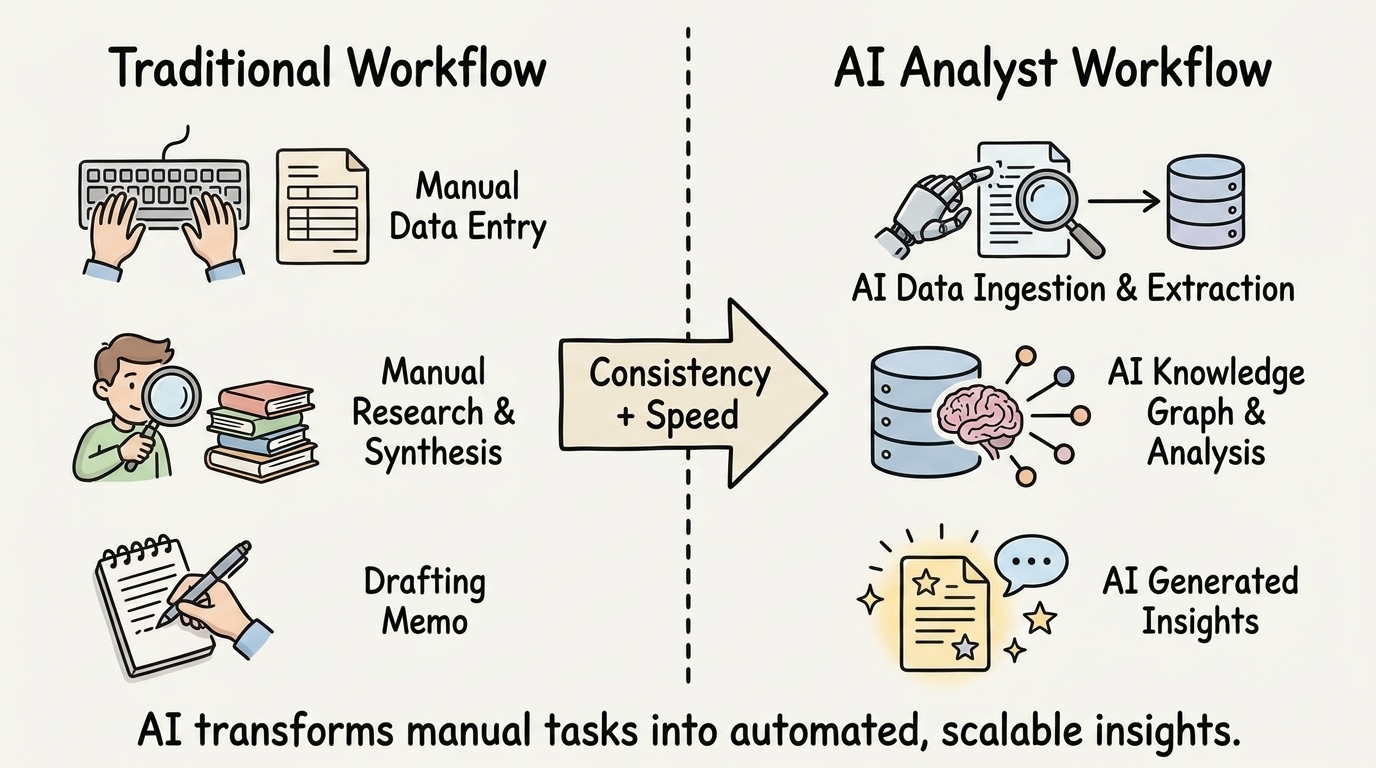
At its core, Leni AI functions as a conversational interface for a commercial real estate firm’s existing property management databases. When an asset manager or regional director wants to know the blended lease renewal rate across a specific multifamily portfolio or the upcoming tenant improvement liabilities for a retail center, they type the question into Leni AI rather than building a custom report in Yardi or RealPage. The software uses natural language processing to interpret the query, translates it into a database search, retrieves the specific data points from the connected property management system, and synthesizes the numbers into a readable text summary or basic data visualization.
Beyond simple data retrieval, the software acts as an automated analyst for routine operational reporting. Users can set up recurring queries to monitor specific key performance indicators, such as weekly changes in physical occupancy, delinquency rates by property type, or maintenance ticket resolution times. The system parses the raw data flowing from the underlying property management software and flags anomalies that might otherwise require manual auditing by a junior analyst. For example, if utility expenses at a specific property spike twenty percent month-over-month, Leni AI is designed to highlight this variance in a daily or weekly briefing format, directing the property manager’s attention to the specific ledger entries causing the increase.
The mechanics of this process depend entirely on API connections. Leni AI does not store the system of record data; it queries it. This means the tool’s effectiveness is strictly bound by the permissions and data structures established within the host systems. If a firm uses non-standard chart of accounts or custom fields in RealPage that the API does not map correctly, the AI will fail to retrieve accurate answers. The software includes a mapping phase during onboarding where these custom fields are theoretically aligned with Leni AI’s data models, allowing the natural language engine to understand the firm’s specific internal terminology for different operational metrics.
9AI Framework: the score, dimension by dimension
CRE Relevance: 9/10
Leni AI is purpose-built for commercial real estate, earning its CRE-Native classification in the BestCRE database. Unlike generic natural language processing wrappers, the underlying data models are trained to understand industry-specific terminology like capitalization rates, triple net leases, and loss to lease calculations. The system recognizes the hierarchical relationship between a portfolio, a property, a building, a unit, and a lease, which is a structural requirement that generalist AI tools consistently fail to grasp. This specialization means asset managers do not need to spend months teaching the software basic real estate accounting principles before it can generate a useful variance report. In practice: The software understands the difference between economic and physical vacancy out of the box.
Data Quality and Sources: 7/10
Because Leni AI operates as an overlay, its data quality score reflects its ability to parse and map external information rather than generating its own proprietary datasets. The software relies heavily on the cleanliness of the user’s Yardi or RealPage environments. If a property manager inconsistently logs lease concessions in the primary system, Leni AI will confidently return flawed insights. However, the tool does include basic validation checks to flag missing fields or illogical dates, such as a lease expiration occurring before a commencement date, which provides a minor auditing benefit. The AI cannot fix bad data, but it can occasionally highlight it. In practice: Your insights will only be as reliable as the data entry habits of your property management team.
Ease of Adoption: 6/10
Deploying an enterprise AI overlay is rarely a quick process, and Leni AI requires significant upfront configuration. While the user interface itself is highly intuitive, functioning much like a standard chat window, the backend API connections demand dedicated IT resources to establish secure data pipelines. Mapping custom chart of accounts and specific ledger codes from legacy systems into Leni AI’s standardized model takes weeks of testing to ensure queries return accurate numbers. Training end-users is minimal, but the technical deployment creates a high barrier to entry for firms lacking dedicated technology staff or external implementation consultants. In practice: Expect a multi-week technical onboarding phase before end-users can actually type their first question.
Output Accuracy: 7/10
The natural language generation is highly competent at summarizing numerical data without hallucinating figures, a critical requirement for financial reporting. When querying rent rolls or operating statements, Leni AI restricts its answers to the exact figures pulled via API, avoiding the generative errors common in broader AI tools. However, complex queries involving multiple variables, such as asking for a weighted average lease expiry adjusted for specific tenant termination options, can sometimes confuse the logic engine, resulting in incomplete calculations. Users must learn to structure their questions precisely to avoid misinterpretation by the parsing layer. In practice: Simple data retrieval is highly accurate, but complex multi-step financial calculations require manual verification.
Integration and Workflow Fit: 8/10
The software’s primary selling point is its direct integration with Yardi and RealPage, which covers a massive share of the institutional commercial real estate market. The API connections are built specifically to handle the complex relational databases of these two giants, allowing for relatively deep data extraction compared to generic middleware. However, firms using alternative property management systems like MRI or specialized accounting tools will find the integration capabilities severely lacking, requiring custom development work that diminishes the product’s value. For its target demographic, the connectivity is highly functional, but it is not universally compatible across the broader proptech ecosystem. In practice: The tool is an excellent fit for Yardi and RealPage shops, but highly problematic for firms outside that specific duopoly.
Pricing Transparency: 4/10
As noted in the BestCRE Master Database, Leni AI utilizes an enterprise pricing model and does not publish its costs publicly. Because the vendor obscures its tier structures, base fees, and implementation costs, it cannot exceed a score of 5 in this dimension. Buyers must engage in a protracted sales cycle simply to determine if the software fits their budget. Analysis of similar Tier 2 AI overlays suggests pricing is likely tied to the number of units, square footage under management, or API call volume, but the lack of public documentation makes independent verification impossible. In practice: You will have to sit through multiple vendor demonstrations before receiving a customized price quote.
Support and Reliability: 6/10
As a Tier 2, unproven startup in the commercial real estate technology space, Leni AI carries inherent vendor risk, capping its score at 6 for this dimension. While early adopters report highly personalized attention from the founding engineering team, this white-glove approach is rarely scalable as the customer base grows. The company lacks the extensive documentation, 24/7 global support desks, and certified third-party integration partners that characterize established Tier 1 vendors. If an API connection breaks during a critical reporting period, users are entirely dependent on a small internal team to push a fix. In practice: Support is currently highly responsive but lacks the mature infrastructure necessary to guarantee long-term enterprise reliability.
Innovation and Roadmap: 7/10
The development pace for Leni AI is aggressive, reflecting the rapid evolution of the broader artificial intelligence sector in August 2026. The company is actively expanding its natural language processing capabilities to handle unstructured data, such as reading PDF lease agreements to cross-reference clauses against the structured data in Yardi. Future updates aim to include predictive analytics for tenant churn and automated budget variance narratives. While these features are promising, buyers should evaluate the tool based on its current data retrieval capabilities rather than future promises of predictive intelligence. In practice: The product updates frequently, but core stability must remain the priority over experimental new features.
Market Reputation: 5/10
Leni AI suffers from the typical visibility issues of an unproven startup, strictly limiting its market reputation score to a maximum of 6. Within niche circles of forward-thinking asset managers, the tool is viewed as a clever solution to legacy software limitations. However, it lacks the widespread industry validation, extensive case studies, and proven long-term ROI required to challenge established incumbents. Many institutional buyers remain hesitant to grant a Tier 2 startup deep API access to their core financial systems due to perceived security and longevity risks. In practice: The tool is highly regarded by early adopters but remains largely unknown to the broader commercial real estate market.
Who should use Leni AI
Leni AI is best suited for organizations that have a massive volume of structured data trapped in legacy systems and need faster ways to extract insights without hiring additional junior analysts. The ideal user is focused on portfolio oversight rather than day-to-day accounting entries.
- Asset managers overseeing large multifamily or commercial portfolios who need immediate answers to variance questions without waiting for the accounting department to run custom reports.
- Firms deeply entrenched in the Yardi or RealPage ecosystems that are frustrated by the native reporting interfaces of those platforms.
- Directors of operations who want to automate the daily distribution of key performance indicators to regional property managers.
Who should look elsewhere
Organizations lacking clean data or using incompatible primary systems will find no value in this overlay. Furthermore, firms without the technical resources to manage a complex API integration should avoid this tool.
- Small property management firms with fewer than one thousand units, as the enterprise implementation costs will vastly outweigh the time saved on reporting.
- Firms utilizing MRI, AppFolio, or custom-built SQL databases, as the out-of-the-box integrations are strictly focused on Yardi and RealPage.
- Companies with poor data hygiene where property managers frequently bypass standard fields in favor of unstructured notes, which the AI cannot reliably parse.
- Accounting departments looking for a tool to generate audited financial statements, as this is an operational insight tool, not a certified ledger.
Pricing and ROI
Leni AI operates strictly on an enterprise pricing model, meaning the vendor does not publish its costs, subscription tiers, or implementation fees publicly. Because of this lack of transparency, buyers must engage directly with the sales team to receive a custom quote. Based on our analysis of similar Tier 2 API overlays in the commercial real estate sector, pricing is typically structured around the total volume of assets under management, either measured by unit count for multifamily or square footage for commercial properties, alongside a hefty one-time implementation fee to cover the complex data mapping process.
When calculating the return on investment, buyers must weigh the undisclosed annual software cost against the human capital hours saved. If an asset management team spends forty hours a month manually exporting RealPage data into Excel to build portfolio variance reports, and an analyst costs the firm roughly sixty dollars an hour fully burdened, the hard savings equate to roughly twenty-eight thousand dollars annually. To achieve a positive ROI, the Leni AI contract and amortized implementation fees must fall comfortably below this threshold, while also factoring in the soft benefits of faster decision-making. Until the company publishes standard rates, buyers must perform this math rigorously during the proposal stage.
Integration and CRE tech stack fit
The entire functional premise of Leni AI rests on its integration fit within a commercial real estate technology stack. The software is explicitly engineered to connect with Yardi and RealPage, utilizing API endpoints to map directly to their complex relational databases. For firms utilizing these two specific platforms, Leni AI acts as a highly effective intelligence layer, bypassing the notoriously rigid native reporting modules of the host systems.
However, this deep specialization comes at the cost of broader market compatibility. The tool does not currently offer native, plug-and-play integrations with other major property management systems like MRI, Entrata, or AppFolio. If your firm uses a diverse tech stack across different joint venture partnerships, Leni AI will only be able to query the portions of your portfolio housed within its supported systems, creating dangerous blind spots in portfolio-wide reporting. Furthermore, establishing the initial API connection requires administrative credentials and a thorough understanding of your firm’s custom data fields, meaning your internal IT director or a third-party database consultant must be actively involved in the deployment process.
Competitive landscape
The landscape for commercial real estate operational software in August 2026 is highly competitive, and Leni AI faces pressure from both primary systems and alternative AI overlays. When evaluating Leni AI, buyers must first look at the native capabilities of their existing platforms. Both Yardi and RealPage are actively developing their own internal artificial intelligence and natural language reporting tools. While these native features are often slower to market and less flexible than a dedicated third-party tool like Leni AI, they require zero additional integration effort and are included in existing enterprise licensing agreements.
For firms looking outside their primary systems, Leni AI competes against several highly rated platforms in the BestCRE database. DoorLoop (scored 93) and AppFolio (scored 86) offer comprehensive property management solutions that increasingly incorporate automated reporting and AI-driven insights directly into their core products, negating the need for an external overlay for mid-market firms. Entrata (scored 88) provides a highly connected platform with strong API capabilities that often satisfy the reporting needs of large multifamily operators without requiring third-party extraction tools.
In the specific realm of data aggregation and AI overlays, Conduit (scored 87) and Relevance AI (scored 85) present formidable alternatives. Conduit excels at unifying disparate data sources across broader tech stacks beyond just Yardi and RealPage, while Relevance AI offers more generalized artificial intelligence capabilities that can be trained on proprietary firm data. Leni AI must prove its specialized CRE-native focus justifies its selection over these broader, highly rated integration platforms.
The bottom line
Leni AI offers a compelling, specialized solution for a very specific type of commercial real estate operator: institutional asset managers frustrated by the reporting limitations of Yardi and RealPage. If your firm struggles to extract timely operational insights from these systems and relies heavily on manual spreadsheet manipulation, this AI analyst provides a highly relevant, CRE-native alternative. However, as a Tier 2 startup with unpublished enterprise pricing, the risk profile is elevated. The software is entirely dependent on the cleanliness of your underlying data and offers zero value to firms operating outside its narrow integration ecosystem. Do not purchase Leni AI expecting it to fix bad accounting practices or organize unstructured data. Buy it only if you have a massive, well-maintained Yardi or RealPage database and need a faster, conversational method to interrogate your own operational metrics.
Frequently asked questions
Does Leni AI replace my current property management software?
No. Leni AI is an overlay tool that requires a primary system of record to function. It sits on top of your existing database to extract and analyze data, meaning you must maintain your core subscriptions to platforms like Yardi or RealPage.
How much does Leni AI cost for a mid-sized portfolio?
The company utilizes an enterprise pricing model and does not publish its rates publicly. Costs are generally customized based on the size of your portfolio, unit count, and the complexity of the required API integrations. You must contact their sales team for a specific quote.
Can Leni AI fix incorrect data entries in my rent roll?
No. The software functions as a read-only analyst. While it can highlight anomalies or flag missing fields in your data, it cannot write corrections back into your primary database. Your property management team must manually fix errors in the host system.
What systems does the software integrate with out of the box?
The platform is specifically designed to integrate directly with Yardi and RealPage. If your firm utilizes other primary property management systems like MRI, Entrata, or AppFolio, you will likely face significant custom development costs or total incompatibility. Buyers should verify API access before signing a contract.
Is my financial data used to train their public AI models?
Enterprise AI overlays typically partition client data to ensure proprietary financial information is not fed into public learning models. However, because Leni AI is an unproven startup, buyers must mandate strict data privacy clauses and security audits during the procurement process to guarantee absolute data isolation.
How long does it take to implement the software?
Because it requires mapping custom chart of accounts and establishing secure API connections with legacy databases, implementation is not instantaneous. Buyers should expect a multi-week technical onboarding phase involving their internal IT staff before end-users can reliably query the system for accurate financial insights.