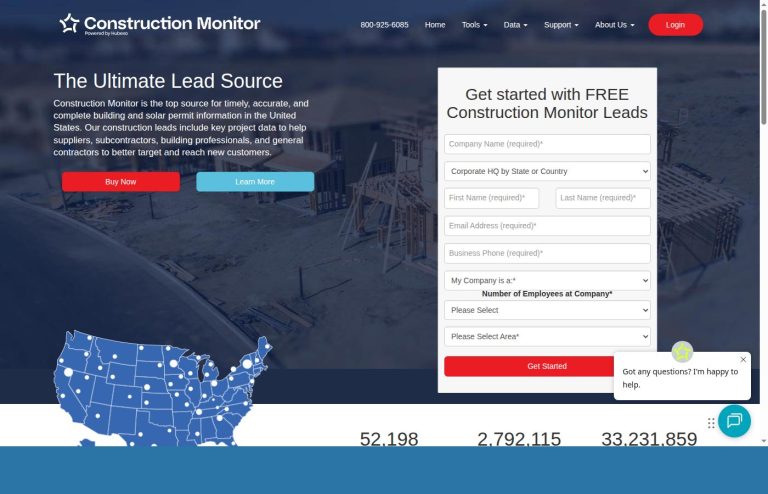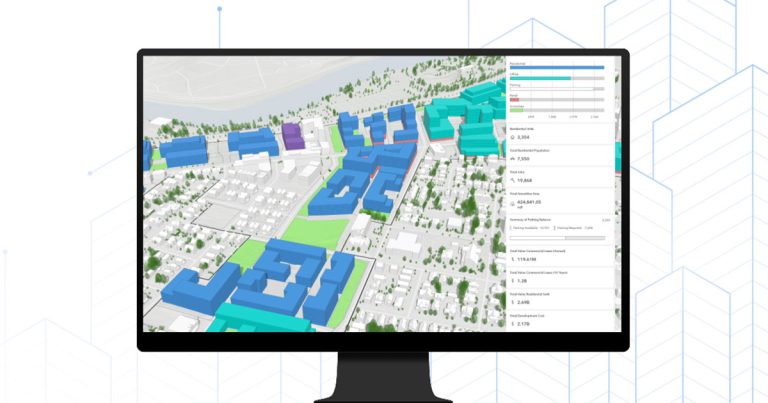
TurboPermit is an AI software platform designed specifically for multifamily developers to streamline permit processing. Classified in the BestCRE master database as a CRE-Native, Tier 2 application, the tool focuses on navigating the notoriously opaque and localized municipal zoning and permitting workflows. Multifamily development requires coordinating multiple overlapping jurisdictional approvals, ranging from environmental clearances and utility connections to complex structural plan checks. TurboPermit attempts to automate the administrative overhead associated with these filings by extracting requirements directly from municipal codes, tracking submission deadlines, and formatting applications to match highly specific local standards. The platform operates on a paid subscription model, positioning itself as an alternative to traditional, manual expediting processes.
As of August 2026, the commercial real estate permitting technology sector remains highly fragmented, with developers often relying on localized expediters or manual tracking via disjointed spreadsheets. TurboPermit enters this competitive category offering a specialized approach, though exact pricing tiers remain unpublished. The platform’s primary value proposition centers on reducing the expensive holding costs associated with delayed municipal approvals. By targeting multifamily developers specifically, rather than offering a general-purpose construction or single-family residential tool, the company aims to address the unique density, parking, and zoning challenges inherent in large-scale residential commercial real estate. Our analysis indicates that while the tool shows significant promise in standardizing application packages across different jurisdictions, its Tier 2 classification suggests it is still maturing its municipal database coverage and feature set when compared to more established competitors in the permitting technology space.
What TurboPermit does and how it works
TurboPermit functions as a centralized workflow engine for the entire multifamily permitting lifecycle, replacing manual tracking with AI-assisted document management. At its core, the platform ingests architectural plans and municipal code data to identify exactly which permits a specific multifamily project requires. Users upload their project specifications, and the system cross-references these details against its database of local zoning laws and building codes. This matching process generates a comprehensive checklist of required forms, supporting documents, and fee schedules specific to the project’s jurisdiction.
Once the requirements are established, the software assists in the actual compilation of the permit application package. It uses natural language processing to extract relevant data from the uploaded architectural and engineering documents, mapping this information onto the required municipal forms. This reduces the manual data entry typically required by development analysts and architects. The platform also includes a tracking dashboard that monitors the status of submitted applications. When a municipality issues a correction notice or requests additional information, TurboPermit logs the correspondence and alerts the development team, ensuring that response deadlines are met and the project maintains its momentum through the review cycles.
Our analysis of the product mechanics reveals that the system’s effectiveness relies heavily on the depth of its municipal database. Because it is classified as a Tier 2 database tool, users should expect that while major metropolitan areas may have deep integration and automated form mapping, smaller or obscure jurisdictions might still require manual oversight. The AI serves primarily as an administrative assistant, flagging missing documents and formatting submissions, rather than replacing the need for qualified architectural professionals to answer complex structural or zoning queries posed by city planners.
9AI Framework: the score, dimension by dimension
CRE Relevance: 10/10
TurboPermit achieves a high score in this dimension because it is explicitly engineered for commercial real estate, specifically targeting the multifamily development sector. Unlike generic project management software or broad construction tech, this platform addresses a highly specific CRE pain point: the localized, bureaucratic friction of municipal permit processing. The tool’s architecture reflects an understanding of multifamily zoning nuances, such as density calculations, parking minimums, and environmental impact reports. By focusing narrowly on developers rather than single-family homeowners or general contractors, the software maintains strict alignment with commercial investment workflows and the financial imperatives of reducing pre-construction holding costs. In practice: Development teams will find a user interface and feature set that speaks their specific industry language rather than requiring adaptation from generic templates.
Data Quality and Sources: 9/10
As a Tier 2 CRE-Native database, the platform offers solid but still developing data infrastructure. The core challenge in permitting software is maintaining accurate, up-to-date information on municipal codes that change frequently and often lack standardized digital publication. TurboPermit manages this by scraping and structuring local zoning data, but our analysis suggests the coverage is likely concentrated in major primary markets with more accessible digital records. Users operating in secondary or tertiary markets may encounter gaps in the automated requirement checklists, necessitating manual verification by the development team. The data quality is sufficient for its primary use case but has not yet reached the comprehensive national coverage of top-tier competitors. In practice: Analysts must still independently verify the AI-generated municipal requirements against the latest local city planning publications.
Ease of Adoption: 8/10
Implementing specialized AI for permit processing requires significant changes to existing development workflows. Development firms typically rely on entrenched processes involving third-party expediters, architects, and internal spreadsheets. Shifting this entire apparatus onto a new software platform demands a coordinated effort across internal teams and external consultants. While the interface is designed to be intuitive, the initial setup involves uploading historical project data, configuring user permissions for various stakeholders, and training staff to trust the AI’s document extraction capabilities. The learning curve is moderate, but the cultural shift away from manual expediting can cause friction among veteran project managers accustomed to traditional methods. In practice: Firms should anticipate a transition period of several weeks where both the old manual processes and the new software run concurrently.
Output Accuracy: 9/10
The accuracy of TurboPermit’s output is highly dependent on the quality of the source documents uploaded by the user and the specific municipality being queried. For standard multifamily applications in major jurisdictions, the natural language processing effectively maps architectural data to municipal forms with minimal errors. However, municipal permitting is notorious for unwritten rules and subjective interpretations by local planners, which an AI cannot reliably predict. The tool excels at administrative accuracy, ensuring that no required form is missing from a submission package and that basic project data is consistent across all documents. It is less reliable when dealing with subjective zoning variances or complex environmental exemptions. In practice: The software eliminates basic clerical errors in application packages but cannot guarantee approval from unpredictable municipal review boards.
Integration and Workflow Fit: 7/10
The integration capabilities of TurboPermit reflect its status as a growing Tier 2 platform. Multifamily developers typically utilize a complex stack of software, including financial modeling tools, construction management platforms like Procore, and specialized document storage systems. Our analysis indicates that while the tool can ingest standard architectural files, its ability to push data bidirectionally into enterprise resource planning systems or general ledger software is limited. Users will likely need to rely on manual exports or basic API connections to keep their broader technology stack synchronized with the permitting milestones tracked within this platform. The lack of deep, native integrations with legacy CRE software remains a hurdle. In practice: Development analysts will need to manually update their external project management dashboards when permitting milestones are achieved.
Pricing Transparency: 5/10
TurboPermit operates on a paid subscription model, but the company does not publish its specific pricing tiers, implementation fees, or seat license costs on its public-facing website. This lack of transparency forces prospective buyers to engage with the sales team to understand the financial commitment required. In the commercial real estate technology sector, hidden pricing often indicates a variable cost structure based on the developer’s pipeline volume, total assets under management, or the specific geographic markets required. Because the vendor does not publish pricing, it cannot exceed a score of 5 in this dimension according to our evaluation framework. This opacity makes it difficult for analysts to perform preliminary return on investment calculations before committing to a sales demonstration. In practice: Buyers must enter negotiations blindly and should demand a clear, fixed-fee structure to avoid unexpected scaling costs.
Support and Reliability: 6/10
As an unproven startup in the highly specialized permitting technology space, TurboPermit carries inherent risks regarding long-term support and reliability. The company is currently building its market presence, which means its customer success teams may be stretched thin as they onboard new multifamily developer clients. While early-stage companies often provide highly personalized support to their initial users, they frequently struggle to maintain that level of service as they scale. Furthermore, the platform’s uptime and ability to quickly resolve critical software bugs during a crucial municipal submission window remain untested at an enterprise scale. Per our rating framework, an unproven startup cannot exceed a score of 6 in this category until it demonstrates sustained operational stability. In practice: Users should establish direct communication channels with the vendor’s engineering team to ensure rapid resolution of critical submission blockers.
Innovation and Roadmap: 8/10
The platform demonstrates a clear, focused innovation trajectory by dedicating its resources entirely to the multifamily development sector. Rather than diluting its engineering efforts across single-family, industrial, or retail permitting, TurboPermit is building specialized features for high-density residential challenges. Our analysis of their market positioning suggests future updates will likely focus on expanding their municipal database coverage and improving the AI’s ability to interpret complex zoning codes. The roadmap appears logically aligned with the immediate needs of their core user base, prioritizing administrative automation over unnecessary visual features. However, as a Tier 2 provider, their development velocity may lag behind better-funded competitors who are tackling the broader permitting landscape. In practice: Buyers are investing in the company’s specific vision for multifamily workflows and must be patient as secondary features are gradually rolled out.
Market Reputation: 6/10
TurboPermit is currently navigating the early stages of establishing its market reputation among commercial real estate developers. As a newer entrant classified as an unproven startup, it lacks the extensive portfolio of public case studies, verified user reviews, and enterprise client testimonials that characterize industry leaders. The multifamily permitting space is highly risk-averse, as delayed approvals directly impact the internal rate of return for development funds. Consequently, many firms are hesitant to trust a critical path item to a newer software vendor. Due to its unproven status, the platform’s score in this dimension is capped at 6. The company must successfully guide a significant volume of projects through to completion before it can claim a dominant reputation. In practice: Prospective clients should demand to speak with reference customers who have successfully secured permits using the platform.
Who should use TurboPermit
TurboPermit is designed for specific segments of the commercial real estate development sector that focus heavily on high-density residential projects.
Mid-sized Multifamily Developers: Firms managing 3 to 10 active development projects simultaneously will find the most value in automating their permitting workflows.
Development Analysts: Professionals tasked with tracking municipal deadlines and compiling application packages can save significant administrative time using the platform’s AI extraction tools.
Regional Builders: Companies operating within a concentrated geographic area where the software has established deep municipal database coverage will experience the highest accuracy and efficiency gains.
Pre-construction Managers: Teams looking to reduce holding costs by accelerating the timeline between land acquisition and breaking ground.
Who should look elsewhere
The platform’s specialized nature means it is not suitable for all commercial real estate professionals or property types.
Industrial and Retail Developers: Firms building warehouses, logistics centers, or shopping malls will find the multifamily-specific zoning logic and templates unhelpful.
Single-Family Homebuilders: The complexity and cost of the platform exceed the requirements for standard single-family residential permitting.
Firms in Obscure Jurisdictions: Developers operating primarily in rural or highly localized tertiary markets may find the Tier 2 database lacks the necessary coverage for their specific municipalities.
Passive Real Estate Investors: Equity partners and asset managers who do not directly manage the construction and entitlement process have no use case for this operational tool.
Pricing and ROI
TurboPermit operates on a paid subscription model, but exact pricing details, tier structures, and implementation fees are not published on their public website. This lack of transparency requires prospective buyers to engage directly with the sales team to obtain a custom quote. In the commercial real estate technology sector, pricing for this type of enterprise software is typically structured based on either the number of active projects, the total development pipeline value, or the number of user seats required by the firm.
Despite the opaque pricing, the return on investment (ROI) math for permitting software is highly tangible. The primary financial driver for multifamily developers is the reduction of pre-construction holding costs. If a developer is carrying a $10 million land acquisition loan at an 8% interest rate, the holding cost is approximately $66,666 per month. If TurboPermit’s AI-assisted workflow can prevent administrative errors that typically cause a one-month delay in municipal approvals, the software effectively saves the developer over $66,000 on a single project. Additionally, the platform reduces the billable hours required from third-party expediters and external architectural consultants who traditionally handle the manual compilation of application packages. To justify the unpublished subscription cost, developers should calculate their average monthly holding costs and measure that against the platform’s ability to accelerate the entitlement timeline.
Integration and CRE tech stack fit
Fitting TurboPermit into an existing commercial real estate technology stack requires careful planning, as its integration capabilities are currently indicative of a Tier 2 platform. Most multifamily developers rely on a combination of financial modeling software, project management tools like Procore or Autodesk Build, and enterprise document storage solutions such as SharePoint or Box. Our analysis indicates that TurboPermit functions primarily as a standalone workflow engine rather than a deeply integrated middleware solution.
Users can easily upload standard architectural files, PDFs, and engineering documents into the system for the AI to process. However, pushing the resulting data, approved permits, and municipal correspondence back into the firm’s central project management software typically requires manual exports or reliance on basic API connections, provided the user has the internal technical resources to configure them. The platform does not currently boast a wide marketplace of native, one-click integrations with legacy CRE accounting or construction management systems. Consequently, development teams must build specific operational habits to ensure that the permitting milestones achieved within TurboPermit are accurately reflected in their broader enterprise resource planning tools, avoiding data silos between the pre-construction and active construction phases.
Competitive landscape
The commercial real estate permitting and zoning technology sector is becoming increasingly competitive, with several established players offering alternatives to TurboPermit. The most direct comparisons are found among platforms that scored higher in the BestCRE evaluations due to their broader database coverage and proven market tenure.
LandScout AI (Score: 87) and Archistar AI (Score: 81) represent the top tier of this category. Both platforms offer superior data quality and integration capabilities, providing comprehensive zoning analysis and automated compliance checking that extends beyond basic permit processing. They are better suited for enterprise-level developers who require national database coverage and advanced generative design features alongside permitting workflows.
Shovels.ai (Score: 80) is another strong competitor, particularly for firms focused on contractor data and building permit history. While TurboPermit focuses strictly on the developer’s workflow for new multifamily applications, Shovels.ai excels in aggregating historical permit data to inform site selection and contractor vetting.
For firms looking strictly at permit expediting and workflow automation, PermitFlow (Score: 76) and Permitify (Score: 76) are the most direct operational rivals. PermitFlow has established a strong market reputation and offers a more transparent, nationwide approach to permit management across various asset classes, not just multifamily. Symbium (Score: 78) also competes in this space, utilizing computational law to automate zoning and planning regulations. TurboPermit must compete against these higher-scoring platforms by proving that its hyper-focus on the multifamily sector yields a more tailored, efficient experience than the broader solutions offered by PermitFlow or Symbium.
The bottom line
TurboPermit offers a compelling, highly specialized tool for multifamily developers struggling with the administrative burden of municipal approvals. However, it is not yet a mature, enterprise-grade solution. The decision to adopt this software hinges entirely on your firm’s development volume and geographic focus. If you are a mid-sized multifamily developer operating in major metropolitan areas where the platform’s database is strongest, the potential savings in holding costs justify the investment, even with unpublished pricing. The AI’s ability to standardize application packages is a clear upgrade over manual spreadsheets. Conversely, institutional developers requiring nationwide coverage, deep integrations with Procore, or those building across multiple asset classes should bypass TurboPermit in favor of higher-scoring alternatives like PermitFlow or LandScout AI. Commit to a pilot program on a single, upcoming project before deploying it across your entire development pipeline, and demand clear service level agreements regarding municipal database updates in your specific target markets.
Frequently asked questions
Is TurboPermit designed for single-family residential or commercial real estate?
TurboPermit is explicitly designed for commercial real estate, with a primary focus on multifamily development projects. It is not intended for single-family homebuilders or individual homeowners, as its features are tailored to the complex zoning, density calculations, and multi-jurisdictional approvals required for large-scale residential commercial investments.
How much does a TurboPermit subscription cost for a development firm?
The company operates on a paid subscription model but does not publish its exact pricing tiers publicly. Prospective buyers must contact their sales team for a custom quote, which is typically based on the firm’s active project volume, pipeline value, or the number of user licenses required.
Does the software integrate natively with Procore or other construction management tools?
Our analysis indicates that native, one-click integrations with major construction management platforms like Procore are currently limited. Users will generally need to rely on manual data exports or custom API connections to synchronize their permitting milestones and approved documents with their broader enterprise technology stack.
Can the AI automatically secure municipal permit approvals without human intervention?
No. The AI functions as an administrative assistant that extracts requirements, tracks deadlines, and formats application packages to reduce clerical errors. It cannot replace the need for qualified architects or development analysts to answer subjective zoning queries and negotiate directly with local municipal city planners.
What does the BestCRE Tier 2 database classification mean for this tool?
A Tier 2 classification indicates that while the tool has a solid data infrastructure, its municipal coverage is still maturing. Users can expect reliable automated requirement checklists in major primary markets, but may encounter data gaps requiring manual verification when operating in smaller, secondary, or tertiary jurisdictions.
How does TurboPermit compare to competitors like PermitFlow and LandScout AI?
TurboPermit is a newer, unproven startup focused strictly on multifamily workflows. Competitors like LandScout AI (Score: 87) and PermitFlow (Score: 76) offer broader national database coverage, better integration capabilities, and cater to multiple asset classes, making them safer choices for large enterprise developers requiring comprehensive solutions.
Related Reviews
Compare TurboPermit with other Permitting & Zoning tools BestCRE has scored: Zoneomics (78/100), GreenLite (71/100), Gridics (69/100) and Camino (68/100). Browse every review in CRE Permitting & Zoning, the full Best CRE AI Tools directory, or the 20 CRE Sectors hub.