VoiceType is a general-purpose AI voice-typing and dictation utility designed to operate across various desktop applications, currently priced at approximately $13 per month following a free trial. Classified as a Tier 2 CRE-Adjacent tool in the BestCRE Master Database, this software does not contain proprietary commercial real estate data or specialized property models. Instead, it functions as a productivity layer that translates spoken words into text wherever a user places their cursor on the screen. For commercial real estate professionals, the primary appeal lies in accelerating the drafting of property tour notes, client emails, and internal investment memos without requiring a specialized integration into existing property management systems or customer relationship management platforms.
As of March 2026, the market for AI assistants includes highly specialized tools and broad development environments like Cursor, which scored a 90 in our framework, or Agentforce at 88. VoiceType sits firmly in the general utility category, competing more with native operating system dictation features than with complex real estate AI platforms. Our analysis indicates that while the tool offers a straightforward value proposition, buyers must carefully evaluate whether a dedicated third-party dictation application justifies an ongoing monthly subscription when similar capabilities are increasingly bundled into enterprise software suites. The tool requires no complex onboarding or technical implementation, but its lack of CRE-specific vocabulary training means analysts will need to monitor how it handles industry acronyms like NOI, CapEx, or WALT during transcription. Ultimately, it serves as a simple mechanical bridge between speech and text.
What VoiceType does and how it works
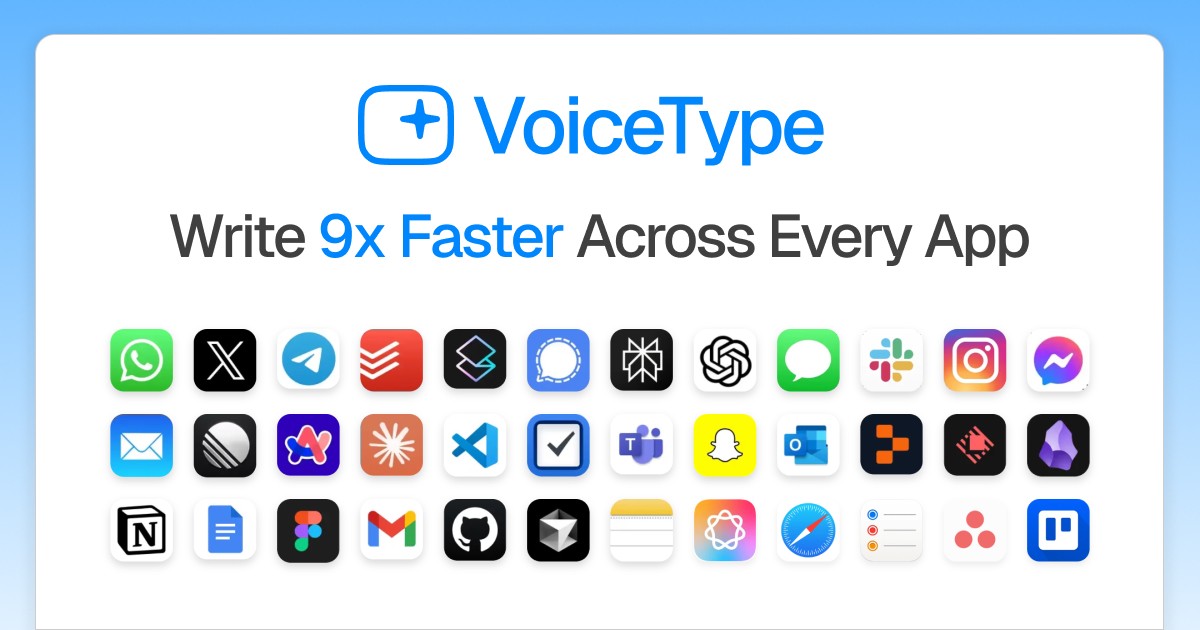
VoiceType operates as a system-level application that intercepts microphone input and converts it into text strings, which are then injected into whatever text field is currently active on the user’s computer. Unlike browser extensions that only function within specific web applications, this tool runs in the background of the operating system. When a user presses a designated hotkey, the software begins recording audio. Once the user finishes speaking and releases the key, the audio is processed through an AI speech-to-text model, and the resulting transcription appears exactly where the cursor is placed. This mechanism allows it to function across email clients, Excel spreadsheets, Word documents, and specialized real estate software like Argus or Yardi without requiring direct API connections.
The underlying mechanics rely on standard large language model transcription capabilities rather than a bespoke commercial real estate dictionary. This means the software uses contextual clues to determine spelling and punctuation, automatically formatting sentences and applying capitalization based on general language patterns. Users do not need to dictate punctuation marks explicitly, as the AI infers structure from pauses and vocal inflection. However, because the model is general-purpose, our analysis suggests it may occasionally misinterpret niche property terms or specific local market street names unless the context makes the intended word mathematically or grammatically obvious.
Beyond basic transcription, the tool acts as a passive input replacement rather than an active analytical assistant. It does not read the existing text on the screen, nor does it summarize documents, extract data from lease agreements, or generate financial models. The scope of functionality is strictly limited to converting spoken audio into typed characters. For a commercial real estate analyst returning from a site visit, this means they can open their CRM, press the activation key, and speak their observations directly into the client record, bypassing the need to type out lengthy paragraphs manually.
9AI Framework: the score, dimension by dimension
CRE Relevance: 3/10
VoiceType contains zero proprietary commercial real estate data, market analytics, or specialized property models. As a Tier 2 CRE-Adjacent tool, it is entirely agnostic to the industry in which it is used. The software does not recognize the difference between a multifamily rent roll and a grocery shopping list, as its sole function is phonetic transcription and basic grammatical formatting. Consequently, it offers no built-in templates for investment memos, no integrations with property databases, and no specialized vocabulary training for terms like triple-net lease or capitalization rate. Buyers seeking a platform that understands real estate fundamentals will find this utility entirely lacking in domain expertise. In practice: The tool functions purely as a mechanical typing substitute rather than a knowledgeable real estate assistant.
Data Quality and Sources: 5/10
Because VoiceType is an input mechanism rather than a database or analytical engine, traditional metrics of data quality do not directly apply. The tool does not source, store, or provide market data, rent comps, or demographic information. The data it handles consists entirely of the audio input provided by the user and the text output generated by its transcription model. Our analysis indicates that the quality of this output relies heavily on the user’s microphone hardware, speaking clarity, and background noise levels. While the underlying AI model applies standard grammatical corrections, it cannot verify the factual accuracy of the dictated information. In practice: Analysts must remember that the software will accurately transcribe a mathematically incorrect rent calculation without offering any warnings or corrections.
Ease of Adoption: 9/10
The implementation process for VoiceType is exceptionally straightforward, requiring minimal technical expertise from the end user. Because the software operates as a standalone desktop utility, there is no need for complex API configurations, database mapping, or lengthy onboarding sessions with IT departments. Users simply download the application, install it on their operating system, grant microphone permissions, and memorize the activation hotkey. The learning curve is essentially flat, as the interface consists primarily of a recording indicator rather than a complex dashboard. Training requirements for commercial real estate teams are negligible, allowing principals and analysts to begin using the tool immediately after installation. In practice: A brokerage team can deploy this software across all their workstations in under ten minutes with zero formal training required.
Output Accuracy: 7/10
The transcription accuracy of VoiceType aligns with contemporary AI speech-to-text standards, effectively handling casual speech, pauses, and self-corrections. The model uses contextual awareness to format sentences logically, inserting commas and periods where appropriate without requiring explicit verbal commands. However, because it lacks a specialized commercial real estate dictionary, our analysis notes that it can struggle with niche industry jargon, specific architectural terms, or unusual local street names. When dictating complex financial structures or highly specific lease clauses, users may need to manually correct homophones or misinterpreted acronyms. The accuracy degrades predictably in noisy environments like active construction sites or crowded coffee shops. In practice: Users will spend less time typing but must still allocate time to proofread outputs for industry-specific terminology errors.
Integration and Workflow Fit: 8/10
VoiceType bypasses traditional software integration challenges by operating at the operating system level rather than connecting through APIs. By simulating keyboard input, the tool is universally compatible with any application that accepts text. Whether a commercial real estate analyst is typing an email in Outlook, entering data into a specialized Argus cash flow model, or updating a client record in Salesforce, the dictation functions identically. This universal compatibility eliminates the need for custom development or third-party integration platforms. However, this also means the tool cannot perform deep, bi-directional data exchanges or trigger automated workflows within those applications. It strictly pushes text to the active cursor location. In practice: The software works with your entire existing technology stack because it simply mimics a physical keyboard.
Pricing Transparency: 9/10
The vendor maintains clear and accessible pricing information on their website, offering a straightforward subscription model. Following a free trial period, VoiceType costs approximately $13 per month per user. This published rate eliminates the need for drawn-out sales negotiations or custom enterprise quoting for basic deployment. There are no hidden implementation fees, required training packages, or complex tiered structures based on usage volume or feature access. For commercial real estate firms evaluating the software, the financial commitment is highly predictable and easily modeled into annual technology budgets. The low price point positions it as a low-risk utility rather than a major capital expenditure. In practice: Buyers can calculate their exact annual cost by simply multiplying their headcount by the published monthly subscription rate.
Support and Reliability: 5/10
As a relatively small and unproven startup, VoiceType offers limited enterprise-grade support infrastructure. The company does not provide dedicated account managers, 24/7 phone support, or guaranteed service level agreements for uptime. Support is primarily handled through asynchronous channels such as email or web forms, which may result in delayed response times for critical issues. While the simplicity of the application means that technical failures are rare, any bugs introduced by operating system updates could temporarily disrupt workflows until a patch is released. Commercial real estate firms accustomed to the high-touch support models of established enterprise vendors will find this self-serve approach lacking. In practice: Users should expect to rely on basic documentation and email ticketing rather than immediate technical assistance if the software malfunctions.
Innovation and Roadmap: 4/10
The development trajectory for VoiceType remains narrow, focusing strictly on incremental improvements to transcription speed and accuracy. The vendor has not published a comprehensive roadmap indicating plans to introduce commercial real estate-specific features, document summarization, or deep workflow automations. As a general utility, future updates will likely mirror broad advancements in foundational speech-to-text models rather than addressing the specialized needs of property professionals. The company operates in a highly competitive space where major operating systems are rapidly integrating similar AI dictation capabilities directly into their native environments. This raises questions about the long-term viability and differentiation of a standalone dictation application. In practice: Buyers should purchase the tool for its current capabilities rather than expecting future updates tailored to commercial real estate workflows.
Market Reputation: 5/10
Within the commercial real estate sector, VoiceType has virtually no established market presence or brand recognition. As an unproven startup in the broader AI utility space, it lacks the extensive case studies, enterprise client rosters, and industry testimonials typical of entrenched technology vendors. While early adopters in general productivity circles report satisfactory performance for basic dictation tasks, the tool has not been rigorously vetted by large institutional brokerages or property management firms. It competes against built-in operating system tools and more comprehensive AI assistants like Conduit or Manus, which scored 87 in our framework. The lack of a proven track record requires buyers to assume a degree of vendor risk. In practice: The company remains an unknown entity for institutional real estate technology buyers.
Who should use VoiceType
VoiceType is best suited for individuals who generate large volumes of written text and prefer speaking over typing. It serves as a practical utility for specific operational roles.
Brokers who need to draft lengthy property tour follow-up emails immediately after returning to their vehicles or desks.
Property managers who document extensive maintenance notes and tenant interactions into their management systems.
Acquisitions analysts who prefer to dictate their initial thoughts and qualitative observations into investment memos.
Executives who want to quickly dictate internal communications without navigating complex AI interfaces.
Who should look elsewhere
Professionals seeking analytical assistance or deep workflow automation will find this tool entirely unsuited to their needs. It is not an analytical engine.
Financial analysts looking for AI to extract data from rent rolls or automate Argus cash flow modeling.
Firms requiring a platform trained specifically on commercial real estate vocabulary and legal lease terminology.
Enterprise technology buyers who mandate SOC-2 compliance, dedicated account managers, and guaranteed service level agreements.
Users who already successfully utilize the native dictation features built into Windows or macOS.
Pricing and ROI
VoiceType operates on a highly transparent and accessible pricing model, offering a free trial followed by a monthly subscription of approximately $13 per user. The vendor does not publish complex enterprise tiers, implementation fees, or mandatory training costs, making the financial commitment entirely predictable. This straightforward approach allows commercial real estate firms to bypass lengthy procurement negotiations and deploy the tool via standard corporate credit card expenses.
When evaluating the return on investment, the math relies entirely on time saved during data entry and drafting tasks. For a commercial real estate broker earning $150,000 annually, their time is valued at roughly $75 per hour. If using VoiceType saves just 15 minutes of typing per week, whether drafting tour notes, logging CRM updates, or composing emails, the software recovers approximately $18.75 in weekly productivity value, or $75 per month. This easily justifies the $13 monthly subscription fee. However, our analysis suggests buyers must weigh this hard cost against the free dictation alternatives already present in modern operating systems. The true ROI depends on whether VoiceType’s AI-driven formatting and accuracy save enough editing time to warrant a separate software subscription.
Integration and CRE tech stack fit
VoiceType approaches integration by avoiding it entirely. Because the software operates as a system-level utility that mimics physical keyboard input, it does not require APIs, webhooks, or native plugins to function within a commercial real estate technology stack. Whether a firm uses Yardi, RealPage, VTS, or a proprietary Salesforce build, VoiceType will push text into any active field where a cursor is placed. This universal compatibility means IT departments do not need to configure data mapping or manage complex software handshakes.
However, this mechanical approach means the tool sits entirely outside the structural logic of the CRE tech stack. It cannot read data from a CRM to provide context, it cannot trigger automated workflows in a project management tool, and it cannot pull property metrics from a database to insert into an email. It is strictly a one-way street: audio in, text out. For firms seeking deep, bi-directional integrations where AI actively interacts with property data, VoiceType will not suffice. It remains a superficial layer that simply replaces the physical act of typing across existing applications.
Competitive landscape
The competitive landscape for VoiceType is divided between native operating system utilities and more comprehensive AI assistants. At the most basic level, the tool competes directly with the built-in dictation features provided by Apple’s macOS and Microsoft Windows. These native tools are free, already installed, and increasingly utilize advanced speech-to-text algorithms, making it difficult for a paid third-party utility to differentiate itself solely on transcription accuracy.
Within the broader AI ecosystem, VoiceType faces pressure from general-purpose AI platforms that offer dictation alongside deeper functionality. While it does not compete directly with specialized development environments like Cursor (which scored 90 in our framework) or Replit (88), it does compete for the limited attention span of users adopting AI. Tools like Agentforce (88) and Conduit (87) provide more complex workflow automations that go far beyond simple text input. Furthermore, specialized commercial real estate AI platforms are beginning to incorporate voice-to-text capabilities directly into their mobile applications, allowing brokers to dictate notes that are automatically categorized and mapped to specific property records.
Our analysis indicates that VoiceType occupies a shrinking middle ground. It is more capable at formatting casual speech than older dictation software, but it lacks the contextual awareness and workflow integration of modern AI copilots. Buyers must decide if a standalone dictation utility provides enough isolated value compared to the free tools they already own or the comprehensive platforms they are likely to adopt.
The bottom line
VoiceType delivers exactly what it promises: a functional, system-wide dictation utility that turns speech into text wherever your cursor is placed. However, for commercial real estate professionals, it is ultimately a convenience tool rather than a strategic asset. The $13 monthly price point is negligible, but the lack of domain-specific vocabulary training and the absence of deep workflow integrations severely limit its ceiling. Firms should not view this as an AI investment, but rather as an ergonomic keyboard alternative for employees who prefer speaking over typing. If your brokers are losing hours each week manually typing tour notes into a CRM, VoiceType offers a cheap, immediate fix. For firms looking to fundamentally improve their analytical capabilities or automate complex property management workflows, this software provides no value. Purchase it for individual high-volume communicators, but do not mistake it for a commercial real estate AI platform.
Frequently asked questions
Does VoiceType integrate directly with Yardi or VTS?
No. VoiceType does not have direct API integrations with any commercial real estate software. It functions by mimicking keyboard input, meaning it will type text into Yardi or VTS wherever you place your cursor, but it cannot read or sync data.
Can the tool understand commercial real estate acronyms like WALT or NOI?
VoiceType uses a general-purpose language model and lacks specialized commercial real estate vocabulary training. While it may guess correctly based on context, users will frequently need to manually correct niche industry acronyms and local market street names.
Is there a free version of VoiceType available?
The vendor offers a free trial period for users to test the software. After the trial expires, continued use requires a paid subscription, which is currently published at approximately $13 per month.
Does VoiceType work on mobile devices for property tours?
The primary application is designed as a desktop utility for operating systems. Users looking for mobile dictation during property tours typically rely on the native voice-to-text features built into their iOS or Android devices.
Can VoiceType summarize my lease documents or investment memos?
No. The software is strictly a speech-to-text dictation tool. It does not read existing text on your screen, analyze documents, or generate summaries. It only converts your spoken words into typed characters.
How does this compare to Windows or Mac built-in dictation?
VoiceType uses advanced AI models that often provide better automatic punctuation and formatting than older native dictation tools. However, buyers must test the free trial to determine if the marginal improvement justifies the $13 monthly subscription cost.
Related Reviews
Compare VoiceType with other AI Assistants & Copilots tools BestCRE has scored: Google Gemini (84/100), Grammarly (83/100), Copilot in Word (71/100) and Nurture Boss (70/100). Browse every review in CRE AI Assistants & Copilots, the full Best CRE AI Tools directory, or the 20 CRE Sectors hub.