AppWork is maintenance management software built primarily for multifamily owners, operators, property managers and service technicians. It changes the workflow between a resident reporting a problem and an operator confirming that the work was completed properly. Instead of treating maintenance as a basic queue inside a broader property management system, AppWork gives the function its own operating layer, covering work orders, scheduling, technician activity, communication, parts, inspections and reporting.
The product is CRE adjacent rather than a general commercial property platform. Its strongest fit is conventional multifamily, where recurring service requests, apartment turns and resident satisfaction create measurable operating pressure. Owners of office, industrial, retail or hospitality assets may recognize parts of the workflow, but AppWork’s language, feature design and integrations clearly center apartment operations. That specialization is useful when maintenance is a strategic concern, but it narrows the addressable buyer group.
AppWork’s main argument is that operators need more than digital work orders. The platform combines operational controls with technician scorecards, ratings, badges, contests and coin based incentives. It also provides dashboards, heat maps and automated insight reports intended to identify recurring issues and performance differences across properties. Its AI layer analyzes submitted requests and presents technicians with suggested actions, while the acquisition of Paraspot AI points toward deeper automation of maintenance intelligence.
BestCRE’s analysis is that AppWork is a credible specialist for operators whose existing property management system does not provide enough maintenance depth. Its feature coverage is broader than a narrow dispatch product, particularly around make ready work, compliance and technician engagement. The principal buying concerns are commercial rather than conceptual: pricing is not published, measurable AI accuracy is not disclosed, and public information does not establish the scale of its customer base. Buyers should test those points with their own work orders before committing.
What Appwork Does and How It Works
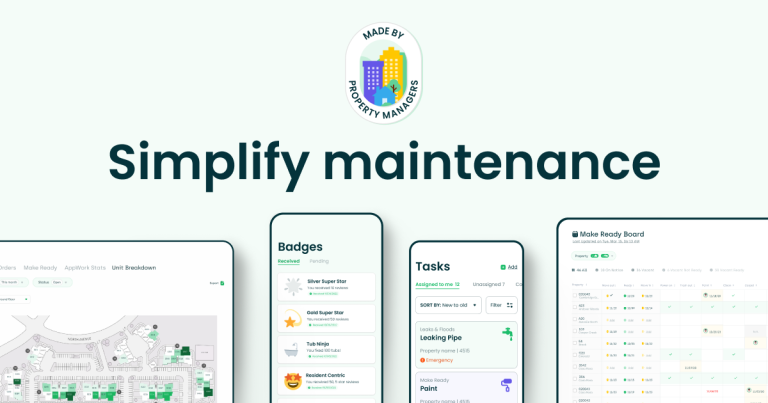
AppWork receives and organizes maintenance requests, then gives managers and technicians role specific views of the resulting work. The technician task page presents color coded assignments for work orders, inspections and make ready activity. Managers can define priorities, schedule work, assign technicians or vendors, communicate with residents and monitor completion. Bulk actions and automatic assignment can reduce repetitive administration. An offline mode supports field work where connectivity is unreliable, while translation from English to Spanish can help mixed language maintenance teams operate from the same request record.
Unit turns receive a dedicated Make Ready Board rather than being treated as ordinary tickets. Operators can configure stages, tasks, assignments and costs, then review the process through boards, calendars or maps. Property management system synchronization is intended to keep occupancy and unit status aligned with field progress. Elsewhere, the platform handles assets, inventory, parts, purchase orders, on call tracking, inspections, incident reports, refrigerant records, preventive maintenance and site checklists. A unit heat map helps managers see concentrations of open work, resident issues and maintenance demand across a property.
The reporting layer converts activity into dashboards, detailed reports and daily AI generated observations. AppWork Intelligence analyzes the language of a new request and offers actionable guidance to the assigned technician. Performance features add resident ratings, technician badges, leaderboards and coin based recognition. BestCRE’s analysis is that this combination can make maintenance data more operationally useful, especially across a portfolio where regional leaders cannot inspect every ticket. However, the vendor does not publish benchmark accuracy, model evaluation methods or independently validated productivity results. Buyers should therefore treat recommendations and insight reports as decision support, verify outputs against source records and define escalation rules for safety, compliance and high cost repairs.
9AI Framework: Dimension by Dimension Analysis
CRE Relevance: 9/10
AppWork earns a 9 for CRE relevance because it is designed around recurring operational work inside multifamily properties. Work orders, apartment turns, preventive maintenance, inspections, refrigerant records, incident reports, technician scheduling and resident communication are direct property operations functions. The Make Ready Board and unit heat map show particularly close alignment with apartment workflows rather than generic field service management. Role specific positioning for owners, regional managers, property managers, maintenance supervisors, technicians and risk personnel reinforces that fit. The deduction reflects its narrowness across the broader CRE market. Office, retail, industrial and hospitality operators may find useful capabilities, but the product is not presented as a comprehensive solution for those asset classes. BestCRE’s analysis is that multifamily buyers should treat AppWork as purpose built, while diversified owners should verify support for every property type before standardizing.
Data Quality and Sources: 7/10
AppWork scores 7 for data quality. The platform collects structured operational records across work orders, turns, inspections, assets, inventory, purchases, technician activity, ratings and compliance logs. Centralizing those records can create a more coherent maintenance history than spreadsheets, email and disconnected property system notes. Data integrity features and property management system synchronization also address common sources of inconsistency. The limiting factor is that input quality still depends on residents, managers and technicians recording requests, labor, parts and completion details correctly. AI analysis cannot repair every incomplete description or incorrect status. The vendor does not publish detailed information about data validation rates, duplicate handling or the methodology behind its generated insights. BestCRE’s analysis is that buyers should evaluate required fields, audit trails, identity matching and synchronization behavior with real portfolio data, particularly when financial approvals or compliance records depend on accurate entries.
Ease of Adoption: 8/10
AppWork scores 8 for ease of adoption because its workflow appears designed for the people who perform and supervise maintenance rather than only for corporate analysts. Color coded technician tasks, swipe based updates, configurable make ready boards, bulk actions and mobile access can reduce training friction. Spanish translation and offline access are practical additions for distributed field teams. The company also advertises unlimited support, free training and an in person launch, although buyers should confirm contractual scope and availability. Gamification may improve participation where technicians respond well to recognition, but it can also create resistance if scoring criteria feel arbitrary or encourage fast closure over complete resolution. BestCRE’s analysis is that implementation success will depend less on basic navigation and more on process design. Operators should standardize priorities, completion rules, escalation paths and rating policies before deployment, then test them with both experienced technicians and site managers.
Output Accuracy: 6/10
AppWork receives 6 for output accuracy. Its conventional outputs, including task status, schedules, unit turn stages and inventory records, should be traceable to user actions and synchronized source data. The more consequential uncertainty concerns AI generated tips and daily insights. AppWork says its intelligence layer analyzes maintenance requests and gives technicians actionable suggestions, but it does not publish accuracy rates, testing methods, confidence indicators or independent validation. A vague resident description can also produce weak guidance even when the underlying model behaves as designed. BestCRE’s analysis is that AI suggestions may accelerate diagnosis for routine issues, but they should not replace technical judgment, safety procedures or licensed trade requirements. During evaluation, buyers should use a representative set of completed work orders, compare suggestions with known resolutions and record false or incomplete recommendations. They should also confirm whether managers can review, suppress or audit automated guidance.
Integration and Workflow Fit: 7/10
AppWork scores 7 for integration. Publicly identified connections with Entrata and AppFolio place the product alongside two important multifamily property management environments. Make ready synchronization can reduce duplicate updates between unit status records and maintenance execution, while an Engrain mapping option adds a visual property layer. This is meaningful because a specialist maintenance platform succeeds only when property, resident, unit and work order data move reliably across systems. The score stops short of the top tier because the complete integration catalog, supported objects, synchronization frequency, error handling and application programming interface terms are not fully published. BestCRE’s analysis is that buyers should request a field level integration map, not settle for a partner logo. They should test new requests, status changes, resident messages, unit turns, vendor records and closed work orders in both directions, then establish which system controls each field when records conflict.
Pricing Transparency: 3/10
AppWork scores 3 for pricing transparency because the vendor does not publish subscription prices, implementation fees, contract minimums or a standard packaging structure. Prospective buyers are directed toward a demonstration and sales conversation. That approach may allow pricing to reflect portfolio size and selected modules, but it makes early comparison difficult for operators building a shortlist. It also leaves unanswered whether training, integrations, data migration, premium support, mapping, AI functions or future modules carry separate charges. BestCRE’s analysis is that buyers should require a written total cost schedule covering implementation and the full initial contract term. The proposal should identify pricing units, minimum property or unit commitments, renewal increases, setup work, integration charges, support entitlements, data export costs and termination assistance. A useful comparison should normalize each proposal to cost per managed unit per month and include internal implementation labor.
Support and Reliability: 7/10
AppWork scores 7 for support. The company publicly promotes unlimited support, free training and in person launch assistance, which addresses the operational reality that technicians and site teams need more than documentation during rollout. A knowledge base, webinars, events and The Maintenance Academy add self service and educational options. These resources can help standardize terminology and reinforce adoption across a portfolio. Still, public claims do not establish response time commitments, support hours, severity definitions, dedicated account coverage or remedies when service levels are missed. Unlimited access also does not necessarily mean immediate resolution. BestCRE’s analysis is that buyers should convert broad support promises into contract language. They should confirm onboarding responsibilities, weekend coverage, escalation contacts, administrator training, turnover training and support for technicians who lack corporate email accounts. References from operators with a similar property count and staffing model would provide stronger evidence than general satisfaction ratings alone.
Innovation and Roadmap: 8/10
AppWork scores 8 for innovation because it combines several ideas that are uncommon in basic property management maintenance modules. AI generated technician guidance, daily insight reports, work order heat maps, configurable turn boards and performance gamification form a coherent operational layer rather than isolated features. The acquisition of Paraspot AI suggests continued investment in automated analysis. Badges, ratings, leaderboards and recognition programs also address technician behavior and retention, subjects that conventional ticketing products often ignore. Innovation does not automatically prove operational value, however. Incentive systems can distort behavior if teams optimize for coins, ratings or closure speed instead of durable repairs. AI suggestions require monitoring, and visual dashboards are only useful when the underlying data is complete. BestCRE’s analysis is that AppWork deserves credit for treating maintenance as both a data problem and a workforce problem. Buyers should nevertheless attach each advanced feature to a measurable operating objective.
Market Reputation: 6/10
AppWork scores 6 for market reputation. The company displays favorable ratings from G2, Google and the App Store, publishes customer stories and points to industry recognition. It also quotes an executive from Atlantic Pacific Companies, giving buyers at least one identifiable operator reference. The announced addition of $7 million to a prior $13 million raise indicates investor backing, but funding does not demonstrate product performance or customer retention. The vendor does not publish a verified customer count, managed unit total, renewal rate or independently audited outcome data. That limited public scale evidence caps the score. BestCRE’s analysis is that AppWork has enough visible market activity to merit a serious evaluation, particularly in multifamily maintenance, but it has not yet established the breadth of reputation associated with larger property technology platforms. Buyers should request current references matching their portfolio size, property class, property system and geographic footprint.
Who Should Use Appwork
AppWork is best suited to multifamily owners and third party managers that view maintenance as a portfolio operating discipline rather than a basic ticket queue. Regional maintenance leaders, vice presidents of operations and property managers should consider it when they need consistent work order priorities, clearer technician accountability, faster unit turns and comparable reporting across sites. It is especially relevant when Entrata or AppFolio remains the system of record but its native maintenance workflow does not provide enough field detail, visual management or performance analysis.
The strongest buyer has multiple properties, a meaningful in house maintenance workforce and enough recurring activity to benefit from standardized data. Operators experiencing inconsistent resident communication, slow turns, missing parts records or weak preventive maintenance controls have concrete use cases to test. Risk and facilities leaders may also value incident reporting, inspections, refrigerant logs and compliance workflows. BestCRE’s analysis is that buyers should appoint one operational owner and involve technicians early. AppWork will create more value when the organization is willing to define common processes, review performance data and act on exceptions.
Who Should Not Use Appwork
Small landlords with limited maintenance volume may not need a dedicated operating layer. If a few staff members can manage requests effectively inside their existing property management system, AppWork could introduce extra administration and another vendor relationship without enough incremental value. Buyers seeking transparent self service pricing may also find the sales led process frustrating. The vendor does not publish standard plans, so a budget comparison requires direct engagement.
Diversified CRE firms should be cautious if multifamily represents only a small part of the portfolio. AppWork is not positioned as a broad facilities platform for office towers, industrial campuses, retail centers or hospitality assets. Organizations needing advanced building automation, energy management or construction project controls should evaluate products designed for those requirements. BestCRE’s analysis is also that operators unwilling to govern technician metrics should avoid deploying gamification. Poorly designed incentives can reward quick closures, create disputes and undermine trust in otherwise useful performance data.
Pricing and ROI Analysis
AppWork does not publish subscription pricing, package limits, implementation charges or contract minimums. Buyers need to request a demonstration and proposal. The absence of public pricing makes it impossible to determine whether the platform is economical for a particular unit count without direct vendor input. A complete quote should separate recurring software charges from migration, configuration, integrations, training, mapping and premium service. Buyers should also ask whether AI analysis, resident communication, compliance functions and gamification are included or sold as additional modules.
Analysis: calculate ROI using verified changes in labor and vacancy time, not general efficiency claims. For example, multiply monthly maintenance requests by minutes saved per request, then multiply the result by the fully loaded hourly labor cost. Add the contribution from faster turns by multiplying days removed from vacancy by the property’s daily effective rent, using only turns where AppWork affected the critical path. Subtract subscription, implementation and internal administration costs. Run conservative, expected and optimistic cases, then require the conservative case to clear the operator’s payback threshold. Do not include resident retention savings unless the organization can connect maintenance performance to measured renewal behavior.
Integration and CRE Tech Stack Fit
AppWork’s published integrations with Entrata and AppFolio give it a credible position beside widely used multifamily property systems. The practical value is reduced duplicate entry across residents, units, work orders and make ready status. Engrain mapping can add spatial context to turn and maintenance activity. Operators should confirm the exact integration available for their edition and contract, since a listed partnership does not establish that every object, workflow or update direction is supported.
BestCRE’s analysis is that implementation should begin with clear system ownership. The property management system will usually remain authoritative for resident, lease and unit records, while AppWork controls maintenance execution and technician activity. Buyers should document field mappings, synchronization timing, failure alerts, duplicate handling and access permissions. They should also test historical imports and data exports before signing. If the portfolio uses another property system, the buyer should request written confirmation of connector availability, technical scope, implementation responsibility and any added cost rather than assuming an open interface will cover the requirement.
Competitive Landscape
Property Meld is the clearest alternative for multifamily operators focused on maintenance coordination and resident communication. Buyers should compare dispatch logic, scheduling, vendor participation, resident updates and property system connectivity. HappyCo offers a broader operations perspective with inspections, property condition workflows and asset management capabilities, making it relevant when maintenance is part of a wider field operations program. Visitt is another option for teams seeking property operations, preventive maintenance, inspections and communication across different commercial asset types.
AppWork distinguishes itself through the combination of technician workflow, make ready management, AI guidance, analytics and gamified performance. That combination is attractive for operators managing an in house apartment maintenance workforce. Property Meld may be stronger for buyers centering the procurement on maintenance coordination. HappyCo may suit organizations that want inspections and property condition management within a larger operating platform. Visitt may deserve preference when a portfolio extends well beyond multifamily.
Broader systems such as Entrata and AppFolio should also remain in the comparison even when they already feed AppWork. Their native maintenance functions may be sufficient, avoiding another implementation and subscription. BestCRE’s analysis is that AppWork should win only when a controlled pilot demonstrates better turn visibility, technician adoption, resident communication or portfolio analysis than the incumbent system. Feature volume alone is not a persuasive reason to add another application.
The Bottom Line
AppWork belongs on the shortlist for multifamily operators with enough maintenance volume to justify a specialist platform. Its work order controls, make ready boards, field tools, compliance records, analytics and technician incentives address real operating problems. The product is particularly compelling when the existing property system captures requests but does not give regional leaders enough visibility or give technicians an effective daily workspace.
Proceed through a measured pilot, not an enterprise commitment based only on a demonstration. Use representative properties, integrate the actual property system and test both routine and high risk requests. Establish baseline turn time, completion quality, resident communication and administrative effort before launch. Require transparent total cost, reference calls and evidence that synchronized records remain accurate. BestCRE’s analysis is that AppWork is a strong specialist with meaningful potential, but its undisclosed pricing and unverified AI accuracy make operational proof essential.
About BestCRE
BestCRE.com is the definitive authority on commercial real estate AI, analysis, and investment intelligence. Every article advances the platform’s mission to help CRE professionals identify, evaluate, and adopt the best tools and strategies in the industry. We benchmark platforms using the 9AI Framework so CRE leaders can compare tools with clear evidence. Explore the category map at 20 CRE sectors for deeper coverage across the CRE stack.
Frequently Asked Questions
What is AppWork multifamily maintenance software?
AppWork is a maintenance management platform designed primarily for multifamily owners, managers and technicians. It centralizes work orders, scheduling, resident communication, apartment turns, inspections, assets, inventory, purchase orders, preventive maintenance and compliance records. Technicians receive mobile task views, while managers can use dashboards, reports and heat maps to monitor property conditions and team performance. The platform also includes ratings, badges, leaderboards and coin based recognition intended to motivate maintenance staff. AppWork Intelligence analyzes submitted requests and presents technicians with suggested actions. It is not a complete property management or accounting system. Instead, it operates as a specialist maintenance layer that can connect with property systems such as Entrata and AppFolio.
How does AppWork compare with Property Meld and HappyCo?
AppWork, Property Meld and HappyCo overlap, but their emphasis differs. AppWork combines work order execution, make ready management, technician performance, compliance records, analytics and AI generated guidance in a multifamily focused platform. Property Meld is a direct comparison for maintenance coordination, scheduling and communication among residents, managers, technicians and vendors. HappyCo is relevant when a buyer wants maintenance alongside inspections, property condition assessment and broader field operations. BestCRE’s analysis is that AppWork deserves preference when technician engagement, turn boards and maintenance intelligence are central requirements. Buyers should still conduct the same scripted workflow in each product, using real requests and actual integration requirements. The best choice depends on portfolio type, operating model, incumbent property system and the quality of each proposed implementation.
How much does AppWork cost?
AppWork does not publish standard subscription prices, implementation fees or contract minimums. A buyer must contact the company for a demonstration and proposal. That means public information is insufficient to calculate a reliable per unit cost or compare plans. Request a written schedule covering recurring software, configuration, data migration, integrations, training, support, mapping, AI functions, renewal increases and termination assistance. Analysis: estimate value by multiplying time saved across monthly maintenance requests by fully loaded labor cost, then add measurable income preserved through faster apartment turns. Subtract all vendor fees and internal implementation labor. Use conservative assumptions and exclude resident retention benefits unless the operator has evidence connecting maintenance improvements to renewals. Compare proposals using the same contract period and managed unit count.
Who should use AppWork?
AppWork best suits multifamily owners, third party managers and regional operations teams with enough maintenance activity to require standardized workflows and portfolio reporting. It is particularly relevant for organizations with in house technicians, recurring apartment turns, preventive maintenance obligations and inconsistent practices across properties. Entrata and AppFolio users may benefit when their property system remains the source of resident and unit data but does not provide sufficient maintenance depth. Smaller landlords with low request volume may be adequately served by existing property management software. Office, industrial, retail and hospitality operators should verify asset class fit because AppWork is centered on multifamily. BestCRE’s analysis is that the ideal buyer has an executive sponsor, an operational process owner and technicians willing to participate in configuration and pilot testing.
What should buyers expect next from AppWork AI?
AppWork is likely to continue expanding automated request analysis, technician guidance and operational insights, particularly following its acquisition of Paraspot AI. That direction is an inference, not a published product commitment. Buyers should ask for a current roadmap but avoid purchasing solely for promised features. The important forward looking questions concern governance: how recommendations are tested, whether confidence is shown, how managers review guidance, what data trains or improves the system, and how customer information is protected. Operators should also ask whether future AI features will be included in existing subscriptions or priced separately. BestCRE’s analysis is that the most valuable progress would be measurable improvement in diagnosis, assignment, preventive action and turn planning, supported by audit trails and customer controlled rules rather than additional generated text alone.
Related Reviews
Compare Appwork with other tools BestCRE has scored in the same category: DoorLoop, Entrata, Moved. Explore more CRE AI tool reviews in our Best CRE AI Tools directory. For sector-specific analysis and market intelligence, visit our 20 CRE Sectors hub.