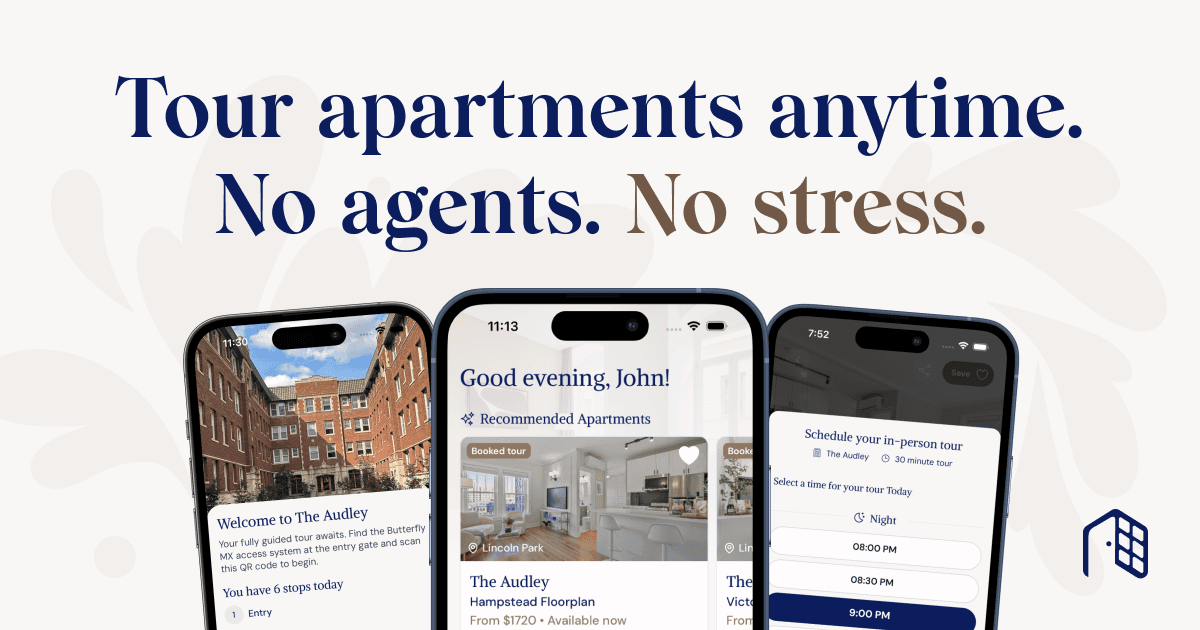
Aigentless is an artificial intelligence automated leasing platform designed specifically for the multifamily commercial real estate sector, enabling prospective renters to conduct unaccompanied, self-guided property tours. Founded in Chicago in 2024, the company provides a mobile application that guides prospects through physical spaces while simultaneously capturing renter insights and answering property-specific questions without requiring a human leasing agent on site. According to the BestCRE master database, the primary use case is serving as an AI automated leasing platform for multifamily operators, filling the gap between purely virtual tours and fully staffed physical walkthroughs. In late 2025, Cardinal Group Companies selected Aigentless as the exclusive provider of self-guided tours across its national student housing portfolio, signaling early institutional adoption.
The platform operates at the intersection of property technology and marketing, aiming to reduce the overhead costs associated with traditional leasing operations. By utilizing a mobile application interface, prospective tenants can schedule and execute tours at their convenience, unlocking doors and accessing community amenities through digital integrations. While other tools in the CRE marketing category focus on content generation or virtual spatial mapping—such as Matterport, which earned a BestCRE score of 92—Aigentless focuses strictly on the physical, in-person leasing journey. The system captures data during the tour, logging prospect preferences and engagement levels to inform follow-up strategies for the property management team. This review evaluates the platform’s utility for multifamily principals and analysts assessing automated leasing solutions in August 2026.
What Aigentless does and how it works
Aigentless functions as a digital leasing agent that facilitates in-person, self-guided tours for multifamily communities. The core mechanic relies on a consumer-facing mobile application that prospective renters download to their smartphones. When a prospect arrives at a property, the application utilizes location services and integrated access control systems to grant entry to the building, specific amenity spaces, and the model or vacant units. The software supports both digital entry systems and traditional lockboxes, ensuring compatibility across different asset classes and building ages.
During the tour, the artificial intelligence engine acts as an interactive guide. The application curates a personalized route through the property based on the prospect’s pre-tour questionnaire. As the user navigates the space, the AI provides contextual information about the unit features, building amenities, and neighborhood highlights. Renters can ask the application questions in real-time regarding pet policies, parking availability, or lease terms, and the system retrieves answers from the property’s specific knowledge base. This eliminates the delay typically associated with self-guided tours where prospects must wait to email or call a leasing office after leaving the property.
Simultaneously, the platform functions as a data collection tool for the property operator. The software tracks which areas of the property the prospect visited, how much time they spent in specific rooms, and the exact questions they asked the AI. This telemetry data is compiled into a renter insight profile and pushed directly into the property’s customer relationship management system. If the prospect is ready to proceed, the application provides a direct link to the online application portal, facilitating an immediate conversion opportunity while the buyer is still physically present on the property.
9AI Framework: the score, dimension by dimension
CRE Relevance: 9/10
Aigentless is entirely purpose-built for the commercial real estate industry, specifically targeting the multifamily and student housing sectors. Unlike generic chatbot applications or broad marketing tools, the platform’s architecture is designed around the physical realities of property leasing. It addresses a highly specific operational bottleneck: the cost and scheduling friction of agent-led property tours. The software understands CRE-specific concepts like floor plans, amenity access, lease terms, and fair housing compliance, ensuring that the artificial intelligence operates within the strict regulatory boundaries of real estate marketing. Because it is a CRE-Native platform, it does not require operators to train the base model on industry terminology or standard leasing practices. In practice: Multifamily operators receive a tool that speaks the language of property management immediately upon deployment, requiring only property-specific details to function.
Data Quality and Sources: 7/10
The platform generates proprietary data by tracking physical prospect movements and conversational inputs during the self-guided tour. The quality of this data is highly dependent on the user’s engagement with the mobile application. When prospects actively use the app to ask questions and navigate the space, the resulting telemetry provides excellent behavioral insights for the leasing team. However, the accuracy of the AI’s responses relies entirely on the quality of the property data fed into the system during onboarding. If the property management team fails to update pricing, availability, or policy changes in the central database, the AI will confidently provide outdated information to prospective renters. The system does not independently verify the physical status of the units. In practice: Analysts must ensure strict data hygiene within their property management systems to prevent the AI from quoting incorrect lease terms.
Ease of Adoption: 7/10
Implementing Aigentless requires significant physical and digital coordination, making it more complex than adopting standard software-as-a-service marketing tools. The deployment process involves mapping the property, configuring the AI knowledge base, and establishing hardware integrations for access control. While the software supports various entry methods, properties with legacy hardware may experience friction during the initial setup phase. On the consumer side, prospects must download a dedicated application from the Apple App Store or Google Play Store and complete a registration process before touring. This creates a slight barrier to entry compared to browser-based solutions, though the app interface itself is straightforward. Staff training is minimal, as the system is designed to operate autonomously. In practice: Deployment timelines will be dictated by the complexity of your building’s existing access control hardware and the cleanliness of your property data.
Output Accuracy: 8/10
The artificial intelligence engine is programmed to deliver specific, factual answers based on the property’s provided documentation. Because it operates in a highly regulated housing environment, the system is constrained to prevent hallucinations or the accidental creation of non-compliant policies. When queried about standard topics like square footage, utility billing, or pet fees, the output is highly accurate and consistent. However, if a prospect asks a highly nuanced or subjective question about the neighborhood or building culture, the AI may default to generic responses or direct the user to contact a human agent. The platform prioritizes safety and compliance over conversational creativity, which is the correct approach for commercial real estate applications. In practice: The AI functions exceptionally well as an interactive FAQ document but will gracefully fail to human staff for complex negotiation scenarios.
Integration and Workflow Fit: 9/10
Aigentless excels in its ability to connect with the established multifamily technology stack. The platform offers direct integrations with primary property management systems including Yardi, Entrata, and RealPage, ensuring that pricing and availability data remain synchronized. Furthermore, it connects with industry-standard customer relationship management tools such as Funnel, RentCafe, and Salesforce. This prevents the creation of data silos, as prospect information, tour completion status, and conversational logs are automatically pushed into the systems where leasing teams already work. The most critical integration point is access control, where the software communicates with smart lock providers to issue temporary digital credentials during the scheduled tour window. In practice: The software acts as a connective layer between your access hardware, your CRM, and your core accounting system without requiring manual data entry.
Pricing Transparency: 4/10
Aigentless operates with custom pricing, and the vendor does not publish standard subscription tiers or implementation fees on its public website. Buyers must engage with the sales team to receive a customized quote based on portfolio size, unit count, and specific hardware integration requirements. In the commercial real estate technology sector, this lack of transparency is common for enterprise deployments but frustrates analysts attempting to build preliminary financial models. The total cost of ownership will likely include a software licensing fee, an implementation charge for mapping the AI knowledge base, and potential hardware costs if the property requires upgraded access control mechanisms to facilitate unaccompanied entry. In practice: Buyers should demand a detailed breakdown of implementation fees versus recurring software costs before committing to a pilot program.
Support and Reliability: 6/10
As a startup founded in 2024, Aigentless is still establishing its long-term support infrastructure. The company provides standard email support and maintains a real-time status page for its services and infrastructure. While early institutional adopters like Cardinal Group Companies have successfully deployed the platform at scale, the vendor lacks the decades of historical uptime data associated with legacy CRE software providers. The reliance on physical access control means that support issues can immediately impact a prospect’s ability to enter a building, making rapid response times critical. Mobile application updates are pushed regularly, with recent patches deployed in July 2026 to address general improvements. In practice: Operators must establish clear internal protocols for handling prospects who experience technical difficulties accessing the property outside of standard business hours.
Innovation and Roadmap: 7/10
The company has demonstrated rapid iteration since its inception, moving quickly from concept to securing national portfolio partnerships by late 2025. The current trajectory focuses on deepening the artificial intelligence’s ability to handle complex conversational workflows and improving the telemetry data extracted from physical tours. Future development will likely center on expanding access control partnerships and refining the predictive analytics used to score prospect conversion probability based on tour behavior. While the vendor does not publish a public roadmap, their focus on the self-service leasing journey aligns with broader multifamily industry trends toward automation and decentralized property management. In practice: Buyers are investing in a specialized tool that will likely expand its AI capabilities to handle a larger percentage of the pre-lease communication funnel over the next two years.
Market Reputation: 6/10
Aigentless is currently classified as a Tier 2, CRE-Native vendor in the BestCRE database, reflecting its status as a newer entrant with growing traction. The platform gained significant credibility following its selection by Cardinal Group Companies as an exclusive provider for student housing self-guided tours. User reviews on the Apple App Store indicate that renters find the application easy to navigate, appreciating the ability to tour at their own pace without high-pressure sales tactics. However, the company does not yet possess the universal brand recognition of established marketing tools like Matterport (BestCRE Score: 92). The firm is actively building its reputation by targeting specific operational pain points in multifamily leasing. In practice: The vendor is highly motivated to ensure the success of early enterprise clients to solidify its position in the competitive proptech landscape.
Who should use Aigentless
Aigentless is engineered for operators who manage high-volume leasing environments and possess the technical infrastructure to support digital integrations.
- Multifamily operators managing large portfolios who want to reduce onsite leasing headcount while expanding available tour hours.
- Student housing managers dealing with massive seasonal leasing surges that overwhelm traditional leasing staff.
- Developers of new construction lease-ups seeking to capture prospect data and accelerate conversion rates through immediate, on-site application links.
- Asset managers looking to standardize the tour experience and gather objective data on prospect behavior across multiple properties.
Who should look elsewhere
The platform relies heavily on modern access control and standardized property data, making it unsuitable for certain asset classes and operational models.
- Owners of older, Class C properties lacking digital access control or the capital budget to install compatible smart lock hardware.
- Commercial office or industrial brokers, as the platform is strictly designed for residential leasing workflows.
- Boutique property managers who rely heavily on white-glove, relationship-based leasing and view automated tours as detrimental to their brand.
- Operators using legacy, on-premise accounting software that cannot integrate via API with modern cloud applications.
Pricing and ROI
Aigentless operates on a custom pricing model, and the vendor does not publish standard subscription tiers, per-unit costs, or implementation fees on its public website. Buyers must engage directly with the sales team to scope the deployment and receive a customized quote. In the commercial real estate technology sector, this approach is standard for enterprise-grade platforms that require deep integrations with existing property management systems and access control hardware.
When modeling the return on investment for Aigentless, analysts must calculate the fully burdened cost of their current leasing operations. The primary ROI driver is the reduction in human hours required to conduct physical property tours. If an average leasing agent spends 45 minutes conducting a tour and the property averages 40 tours per week, the platform can theoretically recover 30 hours of staff time weekly. This time can be reallocated to resident retention efforts or allow ownership to operate the building with a leaner onsite team. Additionally, operators must factor in the potential revenue lift from capturing leases outside of standard business hours, as prospects can tour on weekends or evenings when the leasing office is closed. Buyers should ensure they account for any necessary hardware upgrades to smart locks when calculating the total cost of deployment.
Integration and CRE tech stack fit
The technical architecture of Aigentless is expressly designed to sit within the existing multifamily software ecosystem. The platform requires a bidirectional flow of data to function correctly. It pulls real-time pricing, unit availability, and property details from core property management systems such as Yardi, Entrata, and RealPage. This ensures the artificial intelligence does not quote outdated rental rates during a self-guided tour. Simultaneously, the platform pushes prospect contact information, tour completion data, and conversational logs directly into customer relationship management platforms like Funnel, RentCafe, and Salesforce.
The most complex integration point involves physical access control. Aigentless must communicate with the building’s hardware to issue temporary digital keys or access codes to the prospect’s mobile device for the duration of the scheduled tour. While the vendor states compatibility with digital entry systems and traditional lockboxes, properties utilizing fragmented or proprietary access hardware may require custom API configuration. For operators with standardized tech stacks across their portfolios, the platform acts as a highly effective middleware layer, connecting physical access events with marketing data and core accounting records without requiring manual data entry from the leasing staff.
Competitive landscape
When evaluating Aigentless, buyers must distinguish between tools that virtualize the property and those that automate physical access. In the broader CRE Marketing category, Matterport (BestCRE Score: 92) remains the dominant force for spatial mapping and virtual tours. However, Matterport serves a different function; it allows prospects to view a digital twin of the property from their computer, whereas Aigentless facilitates actual, physical walkthroughs using AI as a guide.
For content generation and marketing copy, operators frequently utilize general-purpose AI tools such as Jasper AI (BestCRE Score: 89) or Copy.ai (BestCRE Score: 87). While these platforms excel at drafting property descriptions or email campaigns, they possess no CRE-specific data and cannot facilitate a physical leasing journey. Similarly, presentation software like Beautiful.ai (BestCRE Score: 89) is utilized for creating pitch decks and marketing collateral, but operates entirely outside the operational leasing funnel.
Direct competitors to Aigentless include established self-guided tour providers like Tour24 and Pynwheel. These platforms also offer unaccompanied physical access and integrate with major property management systems. The primary differentiator for Aigentless is its heavy reliance on an interactive artificial intelligence engine to answer prospect questions in real-time during the tour, attempting to replicate the conversational benefits of a human agent. Buyers might also consider custom application development using platforms like Glide Apps (BestCRE Score: 87) or Dan AI (BestCRE Score: 87) for basic chatbot functionality, though building a custom access-control integration from scratch would be highly inefficient compared to purchasing a purpose-built solution.
The bottom line
Aigentless delivers a highly specific solution for a distinct operational challenge: executing physical property tours without tying up onsite personnel. For institutional multifamily operators and student housing managers struggling with high tour volumes and staffing costs, the platform presents a compelling financial case. The integration depth with major PMS and CRM platforms ensures that data flows logically through the enterprise tech stack. However, the requirement for compatible access control hardware and the inherent complexities of custom pricing mean this is not a casual software purchase. It requires a committed operational shift toward self-service leasing. If your portfolio relies on older physical infrastructure or your brand identity is tied to high-touch, human-led leasing, this tool will introduce unnecessary friction. For modern, data-driven operators aiming to expand tour hours and capture behavioral insights, Aigentless is a highly effective, purpose-built acquisition.
Frequently asked questions
Does Aigentless require smart locks on every unit?
While digital access control provides the most secure and streamlined experience for prospective renters, the platform can also integrate with traditional lockboxes. However, managing physical keys introduces operational friction that diminishes the overall efficiency of an automated leasing system, making smart locks highly recommended.
Which property management systems integrate with the platform?
The software offers direct API integrations with industry-standard core property management systems, prominently including Yardi, Entrata, and RealPage. This connectivity ensures that the artificial intelligence always references accurate, real-time pricing and unit availability data when interacting with prospective renters during their physical tours.
How does the AI handle complex negotiation questions?
The artificial intelligence engine is strictly programmed for fair housing compliance and factual accuracy based on provided property documentation. If a prospect asks a highly nuanced question or attempts to negotiate lease terms, the system will gracefully fail and direct the user to contact a human leasing agent for resolution.
Do prospective renters have to download a mobile app?
Yes, prospective renters are required to download the dedicated Aigentless application from either the Apple App Store or Google Play Store. They must also complete a secure registration and identity verification process before the system will grant them physical access to the property for their scheduled self-guided tour.
Is this tool suitable for commercial office leasing?
No, this software is not designed for commercial office or industrial properties. The platform is specifically engineered for residential real estate, focusing entirely on the unique workflows, access control requirements, and fair housing compliance standards associated with multifamily communities and student housing operations.
How does the platform track prospect behavior?
The mobile application utilizes location services to track which specific areas of the property the user visits and calculates the duration spent in each room. Additionally, it logs all conversational questions asked to the AI, automatically pushing this comprehensive behavioral telemetry data directly into the property’s customer relationship management system.