
Category: CRE Underwriting & Deal Analysis

  • QuickData.ai Review: AI Extraction for Multifamily Underwriting

    QuickData.ai Review: AI Extraction for Multifamily Underwriting

    BestCRE 9AI Score

    72/100 · Contender

    QuickData.ai ranks #189 of 450 commercial real estate AI tools scored on the 9AI Framework. Nine dimensions, each scored out of 10: CRE relevance, data quality, ease of adoption, output accuracy, integration fit, pricing transparency, support, innovation and market reputation.

    Multifamily acquisitions remain the highest-volume transaction category in U.S. commercial real estate, which means underwriting teams across the industry must process an enormous number of individual deal packages. Competitive multifamily bids now demand much faster initial underwriting turnaround than they did just a few years ago. The National Multifamily Housing Council estimated that the average 200-unit apartment acquisition generates between 60 and 90 pages of financial documentation requiring manual data extraction, including rent rolls with unit-level detail, trailing 12-month operating statements with line-item breakdowns, and offering memoranda with property-specific performance metrics. Many multifamily acquisition teams still rely on manual copy-and-paste workflows to transfer financial data from PDF documents into Excel underwriting models, a slow process that introduces transcription errors.

    QuickData.ai is an Excel add-in built specifically for multifamily real estate underwriting that uses machine learning to automatically extract financial data from rent rolls, T12 operating statements, and offering memoranda directly into existing Excel underwriting models. The platform’s AI has been trained on millions of property documents from various property management software outputs, PDF formats, and scanned documents, achieving 98% accuracy on rent roll extraction and 97% accuracy on T12 line item identification. QuickData.ai works within the analyst’s existing Excel environment, eliminating the need to adopt a new platform or restructure established underwriting templates. Pricing begins at $99 per month following a 14-day free trial.

    Under BestCRE’s 9AI evaluation framework, QuickData.ai earns a score of 72 out of 100, placing it in the “Solid Platform” category. The tool’s deep specialization in multifamily document extraction, direct Excel integration, and high accuracy rates make it one of the most targeted CRE AI solutions in the market.

    This review is part of BestCRE’s systematic coverage of commercial real estate AI tools across 20 CRE sectors. For the full AI tools directory, see our Best CRE AI Tools hub.

    What QuickData.ai Does and How It Works

    QuickData.ai operates as a Microsoft Excel add-in that embeds AI-powered document extraction capabilities directly into the spreadsheet environment where multifamily underwriting actually happens. This architectural decision is significant: rather than requiring analysts to upload documents to a separate web platform, extract data, export it, and then manually map the results into their underwriting model, QuickData.ai performs the entire extraction and mapping process within Excel itself. The analyst opens their existing underwriting template, activates the QuickData add-in, selects the source document (rent roll, T12, or OM), and the tool populates the appropriate cells in the model with extracted data.

    The extraction engine is built on machine learning models trained specifically on multifamily real estate documents. For rent rolls, the system identifies and extracts unit numbers, unit types, square footage, current rent, market rent, lease start and expiration dates, tenant names, deposit amounts, and occupancy status across the wide variety of formats produced by different property management systems. The platform handles the format variability that makes manual extraction so time-consuming: rent rolls from Yardi look different from those generated by RealPage, AppFolio, or Buildium, and even properties using the same management software may present data in customized formats. QuickData.ai’s models have been trained to recognize these variations and normalize the extracted data into consistent output regardless of the source format.

    For T12 operating statements, the extraction engine maps revenue and expense line items to standardized categories, handling the inconsistencies in terminology that complicate manual extraction. What one property manager calls “Repairs and Maintenance” another calls “Building Maintenance” or “General Repairs,” and QuickData.ai’s models resolve these variations automatically. The platform also handles the structural differences between T12 presentations: some show monthly columns with annual totals, others present quarterly summaries, and some include both actual and budgeted figures side by side.

    Beyond raw extraction, QuickData.ai includes analytical capabilities that add value to the underwriting process. The platform automatically standardizes disparate rent roll formats, reconciles discrepancies between documents (flagging cases where the rent roll total does not match the T12 rental income figure, for example), and generates analytics on lease turnover, vacancy trends, and rent growth patterns. These features transform the tool from a simple data entry replacement into an analytical preprocessing layer that identifies potential issues before the analyst begins their evaluation. The platform currently runs on Windows PCs only, with Mac support planned for future release.

    9AI Framework: Dimension-by-Dimension Analysis

    CRE Relevance: 9/10

    QuickData.ai earns one of the highest CRE Relevance scores in the BestCRE review database. The platform is built exclusively for commercial real estate underwriting, with every feature, model, and workflow designed around the specific document types and analytical needs of multifamily acquisition teams. The company’s entire product strategy centers on the CRE underwriting workflow: extracting data from property financial documents and placing it directly into Excel models where investment decisions are made. There is no general-purpose functionality, no attempt to serve other industries, and no dilution of the CRE focus. The platform’s training data consists entirely of real estate financial documents, and its extraction models understand CRE-specific concepts like loss-to-lease, concession adjustments, and the relationship between T12 line items and rent roll totals. In practice: QuickData.ai is as CRE-native as a technology tool can be, built by and for multifamily underwriting teams with no distractions from cross-industry ambitions.

    Data Quality and Sources: 8/10

    QuickData.ai’s data quality is defined by its extraction accuracy, which the company reports at 98% for rent rolls and 97% for T12 line items. These accuracy rates are backed by the platform’s training on millions of property documents spanning the full range of property management software outputs and document formats encountered in multifamily transactions. The system includes built-in validation checks that flag discrepancies between documents, such as rent roll totals that do not reconcile with T12 revenue figures, or unit counts that differ between the rent roll and the offering memorandum. This cross-document validation capability is particularly valuable because human transcription errors often go undetected when analysts enter data from each document independently. The confidence scoring system highlights uncertain extractions for manual review, directing analyst attention to the specific fields most likely to need correction. In practice: QuickData.ai’s extraction quality is strong enough for experienced analysts to shift from full manual verification to exception-based review, saving significant time while maintaining underwriting accuracy.

    Ease of Adoption: 7/10

    QuickData.ai’s Excel add-in architecture minimizes the adoption barrier for multifamily underwriting teams. Analysts do not need to learn a new platform, change their existing workflow, or restructure their underwriting templates. The add-in installs in minutes and operates within the familiar Excel environment. The 14-day free trial allows teams to test extraction accuracy on their own documents before committing to a subscription. The primary adoption friction comes from two sources. First, the platform currently runs only on Windows PCs, excluding Mac users who represent a growing segment of CRE professionals. Second, configuring the add-in to map extracted data to a firm’s specific underwriting model template requires initial setup work to define where each data point should be placed. Once this mapping is configured, subsequent extractions populate the model automatically. In practice: Windows-based underwriting teams can be productive within hours of installation, but Mac users must wait for the planned cross-platform release.

    Output Accuracy: 8/10

    QuickData.ai’s output accuracy is among its strongest attributes. The 98% rent roll accuracy rate means that for a typical 200-unit property, approximately 4 data points out of 200 or more may require correction, compared to the dozens of errors that typically occur during manual transcription. The 97% T12 accuracy rate is similarly strong, particularly given the variability of operating statement formats across property managers and accounting systems. The platform’s accuracy improves with usage as the machine learning models adapt to the specific document formats a firm encounters regularly. Cross-document validation adds a layer of analytical accuracy that goes beyond pure extraction: by comparing data points across the rent roll, T12, and OM, the system can identify inconsistencies that might indicate data entry errors in the source documents themselves. This is a capability that manual extraction cannot replicate efficiently. In practice: QuickData.ai’s accuracy is high enough to be trusted for initial model population, though final underwriting decisions should always include human verification of key assumptions and figures.

    Integration and Workflow Fit: 7/10

    QuickData.ai’s integration strategy is elegantly focused: by operating as an Excel add-in, the platform integrates directly into the environment where 90% or more of multifamily underwriting occurs. This eliminates the data export, format conversion, and manual mapping steps that create friction with standalone extraction platforms. The tool works with any Excel-based underwriting model, adapting to the firm’s existing template rather than requiring the firm to conform to a standardized output format. For teams that use Argus Enterprise, the Excel-based output can serve as an intermediate step for populating Argus inputs, though this requires additional manual or scripted transfer. The platform does not offer direct API integration, programmatic access, or connections to deal management platforms like Dealpath or Juniper Square. For firms seeking to build fully automated document-to-decision pipelines, QuickData.ai addresses the extraction step but requires additional tooling for downstream workflow automation. In practice: the Excel-native approach is a strong fit for traditional underwriting workflows but limits automation possibilities for firms pursuing end-to-end digital deal management.

    Pricing Transparency: 7/10

    QuickData.ai publishes a starting price point of $99 per month and offers a 14-day free trial, which provides meaningful transparency for prospective buyers. The trial period allows teams to evaluate extraction accuracy on their own documents before making a financial commitment, reducing adoption risk significantly. The published pricing covers the base subscription, but volume-based tiers and enterprise pricing for larger teams require direct sales engagement. At $99 per month, the ROI threshold is low: a firm that saves even 5 hours per month of analyst time at $50 per hour effective cost would break even on the subscription. For teams processing 10 or more deals per month, the time savings easily justify the cost. The pricing model is simpler and more accessible than many CRE technology platforms that require annual contracts, implementation fees, and minimum commitment periods. In practice: the $99 per month starting price with a free trial creates a low-risk entry point for multifamily teams evaluating document automation.

    Support and Reliability: 6/10

    QuickData.ai provides onboarding support and customer service, with documentation and video tutorials covering installation, configuration, and common use cases. As a smaller, specialized company, the support team is knowledgeable about both the platform and the CRE underwriting workflows it serves, which is an advantage over larger, horizontal technology vendors whose support teams may not understand real estate terminology. The platform’s reliability within Excel is generally consistent, though the Windows-only limitation and dependence on the Excel add-in architecture introduce potential points of friction during Excel updates or version changes. The company does not publish formal SLA guarantees, uptime metrics, or enterprise-grade security certifications, which may concern institutional investors with strict technology governance requirements. In practice: support is responsive and CRE-aware, but the absence of enterprise-grade service level commitments limits appeal to the largest institutional firms.

    Innovation and Roadmap: 7/10

    QuickData.ai demonstrates meaningful innovation in its approach to CRE document extraction. The decision to build within Excel rather than as a standalone platform reflects a sophisticated understanding of how multifamily underwriting teams actually work. The machine learning models trained on millions of property documents represent significant investment in CRE-specific AI development. The cross-document reconciliation capability, which compares data points across rent rolls, T12s, and OMs to identify discrepancies, goes beyond simple extraction into analytical preprocessing. The automated analytics on lease turnover, vacancy trends, and rent growth patterns add value beyond raw data extraction. The planned Mac release will address a meaningful gap in platform coverage. Future innovation opportunities include expanding beyond multifamily to cover office, industrial, and retail document types, adding predictive analytics based on historical extraction patterns, and building integrations with deal management platforms. In practice: QuickData.ai’s innovation is well-directed and CRE-relevant, with a clear pathway for feature expansion that would increase its score in future reviews.

    Market Reputation: 6/10

    QuickData.ai occupies a specialized niche within the CRE technology ecosystem. The platform has attracted attention from multifamily underwriting teams and is recognized by industry publications and AI tool directories as a purpose-built solution for CRE document extraction. G2 reviews reflect positive user experiences, particularly regarding extraction accuracy and time savings. However, the company’s market presence remains relatively small compared to established CRE technology vendors. QuickData.ai has not disclosed significant venture funding, major enterprise client wins, or strategic partnerships with CRE technology platforms that would elevate its market standing. The platform is not yet a fixture at major CRE technology conferences, and its brand recognition among institutional investors is limited. For prospective buyers, this means relying on the product’s demonstrated capabilities during the trial period rather than peer validation from well-known institutional firms. In practice: QuickData.ai’s product quality exceeds its current market visibility, suggesting an opportunity for growth as awareness of CRE-specific AI tools increases.

    9AI Score Card QUICKDATA.AI
    72
    72 / 100
    Solid Platform
    Document Extraction
    QuickData.ai
    Excel add-in extracting rent roll, T12, and OM data directly into multifamily underwriting models with 98% accuracy and cross-document validation.
    9 Dimensions, Scored 1 to 10
    1. CRE Relevance
    9/10
    2. Data Quality & Sources
    8/10
    3. Ease of Adoption
    7/10
    4. Output Accuracy
    8/10
    5. Integration & Workflow Fit
    7/10
    6. Pricing Transparency
    7/10
    7. Support & Reliability
    6/10
    8. Innovation & Roadmap
    7/10
    9. Market Reputation
    6/10
    BestCRE.com, 9AI Framework v2 Reviewed April 2026

    Who Should Use QuickData.ai

    QuickData.ai is ideal for multifamily acquisition teams that process five or more deals per month and rely on Excel-based underwriting models. Firms that evaluate a high volume of multifamily opportunities, including syndicators, private equity real estate funds, and institutional investors with programmatic acquisition strategies, will see the greatest return on their subscription. Analysts who currently spend 15 or more hours monthly on manual rent roll and T12 data entry represent the primary beneficiary profile. The platform is also well-suited for multifamily brokerages that prepare underwriting packages for investor clients, as faster data extraction accelerates the entire deal marketing timeline. Small to mid-size firms without dedicated data entry support staff will find particular value in automating a task that would otherwise consume expensive analyst time.

    Who Should Not Use QuickData.ai

    CRE firms focused on asset types other than multifamily, such as office, industrial, retail, or specialty sectors, will find QuickData.ai’s models less applicable to their document types. Mac users cannot currently access the platform, which eliminates a meaningful portion of the CRE analyst population. Firms seeking a comprehensive underwriting platform with built-in financial modeling, comparable analysis, and investment memo generation will find QuickData.ai too narrowly focused on the data extraction step alone. Organizations with existing enterprise document processing solutions from vendors like ABBYY or Hyperscience may not need a specialized add-on for CRE documents if their current platform can be configured for real estate use cases.

    Pricing and ROI Analysis

    QuickData.ai’s pricing starts at $99 per month with a 14-day free trial. This price point positions the tool as accessible for individual analysts and small teams while remaining cost-effective for larger operations. The ROI case is straightforward: if the platform saves an analyst 25 minutes per deal (the company’s stated average for manual extraction) and a firm evaluates 20 deals per month, the monthly time savings is approximately 8.3 hours. At a blended analyst cost of $60 per hour, that represents $500 in monthly labor savings against a $99 monthly subscription, yielding a 5:1 return. For firms evaluating 50 or more deals monthly, the ROI multiplies proportionally. The 14-day trial period effectively eliminates financial risk, allowing teams to validate extraction accuracy on their own documents and calculate firm-specific ROI before committing. Volume discounts and team pricing for larger deployments require direct engagement with the QuickData.ai sales team.

    Integration and CRE Tech Stack Fit

    QuickData.ai’s integration strategy is deliberately narrow and effective: the platform operates entirely within Microsoft Excel, the primary environment for multifamily financial modeling. This means no data export, format conversion, or manual mapping between systems. The add-in works with any Excel-based underwriting template, adapting to the firm’s existing model structure rather than imposing a standardized format. For firms using Argus Enterprise alongside Excel, QuickData.ai can accelerate the data preparation step by populating an Excel staging template that feeds into Argus. The platform does not currently offer API access, integrations with deal management platforms (Dealpath, Juniper Square), or connections to property management systems (Yardi, RealPage). For firms building automated deal pipelines, QuickData.ai handles the critical extraction step but requires additional tooling to connect with broader workflow systems.

    Competitive Landscape

    QuickData.ai competes in the CRE document extraction space against Docsumo (which offers broader document type coverage but operates as a standalone platform rather than an Excel add-in), Coyote Software (now part of Cherre’s data management platform), and the document processing capabilities embedded in enterprise platforms like MRI Software AI and Yardi Virtuoso. QuickData.ai’s primary differentiator is its Excel-native architecture, which eliminates the friction of transferring extracted data from a separate platform into the underwriting model. Against horizontal document processing platforms like ABBYY and Hyperscience, QuickData.ai’s advantage is its CRE-specific training data and out-of-the-box accuracy for multifamily documents. Its competitive vulnerability is narrow scope: platforms that bundle extraction with broader underwriting, deal management, or portfolio analytics capabilities offer more comprehensive solutions for firms willing to consolidate their technology stack.

    The Bottom Line

    QuickData.ai earns a 9AI score of 72 out of 100 by doing one thing exceptionally well: extracting financial data from multifamily property documents and placing it directly into Excel underwriting models. The platform’s 98% rent roll accuracy, 97% T12 accuracy, and Excel-native architecture make it one of the most efficient document-to-model solutions available for multifamily acquisition teams. The Windows-only limitation and narrow multifamily focus constrain its addressable market, but for the teams it does serve, QuickData.ai can eliminate 15 or more hours of monthly manual data entry at a cost that pays for itself within the first few deals processed. In a market where underwriting speed directly determines competitive positioning, QuickData.ai represents a targeted investment that converts document processing time into analytical capacity.

    About BestCRE

    BestCRE.com is the definitive authority on commercial real estate AI, analysis, and investment intelligence. Our coverage spans 20 CRE sectors with institutional-quality research designed for practitioners, investors, and operators navigating the intersection of technology and commercial real estate. Every review, analysis, and market report is built on primary data, independent evaluation, and a commitment to advancing the CRE industry’s understanding of where AI creates genuine value and where it falls short.

    Frequently Asked Questions

    How does QuickData.ai handle rent rolls from different property management systems?

    QuickData.ai’s machine learning models have been trained on millions of property documents spanning the full range of property management software used in multifamily operations. The platform handles rent rolls generated by Yardi Voyager, RealPage, AppFolio, Buildium, Entrata, and numerous smaller property management systems, as well as manually created Excel or PDF rent rolls with non-standard formatting. The extraction engine identifies common data fields (unit number, unit type, square footage, current rent, market rent, lease dates, occupancy status) regardless of how they are labeled or positioned in the source document. When the platform encounters a rent roll format it has not seen before, confidence scoring flags uncertain extractions for manual review. Over time, as the firm processes more documents, the model’s accuracy on frequently encountered formats approaches near-perfect extraction rates, reducing the correction burden to a handful of data points per document.

    Can QuickData.ai extract data from scanned or photographed property documents?

    Yes, QuickData.ai can process scanned documents and photographed pages in addition to native PDF files. The platform’s OCR (optical character recognition) engine converts scanned images into machine-readable text before applying its extraction models. Accuracy on scanned documents depends on scan quality: high-resolution scans of cleanly printed documents approach the same accuracy rates as native PDFs, while low-resolution scans, faded documents, or photographed pages with perspective distortion may produce lower accuracy and more flagged fields requiring manual review. For multifamily underwriting teams that frequently receive deal packages containing a mix of native PDFs and scanned documents (common when historical operating statements are provided as photocopies), this capability eliminates the need to manually transcribe scanned pages, which is typically the most error-prone step in the extraction process.

    Does QuickData.ai work with custom Excel underwriting models?

    Yes, QuickData.ai is designed to work with any Excel-based underwriting model. The platform does not impose a standardized template or require firms to restructure their existing models. During initial setup, users configure the mapping between QuickData.ai’s extracted data fields and the specific cells or ranges in their underwriting template where each data point should be placed. For example, a firm’s rent roll input tab might expect unit numbers in column A, unit types in column B, and current rents in column F, while another firm’s model might use a completely different layout. QuickData.ai adapts to both configurations through its field mapping system. Once the mapping is configured for a specific model template, all subsequent extractions automatically populate the correct cells. Firms that use multiple underwriting templates for different deal sizes or asset subtypes can configure separate mappings for each template.

    What is the time savings per deal when using QuickData.ai?

    QuickData.ai estimates that manual rent roll and T12 data entry takes an average of 25 minutes per document, and the platform reduces this to approximately 2 to 5 minutes including the review and correction step. For a typical multifamily acquisition that requires processing a rent roll, T12 operating statement, and offering memorandum, the total time savings is approximately 45 to 60 minutes per deal. For firms evaluating 20 to 50 deals per month, this translates to 15 to 50 hours of monthly analyst time reclaimed. The actual savings vary based on document complexity (a 500-unit property’s rent roll takes longer to process than a 50-unit property’s) and extraction accuracy for the specific document formats encountered. The more significant time savings come from error reduction: correcting a transcription error discovered during the underwriting review process typically takes three to five times longer than the original data entry, making prevention through automated extraction more valuable than the raw time saved during the initial extraction step.

    Is QuickData.ai available for Mac users?

    As of this review, QuickData.ai is available only on Windows PCs. The platform operates as a Microsoft Excel add-in that requires the Windows version of Excel for full functionality. Mac support has been announced as a planned future release, but no specific timeline has been published. This limitation is significant for the CRE industry, where Mac usage has increased substantially among younger analysts and at firms that have standardized on Apple hardware. Mac users seeking similar functionality can consider web-based alternatives like Docsumo, which provides CRE document extraction through a browser interface accessible on any operating system. Alternatively, Mac users running Windows through virtualization software (Parallels Desktop or VMware Fusion) may be able to use QuickData.ai, though this configuration is not officially supported and may affect performance or reliability.

    Related Reviews

    Compare QuickData.ai with other Workflow & Automation tools BestCRE has scored: CoStar (81/100), Cherre (74/100), TripleZip (61/100) and Roo Code (59/100). Browse every review in CRE Workflow & Automation, the full Best CRE AI Tools directory, or the 20 CRE Sectors hub.
  • Formula Bot Review: AI Spreadsheet Automation for CRE Analysts

    Formula Bot Review: AI Spreadsheet Automation for CRE Analysts

    BestCRE 9AI Score

    58/100 · Watch

    Formula Bot ranks #424 of 450 commercial real estate AI tools scored on the 9AI Framework. Nine dimensions, each scored out of 10: CRE relevance, data quality, ease of adoption, output accuracy, integration fit, pricing transparency, support, innovation and market reputation.

    Spreadsheet proficiency remains the foundational technical skill in commercial real estate analysis. CRE analysts spend a large part of every working day in Excel or Google Sheets, with financial modeling, rent roll reconciliation, and comparable analysis consuming the largest share of that time. Formula errors in CRE underwriting models can quietly distort projected returns, and junior analysts in particular devote a meaningful share of their spreadsheet time to writing, debugging, and optimizing formulas rather than interpreting the data those formulas produce. The productivity gap between analysts who can write complex array formulas from memory and those who must search for syntax documentation represents a meaningful drag on underwriting speed.

    Formula Bot is an AI-powered spreadsheet assistant that generates Excel and Google Sheets formulas from natural language descriptions, automates data analysis tasks, creates visualizations, and produces interactive dashboards. The platform operates as both a web application and a Microsoft Office add-in, allowing users to describe what they want a formula to do in plain English and receive the correct syntax instantly. Beyond formula generation, Formula Bot offers data cleaning, transformation, SQL query generation, and AI-powered chart creation. Pricing starts with a free tier for basic features, with paid plans at $18 per month (Starter, 250 messages) and $55 per month (Max, 20,000 tool credits).

    Under BestCRE’s 9AI evaluation framework, Formula Bot earns a score of 58 out of 100, placing it in the “Early Stage” category. The tool delivers genuine productivity gains for spreadsheet-intensive CRE workflows but offers no commercial real estate-specific features, data sources, or model templates.

    This review is part of BestCRE’s systematic coverage of commercial real estate AI tools across 20 CRE sectors. For the full AI tools directory, see our Best CRE AI Tools hub.

    What Formula Bot Does and How It Works

    Formula Bot translates natural language requests into spreadsheet formulas, scripts, and data transformations. A CRE analyst who needs to calculate weighted average lease term across a rent roll with varying expiration dates could describe the calculation in plain English and receive the correct SUMPRODUCT or array formula without needing to recall the precise syntax. The platform supports both Excel and Google Sheets formula languages, recognizing the differences in function names and syntax between the two environments.

    The workflow is straightforward: users type a description of what they want to accomplish, and Formula Bot returns the formula, explains its logic, and can apply it directly when used through the Office add-in or Google Sheets integration. The AI model understands context about cell references, named ranges, and data types, allowing it to generate formulas that work within the user’s existing spreadsheet structure. For more complex tasks, the platform can generate VBA macros for Excel or Apps Script code for Google Sheets, automating multi-step processes that would otherwise require manual repetition.

    Beyond formula generation, Formula Bot has expanded into a broader data analysis platform. Users can upload datasets (CSV, Excel) and receive AI-generated insights, statistical summaries, and visualizations. The dashboard creation feature allows users to describe what they want to see, and the platform generates interactive charts and tables automatically. Data cleaning capabilities include standardization, deduplication, and format normalization, which are relevant for CRE teams working with property data from inconsistent sources. The SQL query generation feature converts natural language questions into database queries, potentially useful for firms with property data stored in relational databases.

    For commercial real estate specifically, Formula Bot’s value centers on accelerating the mechanical aspects of financial modeling: writing DCF formulas, building sensitivity tables, creating VLOOKUP and INDEX/MATCH functions for rent comp analysis, and automating the formatting and calculation steps that slow down model construction. The tool does not understand CRE concepts like cap rate compression, lease structure nuances, or ARGUS output interpretation, but it can generate the mathematical formulas that express these concepts once an analyst describes them in plain language.

    9AI Framework: Dimension-by-Dimension Analysis

    CRE Relevance: 3/10

    Formula Bot is a general-purpose spreadsheet automation tool with no features designed for commercial real estate. The platform does not include CRE-specific formula templates, property analysis models, or real estate terminology in its AI model. There are no pre-built workflows for rent roll analysis, DCF modeling, comparable sales adjustment, or any other CRE-specific calculation pattern. The tool can generate formulas that CRE analysts use regularly, but only when the analyst describes the calculation in generic terms. A user asking for “a formula to calculate net operating income” would need to specify the revenue and expense line items explicitly rather than referencing standard CRE accounting categories. The platform treats a real estate proforma identically to any other spreadsheet, offering no domain intelligence about typical ranges, validation rules, or industry-standard calculation methodologies. In practice: Formula Bot is useful for CRE analysts in the same way it is useful for analysts in any industry, but it brings zero CRE-specific value to the table.

    Data Quality and Sources: 5/10

    Formula Bot does not provide any proprietary data or connect to external data sources relevant to commercial real estate. The platform operates on data that users upload or reference within their own spreadsheets. Its data manipulation capabilities are competent for cleaning, transforming, and standardizing datasets, which is useful when CRE teams receive property data in inconsistent formats from multiple sources. The AI-generated insights feature can identify patterns, outliers, and statistical properties of uploaded datasets, though these insights are based on generic statistical analysis rather than CRE-specific benchmarking. The platform cannot compare a property’s operating metrics against market averages, validate cap rates against institutional benchmarks, or flag financial statement anomalies specific to CRE document types. Data quality within Formula Bot is entirely a function of what the user provides. In practice: the platform handles data competently as a transformation layer but contributes no CRE data intelligence of its own.

    Ease of Adoption: 8/10

    Formula Bot excels at ease of adoption. The web interface requires no installation, and the Microsoft Office add-in and Google Sheets integration install in minutes. Users can begin generating formulas immediately without configuration, training, or technical setup. The natural language interface eliminates the need for specialized knowledge about formula syntax, making advanced spreadsheet functions accessible to analysts at all skill levels. The free tier allows prospective users to evaluate the platform without financial commitment, and the $18 per month Starter plan is priced accessibly for individual analysts or small teams. Documentation is clear and includes example prompts that help new users understand how to frame requests effectively. For CRE teams, the adoption barrier is minimal: any analyst who can describe a calculation in words can use Formula Bot to generate the corresponding formula. In practice: Formula Bot is one of the easiest AI tools to adopt in the CRE technology landscape, requiring virtually no onboarding time or technical expertise.

    Output Accuracy: 7/10

    Formula Bot’s formula generation is generally accurate for common calculation patterns. Simple formulas (SUM, AVERAGE, VLOOKUP, IF statements) are produced correctly in the vast majority of cases. More complex formulas involving nested functions, array calculations, or conditional aggregations are correct most of the time but occasionally require adjustment, particularly when the natural language description is ambiguous about edge cases or data structure. For CRE financial modeling, this means that standard calculations like NOI, debt service coverage ratio, or cash-on-cash return will be generated correctly, but complex waterfall distribution formulas or multi-tier promote calculations may need manual refinement. The platform’s explanations of generated formulas help users verify logic before implementation, which is an important safeguard in financial modeling where formula errors can propagate through entire proformas. In practice: Formula Bot is reliable for the 80% of spreadsheet formulas that follow common patterns, but complex CRE-specific calculations require analyst verification and occasional manual adjustment.

    Integration and Workflow Fit: 5/10

    Formula Bot integrates directly with Microsoft Excel (via Office add-in) and Google Sheets (via Workspace add-on), which covers the two spreadsheet environments where virtually all CRE financial modeling occurs. The web application supports file uploads in CSV and Excel formats. Beyond these core spreadsheet integrations, the platform offers limited connectivity to other systems. There are no integrations with CRE-specific platforms such as Yardi, MRI Software, CoStar, Argus Enterprise, or deal management tools like Dealpath. The platform does not connect to property management databases, market data providers, or investment management systems. Its role within a CRE technology stack is narrowly defined: it assists with formula creation and data analysis within spreadsheets but does not bridge the gap between spreadsheet-based workflows and the broader ecosystem of CRE software. In practice: Formula Bot fits naturally within Excel and Google Sheets workflows but does not extend its reach into the broader CRE technology infrastructure.

    Pricing Transparency: 8/10

    Formula Bot publishes clear, straightforward pricing on its website. The free tier provides basic formula generation capabilities, the Starter plan at $18 per month includes 250 messages with access to premium AI models and larger file uploads, and the Max plan at $55 per month offers 20,000 tool credits with the full feature set. There are no hidden fees, usage surprises, or opaque enterprise tiers requiring sales conversations. The credit-based pricing model is easy to understand: each formula generation, data analysis request, or dashboard creation consumes credits from the monthly allocation. For individual CRE analysts, the $18 per month cost is trivially small relative to the productivity gain from faster formula creation. For teams, the per-user cost scales linearly without the volume discount complexity common in enterprise software. In practice: Formula Bot’s pricing is refreshingly transparent and accessible, making it easy for CRE analysts to evaluate ROI without engaging in sales conversations.

    Support and Reliability: 5/10

    Formula Bot provides basic support through its website, including a help center with documentation, example prompts, and troubleshooting guides. The platform does not offer dedicated customer success management, phone support, or SLA guarantees. For a tool priced at $18 to $55 per month, this support level is consistent with market expectations, but it means that CRE teams encountering complex issues or seeking implementation guidance must rely on self-service resources. The platform’s uptime has been generally reliable, though as a relatively small company, Formula Bot does not publish formal availability guarantees or status page metrics. There is no community forum or user group where CRE professionals share formula templates, modeling techniques, or industry-specific best practices. For firms that need enterprise-grade support with guaranteed response times and dedicated account management, Formula Bot’s current support infrastructure falls short. In practice: support is adequate for individual users but insufficient for enterprise CRE teams that require guaranteed service levels and dedicated technical assistance.

    Innovation and Roadmap: 6/10

    Formula Bot has evolved from a simple formula generator into a broader data analysis platform, demonstrating meaningful product development momentum. The addition of dashboard creation, data cleaning, SQL query generation, and AI-powered insights represents a significant expansion of the original value proposition. The platform’s underlying AI model has improved in accuracy and contextual understanding over successive versions. However, Formula Bot has not invested in vertical-specific capabilities for any industry, including commercial real estate. There are no signs of planned CRE-specific features such as pre-built financial model templates, integration with real estate data providers, or domain-specific AI training. The competitive landscape for AI-powered spreadsheet tools is increasingly crowded, with Microsoft Copilot in Excel, Google’s AI features in Sheets, and specialized tools like Coefficient all vying for the same user base. Formula Bot’s ability to differentiate against these well-resourced competitors will determine its long-term viability. In practice: Formula Bot shows steady improvement but faces existential competitive pressure from platform-native AI features in Excel and Google Sheets.

    Market Reputation: 5/10

    Formula Bot maintains a positive reputation on review platforms like G2 and Software Advice, with users praising its formula generation accuracy and ease of use. The platform has accumulated a meaningful user base across industries, though the exact number of active users is not publicly disclosed. Within commercial real estate specifically, Formula Bot’s brand recognition is minimal. The tool is not featured at CRE technology conferences, is not mentioned in major CRE technology surveys, and does not appear in the technology stacks of institutional real estate firms. Its reputation is that of a competent productivity tool rather than a strategic technology platform. The company has not disclosed significant funding rounds, strategic partnerships with CRE software vendors, or enterprise client wins that would elevate its market standing. For CRE professionals evaluating the tool, the limited industry-specific reputation means relying on general user reviews rather than peer endorsements from real estate practitioners. In practice: Formula Bot is well-regarded as a general productivity tool but has not established meaningful credibility within the commercial real estate industry.

    9AI Score Card FORMULA BOT
    58
    58 / 100
    Early Stage
    Spreadsheet Automation
    Formula Bot
    AI-powered spreadsheet assistant generating Excel and Google Sheets formulas from natural language, with data analysis and dashboard creation capabilities.
    9 Dimensions, Scored 1 to 10
    1. CRE Relevance
    3/10
    2. Data Quality & Sources
    5/10
    3. Ease of Adoption
    8/10
    4. Output Accuracy
    7/10
    5. Integration & Workflow Fit
    5/10
    6. Pricing Transparency
    8/10
    7. Support & Reliability
    5/10
    8. Innovation & Roadmap
    6/10
    9. Market Reputation
    5/10
    BestCRE.com, 9AI Framework v2 Reviewed April 2026

    Who Should Use Formula Bot

    Formula Bot is best suited for CRE analysts and associates who spend significant time building and debugging spreadsheet formulas. Junior analysts who are still developing their Excel proficiency will benefit most, as the tool accelerates formula creation for calculation patterns they have not yet memorized. Senior analysts and underwriters can also benefit when constructing complex formulas for one-off analyses, sensitivity tables, or data transformations that fall outside their routine workflows. Individual brokers and small CRE teams that lack dedicated financial modeling support will find the tool useful for creating professional-quality spreadsheet calculations without the expertise required to write advanced formulas from scratch. The $18 per month price point makes it an easy addition to any individual analyst’s toolkit without requiring organizational procurement approval.

    Who Should Not Use Formula Bot

    Institutional CRE firms with established financial modeling templates and experienced analyst teams will find limited value in Formula Bot, as their analysts already possess the formula expertise the tool provides. Teams seeking CRE-specific AI capabilities such as automated underwriting, market data integration, or property valuation should look to purpose-built CRE platforms rather than a general spreadsheet assistant. Firms that require enterprise-grade security, audit compliance, or IT-approved software deployment may find Formula Bot’s consumer-oriented product insufficient for their governance requirements. Anyone expecting Formula Bot to replace a financial modeling course or provide CRE-specific analytical judgment will be disappointed.

    Pricing and ROI Analysis

    Formula Bot’s pricing is accessible and transparent. The free tier provides basic formula generation for evaluation purposes. The Starter plan at $18 per month includes 250 messages with access to premium AI models, and the Max plan at $55 per month offers 20,000 tool credits with the full feature set. For an individual CRE analyst who saves 30 minutes per day on formula writing and debugging, the annual productivity gain at a $50 per hour effective cost is approximately $6,250, providing a return of more than 25 times the annual subscription cost. However, this ROI calculation assumes the analyst encounters formula challenges frequently enough to justify regular use. Analysts who work primarily with established model templates may use the tool only occasionally, reducing the realized return. The platform competes for the same productivity budget as Microsoft Copilot for Excel, which is increasingly bundled with Microsoft 365 enterprise licenses that many CRE firms already hold.

    Integration and CRE Tech Stack Fit

    Formula Bot integrates with Microsoft Excel (via Office add-in) and Google Sheets (via Workspace add-on), covering the two environments where CRE financial modeling occurs. The web application accepts CSV and Excel file uploads for data analysis. Beyond these core integrations, the platform does not connect to CRE-specific systems, databases, or market data providers. Its role in a CRE technology stack is purely supplementary: it assists with spreadsheet creation within existing tools without bridging to property management systems, deal management platforms, or market intelligence services. For firms whose CRE technology stack centers on Excel-based workflows (which remains the majority of the industry), Formula Bot fits naturally into the existing work pattern without requiring changes to established processes.

    Competitive Landscape

    Formula Bot operates in an increasingly competitive market for AI-powered spreadsheet assistance. Microsoft Copilot in Excel represents the most significant competitive threat, as it provides similar formula generation and data analysis capabilities natively within the Excel application that CRE teams already use, often at no additional cost for firms with Microsoft 365 enterprise licenses. Google’s Gemini AI integration in Google Sheets offers comparable functionality for Google Workspace users. Specialized alternatives include Coefficient (which adds live data connections to spreadsheets from CRM, database, and API sources) and Rows.com (which combines spreadsheet functionality with AI analysis). Formula Bot’s advantages include its focused feature set, transparent pricing, and cross-platform support for both Excel and Google Sheets. Its primary vulnerability is the commoditization risk as AI-powered formula assistance becomes a built-in feature of the dominant spreadsheet platforms.

    The Bottom Line

    Formula Bot earns a 9AI score of 58 out of 100, reflecting its position as a useful general-purpose productivity tool with no CRE-specific capabilities. The platform solves a genuine pain point for analysts who struggle with spreadsheet formula syntax, and its natural language interface makes advanced Excel and Google Sheets functions accessible to users at all skill levels. For CRE professionals, the value proposition is real but narrow: Formula Bot helps you write formulas faster, but it cannot help you decide which formulas to write, what assumptions to make, or how to interpret the results in a commercial real estate context. At $18 per month, the risk-reward calculation favors experimentation. The looming question is whether standalone formula assistants like Formula Bot can maintain relevance as Microsoft and Google embed increasingly capable AI directly into their spreadsheet platforms.

    About BestCRE

    BestCRE.com is the definitive authority on commercial real estate AI, analysis, and investment intelligence. Our coverage spans 20 CRE sectors with institutional-quality research designed for practitioners, investors, and operators navigating the intersection of technology and commercial real estate. Every review, analysis, and market report is built on primary data, independent evaluation, and a commitment to advancing the CRE industry’s understanding of where AI creates genuine value and where it falls short.

    Frequently Asked Questions

    Can Formula Bot generate CRE financial modeling formulas like DCF and IRR calculations?

    Formula Bot can generate the Excel or Google Sheets formulas used in CRE financial modeling, including IRR, NPV, XIRR, XNPV, and the array formulas commonly used in discounted cash flow models. However, the tool generates formulas based on user descriptions rather than CRE-specific knowledge. If you ask for “a formula to calculate internal rate of return on annual cash flows in cells B2 through B12 with an initial investment in cell B1,” Formula Bot will produce the correct IRR formula. It will not, however, advise on appropriate discount rates for commercial real estate, suggest cash flow projection methodologies, or validate whether your DCF assumptions are reasonable for a given asset class. The formula accuracy for standard financial functions is high, typically exceeding 95% for well-described requests. Complex waterfall distribution formulas or multi-tier promote calculations may require refinement after initial generation.

    How does Formula Bot compare to Microsoft Copilot in Excel for CRE analysis?

    Formula Bot and Microsoft Copilot in Excel serve similar functions but differ in deployment and pricing model. Copilot is embedded directly within Excel, providing a more seamless experience without switching between applications or installing add-ins. For firms with Microsoft 365 E3 or E5 licenses, Copilot may be available at no additional cost, making it effectively free compared to Formula Bot’s $18 to $55 monthly subscription. Formula Bot’s advantages include cross-platform support (it works with both Excel and Google Sheets, while Copilot is Excel-only), potentially more focused formula generation capabilities, and independence from Microsoft’s broader AI platform decisions. For CRE teams that work exclusively in Excel, Copilot is likely the more practical choice. For teams that split work between Excel and Google Sheets, or that want a dedicated formula assistant without Microsoft’s broader AI ecosystem, Formula Bot remains a viable option.

    Is Formula Bot accurate enough for institutional CRE underwriting?

    Formula Bot’s accuracy is sufficient for generating individual formulas but not for replacing the judgment required in institutional underwriting. The tool produces correct formulas in approximately 90% to 95% of cases for standard financial calculations, which means that every formula should be verified before being incorporated into an underwriting model where errors could affect investment decisions worth millions of dollars. The verification step is straightforward: Formula Bot provides explanations of each generated formula, and analysts can check the logic against their understanding of the intended calculation. For institutional CRE firms, the appropriate use pattern is as an acceleration tool (generating formulas faster) rather than an autonomous calculation engine (generating formulas without review). No institutional investor should submit a capital committee memo based on formulas that have not been independently verified, regardless of whether those formulas were written by a human or generated by AI.

    What spreadsheet tasks does Formula Bot handle beyond formula generation?

    Formula Bot has expanded beyond formula generation to include several data analysis capabilities. The platform can create AI-generated dashboards from uploaded datasets, perform data cleaning and standardization (removing duplicates, normalizing formats, standardizing column names), generate SQL queries from natural language descriptions, and produce statistical summaries and visualizations from uploaded CSV or Excel files. For CRE analysts, the data cleaning features are particularly useful when working with property data from inconsistent sources, such as rent rolls from different property managers that use varying formatting conventions. The dashboard creation feature can produce quick visualizations of portfolio metrics, market comparisons, or financial trend analyses from structured data. These capabilities position Formula Bot as more than a simple formula generator, though each feature is general-purpose rather than optimized for CRE-specific data types or analytical patterns.

    What is the learning curve for CRE analysts using Formula Bot?

    The learning curve for Formula Bot is minimal, typically requiring less than 30 minutes for a CRE analyst to become productive. The natural language interface means users do not need to learn new syntax, navigation patterns, or configuration steps. The primary skill to develop is writing clear, specific descriptions of desired calculations, which improves with a few iterations of trial and refinement. Analysts who describe their requests with specific cell references, data types, and desired output formats receive more accurate formulas than those who make vague requests. For example, asking “calculate the weighted average lease term for units in column A with square footage in column B and remaining term in months in column C” will produce a more accurate result than “calculate WALT.” The platform’s explanation feature helps users understand the generated formulas, which serves double duty as both a verification mechanism and an educational tool that can improve the analyst’s own formula proficiency over time.

    Related Reviews

    Compare Formula Bot with other Workflow & Automation tools BestCRE has scored: Cherre (74/100), Measurabl Navigate (73/100), v0 (63/100) and Relay.app (61/100). Browse every review in CRE Workflow & Automation, the full Best CRE AI Tools directory, or the 20 CRE Sectors hub.

  • Docsumo Review: AI Document Extraction for CRE Underwriting

    Docsumo Review: AI Document Extraction for CRE Underwriting

    BestCRE 9AI Score

    70/100 · Contender

    Docsumo ranks #240 of 450 commercial real estate AI tools scored on the 9AI Framework. Nine dimensions, each scored out of 10: CRE relevance, data quality, ease of adoption, output accuracy, integration fit, pricing transparency, support, innovation and market reputation.

    The commercial real estate underwriting process remains one of the most document-intensive functions in institutional investing. A single multifamily acquisition requires analysts to work through a large stack of documents, including rent rolls, trailing twelve-month operating statements, offering memoranda, environmental reports, and lease abstracts. Underwriting teams spend a substantial share of their time on manual data extraction and reconciliation, tasks that add no analytical value but consume the hours that should be devoted to investment judgment. Manual document processing also introduces errors into underwriting packages, and each error can add days to the deal timeline. The cost of this inefficiency is not merely operational: in competitive markets where bid deadlines compress to 10 or 15 days, the speed of underwriting directly determines which firms can compete for the best assets.

    Docsumo is an AI-powered document automation platform purpose-built for extracting structured data from unstructured financial documents. The platform includes pre-trained models specifically designed for commercial real estate document types, including rent rolls, T12 operating statements, offering memoranda, loan documents, and lease agreements. Docsumo’s OCR and machine learning pipeline can process mixed document uploads, automatically classify each file by type, extract tabular and narrative data with reported accuracy rates of 98% to 99%, and present the results in structured formats ready for import into underwriting models. The platform supports human-in-the-loop validation, allowing analysts to review and correct extractions before finalizing outputs.

    Under BestCRE’s 9AI evaluation framework, Docsumo earns a score of 70 out of 100, placing it in the “Solid Platform” category. The tool’s CRE-specific document models, high extraction accuracy, and dedicated real estate use cases position it as a genuine workflow accelerator for underwriting teams processing high volumes of deal documents.

    This review is part of BestCRE’s systematic coverage of commercial real estate AI tools across 20 CRE sectors. For the full AI tools directory, see our Best CRE AI Tools hub.

    What Docsumo Does and How It Works

    Docsumo operates as an intelligent document processing (IDP) platform that combines optical character recognition with machine learning models trained on specific document types. For commercial real estate, the platform offers pre-built extraction templates for the document categories that consume the most analyst time: rent rolls with hundreds of unit-level line items, trailing 12-month operating statements with complex accounting hierarchies, offering memoranda with narrative and tabular sections, and lease agreements with variable clause structures.

    The workflow begins when a user uploads one or more documents to the Docsumo platform, either through the web interface, API, or email integration. The system first classifies each document by type, which matters significantly in CRE workflows where a single deal package may contain 50 or more files spanning different categories. Once classified, Docsumo applies the appropriate extraction model to each document, identifying relevant fields, parsing tables, and extracting numerical data with context-aware logic that understands the difference between gross rent and net rent, between actual and proforma figures, and between operating expenses and capital expenditures.

    Extracted data flows into a review interface where analysts can verify the results, correct any errors flagged by the system’s confidence scoring, and approve the final output. The platform highlights low-confidence extractions automatically, directing human attention to the specific cells or fields most likely to need correction rather than requiring a full manual review of every data point. Approved data can be exported in structured formats including Excel, JSON, and CSV, or pushed directly to downstream systems through Docsumo’s API. For CRE underwriting teams, this means a rent roll that previously required two to four hours of manual data entry can be processed in 10 to 15 minutes, with the analyst’s role shifting from data entry to data validation.

    The platform’s document models improve over time as users process more documents and provide corrections. This feedback loop means that extraction accuracy for a firm’s specific document formats increases with usage, eventually reducing the correction rate to near zero for commonly encountered layouts. Docsumo also supports custom field definitions, allowing CRE firms to configure extraction templates that match their specific underwriting model inputs rather than conforming to a generic output schema.

    9AI Framework: Dimension-by-Dimension Analysis

    CRE Relevance: 8/10

    Docsumo demonstrates strong CRE relevance through its dedicated commercial real estate product page, pre-trained document models for CRE-specific file types, and marketing that explicitly targets underwriting teams at multifamily and commercial real estate investment firms. The platform’s rent roll extraction capability directly addresses one of the most time-consuming tasks in CRE acquisitions, and its T12 parsing models understand the specific line item hierarchies used in commercial property operating statements. The company has published detailed case studies and blog content focused on CRE document workflows, indicating sustained investment in the vertical rather than superficial marketing positioning. The primary reason this dimension does not score higher is that Docsumo remains a document extraction tool rather than a comprehensive underwriting platform, meaning it solves one critical piece of the workflow without addressing the broader analytical chain. In practice: Docsumo is one of the most CRE-aware document processing platforms available, with models specifically trained on the document types that underwriting analysts handle daily.

    Data Quality and Sources: 8/10

    Docsumo’s data quality is defined by the accuracy of its extraction engine, which the company reports at 98% to 99% across supported document types. For CRE documents, this accuracy rate is particularly impressive given the variability of rent roll formats across property managers, the inconsistency of T12 presentations from different accounting systems, and the complexity of tabular data in offering memoranda. The platform’s OCR engine handles scanned documents, photographed pages, and native PDFs, with confidence scoring that flags uncertain extractions for human review. Data validation rules can be configured to catch common errors such as unit counts that do not match the rent roll total, operating expense ratios that fall outside expected ranges, or revenue figures that are inconsistent across different sections of the same document. The learning feedback loop ensures that accuracy improves over time for each client’s specific document sources. In practice: extraction quality is high enough that experienced analysts can shift from full manual verification to exception-based review, checking only the fields flagged by the system’s confidence model.

    Ease of Adoption: 7/10

    Docsumo’s cloud-based delivery model eliminates infrastructure requirements, and the platform can be operational within days rather than weeks. New users can upload documents immediately and begin processing with the pre-trained CRE models. The web interface is intuitive, presenting extracted data in a spreadsheet-like review format that feels familiar to analysts accustomed to working in Excel. API documentation is well-structured for technical teams that want to integrate Docsumo into existing deal management workflows. The primary adoption friction comes from the configuration phase: firms that want custom field mappings, specific output formats, or integration with proprietary underwriting models need to invest time in template design and API integration work. Training the extraction models on a firm’s specific document sources (particular property managers’ rent roll formats, for example) requires processing a minimum volume of documents before accuracy reaches its peak. In practice: basic document extraction works immediately out of the box, but achieving the full accuracy and workflow integration that justify the platform’s cost requires a 30 to 60 day configuration and optimization period.

    Output Accuracy: 8/10

    Docsumo’s reported extraction accuracy of 98% to 99% places it among the more reliable document processing platforms in the market. For CRE underwriting, where a single misread number in a rent roll can cascade through an entire proforma model, this accuracy level is meaningful but not yet sufficient for fully autonomous processing. The platform’s confidence scoring system provides transparency into which extractions the model is certain about and which require human verification, effectively creating a risk-weighted review process. Validation rules add another layer of quality control, catching logical inconsistencies that pure extraction accuracy metrics might miss. The human-in-the-loop review interface makes correction efficient, allowing analysts to click on a flagged cell, see the original document context, and make corrections inline without switching between applications. Over time, corrections feed back into the model, meaning that error rates decrease as the system learns from each firm’s specific document patterns. In practice: output accuracy is strong enough to eliminate the majority of manual data entry, though human review remains necessary for high-stakes underwriting decisions where a 1% to 2% error rate could affect investment conclusions.

    Integration and Workflow Fit: 6/10

    Docsumo provides a REST API for integration with external systems, supporting both document upload and data retrieval programmatically. The platform can receive documents via email forwarding, web upload, or API calls, and can export extracted data in Excel, CSV, JSON, and XML formats. For CRE workflows, this means Docsumo can be positioned as a preprocessing layer that sits between document receipt and underwriting model input. However, the platform does not offer native connectors to the CRE technology stack’s core platforms. There are no pre-built integrations with Yardi Voyager, MRI Software, Argus Enterprise, CoStar, or common deal management platforms like Dealpath or Juniper Square. Building these connections requires custom API development, which adds implementation cost and maintenance overhead. The platform does integrate with general-purpose tools like Google Sheets, Zapier, and webhook endpoints, providing indirect pathways to CRE systems for firms willing to build middleware. In practice: Docsumo’s API is capable and well-documented, but the absence of native CRE platform connectors means integration work falls entirely on the adopting firm’s technical team.

    Pricing Transparency: 7/10

    Docsumo publishes a starting price point of $25 per month, which positions it as accessible for smaller CRE teams evaluating document automation. The platform also offers a free trial period that allows prospective users to test extraction accuracy on their own documents before committing. However, the published pricing primarily covers entry-level usage tiers, and the cost structure for enterprise volumes (thousands of documents per month, custom model training, dedicated support) requires direct engagement with the sales team. This “starts at” pricing model is more transparent than the fully opaque “request a demo” approach used by many CRE technology vendors, but it leaves uncertainty about what a mid-size or large CRE firm would actually pay at production volume. The ROI case for Docsumo is relatively straightforward to calculate: if a firm processes 500 rent rolls per year and each one takes 2 hours of manual entry at $50 per hour effective cost, that represents $50,000 in annual labor that Docsumo could reduce by 70% or more. In practice: entry-level pricing is clear and competitive, but enterprise-scale costs require a sales conversation that introduces the ambiguity common in B2B SaaS.

    Support and Reliability: 6/10

    Docsumo provides email-based support, a knowledge base with documentation and tutorials, and onboarding assistance for new customers. Enterprise clients receive dedicated account management and priority support channels. The platform’s cloud infrastructure delivers consistent uptime, and the API documentation is sufficient for technical teams to build integrations independently. The primary support gap is the limited availability of CRE-specific implementation guidance. While Docsumo’s support team understands the platform’s capabilities thoroughly, they may not be able to advise on CRE-specific best practices such as optimal field mappings for Argus imports, validation rules specific to multifamily rent rolls versus office lease abstracts, or output formatting conventions used by specific institutional investors. Community resources are limited compared to larger platforms, and third-party implementation partners specializing in Docsumo for CRE are not yet widely available. In practice: technical support is responsive and competent for platform-level issues, but CRE-specific implementation expertise may need to come from the firm’s own team or independent consultants.

    Innovation and Roadmap: 7/10

    Docsumo demonstrates meaningful innovation in its approach to document processing, particularly through its adaptive learning models that improve extraction accuracy based on user corrections. The platform’s auto-classification capability, which can identify document types within mixed uploads without manual sorting, addresses a genuine pain point in CRE deal processing where document packages arrive as undifferentiated file collections. The confidence scoring system represents a thoughtful approach to human-AI collaboration, directing analyst attention where it matters most rather than requiring blanket verification. The company’s investment in CRE-specific models indicates a deliberate vertical strategy rather than a generic horizontal play. However, the platform has not yet introduced more advanced capabilities such as cross-document analysis (comparing current rent rolls against historical versions to identify trends), automated anomaly detection in financial statements, or predictive analytics based on extracted data patterns. These capabilities would significantly increase the platform’s value to CRE underwriting teams. In practice: Docsumo’s current innovation is solid and CRE-relevant, but the next generation of features could transform it from a data entry replacement into an analytical augmentation tool.

    Market Reputation: 6/10

    Docsumo has built a growing presence in the document automation market with particular traction in financial services and real estate. The company’s CRE-focused marketing and dedicated product pages signal serious commitment to the vertical, and user reviews on platforms like G2 and Capterra reflect satisfaction with extraction accuracy and ease of use. However, Docsumo remains a relatively early-stage company compared to established document processing platforms like ABBYY, Kofax, or Hyperscience. Publicly named CRE clients and case studies with specific institutional investors are limited, making it difficult to assess the depth of enterprise adoption in the commercial real estate sector specifically. The company has not established a significant presence at major CRE technology conferences such as Realcomm, CREtech, or Blueprint, which limits visibility among the institutional investor and operator communities that represent the highest-value customer segment. In practice: Docsumo’s product capabilities are strong, but its market presence in CRE specifically remains nascent compared to the brand recognition of larger document processing platforms.

    9AI Score Card DOCSUMO
    70
    70 / 100
    Solid Platform
    Document Extraction
    Docsumo
    AI-powered document extraction platform with pre-trained models for CRE rent rolls, T12 statements, and offering memoranda, delivering 98% accuracy with human-in-the-loop validation.
    9 Dimensions, Scored 1 to 10
    1. CRE Relevance
    8/10
    2. Data Quality & Sources
    8/10
    3. Ease of Adoption
    7/10
    4. Output Accuracy
    8/10
    5. Integration & Workflow Fit
    6/10
    6. Pricing Transparency
    7/10
    7. Support & Reliability
    6/10
    8. Innovation & Roadmap
    7/10
    9. Market Reputation
    6/10
    BestCRE.com, 9AI Framework v2 Reviewed April 2026

    Who Should Use Docsumo

    Docsumo is best suited for CRE acquisition teams, underwriting analysts, and asset managers who process large volumes of financial documents as part of their deal evaluation and portfolio monitoring workflows. Multifamily investment firms that review dozens of rent rolls weekly will see the most immediate ROI, as the platform’s pre-trained models are specifically optimized for the tabular formats common in apartment property documentation. Institutional investors evaluating 50 or more deals per quarter can reduce their document processing bottleneck significantly, freeing analyst time for the higher-value work of investment judgment and deal structuring. Debt origination teams that must reconcile borrower-submitted financials against standardized templates will also find Docsumo’s extraction and validation capabilities directly applicable to their workflow.

    Who Should Not Use Docsumo

    CRE firms processing fewer than 20 documents per month are unlikely to achieve meaningful ROI from Docsumo, as the time saved may not justify the subscription cost and configuration effort. Teams seeking a comprehensive underwriting platform that includes financial modeling, comparable analysis, and investment memo generation will find Docsumo too narrow in scope, as it addresses only the data extraction layer of the underwriting process. Firms that require real-time integration with Yardi, MRI Software, or Argus without custom development resources should evaluate whether Docsumo’s API-based integration approach fits their technical capacity before committing.

    Pricing and ROI Analysis

    Docsumo’s pricing starts at $25 per month with a free trial available for initial evaluation. This entry-level tier serves small teams processing modest document volumes. Enterprise pricing for higher volumes and custom model training requires direct engagement with the sales team. The ROI calculation for CRE underwriting teams is compelling: a firm that processes 200 rent rolls annually at an average of 2.5 hours of manual extraction per document is investing 500 analyst hours per year in data entry. At a blended analyst cost of $50 to $75 per hour, that represents $25,000 to $37,500 in annual labor devoted to a task that Docsumo can reduce by 70% or more. Even at enterprise pricing levels, the payback period for most mid-size CRE firms would be measured in weeks rather than months. The platform’s per-document cost structure also means that ROI improves with scale, benefiting firms that increase acquisition volume without proportionally increasing headcount.

    Integration and CRE Tech Stack Fit

    Docsumo’s integration capabilities center on its REST API, which supports programmatic document upload, status monitoring, and data retrieval. The platform can receive documents via email forwarding (a significant convenience for deal teams that receive packages via email), direct web upload, or API calls from deal management systems. Output formats include Excel, CSV, JSON, and XML, covering the most common import formats for underwriting models and databases. The platform integrates with general-purpose workflow tools including Zapier and webhook endpoints, enabling indirect connections to CRE systems. The critical integration gap remains the absence of native connectors to Yardi Voyager, MRI Software, Argus Enterprise, CoStar, Dealpath, and Juniper Square. For firms with technical resources, building these connections through the API is straightforward but requires development investment. The ideal deployment pattern positions Docsumo as a preprocessing layer: documents enter through Docsumo, extracted data flows into the firm’s underwriting model or deal management platform, and validated outputs inform investment decisions.

    Competitive Landscape

    Docsumo competes in the document extraction space against both horizontal IDP platforms and CRE-specific alternatives. ABBYY Vantage and Hyperscience offer enterprise-grade document processing with broader industry coverage but less CRE-specific training. Within the CRE vertical, QuickData.ai provides a similar rent roll and T12 extraction capability with a focus on multifamily underwriting. Coyote Software (now part of Cherre) offers document extraction as part of a broader CRE data management platform. Docsumo’s advantages include its published entry-level pricing, pre-trained CRE models that work out of the box, and its adaptive learning system that improves accuracy with usage. Its primary competitive vulnerability is the narrow scope of its offering: competitors that bundle extraction with analytics, deal management, or portfolio monitoring provide a more comprehensive workflow solution, even if their extraction capabilities are not quite as specialized.

    The Bottom Line

    Docsumo earns a 9AI score of 70 out of 100 by delivering a focused, effective solution to one of CRE underwriting’s most persistent pain points: the manual extraction of financial data from unstructured documents. The platform’s pre-trained models for rent rolls, T12 statements, and offering memoranda demonstrate genuine CRE domain expertise, and its 98% accuracy rate with human-in-the-loop validation provides a practical path to reducing document processing time by 70% or more. The tool is not a complete underwriting solution, but it does not claim to be one. For CRE acquisition teams drowning in document processing during competitive bid cycles, Docsumo represents a targeted investment that can reclaim hundreds of analyst hours annually and redirect that capacity toward the investment judgment that actually drives returns.

    About BestCRE

    BestCRE.com is the definitive authority on commercial real estate AI, analysis, and investment intelligence. Our coverage spans 20 CRE sectors with institutional-quality research designed for practitioners, investors, and operators navigating the intersection of technology and commercial real estate. Every review, analysis, and market report is built on primary data, independent evaluation, and a commitment to advancing the CRE industry’s understanding of where AI creates genuine value and where it falls short.

    Frequently Asked Questions

    How accurate is Docsumo at extracting data from CRE rent rolls?

    Docsumo reports extraction accuracy of 98% to 99% on supported document types, including commercial real estate rent rolls. This accuracy rate applies to the platform’s pre-trained models and improves over time as the system learns from user corrections on specific document formats. For a typical multifamily rent roll with 200 unit-level line items, a 98% accuracy rate means approximately 4 fields may require manual correction, compared to the roughly 2 to 3 hours of complete manual data entry that the same document would require without automation. The platform’s confidence scoring system identifies which specific fields are most likely to need review, so the analyst’s correction effort is directed to the 2% of data points where the model is uncertain rather than requiring a blanket verification of every cell. Firms that process rent rolls from a consistent set of property managers will see accuracy approach 99% or higher as the model adapts to familiar layouts.

    Can Docsumo process T12 operating statements with complex line item structures?

    Yes, Docsumo includes pre-trained models for trailing 12-month operating statements that understand the hierarchical structure of CRE financial reporting. The platform can parse revenue categories (gross potential rent, vacancy loss, concessions, other income), operating expense line items (property taxes, insurance, repairs and maintenance, utilities, management fees), and net operating income calculations. The extraction engine handles the variability inherent in T12 presentations, which differ across property managers and accounting systems in formatting, terminology, and level of detail. For operating statements that include both actual and proforma columns, or that present monthly detail alongside annual totals, Docsumo maintains context about which figures represent historical performance versus projected performance. This distinction is critical for CRE underwriting, where confusing actual and proforma figures can lead to materially incorrect valuation conclusions.

    How does Docsumo handle mixed document uploads from CRE deal packages?

    Docsumo includes auto-classification technology that can identify document types within mixed uploads. When a CRE acquisitions team receives a deal package containing 40 or more files spanning rent rolls, operating statements, lease abstracts, environmental reports, and offering memoranda, the platform can sort and classify each document without manual intervention. This capability addresses a genuine workflow bottleneck: in competitive CRE transactions, deal packages often arrive as undifferentiated collections of PDFs, and the time spent simply organizing and identifying documents before extraction can consume hours. Docsumo’s classification engine identifies document types based on content patterns, layout structures, and header text, routing each file to the appropriate extraction model. The classification accuracy is high for well-established document types like rent rolls and T12s, though less common document formats may require manual categorization. For firms processing multiple deals simultaneously, this auto-classification feature alone can save significant organizational time.

    What is the typical ROI timeline for CRE firms implementing Docsumo?

    Most CRE firms can expect positive ROI within 30 to 90 days of implementing Docsumo, depending on document processing volume and subscription tier. The ROI calculation is driven primarily by labor cost displacement: if a firm’s analysts spend an average of 2 hours per document on manual data entry at a blended cost of $60 per hour, each document processed through Docsumo saves approximately $84 in labor cost (assuming a 70% reduction in processing time). A firm processing 100 documents per month would realize approximately $8,400 in monthly labor savings, providing a substantial return against even the higher enterprise subscription tiers. Implementation costs are minimal since the platform is cloud-based with no hardware or infrastructure requirements. The 30 to 60 day configuration period represents the primary upfront investment, after which the efficiency gains compound as extraction models improve and analysts become proficient with the review workflow.

    Does Docsumo integrate with Argus Enterprise or other CRE underwriting software?

    Docsumo does not offer a native, pre-built integration with Argus Enterprise, and this represents one of the platform’s most significant limitations for institutional CRE underwriting teams. The platform’s REST API and export capabilities (Excel, CSV, JSON) provide the technical foundation for building a custom integration pipeline, but connecting Docsumo’s extracted data to Argus input templates requires development work to map fields, format outputs, and handle the specific data structures that Argus expects. For firms using Excel-based underwriting models rather than Argus, the integration path is more straightforward since Docsumo’s Excel export can be formatted to match model input templates directly. Some firms have built middleware using workflow automation tools like n8n or Zapier to route Docsumo outputs into their underwriting systems automatically. The absence of native Argus integration is a common gap across CRE document processing tools and reflects the broader challenge of building connectors to legacy enterprise software with limited API accessibility.

    Related Reviews

    Compare Docsumo with other Workflow & Automation tools BestCRE has scored: Cherre (74/100), Measurabl Navigate (73/100), Keyway (72/100) and n8n (69/100). Browse every review in CRE Workflow & Automation, the full Best CRE AI Tools directory, or the 20 CRE Sectors hub.

  • n8n Review: Open Source Workflow Automation for CRE Operations

    n8n Review: Open Source Workflow Automation for CRE Operations

    BestCRE 9AI Score

    69/100 · Niche

    n8n ranks #271 of 450 commercial real estate AI tools scored on the 9AI Framework. Nine dimensions, each scored out of 10: CRE relevance, data quality, ease of adoption, output accuracy, integration fit, pricing transparency, support, innovation and market reputation.

    Commercial real estate operations generate an extraordinary volume of repetitive workflows. Property management teams in particular spend a meaningful share of their time on routine tasks that could be automated. Adoption has not kept pace with that opportunity. Deloitte’s 2027 Commercial Real Estate Outlook, published in September 2026, found that 92 percent of surveyed CRE executives still classify their organizations as researching or piloting AI solutions, while just 8 percent report having integrated AI. The gap between firms that have embraced automation infrastructure and those still relying on manual handoffs continues to widen, creating a competitive disadvantage that compounds with portfolio scale.

    n8n is an open source workflow automation platform that enables CRE teams to connect applications, automate data flows, and orchestrate complex multi-step processes without writing extensive code. The platform offers more than 500 native integrations, supports self-hosted deployment for firms with strict data governance requirements, and provides execution-based pricing that starts at approximately $24 per month for cloud-hosted plans. For commercial real estate practitioners, n8n can automate lead routing from multiple listing sources, streamline document processing workflows, synchronize property data across CRM and asset management systems, and trigger alerts based on market conditions or portfolio events.

    Under BestCRE’s 9AI evaluation framework, n8n earns a score of 69 out of 100, placing it in the “Emerging Tool” category. The platform excels in pricing transparency, integration breadth, and technical innovation, but its lack of native CRE-specific features and the technical expertise required for implementation limit its immediate applicability for commercial real estate teams without dedicated IT resources.

    This review is part of BestCRE’s systematic coverage of commercial real estate AI tools across 20 CRE sectors. For the full AI tools directory, see our Best CRE AI Tools hub.

    What n8n Does and How It Works

    n8n operates as a visual workflow automation platform built on a node-based architecture. Each “node” represents an action, trigger, or transformation, and users connect these nodes in sequences to create automated workflows. The platform distinguishes itself from competitors like Zapier and Make through its open source codebase, self-hosting capability, and execution-based pricing model that charges based on completed workflow runs rather than per-step or per-user fees.

    The core workflow engine supports three primary automation patterns relevant to commercial real estate. First, trigger-based automations can monitor email inboxes, CRM records, spreadsheets, or webhooks for new data and initiate downstream actions automatically. A CRE brokerage could configure n8n to capture new listing inquiries from multiple sources (website forms, Zillow, LoopNet email alerts), enrich each lead with property details from public records APIs, and route qualified prospects to the appropriate broker based on geography and asset class. Second, scheduled workflows can run at defined intervals to synchronize data between systems. An asset manager could schedule nightly pulls from Yardi or MRI Software to update a central reporting dashboard, reconcile rent roll data across properties, or generate exception reports flagging lease expirations within 90 days. Third, AI-augmented workflows leverage n8n’s native integration with large language models to process unstructured data. A due diligence team could build a workflow that ingests scanned lease documents via OCR, passes extracted text to an LLM for clause identification and summarization, and populates a structured database with key lease terms.

    n8n’s integration library spans more than 500 services, including Salesforce, HubSpot, Google Workspace, Microsoft 365, Slack, Airtable, PostgreSQL, and REST API connectors for custom integrations. The platform does not offer native connectors to CRE-specific systems like Yardi, MRI Software, CoStar, or Argus, but its HTTP Request node and custom API capabilities allow technical teams to build these connections manually. Self-hosted deployment options give firms complete control over their data, which matters significantly for institutional investors handling sensitive deal information and tenant financial records. The visual workflow builder requires moderate technical proficiency, sitting somewhere between the simplicity of Zapier and the complexity of writing custom scripts.

    9AI Framework: Dimension-by-Dimension Analysis

    CRE Relevance: 3/10

    n8n is a horizontal automation platform with no features designed specifically for commercial real estate workflows. The platform does not ship with CRE-specific templates, property data connectors, or real estate terminology in its interface. While community members have published workflow templates for real estate lead routing and document processing, these are generic starting points rather than institutional-grade solutions. A CRE firm deploying n8n must build every workflow from scratch, mapping their own data schemas, connecting their own systems, and validating outputs against industry standards. The platform’s value to CRE is entirely derivative of what a technical team builds on top of it, not what it provides out of the box. In practice: n8n is a blank canvas for CRE automation, but the canvas comes without any pre-sketched outlines for property management, deal tracking, or portfolio reporting.

    Data Quality and Sources: 5/10

    n8n does not provide any proprietary data. It is a data movement and transformation layer, not a data source. The quality of outputs depends entirely on the systems connected to it and the logic configured within workflows. The platform handles data transformation competently through its built-in Function and Code nodes, supporting JavaScript for custom data manipulation, JSON parsing, and conditional logic. For CRE applications, this means n8n can reliably move rent roll data from one system to another, but it cannot validate whether that rent roll data is accurate, current, or complete. The platform supports error handling and retry logic, which helps ensure data integrity during transfers, and its execution logs provide an audit trail for troubleshooting failed data flows. In practice: n8n is a reliable pipe for CRE data but adds no intelligence about the data flowing through it, making data quality entirely dependent on upstream sources.

    Ease of Adoption: 8/10

    n8n’s visual workflow builder is one of its strongest assets. Users can drag and drop nodes, configure connections visually, and test workflows in real time before activating them. The learning curve is moderate: a technically inclined analyst can build basic automations within a few hours, though complex multi-step workflows with error handling and conditional branching require deeper familiarity. The platform offers extensive documentation, a community forum with over 900 workflow templates, and a growing library of tutorial videos. Cloud deployment eliminates infrastructure management entirely, while self-hosted installation requires Docker or Kubernetes expertise. For CRE teams, the primary adoption barrier is not the platform itself but the need to map CRE-specific business processes into n8n’s node-based paradigm. Firms without a dedicated operations or technology team will likely need external implementation support. In practice: technically capable CRE teams can achieve value within weeks, but non-technical property management teams will face a steeper onboarding curve.

    Output Accuracy: 7/10

    As a workflow orchestration engine, n8n executes instructions with high reliability. The platform’s execution engine processes triggers, conditions, and actions deterministically, meaning that a properly configured workflow will produce consistent results every time it runs. Error handling is robust: workflows can include retry logic, fallback branches, and notification alerts when executions fail. The platform logs every execution with detailed input and output data for each node, enabling thorough debugging and audit compliance. Where accuracy concerns arise is in the AI-augmented workflows, since LLM outputs routed through n8n inherit the probabilistic nature of the underlying language model. A lease abstraction workflow using n8n to orchestrate GPT-based document parsing will be only as accurate as the LLM’s ability to interpret lease language correctly. n8n does not add a verification layer for AI outputs, so CRE teams must build their own quality checks. In practice: n8n’s deterministic execution is highly reliable, but AI-enhanced workflows require human review checkpoints that teams must configure themselves.

    Integration and Workflow Fit: 8/10

    n8n’s integration library is extensive, covering more than 500 applications including all major CRM platforms, cloud storage services, databases, communication tools, and AI model APIs. The platform also supports generic HTTP Request, GraphQL, and webhook nodes that allow connection to virtually any system with an API. For CRE teams, this means n8n can connect to Salesforce, HubSpot, Google Sheets, Airtable, Slack, Microsoft Teams, and email systems natively. However, the platform lacks pre-built connectors for the CRE technology stack’s most critical systems: Yardi Voyager, MRI Software, RealPage, CoStar, Argus Enterprise, and VTS. Building custom integrations with these platforms is possible through their APIs but requires significant development effort. The execution-based pricing model means integration costs scale with usage volume rather than connection count, which benefits firms with many integrations but low execution frequency. In practice: n8n connects easily to general business tools but requires custom development to integrate with the specialized CRE platforms that form the backbone of institutional operations.

    Pricing Transparency: 9/10

    n8n earns one of its highest dimension scores for pricing transparency. The platform publishes clear, detailed pricing on its website with no hidden fees or opaque enterprise tiers. Cloud plans start at approximately $24 per month (Starter, 2,500 executions), scale to $60 per month (Pro, 10,000 executions), and reach $800 per month (Business, 40,000 executions with SSO and advanced permissions). Annual billing provides a 17% discount. Most notably, n8n’s Community Edition is completely free for self-hosted deployment with unlimited executions, unlimited users, and access to all integrations. This pricing model stands in stark contrast to CRE-specific automation tools that often require “request a demo” conversations before revealing any cost information. For a mid-size CRE firm running 5,000 workflow executions monthly, n8n Cloud would cost roughly $60 per month, a fraction of what comparable Zapier or Make configurations would run. In practice: n8n’s pricing is among the most transparent in the automation space, and the free self-hosted option gives CRE firms a zero-cost entry point for evaluating the platform.

    Support and Reliability: 7/10

    n8n provides tiered support across its plan levels. Community Edition users rely on the open source community forum and documentation, which are active and well-maintained but lack guaranteed response times. Cloud Pro and Business plans include priority support with faster response commitments, while Enterprise plans offer dedicated account management, SLAs, and onboarding assistance. The platform’s uptime record for cloud-hosted instances is strong, and self-hosted deployments give firms complete control over availability and disaster recovery. Documentation is comprehensive, covering every node type, common workflow patterns, and troubleshooting guides. The community has contributed over 900 workflow templates that serve as starting points for common automation scenarios. For CRE teams, the primary support gap is the absence of industry-specific guidance: n8n’s support team understands the platform deeply but cannot advise on CRE-specific workflow design or best practices for property management automation. In practice: enterprise-grade support is available at higher tiers, but CRE-specific implementation guidance must come from third-party consultants or internal expertise.

    Innovation and Roadmap: 8/10

    n8n demonstrates strong innovation velocity as an open source project with a well-funded development team. The platform raised over $50 million in venture funding through 2025 and maintains a rapid release cadence, shipping updates approximately every two weeks. Recent innovations include native AI agent capabilities, allowing workflows to incorporate autonomous decision-making nodes that can select tools, process context, and execute multi-step reasoning without explicit programming for each step. The platform has also introduced advanced error handling, sub-workflow composition for modular automation design, and improved credential management for enterprise deployments. The open source model means that the broader developer community contributes integrations, bug fixes, and workflow templates, accelerating the platform’s evolution beyond what a closed-source competitor could achieve with the same team size. For CRE, the AI agent capabilities represent the most significant innovation: firms could potentially build autonomous workflows that monitor market conditions, analyze new listings against investment criteria, and generate preliminary underwriting summaries. In practice: n8n’s innovation pace outstrips most competitors, and its AI-native architecture positions it well for the next generation of CRE automation use cases.

    Market Reputation: 7/10

    n8n has established a strong reputation in the broader automation and developer community. The platform’s GitHub repository has accumulated over 50,000 stars, placing it among the most popular open source automation projects globally. G2 reviewers rate n8n highly for flexibility, value, and integration breadth, with particular praise for the self-hosted option and execution-based pricing model. The platform is used across industries including technology, consulting, marketing, and financial services, though publicly named CRE-specific clients are scarce. n8n’s competitive positioning against Zapier, Make (formerly Integromat), and Microsoft Power Automate emphasizes cost efficiency, data sovereignty through self-hosting, and technical depth for complex workflows. The platform has not pursued CRE industry conferences, partnerships with real estate technology associations, or co-marketing with CRE software vendors, limiting its visibility within the commercial real estate ecosystem specifically. In practice: n8n commands respect in the broader automation market, but its brand recognition within CRE circles remains limited compared to industry-specific platforms.

    9AI Score Card n8n
    69
    69 / 100
    Emerging Tool
    Workflow Automation
    n8n
    Open source workflow automation platform with 500+ integrations, execution-based pricing, and native AI agent capabilities for building custom CRE operational workflows.
    9 Dimensions, Scored 1 to 10
    1. CRE Relevance
    3/10
    2. Data Quality & Sources
    5/10
    3. Ease of Adoption
    8/10
    4. Output Accuracy
    7/10
    5. Integration & Workflow Fit
    8/10
    6. Pricing Transparency
    9/10
    7. Support & Reliability
    7/10
    8. Innovation & Roadmap
    8/10
    9. Market Reputation
    7/10
    BestCRE.com, 9AI Framework v2 Reviewed April 2026

    Who Should Use n8n

    n8n is best suited for CRE firms that have at least one technically proficient team member capable of designing and maintaining automated workflows. Mid-size brokerages processing high volumes of leads across multiple channels will find significant value in n8n’s ability to unify lead capture, enrichment, and routing into a single automated pipeline. Asset management firms with data distributed across multiple systems (property management software, accounting platforms, investor reporting tools) can use n8n to synchronize information and generate consolidated reports automatically. Development firms managing complex approval workflows involving multiple stakeholders, document stages, and compliance checkpoints can orchestrate these processes through n8n’s visual workflow builder. The platform also appeals to CRE technology teams building internal tools, as its API-first architecture serves as connective tissue between specialized real estate applications.

    Who Should Not Use n8n

    CRE firms seeking a turnkey automation solution with pre-built real estate workflows should look elsewhere. n8n requires users to design, build, and maintain every workflow from scratch, which demands time and technical skill that many property management and brokerage teams lack. Solo practitioners and small teams without dedicated operations support will likely find the platform’s learning curve frustrating compared to simpler, industry-specific alternatives. Firms that need guaranteed CRE-specific compliance features, audit trails aligned with real estate regulatory requirements, or native integration with Yardi, MRI, or Argus will not find these capabilities in n8n without substantial custom development.

    Pricing and ROI Analysis

    n8n’s pricing structure is among the most competitive in the automation space. The Community Edition is entirely free for self-hosted deployment, making it accessible to any CRE firm willing to manage its own infrastructure. Cloud plans start at approximately $24 per month for 2,500 executions, with the Pro tier at $60 per month (10,000 executions) and the Business tier at $800 per month (40,000 executions with SSO and advanced permissions). Annual billing reduces costs by 17%. For context, a comparable Zapier configuration handling 10,000 tasks per month would cost upward of $200 per month, making n8n roughly 70% less expensive at similar volumes. ROI for CRE teams depends heavily on implementation quality: a well-designed lead routing workflow that saves a brokerage team 15 hours per week in manual data entry can justify the platform cost many times over within the first month.

    Integration and CRE Tech Stack Fit

    n8n connects natively to more than 500 applications, covering every major business productivity platform. CRE teams will find ready-made nodes for Salesforce, HubSpot, Google Workspace, Microsoft 365, Slack, Airtable, PostgreSQL, MySQL, and dozens of other tools commonly used in real estate operations. The platform also provides HTTP Request, GraphQL, and webhook nodes that enable connection to any system with an API endpoint. The critical gap for CRE adoption is the absence of native connectors for industry-standard platforms: Yardi Voyager, MRI Software, RealPage, CoStar, Argus Enterprise, and VTS all require custom API integration work. For firms already using cloud-based CRE platforms with REST APIs, building these connections is feasible but requires developer resources. The self-hosted deployment option ensures that sensitive deal data, tenant information, and financial records remain within the firm’s own infrastructure, a meaningful advantage for institutional investors subject to data governance requirements.

    Competitive Landscape

    n8n competes in the horizontal workflow automation market against Zapier, Make (formerly Integromat), and Microsoft Power Automate. Against Zapier, n8n’s primary advantages are cost (60% to 70% lower at comparable volumes), self-hosting capability, and deeper technical flexibility through code nodes and sub-workflows. Make offers a similar visual builder at competitive pricing but lacks n8n’s open source model and self-hosting option. Microsoft Power Automate integrates deeply with the Microsoft 365 ecosystem but carries higher complexity and licensing costs for advanced features. Within the CRE-specific automation space, platforms like Yardi Virtuoso and MRI Software AI provide built-in real estate workflows but at enterprise price points and with less flexibility for custom automation. n8n occupies a distinctive niche as the most flexible, cost-effective automation platform available to CRE teams willing to invest in custom workflow development.

    The Bottom Line

    n8n is a powerful, cost-effective automation platform that offers CRE firms an open source alternative to expensive proprietary workflow tools. Its 9AI score of 69 out of 100 reflects the tension between exceptional technical capabilities and the absence of CRE-specific features that would make it immediately deployable for real estate teams. The platform’s greatest strength is its flexibility: given sufficient technical expertise, a CRE firm can build virtually any automation workflow imaginable. Its greatest limitation is that it demands that expertise rather than providing ready-made solutions. For technically capable CRE operations teams seeking to reduce manual overhead by 20% to 40% at a fraction of the cost of industry-specific platforms, n8n represents a compelling infrastructure investment. For teams looking for plug-and-play real estate automation, the search should continue toward CRE-native alternatives.

    About BestCRE

    BestCRE.com is the definitive authority on commercial real estate AI, analysis, and investment intelligence. Our coverage spans 20 CRE sectors with institutional-quality research designed for practitioners, investors, and operators navigating the intersection of technology and commercial real estate. Every review, analysis, and market report is built on primary data, independent evaluation, and a commitment to advancing the CRE industry’s understanding of where AI creates genuine value and where it falls short.

    Frequently Asked Questions

    Can n8n automate commercial real estate lead management workflows?

    Yes, n8n can automate CRE lead management from capture through qualification and routing. The platform connects to common lead sources including website forms, email inboxes, and CRM platforms, enabling automated enrichment with property details, geographic assignment to the appropriate broker, and immediate CRM record creation. CRE brokerages using n8n for lead automation have reported response time reductions from hours to minutes, which industry data suggests can improve conversion rates by 30% to 50%. The key requirement is that someone on the team must design and configure these workflows, as n8n does not provide pre-built CRE lead management templates. Once configured, the system runs autonomously, processing leads 24 hours a day and ensuring no inquiry falls through the cracks during nights, weekends, or high-volume periods.

    How does n8n pricing compare to Zapier for CRE firms?

    n8n is substantially less expensive than Zapier at every comparable usage tier. For a CRE firm running 10,000 workflow executions per month, n8n Cloud costs approximately $60 per month on the Pro plan, while Zapier’s equivalent would run $200 or more per month depending on the complexity of the workflows and the number of steps per automation. The cost gap widens further with n8n’s self-hosted Community Edition, which is entirely free regardless of execution volume. For a mid-size CRE brokerage processing 500 leads per week through automated routing workflows, the annual cost difference between n8n and Zapier could exceed $2,000. n8n’s execution-based pricing model also means firms pay only for completed workflow runs, not for individual steps within those workflows, providing more predictable cost scaling as automation usage grows.

    Does n8n integrate with Yardi, MRI Software, or CoStar?

    n8n does not offer native, pre-built connectors for Yardi Voyager, MRI Software, CoStar, Argus Enterprise, or other CRE-specific platforms. However, the platform provides HTTP Request, REST API, and webhook nodes that enable technical teams to build custom integrations with any system that exposes an API endpoint. Yardi and MRI both offer API access for qualified partners, and CoStar provides data feeds for enterprise subscribers. Building these integrations requires familiarity with API authentication, data mapping, and error handling, typically representing 20 to 40 hours of development work per integration depending on complexity. Once built, these custom connections function reliably within n8n’s workflow engine. CRE firms considering n8n for enterprise deployment should factor this integration development cost into their total implementation budget.

    Is n8n secure enough for handling sensitive CRE deal data?

    n8n’s self-hosted deployment option provides the highest level of data security available in the workflow automation category. When self-hosted, all data remains within the firm’s own infrastructure, never passing through third-party servers. This is a meaningful advantage for institutional CRE investors handling sensitive deal terms, tenant financial information, and investor communications. Cloud-hosted n8n instances run on encrypted infrastructure with SOC 2 compliance, and Enterprise plans add SAML SSO, role-based access controls, audit logs, and log streaming for security monitoring. Credential management is handled securely with encrypted storage for API keys, database passwords, and authentication tokens. For firms subject to regulatory requirements around data handling, the self-hosted option effectively eliminates third-party data exposure risk, a standard that few competing automation platforms can match.

    What types of CRE workflows can n8n automate most effectively?

    n8n excels at automating repetitive, rule-based CRE workflows that involve moving data between systems, transforming formats, and triggering notifications based on conditions. The most effective CRE use cases include lead routing and enrichment (capturing inquiries from multiple sources and distributing them to brokers based on asset class, geography, or deal size), document processing (extracting data from rent rolls, T12 statements, or offering memoranda and populating structured databases), portfolio reporting (aggregating performance data from multiple properties into consolidated dashboards), lease expiration monitoring (scanning lease databases for upcoming expirations and triggering renewal workflows at defined intervals), and market alert systems (monitoring RSS feeds, email subscriptions, or API endpoints for new listings or market data and routing relevant items to the appropriate team members). Each of these use cases typically saves 5 to 15 hours per week once fully automated.

    Related Reviews

    Compare n8n with other Workflow & Automation tools BestCRE has scored: Cherre (74/100), Measurabl Navigate (73/100), TripleZip (61/100) and ReadyAI (56/100). Browse every review in CRE Workflow & Automation, the full Best CRE AI Tools directory, or the 20 CRE Sectors hub.

  • Akkio Review: No Code Predictive AI for CRE Data Analysis

    Akkio Review: No Code Predictive AI for CRE Data Analysis

    BestCRE 9AI Score

    67/100 · Niche

    Akkio ranks #311 of 450 commercial real estate AI tools scored on the 9AI Framework. Nine dimensions, each scored out of 10: CRE relevance, data quality, ease of adoption, output accuracy, integration fit, pricing transparency, support, innovation and market reputation.

    Akkio has positioned itself as one of the most accessible entry points to predictive AI for business teams that lack data science resources, and for commercial real estate firms sitting on datasets they cannot fully exploit, the platform offers a practical path to machine learning powered insights. Founded in 2019 and headquartered in Cambridge, Massachusetts, Akkio provides a no code platform that lets users build and deploy AI models for forecasting, classification, and data analysis in minutes rather than months. The platform includes Chat Explore for natural language data queries, automated model building with drag and drop interfaces, and generative reports that surface insights without requiring SQL or statistical expertise. In January 2026, Akkio announced a partnership with Havas as part of a 400 million euro investment in agentic AI solutions, which signals growing enterprise credibility. Pricing operates on an enterprise model with data package add ons ranging from $49 per month for 1 million connected rows to $999 per month for 100 million rows, with a free trial available.

    For CRE teams, the relevance centers on predictive analytics applied to portfolio data, market trends, and operational metrics. An asset manager can upload historical rent roll data and build a model that predicts lease renewal probability by tenant. A capital markets team can analyze transaction data to forecast pricing trends by submarket. A property management firm can model maintenance cost patterns to optimize budgeting. The no code approach means these models can be built by analysts and operations staff rather than requiring a dedicated data science team. Akkio integrates with data sources including Google Sheets, HubSpot, Salesforce, and Snowflake, which means CRE teams can connect existing data infrastructure without migration. The automated data cleaning feature addresses one of the most persistent problems in CRE analytics: inconsistent, messy property and financial data.

    Akkio earns a 9AI Score of 67 out of 100, reflecting strong ease of adoption, genuine predictive capability, and practical integration options, balanced by limited CRE specificity and enterprise pricing that may exceed small team budgets. The result is a capable predictive analytics platform that CRE teams can deploy for data driven decision making without technical overhead.

    For category context, review the broader BestCRE sector map at 20 CRE sectors and the full AI tool landscape at Best CRE AI Tools.

    What Akkio Does and How It Works

    Akkio is a no code AI platform that automates the machine learning pipeline from data ingestion through model deployment. Users connect a data source (spreadsheet, database, or cloud platform), select the variable they want to predict or analyze, and the platform automatically cleans the data, engineers features, trains multiple models, and selects the best performing one. The entire process can complete in minutes for typical business datasets. The resulting model can then be used for ongoing predictions as new data arrives.

    The Chat Explore feature provides a natural language interface for data analysis. Users ask questions about their data in plain English and receive visualizations, statistical summaries, and insights without writing queries or formulas. For a CRE analyst, this means asking questions like “which submarkets had the highest rent growth last quarter” or “what is the correlation between tenant credit rating and lease renewal rate” and receiving immediate, structured answers. The Generative Reports feature automatically produces comprehensive analytical reports from connected datasets, identifying trends, anomalies, and patterns that might not be immediately obvious from manual analysis.

    The platform supports both classification models (predicting categories like “will this tenant renew: yes or no”) and regression models (predicting continuous values like “what rent per square foot can we expect for this submarket next quarter”). These model types cover the majority of predictive use cases in CRE operations and investment analysis. Akkio also supports time series forecasting, which is directly applicable to market trend prediction and portfolio performance modeling.

    9AI Framework: Dimension by Dimension Analysis

    CRE Relevance: 4/10

    Akkio is a horizontal predictive AI platform with no built in CRE data or domain specific models. It does not include property databases, market intelligence, or real estate specific analytical frameworks. However, CRE teams generate and accumulate significant datasets (rent rolls, transaction records, operational metrics, market comps) that are well suited for predictive modeling. The platform’s ability to work with any structured dataset means it can be applied to CRE data with the same ease as any other business domain. In practice: CRE relevance depends on the team’s data maturity and willingness to apply predictive analytics to existing datasets.

    Data Quality and Sources: 7/10

    Akkio connects to multiple data sources including Google Sheets, Snowflake, HubSpot, and Salesforce, and provides automated data cleaning and feature engineering. The data cleaning capability is particularly valuable for CRE teams where data quality issues (inconsistent formatting, missing fields, duplicate entries) are common. The platform does not independently source CRE market data, but it can process and analyze any data connected to it. The automated feature engineering identifies relevant data patterns that improve model accuracy without requiring statistical expertise. In practice: data quality handling is strong, with automated cleaning addressing a common CRE data challenge, though the platform requires users to provide their own domain data.

    Ease of Adoption: 9/10

    Ease of adoption is Akkio’s primary value proposition. The no code interface eliminates the need for programming, statistical expertise, or machine learning knowledge. Users connect data, select a prediction target, and the platform handles everything else automatically. The Chat Explore feature makes data analysis as simple as typing a question. Reviews consistently highlight the speed and accessibility of the platform, with most users producing their first predictive model within an hour of signing up. The free trial allows evaluation without financial commitment. In practice: adoption is fast and accessible for non technical CRE teams, with the automated pipeline removing the primary barriers to predictive analytics.

    Output Accuracy: 7/10

    Output accuracy depends on the quality and volume of input data, as with all machine learning systems. Akkio’s automated model selection process trains multiple algorithms and selects the best performer, which typically produces better results than a non expert manually selecting a single approach. The platform provides accuracy metrics and confidence intervals for its predictions, which allows users to assess reliability. For CRE applications, prediction accuracy will vary by use case: tenant renewal prediction with sufficient historical data can achieve high accuracy, while market price forecasting with limited data will produce wider confidence intervals. In practice: accuracy is as good as the underlying data allows, with the automated approach typically outperforming manual analysis for pattern detection.

    Integration and Workflow Fit: 7/10

    Akkio integrates with Google Sheets, Snowflake, HubSpot, Salesforce, and other data platforms. The ability to connect to Snowflake is particularly relevant for CRE firms with data warehouses. Google Sheets integration supports teams that maintain operational data in spreadsheets. The platform can deploy models as APIs for integration into custom applications, which means predictions can be embedded into existing CRE workflows. For portfolio operators, connecting operational data from property management systems (via database exports or integrations) allows continuous predictive monitoring. In practice: integration options are solid for CRE teams with structured data in cloud platforms or spreadsheets.

    Pricing Transparency: 5/10

    Pricing transparency is moderate. Akkio has moved toward enterprise pricing without prominently listing public tiers on its website. Data package add ons are available from $49 per month (1 million connected rows, 100,000 monthly predictions) to $999 per month (100 million rows, 10 million predictions). A free trial is available without requiring credit card details. The shift to enterprise pricing creates uncertainty for smaller teams trying to budget for the platform. In practice: pricing requires engagement with the sales team for full clarity, though the data add on pricing provides some visibility into scaling costs.

    Support and Reliability: 7/10

    Akkio provides customer support and has received positive reviews for responsiveness and helpfulness. The platform has operated since 2019 with consistent availability. The Havas partnership and enterprise positioning suggest growing operational maturity. Reviews on Gartner Peer Insights and other platforms are generally positive, with users praising speed and ease of use. The Cambridge, MA headquarters and venture backing provide organizational stability. In practice: support and reliability are solid for an enterprise focused AI platform.

    Innovation and Roadmap: 7/10

    Akkio has evolved from a basic predictive modeling tool into a comprehensive AI data platform with natural language analysis, generative reports, and automated insights. The Chat Explore feature and partnership with Havas for agentic AI solutions signal a roadmap focused on making AI analytics increasingly autonomous and conversational. The integration of generative AI with traditional predictive modeling represents a meaningful product advancement. In practice: innovation is steady, with the platform expanding from predictive modeling into broader AI powered data intelligence.

    Market Reputation: 7/10

    Akkio is well regarded in the no code AI category, with positive reviews on Gartner, GetApp, Product Hunt, and G2. The platform is recognized for accessibility and practical utility rather than cutting edge research capability. The Havas partnership adds enterprise credibility. For CRE teams evaluating no code predictive analytics tools, Akkio’s reputation for ease of use and actionable insights positions it as a practical choice. In practice: market reputation is positive, with particular strength in accessibility and speed of deployment.

    9AI Score Card Akkio
    67
    67 / 100
    Emerging Tool
    No Code AI Platform
    Akkio
    Akkio delivers no code predictive modeling and data analysis, enabling CRE teams to forecast trends and extract insights without data science expertise.
    9 Dimensions, Scored 1 to 10
    1. CRE Relevance
    4/10
    2. Data Quality & Sources
    7/10
    3. Ease of Adoption
    9/10
    4. Output Accuracy
    7/10
    5. Integration & Workflow Fit
    7/10
    6. Pricing Transparency
    5/10
    7. Support & Reliability
    7/10
    8. Innovation & Roadmap
    7/10
    9. Market Reputation
    7/10
    BestCRE.com, 9AI Framework v2 Reviewed April 2026

    Who Should Use Akkio

    Akkio is a fit for CRE asset managers, portfolio analysts, and operations teams that have structured data they want to analyze predictively but lack data science resources. The platform is particularly valuable for firms with historical rent roll data, transaction records, operational metrics, or market comp databases that want to extract predictive insights. Investment firms evaluating acquisition targets can model expected performance based on historical patterns. Property management companies can predict maintenance costs, tenant turnover, and occupancy trends. Capital markets teams can forecast pricing trends by submarket. Any CRE team that currently analyzes data in spreadsheets can potentially upgrade to predictive analytics through Akkio without hiring data scientists.

    Who Should Not Use Akkio

    Akkio is not a fit for CRE teams that do not have structured datasets to analyze. Firms with minimal historical data or those that rely primarily on qualitative judgment rather than data driven analysis will not find immediate utility. Organizations that already have data science teams with established ML infrastructure may not need a no code alternative. Teams with very small budgets may find the enterprise pricing model inaccessible. Additionally, firms that need CRE specific models pre built with industry data (rather than building models from their own data) should look at CRE native analytics platforms instead.

    Pricing and ROI Analysis

    Akkio has shifted toward enterprise pricing with data package add ons ranging from $49 per month (1 million rows, 100,000 predictions) to $999 per month (100 million rows, 10 million predictions). A free trial is available without credit card requirements. ROI for CRE teams comes from improved decision accuracy and time savings on data analysis. If a predictive model identifies which tenants are likely to churn, enabling proactive retention efforts that save even one lease renewal, the ROI can exceed annual subscription costs many times over. The time savings from automated analysis versus manual spreadsheet work can recover 10 to 20 analyst hours per month. For investment teams, improved deal screening accuracy translates directly into better capital allocation.

    Integration and CRE Tech Stack Fit

    Akkio integrates with Google Sheets, Snowflake, HubSpot, Salesforce, and other data platforms. The Snowflake integration is particularly relevant for CRE firms with data warehouse infrastructure. Google Sheets integration supports teams that maintain operational data in spreadsheets. Models can be deployed as APIs for integration into custom applications, enabling predictions to be embedded in existing CRE workflows. For firms that export data from property management systems like Yardi or MRI into spreadsheets or data warehouses, Akkio can connect to those downstream data stores and build predictive models from the exported data.

    Competitive Landscape

    Akkio competes with DataRobot, Obviously AI, and Google AutoML in the no code predictive analytics category. Its primary differentiation is ease of use and speed of deployment. DataRobot offers more sophisticated enterprise features but at significantly higher cost and complexity. Obviously AI provides a similar no code approach with different pricing. Google AutoML requires more technical configuration. For CRE teams without data science resources, Akkio offers the best balance of accessibility and capability. CRE native analytics platforms like CoStar and REIS provide industry specific data but do not offer custom predictive modeling from proprietary datasets.

    The Bottom Line

    Akkio is a practical, accessible predictive AI platform that CRE teams can use to extract forecasting and analytical insights from their own data without data science expertise. The tradeoff is limited CRE specificity and enterprise pricing that may not suit small teams. For CRE firms with structured datasets and a desire to move beyond descriptive analytics to predictive intelligence, Akkio provides a fast, low friction path to machine learning powered decision support. The 9AI Score of 67 reflects strong ease of adoption and genuine predictive capability within a horizontal platform that CRE teams can configure for domain specific use cases.

    About BestCRE

    BestCRE publishes institutional quality reviews of AI tools shaping commercial real estate. We benchmark platforms using the 9AI Framework so CRE leaders can compare tools with clear evidence. Explore the category map at 20 CRE sectors for deeper coverage across the CRE stack.

    Frequently Asked Questions

    What CRE predictions can Akkio generate from property data?

    Akkio can generate predictions from any structured CRE dataset. Common applications include tenant renewal probability based on historical lease data, rent growth forecasting by submarket using transaction history, maintenance cost prediction from operational records, occupancy rate modeling from historical and market data, and property valuation estimation from comparable sale records. The platform handles both classification predictions (yes/no outcomes like tenant renewal) and regression predictions (continuous values like expected rent per square foot). The accuracy of predictions depends directly on the quality, volume, and relevance of the input data.

    How much CRE data is needed for useful predictions in Akkio?

    The minimum useful dataset depends on the prediction type and complexity. For simple classification models (like tenant renewal prediction), a few hundred records with clear outcome labels can produce useful results. For more complex forecasting (like market price predictions), several thousand data points spanning multiple time periods produce more reliable models. Akkio’s automated data cleaning and feature engineering help maximize the value of available data. CRE teams typically have more usable data than they realize. Rent rolls, lease abstracts, maintenance logs, and transaction records accumulated over several years often provide sufficient volume for meaningful predictive models.

    Does Akkio require data science expertise to use effectively?

    Akkio is explicitly designed for users without data science expertise. The no code interface handles data cleaning, feature engineering, model selection, and training automatically. The Chat Explore feature allows data analysis through natural language questions. Users need to understand their data (what fields mean and what they want to predict) but do not need to understand statistical methods, programming, or machine learning algorithms. CRE analysts who are comfortable working with spreadsheets can typically produce their first predictive model within an hour of starting the platform. Deeper understanding of data quality and model interpretation improves results but is not required for basic functionality.

    How does Akkio compare with using spreadsheets for CRE data analysis?

    Spreadsheets are effective for descriptive analysis (what happened) but limited for predictive analysis (what will happen). Akkio extends CRE analytics from descriptive to predictive by automatically identifying patterns and relationships in data that are difficult to detect through manual spreadsheet analysis. For example, a spreadsheet can show that tenant turnover was 15 percent last year, but Akkio can identify which current tenants are most likely to leave and what factors drive that risk. The platform also handles much larger datasets than spreadsheets can manage efficiently, and the automated model building eliminates the need for complex formula construction and manual statistical analysis.

    Can Akkio connect to CRE property management system data?

    Akkio does not offer direct native integrations with CRE property management systems like Yardi or MRI. However, it connects to data platforms (Google Sheets, Snowflake, Salesforce) where CRE teams commonly store or export operational data. The typical workflow for CRE firms is to export data from property management systems into a spreadsheet or data warehouse, then connect Akkio to that data store. For firms with Snowflake data warehouses that aggregate data from multiple property management systems, Akkio can connect directly and build models across the consolidated dataset. This indirect integration approach works well for most CRE analytics use cases.

    Related Reviews

    Compare Akkio with other Workflow & Automation tools BestCRE has scored: Cherre (74/100), MRI Software AI (70/100), v0 (63/100) and Relay.app (61/100). Browse every review in CRE Workflow & Automation, the full Best CRE AI Tools directory, or the 20 CRE Sectors hub.
  • GemHaus Review: AI Powered Investment Analysis and Market Intelligence for Real Estate

    GemHaus Review: AI Powered Investment Analysis and Market Intelligence for Real Estate

    BestCRE 9AI Score

    59/100 · Watch

    GemHaus ranks #415 of 450 commercial real estate AI tools scored on the 9AI Framework. Nine dimensions, each scored out of 10: CRE relevance, data quality, ease of adoption, output accuracy, integration fit, pricing transparency, support, innovation and market reputation.

    Real estate investment analysis remains one of the most time intensive workflows in the acquisition process. Deal activity is accelerating, which puts a premium on speed. Green Street tracked $164 billion in sales of commercial properties valued at $25 million or more in the first half of 2026, compared with $126 billion in the first half of 2025. JLL’s 2025 Global Real Estate Technology Survey found that 88 percent of investors, owners and landlords have started piloting AI, and acquisition teams are increasingly turning to technology to shorten the path from initial screening to LOI submission. The National Association of Realtors found that investors analyzing residential and small commercial assets still spend an average of two to four hours per property on basic financial analysis, market context assembly, and comp research before making initial go or no go decisions. For high volume investors screening dozens of deals weekly, this manual analysis creates a structural bottleneck that limits deal flow velocity.

    GemHaus addresses this gap with an AI powered platform that generates instant investment reports for any US address, consolidating market data, rental comparables, pro forma projections, and market intelligence into a single interface. The platform provides free real estate market reports for every US zip code including median home prices, rental yields, days on market, and absorption rates. Users can compare Airbnb versus long term rental returns with comps and rent estimates, analyze on market or off market properties, and generate full investment reports in seconds rather than hours. The platform positions itself as a tool that cuts underwriting time from hours to minutes.

    GemHaus earns a 9AI Score of 59 out of 100, reflecting strong ease of use and quick time to value balanced by limited CRE institutional depth, early stage market presence, and narrow integration capabilities. The platform serves individual investors and small portfolio operators more effectively than institutional CRE teams managing complex commercial assets.

    This review is part of BestCRE’s systematic coverage of commercial real estate AI tools across 20 CRE sectors. For the full AI tools directory, see our Best CRE AI Tools hub.

    What GemHaus Does and How It Works

    GemHaus operates as an investment analysis platform that consolidates multiple data sources into a single interface for rapid property evaluation. The core workflow is straightforward: users enter a US address (either on market or off market) and receive a comprehensive investment report that includes property characteristics, comparable sales, rental estimates for both short term and long term strategies, market trends for the surrounding area, and a financial pro forma with projected returns. The platform eliminates the need to toggle between multiple data providers, spreadsheet models, and market research tools to assemble the basic financial picture of a potential investment.

    The market intelligence layer provides zip code level analytics including median home prices, rental yields, days on market, absorption rates, and trend data. This contextualizes individual property analysis within broader market dynamics, helping investors understand whether local conditions support their investment thesis. The AI component processes multiple data inputs to generate rental estimates and investment insights that account for property specific characteristics and local market conditions simultaneously.

    For investors evaluating short term rental strategies, GemHaus provides Airbnb comparable data alongside traditional long term rental estimates, allowing direct comparison of return profiles without requiring separate research workflows. The pro forma modeling incorporates acquisition costs, operating expenses, financing assumptions, and projected cash flows to produce return metrics that investors use in initial screening decisions. The platform’s emphasis on speed (reports generated in seconds) positions it as a screening and initial analysis tool rather than a replacement for full institutional underwriting. For high volume investors who need to triage large deal pipelines quickly, the ability to evaluate properties in seconds rather than hours represents a meaningful workflow improvement.

    9AI Framework: Dimension by Dimension Analysis

    CRE Relevance: 6/10

    GemHaus serves real estate investment analysis workflows but its primary orientation is toward residential and small portfolio investors rather than institutional commercial real estate teams. The platform handles single family rentals, small multifamily, and short term rental analysis effectively. However, it does not address the complex financial structures, lease abstraction, tenant credit analysis, or multi asset portfolio modeling that define institutional CRE underwriting. The market data focuses on residential metrics such as median home prices and rental yields rather than commercial metrics like cap rates, NOI per square foot, or tenant improvement allowances. For investors operating at the intersection of residential and commercial (small multifamily, SFR portfolios), relevance is higher. In practice: GemHaus serves real estate investors broadly but lacks the institutional CRE depth that larger commercial portfolios require.

    Data Quality and Sources: 6/10

    The platform aggregates data across US markets to provide property level comps, rental estimates, and market trends for every zip code. The breadth of coverage is strong, with reports available for any US address. However, the specific data sources, update frequency, and accuracy benchmarks are not publicly documented. For residential investment analysis, the data appears sufficient for initial screening based on the platform’s claim of cutting underwriting time from hours to minutes. The rental estimate methodology (both long term and Airbnb) relies on AI modeling that processes comparable properties and local market conditions. Without published accuracy metrics or independent validation, the reliability of outputs depends on user verification against known data points. In practice: data coverage is broad across US residential markets, but the absence of published accuracy metrics or source transparency limits confidence for high stakes decisions.

    Ease of Adoption: 8/10

    GemHaus is designed for immediate usability. Users enter an address and receive a report in seconds, with no implementation, integration setup, or training required. Free market reports for every US zip code lower the barrier to initial exploration. The interface consolidates data that would otherwise require multiple tools and manual assembly, which means new users can extract value from their first session. The platform does not require technical expertise or real estate modeling knowledge to generate basic investment analyses. This accessibility makes it particularly attractive to newer investors or those scaling their deal screening without adding analyst headcount. In practice: GemHaus has one of the lowest adoption barriers in the real estate investment tool category, delivering immediate value with no setup or training requirement.

    Output Accuracy: 6/10

    GemHaus generates automated pro forma projections, rental estimates, and market assessments using AI modeling. The accuracy of these outputs depends on the quality of underlying data sources and the sophistication of the estimation models. For initial screening purposes, approximate accuracy may be sufficient to identify properties worth deeper analysis. However, the platform does not publish error rates, confidence intervals, or validation studies that would allow users to calibrate their expectations. For investors making final acquisition decisions, GemHaus outputs would typically require validation against independent data sources and more detailed financial modeling. The speed advantage comes with an implicit trade off: instant analysis may sacrifice some precision compared to manual research conducted over hours. In practice: outputs are useful for rapid screening and deal triage, but should be validated against independent sources before committing capital.

    Integration and Workflow Fit: 4/10

    GemHaus operates as a standalone analysis platform with no documented integrations with CRE property management systems, deal management platforms, or institutional underwriting tools. The platform does not connect to Yardi, MRI, CoStar, Argus, or other enterprise systems that institutional CRE teams use. Outputs are consumed within the GemHaus interface rather than flowing into broader investment workflows. For individual investors using spreadsheets and email, the standalone nature may be acceptable. For firms with established tech stacks that expect data to flow between systems, the lack of integration creates manual work between screening (in GemHaus) and detailed analysis (in other tools). In practice: GemHaus is a standalone screening tool that does not integrate with the enterprise CRE tech stack, limiting its utility for teams with established workflow systems.

    Pricing Transparency: 6/10

    GemHaus offers free market reports for every US zip code, which provides a clear entry point for prospective users. The platform appears to operate on a freemium model where basic reports are available at no cost and premium features or deeper analysis require paid access. However, the specific pricing tiers, feature differentiation between free and paid, and exact costs are not prominently documented in public materials. The platform was noted as being in closed beta or limited availability at various points, which creates uncertainty about current access and pricing. The presence of a free tier is a strength for pricing transparency compared to enterprise platforms that require sales conversations. In practice: the free tier provides good initial visibility, but full pricing structure for premium features is not clearly published.

    Support and Reliability: 5/10

    GemHaus appears to be an early stage platform with limited publicly available information about team size, operational history, and support infrastructure. The platform’s website and public presence suggest a newer entrant to the real estate technology market without the decade plus track record of established competitors. Support documentation, SLA guarantees, and enterprise reliability commitments are not publicly visible. For a tool used primarily for initial investment screening rather than mission critical operations, the reliability requirements are less demanding. However, investors who build workflows around the platform’s availability should understand the inherent risks of depending on early stage technology companies. In practice: limited operational history and public documentation about support infrastructure suggest typical early stage maturity, acceptable for screening use but not yet proven for mission critical workflows.

    Innovation and Roadmap: 7/10

    GemHaus demonstrates innovation in how it consolidates the investment analysis workflow into a single, instant interface. The combination of property data, comparable analysis, rental estimates (both short term and long term), market intelligence, and pro forma modeling in one platform represents a meaningful improvement over the fragmented tool landscape that most investors navigate. The AI powered insights layer adds analytical capability beyond simple data aggregation. The platform’s approach of generating full investment reports in seconds rather than requiring manual assembly shows a clear product vision around speed and accessibility. However, the public roadmap is not documented, and the platform’s evolution since initial launch is not well tracked in public materials. In practice: the core product concept is innovative in its consolidation of multiple analysis workflows, though the long term technology roadmap is not publicly visible.

    Market Reputation: 5/10

    GemHaus has limited publicly visible market traction compared to established investment analysis platforms. The platform does not appear in major industry rankings, has limited review presence on platforms like G2 or Capterra, and does not have prominent case studies or named institutional clients. Its positioning suggests targeting individual investors and small portfolio operators rather than institutional CRE firms. The platform’s inclusion in some industry roundup articles about AI tools for real estate investors provides some visibility, but it has not achieved the market recognition of established competitors like PropStream, Reonomy, or CoStar. For individual investors seeking a quick analysis tool, market reputation may be less important than feature utility. In practice: market reputation is early stage, with limited institutional credibility but growing visibility among individual real estate investors.

    9AI Score Card GemHaus
    59
    59 / 100
    Early Stage
    Investment Analysis and Market Intelligence
    GemHaus
    GemHaus delivers instant AI powered investment reports for any US address, consolidating comps, rental estimates, and pro forma modeling into seconds rather than hours.
    9 Dimensions, Scored 1 to 10
    1. CRE Relevance
    6/10
    2. Data Quality & Sources
    6/10
    3. Ease of Adoption
    8/10
    4. Output Accuracy
    6/10
    5. Integration & Workflow Fit
    4/10
    6. Pricing Transparency
    6/10
    7. Support & Reliability
    5/10
    8. Innovation & Roadmap
    7/10
    9. Market Reputation
    5/10
    BestCRE.com, 9AI Framework v2 Reviewed April 2026

    Who Should Use GemHaus

    GemHaus is designed for individual real estate investors and small portfolio operators who need to screen properties quickly without spending hours on manual financial analysis. The platform is particularly useful for investors evaluating residential rental properties (both single family and small multifamily), comparing short term versus long term rental strategies, and conducting initial market research before committing to deeper due diligence. House flippers, Airbnb operators, and buy and hold investors managing fewer than 50 units will find the most immediate value. If your investment process involves screening dozens of potential acquisitions weekly and you need a fast way to generate preliminary financial analysis, GemHaus compresses that workflow meaningfully.

    Who Should Not Use GemHaus

    GemHaus is not appropriate for institutional CRE teams underwriting complex commercial assets such as office buildings, industrial warehouses, or large retail centers. The platform’s data and modeling are oriented toward residential metrics and do not handle commercial lease structures, tenant credit analysis, or the multi scenario cash flow modeling that institutional underwriting requires. Firms using Argus, Excel based institutional models, or enterprise deal management platforms will not find GemHaus capable of replacing those workflows. Teams that require integration with property management systems, accounting platforms, or investor reporting tools will find the standalone nature limiting. The platform solves a specific problem for residential scale investors, not institutional CRE complexity.

    Pricing and ROI Analysis

    GemHaus offers free real estate market reports for every US zip code, providing an accessible entry point for new users. The platform appears to operate on a freemium model where basic market data and property lookups are available at no cost, with premium features and deeper analysis available through paid access. Specific pricing tiers for premium features are not clearly published in current materials. The platform was previously noted as operating in closed beta, which may affect current availability. ROI for users is driven by time savings: if the platform replaces two to four hours of manual analysis per property with seconds of automated reporting, investors screening ten or more properties weekly save 20 to 40 hours monthly. For the likely price point of a consumer or prosumer SaaS tool, the time savings justify adoption quickly.

    Integration and CRE Tech Stack Fit

    GemHaus operates as a standalone analysis platform without documented integrations to enterprise CRE systems. The platform does not connect to property management software (Yardi, AppFolio, Buildium), deal management platforms (DealPath, Juniper Square), or accounting systems. Users consume analysis within the GemHaus interface and would need to manually transfer insights into their existing workflows. For individual investors using spreadsheets and basic tools, this standalone approach is acceptable. For firms with established technology stacks that expect seamless data flow between systems, GemHaus functions as an isolated screening tool that does not participate in broader workflow automation.

    Competitive Landscape

    GemHaus competes with established investment analysis platforms including PropStream (property data and lead generation), DealCheck (rental property analysis), Mashvisor (Airbnb and rental analytics), and Roofstock (marketplace with analytical tools). Its differentiation is the consolidation of multiple data types into a single instant report: rather than requiring users to check comps in one tool, rental estimates in another, and build a pro forma in a spreadsheet, GemHaus combines all three. PropStream offers deeper data but is more expensive and complex. DealCheck provides strong financial modeling but requires more manual input. For investors who value speed and simplicity over depth and customization, GemHaus occupies a useful position in the tool landscape.

    The Bottom Line

    GemHaus is a fast, accessible investment analysis tool that serves individual real estate investors who need to screen properties quickly. The 9AI Score of 59 out of 100 reflects genuine utility in its target market balanced by limited institutional CRE relevance, early stage maturity, and absence of enterprise integrations. For residential investors who want instant financial analysis without manual spreadsheet work, the platform delivers meaningful time savings. For institutional CRE teams managing complex commercial portfolios, the platform lacks the depth, integration, and market reputation needed for professional adoption. GemHaus is worth watching as it matures, particularly for investors who operate at the intersection of residential and small commercial real estate.

    About BestCRE

    BestCRE is the definitive authority on commercial real estate AI, analysis, and investment intelligence. Every article advances the mission of helping CRE professionals identify, evaluate, and deploy the best technology for their investment and operational workflows. We benchmark platforms using the 9AI Framework so CRE leaders can compare tools with clear, evidence based scoring. Explore the full category map at 20 CRE sectors for deeper coverage across the CRE technology stack.

    Frequently Asked Questions

    What types of properties can GemHaus analyze?

    GemHaus can generate investment reports for any US address, covering both on market and off market properties. The platform’s analysis is oriented toward residential investment properties including single family homes, small multifamily buildings, and properties suitable for short term rental strategies. Users can compare long term rental returns against Airbnb performance for the same property, which is particularly useful for investors evaluating which strategy maximizes returns in a given market. The platform provides market reports for every US zip code, offering broad geographic coverage across the country. However, the analysis is not designed for complex commercial properties such as office buildings, industrial facilities, or large retail centers that require different financial modeling approaches.

    How accurate are GemHaus rental estimates and pro forma projections?

    GemHaus uses AI modeling to generate rental estimates and investment projections based on comparable properties and local market data. The platform does not publish specific accuracy metrics, error rates, or validation studies that would allow users to quantify the reliability of its estimates independently. For initial screening purposes where investors need to quickly determine whether a property warrants deeper analysis, approximate estimates are typically sufficient. However, investors should validate GemHaus outputs against independent data sources (such as actual rental listings, recent comparable sales, and local market knowledge) before making acquisition decisions. The platform is best understood as a screening tool that narrows the funnel rather than a replacement for detailed due diligence.

    Is GemHaus free to use?

    GemHaus offers free real estate market reports for every US zip code, which provides an accessible entry point for new users. The platform appears to operate on a freemium model where basic market data and property analysis are available at no cost, with premium features requiring paid access. The exact pricing structure for premium features is not clearly published in current materials, and the platform has been noted as operating in closed beta or limited availability at various points. Prospective users should check the current website for the most up to date information on access, pricing, and feature availability. The free tier provides sufficient value for initial market exploration and basic property screening without financial commitment.

    How does GemHaus compare to PropStream or DealCheck?

    GemHaus differentiates from PropStream and DealCheck primarily through speed and consolidation. PropStream offers deeper property data, lead generation, and skip tracing capabilities but requires more setup and carries a higher price point (typically $99 per month or more). DealCheck provides robust financial modeling with detailed cash flow projections but requires users to input property details manually rather than generating instant reports. GemHaus combines market data, rental estimates, and pro forma analysis into an instant report generated from a single address input, which is faster than either competitor for initial screening. The trade off is depth: PropStream offers more data fields and DealCheck offers more customizable financial modeling. For investors who prioritize screening speed over analytical depth, GemHaus offers advantages.

    Can institutional CRE teams use GemHaus for commercial property analysis?

    GemHaus is not designed for institutional commercial real estate analysis. The platform’s data models, financial projections, and market intelligence are oriented toward residential investment properties rather than complex commercial assets. Institutional CRE teams underwriting office, industrial, retail, or large multifamily assets need tools that handle commercial lease structures, tenant credit analysis, capital expenditure modeling, and multi scenario cash flow projections. Platforms like Argus, CoStar, and DealPath are designed for those workflows. GemHaus may be useful for institutional teams with residential or SFR portfolio components who need quick market screening, but it should not be considered a substitute for purpose built commercial underwriting tools.

    Related Reviews

    Compare GemHaus with other Property Management & Operations tools BestCRE has scored: DoorLoop (73/100), Entrata (72/100), Wayline (70/100) and HqO (70/100). Browse every review in CRE Property Management & Operations, the full Best CRE AI Tools directory, or the 20 CRE Sectors hub.

  • RealPage AI Revenue Management Review: Dynamic Pricing Optimization for Multifamily Portfolios

    RealPage AI Revenue Management Review: Dynamic Pricing Optimization for Multifamily Portfolios

    BestCRE 9AI Score

    74/100 · Contender

    RealPage AI Revenue Management ranks #22 of 584 commercial real estate AI tools scored on the 9AI Framework. Nine dimensions, each scored out of 10: CRE relevance, data quality, ease of adoption, output accuracy, integration fit, pricing transparency, support, innovation and market reputation.

    Multifamily revenue optimization has become the defining operational challenge for apartment operators competing in a market where occupancy management and rent pricing must be synchronized in real time. The National Multifamily Housing Council reported over 19 million professionally managed apartment units in the United States as of 2025. MSCI’s RCA CPPI US report showed apartment prices falling 1.7 percent in June 2026 from a year earlier, the tenth consecutive month of annual declines. That puts a premium on the incremental NOI that effective revenue management can generate for stabilized portfolios. Cushman and Wakefield’s Q3 2026 US Multifamily MarketBeat reported that national multifamily vacancy declined 30 basis points from the prior quarter to 8.6 percent, the third consecutive quarterly decline, making the balance between occupancy and rent growth more delicate for operators. For institutional operators, the difference between algorithmic pricing and manual rate setting now represents a measurable competitive gap.

    RealPage AI Revenue Management is the industry’s most widely deployed algorithmic pricing solution for multifamily assets. The platform provides AI driven rent recommendations for new leases and renewals, aligns lease expirations to minimize vacancy exposure, and optimizes the balance between occupancy and revenue across portfolios of any scale. The system executes across multiple dimensions including price, demand, credit, and workforce to increase revenues. Early adopters of the latest AI capabilities have reported incremental yield gains, though the evidence comes largely from vendor published case studies rather than independent research. The platform is complemented by DemandX, the industry’s first end to end demand operations solution combining advertising, leasing, and pricing data.

    RealPage AI Revenue Management earns a 9AI Score of 74 out of 100, reflecting industry leading data depth and proven revenue impact balanced by the platform’s enterprise complexity and ongoing regulatory scrutiny around algorithmic pricing in multifamily markets. The result is the most battle tested revenue optimization engine in the apartment sector.

    This review is part of BestCRE’s systematic coverage of commercial real estate AI tools across 20 CRE sectors. For the full AI tools directory, see our Best CRE AI Tools hub.

    What RealPage AI Revenue Management Does and How It Works

    RealPage AI Revenue Management operates as a multi dimensional optimization engine that processes supply and demand signals, competitive market data, lease expiration patterns, and property level performance to generate rent pricing recommendations for every unit in a portfolio. The system does not simply adjust rents based on a single variable like occupancy. Instead, it models the interaction between pricing, lease terms, demand velocity, and seasonal patterns to find the revenue maximizing equilibrium at each property. Recommendations are generated daily and account for both new lease pricing and renewal offers, with the goal of maximizing total portfolio revenue rather than optimizing any single metric in isolation.

    The platform’s lease expiration management capability addresses one of the most common sources of revenue leakage in multifamily operations: clustered expirations that create simultaneous vacancy exposure. By distributing lease terms strategically, the system ensures that turnover events are spread across the calendar rather than concentrated in periods that create downward pricing pressure. The AI modeling weighs the trade off between offering a slightly different lease term (which may require a modest concession) and the long term revenue benefit of avoiding expiration concentration.

    DemandX extends the revenue management capability into the leasing funnel by combining advertising spend data, leasing velocity metrics, and pricing signals into a unified demand operations framework. This means operators can see not just what rent to charge but also how much marketing investment is needed to generate sufficient demand at that price point. The integration of pricing and demand generation into a single analytical framework is unique in the multifamily technology stack and reflects RealPage’s access to one of the largest multifamily data sets in the industry. For portfolio operators managing thousands of units across multiple markets, the system provides both the granular unit level recommendations and the portfolio level strategic intelligence needed to drive consistent NOI growth.

    9AI Framework: Dimension by Dimension Analysis

    CRE Relevance: 9/10

    RealPage AI Revenue Management is built exclusively for multifamily rental properties. Every algorithm, data input, and recommendation output is designed for the specific economics of apartment operations: unit level pricing, lease term optimization, vacancy cost modeling, and renewal strategy. The platform handles the complexity of multifamily pricing where each unit has unique characteristics (floor, view, finish level) that must be priced relative to market conditions and internal portfolio dynamics. There is no ambiguity about CRE relevance here. The platform is one of the most deeply specialized tools in the entire commercial real estate technology ecosystem. In practice: RealPage AI Revenue Management is purpose built for multifamily revenue optimization and has no meaningful application outside that sector.

    Data Quality and Sources: 9/10

    RealPage operates one of the largest multifamily datasets in the industry, drawing from millions of units across its client base to inform pricing models. The system ingests property level data including historical rents, occupancy trends, lease velocity, concession patterns, and competitor pricing. This scale of data creates a network effect: the more properties on the platform, the stronger the competitive intelligence and pricing accuracy for each individual asset. The proprietary dataset provides visibility into actual executed leases rather than asking rents, which is a critical distinction for pricing accuracy. The platform also incorporates macroeconomic signals and local market indicators that influence demand patterns. In practice: the data foundation is among the deepest in CRE technology, leveraging scale that no individual operator could replicate independently.

    Ease of Adoption: 7/10

    RealPage AI Revenue Management is an enterprise product that operates within the broader RealPage ecosystem. For firms already using RealPage as their property management platform, adoption of the revenue management module is relatively straightforward. For firms on other PMS platforms, adoption requires either migrating to RealPage or establishing data connectivity between systems. The platform’s recommendations require operational buy in from on site teams and asset managers who must trust and act on algorithmic pricing rather than relying on gut instinct or manual market surveys. Case studies mention the transition from manual pricing to algorithmic as a meaningful cultural shift that requires training and change management. In practice: adoption is smooth for existing RealPage clients, but the enterprise nature and cultural requirements of algorithmic pricing create meaningful implementation effort for firms new to the approach.

    Output Accuracy: 7/10

    RealPage publishes case study results showing 100 to 200 basis points of incremental yield for early adopters of the latest AI capabilities. The platform’s long history in multifamily pricing means the algorithms have been refined across multiple market cycles including both rising and declining demand environments. Rose Associates reported optimized pricing and reduced vacancies using the system at market rate assets. The multi dimensional approach that considers price, demand, credit, and lease expiration patterns simultaneously produces more nuanced recommendations than simpler rules based systems. However, all algorithmic pricing carries inherent uncertainty in rapidly shifting markets, and the system requires human oversight for extraordinary events. In practice: output accuracy is supported by vendor-published case studies with measurable revenue impact, though operators should maintain awareness of market conditions that may require manual adjustment.

    Integration and Workflow Fit: 7/10

    As part of the broader RealPage platform, AI Revenue Management integrates natively with property management, leasing, accounting, and marketing workflows. Pricing recommendations flow directly into the systems that on site teams use daily, eliminating the need to toggle between analytics platforms and operational tools. The DemandX capability connects pricing decisions to advertising and leasing operations, creating a closed loop that other standalone pricing tools cannot replicate. For firms on the RealPage PMS, the integration is seamless. For firms using competing property management systems, integration depth may be more limited, requiring data feeds or manual implementation of recommendations. In practice: within the RealPage ecosystem, integration is strong, though no native Yardi, MRI, CoStar or Argus connector is documented, and it creates workflow advantages that standalone pricing tools cannot match.

    Pricing Transparency: 5/10

    RealPage operates on enterprise pricing that is negotiated based on portfolio size and module selection. The revenue management capability is typically sold as part of a broader RealPage platform subscription or as an add on module. Specific per unit or per property pricing is not published publicly. However, the platform’s widespread adoption suggests pricing that delivers positive ROI for operators across a range of portfolio sizes, from mid market to institutional. The fact that the product generates measurable incremental revenue (100 to 200 basis points) provides a clear framework for evaluating ROI even without public pricing. In practice: pricing requires a sales conversation, but the measurable revenue impact makes ROI evaluation more straightforward than for platforms with less quantifiable outcomes.

    Support and Reliability: 8/10

    RealPage is one of the largest property technology companies in the world, serving millions of units across thousands of clients. The platform’s operational reliability is proven across more than a decade of production use in multifamily revenue management. Enterprise support infrastructure includes dedicated account management, implementation teams, and ongoing performance consulting. The company provides regular training and change management support to help on site teams adopt algorithmic pricing effectively. Thoma Bravo’s acquisition of RealPage provided additional capital resources for platform investment and stability. In practice: support and reliability benefit from RealPage’s scale as a major property technology company, with institutional grade infrastructure and dedicated support teams for revenue management clients.

    Innovation and Roadmap: 8/10

    RealPage continues to invest in AI capabilities within revenue management, with recent additions including new AI agents, multilingual leasing tools, and the DemandX demand operations platform. The evolution from basic yield management to multi dimensional optimization that spans pricing, demand generation, credit screening, and lease expiration management represents genuine innovation in the category. The company’s access to one of the largest multifamily datasets provides a foundation for continued model improvement that newer competitors cannot replicate quickly. The shift toward AI agents and automation reflects broader industry trends while building on the proven pricing engine. In practice: innovation is consistent and builds on an unmatched data foundation, with DemandX representing a meaningful category expansion beyond pure pricing optimization.

    Market Reputation: 7/10

    RealPage’s revenue management is the most widely deployed algorithmic pricing solution in the multifamily industry, with adoption across major institutional operators and mid market firms, although only one client, Rose Associates, is named in our source material. The platform has been in production for over a decade and has proven itself across multiple market cycles. However, the platform has faced regulatory scrutiny and legal challenges around algorithmic pricing practices, with antitrust concerns raised about the potential for coordinated pricing among competitors sharing data through the same platform. While RealPage’s pricing algorithms survived legal scrutiny in 2025 and emerged with their core functionality intact, the reputational impact of these challenges is real among some market participants. In practice: market reputation is strong based on proven performance and scale, though regulatory and legal headlines have introduced uncertainty that some operators weigh in their vendor selection.

    9AI Score Card RealPage AI Revenue Management
    79
    74 / 100
    Solid Platform
    Revenue Management and Pricing
    RealPage AI Revenue Management
    RealPage delivers AI driven dynamic rent pricing and lease optimization for multifamily portfolios, generating 100 to 200 basis points of incremental yield.
    9 Dimensions, Scored 1 to 10
    1. CRE Relevance
    9/10
    2. Data Quality & Sources
    9/10
    3. Ease of Adoption
    7/10
    4. Output Accuracy
    7/10
    5. Integration & Workflow Fit
    7/10
    6. Pricing Transparency
    5/10
    7. Support & Reliability
    8/10
    8. Innovation & Roadmap
    8/10
    9. Market Reputation
    7/10
    BestCRE.com, 9AI Framework v2 Reviewed April 2026

    Who Should Use RealPage AI Revenue Management

    RealPage AI Revenue Management is designed for multifamily operators and investors managing portfolios where pricing decisions directly impact NOI. The platform delivers the most value at scale: operators managing hundreds or thousands of units across multiple markets where manual pricing becomes impractical and suboptimal. Institutional multifamily investors, REITs, and private equity backed operators benefit from the algorithmic consistency and data depth that the platform provides. Asset managers seeking to maximize revenue while maintaining target occupancy levels will find the multi dimensional optimization approach more sophisticated than manual rate setting or simple rules based alternatives. If your firm operates stabilized multifamily assets and wants to extract every available basis point of revenue without sacrificing occupancy, RealPage’s revenue management is the established solution.

    Who Should Not Use RealPage AI Revenue Management

    The platform is not suited for operators of non residential commercial properties, single family rentals, or firms with very small multifamily portfolios where the investment in enterprise software exceeds the revenue uplift. Operators in highly regulated markets with strict rent control or rent stabilization may find algorithmic pricing constrained by legal limits that reduce the platform’s ability to optimize. Firms that philosophically oppose algorithmic pricing or face investor pressure related to affordability concerns may prefer manual pricing approaches. Organizations not on the RealPage property management platform will face additional integration complexity that reduces the seamless workflow benefits.

    Pricing and ROI Analysis

    RealPage AI Revenue Management is priced as an enterprise module within the broader RealPage platform, with costs negotiated based on portfolio size and module selection. Published ROI data from RealPage indicates that early adopters generated 100 to 200 basis points of incremental yield, which translates to significant NOI improvement at scale. For a 1,000 unit portfolio with average monthly rent of $1,800, even 100 basis points of incremental yield represents approximately $216,000 in additional annual revenue. The platform also drives indirect ROI through reduced vacancy days (by optimizing lease expirations) and more efficient marketing spend (through DemandX). For institutional operators, the revenue management module typically pays for itself many times over through measurable rent growth above what manual pricing would achieve.

    Integration and CRE Tech Stack Fit

    RealPage AI Revenue Management integrates natively within the RealPage ecosystem, connecting to property management, leasing, accounting, and marketing functions without requiring separate data feeds or manual processes. Pricing recommendations appear directly in the systems that leasing teams use daily, which eliminates friction between analytics and execution. The DemandX capability extends integration into advertising and demand generation, creating a closed loop from marketing spend through leasing velocity to pricing optimization. For firms on competing property management platforms, integration depth may be more limited. The platform’s data strength comes partly from the network of properties on the RealPage ecosystem, which creates advantages for firms already within that environment.

    Competitive Landscape

    RealPage competes with Yardi‘s RENTmaximizer, Entrata‘s revenue management capabilities, and standalone pricing platforms like REBA Technology and PriceLabs (which focuses on short term rentals but has expanded into conventional multifamily). RealPage’s primary advantage is data scale: access to one of the largest multifamily datasets provides competitive intelligence that smaller platforms cannot replicate. The DemandX integration of pricing with demand generation is also unique in the market. Yardi offers comparable functionality within its ecosystem, creating a parallel where the choice often follows the PMS selection. Newer entrants offer potentially lower pricing but lack the historical data depth and algorithmic refinement that comes from over a decade of production use.

    The Bottom Line

    RealPage AI Revenue Management is the industry standard for algorithmic multifamily pricing with proven performance metrics and unmatched data scale. The 9AI Score of 74 out of 100 reflects exceptional CRE relevance and data depth balanced by enterprise pricing complexity and the regulatory environment around algorithmic rent optimization. For institutional multifamily operators seeking to maximize revenue across large portfolios, the platform delivers measurable yield improvement that manual pricing cannot match. The evolution toward multi dimensional optimization through DemandX represents continued innovation in a category that RealPage largely created and continues to define.

    About BestCRE

    BestCRE is the definitive authority on commercial real estate AI, analysis, and investment intelligence. Every article advances the mission of helping CRE professionals identify, evaluate, and deploy the best technology for their investment and operational workflows. We benchmark platforms using the 9AI Framework so CRE leaders can compare tools with clear, evidence based scoring. Explore the full category map at 20 CRE sectors for deeper coverage across the CRE technology stack.

    Frequently Asked Questions

    How much incremental revenue can RealPage AI Revenue Management generate?

    RealPage reports that early adopters of the latest AI capabilities generated 100 to 200 basis points of incremental yield compared to their prior pricing approaches. For a portfolio of 1,000 units at average monthly rents of $1,800, 100 basis points translates to approximately $216,000 in additional annual revenue. The actual impact varies based on market conditions, current pricing sophistication, portfolio composition, and how consistently teams implement recommendations. Properties that were previously priced manually typically see larger improvements than those already using some form of yield management. The revenue improvement comes from both higher rents on correctly priced units and reduced vacancy days through optimized lease expiration management.

    Does RealPage AI Revenue Management work with non RealPage property management systems?

    RealPage AI Revenue Management is designed primarily for operators within the RealPage ecosystem, where it integrates natively with property management, leasing, and marketing functions. For firms using competing property management systems such as Yardi, Entrata, or AppFolio, the integration path may be more limited and could require data feeds or manual implementation of pricing recommendations. The platform’s strongest value proposition depends on seamless workflow integration where recommendations flow directly into operational systems. Operators evaluating RealPage revenue management who are not on the RealPage PMS should request specific details about integration capabilities with their current systems during the evaluation process.

    What is DemandX and how does it relate to revenue management?

    DemandX is the industry’s first end to end demand operations solution, combining advertising data, leasing velocity metrics, and pricing signals into a unified optimization framework. While traditional revenue management focuses solely on what rent to charge, DemandX addresses the full demand equation: how much marketing investment is needed to generate sufficient qualified traffic at a given price point, and how leasing team performance affects conversion from traffic to signed leases. This integration means operators can optimize not just pricing but the entire revenue generation pipeline from advertising through leasing to signed leases. DemandX reduces future vacancy exposure by identifying demand shortfalls early and adjusting both marketing spend and pricing to maintain target leasing velocity.

    How has regulatory scrutiny affected RealPage revenue management?

    RealPage’s revenue management platform faced antitrust scrutiny with concerns raised about whether algorithmic pricing tools that incorporate competitor data could facilitate coordinated pricing among operators. Legal challenges in 2024 and 2025 tested these allegations, and the pricing algorithms survived judicial scrutiny, emerging with their core functionality intact according to Multifamily Dive reporting. The company has emphasized the transparency of its recommendations and the independent decision making that operators maintain. Operators evaluating the platform should understand the regulatory landscape and ensure their pricing practices comply with local and federal housing regulations. The legal outcomes reinforced that algorithmic pricing recommendations are legally permissible when operators make independent final decisions.

    What types of multifamily properties benefit most from algorithmic pricing?

    The highest ROI from RealPage AI Revenue Management comes from Class A and B market rate properties in competitive markets where demand elasticity creates meaningful pricing opportunities. Properties with 200 or more units see stronger returns because the statistical models have more data points to optimize and the aggregate revenue impact is larger. Portfolios spread across multiple markets benefit from the platform’s ability to apply market specific intelligence without requiring local pricing expertise at every property. Lease up properties benefit from dynamic pricing that adjusts as absorption progresses. Stabilized assets in markets with moderate to high demand benefit from continuous optimization that captures seasonal and micro market trends that manual pricing typically misses.

    Related Reviews

    Compare RealPage AI Revenue Management with other Property Management & Operations tools BestCRE has scored: DoorLoop (73/100), Brickwise AI (71/100), Mason (70/100) and Moved (66/100). Browse every review in CRE Property Management & Operations, the full Best CRE AI Tools directory, or the 20 CRE Sectors hub.
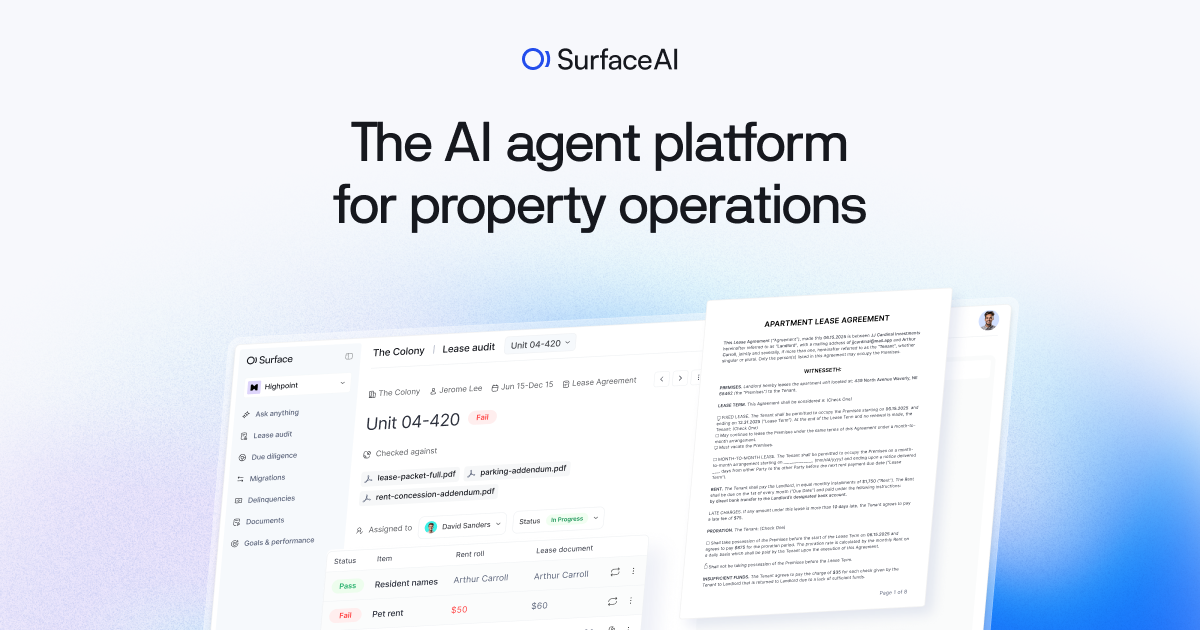
  • Measurabl Review: ESG Data Management and Sustainability Reporting for CRE Portfolios

    Measurabl Review: ESG Data Management and Sustainability Reporting for CRE Portfolios

    BestCRE 9AI Score

    72/100 · Contender

    Measurabl ranks #105 of 584 commercial real estate AI tools scored on the 9AI Framework. Nine dimensions, each scored out of 10: CRE relevance, data quality, ease of adoption, output accuracy, integration fit, pricing transparency, support, innovation and market reputation.

    Environmental, social, and governance requirements in commercial real estate have shifted from voluntary reporting to mandatory disclosure in most institutional capital markets. GRESB participation among real estate funds increased to over 2,000 entities in 2025, covering more than $8.6 trillion in gross asset value. The European Union’s SFDR regulations now require real estate fund managers to report principal adverse impacts on sustainability factors. In the United States, the SEC’s climate disclosure rules and state level mandates in New York and California are driving compliance requirements that touch every institutional portfolio. Institutional investors now factor ESG performance into allocation decisions, making sustainability data not just a reporting obligation but a capital access requirement.

    Measurabl is the dominant platform in this space. Founded in San Diego and deployed across more than 18 billion square feet of real estate valued in excess of $3 trillion, the platform is adopted by 37 percent of the world’s top asset managers operating across 93 countries. Over 1,000 customers use Measurabl to collect, manage, analyze, and report sustainability data across their building portfolios. In July 2024, the company launched its next generation platform with new modules including Data Manager for automated data acquisition, Insights and Disclosure for global framework reporting, and Navigate for net zero pathway planning. The platform received the Global ESG Compliancy Award at MIPIM 2026 in Cannes.

    Measurabl earns a 9AI Score of 72 out of 100, reflecting category leading market position and deep CRE ESG functionality balanced by limited pricing transparency and the inherent complexity of enterprise sustainability platforms. The result is the clearest category leader in CRE ESG data management with institutional scale adoption that few competitors approach.

    This review is part of BestCRE’s systematic coverage of commercial real estate AI tools across 20 CRE sectors. For the full AI tools directory, see our Best CRE AI Tools hub.

    What Measurabl Does and How It Works

    Measurabl provides a comprehensive suite of software products designed specifically for real estate owners, operators, and investors to quantify, manage, and report on sustainability data across their portfolios. The platform’s architecture centers on automated data collection from utility providers, building management systems, and property level sources. Rather than requiring manual data entry or spreadsheet compilation, Measurabl’s Data Manager module streamlines acquisition with automated, machine learning driven quality checks that validate incoming information against expected ranges and historical patterns.

    The Insights and Disclosure module enables reporting to global sustainability frameworks including GRESB, SFDR, CDP, ENERGY STAR, and regional regulatory requirements. Asset managers can generate audit proof reports that meet institutional standards without maintaining separate reporting workflows for each framework. The platform translates raw building performance data into the specific formats and metrics that each framework requires, reducing the compliance burden from a multi week manual process to an automated pipeline. For firms reporting across multiple jurisdictions and frameworks simultaneously, this consolidation is critical.

    Measurabl Navigate represents the platform’s forward looking capability, guiding customers on their journey to net zero by modeling pathways, quantifying the financial returns of sustainability investments, and benchmarking progress against portfolio targets. This moves the platform beyond backward looking compliance reporting into strategic planning territory. For investment managers evaluating capital expenditure decisions on energy efficiency, renewable energy installations, or building electrification, Navigate provides the analytical framework to model costs, returns, and timeline scenarios. The platform also supports capital markets use cases, helping firms communicate ESG performance to investors and lenders who increasingly condition capital access on sustainability metrics.

    9AI Framework: Dimension by Dimension Analysis

    CRE Relevance: 9/10

    Measurabl is built exclusively for real estate sustainability data management. Every module, workflow, and reporting template is designed around the specific requirements of building portfolios, from utility data collection at the property level to fund level ESG disclosure for institutional investors. The platform handles the unique data challenges of real estate: multiple building types, varying utility structures, tenant versus landlord controlled spaces, and portfolio composition that changes through acquisitions and dispositions. Its integration with GRESB, the dominant benchmark for real estate ESG performance, makes it a direct participant in how the industry measures and communicates sustainability outcomes. In practice: Measurabl is the most CRE specific ESG platform available, purpose built for the data structures and reporting requirements unique to real estate portfolios.

    Data Quality and Sources: 8/10

    The platform’s Data Manager module automates data acquisition from utility providers and building systems, applying machine learning driven quality checks to validate incoming data. This automated validation catches anomalies, gaps, and implausible values before they contaminate reporting outputs. For portfolios spanning hundreds of buildings across multiple geographies, automated data quality is essential because manual verification at that scale is impractical. Measurabl also supports audit proof documentation, which means data lineage and validation steps are tracked for external verification. The platform draws from actual building performance data rather than estimates or proxies, which strengthens the reliability of outputs. In practice: data quality infrastructure is designed for institutional audit standards, with automated validation that scales across large portfolios without proportional increases in manual effort.

    Ease of Adoption: 7/10

    Measurabl serves over 1,000 customers across 93 countries, which demonstrates that the platform is adoptable at scale. However, ESG data management inherently requires significant setup work: establishing utility data feeds, configuring building characteristics, mapping portfolio structure, and aligning reporting frameworks to specific fund requirements. The platform simplifies this relative to manual approaches, but the initial configuration is not trivial for large portfolios. Firms with established property data infrastructure will find adoption more straightforward than those starting from scattered spreadsheets. The next generation platform launched in 2024 appears to emphasize usability improvements, but enterprise sustainability reporting remains a complex domain regardless of software quality. In practice: adoption is well supported by a mature implementation process and large customer base, but the inherent complexity of ESG data management means meaningful setup time is required.

    Output Accuracy: 7/10

    Measurabl emphasizes audit proof reporting and machine learning driven quality checks, which suggests outputs designed to withstand external scrutiny. For institutional real estate firms, the accuracy of ESG reporting has direct financial consequences: inaccurate GRESB submissions affect benchmark scores that LPs use in allocation decisions, and regulatory filings carry legal compliance requirements. The platform’s automated validation catches data entry errors and anomalies that manual processes typically miss. The fact that 37 percent of the world’s top asset managers rely on the platform for their sustainability reporting suggests confidence in output quality among sophisticated users. However, ESG data accuracy ultimately depends on source data quality, and the platform cannot validate what happens upstream of utility meters. In practice: outputs are designed for institutional audit standards and are used by major asset managers for regulatory and investor reporting, though no published accuracy metrics or independent validation support a score above 7.

    Integration and Workflow Fit: 7/10

    Measurabl integrates with utility data providers, building management systems, and property level data sources to automate the collection pipeline, though the vendor pages reviewed do not itemize connector coverage, which holds this score at 7. The platform also outputs directly to major reporting frameworks including GRESB, SFDR, CDP, and ENERGY STAR, which eliminates the need to maintain separate export and formatting workflows. For firms that use Yardi or MRI as their property management backbone, Measurabl connects to pull building characteristics and portfolio structure rather than requiring duplicate data entry. The capital markets module connects ESG performance data to investor communications and lending requirements. For the broader CRE tech stack, Measurabl occupies a clear position as the ESG data layer that sits alongside (not replaces) property management, accounting, and deal management systems. In practice: integration depth covers both data input (utility and property systems) and data output (regulatory and benchmarking frameworks) in a way that reduces manual work at both ends.

    Pricing Transparency: 5/10

    Measurabl does not publish pricing on its website. The platform operates on an enterprise sales model where pricing is negotiated based on portfolio size, number of buildings, reporting requirements, and module selection. There are no visible enterprise tiers and no per building pricing published, though the vendor offers a free solution that smaller portfolios can sign up for, which lifts this score to 5. This is consistent with enterprise CRE platforms that serve institutional clients, but it creates friction for mid market firms evaluating multiple ESG solutions simultaneously. Third party comparison sites confirm that pricing requires direct engagement with the sales team. For a category where compliance deadlines create urgency, the lack of pricing transparency can slow decision making. In practice: expect a sales driven process with pricing scaled to portfolio size, and budget accordingly for an institutional grade solution.

    Support and Reliability: 7/10

    With over 1,000 customers across 93 countries and deployment across 18 billion square feet, Measurabl demonstrates operational reliability at global scale. The platform handles annual reporting cycles where thousands of buildings submit data simultaneously for GRESB deadlines, which implies robust infrastructure. The company’s longevity in the market (multiple years of operation with steady growth) and receipt of the Global ESG Compliancy Award at MIPIM 2026 signal institutional credibility. Customer support for enterprise accounts typically includes dedicated account management and implementation assistance. However, detailed public SLA documentation and uptime metrics are not readily available on the website, which holds support at 7. In practice: the platform’s scale, customer base, and industry recognition suggest strong operational reliability, supported by enterprise grade support for institutional clients.

    Innovation and Roadmap: 8/10

    The launch of the next generation platform in July 2024 demonstrates active R&D investment and willingness to rebuild rather than incrementally patch. The addition of machine learning driven data quality checks represents genuine AI integration rather than marketing language. Measurabl Navigate introduces forward looking net zero pathway modeling, which moves the platform beyond compliance reporting into strategic investment planning. This evolution from backward looking data collection to predictive analytics and scenario modeling shows a trajectory toward deeper analytical capabilities. The platform’s position at the intersection of regulatory technology and sustainability analytics gives it a natural expansion path as ESG requirements become more complex. In practice: the next generation platform and Navigate module represent meaningful innovation, positioning Measurabl ahead of competitors who remain focused on basic data collection.

    Market Reputation: 7/10

    Measurabl’s market position is strong for a CRE technology company, and the score is held at 7 because no customers are named in the evidence reviewed. Deployment across 18 billion square feet, adoption by 37 percent of the world’s top asset managers, over 1,000 customers across 93 countries, and the Global ESG Compliancy Award at MIPIM 2026 collectively establish the platform as the clear category leader in CRE ESG technology. The company is consistently cited in industry reports on sustainability technology for real estate. Its relationship with GRESB as a data submission pathway gives it structural importance in how the industry benchmarks sustainability performance. Few CRE technology platforms achieve this level of market penetration and institutional recognition. In practice: Measurabl has the strongest market reputation in CRE ESG technology, approaching the kind of category dominance that CoStar holds in market data.

    9AI Score Card Measurabl
    77
    72 / 100
    Solid Platform
    ESG Data and Sustainability Reporting
    Measurabl
    Measurabl is the world’s leading ESG platform for real estate, deployed across 18 billion square feet with ML driven data quality and audit proof sustainability reporting.
    9 Dimensions, Scored 1 to 10
    1. CRE Relevance
    9/10
    2. Data Quality & Sources
    8/10
    3. Ease of Adoption
    7/10
    4. Output Accuracy
    7/10
    5. Integration & Workflow Fit
    7/10
    6. Pricing Transparency
    5/10
    7. Support & Reliability
    7/10
    8. Innovation & Roadmap
    8/10
    9. Market Reputation
    7/10
    BestCRE.com, 9AI Framework v2 Reviewed April 2026

    Who Should Use Measurabl

    Measurabl is designed for institutional real estate owners, operators, and investors who face sustainability reporting obligations and want to use ESG performance as a competitive advantage in capital markets. The platform is particularly valuable for firms that report to GRESB, comply with SFDR or SEC climate disclosure rules, or need to demonstrate ESG performance to limited partners and lenders. Asset managers responsible for portfolios spanning dozens or hundreds of buildings across multiple jurisdictions benefit from the automated data collection and multi framework reporting. Firms pursuing net zero commitments or evaluating sustainability capital expenditure decisions will find the Navigate module useful for pathway modeling. If your firm faces growing ESG reporting requirements and manages a portfolio large enough to make manual data compilation impractical, Measurabl is the category standard.

    Who Should Not Use Measurabl

    Measurabl is not appropriate for small landlords with a few properties or firms that do not face regulatory or investor driven ESG reporting requirements. The platform’s enterprise positioning and custom pricing assume institutional scale that would be disproportionate for operators with fewer than 10 to 20 buildings. Firms focused exclusively on value add acquisitions with short hold periods may not see sufficient ROI from a comprehensive sustainability platform if their investors do not require ESG reporting. Teams looking for a simple carbon calculator or basic utility tracking tool will find Measurabl more comprehensive (and more expensive) than their needs warrant. The platform solves institutional compliance and reporting challenges, not individual building optimization.

    Pricing and ROI Analysis

    Measurabl operates on enterprise pricing negotiated based on portfolio size, number of buildings, geographic scope, and module selection. No pricing is published publicly. For institutional portfolios, the ROI case rests on several factors: reduced analyst time for manual data compilation (often measured in weeks per reporting cycle), improved GRESB scores that influence LP allocation decisions, compliance with mandatory disclosure requirements that avoid regulatory penalties, and access to green financing products that offer favorable terms for certified buildings. For a large fund managing hundreds of buildings, the annual cost of Measurabl is typically a fraction of a basis point on AUM while enabling access to capital markets advantages worth significantly more.

    Integration and CRE Tech Stack Fit

    Measurabl integrates with property management systems, utility data providers, and building management systems on the input side, while connecting to GRESB, SFDR, CDP, ENERGY STAR, and other frameworks on the output side. For firms using Yardi or MRI, the platform can pull building and portfolio data to reduce duplicate entry. The capital markets module connects sustainability performance to investor reporting and green bond certification workflows. Measurabl occupies a distinct position in the CRE tech stack as the ESG data layer, complementing (not competing with) property management, accounting, deal management, and asset management platforms. This clear functional boundary makes it additive to existing systems rather than requiring replacement of any current infrastructure.

    Competitive Landscape

    Measurabl competes with platforms like Deepki (European market leader), Envizi (now part of IBM), Watershed, Longeviti (focused on building health), and various point solutions for specific reporting frameworks. Its primary differentiation is market share: with 37 percent of the world’s top asset managers and 18 billion square feet of coverage, Measurabl has achieved a scale that creates network effects. The platform’s direct relationship with GRESB as a submission pathway gives it structural positioning that competitors must work around. Dcycle and newer entrants offer alternatives with potentially lower price points, but they lack the institutional track record and framework integration depth that Measurabl has built over years of market presence.

    The Bottom Line

    Measurabl is the category leader in CRE ESG technology with a market position that approaches dominance among institutional real estate investors. The 9AI Score of 72 out of 100 reflects strong market reputation and CRE relevance balanced by the enterprise pricing opacity that is common among institutional platforms. For firms that face mandatory sustainability reporting, pursue GRESB benchmarking, or want to leverage ESG performance for capital markets advantage, Measurabl is the established standard. Its next generation platform and Navigate module demonstrate continued innovation in a category that will only grow in importance as regulatory requirements expand globally.

    About BestCRE

    BestCRE is the definitive authority on commercial real estate AI, analysis, and investment intelligence. Every article advances the mission of helping CRE professionals identify, evaluate, and deploy the best technology for their investment and operational workflows. We benchmark platforms using the 9AI Framework so CRE leaders can compare tools with clear, evidence based scoring. Explore the full category map at 20 CRE sectors for deeper coverage across the CRE technology stack.

    Frequently Asked Questions

    What sustainability frameworks does Measurabl support for reporting?

    Measurabl supports reporting to all major sustainability frameworks relevant to commercial real estate including GRESB, SFDR (the EU’s Sustainable Finance Disclosure Regulation), CDP (Carbon Disclosure Project), ENERGY STAR Portfolio Manager, and various regional regulatory requirements. The platform’s Insights and Disclosure module translates raw building performance data into the specific formats, metrics, and structures that each framework requires. This means a firm reporting to GRESB, CDP, and SFDR simultaneously does not need to maintain three separate data workflows. The platform generates audit proof documentation that meets institutional standards for each framework, and its direct relationship with GRESB as a data submission pathway provides structural integration that simplifies the annual benchmarking process.

    How does Measurabl collect building sustainability data?

    Measurabl’s Data Manager module automates data acquisition from utility providers, building management systems, and property level sources. The platform establishes connections to utility companies and other data sources that push information automatically rather than requiring manual entry or spreadsheet uploads. Machine learning driven quality checks validate incoming data against expected ranges, historical patterns, and portfolio level benchmarks, flagging anomalies before they reach reporting outputs. For properties where automated utility connections are not available, the platform supports manual entry with validation rules that catch common errors. This hybrid approach ensures comprehensive coverage even for properties in regions where utility data automation is not yet standard.

    What is Measurabl Navigate and how does it support net zero planning?

    Measurabl Navigate is a module that guides customers on their journey to net zero by modeling pathways, quantifying the financial returns of sustainability investments, and benchmarking progress against portfolio targets. Unlike the backward looking compliance reporting in other modules, Navigate is forward looking: it helps investment managers evaluate which capital expenditure decisions (energy efficiency retrofits, renewable energy installations, building electrification) will deliver the best combination of carbon reduction and financial return. The module provides scenario modeling so firms can compare different pathways to net zero based on cost, timeline, and impact. For firms that have set public net zero commitments or face investor pressure to demonstrate credible decarbonization plans, Navigate provides the analytical framework to move from aspiration to actionable strategy.

    How does Measurabl’s market position compare to competitors like Deepki?

    Measurabl and Deepki are the two leading platforms in CRE ESG technology, with geographic concentration being the primary differentiator. Measurabl has stronger market share in North America and global institutional markets, while Deepki holds stronger positioning in European markets where SFDR compliance has been mandatory longer. Measurabl’s deployment across 18 billion square feet and adoption by 37 percent of top asset managers gives it scale advantages in network effects and framework relationships. Deepki offers strong European regulatory expertise and has grown rapidly with EU sustainability requirements. For global firms operating across both markets, Measurabl’s broader geographic coverage (93 countries) may provide advantages, while firms concentrated in European markets may find Deepki’s regulatory depth more immediately relevant.

    What is the typical ROI timeline for implementing Measurabl?

    ROI from Measurabl typically materializes through multiple channels over the first 12 to 18 months. Immediate returns come from reduced analyst time in data compilation and reporting preparation, which firms often measure in person weeks per annual reporting cycle. Medium term returns come from improved GRESB scores that influence LP allocation decisions (GRESB participants with higher scores report better capital raising outcomes). Longer term returns come from access to green financing products that offer 10 to 25 basis points of spread reduction for certified buildings, and from compliance with mandatory disclosure requirements that avoid regulatory penalties. For a firm managing a $2 billion portfolio, even a single basis point advantage in financing terms represents $200,000 annually in debt service savings.

    Related Reviews

    Compare Measurabl with other Property Management & Operations tools BestCRE has scored: DoorLoop (73/100), RentZoro (73/100), Entrata (72/100) and Brickwise AI (71/100). Browse every review in CRE Property Management & Operations, the full Best CRE AI Tools directory, or the 20 CRE Sectors hub.
  • Surface AI Review: AI Agents for Multifamily Due Diligence and Asset Management

    Surface AI Review: AI Agents for Multifamily Due Diligence and Asset Management

    BestCRE 9AI Score

    68/100 · Niche

    Surface AI ranks #286 of 450 commercial real estate AI tools scored on the 9AI Framework. Nine dimensions, each scored out of 10: CRE relevance, data quality, ease of adoption, output accuracy, integration fit, pricing transparency, support, innovation and market reputation.

    Multifamily acquisitions are accelerating into a market where speed determines competitive advantage. CBRE’s 2026 US Real Estate Market Outlook forecasts a 16 percent increase in commercial real estate investment volume in 2026, which would nearly match pre-pandemic levels. JLL’s 2025 Global Real Estate Technology Survey found that 88 percent of investors, owners and landlords have started piloting AI, while only 5 percent of corporate real estate occupiers report having achieved all of their AI program goals. The gap between intention and execution is widest in due diligence and asset management, where teams still spend weeks manually auditing resident files, lease documents, and delinquency records before closing acquisitions. For multifamily operators managing hundreds or thousands of units, the operational bottleneck in pre acquisition analysis directly impacts deal velocity and competitive positioning.

    Surface AI addresses this gap with a platform built specifically for multifamily real estate teams. Founded in 2023 and headquartered in Boston, the company deploys specialized AI agents that automate due diligence reviews, delinquency management, document processing, and lease auditing. The platform connects to existing property management systems to extract, analyze, and surface actionable insights from resident data, raising red flags before acquisition and monitoring performance continuously post close. Surface AI’s agent based architecture means each workflow has a dedicated AI system trained for that specific task rather than relying on a single general purpose model.

    Surface AI earns a 9AI Score of 68 out of 100, reflecting strong CRE relevance and innovative AI architecture balanced by early stage market presence and limited pricing transparency. The platform represents a new generation of purpose built CRE AI tools that target specific operational workflows rather than attempting to be a comprehensive system of record.

    This review is part of BestCRE’s systematic coverage of commercial real estate AI tools across 20 CRE sectors. For the full AI tools directory, see our Best CRE AI Tools hub.

    What Surface AI Does and How It Works

    Surface AI operates through a suite of specialized AI agents, each designed for a distinct multifamily workflow. The Due Diligence Agent automates the pre acquisition review process by extracting and analyzing resident data across an entire portfolio. For a 500 unit property that might take two weeks to audit manually, the platform can compress that timeline to 48 hours by automatically parsing lease documents, resident files, and payment histories to identify risks and anomalies. The agent raises red flags on issues such as lease inconsistencies, missing documentation, and revenue discrepancies that would otherwise require manual line by line review.

    The Delinquency Agent protects cash flow by automating rent collection workflows. It sends policy compliant reminders, escalates accounts based on configurable thresholds, and flags risk patterns across the portfolio. Rather than requiring property managers to manually track overdue accounts and generate collection notices, the agent operates continuously, identifying delinquency trends early and initiating appropriate responses before balances escalate. The Document Management Agent handles the manual work associated with property takeovers and acquisitions, processing and organizing the document load that accompanies every transition.

    The Lease Audit Agent runs continuously in the background, catching errors and revenue leaks as they appear rather than waiting for periodic manual audits. This proactive monitoring means that incorrect charges, missed escalations, or lease term violations are surfaced immediately rather than discovered months later during reconciliation. Surface AI connects with the property management systems that clients already use, providing portfolio wide visibility through intuitive search, proactive alerts, and AI generated insights. The platform drafts policy compliant communications and generates summaries that allow asset managers to make decisions in seconds rather than hours.

    9AI Framework: Dimension by Dimension Analysis

    CRE Relevance: 9/10

    Surface AI is built exclusively for multifamily real estate operations and investment workflows. Every agent, feature, and data model targets a specific CRE use case: due diligence during acquisitions, delinquency management during operations, lease auditing for revenue protection, and document processing during takeovers. The platform does not attempt to serve adjacent industries or general business automation. Its entire value proposition is rooted in the specific challenges that multifamily operators and investors face daily. The focus on pre acquisition analysis and post close asset management places it squarely in the core workflow of institutional multifamily investment. In practice: Surface AI is one of the most narrowly focused CRE AI platforms available, addressing multifamily operational workflows with purpose built intelligence.

    Data Quality and Sources: 7/10

    Surface AI draws its data from the client’s existing property management systems rather than from external databases or proprietary market data. The platform connects to whatever systems the client uses to run their properties, extracting resident information, lease data, payment histories, and operational documents. The quality of output depends significantly on the quality of input data in those source systems. The AI agents apply extraction and analysis logic to surface patterns and anomalies, but they do not supplement client data with external market intelligence or third party verification. For due diligence purposes, the platform’s value comes from speed and consistency of analysis rather than from novel data sources. In practice: data quality is strong within the scope of client system data, but the platform does not independently verify or enrich information from external sources.

    Ease of Adoption: 7/10

    Surface AI is designed as a modern SaaS platform with AI agents that connect to existing property management infrastructure. The company emphasizes that the platform works with the systems clients already use, which suggests integration setup rather than wholesale system replacement. For teams already operating on standard property management platforms, the path to initial value should be relatively straightforward: connect systems, configure agent parameters, and begin receiving insights. The agent based architecture means each workflow can be adopted independently, allowing firms to start with due diligence automation and expand to delinquency management or lease auditing as confidence builds. However, as a 2023 founded company, the implementation process and support resources may be less mature than established enterprise platforms. In practice: adoption is designed to be incremental and system agnostic, though early stage maturity means fewer reference implementations to guide new clients.

    Output Accuracy: 7/10

    Surface AI’s marketing emphasizes that its agents catch errors and revenue leaks that manual processes miss, and that due diligence reviews surface red flags automatically. The Lease Audit Agent’s continuous monitoring approach provides a higher frequency of accuracy checks compared to periodic manual audits. However, the company has not published specific accuracy metrics, error rates, or third party validation studies. For a platform processing resident data and financial records, accuracy is critical because false positives create noise and false negatives create risk. The agent based architecture, where each AI is specialized for a specific task, likely produces stronger accuracy than general purpose models applied to the same workflows. In practice: output accuracy appears designed for institutional confidence, but the absence of published performance benchmarks limits independent verification.

    Integration and Workflow Fit: 7/10

    Surface AI positions itself as compatible with the property management systems clients already use, which implies API level connectivity to common multifamily platforms. The company’s messaging emphasizes connecting with all client systems to provide portfolio wide visibility. However, specific named integrations (such as Yardi, RealPage, Entrata, or AppFolio) are not prominently listed in public materials. The platform’s value depends heavily on its ability to ingest data from these source systems reliably. For firms operating on a single property management platform, integration may be straightforward. For firms with assets spread across multiple operators using different systems, the integration depth becomes more critical. In practice: the platform is designed for system connectivity, but the specific scope of supported integrations is not publicly documented at the level of detail institutional buyers typically require.

    Pricing Transparency: 4/10

    Surface AI does not publish pricing on its website. The platform operates on a custom pricing model that requires direct engagement with the sales team. There are no visible tiers, no per unit pricing, and no self serve options that would allow a prospective buyer to estimate costs independently. This is consistent with enterprise CRE software but creates friction for mid market operators who want to understand budget implications before entering a sales process. For a company founded in 2023 that is still building market share, the lack of pricing transparency may slow adoption among firms that prefer to self qualify before investing time in demos. In practice: pricing is fully opaque and requires a sales conversation, which is a barrier for firms evaluating multiple solutions simultaneously.

    Support and Reliability: 6/10

    Surface AI was founded in 2023, which means it has approximately three years of production history. While this is sufficient to demonstrate initial viability, it does not provide the decade plus track record that institutional investors typically prefer for mission critical systems. The company has secured venture capital funding, which signals investor confidence in the team and technology. However, public documentation on support tiers, SLAs, uptime guarantees, and disaster recovery procedures is not readily available. For firms conducting due diligence on a platform that will process sensitive resident and financial data, the limited public documentation on operational reliability may require additional reference calls and security assessments. In practice: the platform appears functional and backed by credible investors, but the three year operational history limits confidence compared to more established alternatives.

    Innovation and Roadmap: 8/10

    Surface AI represents the newer generation of CRE technology that is AI native rather than AI enhanced. The platform was built from inception with specialized AI agents as the core architecture rather than retrofitting machine learning onto an existing database product. This approach allows each agent to be optimized for its specific workflow: due diligence analysis, delinquency detection, lease auditing, and document processing. The multi agent design also enables the company to launch new capabilities by deploying additional specialized agents without redesigning the core platform. The company’s content demonstrates deep understanding of where AI creates genuine value in multifamily operations versus where it remains aspirational. In practice: the AI native architecture and agent based design represent genuine technical innovation in the CRE software category, positioning the company ahead of retrofitted competitors.

    Market Reputation: 6/10

    Surface AI is an early stage company with venture capital backing and a growing presence in the multifamily CRE technology ecosystem. The company has a LinkedIn presence and has been covered on Crunchbase and PitchBook, which confirms legitimate funding and market activity. However, publicly named enterprise clients, case studies with measurable outcomes, and third party reviews on platforms like G2 or Capterra are limited. For institutional buyers, this means the platform requires hands on evaluation rather than relying on peer references or industry recognition. The company’s focused positioning in multifamily operations gives it a clear identity, but market reputation takes time to build. In practice: Surface AI has credible backing and a clear market position, but early stage companies inherently carry more reputational uncertainty than established platforms with hundreds of named clients.

    9AI Score Card Surface AI
    68
    68 / 100
    Emerging Tool
    Due Diligence and Asset Management
    Surface AI
    Surface AI deploys specialized AI agents for multifamily due diligence, delinquency management, and lease auditing to accelerate acquisitions and protect cash flow.
    9 Dimensions, Scored 1 to 10
    1. CRE Relevance
    9/10
    2. Data Quality & Sources
    7/10
    3. Ease of Adoption
    7/10
    4. Output Accuracy
    7/10
    5. Integration & Workflow Fit
    7/10
    6. Pricing Transparency
    4/10
    7. Support & Reliability
    6/10
    8. Innovation & Roadmap
    8/10
    9. Market Reputation
    6/10
    BestCRE.com, 9AI Framework v2 Reviewed April 2026

    Who Should Use Surface AI

    Surface AI is designed for multifamily investment firms, operators, and acquisition teams that need to compress due diligence timelines and automate repetitive operational workflows. The platform is particularly valuable for firms acquiring properties at volume where manual resident file review creates bottlenecks that slow closing timelines. Asset managers responsible for monitoring delinquency across large portfolios benefit from the automated collection workflows and risk pattern detection. Teams handling property takeovers where document processing volume spikes benefit from the Document Management Agent’s ability to handle transition workload without adding temporary staff. If your firm acquires or manages multifamily assets at institutional scale and struggles with the manual intensity of resident data analysis, Surface AI targets that specific pain point.

    Who Should Not Use Surface AI

    Surface AI is not appropriate for commercial real estate firms focused on office, industrial, retail, or other non residential asset classes. The platform’s entire architecture is built around multifamily resident data, lease structures, and operational workflows that do not translate to other property types. Small landlords with a handful of units will not see meaningful ROI from an enterprise AI platform. Firms that need comprehensive property management, accounting, or investor reporting capabilities should look at full stack platforms rather than a specialized analytics and automation layer. Teams that require proven track records with five or more years of production history may find the 2023 founding date insufficient for their risk tolerance.

    Pricing and ROI Analysis

    Surface AI operates on custom pricing with no published rates. The platform requires direct sales engagement to receive a proposal, which is consistent with enterprise CRE software but limits self qualification for prospective buyers. ROI is driven by three primary levers: compressed due diligence timelines that allow faster closing on acquisitions (converting two week audits to 48 hour analyses), revenue recovery through continuous lease auditing that catches errors and missed escalations, and reduced delinquency losses through automated early intervention. For a firm acquiring a 500 unit property, shaving ten days off the due diligence timeline can translate into meaningful interest carry savings and competitive advantage in bidding situations.

    Integration and CRE Tech Stack Fit

    Surface AI positions itself as compatible with the property management systems clients already use, providing a connective layer that pulls data from existing infrastructure rather than replacing it. The platform’s value depends on its ability to ingest data from systems like Yardi, RealPage, Entrata, and AppFolio, though specific named integrations are not prominently documented in public materials. For firms operating on standard multifamily platforms, the integration path should be achievable. For firms with complex multi system environments involving different property managers at different sites, integration scope becomes a critical question during evaluation. Surface AI functions as an analytics and automation layer on top of existing systems rather than as a replacement for property management infrastructure.

    Competitive Landscape

    Surface AI competes with established due diligence and asset management platforms as well as newer AI native entrants. In the due diligence automation space, it competes with firms like Enodo (multifamily analytics), DealPath (deal management with due diligence workflows), and manual processes augmented by tools like Docsumo or QuickData for document extraction. For delinquency management, it competes against built in collection modules within Yardi, RealPage, and Entrata. Surface AI’s differentiation is its multi agent architecture that addresses several related workflows through a unified platform rather than solving only one piece of the puzzle. The trade off is market maturity: established platforms have deeper integration ecosystems and longer track records.

    The Bottom Line

    Surface AI represents the emerging wave of AI native CRE platforms that target specific operational workflows with specialized intelligence. Its multi agent approach to multifamily due diligence, delinquency management, and lease auditing addresses real pain points that institutional operators face daily. The 9AI Score of 68 out of 100 reflects genuine innovation and strong CRE relevance balanced by early stage market presence, limited pricing visibility, and the inherent uncertainty of a platform with only three years of operational history. For multifamily firms that prioritize speed and automation in acquisition workflows and are comfortable evaluating newer technology, Surface AI offers a compelling value proposition worth investigating.

    About BestCRE

    BestCRE is the definitive authority on commercial real estate AI, analysis, and investment intelligence. Every article advances the mission of helping CRE professionals identify, evaluate, and deploy the best technology for their investment and operational workflows. We benchmark platforms using the 9AI Framework so CRE leaders can compare tools with clear, evidence based scoring. Explore the full category map at 20 CRE sectors for deeper coverage across the CRE technology stack.

    Frequently Asked Questions

    What specific AI agents does Surface AI offer for multifamily operations?

    Surface AI deploys four primary AI agents, each specialized for a distinct multifamily workflow. The Due Diligence Agent automates pre acquisition resident data analysis, extracting and reviewing files that would otherwise require weeks of manual audit. The Delinquency Agent monitors rent collection across portfolios, sending compliant reminders, escalating accounts, and flagging risk patterns automatically. The Lease Audit Agent runs continuously to catch billing errors, missed escalations, and revenue leaks as they occur rather than waiting for periodic reviews. The Document Management Agent handles the processing and organization of documents during property takeovers and acquisitions. Each agent operates independently, allowing firms to adopt specific capabilities based on their immediate operational priorities.

    How quickly can Surface AI complete a due diligence review compared to manual processes?

    Surface AI’s marketing materials suggest that a 500 unit portfolio that might take two weeks to audit manually can be analyzed in approximately 48 hours using the platform’s Due Diligence Agent. This compression is achieved by automating the extraction and analysis of resident data, lease files, and payment histories that analysts would otherwise review line by line. The speed advantage becomes more pronounced as portfolio size increases, since the AI agent scales linearly while manual processes face diminishing returns as teams add analysts. For competitive acquisition environments where multiple bidders are pursuing the same property, the ability to complete diligence in days rather than weeks can determine whether a firm wins or loses the deal.

    Does Surface AI integrate with existing property management systems?

    Surface AI is designed to connect with the property management systems that clients already use, functioning as an analytics and automation layer rather than a replacement. The company positions its platform as compatible with existing infrastructure, pulling data from source systems to power its AI agents. However, specific named integrations with platforms like Yardi, RealPage, Entrata, or AppFolio are not prominently documented in public materials as of early 2026. Prospective buyers should request a detailed integration assessment during the evaluation process to confirm compatibility with their specific system environment. The platform’s value depends heavily on its ability to ingest data reliably from these source systems.

    What types of multifamily firms benefit most from Surface AI?

    The platform is designed for institutional multifamily operators and investment firms that acquire, manage, or reposition properties at scale. Firms making multiple acquisitions per year benefit from the due diligence acceleration, since the time savings compound across deals. Operators managing portfolios of hundreds or thousands of units benefit from automated delinquency management that would otherwise require dedicated collections staff. Asset managers handling property takeovers or transitions benefit from document processing automation that reduces the administrative burden of onboarding new assets. The common thread is operational scale: Surface AI delivers the most value when manual processes create bottlenecks that limit growth or competitive positioning.

    How does Surface AI compare to traditional due diligence approaches?

    Traditional due diligence in multifamily acquisitions involves teams of analysts manually reviewing resident files, lease documents, payment histories, and operational records unit by unit. This process is labor intensive, error prone, and time consuming, typically requiring one to three weeks for properties of meaningful scale. Surface AI’s approach replaces much of this manual review with automated extraction and analysis that identifies anomalies, inconsistencies, and risk factors across the entire dataset simultaneously. The AI does not eliminate human judgment but compresses the time between data review and decision making. Rather than spending two weeks gathering information before making assessments, teams can focus their expertise on evaluating the flagged issues rather than hunting for them manually.

    Related Reviews

    Compare Surface AI with other Property Management & Operations tools BestCRE has scored: DoorLoop (73/100), IronLedger.ai (73/100), Mason (70/100) and Moved (66/100). Browse every review in CRE Property Management & Operations, the full Best CRE AI Tools directory, or the 20 CRE Sectors hub.

  • Pereview Software Review: AI Powered Asset Management for CRE Equity and Debt

    Pereview Software Review: AI Powered Asset Management for CRE Equity and Debt

    BestCRE 9AI Score

    74/100 · Contender

    Pereview Software ranks #143 of 450 commercial real estate AI tools scored on the 9AI Framework. Nine dimensions, each scored out of 10: CRE relevance, data quality, ease of adoption, output accuracy, integration fit, pricing transparency, support, innovation and market reputation.

    Commercial real estate asset management is undergoing a structural shift as institutional investors demand faster reporting cycles, deeper portfolio visibility, and tighter risk controls. In Deloitte’s 2027 Commercial Real Estate Outlook, more than 90 percent of surveyed CRE executives plan to increase spending on data and technology next year, up from 76 percent in the previous survey. Data integration remains one of the largest operational bottlenecks for CRE investment managers, who spend a considerable share of analyst time on manual data reconciliation. Transparency and reporting quality now rank among the key factors limited partners evaluate when selecting fund managers. The pressure to standardize, automate, and validate portfolio data at scale has never been higher.

    Pereview Software addresses this gap directly. Founded in 2011 and headquartered in Dallas, the platform is positioned as the commercial real estate industry’s only dedicated asset management solution for both equity and debt investments. It aggregates, normalizes, and validates data from over 100 CRE software programs through more than 70 native integrations, including Yardi, MRI, Sage, and DealPath. The company serves institutional clients such as Argosy Real Estate Partners, Dalfen, PCCP, Ryan Companies, Rockwood Capital, and Singerman Real Estate, and has partnered with Juniper Square to deliver asset and portfolio insights for private real estate partners.

    Pereview earns a 9AI Score of 74 out of 100, reflecting deep CRE relevance and strong integration capabilities balanced by limited pricing transparency and moderate public documentation of its AI features. The result is a mature, purpose built platform that delivers institutional grade reporting and portfolio intelligence for firms managing complex equity and debt portfolios.

    This review is part of BestCRE’s systematic coverage of commercial real estate AI tools across 20 CRE sectors. For the full AI tools directory, see our Best CRE AI Tools hub.

    What Pereview Software Does and How It Works

    Pereview Software operates as a centralized asset management platform that unifies data from property management systems, accounting platforms, internal stakeholders, joint ventures, and third party sources into a single reporting and analytics layer. The core workflow begins with automated data ingestion. Pereview connects to over 70 enterprise systems, pulling in financial data, lease information, loan metrics, and operational KPIs without requiring manual data entry or spreadsheet reconciliation. This automated pipeline reduces the time firms spend loading, cleaning, and validating data by what the company estimates at up to 90 percent for recurring reports.

    Once data is ingested, the platform provides point and click reporting across critical investment metrics including NOI, IRR, LTV, DSCR, AUM, occupancy rates, lease expirations, loan performance, and maturity dates. Asset managers can generate monthly, quarterly, and annual reports with ad hoc filtering and drill down capabilities that allow them to move from portfolio level summary to asset level detail in a single interface. The reporting engine supports both equity investments (where the focus is on NOI growth, valuation movement, and lease risk) and debt investments (where the focus shifts to loan performance, covenant compliance, and maturity tracking).

    Pereview’s AI capabilities focus on accelerating data load, processing, and validation so that the platform instance remains current and accurate. This includes intelligent data matching, anomaly detection during ingestion, and automated validation rules that flag discrepancies before they reach final reports. The platform is built on Microsoft Azure, which provides enterprise grade security and scalability for firms managing portfolios across hundreds of assets and multiple fund vehicles. For teams that need to consolidate reporting across joint ventures, separate accounts, and co investment structures, Pereview’s architecture handles multi entity complexity natively rather than requiring workaround solutions.

    9AI Framework: Dimension by Dimension Analysis

    CRE Relevance: 9/10

    Pereview is purpose built exclusively for commercial real estate investment management. Every feature, workflow, and data model is designed around the specific needs of CRE equity and debt asset managers. The platform handles the full lifecycle of real estate investments from acquisition through disposition, covering both the operational metrics that drive NOI and the financial structures that define fund performance. Unlike horizontal enterprise tools that require extensive customization to serve CRE workflows, Pereview speaks the language of the industry natively. Its KPI library includes metrics specific to real estate such as occupancy, rent per square foot, lease rollover schedules, DSCR, and LTV ratios. In practice: Pereview is one of the most CRE specific asset management platforms available, built from the ground up for institutional real estate investment firms.

    Data Quality and Sources: 8/10

    The platform’s data architecture is built around automated ingestion from over 100 CRE software programs through 70 plus native integrations. This breadth of connectivity means that firms can consolidate data from Yardi, MRI, Sage, DealPath, and dozens of other systems without manual intervention. Pereview’s validation layer applies rules during ingestion to catch discrepancies, missing values, and formatting errors before data reaches the reporting layer. The company’s AI capabilities further enhance data quality by automating matching and anomaly detection during the load process. For firms managing diverse portfolios with data flowing from multiple property managers and joint venture partners, this automated validation is critical. In practice: the data quality infrastructure is designed for institutional scale with built in safeguards that reduce the risk of reporting errors from manual data handling.

    Ease of Adoption: 6/10

    Pereview is an enterprise platform that requires meaningful implementation effort. Firms need to map their existing data sources, configure integration connections, establish validation rules, and train teams on the reporting interface. The initial setup is not a self serve experience: it requires coordination between Pereview’s implementation team and the client’s operations and IT staff. Once configured, the platform’s point and click reporting is designed for accessibility, but the upfront investment in data mapping and system integration can take weeks to months depending on portfolio complexity. For firms already using Yardi or MRI as their property management backbone, the integration path is well established and reduces setup friction. In practice: adoption is straightforward for teams with clear data governance, but the enterprise nature of the platform means smaller firms may find the implementation timeline longer than expected.

    Output Accuracy: 8/10

    Pereview’s output accuracy is driven by its automated validation layer and the fact that data flows directly from source systems rather than through manual re entry. The platform applies configurable rules that check for completeness, consistency, and plausibility during every data load cycle. This approach reduces the spreadsheet errors that commonly plague asset management reporting when analysts manually compile data from multiple sources. The AI powered validation further strengthens accuracy by detecting anomalies that rule based systems might miss. Client references suggest that the platform produces reports suitable for investor presentations and board level decision making without requiring secondary verification. In practice: the automated data pipeline and validation framework produce outputs that meet institutional reporting standards with minimal manual quality assurance.

    Integration and Workflow Fit: 9/10

    Integration is one of Pereview’s strongest dimensions. The platform offers over 70 native connectors to CRE industry systems including Yardi, MRI, Sage, DealPath, and Juniper Square. This means firms do not need to build custom ETL pipelines or maintain middleware to get data flowing into the asset management layer. The partnership with Juniper Square extends Pereview’s reach into investor reporting and fund administration, creating a connected ecosystem that covers both operational performance and investor communications. For debt focused firms, the platform integrates with loan servicing systems to pull in payment history, covenant data, and maturity schedules. In practice: Pereview’s integration depth is among the strongest in the CRE asset management category, making it a natural fit for firms that already operate on standard industry platforms.

    Pricing Transparency: 4/10

    Pereview does not publish pricing on its website. The only path to understanding cost is through a demo request and sales conversation, which is typical of enterprise CRE platforms but creates friction for firms trying to budget or compare solutions. There are no public tiers, no per user pricing visible, and no calculator that would allow a prospective buyer to estimate annual cost based on portfolio size. Third party review sites confirm that pricing is custom and negotiated based on portfolio complexity, number of integrations, and user count. While this approach is standard for enterprise software, it limits the ability of mid market firms to self qualify. In practice: pricing transparency is a weakness, and firms should expect a multi week sales process before receiving a proposal.

    Support and Reliability: 7/10

    Pereview is built on Microsoft Azure, which provides enterprise grade infrastructure with high availability and security certifications. The platform has been operating since 2011, which implies over a decade of production stability and iterative improvement. Client references on review platforms note responsive support and willingness to customize integrations for specific client needs. However, detailed SLA documentation, support tier structures, and public uptime metrics are not readily available. The company’s longevity and institutional client base suggest mature support operations, but the lack of public documentation means prospective buyers must rely on reference calls rather than published commitments. In practice: support appears reliable based on client feedback and platform maturity, but formal service level documentation would strengthen confidence for risk averse institutional buyers.

    Innovation and Roadmap: 7/10

    Pereview has recently introduced AI capabilities focused on data load acceleration, intelligent matching, and automated validation. These features represent a meaningful step forward from traditional rule based processing, applying machine learning to reduce manual intervention in the data pipeline. The company’s blog content demonstrates awareness of industry trends including automation, data integration challenges, and the evolving expectations of institutional investors. However, the public roadmap is not transparent, and the specific scope of AI capabilities is described in general terms rather than with detailed technical documentation. For a platform founded in 2011, the introduction of AI features signals ongoing investment in modernization. In practice: Pereview is evolving its technology stack with AI enhancements, though the pace and scope of innovation are less visible than some newer competitors.

    Market Reputation: 8/10

    Pereview serves a roster of institutional CRE firms including Argosy Real Estate Partners, Dalfen, PCCP, Ryan Companies, Rockwood Capital, and Singerman Real Estate. The company is ranked fifth in SelectHub’s Real Estate Asset Management Software directory and has maintained market presence since 2011. Its partnership with Juniper Square further validates its position in the institutional ecosystem. The platform’s focus on both equity and debt investments gives it a unique positioning that few competitors address comprehensively. Review platforms show limited volume but positive sentiment, which is consistent with enterprise software that serves a concentrated institutional client base rather than a mass market. In practice: Pereview has strong institutional credibility and a defensible market position as the only dedicated platform serving both equity and debt CRE asset management.

    9AI Score Card Pereview Software
    74
    74 / 100
    Solid Platform
    Asset and Portfolio Management
    Pereview Software
    Pereview delivers AI powered asset management for CRE equity and debt portfolios, unifying data from 70 plus integrations into institutional grade reporting and analytics.
    9 Dimensions, Scored 1 to 10
    1. CRE Relevance
    9/10
    2. Data Quality & Sources
    8/10
    3. Ease of Adoption
    6/10
    4. Output Accuracy
    8/10
    5. Integration & Workflow Fit
    9/10
    6. Pricing Transparency
    4/10
    7. Support & Reliability
    7/10
    8. Innovation & Roadmap
    7/10
    9. Market Reputation
    8/10
    BestCRE.com, 9AI Framework v2 Reviewed April 2026

    Who Should Use Pereview Software

    Pereview is designed for institutional real estate investment managers, private equity real estate firms, and debt funds that manage complex portfolios across multiple assets, fund vehicles, and joint venture structures. The platform is particularly valuable for firms that struggle with manual data reconciliation across multiple property management systems and need automated, validated reporting for investor communications and internal decision making. Asset managers, portfolio analysts, and CFO teams that produce recurring reports on NOI, IRR, occupancy, and loan performance will find the most immediate value. If your firm manages both equity and debt investments and needs a single platform to unify reporting across both, Pereview addresses that specific gap better than most alternatives.

    Who Should Not Use Pereview Software

    Pereview is not designed for individual brokers, small landlords, or firms with fewer than a handful of assets. The platform’s enterprise implementation requirements, custom pricing model, and integration focused architecture assume a level of operational complexity that smaller operators do not typically face. Firms looking for a quick setup, self serve experience with transparent monthly pricing will find the onboarding process mismatched to their expectations. Teams that primarily need deal pipeline management rather than asset level performance monitoring may be better served by dedicated deal management platforms.

    Pricing and ROI Analysis

    Pereview operates on a custom pricing model with no published tiers or per user rates. Pricing is negotiated based on portfolio size, number of integrations, user count, and specific implementation requirements. The company targets institutional clients, which implies contract values in the five to six figure annual range for mid to large firms. ROI is driven primarily by time savings in report generation (the company claims up to 90 percent reduction in recurring reporting time), reduced error rates from automated validation, and improved investor confidence from consistent, timely reporting. For firms spending significant analyst hours on manual data reconciliation across multiple systems, the platform’s automation can deliver measurable productivity gains within the first quarter of full deployment.

    Integration and CRE Tech Stack Fit

    Integration is Pereview’s defining strength. The platform connects natively to over 70 CRE systems including Yardi, MRI, Sage, DealPath, and Juniper Square. This means asset managers can consolidate data from property management, accounting, deal management, and investor reporting platforms into a single analytics layer without building custom middleware. The Microsoft Azure foundation provides enterprise security and compliance certifications that institutional investors require. For firms with complex multi system environments involving separate property managers, joint venture partners, and co investors feeding data into a central reporting function, Pereview’s integration architecture is designed to handle that exact complexity.

    Competitive Landscape

    Pereview competes with asset management capabilities within broader platforms such as VTS, Yardi Investment Management, and MRI Investment Management, as well as with dedicated portfolio analytics tools like DealPath and Juniper Square. Its primary differentiation is the exclusive focus on both equity and debt asset management in a single platform, combined with deep integration to source systems. VTS offers broader leasing and market intelligence capabilities but does not focus as deeply on debt portfolio management. Yardi and MRI provide asset management modules within their larger property management ecosystems, but Pereview’s independence from any single PMS vendor allows it to serve as a neutral aggregation layer across multiple systems.

    The Bottom Line

    Pereview Software is a mature, purpose built asset management platform for institutional CRE firms managing equity and debt portfolios. Its deep integration capabilities, automated data validation, and comprehensive reporting across critical KPIs make it a strong choice for firms that need to consolidate data from multiple systems into reliable investor grade outputs. The 9AI Score of 74 out of 100 reflects genuine CRE depth and integration strength tempered by limited pricing transparency and moderate public documentation of newer AI capabilities. For institutional asset managers who need a platform that speaks the language of real estate investment management natively, Pereview delivers measurable value.

    About BestCRE

    BestCRE is the definitive authority on commercial real estate AI, analysis, and investment intelligence. Every article advances the mission of helping CRE professionals identify, evaluate, and deploy the best technology for their investment and operational workflows. We benchmark platforms using the 9AI Framework so CRE leaders can compare tools with clear, evidence based scoring. Explore the full category map at 20 CRE sectors for deeper coverage across the CRE technology stack.

    Frequently Asked Questions

    What types of CRE investments does Pereview Software support?

    Pereview supports both equity and debt commercial real estate investments within a single platform, which is a key differentiator in the market. For equity investments, the platform tracks NOI, IRR, occupancy rates, lease expirations, capital expenditure budgets, and valuation metrics across individual assets and fund level portfolios. For debt investments, it monitors loan performance, DSCR, LTV ratios, covenant compliance, maturity dates, and payment history. This dual coverage means firms that operate across both investment types do not need separate systems or manual reconciliation to produce unified portfolio reporting. The company serves institutional clients managing portfolios that span multiple fund vehicles, joint ventures, and co investment structures.

    How does Pereview integrate with existing CRE software systems?

    Pereview offers over 70 native integrations with CRE industry systems including Yardi, MRI, Sage, DealPath, and Juniper Square. The platform aggregates and normalizes data from over 100 CRE software programs, pulling in financial statements, lease data, loan metrics, and operational KPIs through automated pipelines. Integration setup is handled during implementation with Pereview’s team configuring connections to each client’s specific system environment. Once established, data flows automatically on scheduled intervals, reducing the need for manual uploads or spreadsheet based reconciliation. The partnership with Juniper Square extends the platform’s reach into investor communications and fund reporting.

    How long does Pereview implementation typically take?

    Implementation timelines for Pereview vary based on portfolio complexity, the number of source systems being integrated, and the volume of historical data being migrated. Based on industry patterns for enterprise CRE platforms of this scope, implementation typically ranges from six to twelve weeks for firms with standard integration requirements and established data governance. More complex deployments involving dozens of property managers, multiple joint venture structures, and custom reporting configurations can extend beyond that range. The implementation process includes data mapping, integration configuration, validation rule setup, user training, and parallel running periods to confirm accuracy before going live.

    What AI capabilities does Pereview currently offer?

    Pereview’s AI capabilities focus on the data pipeline rather than the analysis layer. The platform uses machine learning to accelerate data load processing, perform intelligent matching between incoming data and existing records, and automate validation by detecting anomalies that traditional rule based systems might miss. These capabilities reduce the manual effort required to ensure data accuracy during each reporting cycle. The company’s public materials describe AI as an enhancement to existing workflows rather than a standalone product, which suggests the focus is on operational efficiency gains within the established platform architecture. More advanced AI features such as predictive analytics or natural language querying have not been prominently marketed as of early 2026.

    How does Pereview compare to using Yardi or MRI for asset management?

    Yardi and MRI both offer asset management modules within their broader property management ecosystems, which means firms already on those platforms can access asset management capabilities without adding another vendor. Pereview’s advantage is vendor neutrality: because it connects to both Yardi and MRI (and dozens of other systems), it serves as a consolidation layer for firms that use multiple property managers or have assets managed across different platforms. This is particularly relevant for institutional investors and fund managers who do not control which property management system their operating partners use. Pereview’s dedicated focus on both equity and debt investments also gives it deeper functionality in those specific workflows compared to modules within larger PMS platforms.

    Related Reviews

    Compare Pereview Software with other Property Management & Operations tools BestCRE has scored: Rentana (74/100), DoorLoop (73/100), Entrata (72/100) and Funnel (70/100). Browse every review in CRE Property Management & Operations, the full Best CRE AI Tools directory, or the 20 CRE Sectors hub.

PRIME 7.00%FED FUNDS 3.88%5-YR UST 4.64% ▲10-YR UST 4.86% ▲SOFR 30D 3.91%Updated Nov 10, 2026
Talk to a CRE Capital Advisor
Sizing a deal? | Curated capital network Tell Us About Your Deal (307) 439-0410