
Category: CRE Valuation & Appraisal

  • CRE Agents Review: AI workflow automation for commercial real estate underwriting and portfolio monitoring

    CRE Agents Review: AI workflow automation for commercial real estate underwriting and portfolio monitoring

    BestCRE 9AI Score

    63/100 · Niche

    CRE Agents ranks #359 of 450 commercial real estate AI tools scored on the 9AI Framework. Nine dimensions, each scored out of 10: CRE relevance, data quality, ease of adoption, output accuracy, integration fit, pricing transparency, support, innovation and market reputation.

    CRE Agents is a specialized software provider delivering AI agents tailored for CRE asset management, acquisitions, and brokerage. Operating as a Tier 2 CRE-native platform, the company focuses on automating repetitive analytical tasks that typically consume associate-level hours. While categorized primarily under CRE Valuation & Appraisal, the tool functions more as a workflow automation layer than a traditional automated valuation model. By deploying specialized agents, the platform attempts to bridge the gap between static property data and active deal execution. The commercial real estate industry has seen a flood of general-purpose generative AI wrappers, but CRE Agents differentiates itself by constraining its models to specific industry use cases.

    Evaluating this platform requires separating the vendor’s technical ambition from its current operational reality. As of March 2026, the market for autonomous AI agents in commercial real estate remains highly speculative. Buyers must understand that these agents do not replace the fiduciary judgment required in acquisitions or asset management. Instead, they act as high-speed data compilers. The software parses rent rolls, extracts lease clauses, and structures financial data for preliminary underwriting. However, because the vendor operates as an unproven startup in a sector where trust is paramount, prospective buyers must approach implementation with strict oversight protocols. The platform shows promise for mid-sized brokerages and agile acquisition teams, provided they have the internal discipline to verify the machine-generated outputs before utilizing them in investment committee memorandums.

    What CRE Agents does and how it works

    CRE Agents operates by deploying specialized, task-specific AI routines that interact with a firm’s internal documents and external data feeds. When an analyst uploads a raw offering memorandum, a rent roll, and historical operating statements, the acquisition agent extracts the relevant financial metrics and populates a standardized underwriting template. The system uses natural language processing to identify anomalies in lease structures, such as unusual co-tenancy clauses or non-standard expense stops, flagging these for human review. This extraction process aims to reduce the initial screening time for new deals from several hours to a matter of minutes.

    For asset management, the platform deploys a different set of agents designed to monitor portfolio performance against initial business plans. These agents ingest monthly property management reports, cross-reference them with budget projections, and generate variance summaries. If a property experiences a sudden spike in utility costs or a drop in physical occupancy, the asset management agent drafts an alert detailing the discrepancy. The brokerage-focused agents concentrate on market research and comp aggregation, pulling recent lease and sale comparables to generate preliminary broker opinion of value reports.

    Mechanically, the software relies on large language models fine-tuned on commercial real estate terminology. Users interact with the agents through a chat interface or by setting up automated triggers tied to a shared inbox or cloud storage folder. When a new deal hits the inbox, the agent automatically begins processing the attachments. The output is typically delivered as a structured data file or a drafted narrative summary. Crucially, the system requires users to maintain strict document organization, as the agents struggle to parse highly unstructured or poorly scanned historical records.

    9AI Framework: the score, dimension by dimension

    Dimension Score
    CRE Relevance 9/10
    Data Quality and Sources 7/10
    Ease of Adoption 6/10
    Output Accuracy 7/10
    Integration and Workflow Fit 6/10
    Pricing Transparency 4/10
    Support and Reliability 5/10
    Innovation and Roadmap 8/10
    Market Reputation 5/10
    Composite 9AI Score 63/100

    CRE Relevance: 9/10

    The platform is entirely dedicated to commercial real estate, avoiding the pitfalls of general-purpose AI tools that fail to understand industry-specific nuances like triple net leases or capitalization rate spreads. By focusing specifically on asset management, acquisitions, and brokerage, the vendor has trained its models to recognize the standard document formats and financial structures unique to institutional real estate. This specialized focus means users do not need to spend time teaching the AI basic industry concepts. The agents understand the difference between gross and net rentable area out of the box. In practice: Analysts can deploy the tool immediately on standard deal documents without writing complex, explanatory prompts.

    Data Quality and Sources: 7/10

    As a Tier 2 database, CRE Agents relies heavily on the quality of the internal data provided by the user. The platform does not natively supply a proprietary database of national property comparables like some top-tier data providers. Instead, it structures and synthesizes the data found in the user’s uploaded rent rolls, operating statements, and third-party appraisals. The AI is highly effective at extracting text and numbers from clean PDFs, but performance degrades when processing older, handwritten, or heavily skewed scans. In practice: Firms must ensure their source documents are legible and reasonably organized to prevent the agents from hallucinating financial figures.

    Ease of Adoption: 6/10

    Implementing AI agents requires a significant shift in daily workflows. While the user interface is relatively straightforward, training acquisition and asset management teams to trust and verify the automated outputs takes time. Users must learn how to configure the agents, set up email triggers, and map the extracted data to their specific internal underwriting models. The vendor provides onboarding documentation, but the burden of change management falls entirely on the buyer’s leadership team. Resistance from senior staff who prefer manual data entry is a common hurdle. In practice: Successful deployment requires an internal champion to mandate usage and audit the early results.

    Output Accuracy: 7/10

    The accuracy of the extracted financial data and lease abstractions is generally high when dealing with standardized institutional documents. The models correctly identify key lease dates, base rent escalations, and tenant improvement allowances most of the time. However, the system occasionally struggles with complex, multi-tiered waterfall structures or highly bespoke joint venture agreements. Buyers cannot blindly trust the aggregated numbers for final investment decisions. The software is a screening tool, not a replacement for a final human audit. In practice: Analysts must spot-check the generated underwriting assumptions against the source documents before presenting the data to the investment committee.

    Integration and Workflow Fit: 6/10

    The platform offers basic API connectivity to common cloud storage providers and email clients, allowing for automated document ingestion. However, direct, two-way integrations with heavy enterprise resource planning systems or complex valuation software like Argus Enterprise are limited. Users typically have to export the agent’s findings as a CSV or Excel file and manually upload them into their primary financial models. This disjointed data transfer limits the platform’s utility for large institutions demanding fully automated data pipelines. In practice: Buyers should expect to rely on Excel as the intermediary bridge between the AI agents and their core accounting systems.

    Pricing Transparency: 4/10

    The vendor operates on a paid model but does not publish specific pricing tiers, implementation fees, or seat license costs on its website. This opacity forces prospective buyers into a lengthy sales cycle just to determine basic budget feasibility. It remains unclear whether the company charges based on the number of users, the volume of documents processed, or the number of active agents deployed. This lack of public information complicates the evaluation process for mid-market firms with strict technology budgets. In practice: Buyers must demand a detailed, itemized pricing proposal early in the sales conversation to avoid unexpected overage charges.

    Support and Reliability: 5/10

    As an unproven startup, the vendor’s support infrastructure is still developing. Users report that while the founding engineering team is highly responsive to critical bugs, standard technical support queries often face delayed response times. The company lacks a comprehensive, 24/7 global support desk, which may pose challenges for international firms or teams working late on deal deadlines. Documentation is adequate for basic setup but lacks deep troubleshooting guides for complex API integration errors. In practice: Early adopters should negotiate guaranteed service level agreements and dedicated account management to ensure they receive timely assistance during the critical onboarding phase.

    Innovation and Roadmap: 8/10

    The company demonstrates a clear understanding of where autonomous workflows are heading in commercial real estate. Their development pipeline includes planned features for predictive market analytics and more sophisticated multi-document cross-referencing. The vendor frequently updates its underlying language models to improve reasoning capabilities and reduce extraction errors. This aggressive development pace indicates a strong commitment to pushing the boundaries of what AI can achieve in property valuation and deal screening. In practice: Buyers are investing in the company’s future capabilities as much as the current feature set, requiring a tolerance for frequent interface updates and evolving functionalities.

    Market Reputation: 5/10

    The platform is relatively new to the commercial real estate technology landscape and lacks the extensive track record of established valuation providers. While early pilot programs have generated cautious optimism among boutique brokerages, the tool has yet to be stress-tested by major institutional asset managers at scale. The company has not accumulated a critical mass of verified, independent case studies detailing long-term return on investment. Trust in the brand is still being built. In practice: Prospective buyers should ask the vendor for reference calls with current clients of a similar size and asset class focus before signing a contract.

    Who should use CRE Agents

    CRE Agents is best suited for agile teams looking to accelerate their initial deal screening and portfolio monitoring processes. The ideal user has a high volume of standardized documents and a mandate to increase operational efficiency without adding headcount.

    Boutique and mid-sized investment sales brokerages needing faster preliminary valuations.

    Acquisition teams at private equity real estate firms processing dozens of offering memorandums weekly.

    Asset managers overseeing stabilized portfolios who need automated variance reporting.

    Tech-forward analysts comfortable auditing machine-generated financial models.

    Who should look elsewhere

    Firms requiring highly customized, enterprise-grade data pipelines or those dealing exclusively in niche, non-standard asset classes will find the platform lacking. Organizations without the internal discipline to verify AI outputs face significant risk.

    Institutional core funds requiring direct, two-way integration with Argus Enterprise.

    Firms dealing primarily in complex, highly unstructured distressed debt workouts.

    Organizations with strict on-premise data security mandates prohibiting cloud-based AI processing.

    Teams looking for a fully automated valuation model that requires zero human oversight.

    Pricing and ROI

    The vendor operates on a paid commercial model, but specific pricing details are strictly not published on their public channels. Prospective buyers must engage directly with the sales team to receive a custom quote. Based on typical structures for similar AI agent platforms, buyers should anticipate a combination of base platform access fees and variable costs tied to usage metrics, such as the number of documents processed or active agents deployed. This lack of transparency requires firms to carefully define their expected usage volume during contract negotiations to avoid unexpected overage fees.

    When calculating the return on investment, buyers must weigh the software cost against the fully loaded hourly rate of junior analysts. If an acquisition team reviews 100 offering memorandums per month, and the software reduces the initial data extraction and formatting time from two hours to twenty minutes per deal, the firm saves approximately 166 hours monthly. At an analyst cost of $50 per hour, this yields a gross savings of $8,300 per month. To achieve a positive ROI, the platform’s monthly licensing and implementation amortization must fall well below this threshold, factoring in the time still required for senior staff to audit the AI’s output.

    Integration and CRE tech stack fit

    Fitting CRE Agents into an existing commercial real estate technology stack requires realistic expectations regarding data flow. The platform excels at ingesting unstructured data from email attachments and standard cloud storage repositories like SharePoint or Google Drive. However, its ability to push structured data directly into complex, industry-standard systems is currently constrained.

    Firms utilizing heavy enterprise resource planning software such as Yardi or MRI will not find native, plug-and-play synchronization. Instead, the AI agents generate structured outputs, typically CSV or Excel files, that must be manually imported into these core accounting systems. Similarly, while the tool is categorized under valuation and appraisal, it does not currently offer a direct API link to Argus Enterprise for automated cash flow modeling. Users must map the extracted rent roll data into an Excel upload template first. For brokerages, integrating the agent’s findings into customer relationship management platforms like Salesforce requires utilizing third-party middleware or custom API development. Buyers must allocate internal IT resources or hire external consultants to build these data bridges if they desire a highly automated pipeline.

    Competitive landscape

    The commercial real estate valuation and AI landscape is increasingly crowded, forcing buyers to carefully distinguish between automated valuation models and workflow automation tools. CRE Agents competes in a specialized niche, but buyers must evaluate it against established players in the broader category.

    Attentive.ai (scored 88) remains a formidable alternative for firms focused on automated site measurements and exterior property data extraction, offering a more proven track record in visual data processing. Clear Capital (Scored 78) and HouseCanary (Scored 74) dominate the residential and light commercial valuation space, providing vast proprietary databases of historical transactions that CRE Agents lacks. If a firm requires instant access to verified sales comparables rather than document extraction, these established data providers are superior choices.

    For construction and development-focused valuation, Togal.AI (Scored 76) offers highly specialized automated takeoff capabilities that far exceed the general document processing scope of CRE Agents. Meanwhile, C3 AI Property Appraisal (Scored 76) provides a more enterprise-ready infrastructure for large municipal and institutional valuation tasks, backed by a mature corporate support network. Finally, PriceHubble (Scored 73) offers strong predictive valuation analytics, particularly in the European market, which may appeal to cross-border investors looking for integrated market forecasting. CRE Agents differentiates itself by focusing specifically on the analyst workflow, reading documents and drafting summaries, rather than providing a proprietary database of property values.

    The bottom line

    CRE Agents offers a compelling, albeit early-stage, solution for commercial real estate firms desperate to reduce the administrative burden of deal screening and portfolio monitoring. By focusing specifically on asset management, acquisitions, and brokerage workflows, the platform avoids the generic pitfalls of broader AI tools. However, its status as an unproven startup requires buyers to proceed with caution. The software is a powerful data extraction and synthesis engine, not a replacement for experienced underwriting judgment. Firms that implement strict auditing protocols and possess the technical agility to manage manual data transfers will extract significant value. Conversely, large institutions demanding native enterprise integrations and published, transparent pricing should wait for the platform to mature. Purchase this tool if your primary bottleneck is junior analyst capacity, but do not expect it to operate entirely unsupervised.

    Frequently asked questions

    Does CRE Agents provide a proprietary database of sales comparables?

    No. The platform operates strictly as a workflow automation tool, extracting and structuring data from the specific documents you upload. It does not supply an internal database of national property comparables, historical sales data, or proprietary market analytics. Users must bring their own market data to the platform.

    Can the software automatically update Argus Enterprise models?

    Direct, two-way API integration with Argus Enterprise is not natively supported out of the box. Users must export the extracted rent roll and operating statement data into an Excel format. From there, analysts can format the spreadsheet to match the standard Argus import templates for cash flow modeling.

    Is the pricing for CRE Agents publicly available?

    Pricing is strictly not published on the vendor’s website. The company utilizes a custom, paid commercial model, requiring prospective buyers to engage directly with their sales team. You will receive a specific quote based on your anticipated document processing volume and the number of active agents deployed.

    How does the platform handle scanned, handwritten documents?

    While the artificial intelligence models excel at processing clean, digital PDFs, their accuracy significantly degrades when analyzing older, handwritten, or heavily skewed scanned documents. Users must allocate additional time to manually verify and correct the financial outputs generated from poor-quality source files to avoid underwriting errors.

    Does the tool work for all commercial asset classes?

    The underlying language models are trained on standard commercial real estate structures and perform reliably on traditional multifamily, office, industrial, and retail assets. However, highly bespoke or niche asset classes, such as specialized cold storage or complex hospitality joint ventures, will require significant manual oversight and verification.

    What level of technical support is provided during onboarding?

    The vendor provides basic onboarding documentation and direct access to the engineering team for resolving critical software bugs. However, because they operate as an unproven startup, they currently lack a dedicated 24/7 global support desk, which may delay immediate troubleshooting for complex API integration or workflow errors.

    Related Reviews

    Compare CRE Agents with other Valuation & Appraisal tools BestCRE has scored: V7 Go (73/100), Hover (71/100), ZipSmart.ai (63/100) and Placepoint (62/100). Browse every review in CRE Valuation & Appraisal, the full Best CRE AI Tools directory, or the 20 CRE Sectors hub.

  • C3 AI Property Appraisal Review: Enterprise AI mass appraisal platform for county assessors and commercial valuation teams

    C3 AI Property Appraisal Review: Enterprise AI mass appraisal platform for county assessors and commercial valuation teams

    BestCRE 9AI Score

    67/100 · Niche

    C3 AI Property Appraisal ranks #370 of 584 commercial real estate AI tools scored on the 9AI Framework. Nine dimensions, each scored out of 10: CRE relevance, data quality, ease of adoption, output accuracy, integration fit, pricing transparency, support, innovation and market reputation.

    C3 AI is a publicly traded enterprise artificial intelligence software provider that has adapted its core platform into a specialized valuation engine. According to the BestCRE master database, the primary use case for C3 AI Property Appraisal is enterprise AI for property valuations. Rather than serving as a lightweight point solution for individual brokers, this platform is engineered for mass appraisal environments, specifically targeting county assessor offices and large institutional portfolio managers who need to process hundreds of thousands of parcels simultaneously. The software represents a significant departure from traditional appraisal methods, moving organizations away from manual spreadsheet calculations and toward centralized, machine learning-driven workflows that can handle both residential and complex commercial assets.

    Evaluating this platform in Q1 2026 requires understanding its distinct position in the commercial real estate technology ecosystem. While tools like HouseCanary or Clear Capital often focus on residential volume or single-asset analytics, C3 AI tackles the heavy data infrastructure challenges inherent in mass commercial and residential appraisals. The system is designed to ingest fragmented data from legacy municipal systems and apply machine learning to generate defensible, compliant valuations at scale. For organizations managing billions in taxable value, the platform promises to replace manual spreadsheet aggregation with automated, model-driven workflows. Since March 2026, the company has continued to refine its models to meet strict regulatory accuracy thresholds, cementing its status as an enterprise-grade infrastructure solution rather than a simple proptech application. Buyers must approach this tool with an enterprise mindset, recognizing that its power comes with significant integration requirements.

    What C3 AI Property Appraisal does and how it works

    C3 AI Property Appraisal operates by unifying fragmented real estate data into a single, structured data image. The platform ingests information directly from a client’s Computer-Assisted Mass Appraisal (CAMA) system, Geographic Information Systems (GIS), and unstructured files like deeds, permits, and zoning records. By applying natural language processing to unstructured documents, the software extracts relevant valuation inputs that typically require manual review. This creates a centralized repository where all property characteristics, market statistics, and historical assessment activities are continuously updated and cross-referenced, ensuring the models run on the most accurate available data.

    Once the data is unified, the platform applies Automated Valuation Models (AVMs) to calculate property values. The system utilizes machine learning clustering algorithms to automatically identify and recommend sales comparable properties, generating specific adjustment calculations for each comp. For property condition assessments, the software employs computer vision to analyze property images, such as street-level photos or aerial satellite imagery, and automatically assigns condition ratings. This reduces the need for physical site inspections while maintaining consistent evaluation criteria across massive portfolios, accelerating the timeline for mass reappraisals.

    Crucially for tax authorities and enterprise funds, the platform prioritizes explainability. Every AI-generated valuation is accompanied by a comprehensive evidence package designed to comply with International Association of Assessing Officers (IAAO) standards. These packages document the exact data points, comparable selections, and mathematical adjustments used by the model. When property owners appeal their tax assessments, appraisers can export these evidence packages to defend the valuation mathematically, significantly reducing the administrative burden of the appeals process and protecting municipal or institutional revenue.

    9AI Framework: the score, dimension by dimension

    Dimension Score
    CRE Relevance 6/10
    Data Quality and Sources 6/10
    Ease of Adoption 6/10
    Output Accuracy 8/10
    Integration and Workflow Fit 7/10
    Pricing Transparency 4/10
    Support and Reliability 8/10
    Innovation and Roadmap 8/10
    Market Reputation 7/10
    Composite 9AI Score 67/100

    CRE Relevance: 6/10

    C3 AI Property Appraisal is highly specialized for mass valuation, making it relevant to municipal assessors and, secondarily, institutional fund managers, though it sits outside the core CRE investment workflow. Unlike generic predictive models, the platform is engineered around the specific workflows of the assessment industry, including sales comparable adjustments, income capitalization, and cost approaches. It handles complex commercial assets alongside residential parcels, addressing the heterogeneous nature of commercial real estate. The system’s focus on IAAO compliance and appeal defense demonstrates a deep understanding of the regulatory realities facing tax authorities and large-scale portfolio operators.

    In practice: Commercial valuation teams use the platform to execute mass reappraisals across diverse property types without abandoning industry-standard valuation methodologies.

    Data Quality and Sources: 6/10

    The platform relies heavily on the quality of the client’s internal data, acting as an aggregation and cleansing engine rather than a proprietary data provider. It excels at identifying discrepancies between siloed systems, such as conflicting square footage records in a CAMA system versus a GIS database. By deploying AI-driven document extraction, it also activates trapped data from unstructured PDFs and historical records. However, in non-disclosure states where transaction data is scarce, the models still depend on the client’s ability to source third-party or voluntary sales disclosures.

    In practice: Users spend less time manually verifying property characteristics because the system automatically flags data anomalies across connected municipal databases.

    Ease of Adoption: 6/10

    As a heavy enterprise application, this is not a plug-and-play solution. Implementation requires significant IT resources, extensive data mapping, and custom model training to fit a specific county or portfolio. Deployments typically begin with a multi-month pilot program to establish baseline accuracy and integrate with legacy on-premise systems. The learning curve for appraisers transitioning from manual spreadsheets to an AI-driven interface is substantial, necessitating structured change management and dedicated training sessions from the vendor.

    In practice: Organizations must commit to a lengthy, resource-intensive onboarding process before realizing efficiency gains in their appraisal workflows.

    Output Accuracy: 8/10

    The software consistently achieves high marks in valuation accuracy, with public case studies citing model accuracy improvements of up to 50% over legacy methods. By evaluating valuations against IAAO industry-standard benchmarks, the system ensures statistical reliability across large datasets. The computer vision component standardizes condition ratings, removing the subjective bias inherent in human inspections. Continuous learning algorithms mean the models refine their accuracy over time as appraisers accept or override AI-generated adjustments, creating a feedback loop that tightens valuation margins.

    In practice: Chief appraisers rely on the platform’s statistical dashboards to prove their mass valuations meet strict regulatory accuracy thresholds.

    Integration and Workflow Fit: 7/10

    Integration is a strength of the C3 AI architecture within assessor systems, though no native Yardi, MRI, CoStar, or Argus connector is documented. The platform features bi-directional synchronization with major CAMA software and GIS platforms, ensuring that AI-generated valuations and condition ratings flow directly back into the system of record. This eliminates duplicate data entry and ensures that the AI operates as an extension of the existing tech stack rather than a disconnected silo. The system is designed to handle the complex, high-volume data pipelines required by government agencies and enterprise financial institutions.

    In practice: IT departments configure the software to pull nightly updates from the CAMA system, returning finished valuations by morning.

    Pricing Transparency: 4/10

    The vendor operates strictly on an enterprise sales model, and specific pricing details are not published. According to the BestCRE master database, the platform utilizes custom pricing, which typically involves substantial annual licensing fees, implementation costs, and potential consumption-based metrics tied to parcel volume or model usage. There are no self-serve tiers or transparent monthly subscriptions available for smaller firms. Buyers must engage in a prolonged scoping process to receive a customized quote based on their specific integration requirements and portfolio size.

    In practice: Procurement teams should prepare for opaque, high-ticket enterprise contract negotiations rather than predictable SaaS pricing.

    Support and Reliability: 8/10

    Backed by a publicly traded enterprise software company, the platform offers institutional-grade reliability and support. C3 AI has extensive experience managing mission-critical applications for federal governments and Fortune 500 companies, ensuring high uptime, rigorous security protocols, and dedicated account management. Clients receive comprehensive technical support during implementation and ongoing model operations assistance to retrain algorithms as market conditions shift. This level of backing minimizes the existential risk often associated with adopting AI tools from early-stage proptech startups.

    In practice: Enterprise clients receive dedicated engineering support to ensure their automated valuation models remain operational during critical tax assessment periods.

    Innovation and Roadmap: 8/10

    The company continues to invest heavily in expanding its AI capabilities, specifically focusing on generative AI and advanced document processing. Recent updates introduced conversational interfaces that allow appraisers to query property histories using natural language. The roadmap emphasizes deeper integration of computer vision for granular commercial asset inspections and enhanced predictive analytics for forecasting neighborhood-level market shifts. By treating documents as structured intelligence rather than static files, the vendor is pushing the boundaries of automated data extraction in real estate.

    In practice: Users benefit from a continuous rollout of advanced machine learning features that reduce the need for manual data entry.

    Market Reputation: 7/10

    Within the public sector and municipal assessment space, C3 AI has built a solid reputation, securing massive contracts with entities like Riverside County and the State of New Mexico. However, in the private commercial real estate sector, among brokerages, mid-sized operators, and independent appraisal firms, the brand is less recognized than dedicated proptech names. The company is viewed primarily as a broad enterprise AI provider rather than a CRE-native firm, though its specific property appraisal application is rapidly gaining traction among institutional players.

    In practice: Government assessors view the vendor as a trusted modernization partner, while private CRE firms may still be discovering its real estate capabilities.

    Who should use C3 AI Property Appraisal

    This platform is engineered for organizations managing massive, heterogeneous property portfolios that require mathematically defensible valuations at scale.

    County assessor offices conducting annual mass reappraisals across hundreds of thousands of parcels.

    Institutional portfolio managers needing automated, compliant valuations for large commercial real estate funds.

    Enterprise valuation firms looking to reduce the administrative burden of tax appeal defense.

    Municipalities seeking to identify and resolve data discrepancies between siloed CAMA and GIS systems.

    Who should look elsewhere

    The heavy infrastructure requirements make this tool entirely unsuitable for smaller operations or those needing quick, ad-hoc valuations.

    Boutique CRE brokerages that rely on fast, one-off Broker Opinions of Value (BOVs).

    Independent commercial appraisers who do not maintain massive internal property databases.

    Firms seeking lightweight, plug-and-play software with transparent monthly subscription costs.

    Organizations lacking the dedicated IT resources required for complex enterprise software integrations.

    Pricing and ROI

    As confirmed by the BestCRE master database, C3 AI Property Appraisal operates entirely on custom pricing. The vendor does not publish standard subscription tiers, per-user licenses, or per-parcel fees. Because this is an enterprise-grade AI platform requiring extensive custom integration, data mapping, and model training, buyers should expect contract values commensurate with heavy enterprise software, often reaching into the hundreds of thousands or millions of dollars annually, depending on the scale of the deployment and the number of parcels processed. There are no self-serve options available.

    To justify this level of investment, buyers must rely on macro-level ROI math. Consider a county assessor’s office responsible for 300,000 parcels. If manual data aggregation, comparable selection, and valuation take an average of one hour per parcel at a labor cost of $40 per hour, the baseline valuation cost is $12 million. If the platform increases appraiser efficiency by 40%, a metric cited in the vendor’s public case studies, the organization reclaims $4.8 million in labor capacity. Furthermore, by generating automated evidence packages, the software drastically reduces the legal and administrative costs associated with defending tax appeals, protecting municipal revenue and delivering a clear return on a seven-figure software contract.

    Integration and CRE tech stack fit

    C3 AI Property Appraisal is designed to sit at the center of a complex enterprise tech stack, acting as the intelligent layer above existing systems of record. Its most critical integration capability is its bi-directional synchronization with legacy Computer-Assisted Mass Appraisal (CAMA) software. Instead of forcing appraisers to work entirely in a new environment, the platform extracts data from the CAMA system, processes the AI valuations, and pushes the finalized figures and condition ratings directly back into the native database.

    Beyond CAMA, the system integrates natively with enterprise Geographic Information Systems (GIS), such as Esri, to incorporate spatial data, zoning boundaries, and flood plain information into the valuation models. It also connects to municipal document repositories to ingest unstructured files like deeds and permits. Because it is built on the broader C3 AI platform architecture, it supports standard enterprise APIs and secure data pipelines, ensuring compliance with strict government and financial IT security protocols. This heavy integration focus ensures the AI models are always calculating based on the most current, comprehensive data available to the organization.

    Competitive landscape

    When evaluating C3 AI Property Appraisal, enterprise buyers must weigh it against other automated valuation and mass appraisal tools, though few match its specific focus on municipal infrastructure. Clear Capital (scored 78) is a formidable alternative, particularly for residential and light commercial portfolios, offering highly refined AVMs and a vast proprietary property database. However, Clear Capital functions more as a data and analytics provider, whereas C3 AI is a bespoke infrastructure layer built on top of the client’s own data.

    HouseCanary (scored 74) provides excellent predictive analytics and automated valuations, but its focus remains heavily skewed toward the residential sector and single-family rental investors, lacking the complex commercial mass appraisal workflows that C3 AI supports. For global portfolios, PriceHubble (scored 73) offers strong predictive valuation models with a highly intuitive user interface, but it is better suited for private wealth and banking sectors rather than municipal tax assessment.

    Finally, Automax AI (scored 70) competes in the automated workflow space, helping firms speed up report generation. Yet, it does not offer the heavy machine learning clustering for comparable selection or the computer vision condition ratings found in C3 AI. Ultimately, C3 AI stands apart by targeting the specific, highly regulated needs of county assessors and massive institutional funds, trading the agility of a SaaS product for the comprehensive power of a custom enterprise AI deployment.

    The bottom line

    C3 AI Property Appraisal is a highly specialized, heavy-duty valuation engine built for the complex realities of mass appraisal. It is not a tool for the average commercial broker or independent appraiser. Instead, it is designed for county assessors and institutional portfolio managers who are drowning in siloed data and manual spreadsheet workflows. By unifying CAMA data, GIS mapping, and unstructured documents into a single AI-driven interface, it allows organizations to process hundreds of thousands of valuations with mathematical consistency and IAAO compliance. The lack of transparent pricing and the requirement for extensive IT integration mean this platform demands a serious organizational commitment. However, for entities managing billions in taxable value, the ability to automate comparable adjustments, standardize condition ratings via computer vision, and instantly generate defense packages for tax appeals makes it a highly justifiable enterprise investment.

    Frequently asked questions

    Does C3 AI Property Appraisal work for single-asset commercial valuations?

    While capable of valuing individual properties, the platform is engineered for mass appraisal. It is not cost-effective or practical for boutique firms executing one-off Broker Opinions of Value, as its strength lies in processing massive datasets and identifying comparable properties across large portfolios.

    How does the software integrate with existing CAMA systems?

    The platform features bi-directional integration with legacy Computer-Assisted Mass Appraisal (CAMA) systems. It extracts raw property data, runs AI-driven valuation models, and pushes the finalized values, adjustments, and condition ratings directly back into the CAMA database to eliminate duplicate entry.

    Can the platform process unstructured documents like deeds and zoning records?

    Yes. The software utilizes natural language processing and document intelligence to extract critical valuation inputs from unstructured files, such as scanned deeds, inspection reports, and permits, converting them into structured data for the valuation models.

    Is C3 AI Property Appraisal suitable for non-disclosure states?

    Yes, though it requires adaptation. In non-disclosure states where public sales data is restricted, the platform relies on the client’s internal records, voluntary disclosures, and integrated third-party data to train its machine learning models and identify comparable properties.

    How does the computer vision feature assess property conditions?

    The platform analyzes visual data, such as street-level photographs and aerial satellite imagery, using computer vision algorithms. It automatically detects property degradation or improvements, assigning standardized condition ratings that remove the subjective bias of manual human inspections.

    What is the typical implementation timeline for this enterprise software?

    Because it is a heavy enterprise application requiring custom data mapping and model training, implementation is extensive. Deployments typically begin with a multi-month pilot program to prove model accuracy before rolling out full integration with municipal or institutional IT systems.

    Related Reviews

    Compare C3 AI Property Appraisal with other Valuation & Appraisal tools BestCRE has scored: V7 Go (73/100), Hover (71/100), Adema AI (66/100) and Plaace (64/100). Browse every review in CRE Valuation & Appraisal, the full Best CRE AI Tools directory, or the 20 CRE Sectors hub.

  • Automax AI Review: 24-Hour Hybrid Appraisals Built for UAD 3.6

    Automax AI Review: 24-Hour Hybrid Appraisals Built for UAD 3.6

    BestCRE 9AI Score

    52/100 · Watch

    Automax AI ranks #569 of 584 commercial real estate AI tools scored on the 9AI Framework. Nine dimensions, each scored out of 10: CRE relevance, data quality, ease of adoption, output accuracy, integration fit, pricing transparency, support, innovation and market reputation.

    From November 2, 2026, every new appraisal report submitted to the Uniform Collateral Data Portal must follow Uniform Appraisal Dataset 3.6 and the redesigned Uniform Residential Appraisal Report, according to Freddie Mac’s UAD 3.6 FAQ. The redesign replaces a shelf of legacy forms with one data-driven report and asks for more measured property data on every file. Readiness is uneven enough that Fannie Mae and Freddie Mac introduced a one-time policy exception that lets approved sellers keep submitting UAD 2.6 reports through May 19, 2027. That transition is the market Automax AI was built for.

    Automax AI is a residential appraisal firm with its own software, not a commercial valuation tool. A lender orders from its loan origination system or a web dashboard, a homeowner or licensed data collector scans the property with an iPhone app that uses LiDAR and computer vision, a licensed panel appraiser finishes the report with the company’s Appraisal Copilot tools, and the signed report comes back, the company says, in 24 hours rather than the 5 to 10 days of a traditional appraisal. The San Francisco company went through Y Combinator’s Fall 2025 batch and has raised more than $5 million.

    CRE lenders and debt brokers touch this collateral more often than their titles suggest: investor loans on one to four unit rentals, single-family rental portfolios assembled house by house, and bridge loans on small residential conversions. UAD 3.6 sharpens the overlap. The GSEs retired the Small Residential Income Property Appraisal Report (Form 1025) and, in most situations, the separate Single Family Comparable Rent Schedule (Form 1007), so two to four unit properties and the market rent opinion a cash flow lender relies on now sit inside the redesigned URAR.

    9AI Score: 52/100, Early Stage. The score reflects fit and evidence, not the quality of the idea. Automax is residential only, publishes no fees, names no customers and offers no independent accuracy data. A lender with a residential sleeve may find a pilot worthwhile; a commercial appraiser or underwriter should look elsewhere.

    This review is part of BestCRE’s systematic coverage of commercial real estate AI tools across 20 CRE sectors. For the full AI tools directory, see our Best CRE AI Tools hub.

    What Automax AI Does and How It Works

    The Automax homepage lays out five steps from the lender’s system to a signed report. Orders start in the lender’s loan origination system or a web dashboard, where the buyer chooses Hybrid, Traditional or Desktop service, and order status stays visible to both lender and borrower in real time.

    Collection is what makes the service hybrid. Instead of waiting for an appraiser to schedule an inspection, a homeowner or one of Automax’s licensed third-party data collectors walks the property with the mobile app, which captures floor plans, photos and condition in one pass. The company’s Y Combinator profile says the app uses LiDAR and computer vision, and a University of Waterloo profile of the founder describes a 3D model, precise measurements and 700 data points. Automax says capture is completed upfront at no cost. In November 2025 the company described sending a certified inspector; the current site puts the homeowner first.

    A matching system then pairs each order with a licensed appraiser by coverage area, property type and capacity. Appraisers join through a panel recruiting page that offers the software free to active panelists, an iPhone app that works offline at the property, and assignments spanning UAD 3.6, hybrid, desktop and HELOC work. The engine is Appraisal Copilot. According to the company’s Y Combinator launch post, AI agents reconcile market data, select and score comparables and draft the valuation, and a licensed appraiser then reviews, edits and signs. The homepage demonstration shows a sales comparison grid and a cost approach, with no income approach.

    Delivery closes the loop. The signed report arrives by email, data fields populate the lender’s origination system, and a combined AI and human review sits in front of delivery. The vendor quotes several clocks: average appraiser turn time under 40 minutes on its panel page, report completion within an hour on its homepage, and 24 hours from order to signed report. Only the 24-hour figure matters to a pipeline, and it depends on how quickly a scan gets done.

    The business model has changed too. Automax began as internal tooling for appraisal firms, and its launch post says that tooling grew to power more than 3,000 reports a month. Founder and CEO Humza Ahmed told the University of Waterloo in August 2026 that the company no longer sells to appraisers at all and now partners directly with lenders, insurers and homeowners. Appraisers are the supply side; lenders are the customer.

    9AI Framework: Dimension by Dimension Analysis

    CRE Relevance: 3/10

    Automax sells residential appraisals, and its own tagline reads “AI-native residential appraisals.” The workflow, the demonstration grid and the appraiser recruiting all point to houses and small residential properties appraised for mortgage and HELOC lending. There is no income capitalization, rent roll or cap rate tooling. The score sits above the floor because CRE lenders do finance residential collateral, from one to four unit rentals to single-family rental portfolios, and UAD 3.6 moves the rent opinion for that collateral into the URAR itself. Automax does not publish which property types or loan purposes its panel covers. In practice: get written confirmation that two to four unit properties, investment purpose loans and your states are in scope before ordering a test file.

    Data Quality and Sources: 5/10

    Property capture is the strong half of the data story. A LiDAR scan produces measured floor plans and standardized condition data, and the launch post says it extracts more than 150 attributes per property. That beats a hurried walkthrough and matches the room-by-room measurement UAD 3.6 asks for. Market data is the weak half. The vendor says its AI grounds each adjustment in market data and cleans faulty inputs, but it does not name its MLS, public record or sales sources or explain how comparables are chosen. A scan taken by an untrained homeowner adds a variable that only process controls can manage. In practice: ask which data feeds sit behind comparable selection and how homeowner scans are checked before an appraiser relies on them.

    Ease of Adoption: 7/10

    For a lender, adoption is light. There is no hardware to buy and no inspector staff to build, and orders can start in an origination system or a browser. Onboarding is sales led: the homepage invites lenders to talk to the team about onboarding an appraisal pipeline. Coverage deserves a check. The homepage claims nationwide coverage, while the November 2025 launch post said Automax was taking orders in California and Colorado and adding states weekly. Hybrid eligibility is set by investors and loan programs, not the vendor. In practice: pilot a handful of files in one state and have compliance confirm hybrid eligibility for each loan program first.

    Output Accuracy: 5/10

    Automax publishes no accuracy evidence: no validation study, no comparison against traditional appraisals, no revision rates and no Collateral Underwriter score history. Its control is structural. A licensed appraiser reviews, edits and signs every report, which puts liability where it belongs but does not prove quality. The only worked example is the homepage grid, and it reads as placeholder data: a comparable priced at $210,000 carries a gross living area adjustment of $442,301. GLA in a residential grid means gross living area, not the gross leasable area CRE readers know. Speed claims also vary, from under 20 minutes start to finish on Y Combinator to 24 hours on the homepage. In practice: run Automax in parallel with your current appraisals on 20 or more files and compare values, revision requests and risk scores.

    Integration and Workflow Fit: 6/10

    Automax says orders flow from a lender’s origination system and that data fields populate back into it when the signed report is delivered. That is the right shape for a mortgage workflow and earns a middle score. Specificity is the weakness. The site names no origination systems, documents no API or webhooks and lists no appraisal management partners, although its contact form offers integrations as an inquiry type, which suggests the work is scoped case by case. For loans sold to the GSEs, the integration that matters most is clean UAD 3.6 delivery to UCDP. For CRE workflows the fit is thin, since nothing reaches ARGUS Enterprise cash flow models, CoStar or Excel underwriting. In practice: ask for supported origination systems, a sample UAD 3.6 file and UCDP submission results before scoping an integration.

    Pricing Transparency: 4/10

    Automax publishes no prices. Its refund policy does disclose the billing model: usage based, charged per completed appraisal, with no recurring subscription fees, and refunds limited to duplicate charges, billing errors and technical failures on the vendor’s side. The homepage adds that on-site capture carries no cost, and the November 2025 launch post offered new customers a free first appraisal. None of that tells a lender what an order costs by product, state or turnaround. A single list price is impractical for appraisals, but fee ranges by service type are not. Quote-only vendors land at four or five under the 9AI Framework, and the absence of any numeric anchor holds Automax at four. In practice: request a fee schedule by product and state, including rush, revision and failed scan charges.

    Support and Reliability: 5/10

    Real-time order status for lender and borrower is a genuine reliability feature, because it removes the status calls that eat a processor’s day. The contact page says the team typically responds within one business day, and the site publishes Terms of Use, a Privacy Policy and a Refund Policy. Missing are a service level agreement, support hours, uptime history and named account management. Scale is the larger question. Y Combinator lists a team of four, and turnaround depends on collectors and panel appraisers outside the software, so a lender’s peak month tests operations as much as code. In practice: ask how missed scans, appraiser no-shows and revision requests are handled, what turn time is guaranteed by state, and write the answers into the contract.

    Innovation and Roadmap: 7/10

    Automax combines LiDAR capture, automated appraiser matching and AI-assisted report writing in one managed service, timed to the UAD 3.6 reset. The design fits the new regime: UAD 3.6 supports traditional, hybrid, desktop and exterior scopes of work, and hybrid workflows already produce the measured data the dataset expects. The company has pivoted from tooling for appraisal firms to a lender-facing service and lists a realtor product as coming soon. The score stops at seven because there is no public roadmap, release notes or model documentation, and incumbents are adding similar capture: Reggora has announced lidar scanning for its forms software. In practice: ask for the Appraisal Copilot release history and the next two quarters of planned features before committing volume.

    Market Reputation: 5/10

    Automax has investor validation and little public customer evidence. It is a Y Combinator Fall 2025 company, and the University of Waterloo reported that Ahmed has raised more than $5 million, beginning with a $500,000 pre-seed check and followed by a larger round after Y Combinator. The company cites early traction of its own: more than 3,000 reports a month through its earlier tooling, and a first customer who ran what Ahmed called Canada’s largest appraisal company. None of those firms is named, and the website shows no lender logos, testimonials or case studies. Without three named CRE clients this dimension would cap at seven regardless. In practice: ask for three lender references with similar loan types and volume, and for their revision and turnaround statistics rather than the vendor’s averages.

    Who Should Use Automax AI

    The best fit is a lender or debt platform with residential collateral and a cycle time problem as UAD 3.6 takes hold. That includes mortgage and HELOC lenders facing longer on-site inspections under the new dataset, and CRE-oriented lenders with a residential sleeve: small-balance investor programs on one to four unit rentals, single-family rental lenders that need values house by house, and bridge lenders ordering appraisals on houses and small conversions. These buyers want order tracking, structured data and a faster path to a signed report, which is what Automax is built around, provided its states, property types and loan purposes match theirs.

    Debt brokers and capital advisors whose borrowers hold small residential income property should know the service exists, because the appraisal is often the longest step between term sheet and closing. Residential appraisers seeking panel work are a third audience, as supply rather than customers.

    Who Should Not Use Automax AI

    Commercial appraisers, valuation firms and CRE underwriters should skip Automax. It offers no income approach, no commercial property types, no rent roll or lease handling and no discounted cash flow support. An owner of a multifamily, retail or industrial asset who needs a commercial appraisal should look at a tech-enabled commercial firm such as Bowery Valuation’s commercial appraisal platform, and commercial appraisers who want better tooling should evaluate Valcre’s commercial appraisal workflow software.

    Lenders that need published pricing before a pilot, programs whose investors will not accept a hybrid or homeowner-captured scan, and institutions with a settled appraisal management platform and vendor panel should also wait. A young vendor without a rate card or named references is a hard sell to any credit committee.

    Pricing and ROI Analysis

    Automax bills per completed appraisal with no subscription, but as of October 2026 it publishes no fee for any product. Capture carries no separate charge, so the cost lever is the appraisal fee itself, and any comparison with incumbent hybrid providers has to start from the lender’s own quotes.

    The return case rests on time. Class Valuation’s Nikkita Phanda, writing in HousingWire on hybrid appraisals under UAD 3.6, puts hybrids at roughly two to three days faster than traditional assignments and GSE hybrid eligibility in the mid-90 percent range. Take a hypothetical lender closing 100 residential collateral loans a month and assume Automax saves three days per file, well short of its own 24-hour claim. That removes about 300 file-days from the pipeline each month. Price those days at rate lock extension costs and carry, add fewer fallout files, then subtract any fee premium. The case turns on revision rates, which Automax does not publish.

    There is a compliance return as well for lenders that sell to the GSEs. Loans backed by UAD 2.6 reports submitted under the exception from March 1, 2027 lose collateral representation and warranty relief for value, so clean UAD 3.6 output protects more than speed.

    Integration and CRE Tech Stack Fit

    Automax belongs in a mortgage-style loan operations stack. Orders come in from the origination system or dashboard, the signed report arrives by email, structured fields flow back to the origination system, and for GSE loans the report must clear UCDP as UAD 3.6 data. With no named origination platforms, integration is a scoping exercise rather than a feature. Ask which report writing software produces the UAD 3.6 output and whether that software has completed GSE verification, a step Reggora announced for its Reggora Forms product in July 2026.

    A CRE shop should not expect fit with its usual tools: Excel underwriting, CoStar comps and Yardi or MRI property data. For a CRE lender with a residential sleeve, the practical questions are whether a signed URAR with structured data satisfies its credit committee and loan buyers, and whether the rent opinion in the URAR’s Rental Information section is enough to size a loan on cash flow.

    Competitive Landscape

    Automax competes in lender-ordered residential valuation, so its rivals are hybrid appraisal providers and appraisal management platforms, not CRE software. Clear Capital is the incumbent benchmark: it sells a FIRREA and GSE-compliant hybrid appraisal nationwide, with its own ClearInsight property data collection and a claim of up to 50 percent faster turnaround than a traditional appraisal. BestCRE scores Clear Capital’s valuation and appraisal review platform at 78/100. Reggora takes the software route, pairing an appraisal management platform for lenders with free UAD 3.6 forms software for appraisers.

    On the capture side, ValueMate’s LiDAR scanning app for appraisers (60/100) produces floor plans, living area and a draft appraisal dataset, the closest software analog to Automax’s scan. The difference is the buyer: ValueMate is software that appraisers and analysts run themselves, while Automax sells a signed appraisal to lenders. Data-first alternatives remove the appraiser for lower-risk files. HouseCanary’s automated valuation models (74/100) and Cotality’s property data and valuation analytics (73/100) serve lenders that want an AVM rather than an appraisal.

    Automax’s edge is speed, borrower visibility and a design built for UAD 3.6 from the start. Its gaps are scale, named references, published pricing and accuracy evidence, where incumbents lead.

    The Bottom Line

    Automax AI earns 52/100, Early Stage, because it is a residential appraisal service rather than a CRE tool and its public evidence stops at the pitch. The design is sound and well timed: scan the property with LiDAR, match a licensed appraiser, let AI assemble the report and deliver it into the origination system, all built for the UAD 3.6 regime that takes effect November 2, 2026. The founder comes from a family of appraisers, and more than $5 million in funding buys runway.

    The decision is straightforward. Commercial appraisers, underwriters and investors should pass. A lender or debt platform with a residential sleeve should request a demo, get coverage, fees and turnaround commitments in writing, and run Automax alongside its current appraisals on a small batch before moving volume. BestCRE will revisit the score when named lender references, pricing or validation data appear.

    About BestCRE

    BestCRE.com is the definitive authority on commercial real estate AI, analysis, and investment intelligence. Every article advances the platform’s mission to help CRE professionals identify, evaluate, and adopt the best tools and strategies in the industry. We benchmark platforms using the 9AI Framework so CRE leaders can compare tools with clear evidence. Explore the category map at 20 CRE sectors for deeper coverage across the CRE stack.

    Frequently Asked Questions

    What is a hybrid appraisal, and how does Automax AI do it?

    A hybrid appraisal splits the work. A trained data collector or the homeowner gathers measurements, photos and condition data on site, and a licensed appraiser completes the analysis and signs the report without visiting. Under UAD 3.6 the GSEs support traditional, hybrid, desktop and exterior scopes of work. Automax runs collection with an iPhone app that uses LiDAR and computer vision, then routes the file to a panel appraiser who finishes the report with its Appraisal Copilot tools. Its order form offers Hybrid, Traditional and Desktop products, and it promises delivery in 24 hours against 5 to 10 days for a traditional appraisal. Which loans may use a hybrid is set by investors and loan programs, not by the vendor, so confirm eligibility program by program before ordering.

    When does UAD 3.6 become mandatory, and what if a lender is not ready?

    UAD 3.6 is mandatory for all new appraisal reports submitted to UCDP on or after November 2, 2026, and the date turns on each report’s first UCDP submission, not the loan application date. Freddie Mac’s UAD page notes that many lenders are already submitting UAD 3.6 reports. Sellers that need more time can request a one-time GSE exception to submit new UAD 2.6 reports through May 19, 2027 and resubmit them through June 27, 2027. From March 1, 2027, those reports no longer receive normal Collateral Underwriter and Loan Collateral Advisor risk scores, and the loans lose representation and warranty relief for value. Lenders that do not sell directly to the GSEs must align with their investors or aggregators. A vendor like Automax helps only if its output clears UCDP cleanly, so ask for submission results.

    Can Automax AI appraise a two to four unit rental for an investor loan?

    Possibly, but confirm it before ordering. Under UAD 3.6 the GSEs retired the Small Residential Income Property Appraisal Report (Form 1025) and the Operating Income Statement (Form 216), and in most situations market rent is no longer reported on a separate Form 1007 but in the redesigned URAR’s Rental Information section. That makes a UAD 3.6-native vendor relevant to lenders who size investor loans on rental income. Automax, however, publishes no list of covered property types or loan purposes, and its demonstration shows only a comparison grid and a cost approach. Ask whether its scan handles multiple units in one building, whether panel appraisers complete the rental section, and whether investment purpose loans are in scope in your states. Anything with meaningful commercial space belongs with a commercial appraiser.

    How much does Automax AI charge per appraisal?

    Automax does not publish fees. Its refund policy, effective July 16, 2025, says it bills on a usage basis, charging per completed appraisal with no recurring subscription fees, and limits refunds to duplicate charges, billing errors and technical problems on its side. The homepage says on-site data capture is completed upfront at no cost, and the company’s November 2025 launch offered prospective customers a free first appraisal. To build a real comparison, request a fee schedule for hybrid, traditional and desktop products by state, along with rush, revision and failed scan charges, then compare it with quotes from incumbent hybrid providers. Time savings matter as much as the fee: Automax quotes 24 hours against 5 to 10 days for a traditional appraisal.

    Who founded Automax AI and how much funding has it raised?

    Humza Ahmed founded Automax AI in 2025 and serves as CEO. He studied software engineering at the University of Waterloo and previously did machine learning research at Huawei, according to his Y Combinator profile, and his launch post notes that his family has been in the appraisal business for 40 years. The company went through Y Combinator’s Fall 2025 batch, is based in San Francisco and lists a team of four. In August 2026 the University of Waterloo reported that Ahmed has raised more than $5 million, starting with a $500,000 pre-seed check and followed by a larger round after Y Combinator. For a lender, seed-stage funding means runway but a short operating history, so ask who led the round, how long the runway lasts and what continuity plan covers in-flight orders.

    Related Reviews

    Compare Automax AI with other Valuation & Appraisal tools BestCRE has scored: Rockport VAL (74/100), PriceHubble (73/100), Adema AI (66/100) and CRE Agents (63/100). Browse every review in CRE Valuation & Appraisal, the full Best CRE AI Tools directory, or the 20 CRE Sectors hub.

  • Adema AI Review: AI tool for site sourcing and planning analysis in commercial real estate

    Adema AI Review: AI tool for site sourcing and planning analysis in commercial real estate

    BestCRE 9AI Score

    66/100 · Niche

    Adema AI ranks #326 of 450 commercial real estate AI tools scored on the 9AI Framework. Nine dimensions, each scored out of 10: CRE relevance, data quality, ease of adoption, output accuracy, integration fit, pricing transparency, support, innovation and market reputation.

    Adema AI is an emerging artificial intelligence platform designed specifically for commercial real estate site sourcing, planning analysis, and operator matching, currently offering pre-launch pricing tiers ranging from £39 to £239 per month. Operating within the CRE Valuation & Appraisal category, the platform is classified as a Tier 2 CRE-Native database tool. As of Q3 2026, the company focuses on automating the early stages of the development lifecycle, allowing analysts and principals to evaluate land parcels and existing assets for their highest and best use without relying entirely on manual municipality research. The software aims to ingest zoning codes, planning histories, and local demographic data to output feasibility scores and potential operator matches for a given site.

    While established players like Attentive.ai and Clear Capital dominate the broader appraisal and site measurement space, Adema AI targets a very specific niche: the intersection of land sourcing and planning viability. Our analysis indicates that the platform’s primary utility lies in its ability to parse dense planning documents and match sites with potential operators, a process that typically requires hours of manual reading and relationship mapping. Because the tool is still in its early commercial phases, users should approach its automated planning conclusions as a preliminary filter rather than a final underwriting truth. The low barrier to entry makes it an accessible option for boutique developers and independent consultants who need to increase their site evaluation volume without adding headcount.

    What Adema AI does and how it works

    Adema AI functions primarily as a search and filtering engine for commercial real estate development and acquisition teams. The core mechanic involves users inputting specific geographic parameters or parcel coordinates into the system. The software then queries its database to pull relevant planning histories, local zoning constraints, and permitted use cases. Based on our analysis of its feature set, the platform uses natural language processing to extract key limitations and allowances from municipal planning portals, translating dense regulatory text into a standardized dashboard view. This allows an analyst to quickly see if a site is viable for a specific asset class, such as a drive-thru restaurant or a mid-rise multifamily complex, before committing resources to a formal feasibility study.

    Beyond basic site sourcing, the platform incorporates an operator matching algorithm. Once a site’s parameters are defined, Adema AI cross-references the location and permitted uses against a database of commercial operators and tenants known to be expanding in that region. The system evaluates demographic overlaps and proximity to competitors to suggest which brands or operators would be the most logical fit for the proposed development. This feature shifts the tool from a pure research utility into a preliminary leasing and disposition aid, helping developers build a tenant narrative early in the acquisition phase.

    Users interact with the platform through a web-based interface, organizing their prospected sites into digital pipelines. The software allows teams to save planning constraints, export summary reports, and track the status of multiple parcels simultaneously. Because it operates as a Tier 2 CRE-Native database, it relies on aggregating public and semi-public data sources rather than generating proprietary primary data. Analysts must still verify the final planning details directly with local authorities, but the tool significantly compresses the time spent identifying which sites warrant that deeper level of investigation.

    9AI Framework: the score, dimension by dimension

    Dimension Score
    CRE Relevance 9/10
    Data Quality and Sources 6/10
    Ease of Adoption 8/10
    Output Accuracy 6/10
    Integration and Workflow Fit 5/10
    Pricing Transparency 9/10
    Support and Reliability 5/10
    Innovation and Roadmap 7/10
    Market Reputation 4/10
    Composite 9AI Score 66/100

    CRE Relevance: 9/10

    Adema AI is built entirely around commercial real estate workflows, specifically targeting the highly specialized tasks of site sourcing and planning analysis. Unlike generic language models that struggle with the nuances of zoning laws or operator requirements, this platform is structured to understand the specific vocabulary and constraints of property development. The inclusion of operator matching demonstrates a clear understanding of how developers actually monetize sites. However, its focus is narrow, meaning it will not assist with broader property management or complex financial modeling tasks outside of its core sourcing mandate. In practice: Analysts will use this tool exclusively for the top-of-funnel acquisition phase to screen out unviable parcels before underwriting begins.

    Data Quality and Sources: 6/10

    As a Tier 2 database tool, the platform aggregates existing public records, planning portals, and operator expansion data rather than producing proprietary field data. The quality of its outputs is inherently tied to the digitization standards of the local municipalities it covers. In regions with modernized, machine-readable planning databases, the extraction is highly reliable. In jurisdictions relying on scanned, non-searchable PDFs, the system’s ability to parse zoning constraints may degrade. Our analysis suggests that while the operator matching data is logically structured, the exact freshness of tenant expansion mandates is difficult to verify independently. In practice: Users must treat the platform’s planning summaries as a strong directional indicator rather than a legally binding zoning report.

    Ease of Adoption: 8/10

    The platform is designed as a lightweight, cloud-based application that requires minimal technical expertise to deploy. With its straightforward subscription model, individual analysts or small teams can bypass lengthy enterprise procurement cycles and begin using the software immediately. The interface prioritizes search functionality and pipeline management, mimicking familiar CRM layouts to reduce the learning curve. There are no complex on-premises installations or mandatory multi-week training programs required to extract basic value from the site sourcing features. The primary friction point will simply be learning how to structure queries to get the most accurate planning data. In practice: A junior analyst can create an account and begin generating site feasibility summaries within their first hour of logging in.

    Output Accuracy: 6/10

    Because Adema AI is still in its early commercial lifecycle, the precision of its automated planning analysis remains under observation. Extracting nuanced conditions from municipal documents is notoriously difficult, and natural language processing models can occasionally misinterpret conditional zoning approvals as absolute permissions. The operator matching feature relies on algorithmic assumptions about demographic fit, which may not always align with a specific tenant’s unstated corporate strategy. Compared to established valuation tools like HouseCanary or Clear Capital, the outputs here are more qualitative than quantitative, making strict accuracy harder to benchmark objectively. In practice: Development teams will need to manually audit the software’s findings against official municipal records before deploying capital on a site.

    Integration and Workflow Fit: 5/10

    As an emerging startup, Adema AI currently functions primarily as a standalone web application rather than a deeply integrated enterprise module. Details regarding native API connections to major commercial real estate platforms like Yardi, Argus, or Salesforce are not published. Users should expect to manually export data, likely via CSV or PDF reports, to transfer site summaries into their existing underwriting models or corporate databases. While this lack of connectivity is standard for early-stage sourcing tools, it does create a siloed workflow where planning data must be re-entered into other systems once a site moves into formal due diligence. In practice: Analysts will operate the platform in a separate browser tab and manually transfer winning sites into their primary pipeline trackers.

    Pricing Transparency: 9/10

    The company excels in this dimension by openly publishing its pre-launch pricing structure, a rarity in commercial real estate technology. With tiers ranging from £39 to £239 per month, prospective buyers can immediately calculate their financial exposure without submitting to mandatory sales demonstrations. This transparent, consumer-style pricing model clearly delineates what features and volume limits are included at each tier. It allows independent consultants and boutique firms to accurately budget for the software as a predictable operating expense. The clear publication of these figures earns the platform a high score for transparency. In practice: Buyers can evaluate the tool’s cost against their current manual research expenses and authorize a subscription using a standard corporate credit card.

    Support and Reliability: 5/10

    Adema AI is an unproven startup, which inherently caps its score in this category. Early-stage companies often lack the infrastructure to provide 24/7 global support or dedicated enterprise account managers. Users paying at the £39 to £239 per month level should expect standard email or chat-based support rather than immediate telephone assistance. While the founders and early team are likely highly responsive to initial user feedback, the long-term stability of the support apparatus has not yet been tested at scale. There are no published service level agreements guaranteeing uptime or specific response windows. In practice: Users will rely on asynchronous communication for troubleshooting and should not expect immediate, live technical interventions during critical deal deadlines.

    Innovation and Roadmap: 7/10

    The stated focus on automating planning analysis and operator matching indicates a forward-thinking approach to the earliest stages of the development cycle. Moving beyond basic parcel mapping to actually interpreting municipal intent and suggesting tenant fits shows a strong product vision. However, because the company is in its pre-launch phase, its ability to execute on this roadmap and deliver consistent feature updates remains theoretical. The current trajectory suggests future enhancements will likely focus on expanding geographic coverage and refining the natural language extraction capabilities for denser regulatory documents. In practice: Early adopters are investing in the platform’s future potential to automate the entire site feasibility process as much as its current feature set.

    Market Reputation: 4/10

    As a pre-launch entity, Adema AI has not yet established a verifiable track record within the commercial real estate industry. It lacks the extensive case studies, public client rosters, and peer reviews enjoyed by established category peers like Togal.AI or PriceHubble. The market has not yet stress-tested its claims regarding operator matching accuracy or planning analysis efficiency at a commercial scale. Consequently, its reputation score reflects its status as an unknown quantity rather than any negative market sentiment. Trust must be built over time through consistent delivery and verified user success stories. In practice: Procurement teams will view this vendor as a speculative technology bet rather than a proven, institutional-grade software provider.

    Who should use Adema AI

    Adema AI is specifically tailored for professionals who spend significant time identifying and filtering potential development sites. The low cost of entry makes it highly accessible for smaller operations that cannot afford dedicated research teams.

    Boutique commercial developers looking to increase the volume of sites they screen without hiring additional junior analysts.

    Independent land brokers who need to quickly determine the highest and best use of a parcel to market it to the right operators.

    Retail and hospitality expansion managers seeking data-driven suggestions for new locations based on zoning viability.

    Acquisition analysts who want a preliminary filter to eliminate non-compliant sites before initiating formal feasibility studies.

    Who should look elsewhere

    The platform’s narrow focus on sourcing and planning means it offers little utility for professionals focused on later stages of the asset lifecycle. Firms requiring deep financial modeling or enterprise-grade integrations will find the tool insufficient.

    Institutional asset managers focused on the operational performance and financial reporting of existing, stabilized portfolios.

    Commercial appraisers who require rigorous, verifiable comparable sales data and complex discounted cash flow modeling.

    Property managers looking for tenant communication, maintenance tracking, or rent collection software.

    Enterprise firms requiring strict SOC2 compliance, single sign-on, and native API integrations with core ERP systems.

    Pricing and ROI

    Adema AI operates on a highly transparent, subscription-based pricing model. The company currently advertises pre-launch pricing tiers ranging from £39 to £239 per month. This consumer-friendly SaaS approach is a significant departure from the opaque, custom-quoted enterprise contracts typical of commercial real estate technology. The entry-level £39 tier is clearly aimed at independent consultants and single-user brokers, while the £239 upper tier likely accommodates small teams or users requiring higher volumes of site queries and operator matches.

    From an ROI perspective, the math is straightforward. A junior acquisitions analyst or researcher typically costs a firm upwards of £40,000 to £60,000 annually. If an analyst spends just ten hours a month manually reading municipal planning portals and cross-referencing operator expansion lists, the labor cost far exceeds the £239 maximum monthly software fee. By automating the preliminary site screening process, a firm can effectively double its top-of-funnel pipeline review capacity for a fraction of the cost of a human resource. Even if the platform only successfully identifies one viable off-market site or prevents a team from wasting a week researching a parcel with hidden zoning restrictions, the software pays for its annual subscription multiple times over. The low financial commitment allows firms to test the tool with minimal risk.

    Integration and CRE tech stack fit

    Integrating Adema AI into an existing commercial real estate technology stack requires a manual approach, as the platform currently operates as a standalone web application. Our analysis indicates that there are no published native APIs or direct connectors to industry-standard platforms such as Argus Enterprise, Yardi, or Salesforce. Consequently, the tool sits at the very front of the technology workflow, acting as an isolated research environment rather than a connected data node.

    Analysts will use Adema AI to conduct their initial site sourcing and planning analysis. Once a site is deemed viable and an operator match is identified, the user must manually export this intelligence, likely via standard CSV downloads or PDF summary reports, and input the data into their firm’s primary deal tracking CRM or financial underwriting models. While this disconnected workflow introduces a minor data entry burden, it is highly typical for early-stage sourcing tools. Firms should not expect the software to automatically update their internal databases. The platform is best utilized as a distinct, top-of-funnel research utility that feeds qualified leads into the broader, more established corporate tech stack.

    Competitive landscape

    Within the CRE Valuation & Appraisal category, Adema AI occupies a distinct, highly specialized niche that separates it from broader valuation platforms. Established peers like Clear Capital (Scored 78) and HouseCanary (Scored 74) focus heavily on automated valuation models, comparable sales data, and strict appraisal workflows for residential and commercial assets. In contrast, Adema AI does not attempt to provide definitive financial valuations; instead, it focuses purely on the physical and regulatory viability of a site through planning analysis and operator matching.

    For automated site measurements and takeoffs, tools like Attentive.ai (Scored 88) and Togal.AI (Scored 76) lead the market by using computer vision to analyze plans and aerial imagery. While those tools are essential for the construction estimating phase, Adema AI operates earlier in the timeline, helping developers decide if a site is even legally viable to build on before construction plans are ever drawn. Another peer, PriceHubble (Scored 73), provides excellent market insights and predictive valuations, but lacks Adema AI’s specific focus on parsing municipal zoning codes and matching specific commercial operators to land parcels.

    The most direct alternatives to Adema AI are traditional GIS mapping tools like Esri ArcGIS combined with manual municipal research, or specialized zoning platforms like Deepblocks. However, Adema AI attempts to differentiate itself by adding the operator matching layer, transforming the tool from a pure zoning calculator into a preliminary leasing and disposition strategy aid. Buyers must weigh Adema AI’s low-cost, automated approach against the manual precision of established GIS software.

    The bottom line

    Adema AI is a highly specialized, low-cost sourcing utility that shows significant promise for automating the tedious early stages of commercial site selection. Its transparent pricing and clear focus on planning analysis and operator matching make it an attractive proposition for boutique developers, land brokers, and expansion managers who need to scale their top-of-funnel pipeline without adding headcount. However, as an unproven, pre-launch startup, it lacks the enterprise integrations, verified market reputation, and guaranteed support structures of established category leaders. Buyers should not expect it to replace formal legal zoning reviews or complex financial underwriting. The decision to purchase rests on volume: if your team spends hours manually reading municipal portals and mapping tenant expansions, the £39 to £239 monthly fee is a negligible risk for a potentially massive efficiency gain. Treat it as a powerful preliminary filter, not a final authority.

    Frequently asked questions

    What is the primary use case for Adema AI?

    The platform is primarily used for commercial real estate site sourcing, automated planning analysis, and operator matching. It helps developers and brokers quickly determine the regulatory viability of a parcel and suggests potential commercial tenants based on local demographics and permitted uses.

    How much does Adema AI cost?

    The company openly publishes pre-launch pricing tiers ranging from £39 to £239 per month. This highly transparent, subscription-based model allows individual analysts and small teams to select a tier that matches their required volume of site queries, entirely avoiding the expensive, long-term enterprise contracts typical in commercial real estate software.

    Does Adema AI integrate with Argus or Yardi?

    No, there are currently no published native integrations with major commercial real estate platforms like Argus, Yardi, or Salesforce. The platform operates as a standalone web application, requiring users to manually export their planning summaries and operator matches into their primary internal databases.

    Can this tool replace a formal zoning report?

    Absolutely not. While the software utilizes natural language processing to extract constraints from municipal planning portals, it is intended to act as a preliminary filter. Development teams must still manually verify all automated planning conclusions with local authorities before committing capital to an acquisition.

    Is Adema AI suitable for institutional asset managers?

    It is generally not suitable for institutional asset managers focused on stabilized portfolios. The platform is strictly designed for the top-of-funnel acquisition and development phases. It lacks the financial modeling, property management, and portfolio reporting features required for managing existing commercial assets.

    How does the operator matching feature work?

    Once a site’s geographic and zoning parameters are defined, the platform cross-references these details against a database of commercial operators known to be expanding in the area. It evaluates demographic overlaps and permitted uses to suggest which brands would be the most logical tenant fit.

    Related Reviews

    Compare Adema AI with other Valuation & Appraisal tools BestCRE has scored: V7 Go (73/100), PropRise (73/100), Hover (71/100) and Automax AI (52/100). Browse every review in CRE Valuation & Appraisal, the full Best CRE AI Tools directory, or the 20 CRE Sectors hub.
  • Clear Capital Review: Strong in Mortgage Valuation, Lean in Commercial

    Clear Capital Review: Strong in Mortgage Valuation, Lean in Commercial

    BestCRE 9AI Score

    59/100 · Watch

    Clear Capital ranks #537 of 584 commercial real estate AI tools scored on the 9AI Framework. Nine dimensions, each scored out of 10: CRE relevance, data quality, ease of adoption, output accuracy, integration fit, pricing transparency, support, innovation and market reputation.

    Small-balance commercial lending runs on a different clock than the institutional deals most CRE software is built for. In April 2018 the Federal Reserve, the FDIC and the OCC raised the commercial real estate appraisal threshold from $250,000 to $500,000, the first change since 1994. Below that line a regulated lender may skip the certified appraisal, but it must still obtain an appropriate evaluation of the real property collateral consistent with safe and sound banking practices, and above it a state certified appraiser is mandatory. Evaluations and broker price opinions fill that space, and that space is where Clear Capital’s commercial business lives.

    Clear Capital, founded in 2001 and based in Reno, Nevada, is a valuation technology company built mainly for residential mortgage lending, from the ClearAVM automated valuation model and a Rental AVM to GSE form appraisals, a 50-state appraisal management company and the AURA appraisal review engine. Its commercial line is two products. The Commercial Broker Price Opinion covers offices, retail, industrial, apartments and hotels with no stated loan size limit, and the Commercial Evaluation is built for commercial properties and loans under $500,000. Both are prepared by local brokers, agents and appraisers in Clear Capital’s network, and both can incorporate an income capitalization analysis. That is a credible offer for lenders, servicers and loan buyers who need a defensible value below the full appraisal tier, and an irrelevant one for sponsors underwriting acquisitions.

    9AI Score: 59/100 (Early Stage). The score reflects strong lending distribution, quote-only pricing, no integrations with the CRE operating stack, no published accuracy evidence for the commercial reports, and a commercial line that is narrow next to the residential business. Early Stage is BestCRE’s descriptor for any score below 60, and here it measures the depth of commercial coverage, not the maturity of a company that has filled valuation orders for 25 years.

    This review is part of BestCRE’s systematic coverage of commercial real estate AI tools across 20 CRE sectors. For the full AI tools directory, see our Best CRE AI Tools hub.

    What Clear Capital Does and How It Works

    Clear Capital’s product menu shows where the weight sits. ClearAVM, which the company says covers more than 120 million properties with a 2.3% median variance from sale values, anchors an analytics group that also includes a Property Analytics API and a Rental AVM positioned as an alternative to the GSE Single-Family Comparable Rent Schedule (Form 1007). Appraisals run from traditional reports to hybrid and desktop products on GSE 1004 forms. Appraisal review covers Collateral Desktop Analysis, Value Reconciliation, AURA and AURA Risk Navigator, and the inspection side adds condition reports and CubiCasa, the smartphone floor plan app Clear Capital acquired in 2021. Underneath sits PropertyNova, which supplies tax assessment, recorder deed and mortgage data.

    The Commercial BPO is the broader of the two commercial products. Clear Capital sells it to lenders, loan investors and loan due diligence providers when a full narrative appraisal is not required, naming capital markets sales, loan servicing, small business loans and portfolio purchases as typical uses. Each report shows an as-is price, a repaired price, a sales comparison price and, where needed, an income capitalization price, with an opinion of market rent and potential gross income. Reports are completed in seven days or less, which the company says is up to four times faster than appraisal turn times, and each passes two levels of automated quality control plus a staff review.

    The Commercial Evaluation targets the regulatory exemption directly. Clear Capital positions it for commercial properties and loans under $500,000, for commercial collateral on business loans under $1 million, and for credit extensions and loan modifications. The report analyzes three closed sales, current listings, rental comparables and income, scrutinizes more than 20 data points per comparable, and concludes value using both the sales comparison and income capitalization approaches. It names the most probable buyer and estimated marketing time, cites its data sources and carries the preparer’s e-signature, and the company states that the format complies with the Interagency Appraisal and Evaluation Guidelines and with regulations in all 50 states.

    What the menu leaves out matters as much. There is no commercial AVM, no product marketed as a commercial narrative appraisal, no rent roll or lease analysis, and no commercial market research. The appraisal business is organized around GSE residential forms and the UAD 3.6 standard that becomes mandatory on November 2, 2026, and the AI investment in AURA and Restb.ai’s computer vision is aimed at residential appraisal review. Ordering splits the same way: the self-serve Product Portal added residential BPOs, residential evaluations and condition inspections in October 2024, while commercial orders start with a setup request to the sales team or run through lending platforms.

    9AI Framework: Dimension by Dimension Analysis

    CRE Relevance: 6/10

    Clear Capital earns a middle score because its commercial line is real, broader than a small-balance niche, and still a small part of the company. The Commercial BPO has no stated loan size cap, covers the major income property types and is sold for loan trades, servicing and due diligence as well as origination, while the Commercial Evaluation maps precisely onto the $500,000 exemption. Against that, two commercial products sit in a catalog of more than twenty, and the rest points toward residential mortgage lending. In practice: a community bank funding a $400,000 loan on a small retail building, or a buyer diligencing a pool of small commercial loans, can use Clear Capital directly, while a sponsor underwriting a multimillion dollar acquisition has nothing here to buy.

    Data Quality and Sources: 6/10

    Clear Capital’s data credentials are strongest on the residential side. The company cites more than 200 data points on nearly every U.S. property and more than 3.8 billion historical property records, updates ClearAVM data hourly, and packages public record tax, deed and mortgage data through PropertyNova. The commercial reports run on a different engine: local brokers and agents select comparables using Clear Capital’s proprietary sales and rental data, and the evaluation scrutinizes more than 20 attributes per comparable. What is not public is the depth of that commercial sales and lease data by market and property type, which is exactly where small commercial valuation is hardest. In practice: ask for sample commercial reports in two or three of your own markets, and ask which sales and lease sources the preparers use beyond the public record.

    Ease of Adoption: 6/10

    Adoption is manageable for a lender that already orders third-party valuations, though commercial ordering is not self-serve. Lenders on MeridianLink Mortgage can add Clear Capital as a service provider through a ticket to MeridianLink’s integration team and then order the Commercial BPO and Commercial Evaluation without leaving the loan file, and LightBox’s Collateral360 platform lists Clear Capital as a provider of commercial and residential BPOs, evaluations and condition inspections. Elsewhere, commercial orders start with the sales team, and the site organizes its solutions around mortgage roles such as loan officer, underwriter and servicer rather than commercial credit officers. In practice: expect a short setup if you already run MeridianLink Mortgage or Collateral360, and a longer conversation to confirm that your property types, markets and loan sizes are covered.

    Output Accuracy: 5/10

    Clear Capital publishes accuracy evidence for its residential models and none for its commercial reports. ClearAVM comes with a quarterly performance report, most recently for Q3 2026, and a confidence score based on forecast standard deviation, and the residential BPO carries Morningstar’s top MOR RV1 rating. The Commercial BPO and Commercial Evaluation are opinion products whose reliability depends on the individual preparer; two levels of automated quality control and a staff review are a sound process, not a measured outcome. Small commercial properties are heterogeneous, with thin lease evidence and few true comparables, so variance between preparers is the main risk. The midpoint score reflects absent evidence rather than demonstrated problems. In practice: treat a commercial evaluation as supporting documentation for a low-balance loan, and have a credit officer challenge the capitalization rate, market rent and comparables on anything near the threshold.

    Integration and Workflow Fit: 6/10

    Clear Capital integrates deeply with lending workflows and not at all with the CRE operating stack. In June 2026 it announced an integration with MeridianLink covering valuation, inspection and appraisal review, and its appraisals can be ordered through the ICE Marketplace, ValueLink, Mercury Network and Reggora. AURA became available inside LenderX’s valuation management system in 2023, and the commercial reports were offered through EDR’s Lender Portal starting in 2015 and are listed on Collateral360 today. A Property Analytics API and a Property Valuation API round out the options. Clear Capital lists no integrations with Yardi, MRI, CoStar or ARGUS, which caps this dimension. In practice: a bank on MeridianLink Mortgage or Collateral360 can order without new software, while an investor running ARGUS models will move report data by hand.

    Pricing Transparency: 4/10

    Clear Capital does not publish prices for any product. The commercial pages call the evaluation simple and affordable and the BPO cost-effective, but neither lists a per-report fee, rush fee, volume tier or contract minimum, and although the self-serve Product Portal takes online payment, no rate card is public. That is common among valuation vendors that sell to lenders through negotiated agreements, but it makes budgeting hard for the community banks most likely to use the commercial products. A quote-only model typically lands at four or five in the 9AI Framework. In practice: request a written fee schedule that breaks out the Commercial BPO, Commercial Evaluation, rush and revision fees, and compare it with quotes from two local commercial appraisers and one other evaluation provider.

    Support and Reliability: 7/10

    Clear Capital presents as an institutional vendor built to support regulated lenders. It operates a 50-state appraisal management company, publishes its AMC license and registration numbers, runs separate appraiser and broker networks, and says dedicated customer support and customer success teams monitor pipelines and step in when timelines slip. The Commercial BPO’s seven-day turnaround is a published commitment, and majority ownership by GTCR since July 2025 adds capital. With no published uptime, support hours or service level terms for the commercial products, the score rests on organizational maturity. In practice: ask which team handles commercial orders, what turnaround the contract guarantees for evaluations, and how revisions and value disputes are resolved.

    Innovation and Roadmap: 7/10

    Clear Capital invests visibly in new tooling, and almost all of it targets residential appraisal workflows. AURA, its AI collateral analyzer for UAD 2.6 and UAD 3.6 appraisals, runs more than 700 GSE compliance rules, compares subject and comparable photos against appraisal data, and is claimed to cut manual review effort by 50%. Clear Capital says AURA became the first appraisal risk decision solution to support UAD 3.6 in November 2025, and in August 2026 AURA was named Appraisal Solution of the Year in the 2026 PropTech Breakthrough Awards. In May 2026 the company acquired Restb.ai, a computer vision company whose image recognition is being integrated across Clear Capital and CubiCasa. None of these launches targets commercial collateral. In practice: treat the innovation as evidence of engineering depth, not as a promise of commercial features, and ask whether Restb.ai condition scoring will reach commercial inspection photos.

    Market Reputation: 6/10

    Clear Capital’s reputation is well established in mortgage valuation and thinner in commercial real estate. The company says it works with 80 of the top 100 lenders, 64 of the top 100 servicers and 6 of the top 10 investors, GTCR describes its products as supporting more than five million real estate and housing finance transactions a year, and CEO Duane Andrews received the 2026 Kurt Pfotenhauer Award at the Mortgage Bankers Association’s annual convention. The commercial record is older and quieter. EDR chose Clear Capital in 2015 to supply commercial evaluations and BPOs through its Lender Portal, citing its quality control, but Clear Capital publishes no commercial case study or named commercial lending client, and residential recognition does not transfer automatically to commercial work. In practice: ask for two references that order the commercial products specifically, and call them before you sign.

    Who Should Use Clear Capital

    Community banks, credit unions and private lenders with a steady flow of commercial loans under $500,000 are the clearest fit. A lender writing many small loans on owner-occupied buildings, neighborhood retail or small apartment properties needs a value estimate that costs less and moves faster than an appraisal, and the Commercial Evaluation was built for that job. The case strengthens for institutions that already use Clear Capital for residential collateral, because a single vendor relationship can then serve both books.

    The Commercial BPO opens a second audience: servicers, loan investors and due diligence firms that need market values on commercial collateral in a loan pool, a workout or a portfolio purchase, where a seven-day broker opinion is often sufficient and a narrative appraisal on every asset is impractical.

    Who Should Not Use Clear Capital

    Investors, sponsors and brokers evaluating acquisitions should look elsewhere. Clear Capital offers no deal underwriting, no commercial market research and no pricing tool, so a multifamily or net lease buyer testing a purchase price will find nothing that substitutes for a cash flow model or a market data subscription such as CoStar’s commercial comps and market analytics.

    Regulated lenders originating commercial real estate loans above $500,000 need a state certified appraiser regardless, so for those files a provider such as Bowery Valuation, which delivers commercial appraisals on its own platform, is the more relevant comparison. Asset managers seeking a commercial AVM for portfolio marks should look at other platforms, because ClearAVM and the Rental AVM are built around residential property. Lenders financing value-add or transitional assets should be cautious, since a broker opinion on a repositioning project is a thin basis for credit.

    Pricing and ROI Analysis

    Clear Capital does not publish prices for the Commercial BPO, the Commercial Evaluation or any other product, and it is not public whether commercial orders are priced per report, by volume tier or under a contract minimum. Buyers must request a quote.

    Without a price, the ROI case rests on three variables: the fee gap between a Clear Capital report and a local small-balance appraisal or evaluation, the days saved from order to delivery, and the share of the pipeline that qualifies. The seven-day BPO commitment gives buyers a turnaround benchmark to hold against local alternatives. As arithmetic only, and not a quote, every $100 of savings per order across 1,000 qualifying loans equals $100,000 a year. A lender with a few dozen small commercial loans a year may not justify onboarding a new vendor, while a servicer valuing hundreds of assets in a pool trade will feel the time savings directly.

    Integration and CRE Tech Stack Fit

    Clear Capital’s integration story is about lending systems, not the CRE operating stack. The commercial products are orderable inside MeridianLink Mortgage, a cloud loan origination system designed for banks, credit unions and mortgage lenders, and through LightBox’s Collateral360, which also routes environmental, zoning, flood and site inspection reports to lenders. That combination suits a community bank whose stack is a loan origination system, a credit memo process and a collateral tracking tool.

    Anyone planning to feed valuation outputs into an ARGUS Enterprise cash flow model or a data warehouse should expect manual export or custom API work, and should ask whether Clear Capital’s APIs return commercial report data at all. Teams that need machine-readable income valuations inside a lending workflow can compare Rockport VAL, which exposes its DCF valuation calculations through a REST API.

    Competitive Landscape

    Competitors split by use case. In residential and portfolio valuation, HouseCanary’s AVM and portfolio risk platform, which BestCRE scores at 74/100, and Cotality’s parcel data and valuation models, scored at 73/100, compete for the same lender budget as ClearAVM and AURA. PriceHubble’s residential valuation engine, also at 73/100, is more relevant to European and residential portfolios than to US commercial evaluations.

    For small commercial evaluations the most direct competitors sit in the same ordering menus: Collateral360 lists First American for commercial evaluations and LCS Inc. for evaluations and appraisal reviews alongside Clear Capital, and local commercial appraisers serve small loans in every market. Above the threshold the comparison shifts to commercial appraisal providers and the software they use, such as Valcre’s commercial appraisal workflow platform, scored at 76/100. Clear Capital’s edge is a national network, a published seven-day BPO turnaround and bundled residential and review tools under one contract. Its weakness is that local judgment on a small, idiosyncratic commercial property is hard to scale through a broker network.

    The Bottom Line

    Clear Capital scores 59/100 on the 9AI Framework (Early Stage). The score is not a verdict on the company, an established valuation vendor with deep lending distribution, majority backing from GTCR and an award-winning appraisal review engine. It is a verdict on fit for commercial real estate: two commercial products, quote-only pricing, no CRE stack integrations and no published accuracy or client evidence for the commercial line.

    For community banks, credit unions and private lenders writing commercial loans under $500,000, and for servicers and loan buyers who need fast values across loan pools, the Commercial Evaluation and Commercial BPO deserve a quote, sample reports from your own markets and a reference call. For investors, sponsors, brokers and lenders on larger originations, this is the wrong tool. Clear Capital’s strength sits in residential mortgage valuation, and the size of that business can make its commercial line look larger than it is.

    About BestCRE

    BestCRE.com is the definitive authority on commercial real estate AI, analysis, and investment intelligence. Every article advances the platform’s mission to help CRE professionals identify, evaluate, and adopt the best tools and strategies in the industry. We benchmark platforms using the 9AI Framework so CRE leaders can compare tools with clear evidence. Explore the category map at 20 CRE sectors for deeper coverage across the CRE stack.

    Frequently Asked Questions

    Is a commercial evaluation the same as a commercial appraisal?

    No. An appraisal is a formal opinion of value prepared by a state licensed or certified appraiser under USPAP, while an evaluation is the market value estimate federal rules permit for exempt transactions. When the Federal Reserve, FDIC and OCC raised the threshold to $500,000 in 2018, they noted that evaluations do not have to comply with USPAP or be completed by a licensed or certified appraiser, but the institution must still obtain one consistent with safe and sound banking practices. Commercial real estate transactions above $500,000 require an appraisal by a state certified appraiser. Clear Capital’s Commercial Evaluation is designed for the exempt tier and uses both the sales comparison and income capitalization approaches, while its Commercial BPO is a broker’s opinion sold where a full narrative appraisal is not required. Lenders should confirm which report their credit policy accepts at each loan size, and remember that regulators can still require an appraisal when safety and soundness concerns warrant it.

    Who owns Clear Capital?

    GTCR, a Chicago private equity firm, has been Clear Capital’s majority shareholder since July 2025. The transaction was the company’s first outside investment, and co-founder and CEO Duane Andrews retained substantial equity. GTCR said it would invest in the technology platform and accelerate acquisitions, and former Optimal Blue CEO Scott Happ joined the board. The first visible result came in May 2026, when Clear Capital acquired the computer vision company Restb.ai; HousingWire reported that the deal closed on May 7 and that financial terms were not disclosed. Both moves deepen the residential mortgage franchise. A commercial lender should ask the account team whether the Commercial BPO and Commercial Evaluation have dedicated staff, reviewers with commercial experience and a development roadmap under the new ownership.

    Can Clear Capital’s AURA review commercial appraisals?

    AURA is built for residential appraisals. Clear Capital describes it as an AI-driven collateral analyzer for UAD 2.6 and UAD 3.6, the Uniform Appraisal Dataset standards that Fannie Mae and Freddie Mac use for residential appraisal reports, and its core checks are more than 700 GSE compliance rules and photo comparisons against appraisal data. Its companion, AURA Risk Navigator, is an interactive review workflow for the same reports. Clear Capital does not market AURA for narrative commercial appraisals, income approach assumptions or capitalization rates. A commercial lender that wants automated review of commercial appraisals should request a demonstration on a real commercial report, covering income approach checks, capitalization rate reasonableness and lease assumptions, before assuming coverage. Clear Capital also sells Collateral Desktop Analysis and Value Reconciliation as review products, so ask whether either is offered on commercial collateral and at what turnaround.

    How long does a Clear Capital commercial BPO take?

    Clear Capital commits to completing Commercial BPOs in seven days or less, which it says is up to four times faster than appraisal turn times. Each report is prepared by a local broker or agent from the company’s nationwide network, passes two levels of automated quality control, and is reviewed by Clear Capital staff before delivery. The BPO covers offices, retail and industrial space, apartments, hotels and other property types, and reconciles the sales comparison and income capitalization prices into one value estimate when both are needed. That speed suits servicing, loan sales and portfolio purchases where dozens of assets need values at once. Turnaround for the Commercial Evaluation is not published, so lenders should ask for contractual turn times on both products, along with rush fees and the revision process when a credit officer disputes a comparable or a capitalization rate.

    How does Clear Capital’s commercial evaluation differ from its residential one?

    The headline difference is the loan size ceiling. Clear Capital positions its Residential Evaluation for residential loans under $400,000, including HELOCs, and its Commercial Evaluation for commercial loans under $500,000, matching the federal commercial threshold. The content differs too. The Commercial Evaluation analyzes three closed sales, current listings, rental comparables and income, examines more than 20 data points per comparable, and concludes value with both the sales comparison and income capitalization approaches, adding the most probable buyer and estimated marketing time. The residential version is generated by top-rated local brokers and documents zoning, current and projected use, market conditions and the sources for listing and sales history. Both are marketed as compliant with the Interagency Appraisal and Evaluation Guidelines. If a loan sits near either ceiling, confirm whether your credit policy or the regulation governs eligibility, because vendor labels are product guidance, not regulatory definitions.

    Related Reviews

    Compare Clear Capital with other Valuation & Appraisal tools BestCRE has scored: PropRise (73/100), Hover (71/100), Valuebase (70/100) and Masterkey (51/100). Browse every review in CRE Valuation & Appraisal, the full Best CRE AI Tools directory, or the 20 CRE Sectors hub.

  • Attentive.ai Review: AI Powered Takeoffs for Construction and Field Services

    Attentive.ai Review: AI Powered Takeoffs for Construction and Field Services

    BestCRE 9AI Score

    63/100 · Niche

    Attentive.ai ranks #359 of 450 commercial real estate AI tools scored on the 9AI Framework. Nine dimensions, each scored out of 10: CRE relevance, data quality, ease of adoption, output accuracy, integration fit, pricing transparency, support, innovation and market reputation.

    Attentive.ai has emerged as one of the more compelling AI platforms in preconstruction, building a takeoff engine that converts aerial imagery and construction plans into measured, bid ready outputs. The company reports that more than 1,000 businesses now use its platform across landscaping, paving, roofing, concrete, steel, mechanical, civil, and utilities trades. Performance claims are specific: 98 percent or higher accuracy on site measurements, 90 percent time savings compared with manual takeoff workflows, and a demonstrated ability to help contractors submit roughly twice as many bids per quarter. Those are not abstract efficiency gains. They translate directly into revenue capacity for general contractors and specialty trades that depend on speed and precision to win work.

    The platform began as an aerial imagery measurement tool for landscaping and paving maintenance, then expanded into a broader preconstruction product called Beam AI. That evolution matters because it signals a transition from a single use measurement tool to a full workflow platform covering takeoffs, estimating, bid management, and team collaboration. In November 2025, Attentive.ai closed a $30.5 million Series B round, with the stated goal of becoming the backbone of preconstruction for mid market contractors and field service operators. For CRE developers and general contractors managing capital intensive projects, the ability to compress takeoff timelines from days to minutes represents a measurable reduction in preconstruction cost and cycle time.

    Attentive.ai earns a 9AI Score of 63 out of 100, reflecting strong output accuracy, meaningful time savings, and a clear product roadmap, balanced by limited pricing transparency and an integration ecosystem that is still maturing. The result is a focused, high performance takeoff engine with growing relevance across the CRE construction stack.

    For category context, review the broader BestCRE sector map at 20 CRE sectors and the full AI tool landscape at Best CRE AI Tools.

    What Attentive.ai Does and How It Works

    Attentive.ai uses computer vision and machine learning to automate the measurement and quantification process that sits at the front end of every construction bid. Users upload aerial imagery, satellite photos, or construction plan sets, and the platform returns measured takeoffs with material quantities, area calculations, and linear measurements. The core workflow eliminates the manual process of scaling blueprints, tracing boundaries, and counting features that traditionally consumes hours or days of estimator time.

    The product, branded Beam AI for its construction estimating application, supports multiple trades including concrete, steel, mechanical, civil infrastructure, utilities, roofing, and landscaping. Each trade vertical has tuned measurement models that recognize relevant features from plan sets and imagery. For a roofing contractor, that means automated roof area and pitch calculations. For a civil contractor, it means automated earthwork and grading measurements. The platform also supports overlay comparisons between plan revisions, which helps estimators identify scope changes without re measuring entire projects.

    Attentive.ai emphasizes a production workflow model rather than a single user tool. Teams can process multiple projects simultaneously, route takeoffs for review, and export quantities into estimating and bid management systems. That operational design reflects the reality of preconstruction departments that handle dozens of bid opportunities per month and need to triage quickly. The company has also signaled plans to expand into estimating, bid management, and collaboration, which would position it as a more complete preconstruction operating system rather than a standalone measurement tool.

    9AI Framework: Dimension by Dimension Analysis

    CRE Relevance: 6/10

    Attentive.ai targets the preconstruction phase of the CRE lifecycle, which is where cost estimation, scope definition, and bid strategy directly influence project economics. The platform is most relevant to general contractors, specialty trade contractors, and CRE developers who manage ground up construction or major renovation projects. While the tool originated in landscaping and paving maintenance, its expansion into concrete, steel, civil, mechanical, and roofing trades places it firmly within the CRE construction workflow. The relevance is strongest for firms that depend on high volume bidding and need to compress the time between plan receipt and bid submission. For institutional developers managing large capital programs, the preconstruction phase is where cost overruns originate, making accurate and fast takeoffs a strategic advantage. In practice: Attentive.ai fits directly into the construction arm of CRE operations, especially for firms managing multiple concurrent projects.

    Data Quality and Sources: 7/10

    The platform processes two primary data inputs: aerial and satellite imagery for site level measurements, and uploaded construction plan sets for detailed takeoffs. Attentive.ai claims 98 percent or higher accuracy on its automated measurements, which is a specific and measurable claim that distinguishes it from platforms that offer vague performance descriptions. The aerial imagery pipeline leverages high resolution satellite and drone imagery to extract site dimensions, surface areas, and feature counts. For plan based takeoffs, the AI models parse architectural and engineering drawings to identify relevant construction elements and calculate quantities. The quality of output depends on input quality, meaning that low resolution plans or outdated imagery can reduce accuracy. However, the reported accuracy rate and the volume of processed projects (across 1,000 plus businesses) suggest a well trained model with meaningful production validation. In practice: data quality is strong for standard plan sets and current aerial imagery, with edge cases requiring manual review.

    Ease of Adoption: 7/10

    The platform is designed for estimators and project managers who may not have deep technical backgrounds. The workflow follows a straightforward pattern: upload plans or imagery, select the trade and measurement type, and receive automated takeoff results. Reviews indicate that the learning curve is manageable and that most users can produce usable outputs within their first session. The 90 percent time savings figure implies that the interface does not introduce significant friction. For teams transitioning from manual takeoff methods using on screen digitizers or printed plans, the shift to AI driven measurement represents a meaningful workflow change, but the output format (quantities, areas, linear measurements) is familiar to anyone who has done estimating work. In practice: adoption is fast for teams that already understand takeoff workflows, with minimal training required to reach productive output.

    Output Accuracy: 8/10

    Output accuracy is the platform’s primary selling point. The 98 percent or higher accuracy claim is supported by production usage across more than 1,000 businesses, which provides a meaningful validation dataset. Contractors report that the automated measurements align closely with manual verification, and the time savings allow estimators to focus on pricing strategy and scope interpretation rather than measurement mechanics. The platform also supports overlay and comparison features that help identify discrepancies between plan revisions, which adds a quality control layer to the takeoff process. Edge cases include complex site conditions, unusual building geometries, or low quality plan sets where AI models may produce measurements that require manual adjustment. In practice: accuracy is high enough for bid level estimating, with standard QA review recommended for final pricing on large projects.

    Integration and Workflow Fit: 6/10

    Attentive.ai currently functions primarily as a takeoff generation layer that exports quantities for use in downstream estimating and bid management systems. The platform supports standard export formats that can be consumed by spreadsheet based estimating workflows or imported into dedicated estimating software. However, deep native integrations with major construction management platforms such as Procore, PlanGrid, or enterprise ERP systems are not prominently marketed. The company’s stated roadmap includes expansion into estimating, bid management, and collaboration, which would reduce the number of manual handoffs in the preconstruction workflow. For teams that already use a dedicated estimating platform, Attentive.ai fits as a front end measurement engine that feeds into existing processes. In practice: the tool integrates well as a takeoff layer but requires manual export steps for teams with complex downstream systems.

    Pricing Transparency: 4/10

    Pricing transparency is limited. The platform is described as usage based, but specific pricing tiers, per project costs, or subscription rates are not publicly listed on the website. Prospective users are directed to request a demo or contact sales for pricing details. This approach is common among construction technology platforms that serve a wide range of firm sizes and project volumes, but it creates uncertainty for teams trying to budget for new technology adoption. The absence of a self serve pricing page means that small contractors cannot easily evaluate cost effectiveness without engaging the sales process. In practice: pricing requires direct engagement with the sales team, which adds friction for smaller firms but is standard for enterprise oriented construction technology.

    Support and Reliability: 6/10

    With more than 1,000 businesses on the platform and a $30.5 million Series B round closed in November 2025, Attentive.ai has the operational foundation and funding to support a growing customer base. User reviews cite responsive support and a team that actively incorporates feedback into product updates. The platform’s production volume across multiple trades suggests operational stability, though specific uptime metrics or SLA commitments are not publicly documented. The transition from a niche measurement tool to a broader preconstruction platform introduces execution risk, but the funding level provides runway for sustained development and support investment. In practice: support is responsive and the company is well funded, though formal reliability metrics are not publicly available.

    Innovation and Roadmap: 7/10

    Attentive.ai demonstrates strong innovation momentum. The company’s evolution from aerial imagery measurement for landscaping to a multi trade preconstruction platform shows a deliberate product expansion strategy. The $30.5 million Series B, raised specifically to expand Beam AI from takeoffs into a full preconstruction ecosystem, signals that the roadmap includes estimating, bid management, and team collaboration. The company has also expanded its AI models to cover an increasing number of trades, which requires significant model training and validation effort. The underlying computer vision technology is continuously refined as the platform processes more projects, creating a data flywheel that improves accuracy over time. In practice: innovation is a core strength, with a clearly articulated roadmap that extends well beyond the current product footprint.

    Market Reputation: 6/10

    Attentive.ai has built a solid market reputation within the preconstruction technology space. The company’s customer base of more than 1,000 businesses provides meaningful market validation, and user reviews on platforms like G2 and SourceForge are generally positive, highlighting accuracy and time savings as primary strengths. The $30.5 million Series B round from reputable investors signals institutional confidence in the company’s trajectory. Coverage in construction technology publications has positioned Attentive.ai as a serious contender in the AI driven takeoff category, competing with established players like Togal.AI and newer entrants in the space. In practice: market reputation is growing and well supported by customer adoption, funding milestones, and positive user feedback.

    9AI Score Card Attentive.ai
    63
    63 / 100
    Emerging Tool
    Preconstruction and Estimating
    Attentive.ai
    Attentive.ai automates construction takeoffs using AI and aerial imagery, enabling contractors to bid faster with 98 percent accuracy across multiple trades.
    9 Dimensions, Scored 1 to 10
    1. CRE Relevance
    6/10
    2. Data Quality & Sources
    7/10
    3. Ease of Adoption
    7/10
    4. Output Accuracy
    8/10
    5. Integration & Workflow Fit
    6/10
    6. Pricing Transparency
    4/10
    7. Support & Reliability
    6/10
    8. Innovation & Roadmap
    7/10
    9. Market Reputation
    6/10
    BestCRE.com, 9AI Framework v2 Reviewed April 2026

    Who Should Use Attentive.ai

    Attentive.ai is a fit for general contractors, specialty trade contractors, and CRE developers that manage high volume bidding processes and need to compress preconstruction timelines. Estimators working across roofing, concrete, civil, mechanical, steel, and landscaping trades will find the most immediate value because the platform is tuned for those measurement workflows. Firms that currently rely on manual takeoff methods, whether using printed plans, on screen digitizers, or basic measurement software, stand to gain the largest efficiency improvement. The platform is also well suited for mid market contractors that process a high volume of bid opportunities and need to prioritize which projects to pursue based on fast, accurate scope assessment.

    Who Should Not Use Attentive.ai

    Attentive.ai may not be the right fit for CRE teams focused on asset management, leasing, or investment analysis where takeoff and construction measurement are not part of the workflow. Firms that require deep integration with enterprise construction management platforms like Procore or Oracle Primavera may find the current integration ecosystem insufficient for their needs. Organizations that need full cost transparency before procurement may be frustrated by the lack of public pricing. Additionally, teams working exclusively on acquisition underwriting or property operations will not find direct utility in a takeoff focused tool, even though the accuracy and speed of preconstruction measurement indirectly affects project economics.

    Pricing and ROI Analysis

    Pricing details are not publicly available. The platform operates on a usage based model, which suggests that costs scale with project volume rather than flat subscription tiers. Prospective users are directed to contact sales for a demo and pricing discussion. The ROI case centers on time savings and bid volume. If the platform delivers 90 percent time savings on takeoffs and enables contractors to bid roughly twice as many projects per quarter, the revenue impact of increased bid volume can significantly outweigh software costs. For a mid market contractor processing 20 to 40 bid opportunities per month, even a modest increase in win rate from faster, more accurate bids represents substantial incremental revenue. The $30.5 million Series B also signals that the company is investing in product expansion, which could increase the value proposition as estimating and bid management features come online.

    Integration and CRE Tech Stack Fit

    Attentive.ai currently operates primarily as a front end takeoff engine that exports measurement data into downstream estimating and bid management workflows. The platform supports standard export formats for quantities and measurements, which allows integration with spreadsheet based estimating processes and dedicated estimating software. Deep native integrations with major construction management platforms are not prominently featured in the current product marketing. The company’s roadmap includes expansion into estimating, bid management, and collaboration, which would reduce the manual handoff between measurement and pricing. For CRE developers and general contractors that maintain internal technology stacks, Attentive.ai fits as a specialized measurement layer that improves the speed and accuracy of the data feeding into existing preconstruction processes.

    Competitive Landscape

    Attentive.ai competes in the AI driven takeoff category alongside platforms like Togal.AI, which offers AI powered construction takeoff with a published $299 per month per user pricing model. Other competitors include traditional takeoff software providers such as PlanSwift and Bluebeam, which offer more manual but deeply established measurement workflows. The key differentiator for Attentive.ai is its dual capability in aerial imagery measurement and plan based takeoffs, which gives it a broader application range than tools focused exclusively on one input type. The $30.5 million in funding also positions it to invest in product expansion at a pace that smaller competitors may not match. For CRE construction teams evaluating takeoff automation, the choice often comes down to trade coverage, accuracy validation, and integration fit with existing estimating workflows.

    The Bottom Line

    Attentive.ai is a high accuracy, AI driven takeoff platform that delivers measurable time savings and bid capacity gains for contractors and CRE construction teams. Its expansion from aerial imagery measurement into a multi trade preconstruction platform, backed by $30.5 million in Series B funding, positions it as a serious contender in the construction technology stack. The tradeoff is limited pricing transparency and an integration ecosystem that is still maturing. For teams that need fast, accurate takeoffs across multiple trades and are willing to engage the sales process for pricing, Attentive.ai offers strong value. The 9AI Score of 63 reflects a well executed product with a clear growth trajectory in a category that directly impacts CRE project economics.

    About BestCRE

    BestCRE publishes institutional quality reviews of AI tools shaping commercial real estate. We benchmark platforms using the 9AI Framework so CRE leaders can compare tools with clear evidence. Explore the category map at 20 CRE sectors for deeper coverage across the CRE stack.

    Frequently Asked Questions

    How accurate are Attentive.ai takeoffs compared with manual measurement?

    Attentive.ai reports 98 percent or higher accuracy on automated takeoffs, which closely matches the precision of experienced estimators using manual methods. The difference is speed: automated takeoffs that previously took hours can be completed in minutes, freeing estimators to focus on pricing strategy and scope interpretation. For standard plan sets and current aerial imagery, the accuracy is sufficient for bid level estimating. Complex or unusual geometries may require manual review, but the platform’s production track record across more than 1,000 businesses provides meaningful validation of its accuracy claims.

    What trades and project types does Attentive.ai support?

    The platform supports takeoffs across concrete, steel, mechanical, civil infrastructure, utilities, roofing, landscaping, and paving trades. It handles both aerial imagery based site measurements and plan set based takeoffs, which gives it broader coverage than tools focused on a single input type. The multi trade support means that general contractors managing diverse project portfolios can use a single platform for measurement across disciplines rather than maintaining separate tools for each trade.

    How does Attentive.ai compare with Togal.AI for construction takeoffs?

    Both platforms use AI to automate construction takeoffs, but they differ in scope and input types. Togal.AI focuses on plan based takeoffs with published pricing at $299 per month per user and claims 98 percent accuracy with 80 percent time reduction. Attentive.ai covers both aerial imagery and plan based takeoffs, which provides a broader measurement capability, and reports 90 percent time savings. Attentive.ai also has a larger stated customer base at over 1,000 businesses and recently raised $30.5 million to expand into full preconstruction workflows. The choice depends on whether a team needs aerial measurement capability and the specific trade coverage required.

    What is the expected ROI for mid market contractors using Attentive.ai?

    ROI comes from two primary channels: time savings on individual takeoffs and increased bid volume. If estimators save 90 percent of their takeoff time, they can process significantly more bid opportunities in the same period. Attentive.ai reports that users submit roughly twice as many bids per quarter after adoption. For a mid market contractor where each won project generates meaningful revenue, even a modest increase in bid volume and win rate can produce ROI that far exceeds the software cost. The specific dollar impact depends on project sizes, win rates, and the number of estimators using the platform.

    Does Attentive.ai integrate with existing construction management platforms?

    Attentive.ai currently exports takeoff data in standard formats that can be consumed by spreadsheet based workflows and dedicated estimating software. Deep native integrations with platforms like Procore, PlanGrid, or enterprise ERP systems are not prominently marketed at this stage. The company’s roadmap includes expansion into estimating, bid management, and collaboration features, which would reduce manual handoffs. For teams with existing technology stacks, the platform functions as a specialized measurement front end that improves the speed and accuracy of data flowing into downstream processes.

    Related Reviews

    Compare Attentive.ai with other Construction & Development tools BestCRE has scored: Tailorbird (74/100), Field Materials (70/100), Civils.ai (69/100) and Digs (64/100). Browse every review in CRE Construction & Development, the full Best CRE AI Tools directory, or the 20 CRE Sectors hub.

  • Togal.AI Review: AI Construction Takeoff with 98 Percent Accuracy and Published Pricing

    Togal.AI Review: AI Construction Takeoff with 98 Percent Accuracy and Published Pricing

    BestCRE 9AI Score

    73/100 · Contender

    Togal.AI ranks #50 of 584 commercial real estate AI tools scored on the 9AI Framework. Nine dimensions, each scored out of 10: CRE relevance, data quality, ease of adoption, output accuracy, integration fit, pricing transparency, support, innovation and market reputation.

    Construction estimating departments face a structural capacity problem that directly affects commercial real estate development timelines. Estimating departments feel the same labor squeeze as the rest of the industry. The Associated General Contractors of America and NCCER 2025 Workforce Survey found that 45 percent of respondents experienced project delays due to shortages of their own or their subcontractors’ workers, down from 54 percent in the 2024 survey. Pre construction workflows still depend heavily on manual plan reading and quantity calculation. A 2016 McKinsey analysis, Imagining construction’s digital future, found that large capital projects typically take 20 percent longer to finish than scheduled and are up to 80 percent over budget. CBRE’s construction cost data indicates that faster bid turnaround correlates with better pricing in competitive markets, as general contractors who can respond quickly capture opportunities that slower competitors miss. For commercial real estate developers, the speed and accuracy of construction takeoffs directly affect project budgets, timelines, and the ability to evaluate design alternatives without waiting weeks for cost feedback.

    Togal.AI addresses this challenge with an AI powered takeoff tool built by estimators for estimators. The platform automatically detects, measures, and compares elements directly from construction drawings with up to 98 percent accuracy and 80 percent faster completion than manual methods. Priced transparently at $299 per month per user (billed annually), Togal is trusted daily by thousands of professional builders for commercial and institutional project takeoffs. According to a Togal case study, Total Flooring Contractors used the platform to complete a takeoff for a 30 story high rise within a 48 hour deadline, a task that would have been impossible with manual methods in that timeframe.

    Togal.AI earns a 9AI Score of 73 out of 100, reflecting strong accuracy, transparent pricing, and genuine utility for commercial construction estimating balanced by limited integration depth beyond the takeoff workflow. The platform represents the category leader in AI powered construction takeoff with published performance metrics and clear pricing.

    This review is part of BestCRE’s systematic coverage of commercial real estate AI tools across 20 CRE sectors. For the full AI tools directory, see our Best CRE AI Tools hub.

    What Togal.AI Does and How It Works

    Togal.AI operates as an AI powered construction takeoff platform that automates the detection, measurement, and quantification of building elements from architectural and engineering drawings. The core workflow is designed for maximum simplicity: estimators upload construction drawings in any format (PDF, JPEG, PNG, TIFF), and with a single button press, the AI automatically identifies and measures all detectable elements. The system handles the tedious clicking and counting that traditionally takes estimators hours or days to complete manually, processing plan sheets in minutes instead.

    The AI detection capability goes beyond simple area measurement. The system recognizes specific construction elements, categorizes them by type, and calculates quantities appropriate to each element (areas for flooring, linear measurements for walls, counts for fixtures). This intelligence means estimators do not need to manually identify each element type before measuring, which eliminates one of the most time consuming steps in traditional digital takeoff workflows. The platform supports both AI assisted and manual takeoff within the same environment, allowing estimators to use AI for straightforward elements and manually measure complex or unusual conditions.

    Togal’s drawing comparison feature provides instant quantitative analysis of changes between drawing versions. When architects issue revisions, estimators can immediately see what changed and how it affects quantities rather than performing a full re takeoff. This capability is particularly valuable during the bidding phase when multiple addenda arrive and estimators must quickly assess cost impacts. The 3D visualization tool allows estimators to see their takeoff rendered in three dimensions, which aids in verification and helps communicate scope to project teams. For commercial projects where accuracy directly affects profitability (a 2 percent error on a $10 million project represents $200,000), the platform’s 98 percent accuracy claim and professional workflow design address a critical business need.

    9AI Framework: Dimension by Dimension Analysis

    CRE Relevance: 7/10

    Togal.AI serves the construction estimation workflow that is integral to commercial real estate development. The platform handles commercial scale projects (demonstrated by the 30 story high rise example) and serves the general contractors, subcontractors, and estimating firms that bid on CRE development work. Construction takeoff is a critical step in the pre construction pipeline that determines project budgets, contractor selection, and ultimately the feasibility of CRE development projects. However, the platform serves the construction side rather than the investment, leasing, or asset management workflows that define institutional CRE operations. Its relevance is to the development and capital expenditure side of the CRE lifecycle. In practice: Togal.AI is highly relevant to CRE development and construction workflows, serving the estimating professionals who price the buildings that investors develop.

    Data Quality and Sources: 7/10

    Togal processes construction drawings directly, extracting measurements and quantities from the authoritative source documents that define project scope. The platform’s claimed 98 percent accuracy represents one of the highest published accuracy metrics in the construction takeoff category. The AI models are trained specifically on construction document recognition, enabling detection of building elements that generic image processing would miss. The drawing comparison feature adds a data quality layer by quantifying changes between versions, which helps estimators maintain accuracy as projects evolve through design development. The multi format support (PDF, JPEG, PNG, TIFF) ensures that whatever format drawings arrive in, the AI can process them without conversion. In practice: data quality is good within the AI takeoff category, backed by a published 98 percent accuracy claim and direct processing of construction source documents.

    Ease of Adoption: 8/10

    Togal is designed for professional estimators who understand construction drawings but want to eliminate manual measurement tedium. The one button AI takeoff (hit the green Togal button) represents minimal friction between uploading a drawing and receiving automated measurements. The platform supports the estimator’s existing workflow rather than requiring a fundamentally different approach to takeoff. Estimators can use AI for routine elements and switch to manual measurement for complex conditions within the same environment. Thousands of professional builders use the platform daily, demonstrating adoptability across the construction estimation community. The clear pricing ($299 per month per user) eliminates procurement uncertainty. In practice: adoption is straightforward for any estimator comfortable with digital plan reading, requiring minimal training to achieve productivity gains on the first project.

    Output Accuracy: 8/10

    Togal publishes a 98 percent accuracy claim, which is one of the few concrete performance metrics available among AI takeoff tools. For commercial construction where accuracy directly affects profitability, this level of performance means estimators can trust automated measurements for the majority of elements while focusing manual verification on high value or complex conditions. The 30 story high rise case study demonstrates that accuracy holds at commercial scale, not just for simple residential plans. The drawing comparison feature further supports accuracy by ensuring that estimates reflect the latest design changes rather than outdated versions. The ability to verify AI takeoffs in 3D adds a visual confirmation step that catches errors before they affect bids. In practice: the published 98 percent accuracy and commercial scale case studies provide more confidence than competing platforms that do not publish performance metrics.

    Integration and Workflow Fit: 6/10

    Togal.AI focuses on the takeoff step within the broader estimation workflow. The platform excels at measuring and quantifying, but integration with downstream systems (cost databases, bid management platforms, construction management tools) is not prominently documented. Estimators typically need to transfer quantities from the takeoff tool into their pricing systems, and the depth of export capabilities and API connectivity determines how smoothly that transfer occurs. For firms using standalone spreadsheets for pricing, Togal’s output can be manually transferred. For firms using integrated estimating and bid management platforms, the integration path may require more investigation. The platform does not replace the full estimation workflow (pricing, bid compilation, submission) but handles the measurement component. In practice: Togal excels at the takeoff step but integration with the broader estimation and bid management workflow requires evaluation based on each firm’s specific tech stack.

    Pricing Transparency: 8/10

    Togal publishes clear pricing at $299 per month per user billed annually ($3,588 per user per year). A five person estimating team would pay $17,940 annually at the Growth list price, though the Business tier for four or more users is custom priced with quantity discounts. This transparency is exceptional in the construction technology space where most enterprise tools hide pricing behind sales conversations. The published pricing allows firms to calculate ROI independently, compare against alternatives without engaging sales teams, and make budget decisions quickly. The per user model is straightforward and scalable. There are no hidden implementation fees or minimum commitments prominently mentioned. For buyers who value clarity and the ability to self qualify, Togal’s pricing approach is a significant competitive advantage. In practice: pricing transparency is strong for the published Growth plan, though the Business tier for four or more users is custom priced, still enabling immediate budget evaluation without sales friction.

    Support and Reliability: 7/10

    Togal serves thousands of professional builders with daily use, which demonstrates operational reliability at meaningful scale. The platform has reviews on G2, GetApp, and Software Advice that provide insight into user satisfaction and support quality. The company’s positioning as a tool “built by estimators” suggests domain expertise within the support team. However, detailed SLA documentation, enterprise support tiers, and public uptime metrics are not prominently published. For estimating teams working under bid deadlines where platform availability is critical, the reliability question matters. The platform’s presence across multiple review platforms with generally positive feedback suggests adequate support operations for its user base. In practice: support and reliability appear adequate for the professional estimating market based on review platform feedback and daily use by thousands of builders.

    Innovation and Roadmap: 8/10

    Togal demonstrates meaningful innovation across multiple dimensions of the takeoff workflow. The AI auto detection that identifies and measures building elements from a single button press eliminates the most tedious part of estimation. The drawing comparison feature that quantifies changes between versions addresses a workflow pain point that traditional tools ignore. The 3D visualization capability adds a verification and communication layer that transforms flat measurements into spatial understanding. The combination of these features within a purpose built estimation environment (rather than a generic AI tool applied to construction) shows deep domain understanding. The platform’s continued development and expansion suggest an active roadmap, though specific future features are not publicly detailed. In practice: innovation is demonstrated through multiple AI capabilities that each address distinct estimation pain points, creating a platform that is more than the sum of its individual features.

    Market Reputation: 7/10

    Togal is recognized as a leading AI takeoff platform in the construction technology space, with presence on major review platforms (G2, GetApp, Software Advice) and regular inclusion in industry comparisons and buyer guides. The platform is trusted by thousands of professional builders for daily production work, which provides strong social proof within the estimation community. The Total Flooring Contractors case study demonstrating commercial scale capability adds credibility for larger projects. Industry blog coverage and pricing comparison guides consistently include Togal as a top tier option. However, the platform has not achieved the household name recognition of broader construction technology companies like Procore or Bluebeam, which serve wider audiences. In practice: market reputation is strong within the construction estimating niche, with growing recognition as the AI powered alternative to traditional digital takeoff tools.

    9AI Score Card Togal.AI
    76
    73 / 100
    Solid Platform
    Construction Takeoff and Estimation
    Togal.AI
    Togal.AI delivers AI powered construction takeoffs with 98 percent accuracy and 80 percent time reduction at transparent published pricing for professional estimators.
    9 Dimensions, Scored 1 to 10
    1. CRE Relevance
    7/10
    2. Data Quality & Sources
    7/10
    3. Ease of Adoption
    8/10
    4. Output Accuracy
    8/10
    5. Integration & Workflow Fit
    6/10
    6. Pricing Transparency
    8/10
    7. Support & Reliability
    7/10
    8. Innovation & Roadmap
    8/10
    9. Market Reputation
    7/10
    BestCRE.com, 9AI Framework v2 Reviewed April 2026

    Who Should Use Togal.AI

    Togal.AI is designed for professional construction estimators, general contractors, subcontractors, and estimating firms who perform quantity takeoffs from architectural and engineering drawings as a core part of their business. The platform delivers the most value to firms bidding on commercial projects where speed and accuracy directly affect win rates and profitability. Estimating departments that are capacity constrained (unable to bid on all available opportunities because of manual takeoff bottlenecks) benefit from the 80 percent time reduction that enables more bids per estimator. Firms working on tight bid deadlines (the 48 hour high rise example) can now compete on projects they would previously have to decline. If your estimating team spends most of their time clicking and measuring rather than analyzing and pricing, Togal addresses that imbalance directly.

    Who Should Not Use Togal.AI

    Togal.AI is not appropriate for CRE investment professionals, asset managers, or teams that do not perform construction quantity takeoffs. The platform serves the construction estimation niche specifically and does not address leasing, financing, property management, or investment analysis workflows. Small residential contractors who rarely bid on projects from formal construction drawings may find the $299 monthly cost disproportionate to their use volume. Firms that need a complete estimation platform (including detailed cost databases, bid compilation, and submission management) should understand that Togal handles the measurement step rather than the entire workflow. Teams that prefer fully manual control over every measurement may find the AI approach requires trust building before full adoption.

    Pricing and ROI Analysis

    Togal.AI costs $299 per month per user billed annually ($3,588 per user per year). A five person estimating team would pay $17,940 annually at the Growth list price, though the Business tier for four or more users is custom priced with quantity discounts. ROI is driven by the ability to bid on more projects: if an estimator previously produced three bids per week and can now produce five to seven bids per week (80 percent time reduction on the takeoff step), the incremental revenue from additional won projects quickly exceeds the subscription cost. For a general contractor with a 20 percent win rate and average project value of $500,000, two additional bids per week represents approximately $200,000 in additional monthly contract value. Even accounting for the fact that takeoff is only one step in the estimation process, the time compression enables meaningful revenue growth that dwarfs the $299 monthly investment.

    Integration and CRE Tech Stack Fit

    Togal.AI handles the takeoff (measurement and quantification) step within the broader construction estimation workflow. The platform accepts all drawing formats and produces quantity data that estimators then use in their pricing and bid compilation processes. The depth of integration with downstream systems (cost databases, bid management platforms, ERP systems) is not prominently documented in public materials. For firms that use traditional spreadsheet based pricing after takeoff, Togal’s output can be manually transferred. For firms seeking seamless data flow from takeoff through pricing to bid submission, the integration path requires evaluation. The platform occupies a specific position in the estimation workflow rather than attempting to replace the entire process.

    Competitive Landscape

    Togal.AI competes with traditional digital takeoff tools (PlanSwift, Bluebeam Revu, On Screen Takeoff) and emerging AI powered alternatives (Bobyard for landscaping, Attentive.ai for aerial takeoffs). Its primary differentiation is the combination of published accuracy metrics (98 percent), published pricing ($299 per month), and commercial scale capability (30 story high rise). PlanSwift and Bluebeam offer deeper manual measurement tools but without AI automation. Bobyard focuses on landscaping rather than general commercial. Attentive.ai works from aerial imagery rather than plan documents. For commercial estimating firms that want AI automation with transparent cost and published accuracy, Togal.AI currently offers the strongest combination of these attributes in the market.

    The Bottom Line

    Togal.AI is the leading AI powered construction takeoff platform with published accuracy metrics, transparent pricing, and proven commercial scale performance. The 9AI Score of 73 out of 100 reflects strong accuracy, innovation, and pricing transparency balanced by its focused position as a takeoff tool rather than a complete estimation platform. For professional estimators who want to bid on more projects without hiring more staff, Togal delivers measurable productivity gains at a clear, predictable cost. The platform’s willingness to publish both accuracy (98 percent) and pricing ($299 per month) sets a transparency standard that other construction technology vendors should emulate.

    About BestCRE

    BestCRE is the definitive authority on commercial real estate AI, analysis, and investment intelligence. Every article advances the mission of helping CRE professionals identify, evaluate, and deploy the best technology for their investment and operational workflows. We benchmark platforms using the 9AI Framework so CRE leaders can compare tools with clear, evidence based scoring. Explore the full category map at 20 CRE sectors for deeper coverage across the CRE technology stack.

    Frequently Asked Questions

    How does Togal.AI achieve 98 percent accuracy on construction takeoffs?

    Togal.AI achieves its published 98 percent accuracy through AI models specifically trained on construction document recognition. The platform processes architectural and engineering drawings using computer vision algorithms that detect building elements, classify them by type, and calculate appropriate measurements. The AI is trained on construction specific patterns rather than applying generic image recognition, which enables it to understand the conventions, symbols, and annotations that construction drawings use to represent building elements. The 98 percent accuracy applies to detectable elements within supported drawing types, and the platform allows estimators to manually verify or adjust any measurement where they require additional precision. The combination of specialized training, professional grade algorithms, and human verification capability produces the published accuracy level.

    What drawing formats does Togal.AI support?

    Togal.AI supports all common construction drawing formats including PDF, JPEG, PNG, and TIFF. This broad format support means estimators can process drawings regardless of how they are received from architects, engineers, or general contractors. PDFs are the most common format for construction document distribution, and Togal handles multi page PDF plan sets natively. The image format support (JPEG, PNG, TIFF) accommodates scanned documents, photographed drawings, and older plan sets that may not be available in clean PDF format. This flexibility eliminates the file conversion step that some competing tools require, allowing estimators to begin takeoff immediately upon receiving drawings in whatever format the design team provides.

    How does the drawing comparison feature work?

    Togal’s drawing comparison feature allows estimators to upload two versions of the same drawing and receive an instant quantitative analysis of all changes and modifications between versions. When architects issue addenda or design revisions during the bidding phase, estimators traditionally must perform a full re takeoff or manually compare drawings side by side to identify changes. Togal automates this by highlighting differences and quantifying the impact on measurements. This capability is particularly valuable during competitive bidding when multiple addenda arrive and estimators must quickly assess cost implications without re measuring the entire project. The feature saves hours per revision and reduces the risk of missing scope changes that could affect bid accuracy.

    What is the ROI of Togal.AI for a typical estimating team?

    For a five person estimating team paying $17,940 annually at Growth list pricing ($299 per month per user, with custom Business pricing available for four or more users), ROI is driven by the ability to produce more bids and reduce overtime. If the 80 percent takeoff time reduction enables each estimator to handle two additional bids per week, the team gains ten additional bid opportunities weekly. At a typical 20 percent win rate and average project values of $200,000 to $500,000, two additional won projects per week represents $400,000 to $1,000,000 in incremental monthly contract value. Even accounting for the fact that takeoff is one step in the broader estimation process, the time compression enables meaningful capacity expansion without hiring additional estimators (who are difficult to recruit and expensive to compensate in the current labor market).

    Can Togal.AI handle large commercial projects?

    Yes, Togal.AI has demonstrated capability on large commercial projects. The published case study describes Total Flooring Contractors using the platform to complete a takeoff for a 30 story high rise within a 48 hour deadline, a project that would have been impossible to measure manually in that timeframe. The platform processes multi page plan sets and handles the scale of commercial documentation (which can run into hundreds of sheets for large projects). The AI detection capabilities work across the drawing complexities found in commercial architecture, including multi story buildings, complex floor plates, and detailed specifications. For commercial estimating firms handling institutional scale projects, the platform’s accuracy and speed claims are designed for and validated against commercial complexity rather than just residential simplicity.

    Related Reviews

    Compare Togal.AI with other Construction & Development tools BestCRE has scored: Field Materials (70/100), EquipmentShare (69/100), Civils.ai (69/100) and Karmen (63/100). Browse every review in CRE Construction & Development, the full Best CRE AI Tools directory, or the 20 CRE Sectors hub.

  • Handoff Review: AI Estimating and Business Automation for Construction Contractors

    Handoff Review: AI Estimating and Business Automation for Construction Contractors

    BestCRE 9AI Score

    67/100 · Niche

    Handoff ranks #311 of 450 commercial real estate AI tools scored on the 9AI Framework. Nine dimensions, each scored out of 10: CRE relevance, data quality, ease of adoption, output accuracy, integration fit, pricing transparency, support, innovation and market reputation.

    The Census Bureau estimated August 2026 construction spending at a seasonally adjusted annual rate of $2,203.1 billion, which is 1.7 percent below the August 2025 estimate of $2,242.0 billion, yet many contractors still operate without dedicated estimating software. A 2025 industry survey found that contractors who submitted bids within 24 hours had a 30 percent higher win rate than those with slower turnaround, making estimation speed a direct predictor of revenue growth. The National Association of Home Builders reported that 74 percent of remodeling contractors cited finding and retaining skilled labor as their top challenge in 2025, which extends to administrative and estimating roles. For commercial property owners managing maintenance and renovation budgets across portfolios, the speed and accuracy of contractor estimates directly affects project timelines and capital deployment. Faster vendor response times tend to go hand in hand with higher tenant satisfaction in managed properties.

    Handoff addresses this gap with an AI powered platform that turns site walkthroughs into instant, accurate project estimates. More than 10,000 contractors have switched to Handoff to replace their administrative workflows with what the company calls an AI Teammate. The platform generates construction estimates in seconds from text descriptions, voice input, or photos, then converts those estimates into professional proposals with integrated payment collection. The system handles estimating, project management, daily administration, project tracking, change orders, and client follow up in a single mobile first platform designed for contractors who operate primarily from job sites rather than offices.

    Handoff earns a 9AI Score of 67 out of 100, reflecting strong innovation in AI powered estimation and exceptional ease of adoption balanced by limited direct CRE institutional relevance and early stage integration depth. The platform represents a new category of AI tools that make professional business operations accessible to trade contractors without dedicated office staff.

    This review is part of BestCRE’s systematic coverage of commercial real estate AI tools across 20 CRE sectors. For the full AI tools directory, see our Best CRE AI Tools hub.

    What Handoff Does and How It Works

    Handoff operates as a mobile first AI platform that automates the business operations that contractors traditionally handle manually or through fragmented tool combinations. The core workflow begins with estimation. Contractors can generate project estimates through multiple input methods: typing a description of the work scope, speaking into the app using voice recognition, or uploading photos and drawings that the AI interprets to build itemized scopes of work. The AI processes these inputs against trained construction cost databases to produce detailed, line item estimates that include materials, labor, and overhead calculations in seconds rather than the hours or days that manual estimation requires.

    Once an estimate is generated, the platform converts it into a professional proposal that contractors can send to customers immediately. The proposal includes scope descriptions, pricing breakdowns, and terms that the customer can review and approve digitally. Integrated payment collection means that once work is authorized, deposits and progress payments can be collected through the same platform. This eliminates the common contractor workflow of estimating in a spreadsheet, creating proposals in a word processor, and chasing payments through separate invoicing tools.

    Beyond estimation, Handoff functions as a client management system that tracks leads, projects, and customer communications. The platform handles change orders (scope modifications during active projects), project status tracking, and automated client follow up. For contractors managing multiple concurrent projects, this centralized management replaces the combination of notebooks, text messages, and memory that many small operators use. The AI Teammate concept means the platform proactively manages administrative tasks rather than waiting for the contractor to remember and execute them manually. For remodelers, handymen, and general contractors who spend evenings doing paperwork instead of resting, this automation represents a meaningful quality of life improvement alongside the business efficiency gains.

    9AI Framework: Dimension by Dimension Analysis

    CRE Relevance: 5/10

    Handoff serves residential remodeling contractors and handymen rather than institutional commercial real estate professionals. Its connection to CRE exists primarily through the vendor relationship: property managers procure maintenance and renovation services from the contractors who use Handoff. The platform can generate estimates for commercial tenant improvement projects, maintenance work, and small renovation scopes. However, it does not integrate with property management systems, capital expenditure planning tools, or institutional procurement workflows. For CRE property managers who need faster estimates from their vendor network, Handoff improves the supply side experience. For institutional CRE teams managing their own operations, the platform lacks the enterprise features and integrations they require. In practice: Handoff is relevant to CRE through the vendor ecosystem but does not serve institutional real estate operations directly.

    Data Quality and Sources: 6/10

    Handoff’s AI estimates are generated from trained construction cost databases that process user inputs (text, voice, photos) into itemized scope and pricing. The quality of estimates depends on the accuracy of the underlying cost data, the AI’s interpretation of project descriptions, and local market pricing that may vary from national averages. The platform’s approach of accepting multiple input formats (text, voice, photo, drawings) provides flexibility but introduces variability based on how completely and accurately contractors describe their scope. With 10,000 contractors using the platform, the feedback loop should improve estimation accuracy over time as the AI learns from real project outcomes. However, published accuracy metrics or validation studies comparing AI estimates to actual project costs are not available. In practice: data quality is sufficient for competitive bidding and client communication, though contractors should validate estimates against their experience for unusual or complex scopes.

    Ease of Adoption: 9/10

    Handoff achieves one of the highest ease of adoption scores in this review series. The platform is available as a mobile app (iOS App Store), designed for contractors who work from job sites rather than desks. Generating an estimate requires nothing more than speaking, typing, or taking a photo, which means the learning curve is minimal. No technical expertise, construction software experience, or formal training is needed to produce professional output. The platform consolidated five or more separate business tasks (estimating, proposals, payments, project tracking, client communication) into a single interface, which simplifies rather than complicates the contractor’s technology environment. The fact that 10,000 contractors have adopted the platform demonstrates mass accessibility across a user base that often resists technology adoption. In practice: Handoff has the lowest adoption barrier of any construction technology tool reviewed, requiring no more effort than sending a text message to generate a professional estimate.

    Output Accuracy: 7/10

    Handoff’s AI generates estimates trained on construction cost data, producing itemized breakdowns of materials, labor, and overhead. The accuracy is designed to be sufficient for competitive bidding, meaning estimates should be close enough to actual project costs that contractors can win work without either overpricing (losing bids) or underpricing (losing money). The platform’s ability to read drawings and photos to build scopes demonstrates computer vision capabilities that go beyond simple text processing. For routine residential projects (kitchen remodels, bathroom renovations, paint jobs, deck construction), the AI likely performs well because these projects have relatively standard cost structures. For unusual projects or complex commercial scopes, accuracy may decrease. The 30 percent higher win rate statistic for contractors who bid within 24 hours suggests that speed of estimation matters more than precision in many competitive scenarios. In practice: outputs are accurate enough for the residential contractor market where speed and professionalism drive close rates, though complex commercial scopes may require manual adjustment.

    Integration and Workflow Fit: 5/10

    Handoff operates as a self contained platform that handles the full contractor workflow internally. The app manages leads, estimates, proposals, payments, project tracking, and client communication without requiring external tools. For contractors previously using a combination of spreadsheets, text messages, and paper estimates, this consolidation is an improvement. However, the platform does not prominently document integrations with accounting systems (QuickBooks, FreshBooks), construction management platforms, or property management systems. For contractors who need their estimating tool to connect to other business systems, the integration depth may be limiting. The mobile first design prioritizes field usability over enterprise system connectivity. In practice: Handoff is self contained and effective for contractors who want a single tool, but lacks the external integration depth that more established business operations require.

    Pricing Transparency: 8/10

    Handoff publishes pricing on its website, which provides clear visibility for prospective users. The published pricing page allows contractors to understand costs before engaging with sales, evaluate ROI independently, and make budget decisions without time consuming demo processes. The platform appears to offer tiered pricing based on feature access and usage volume. The App Store listing provides additional pricing context and user reviews that help contractors evaluate the investment. Compared to enterprise CRE platforms that hide pricing behind sales conversations, Handoff’s transparency is a significant strength that matches the expectations of its contractor user base. In practice: pricing transparency is strong, with published rates that enable immediate self qualification and budget planning.

    Support and Reliability: 6/10

    Handoff serves over 10,000 contractors through a mobile application, which demonstrates operational consistency at meaningful scale. The platform is available on the iOS App Store with reviews that provide insight into user satisfaction and reliability. However, the company appears to be a relatively early stage venture without the multi year track record or large team that established construction technology companies possess. App based platforms introduce dependencies on mobile device performance, internet connectivity, and app store policies that enterprise web applications avoid. For contractors in areas with limited connectivity or using older devices, mobile first architecture may create occasional friction. In practice: the platform is functional and adopted at scale, but early stage maturity and mobile only architecture introduce reliability considerations that contractors should evaluate based on their operating environment.

    Innovation and Roadmap: 8/10

    Handoff demonstrates genuine innovation in making AI powered estimation accessible to contractors who have never used estimating software. The multi modal input approach (text, voice, photo, drawings) removes barriers that traditionally limited technology adoption among field workers. The AI Teammate concept, where the platform proactively manages administrative tasks rather than passively waiting for user input, represents a forward thinking approach to business automation. The ability to read construction drawings and photos to build scopes shows computer vision capabilities that go beyond simple text processing. The platform’s evolution from estimation tool to full business operations platform demonstrates strategic product expansion. In practice: Handoff represents meaningful innovation in applying AI to make professional business operations accessible to contractors without dedicated office staff or technology expertise.

    Market Reputation: 6/10

    Handoff has achieved adoption by over 10,000 contractors, which establishes meaningful market presence in the residential construction technology space. The platform has listings on G2, GetApp, and Capterra with reviews that provide social proof. Coverage in AI estimating software guides and contractor technology resources demonstrates visibility among its target audience. However, the platform has not achieved the name recognition of established construction technology companies like Procore, BuilderTrend, or CoConstruct in the broader market. Within the niche of AI powered estimation for small contractors, Handoff appears to be a leader. In the broader construction or CRE technology ecosystem, recognition remains developing. In practice: market reputation is strong within the small contractor segment and growing in the broader construction technology landscape, with meaningful adoption but limited institutional visibility.

    9AI Score Card Handoff
    67
    67 / 100
    Emerging Tool
    Construction Estimating and Automation
    Handoff
    Handoff replaces contractor admin with an AI teammate, generating instant construction estimates from text, voice, or photos for over 10,000 contractors.
    9 Dimensions, Scored 1 to 10
    1. CRE Relevance
    5/10
    2. Data Quality & Sources
    6/10
    3. Ease of Adoption
    9/10
    4. Output Accuracy
    7/10
    5. Integration & Workflow Fit
    5/10
    6. Pricing Transparency
    8/10
    7. Support & Reliability
    6/10
    8. Innovation & Roadmap
    8/10
    9. Market Reputation
    6/10
    BestCRE.com, 9AI Framework v2 Reviewed April 2026

    Who Should Use Handoff

    Handoff is designed for residential remodeling contractors, handymen, and general contractors who need to generate estimates quickly without dedicated office staff. The platform is particularly valuable for sole proprietors and small crews who currently estimate from memory or basic spreadsheets and lose opportunities because they cannot produce professional proposals fast enough. Contractors who want to bid on more projects without hiring additional estimators benefit from the AI’s ability to generate instant estimates from simple inputs. Commercial property maintenance contractors handling routine tenant improvements and repairs can also benefit from faster estimate turnaround. If you operate a contracting business and spend evenings doing paperwork that should have been finished on the job site, Handoff targets that exact problem.

    Who Should Not Use Handoff

    Handoff is not appropriate for institutional CRE teams, large general contractors managing complex commercial projects, or firms that require enterprise grade estimating with detailed cost databases and historical project data. The platform’s residential focus and mobile first design assume simpler project scopes than major commercial construction. Contractors who need deep integration with accounting systems, project management platforms, or enterprise resource planning tools will find the standalone nature limiting. Firms that require collaboration between multiple estimators on large projects need enterprise estimating solutions rather than individual productivity tools. Teams already using comprehensive construction management platforms like Procore or BuilderTrend may find Handoff redundant rather than complementary.

    Pricing and ROI Analysis

    Handoff publishes pricing on its website with tiered plans based on feature access. The platform is available as a mobile app, suggesting pricing that aligns with the small contractor market (likely in the $50 to $200 per month range based on comparable tools). ROI is driven by two primary factors: winning more projects through faster proposal turnaround (the 30 percent higher win rate for 24 hour responses) and reclaiming administrative hours that contractors can redirect to billable work. For a contractor billing at $75 per hour who saves five hours per week on estimating and administration, the monthly value of recovered time is approximately $1,500. Even modest subscription pricing delivers strong ROI against those savings, making adoption economically compelling for any contractor with consistent project volume.

    Integration and CRE Tech Stack Fit

    Handoff operates as a self contained mobile platform that manages the full contractor workflow from estimate through payment. The system does not prominently document integrations with external accounting software, construction management platforms, or CRE property management systems. For its target market of small to mid size residential contractors, this self contained approach is often sufficient because the platform replaces rather than supplements their existing (often paper based) systems. For commercial property managers who might want to connect vendor estimation tools to their procurement workflows, Handoff does not provide that connectivity. The platform fits the individual contractor’s tech stack as a complete solution rather than functioning as a component in a larger enterprise system.

    Competitive Landscape

    Handoff competes with construction estimating tools like Jobber (field service management with estimating), Housecall Pro (home service operations), and Buildertrend (construction project management). Its primary differentiation is the AI powered estimation from multi modal inputs (text, voice, photos) that eliminates manual takeoff entirely for routine projects. Jobber and Housecall Pro offer broader operational features but with more traditional (manual) estimating workflows. Buildertrend serves larger operations with more comprehensive project management but greater complexity. For contractors who prioritize estimation speed above all else and want the simplest possible tool, Handoff’s AI first approach offers a unique value proposition. The trade off is depth: enterprise estimating platforms provide more detailed cost tracking and historical data analysis.

    The Bottom Line

    Handoff is an innovative AI estimating platform that makes professional business operations accessible to contractors who previously relied on manual methods. The 9AI Score of 67 out of 100 reflects genuine innovation and exceptional ease of adoption balanced by limited CRE institutional relevance and developing integration capabilities. For residential contractors and handymen who need to bid faster, present more professionally, and reclaim administrative time, Handoff delivers immediate value. The AI Teammate concept represents a forward thinking approach to business automation that other construction technology tools have not yet matched in accessibility. As the platform expands its capabilities and trade coverage, its relevance to broader CRE maintenance and renovation workflows may increase.

    About BestCRE

    BestCRE is the definitive authority on commercial real estate AI, analysis, and investment intelligence. Every article advances the mission of helping CRE professionals identify, evaluate, and deploy the best technology for their investment and operational workflows. We benchmark platforms using the 9AI Framework so CRE leaders can compare tools with clear, evidence based scoring. Explore the full category map at 20 CRE sectors for deeper coverage across the CRE technology stack.

    Frequently Asked Questions

    How does Handoff generate construction estimates from voice or photos?

    Handoff uses AI to process multiple input formats and convert them into structured construction estimates. For voice input, contractors speak a description of the project scope (such as “remodel a 10 by 12 bathroom with new tile, vanity, and fixtures”) and the AI interprets the description, identifies relevant work items, and generates an itemized estimate with materials, labor, and overhead. For photo input, contractors photograph existing conditions or construction drawings, and computer vision algorithms identify elements, measure dimensions where possible, and build a scope of work from visual information. The AI processes these inputs against trained construction cost databases to produce estimates that account for material costs, labor rates, and standard overhead factors. The multi modal approach means contractors can use whichever input method is most convenient on the job site.

    How accurate are Handoff AI estimates compared to manual estimation?

    Handoff’s AI estimates are designed to be accurate enough for competitive bidding in the residential construction market. The platform does not publish specific accuracy percentages or comparison studies against manual estimation methods. For routine residential projects with standard scopes (kitchen remodels, bathroom renovations, painting, decking), the AI likely performs well because these projects have relatively predictable cost structures. For unusual projects, custom work, or scopes with significant site specific variables, the AI estimates may require manual adjustment by experienced contractors. The 10,000 contractors using the platform for production bidding suggests outputs are commercially viable. The key advantage is speed rather than precision: generating a professional estimate in seconds allows contractors to bid faster and win more work, even if minor adjustments are needed for specific situations.

    What business operations does Handoff automate beyond estimating?

    Beyond estimation, Handoff automates five key business operations for contractors. Client management tracks leads, customer communications, and project history in a centralized system. Proposal generation converts estimates into professional, branded documents that customers can approve digitally. Payment collection integrates deposits, progress payments, and final invoicing within the same platform. Change order management handles scope modifications during active projects, recalculating costs and generating updated documentation. Client follow up automates communication at key project milestones without requiring the contractor to remember and execute manually. The AI Teammate concept means the platform proactively handles administrative tasks rather than waiting for contractor input, which is particularly valuable for sole proprietors who have no office staff to manage these workflows.

    Is Handoff suitable for commercial construction projects?

    Handoff is primarily designed for residential remodeling and general contracting, which means its estimation models and workflow are optimized for projects in the $5,000 to $100,000 range. For small commercial projects such as tenant improvements, retail buildouts, or office renovations with straightforward scopes, the platform can generate useful preliminary estimates. However, for large commercial construction projects with complex specifications, multiple trade coordination, prevailing wage requirements, or institutional documentation standards, Handoff lacks the depth that enterprise estimating platforms provide. Commercial general contractors managing multimillion dollar projects need tools that handle detailed cost databases, bid package management, subcontractor coordination, and formal bid documentation that exceed Handoff’s current scope.

    How does Handoff compare to traditional construction estimating software?

    Traditional construction estimating software (such as RSMeans, Sage Estimating, or ProEst) provides detailed cost databases, historical project data, and manual takeoff tools designed for professional estimators. These platforms prioritize accuracy and detail over speed, often requiring hours of setup and data entry for a single estimate. Handoff takes the opposite approach: speed and accessibility over exhaustive detail. Where traditional software requires trained estimators who understand how to build estimates item by item, Handoff generates estimates from natural language descriptions in seconds. The trade off is depth: traditional software produces more detailed and defensible estimates for complex projects, while Handoff produces faster, good enough estimates for routine residential work. For contractors bidding on high volumes of relatively standard projects, Handoff’s speed advantage outweighs the precision advantage of traditional tools.

    Related Reviews

    Compare Handoff with other Construction & Development tools BestCRE has scored: Canvas (70/100), Field Materials (70/100), Civils.ai (69/100) and Cedar (63/100). Browse every review in CRE Construction & Development, the full Best CRE AI Tools directory, or the 20 CRE Sectors hub.
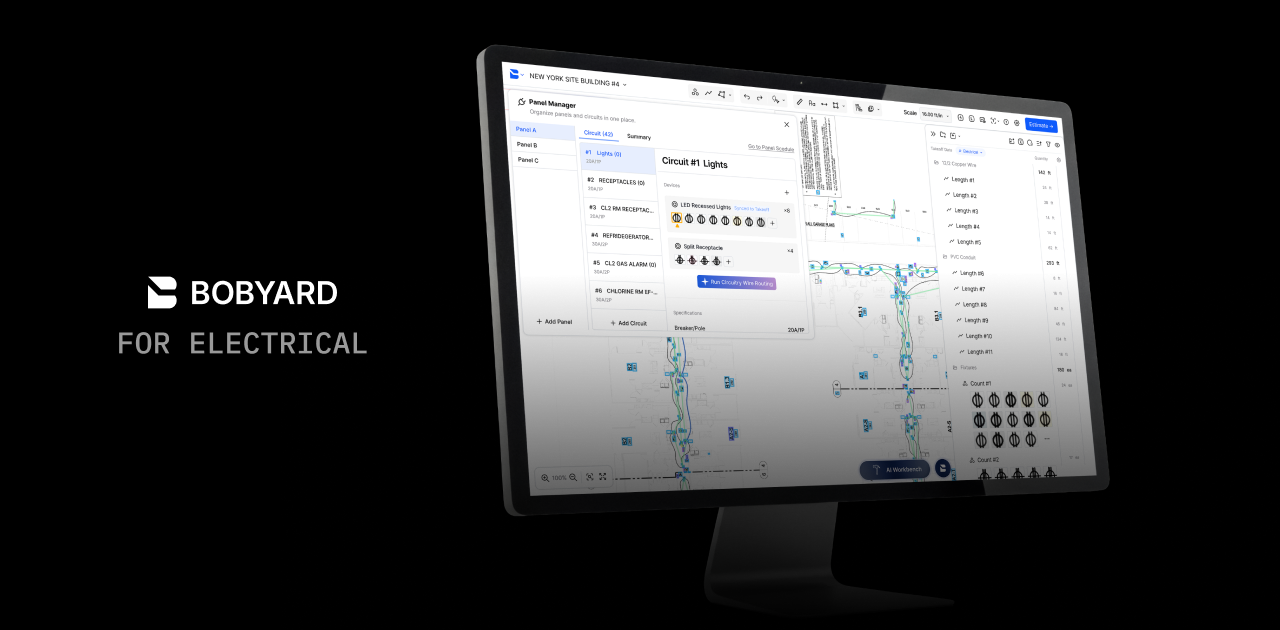
  • Roofr Review: All in One Roofing Sales Platform with AI Measurement and Proposals

    Roofr Review: All in One Roofing Sales Platform with AI Measurement and Proposals

    BestCRE 9AI Score

    69/100 · Niche

    Roofr ranks #271 of 450 commercial real estate AI tools scored on the 9AI Framework. Nine dimensions, each scored out of 10: CRE relevance, data quality, ease of adoption, output accuracy, integration fit, pricing transparency, support, innovation and market reputation.

    Roofing is a $62 billion industry in the United States according to IBISWorld’s 2025 market analysis, yet the vast majority of roofing contractors still operate with fragmented technology stacks that force manual handoffs between measurement, proposal generation, contract signing, and payment collection. The National Roofing Contractors Association found that labor shortages affected 80 percent of roofing firms in 2025, making operational efficiency critical for maintaining margins. JLL’s construction technology report noted that specialty trade contractors are among the last segments of CRE adjacent industries to adopt integrated SaaS platforms, creating an opportunity for consolidation. For commercial property owners and managers, roofing represents a significant capital expenditure category, since roof replacement and maintenance are recurring line items in building capital budgets across institutional portfolios.

    Roofr has emerged as the leading all in one roofing sales platform, serving over 12,000 roofing companies with satellite based aerial measurement reports, branded proposals with e signature, CRM functionality, work order management, invoicing, and payment processing. The company closed a Series B round from TCV and ABC Supply in January 2025 and has grown from 10 to over 150 employees. The platform supports the full contractor workflow from lead capture through measurement, proposal, e signature, work order, production, invoice, and payment. Measurement reports starting at $13 deliver satellite derived roof dimensions including squares, ridges, valleys, hips, rakes, and waste factors in as little as three hours.

    Roofr earns a 9AI Score of 69 out of 100, reflecting strong adoption, transparent pricing, and effective workflow consolidation for roofing contractors balanced by limited direct CRE institutional relevance and developing AI capabilities. The platform represents the leading vertical SaaS solution for roofing operations.

    This review is part of BestCRE’s systematic coverage of commercial real estate AI tools across 20 CRE sectors. For the full AI tools directory, see our Best CRE AI Tools hub.

    What Roofr Does and How It Works

    Roofr operates as an integrated platform that consolidates the roofing contractor’s entire sales and operations workflow into a single system. The core workflow begins with measurement. Contractors can order a satellite based measurement report by entering a property address. Roofr’s measurement team pulls satellite imagery, traces the roof outline, and calculates all relevant dimensions including total squares, ridge lengths, valley lengths, hip measurements, rake measurements, starter requirements, and waste factors. Reports are delivered in PDF and CAD formats, typically within three to six hours depending on the service tier.

    Once measurements are complete, the platform’s proposal builder enables contractors to create professional, branded proposals with multiple pricing options (commonly structured as good, better, and best packages). The drag and drop interface allows customization of materials, labor, and scope without requiring design skills. Homeowners and property managers receive proposals digitally and can approve with integrated e signature from any device. This eliminates the manual process of creating proposals in word processors, printing them, and collecting physical signatures.

    The CRM module manages the full pipeline from lead capture through project completion. Each lead progresses through defined stages (measurement, proposal, signature, work order, production, invoice, payment) with visibility across the entire workflow. For contractors managing dozens of simultaneous projects, this replaces the combination of spreadsheets, separate CRM tools, and paper based tracking that most small to mid size roofing companies use. The platform also handles invoicing and payment collection, completing the loop from initial customer contact to final payment receipt. Roofr’s roadmap includes AI Lead Capture Agents and AI Data Reporting, which would add intelligent automation to the customer acquisition and business analytics workflows.

    9AI Framework: Dimension by Dimension Analysis

    CRE Relevance: 5/10

    Roofr serves roofing contractors who work on commercial and residential properties, but the platform itself is not designed for institutional CRE workflows. Its relevance to CRE exists at the subcontractor level: property managers and owners procure roofing services from the contractors who use Roofr. The measurement and proposal tools are useful for commercial roofing projects, and the platform handles both residential and commercial scope. However, Roofr does not integrate with property management systems, capital expenditure planning tools, or institutional procurement workflows. The connection to CRE is indirect: better tools for roofing contractors improve the quality and speed of service that property owners receive. In practice: Roofr is highly relevant to the roofing trade but tangential to institutional CRE operations, serving the supply side of a service that property portfolios regularly consume.

    Data Quality and Sources: 7/10

    Roofr’s measurement data comes from satellite imagery processed by trained measurement teams and algorithms. The reports include dimensional data (squares, linear measurements, angles) derived from aerial imagery, which provides accuracy sufficient for estimating and proposal purposes. The satellite based approach differs from photogrammetry (used by Hover) and proprietary aerial surveys (used by EagleView), offering a middle ground between cost and precision. Reports are delivered in PDF and CAD formats that contractors can verify and adjust if needed. The CRM data reflects actual business operations rather than external market data. While the measurement methodology has proven sufficient for over 12,000 contractors, it may not match the precision of in person measurement for complex commercial roofs with unusual geometries. In practice: data quality is strong for proposal and estimating purposes, with satellite derived measurements that have proven reliable at scale across thousands of contractor relationships.

    Ease of Adoption: 8/10

    With over 12,000 roofing companies on the platform, Roofr has demonstrated mass adoptability within its target market. The workflow is intuitive: enter an address, receive measurements, build a proposal, send for signature. The drag and drop proposal builder requires no design skills and produces professional output. The platform consolidates seven workflow steps that previously required three or four separate tools, which means contractors simplify their technology stack by adopting Roofr rather than adding complexity. Published pricing and free self measurement options lower the barrier to trial. G2 reviews highlight the proposal builder as particularly well received for ease of use. In practice: Roofr’s adoption success across 12,000 companies demonstrates that the platform is accessible to roofing contractors across a wide range of technical sophistication, from sole proprietors to multi crew operations.

    Output Accuracy: 7/10

    Measurement reports from Roofr include detailed dimensional data that contractors use directly in pricing and material ordering, which implies a level of accuracy sufficient for commercial use. The satellite based methodology has limitations in areas with heavy tree cover, unusual roof geometries, or recent construction not captured in current imagery. For standard residential and commercial roofs, the approach produces reliable results as demonstrated by the platform’s wide adoption. The proposal outputs are as accurate as the measurements and pricing the contractor inputs, with the platform handling calculation and formatting rather than introducing its own estimation assumptions. Published reviews note occasional measurement discrepancies that require manual adjustment, which is expected for satellite derived data. In practice: accuracy is sufficient for competitive bidding and material ordering on standard roof geometries, with occasional adjustments needed for complex commercial structures.

    Integration and Workflow Fit: 6/10

    Roofr consolidates the roofing workflow internally, handling measurement, proposals, CRM, work orders, invoicing, and payments within a single platform. This internal integration is strong. However, external integrations with broader construction management platforms, accounting systems, and CRE enterprise tools are more limited. The platform’s “one platform from leads to payouts” thesis means it aims to replace external tools rather than integrate with them. For roofing contractors whose primary technology needs are covered by Roofr, this self contained approach is effective. For contractors who use separate accounting software (QuickBooks, Sage) or project management tools (Procore), the integration depth with external systems may not match expectations. In practice: internal workflow integration is excellent, but the platform operates more as a self contained ecosystem than as a component in a broader technology stack.

    Pricing Transparency: 8/10

    Roofr publishes pricing on its website, which is refreshingly transparent compared to enterprise CRE platforms. The company overhauled its pricing in March 2026, retiring the previous Pro, Premium, and Elite tiers. Current pricing includes measurement reports starting at $13 per report with delivery in as little as three hours, and Measure Plus add ons at $109 to $169 per month for priority delivery. A free self measurement option allows contractors to trace roofs themselves without purchasing reports. The AI website builder is available at $99 per month. This published pricing structure allows contractors to evaluate costs before engaging with sales and makes budget planning straightforward. In practice: pricing transparency is among the strongest in the construction technology category, with clear per report and subscription costs that enable self qualification.

    Support and Reliability: 7/10

    Roofr serves over 12,000 roofing companies and has grown from 10 to over 150 employees, indicating operational maturity sufficient to support a large user base. The Series B funding from TCV (a prominent growth equity firm) and ABC Supply (the largest wholesale distributor of roofing products in the US) provides both capital and strategic validation. G2 reviews generally reflect positive sentiment on customer support and platform reliability. The measurement delivery timelines (three to six hours) require consistent operational execution at scale, which the company appears to maintain. For a platform handling mission critical sales workflows (proposals that generate revenue), reliability during peak business periods is essential. In practice: support and reliability are adequate for the contractor market, backed by credible investors and demonstrated operational consistency across 12,000 customer relationships.

    Innovation and Roadmap: 7/10

    Roofr’s innovation lies in the consolidation of a fragmented workflow rather than in any single breakthrough technology. The satellite measurement capability, while not unique, is well integrated with the proposal and CRM workflow in a way that creates a seamless experience. The planned AI Lead Capture Agents and AI Data Reporting features on the roadmap suggest continued investment in intelligent automation. The $99 per month AI website builder represents early AI capability in the marketing layer. The company’s trajectory from measurement tool to full operational platform demonstrates strategic product expansion that creates increasing value for existing users. The March 2026 pricing overhaul shows willingness to evolve the business model alongside the product. In practice: innovation is demonstrated through workflow consolidation and strategic product expansion, with planned AI features that could significantly enhance the platform’s intelligence layer.

    Market Reputation: 7/10

    Roofr’s adoption by over 12,000 roofing companies establishes it as the leading vertical SaaS platform for roofing operations. The Series B investment from TCV and ABC Supply provides both financial credibility and industry validation (ABC Supply’s participation as a strategic investor signals confidence from the roofing industry’s largest supplier). G2 reviews reflect positive sentiment, and the platform is regularly featured in roofing industry publications and software comparison guides. The company’s growth from 10 to 150 plus employees in a few years demonstrates strong market traction. Within the roofing vertical, reputation is strong. Within the broader CRE technology ecosystem, recognition is limited because the platform serves a specific trade rather than institutional real estate workflows. In practice: market reputation is excellent within the roofing industry and growing in the broader construction technology landscape, supported by institutional investment and strong adoption metrics.

    9AI Score Card Roofr
    69
    69 / 100
    Emerging Tool
    Roofing Sales and Operations Platform
    Roofr
    Roofr serves 12,000 plus roofing companies with satellite measurement, branded proposals, CRM, and payments in one platform from leads to payouts.
    9 Dimensions, Scored 1 to 10
    1. CRE Relevance
    5/10
    2. Data Quality & Sources
    7/10
    3. Ease of Adoption
    8/10
    4. Output Accuracy
    7/10
    5. Integration & Workflow Fit
    6/10
    6. Pricing Transparency
    8/10
    7. Support & Reliability
    7/10
    8. Innovation & Roadmap
    7/10
    9. Market Reputation
    7/10
    BestCRE.com, 9AI Framework v2 Reviewed April 2026

    Who Should Use Roofr

    Roofr is designed for roofing contractors ranging from sole proprietors to multi crew operations who need to streamline their sales and operations workflow. The platform delivers the most value to contractors currently using three or more separate tools for measurement, proposals, customer management, and payments. Companies submitting multiple bids per week benefit from the integrated workflow that moves from measurement to signed contract faster. Commercial roofing contractors working on property management accounts benefit from the professional proposal presentation and digital signature capabilities. If your roofing business struggles with proposal turnaround time, customer tracking, or payment collection, Roofr consolidates those pain points into a single platform.

    Who Should Not Use Roofr

    Roofr is not appropriate for institutional CRE asset managers, investors, or firms that do not directly perform or manage roofing work. The platform does not serve general contracting, development, or property management workflows beyond the roofing scope. Large commercial roofing contractors with established enterprise systems (ERP, advanced project management) may find the platform’s integration depth insufficient for their technology stack. Firms that need precise measurement from proprietary aerial surveys rather than satellite imagery should evaluate EagleView or similar premium measurement services. Teams focused on non roofing construction trades will not find relevant capabilities in the current version.

    Pricing and ROI Analysis

    Roofr publishes clear pricing on its website. Measurement reports start at $13 per report with delivery in as little as three hours, with a free self measurement option available. The Measure Plus subscription offers priority delivery at $109 to $169 per month. The AI website builder is $99 per month. For a roofing contractor whose average project is $8,000 to $15,000 and who converts 20 to 30 percent of proposals, the investment in faster, more professional proposals can generate significant incremental revenue. If professional proposals increase close rates by even 5 percentage points, the ROI from a $169 monthly subscription is recovered from a single additional closed project. The consolidated workflow also saves administrative time that contractors can redirect to sales activity.

    Integration and CRE Tech Stack Fit

    Roofr is designed as a self contained platform that handles the full roofing sales cycle internally. The platform manages leads, measurements, proposals, contracts, work orders, invoicing, and payments without requiring external tools. For contractors who previously assembled this workflow from separate applications, Roofr replaces rather than integrates. External connections to accounting systems (QuickBooks), construction management platforms, or CRE enterprise tools are not prominently documented. For property managers who procure roofing services, Roofr does not provide a portal or integration point for managing vendor relationships from the owner side. The platform fits the roofing contractor’s tech stack, not the property owner’s tech stack.

    Competitive Landscape

    Roofr competes with EagleView (premium aerial measurement), Hover (photogrammetry based measurement and design), RooferBase (roofing CRM and operations), and JobNimbus (roofing business management). Its differentiation is the integration of measurement, proposals, CRM, and payments in a single platform at an accessible price point. EagleView offers higher precision measurement but at premium pricing and without the integrated sales workflow. Hover provides 3D modeling capabilities but focuses on visualization rather than full sales operations. RooferBase and JobNimbus offer competing CRM and operations features but with different measurement partnerships. Roofr’s 12,000 plus customers and Series B funding establish it as the category leader in integrated roofing sales platforms.

    The Bottom Line

    Roofr is the leading vertical SaaS platform for roofing contractors, combining measurement, proposals, CRM, and payments into a workflow that 12,000 companies depend on daily. The 9AI Score of 69 out of 100 reflects strong adoption, transparent pricing, and effective workflow automation balanced by limited direct CRE institutional relevance. For roofing contractors seeking to professionalize their sales process and consolidate their technology stack, Roofr is the category standard. For CRE property managers and owners, understanding that your roofing vendors use Roofr means expecting faster proposals, digital signatures, and more professional engagement from the contractors who maintain your portfolio’s most critical building envelope component.

    About BestCRE

    BestCRE is the definitive authority on commercial real estate AI, analysis, and investment intelligence. Every article advances the mission of helping CRE professionals identify, evaluate, and deploy the best technology for their investment and operational workflows. We benchmark platforms using the 9AI Framework so CRE leaders can compare tools with clear, evidence based scoring. Explore the full category map at 20 CRE sectors for deeper coverage across the CRE technology stack.

    Frequently Asked Questions

    How accurate are Roofr satellite measurement reports?

    Roofr’s measurement reports are derived from satellite imagery processed by trained measurement teams and algorithms. The reports include total roof squares, ridge lengths, valley lengths, hip measurements, rake measurements, starter requirements, and waste factor calculations delivered in PDF and CAD formats. The accuracy is sufficient for competitive bidding and material ordering, as demonstrated by adoption across 12,000 roofing companies who rely on these measurements for business critical proposals. For standard residential and straightforward commercial roofs, satellite derived measurements provide reliable dimensional data. Complex commercial roofs with unusual geometries, heavy tree cover, or recent modifications not captured in current imagery may require supplemental on site measurement. Contractors can also use the free self measurement tool to verify or supplement satellite reports.

    What does Roofr cost for roofing contractors?

    Roofr overhauled its pricing in March 2026. Measurement reports start at $13 per report with delivery in as little as three hours. The Measure Plus subscription offers priority delivery at $109 per month (six hour delivery) or $169 per month for faster turnaround. A free self measurement option allows contractors to trace roof outlines themselves without purchasing reports. The AI website builder is available at $99 per month. The previous Pro, Premium, and Elite tier structure has been retired. The published pricing makes budgeting straightforward for contractors of any size, and the per report model means firms only pay for measurement when they need it rather than committing to volume they may not use consistently.

    How does Roofr’s proposal builder work?

    Roofr’s drag and drop proposal builder allows contractors to create professional, branded proposals without design skills. Measurement data from satellite reports or self measurement imports directly into the proposal template. Contractors add their pricing for materials, labor, and scope, typically structured as good, better, and best packages that give property owners options at different price points. The proposals include branding elements (logo, colors, company information), detailed scope descriptions, material specifications, and pricing breakdowns. Homeowners and property managers receive proposals digitally and can approve with integrated e signature from any device. The proposal builder is consistently cited in G2 reviews as the platform’s most valued feature for its combination of professional output and ease of use.

    Does Roofr work for commercial roofing projects?

    Roofr handles both residential and commercial roofing projects, with satellite measurement reports available for any address in the United States. Commercial roofing contractors use the platform for measurement, proposals, and CRM just as residential contractors do. For commercial projects, the professional proposal presentation and digital signature capabilities are particularly valuable when working with property management firms that expect polished vendor communications. The measurement reports cover the same dimensional data (squares, ridges, valleys, waste factors) regardless of building type. However, very large or complex commercial roofs may require supplemental on site measurement to capture details that satellite imagery cannot fully resolve, such as multi level roof sections or areas obscured by mechanical equipment.

    What AI features does Roofr currently offer and what is planned?

    Roofr’s current AI capabilities include an AI powered website builder available at $99 per month that helps roofing contractors create professional web presence with minimal effort. The satellite measurement process involves algorithmic processing of aerial imagery, though the primary intelligence comes from trained measurement teams rather than fully autonomous AI. The company’s roadmap includes AI Lead Capture Agents that would automate initial customer engagement and qualification, and AI Data Reporting that would provide intelligent business analytics and insights across the contractor’s operations. These planned features would significantly enhance the platform’s AI dimension by adding autonomous intelligence to customer acquisition and business decision making workflows that currently require manual oversight.

    Related Reviews

    Compare Roofr with other Construction & Development tools BestCRE has scored: Built (76/100), OnsiteIQ (71/100), Field Materials (70/100) and Civils.ai (69/100). Browse every review in CRE Construction & Development, the full Best CRE AI Tools directory, or the 20 CRE Sectors hub.

  • Bobyard Review: AI Powered Takeoff and Estimating for Construction and Landscaping

    Bobyard Review: AI Powered Takeoff and Estimating for Construction and Landscaping

    BestCRE 9AI Score

    64/100 · Niche

    Bobyard ranks #337 of 450 commercial real estate AI tools scored on the 9AI Framework. Nine dimensions, each scored out of 10: CRE relevance, data quality, ease of adoption, output accuracy, integration fit, pricing transparency, support, innovation and market reputation.

    Construction estimating remains one of the most labor intensive bottlenecks in commercial real estate development. Construction has been slow to digitize, with estimating workflows still dominated by manual plan reading and quantity calculations. Labor is a related constraint. The Associated General Contractors of America and NCCER 2025 Workforce Survey found that 83 percent of firms with craft worker openings report those positions are as hard or harder to fill than a year ago. Estimating capacity is hard to add in that environment. The Turner Building Cost Index rose 5.2 percent year over year in the second quarter of 2026, according to Turner Construction, which raises the stakes for firms that must produce accurate, competitive bids quickly enough to win work. For landscaping and site work contractors specifically, the challenge is compounded by the complexity of plan sets that combine planting schedules, irrigation systems, hardscape measurements, and electrical specifications into documents that require specialized expertise to interpret.

    Bobyard addresses this gap with an AI platform that automates quantity takeoffs from construction plans. The platform, which launched Bobyard 2.0, can instantly detect and count planting, irrigation, and electrical symbols, automatically measure pavers, concrete, and other materials, and calculate beds, edges, and hardscape in seconds. The company says the system automates up to 70 percent of the quantity and material takeoff process, and that teams commonly cut takeoff time by 50 to 90 percent, with one customer reporting 5X bid volume. Originally built for landscaping contractors, Bobyard now supports six trades: landscaping, electrical, plumbing, mechanical, interior finishes, and paving.

    Bobyard earns a 9AI Score of 64 out of 100, reflecting genuine innovation in AI powered takeoff automation balanced by limited CRE institutional depth, early trade focus, and developing market reputation. The platform represents an emerging category of AI tools that compress pre construction workflows for specialized contractors.

    This review is part of BestCRE’s systematic coverage of commercial real estate AI tools across 20 CRE sectors. For the full AI tools directory, see our Best CRE AI Tools hub.

    What Bobyard Does and How It Works

    Bobyard operates as an AI powered takeoff platform that reads construction plans and automatically identifies, counts, and measures elements that estimators would otherwise process manually. Users upload plan sheets (PDFs or images) and the platform’s computer vision models identify symbols, shapes, and annotations specific to the trade being estimated. For landscaping plans, the AI recognizes planting symbols and counts them by type, detects irrigation components and maps their distribution, identifies hardscape areas and calculates square footage, and measures linear elements like edging and borders.

    The Bobyard 2.0 platform introduces a unified AI workbench that consolidates multiple estimation workflows into a single environment. The Multi Measure feature allows estimators to draw a single shape and automatically calculate area, perimeter, and volume simultaneously rather than requiring separate measurements for each metric. This addresses a common pain point where estimators must create redundant annotations on plans to capture different dimensional properties of the same element. The platform’s “measure first, price later” model separates the physical quantity takeoff from the pricing step, allowing estimators to complete accurate measurements before applying material costs and labor rates.

    The material and cost integration in Bobyard 2.0 connects measurements directly to pricing databases, so once quantities are established, the system can generate preliminary cost estimates without requiring manual lookup and calculation. For contractors submitting multiple bids per week, the ability to move from plan receipt to quantity takeoff to preliminary pricing in hours rather than days represents a meaningful competitive advantage. The platform’s claimed automation of up to 70 percent of the takeoff process means estimators spend their expertise on the 30 percent that requires human judgment (unusual conditions, site specific factors, scope clarifications) rather than on routine counting and measuring that AI handles more consistently.

    9AI Framework: Dimension by Dimension Analysis

    CRE Relevance: 6/10

    Bobyard serves the construction estimation workflow that is part of the broader CRE development pipeline. However, its primary focus on landscaping takeoffs positions it in a specialized trade niche rather than at the institutional CRE level where decisions about building development, financing, and investment occur. The platform is relevant to general contractors, landscape contractors, and developers who need to price site work as part of larger projects. Its expansion to six construction trades broadens its CRE relevance. For CRE developers managing ground up projects, accurate site work takeoffs inform budget decisions. But the platform does not directly serve the asset management, leasing, or investment workflows that define institutional CRE operations. In practice: Bobyard is relevant to CRE development workflows at the trade contractor level, but its current landscaping focus limits broader institutional CRE applicability.

    Data Quality and Sources: 7/10

    Bobyard’s AI models process construction plan documents directly, extracting measurements and quantities from the source documents that define scope. The data quality depends on the accuracy of the AI’s interpretation of plan symbols, dimensions, and annotations. The platform claims to automate 70 percent of the takeoff process, which implies high accuracy for the elements it handles. The AI symbol detection for planting, irrigation, and electrical components demonstrates domain specific training that goes beyond generic image recognition. Material and cost databases provide pricing context that connects quantities to budgets. However, the platform has not published specific accuracy metrics or error rates that would allow comparison against manual takeoff accuracy. In practice: data quality is grounded in direct plan interpretation with domain trained AI, producing measurements accurate enough for bid preparation at the 70 percent automation level.

    Ease of Adoption: 8/10

    Bobyard is designed for immediate usability by construction estimators who can upload plans and begin receiving automated takeoffs without extensive training or implementation. The platform’s workflow mirrors the mental model of estimators (upload plan, identify elements, measure quantities, apply pricing) while automating the most repetitive steps. The company’s reported takeoff time savings of 50 to 90 percent suggest that users achieve value from their first session. The Multi Measure feature and unified workbench reduce the learning curve by consolidating functions that traditionally require separate tools or multiple passes through a plan set. For trade contractors accustomed to manual measurement or basic PDF takeoff tools, Bobyard represents a meaningful step up in capability without requiring technical expertise. In practice: adoption is designed for immediate productivity gains with a workflow that construction estimators will find intuitive and familiar.

    Output Accuracy: 7/10

    The platform’s claimed automation of 70 percent of the takeoff process, which implies that outputs for those automated elements are accurate enough to trust in bid preparation. The remaining 30 percent requiring human judgment suggests appropriate calibration: the AI handles routine counting and measurement while flagging complex or ambiguous elements for estimator review. The symbol detection capability for planting, irrigation, and electrical components demonstrates specialized accuracy in recognizing and categorizing plan elements. However, published accuracy benchmarks, error rates, or comparison studies against manual takeoffs are not available. For competitive bidding where accuracy directly affects profitability, the 70 percent automation claim positions Bobyard as a productivity tool that augments rather than replaces estimator judgment. In practice: outputs are reliable enough for production use in bid preparation, though estimators should verify automated quantities for complex or high value elements.

    Integration and Workflow Fit: 5/10

    Bobyard integrates materials and costs within its platform but does not prominently document connections to broader construction management systems, accounting platforms, or enterprise CRE tools. The platform operates primarily as a standalone estimation tool where outputs may need to be transferred to other systems for project management, procurement, or financial tracking. For trade contractors using QuickBooks, Sage, or construction specific ERP systems, the integration path is not clearly documented. The “measure first, price later” model suggests that material databases are internal to the platform rather than pulled from external sources. For firms that need estimation outputs to flow into broader project management workflows, manual data transfer may be required. In practice: Bobyard functions effectively as a standalone estimation tool but lacks the documented integration depth that firms with established tech stacks require.

    Pricing Transparency: 5/10

    Bobyard does not prominently publish pricing on its website, though the platform provides an ROI calculator that helps prospective users estimate potential savings. The ROI calculator suggests the company understands the value conversation but chooses not to publish specific tier pricing publicly. The platform appears to operate on a subscription model based on its SaaS architecture, but exact costs per user or per project are not visible. For trade contractors evaluating the tool against alternatives like Togal.AI (which publishes $299 per month per user), the lack of published pricing creates unnecessary friction in the evaluation process. The ROI calculator partially compensates by helping users understand potential value before engaging sales. In practice: pricing requires direct inquiry, though the ROI calculator provides some guidance on expected value that aids budget conversations.

    Support and Reliability: 6/10

    Bobyard is an early stage company that has recently launched its 2.0 platform, indicating active development and investment in the product. The Crunchbase profile confirms venture funding, which signals investor confidence in the team and technology. Coverage in Landscape Management and AI industry publications demonstrates market awareness. However, the platform’s operational history is limited compared to established construction technology companies. Public documentation on support tiers, uptime guarantees, and enterprise reliability is not readily available. For trade contractors who need consistent availability during peak bidding periods, the early stage maturity introduces some uncertainty. In practice: the platform shows active development momentum and credible backing, but limited operational history means reliability is not yet proven at scale over extended periods.

    Innovation and Roadmap: 8/10

    Bobyard demonstrates genuine technical innovation in applying computer vision and AI to construction plan interpretation. The ability to automatically detect and count trade specific symbols (planting, irrigation, electrical) represents specialized AI training that goes beyond generic document processing. The Multi Measure feature that calculates area, perimeter, and volume from a single annotation shows thoughtful product design around estimator workflows. The launch of Bobyard 2.0 with its unified AI workbench and the expansion to six construction trades signals an active roadmap. The claimed 70 percent automation rate positions the platform at the frontier of what current AI can reliably achieve in construction takeoff. In practice: Bobyard represents meaningful innovation in AI applied to construction estimation, with a clear expansion path from landscaping to broader trade categories.

    Market Reputation: 6/10

    Bobyard has achieved visibility in trade publications (Landscape Management) and AI industry media (Artificial Intelligence News), which demonstrates market awareness among its target audience. The Crunchbase profile confirms legitimate venture backing. However, the platform has not yet achieved the widespread adoption or named enterprise client base that established construction technology companies possess. Reviews on G2, Capterra, or other software evaluation platforms are limited. The landscaping industry focus gives the company a clear beachhead market with room to expand, but current reputation is built on potential and early traction rather than proven scale. In practice: market reputation is developing with credible press coverage and investor backing, but the platform has not yet achieved the established presence that reduces buyer risk for institutional adopters.

    9AI Score Card Bobyard
    64
    64 / 100
    Emerging Tool
    Construction Takeoff and Estimation
    Bobyard
    Bobyard automates up to 70 percent of construction takeoffs with AI symbol detection and measurement, enabling estimators to submit 3 to 5 times more bids.
    9 Dimensions, Scored 1 to 10
    1. CRE Relevance
    6/10
    2. Data Quality & Sources
    7/10
    3. Ease of Adoption
    8/10
    4. Output Accuracy
    7/10
    5. Integration & Workflow Fit
    5/10
    6. Pricing Transparency
    5/10
    7. Support & Reliability
    6/10
    8. Innovation & Roadmap
    8/10
    9. Market Reputation
    6/10
    BestCRE.com, 9AI Framework v2 Reviewed April 2026

    Who Should Use Bobyard

    Bobyard is designed for landscaping contractors, general contractors handling site work, and estimators who need to produce quantity takeoffs from plan sets faster than manual methods allow. The platform is particularly valuable for firms bidding on multiple projects simultaneously where estimator bandwidth limits the number of competitive proposals submitted. Companies with dedicated estimation teams that process landscape, irrigation, hardscape, and electrical plans will see the most immediate time savings. Developers who self perform site work or need to validate subcontractor bids can also benefit from rapid independent takeoffs. If your firm loses opportunities because estimators cannot process plans fast enough to meet bid deadlines, Bobyard directly addresses that constraint.

    Who Should Not Use Bobyard

    Bobyard is not appropriate for institutional CRE investors, asset managers, or firms focused on building operations rather than construction. The platform does not serve leasing, financing, or portfolio management workflows. Teams focused on commercial building trades (mechanical, electrical, plumbing, structural) will not find relevant capabilities in the current landscaping focused version, though the expansion to additional trades is planned. Firms that need deep integration with construction management platforms (Procore, PlanGrid, Autodesk Build) may find the standalone nature limiting. Very small operators with occasional projects may not generate enough bid volume to justify subscription costs.

    Pricing and ROI Analysis

    Bobyard’s specific pricing is not published but the company provides an ROI calculator on its website to help prospective users estimate potential savings. The ROI case is compelling: if the platform enables estimators to submit several times more bids while reducing takeoff time by 50 to 90 percent, the incremental revenue from additional won projects can substantially exceed subscription costs. For a landscaping contractor with an average project value of $50,000 and a typical win rate of 20 percent, submitting four additional bids per week (enabled by time savings) could generate $40,000 in incremental weekly revenue. Even at aggressive subscription pricing, the economics favor adoption for any firm submitting regular bids.

    Integration and CRE Tech Stack Fit

    Bobyard operates primarily as a standalone estimation platform. The 2.0 version integrates materials and costs within the platform, allowing users to move from measurement to preliminary pricing without switching tools. However, documented integrations with broader construction management platforms (Procore, Buildertrend, CoConstruct), accounting systems (QuickBooks, Sage), or CRE enterprise tools are not prominently marketed. For trade contractors whose tech stack consists of basic business tools, the standalone nature is acceptable. For firms with established project management workflows that expect estimation data to flow into other systems, manual export or data transfer may be required until integration depth matures.

    Competitive Landscape

    Bobyard competes with AI powered takeoff platforms including Togal.AI ($299 per month per user, claiming 98 percent accuracy and 80 percent time reduction), Attentive.ai (aerial imagery based takeoffs), and traditional digital takeoff tools like PlanSwift, Bluebeam, and On Screen Takeoff. Its primary differentiation is the landscaping industry focus with specialized symbol detection for planting, irrigation, and hardscape elements that general purpose takeoff tools do not handle natively. Togal.AI offers broader construction trade coverage with published pricing and accuracy claims. Traditional tools provide more manual control but less automation. For landscaping contractors specifically, Bobyard’s domain specialization likely provides accuracy advantages over general purpose alternatives.

    The Bottom Line

    Bobyard is an innovative AI takeoff platform that addresses a real productivity bottleneck for landscaping and construction estimators. The 9AI Score of 64 out of 100 reflects genuine technical innovation and strong ease of use balanced by narrow trade focus, early stage maturity, and limited CRE institutional relevance. For landscaping contractors and site work estimators who need to bid more projects faster, the platform delivers measurable time savings. The expansion to six construction trades broadens its applicability to more CRE development workflows. As a specialized estimation tool rather than an enterprise CRE platform, Bobyard occupies a narrow but valuable position in the pre construction technology landscape.

    About BestCRE

    BestCRE is the definitive authority on commercial real estate AI, analysis, and investment intelligence. Every article advances the mission of helping CRE professionals identify, evaluate, and deploy the best technology for their investment and operational workflows. We benchmark platforms using the 9AI Framework so CRE leaders can compare tools with clear, evidence based scoring. Explore the full category map at 20 CRE sectors for deeper coverage across the CRE technology stack.

    Frequently Asked Questions

    What types of construction plans can Bobyard process?

    Bobyard currently processes landscaping related construction plans including planting plans (with automatic symbol detection and counting), irrigation plans (identifying components and mapping distribution), hardscape plans (measuring areas of pavers, concrete, and other materials), and electrical site plans. The platform reads PDF and image format plan sheets that estimators upload directly. Bobyard 2.0 launched with expanded capabilities for landscaping contractors, and the platform now supports six trades: landscaping, electrical, plumbing, mechanical, interior finishes, and paving. The AI models are trained specifically on trade relevant symbols and annotations rather than applying generic document processing, which enables the specialized detection accuracy that trade estimators require.

    How much time does Bobyard save compared to manual takeoff methods?

    Bobyard reports that teams commonly cut takeoff time by 50 to 90 percent compared to manual methods, and that its platform automates up to 70 percent of the quantity and material takeoff process. This time savings enables estimators to submit three to five times more bids per estimator, which directly impacts revenue potential for firms constrained by estimation bandwidth. For a project that would typically require eight hours of manual takeoff work, Bobyard’s automation could compress that to approximately three hours. The remaining time is spent on the 30 percent of elements that require human judgment, such as unusual site conditions, scope clarifications, or non standard specifications that the AI flags for review rather than automating.

    How does Bobyard compare to Togal.AI for construction takeoffs?

    Bobyard and Togal.AI both apply AI to construction takeoff automation but differ in focus and positioning. Togal.AI publishes pricing at $299 per month per user (annual), claims 98 percent accuracy, and supports broader construction trades with a focus on general commercial estimating. Bobyard specializes in landscaping and site work with domain specific symbol detection for planting, irrigation, hardscape, and electrical elements. For landscaping contractors, Bobyard’s specialized AI models likely produce more accurate results for trade specific symbols than general purpose alternatives. For general contractors handling multiple building trades, Togal.AI’s broader trade coverage may provide more immediate value. The choice depends on whether the buyer prioritizes depth in landscape estimation or breadth across construction trades.

    What is the Multi Measure feature in Bobyard 2.0?

    Multi Measure is a Bobyard 2.0 feature that allows estimators to draw a single shape or line on a plan and automatically calculate multiple dimensional properties simultaneously. Instead of creating separate annotations for area, perimeter, and volume of the same element (which traditional takeoff tools require), estimators draw once and receive all relevant measurements at the same time. This addresses a common workflow inefficiency where estimators must trace the same hardscape area three times to get square footage (for material), linear footage (for edging), and cubic volume (for base material). The feature reduces both the time and the error potential inherent in redundant measurement operations.

    Is Bobyard expanding beyond landscaping to other construction trades?

    Yes, Bobyard has expanded beyond landscaping and now supports six trades: landscaping, electrical, plumbing, mechanical, interior finishes, and paving. The platform launched initially for landscaping contractors as its beachhead market, building specialized AI models for planting, irrigation, hardscape, and electrical symbol detection. The planned expansion to additional trades would broaden the platform’s applicability to general contractors, subcontractors in other disciplines, and CRE developers who need takeoff capabilities across multiple scopes of work. The specific trades targeted for expansion have not been publicly detailed, but the platform’s computer vision architecture is designed to be trained on new symbol sets and measurement patterns as new trade modules are developed.

    Related Reviews

    Compare Bobyard with other Construction & Development tools BestCRE has scored: Resolve (71/100), Field Materials (70/100), Civils.ai (69/100) and Firmus (69/100). Browse every review in CRE Construction & Development, the full Best CRE AI Tools directory, or the 20 CRE Sectors hub.

PRIME 7.00%FED FUNDS 3.88%5-YR UST 4.64% ▲10-YR UST 4.86% ▲SOFR 30D 3.91%Updated Nov 10, 2026
Talk to a CRE Capital Advisor
Sizing a deal? | Curated capital network Tell Us About Your Deal (307) 439-0410