Condo Control is community management software for condominium associations, homeowners associations, property management companies, and apartment operators. It changes the daily workflow around resident requests, rule violations, amenity reservations, documents, payments, maintenance, security, and board communication. Instead of managing those activities through separate inboxes, spreadsheets, paper forms, and resident portals, an operator can keep them within one property and portfolio system. The product is best understood as association operations software rather than a conventional commercial property management suite. It serves a real estate operating need, but its center of gravity is residential communities with shared governance.
The platform is unusually broad for this niche. Its modules cover accounting, billing and collections, online payments, maintenance requests, architectural changes, preventive maintenance, records, electronic voting, security logs, package management, visitor parking, amenity booking, and resident communications. Portfolio tools let management companies monitor work across multiple communities, while the resident portal provides a single place for occupants to submit requests and retrieve information. This breadth can reduce system switching, but buyers should verify the depth of each module against their existing accounting, maintenance, and access control requirements.
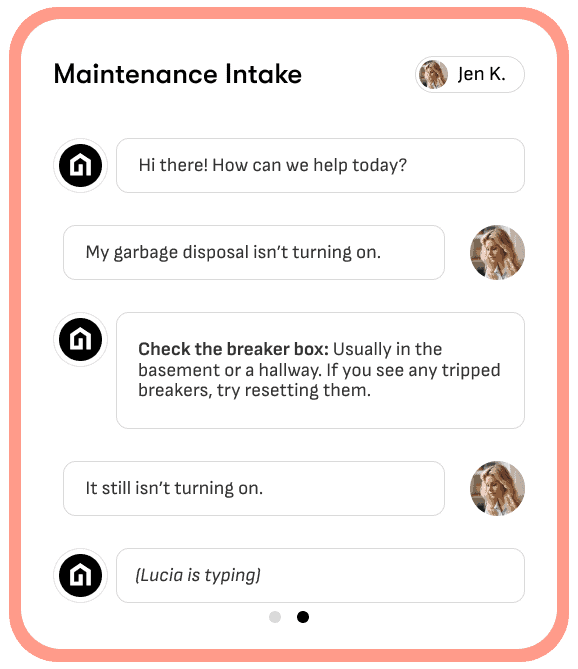
AI appears in practical, service oriented workflows. Condo Control promotes an AI manager assistant, resident answers based on searchable community knowledge, automated routing, and a manager inbox spanning voice, text, and email. These functions address a costly problem for association managers: repeated questions and fragmented communication. BestCRE’s analysis is that the AI value depends less on general intelligence than on the quality of each community’s documents, records, permissions, and escalation rules. Poor source material will limit the usefulness of automated answers regardless of the interface.
The vendor says its platform serves more than 3.5 million residents across North America and reports 99.9 percent platform uptime, 98 percent support quality, and 99 percent ease of setup. Those are vendor claims, and buyers should request definitions, measurement periods, sample sizes, service commitments, and reference customers before treating them as procurement evidence. The overall verdict is favorable for condominium and HOA operators seeking one operational layer across staff, boards, and residents. Conventional office, industrial, retail, and investment teams will find the fit substantially weaker.
What Condo Control Does and How It Works
Condo Control organizes a community around linked records for residents, units, documents, requests, payments, amenities, visitors, incidents, violations, and governance activity. Managers can publish announcements, maintain a resident database, store files, track tasks, collect electronic consent, and support virtual meetings or voting. Residents use a branded portal or mobile experience to pay charges, request service, reserve shared facilities, obtain documents, register guests, and receive updates. Boards can review financial information, notices, agendas, minutes, approvals, and historical records without requiring managers to compile every update manually.
Operational workflows are the core strength. A manager can receive a maintenance request, assign responsibility, monitor its status, identify an overdue item, and preserve the history for future review. Violation tracking creates a structured record of community rule issues rather than leaving notices scattered across email and paper files. Security functions address authorized entry, keys, patrol activity, packages, parking, and incidents. Amenity and event features add booking controls that matter in shared residential properties. Portfolio views are intended to expose response times, escalations, workloads, and communities needing attention, although buyers should test whether available reporting supports their exact regional structure and management agreements.
The accounting offering includes association accounting, accounts payable, accounts receivable, billing, collections, bank reconciliation, budgeting, reporting, approvals, vendor management, and audit oriented record keeping. Condo Control also offers managed accounting and moderated meeting services, which may appeal to associations without deep internal staffing. Its AI layer handles routine resident questions, searches community information, assists managers, and routes matters requiring human action. The practical implementation question is whether permissions prevent one resident or board member from seeing information intended for another audience. Buyers should test document retrieval, answer citations, escalation behavior, multilingual use, retention settings, exports, and audit trails with their own data before deployment.
9AI Framework: Dimension by Dimension Analysis
CRE Relevance: 7/10
A score of 7 reflects strong relevance to residential community operations but limited applicability across institutional commercial property types. Condo Control maps closely to condominium and HOA workflows, including violations, amenities, resident records, governance, payments, maintenance, packages, access, and board reporting. Property management companies with association portfolios can use it as an operating system across multiple communities. However, an office, retail, industrial, hospitality, or logistics owner should not expect specialized lease administration, tenant recoveries, deal management, capital markets analysis, or commercial asset management workflows. Apartment operators may find selected functions useful, but should confirm that leasing, rent accounting, and compliance requirements match the product. BestCRE classifies the platform as CRE adjacent because it supports real property operations while focusing primarily on resident governed communities rather than mainstream commercial assets.
Data Quality and Sources: 7/10
A score of 7 recognizes a broad, structured operating record without assuming that the underlying information is automatically reliable. The platform can centralize unit, resident, financial, maintenance, violation, visitor, document, voting, and communication data. That structure is valuable because events can be associated with a community and preserved for later review. Data quality will still depend on configuration, staff discipline, duplicate management, document maintenance, and integrations with financial or access systems. AI answers create an additional dependency on current, correctly permissioned source documents. The vendor does not publish enough technical detail to independently assess retrieval evaluation, data lineage, model monitoring, or error rates. Buyers should run migration samples and compare balances, resident identities, open work, violation histories, permissions, and document versions before approving a full conversion.
Ease of Adoption: 8/10
A score of 8 reflects a product designed around recognizable tasks for managers, residents, board members, volunteers, accounting staff, and security teams. A unified portal can be easier to introduce than a collection of unrelated point products, particularly when residents need one destination for payments, requests, bookings, votes, notices, and documents. Condo Control also offers onboarding, training, ongoing support, and mobile applications. The vendor’s reported setup metric is encouraging, but the methodology is not published in enough detail for independent validation. Adoption risk remains meaningful because every community has its own bylaws, approval paths, amenity rules, communication practices, and resident demographics. Successful rollout requires clean records, clear permissions, board agreement, staff ownership, and resident education. Buyers should pilot one representative community before committing an entire portfolio.
Output Accuracy: 7/10
A score of 7 reflects credible record based workflows paired with unanswered questions about AI evaluation. Transaction histories, booking records, voting records, task states, and violation logs can be accurate when users enter data consistently and system rules are configured correctly. Financial output should be reconciled against bank, billing, payment, and legacy records during implementation. For AI generated resident answers or manager assistance, accuracy depends on the source documents, retrieval method, permissions, and escalation design. Condo Control does not publicly provide a comprehensive benchmark for answer accuracy, hallucination rates, citation coverage, or false routing. BestCRE’s analysis is that buyers should treat AI output as assisted service rather than an authoritative interpretation of bylaws, statutes, financial obligations, or legal notices. A controlled test set of common and adversarial questions is essential before resident access is enabled.
Integration and Workflow Fit: 7/10
A score of 7 reflects the presence of an integration offering and broad internal modules, balanced against limited public detail about every connector and data exchange method. Condo Control can potentially reduce integration burden by placing accounting, operations, resident services, governance, communications, and security workflows in one platform. Most professional operators will still need connections to banks, payment services, access control hardware, accounting systems, identity providers, document repositories, or reporting environments. Buyers should request the current integration catalog and verify whether each connection is native, partner delivered, file based, or custom. They should also examine API coverage, webhooks, authentication, rate limits, field mappings, error handling, ownership of connector support, and export accessibility. The score rewards credible stack fit for associations without assuming interoperability that the vendor has not publicly documented.
Pricing Transparency: 5/10
A score of 5 applies because Condo Control does not publish enough standard pricing information for a buyer to estimate total cost without contacting sales. Public pages direct prospects toward a demonstration and package discussion rather than presenting a complete price table covering subscriptions, implementation, migration, support, payments, accounting, optional services, integrations, and contract terms. This makes early comparison harder for self managed communities and portfolio operators alike. Buyers should request pricing by unit, community, module, user, transaction, and service, even if some of those measures do not apply. They should also ask about minimum fees, annual increases, onboarding charges, data conversion, training, premium support, payment processing, termination assistance, and data exports. The score reaches the framework ceiling for a vendor without published pricing, but cannot exceed it absent usable public figures.
Support and Reliability: 8/10
A score of 8 reflects a visible commitment to onboarding, training, manager and resident assistance, a help center, system status reporting, and ongoing support. Community software produces an unusually wide support surface because managers, board members, residents, accounting teams, and security personnel may all need help with different tasks. Condo Control publicly reports a high support quality measure, but buyers should ask how that figure is calculated and which customer populations it includes. Procurement should focus on documented response and resolution targets, support hours, emergency coverage, escalation paths, implementation staffing, named account ownership, and assistance for residents who struggle with digital tools. Reference calls should include both a management company and a self managed association with similar complexity. The score is strong because support is central to the offering, while stopping short of assuming every service claim will match contract terms.
Innovation and Roadmap: 8/10
A score of 8 recognizes useful application of AI to the actual burden of community management. The manager assistant, searchable resident knowledge, automated routing, and combined voice, text, and email inbox target repetitive questions and fragmented service work rather than adding a generic chatbot to an unrelated product. Combining these functions with portfolio workload signals, accounting, records, governance, and resident self service can produce meaningful operational context. The limiting issue is verification. Condo Control does not publish enough detail about models, evaluation methods, citations, confidence controls, retention, or administrative review to establish how safely the AI performs across diverse communities. BestCRE’s analysis is that the innovation is practical and well placed, but buyers should score it on reduced handling time, containment quality, escalation accuracy, and resident satisfaction during a controlled pilot.
Market Reputation: 7/10
A score of 7 reflects meaningful market presence in condominium and HOA management, supported by the vendor’s stated resident reach and visible specialization in North American communities. The product covers the needs of managers, boards, residents, security teams, and self managed associations, suggesting experience with a complex set of stakeholders. Its positioning is clearer than that of a generic property platform attempting to serve every asset class. Still, market reputation should be tested rather than inferred from scale claims or testimonials alone. The vendor does not publish every figure needed to judge customer retention, implementation success, complaint resolution, or module adoption. Buyers should seek references matching their portfolio size, jurisdiction, accounting model, and governance structure. They should also review service history, data portability, system status records, contract renewal terms, and support performance before making a portfolio decision.
Who Should Use Condo Control
Condo Control is best suited to condominium and HOA management companies that want a shared operating layer across multiple communities. It fits teams dealing with high resident contact volume, board reporting, rule enforcement, amenity reservations, packages, visitor access, maintenance requests, payments, documents, and elections. A regional operator can use portfolio views to standardize work and identify overdue tasks or escalations. The strongest buyer has enough process maturity to configure permissions and workflows, but still relies on email, spreadsheets, paper forms, or several disconnected resident tools.
Self managed associations are another plausible fit, particularly where volunteers need clearer records and continuity between board terms. Communities with active amenities, frequent communications, complicated visitor procedures, or substantial governance activity may gain more value than a small association with few shared services. Apartment managers should consider the platform when resident operations and community services matter more than leasing automation. In every case, the evaluation team should include operations, accounting, board representatives, security or concierge staff, and a resident perspective. The product’s breadth makes cross functional testing more important than a manager only demonstration.
Who Should Not Use Condo Control
Institutional office, retail, industrial, hotel, or logistics owners should generally look elsewhere. Condo Control is not centered on commercial leasing, recoveries, valuation, investor reporting, deal pipelines, space planning, or asset level financial modeling. A commercial operator might use isolated service functions, but that would not justify adopting a community platform as its main property system. Mixed portfolios should confirm that separate systems will not create fragmented reporting or duplicate records.
Very small communities with minimal administration may also find the platform broader than necessary, especially when pricing cannot be screened publicly. Buyers seeking a lightweight bookkeeping tool, a dedicated access control product, or a specialized maintenance system should compare focused alternatives. Condo Control is also a poor fit for organizations unwilling to clean resident and document data, define permissions, assign workflow ownership, and train users. AI cannot compensate for outdated policies, contradictory documents, or inconsistent operational records.
Pricing and ROI Analysis
Condo Control does not publish a complete standard price schedule. Prospective buyers must contact the vendor for a demonstration and quote. That quote should separate software subscription costs from implementation, data migration, training, payment processing, integrations, managed accounting, meeting services, premium support, and any optional modules. Buyers should also establish the billing basis, contract length, renewal increase, minimum commitment, number of included communities or units, user limits, storage limits, and exit assistance. Without those details, a low headline quote could understate the actual cost of deployment and ongoing administration.
Analysis: a buyer can calculate a simple annual break even threshold without assuming any undisclosed price. Add the annual subscription, implementation amortized across the expected contract period, transaction charges, and internal administration cost. Divide that total by the fully loaded hourly cost of managers and support staff. The result is the number of labor hours the system must save each year to break even. A stronger business case separately measures reduced payment handling, fewer duplicate tools, faster request closure, lower document fulfillment effort, and avoided board reporting work. Use observed pilot data rather than vendor estimates, and do not count the same saving in more than one category.
Integration and CRE Tech Stack Fit
Condo Control can sit near the center of an association technology stack because it covers accounting, payments, operations, resident services, communications, governance, security, and records. That breadth may allow an operator to retire selected point products. It does not eliminate the need to validate connections with banking, payment, access control, identity, document, reporting, and external accounting systems. The vendor presents integrations as part of the product, but the exact availability and technical method of every connection should be confirmed during procurement.
Require a written system map showing the source of truth for residents, units, vendors, balances, payments, documents, work items, credentials, and communication preferences. Test create, update, failure, retry, and deletion scenarios rather than accepting a demonstration of successful data flow. Buyers should confirm API and webhook access, authentication options, export formats, audit logs, data latency, sandbox availability, and responsibility for connector incidents. If portfolio reporting depends on a warehouse or business intelligence tool, validate bulk extraction and stable identifiers before signing.
Competitive Landscape
Vantaca is the most direct alternative for association management companies seeking purpose built HOA accounting, operations, portals, and portfolio workflows. Assembly HOA is relevant for buyers prioritizing modern association management and resident experience. Condo Control differentiates itself through the combination of community operations, governance, security, violation tracking, resident services, accounting, and practical AI functions. The buying decision should turn on accounting depth, workflow configurability, implementation quality, reporting, resident adoption, and the exact integrations required, not the length of either vendor’s feature page.
Buildium and AppFolio deserve consideration when the portfolio includes conventional rental housing and the buyer needs leasing, rent collection, maintenance, and property accounting within a broader residential management system. AppFolio has a stronger position among professional property managers requiring a wide operating suite, while Condo Control is more specifically shaped around boards, shared amenities, voting, violations, community records, and association governance. DoorLoop and Entrata are additional options for rental centered operators, although their ideal customer profiles differ. Buyers should use identical scenarios across demonstrations, including a violation, an architectural request, a payment exception, an amenity conflict, a board approval, a resident question, and a portfolio escalation.
The Bottom Line
Choose Condo Control when the operating problem is association complexity: too many resident contacts, scattered records, inconsistent community workflows, manual board reporting, and disconnected booking, payment, maintenance, security, or governance processes. Its broad functional coverage and targeted AI tools make it a credible finalist for condominium and HOA portfolios. The product is less compelling as a general commercial property platform.
Do not sign based on breadth alone. Require a configured pilot using real documents, permissions, accounting records, resident questions, and escalation paths. Validate AI answers, financial reconciliation, reporting, integrations, exports, and support commitments. Obtain a complete multiyear cost model because public pricing is unavailable. If the pilot demonstrates measurable labor savings and reliable resident service without weakening controls, Condo Control is a sensible purchase. If commercial leasing or rental lifecycle management is the primary requirement, select a platform built around that workflow.
About BestCRE
BestCRE.com is the definitive authority on commercial real estate AI, analysis, and investment intelligence. Every article advances the platform’s mission to help CRE professionals identify, evaluate, and adopt the best tools and strategies in the industry. We benchmark platforms using the 9AI Framework so CRE leaders can compare tools with clear evidence. Explore the category map at 20 CRE sectors for deeper coverage across the CRE stack.
Frequently Asked Questions
What is Condo Control?
Condo Control is community management software for condominium associations, homeowners associations, property management companies, and some apartment operators. It centralizes resident communication, accounting, payments, maintenance, amenity booking, violations, documents, voting, visitor management, security records, and board governance. Managers can operate individual communities or monitor work across a portfolio, while residents use a portal for common services and information. The platform also includes AI functions intended to answer routine questions, search community knowledge, help managers, and route requests. BestCRE’s analysis is that Condo Control should be evaluated as an association operations platform, not as a general commercial real estate system for office, industrial, retail, or investment management.
How does Condo Control compare with AppFolio and Vantaca?
Condo Control and Vantaca are closely aligned with association management, including board, resident, accounting, governance, and community operations workflows. A buyer should compare their accounting depth, automation, reporting, resident experience, implementation, support, and integrations using the same scenarios. AppFolio is broader across professional residential property management and may fit rental operators needing leasing and rent lifecycle functions. Condo Control is more specifically oriented toward shared community administration, including amenities, violations, visitor procedures, elections, records, and board transparency. No comparison should rest solely on feature availability. Test configuration effort, permissions, mobile adoption, financial reconciliation, data exports, AI answer quality, and total contract cost with a representative community.
How much does Condo Control cost?
Condo Control does not publish a complete standard price schedule, so buyers must request a quote. Ask the vendor to itemize subscriptions, implementation, data migration, training, payment processing, integrations, managed accounting, meeting services, optional modules, support levels, and termination assistance. Confirm whether charges vary by unit, community, user, transaction, module, or portfolio size. Also request the contract term, renewal increase, minimum commitment, storage allowance, and export terms. BestCRE’s analysis is that the correct comparison is total cost across the expected contract period, not the initial subscription quote. Use a pilot to measure saved staff time and retired software costs, then compare those verified benefits with the complete annualized expense.
Who should use Condo Control?
Condo Control best suits condominium and HOA management companies handling multiple communities, frequent resident requests, board reporting, payments, violations, amenities, packages, visitors, maintenance, documents, and elections. It can also suit self managed associations that need continuity between volunteer boards and a dependable system of record. Communities with active shared facilities or complicated governance will generally have more opportunities to benefit than small associations with little administrative activity. Apartment operators may find value in resident operations, but should verify leasing and rent requirements separately. The ideal buyer is prepared to clean records, configure permissions, establish escalation rules, train staff and residents, and measure results through a representative pilot.
Will Condo Control’s AI replace routine resident service work?
Condo Control’s AI may reduce repetitive work by answering common resident questions, searching approved community information, assisting managers, and routing requests that require human action. It should not be treated as an authoritative interpreter of governing documents, legal requirements, account balances, or disputed violations. Future value will depend on source quality, permission controls, answer citations, confidence handling, multilingual performance, monitoring, and dependable escalation. Condo Control does not publish enough independent performance evidence to predict a specific automation rate. BestCRE’s analysis is that buyers should build a test set from actual resident questions, review every answer category, measure correct containment and escalation, and expand access only after the system performs reliably with current community documents.
Related Reviews
Compare Condo Control with other tools BestCRE has scored in the same category: DoorLoop, Entrata, Moved. Explore more CRE AI tool reviews in our Best CRE AI Tools directory. For sector-specific analysis and market intelligence, visit our 20 CRE Sectors hub.