Kolena is an artificial intelligence platform designed to automate commercial real estate document workflows through the deployment of custom AI agents. Originally established as a testing and validation framework for machine learning models, the company has pivoted a segment of its operations to focus explicitly on the commercial real estate sector. According to the BestCRE master database, Kolena’s primary use case is automating real estate document workflows with AI agents, targeting the extraction of critical data from leases, offering memorandums, rent rolls, and property inspection reports. The system is classified as a Tier 2 CRE-Native application, indicating that while it possesses domain-specific training for property operations, it has not yet achieved the ubiquitous market penetration of legacy systems. As of March 2026, the platform attempts to replace offshore manual data entry by processing unstructured PDFs and inconsistently formatted spreadsheets into structured data.
The commercial real estate industry has historically struggled with the ingestion of unstructured data. Analysts spend countless hours reading complex commercial leases to abstract key dates, tenant improvement allowances, and co-tenancy clauses. Kolena addresses this bottleneck by providing a centralized dashboard where users can deploy specialized agents to read, reconcile, and extract data from these documents. While established players rely on older optical character recognition technology paired with human-in-the-loop validation, Kolena utilizes large language models to interpret the semantic meaning of contract clauses. This approach reduces the time required to build financial models and underwrite acquisitions, though it introduces new requirements for auditing the AI’s outputs. For asset managers and acquisition teams evaluating their technology stack in Q1 2026, Kolena represents a shift toward autonomous document processing, promising significant reductions in turnaround times for underwriting and compliance checks.
What Kolena does and how it works
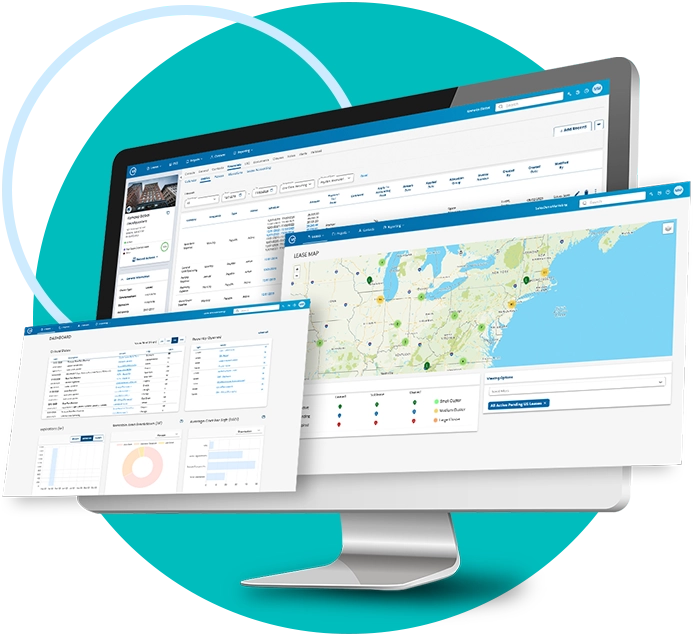
Kolena functions as an orchestration layer for large language models, specifically tuned for commercial real estate documentation. Users upload raw, unstructured files, such as scanned PDF leases, offering memorandums, title reports, or loss run histories, into the platform’s centralized repository. Instead of relying on static templates or rigid optical character recognition bounding boxes, the system deploys specialized AI agents to read the documents. These agents are pre-configured to look for specific commercial real estate variables, such as base rent escalations, expense stops, renewal options, and tenant break rights. The AI parses the natural language of the contracts, identifies the relevant clauses, and extracts the data into a structured format.
The core mechanic relies on natural language processing to handle inconsistencies across different property managers and legal teams. For example, when processing rent rolls from three different acquisitions, Kolena’s agents identify the underlying financial metrics regardless of how the columns are labeled. The platform then reconciles this extracted data against other uploaded documents, flagging discrepancies between a lease agreement and a provided rent roll. Every extracted data point is hyperlinked back to the exact paragraph and page in the source document, allowing human analysts to quickly verify the machine’s work. This citation feature is critical for underwriting, where a single hallucinated number could alter a discounted cash flow model.
Beyond text extraction, the platform includes capabilities for visual property assessments. Users can upload property inspection photos, and the AI agents will categorize the images, detect visible damage, and generate condition reports. The extracted data, whether from text or images, can then be exported into standard Excel models or pushed into portfolio management software via application programming interfaces. By automating the initial data ingestion and structuring phases, Kolena shifts the analyst’s role from manual data entry to quality control and strategic analysis, fundamentally accelerating the due diligence phase of property acquisitions.
9AI Framework: the score, dimension by dimension
CRE Relevance: 9/10
Kolena achieves a strong domain focus by tailoring its AI agents specifically for commercial real estate workflows. Unlike generic AI wrappers that struggle with the nuances of commercial leases or rent rolls, this platform understands industry-standard metrics like net operating income, tenant improvement allowances, and triple net lease structures. The system is trained to navigate complex offering memorandums and identify hidden risks in due diligence documents. While it remains a Tier 2 application compared to deeply entrenched legacy systems, its architecture is undeniably built for the property sector rather than adapted as an afterthought. The ability to cross-reference a rent roll against an original lease document demonstrates a deep understanding of the acquisition analyst’s daily friction points. In practice: Acquisition teams can deploy agents that already understand the difference between gross and modified gross leases without requiring extensive prompt engineering.
Data Quality and Sources: 8/10
The integrity of extracted information is the primary metric by which document intelligence tools are judged. Kolena mitigates the inherent risks of large language model hallucinations by enforcing strict source-linking protocols. Every data point populated in the output dashboard contains a direct hyperlink to the source text, forcing the AI to show its work. This architecture ensures that analysts do not have to blindly trust the machine. However, the system still occasionally struggles with highly bespoke legal phrasing or heavily redacted scanned documents, requiring human oversight for complex edge cases. The data quality is high, but it is not infallible, meaning firms must maintain a rigorous auditing process. In practice: Junior analysts will spend their time clicking through cited links to verify extracted rent escalations rather than typing the numbers from scratch.
Ease of Adoption: 8/10
Implementing new enterprise software often requires months of change management, but Kolena accelerates this process through a no-code interface. The platform is designed so that real estate professionals can configure and deploy AI agents without relying on an internal engineering team. Users simply select the type of document they are uploading and choose the specific data points they want to extract from a pre-populated menu. The user interface is intuitive, resembling modern consumer applications rather than clunky legacy real estate software. Training a team to use the basic extraction features takes days rather than weeks. However, building highly customized workflows for proprietary financial models requires a steeper learning curve and a deeper understanding of how the AI interprets instructions. In practice: A senior associate can set up a basic lease abstraction pipeline for a new portfolio acquisition in a single afternoon.
Output Accuracy: 8/10
Accuracy in commercial real estate underwriting is non-negotiable, as minor extraction errors compound over a ten-year discounted cash flow model. Kolena delivers high accuracy rates on standard documentation, effectively capturing base rents, square footages, and lease expirations. The platform’s reliance on advanced natural language processing allows it to interpret context, reducing the false positives that plague older extraction tools. Yet, when confronted with poorly scanned, handwritten amendments or contradictory clauses buried in fifty-page addendums, the AI’s confidence scores can drop. The system is smart enough to flag these low-confidence extractions for human review, which prevents bad data from silently corrupting financial models. The accuracy is impressive but requires a human-in-the-loop for final validation. In practice: The software successfully automates the extraction of ninety percent of standard lease terms, leaving the most complex legal nuances for the legal team to interpret.
Integration and Workflow Fit: 7/10
A document intelligence tool must communicate effectively with the broader commercial real estate technology stack to deliver true efficiency. Kolena offers standard application programming interfaces and connectors designed to push extracted data into common financial modeling tools and property management systems. It can export clean, structured data into Excel, which remains the industry standard for custom underwriting. However, as a Tier 2 provider, it lacks the deep, out-of-the-box bidirectional integrations with legacy enterprise resource planning systems that older competitors possess. Firms using highly customized, on-premise databases may find the integration process requires custom development work. The platform functions well as a standalone extraction engine, but achieving fully automated data flow into proprietary systems demands additional technical investment. In practice: Most firms will rely on the platform’s Excel export functionality to feed their underwriting models rather than building complex direct database integrations.
Pricing Transparency: 4/10
Evaluating the financial viability of software requires clear cost metrics, an area where this vendor falls short. According to the BestCRE master database, Kolena operates on a custom pricing model paired with a free trial, meaning no standard licensing tiers or volumetric costs are published on their website. This opacity forces prospective buyers into a lengthy sales cycle just to determine if the tool fits their budget. While custom pricing is common for enterprise AI deployments, the lack of baseline figures makes it difficult for mid-sized firms to benchmark against competitors. Buyers must negotiate based on their specific document volume, the number of custom agents required, and the level of implementation support. This lack of upfront clarity significantly limits the ability to perform early-stage cost-benefit analysis. In practice: Interested buyers must commit to discovery calls and a trial period before receiving a concrete financial proposal.
Support and Reliability: 6/10
As an emerging player in the commercial real estate sector, Kolena’s support infrastructure is still proving itself against established industry giants. The company provides dedicated customer success managers for enterprise clients, assisting with the initial configuration of custom AI agents and workflow mapping. Because the platform relies on evolving large language models, prompt engineering support is critical when the AI fails to extract specific clauses. While early adopters report responsive technical assistance, the vendor lacks the massive, global support teams and decades of historical troubleshooting data that legacy providers offer. An unproven startup inherently carries a higher risk of support bottlenecks during periods of rapid scaling. Buyers must weigh the benefits of personalized attention against the potential limitations of a smaller support organization. In practice: Users will likely communicate directly with the core product team to resolve complex extraction failures during the initial deployment phase.
Innovation and Roadmap: 9/10
Kolena excels in its forward-looking technical trajectory, positioning itself at the forefront of agentic AI workflows. The company is actively moving beyond simple text extraction to develop autonomous agents capable of cross-referencing multiple document types, such as comparing a property condition report against an insurance loss run. Their roadmap indicates a strong focus on multimodal AI, allowing the system to process photographs, financial spreadsheets, and legal PDFs within the same analytical framework. This commitment to continuous technical advancement ensures the platform will not become obsolete as underlying language models improve. The pace of feature releases is rapid, reflecting the agility of a specialized technology firm focused on disrupting manual workflows. In practice: Clients can expect frequent updates that introduce new agent capabilities, expanding the tool’s utility from acquisition due diligence into ongoing asset management and compliance tracking.
Market Reputation: 6/10
Kolena is currently navigating the transition from a generalized AI testing framework to a specialized commercial real estate solution. Within the broader machine learning community, the company holds a strong reputation for model validation and quality assurance. However, in the insular world of commercial real estate, it remains a Tier 2 challenger brand. It does not yet possess the widespread brand recognition of Prophia or the entrenched user base of legacy extraction tools. Early case studies highlight significant time savings for private equity managers and lenders, but the overall volume of peer-reviewed deployments is still growing. As an unproven startup in the property sector, it faces skepticism from institutional buyers who prioritize longevity and established market presence over novel technology. In practice: Champions of the software will need to justify their selection to investment committees who are likely unfamiliar with the vendor’s name.
Who should use Kolena
Kolena is engineered for organizations burdened by high volumes of unstructured documentation and complex due diligence requirements. The platform delivers the highest value to teams that currently waste hundreds of expensive analyst hours on manual data entry, lease abstraction, and document reconciliation. It is particularly effective for firms looking to internalize workflows that were previously outsourced to offshore service providers.
Acquisition Teams: Analysts who need to rapidly underwrite properties by extracting data from offering memorandums, rent rolls, and historical operating statements during tight due diligence windows.
Asset Managers: Professionals managing diverse portfolios who must abstract complex lease terms, track critical dates, and ensure tenant compliance across multiple assets.
Commercial Lenders: Underwriting departments that process loan applications and must verify financial data against submitted tax returns, lease agreements, and property condition reports.
Insurance Underwriters: Risk assessment teams dealing with commercial properties that need to quickly parse historical loss runs and structural inspection documents.
Who should look elsewhere
Despite its advanced capabilities, Kolena is not a universal solution for every real estate operation. Firms with low transaction volumes or those that rely entirely on standardized, structured data feeds will not realize a sufficient return on investment to justify the implementation effort. Furthermore, organizations demanding out-of-the-box, bidirectional synchronization with legacy accounting systems may find the platform’s integration capabilities lacking.
Small Private Investors: Individuals or boutique firms acquiring one or two properties a year, where the volume of document processing does not warrant an enterprise AI platform.
Firms Requiring Legacy ERP Sync: Organizations that refuse to use intermediary Excel exports and demand native, two-way integrations with older, on-premise property management databases.
Retail Brokerages: Teams primarily focused on relationship management and marketing rather than heavy financial underwriting or complex legal document abstraction.
Pricing and ROI
Kolena does not publish its pricing tiers publicly, operating instead on a custom pricing model tailored to the specific needs and volume of the client. According to the BestCRE master database, the vendor requires prospective buyers to engage in a sales process to receive a quote, though they do offer a free trial to validate the technology. This opaque approach is standard for enterprise AI solutions but frustrates analysts attempting to conduct quick market comparisons. Costs are typically structured around the volume of documents processed, the number of custom AI agents deployed, and the level of required implementation support.
To justify the undisclosed investment, buyers must rely on rigorous return on investment math. Consider a mid-sized private equity firm processing two hundred commercial leases annually. If a junior analyst earning sixty dollars an hour spends four hours manually abstracting and verifying each lease, the annual labor cost is forty-eight thousand dollars. If Kolena reduces that processing time by eighty percent, a conservative estimate based on the platform’s capabilities, the labor cost drops to under ten thousand dollars. This yields nearly forty thousand dollars in direct operational savings, before accounting for the value of faster deal execution and the reduction in costly underwriting errors. Buyers should calculate their current baseline abstraction costs and demand that the custom pricing proposal comes in significantly below that threshold to ensure a rapid payback period.
Integration and CRE tech stack fit
A document intelligence platform is only as valuable as its ability to feed data into the firm’s broader commercial real estate technology stack. Kolena approaches integration through a flexible, API-first architecture designed to connect with modern cloud applications. The platform excels at exporting clean, structured data into Excel, which remains the undisputed backbone of commercial real estate financial modeling. Analysts can map the AI’s extracted fields directly into their proprietary discounted cash flow templates, eliminating the manual transcription phase.
However, when evaluating integration fit against legacy systems, Kolena shows its status as a newer market entrant. While it offers connectors for widely used cloud storage solutions like SharePoint and Google Drive to automate document ingestion, it lacks the deep, native, bidirectional integrations with older enterprise resource planning systems like Yardi Voyager or MRI Software. Firms relying on these legacy databases will likely need to utilize intermediate CSV uploads or invest in custom development work to achieve fully automated data synchronization. For modern tech stacks, the integration process is straightforward, but organizations burdened by technical debt should anticipate some friction when connecting the AI agent outputs to their core accounting ledgers.
Competitive landscape
The commercial real estate document intelligence sector is highly competitive, and Kolena faces formidable alternatives that buyers must evaluate. The most direct comparison is Prophia (BestCRE Score: 94), the dominant force in lease abstraction. Prophia offers deeper, proven integrations with legacy property management systems and boasts a massive, pre-trained database of commercial leases. Firms prioritizing a safe, established choice for pure lease abstraction will likely lean toward Prophia, whereas Kolena appeals to buyers wanting customizable AI agents for a wider variety of document types, including offering memorandums and inspection photos.
Another strong alternative is Findable (BestCRE Score: 87), which specializes in organizing and automating building documentation and compliance records. Findable is superior for facility managers focused on operational compliance, while Kolena is better suited for acquisition analysts focused on financial underwriting. Buyers should also consider RETS AI (BestCRE Score: 86) and Wilson AI (BestCRE Score: 82). RETS AI provides highly accurate natural language processing tailored specifically for real estate transactions, offering a slightly more mature support infrastructure.
Meanwhile, legacy software providers are attempting to close the gap; MRI Software AI (BestCRE Score: 76) offers native document extraction built directly into its massive ERP ecosystem. While MRI’s AI capabilities are less flexible than Kolena’s custom agents, the direct integration into an existing accounting stack is highly attractive to institutional users. Finally, general-purpose contract lifecycle management tools like Evisort (BestCRE Score: 70) exist, but Kolena’s CRE-native training provides a distinct advantage over these generic alternatives when processing complex rent rolls.
The bottom line
Kolena is a powerful, highly capable document intelligence platform that successfully applies modern large language models to the specific friction points of commercial real estate. It is not a legacy system with decades of market dominance, but rather an agile, Tier 2 challenger that excels at unstructured data extraction. Buy Kolena if your acquisition or asset management teams are drowning in PDFs and inconsistently formatted rent rolls, and you want the flexibility to build custom AI agents without writing code. The platform’s strict source-linking architecture effectively neutralizes the risk of AI hallucinations, making it safe for rigorous underwriting environments. Pass on Kolena if your firm processes low transaction volumes or demands native, plug-and-play synchronization with older, on-premise accounting databases. Ultimately, for firms willing to invest the time to configure their workflows and navigate custom pricing, Kolena delivers a decisive operational advantage, transforming due diligence from a labor-intensive bottleneck into a rapid, automated process.
Frequently asked questions
Does Kolena require a dedicated software engineer to set up?
No. The platform features a no-code interface designed for real estate analysts and asset managers. Users can configure custom AI agents, map extraction fields, and set up document processing workflows using visual menus, completely eliminating the need for internal engineering resources or complex coding.
How does the software handle poorly scanned or handwritten commercial leases?
The system utilizes advanced natural language processing and computer vision to interpret difficult documents. When the AI encounters illegible text or highly ambiguous clauses, it assigns a low confidence score and flags the specific data point, requiring a human analyst to review and validate the extraction manually.
Can Kolena process property inspection photos alongside text documents?
Yes. The platform supports multimodal AI capabilities, allowing users to upload visual property assessments. The AI agents can analyze these photographs to detect visible structural damage, categorize issues, and automatically generate detailed condition reports, which can be cross-referenced against text-based loss run histories.
Is the pricing for Kolena based on the number of users or document volume?
Pricing details are not published publicly, as the vendor utilizes a custom quoting model. However, enterprise AI solutions in this category typically base their costs on the total volume of documents processed and the complexity of the custom agents deployed, rather than a strict per-user license fee.
How does Kolena prevent AI hallucinations from ruining financial models?
The platform enforces a strict source-linking protocol for every piece of extracted data. When a number is populated in the dashboard, it includes a direct hyperlink to the exact page and paragraph in the source PDF, allowing analysts to instantly audit the machine’s accuracy before exporting to Excel.
Does Kolena integrate directly with Yardi or MRI Software?
While it offers standard application programming interfaces and Excel export capabilities, it lacks the deep, out-of-the-box bidirectional integrations with legacy enterprise resource planning systems like Yardi or MRI. Firms using these older databases will likely need to rely on CSV uploads or invest in custom development work.
Related Reviews
Compare Kolena with other Lease Abstraction & Document Intelligence tools BestCRE has scored: Leasecake (78/100), Occupier (78/100), Bryckel AI (68/100) and Lucernex (67/100). Browse every review in CRE Lease Abstraction & Document Intelligence, the full Best CRE AI Tools directory, or the 20 CRE Sectors hub.