Brivo is a cloud-based physical security platform used by property managers, commercial building owners, facilities teams, and security departments. Its core job is to replace locally administered access control with a central system for managing doors, credentials, visitors, cameras, alarms, and security events. In a CRE workflow, that changes how operators grant tenant and employee access, revoke credentials, investigate incidents, monitor multiple sites, and document activity. Instead of configuring each building independently or relying on an on-site server, authorized staff can administer a portfolio through Brivo’s web and mobile interfaces.
The product is best understood as security infrastructure, not a broad property management system. Brivo does not replace lease administration, accounting, maintenance management, or tenant relationship platforms. It sits beside those systems and controls an operational layer that matters every day: who may enter, where they may go, when access applies, and what evidence is available when something goes wrong. Its commercial real estate fit is strongest in offices, mixed portfolios, coworking environments, parking operations, and buildings where access permissions change frequently.
Brivo combines access control with video management, visitor administration, identity functions, alerts, analytics, and compatible physical hardware. The appeal is centralization. A regional operator can potentially use one administrative environment for multiple doors and locations, associate access events with video, issue mobile credentials, and review exceptions remotely. The platform also supports an open API and a sizable integration ecosystem, which can connect security workflows to identity providers, property software, cameras, and other building systems.
BestCRE’s analysis is that Brivo is a mature, credible choice for cloud access control, particularly when portfolio-wide administration and video verification matter. It is less compelling for buyers seeking a low-cost, self-installed entry system or one application covering every property management function. Procurement also requires discipline because the vendor does not publish standard pricing. Buyers must compare software subscriptions, controllers, readers, locks, cameras, installation, monitoring, credential costs, and ongoing dealer support as one operating model.
What Brivo Does and How It Works
Brivo manages access permissions through a cloud administration layer connected to controllers, readers, locks, and related devices at each property. Administrators create identities, assign credentials, define schedules, and specify which doors or areas each person can enter. Credentials can include cards, fobs, or mobile access. When someone presents a credential, the system evaluates the applicable permissions and records the event. Operators can change access without visiting every location, which is useful when employees leave, tenants turn over, contractors need temporary entry, or a portfolio follows common security policies.
The Security Suite extends this workflow into video, visitors, alerts, and incident review. Door activity can be associated with camera footage so an operator can examine whether the person entering matched the credential event. Visitor tools support registration and check-in processes, while alerts can flag selected conditions for review. Brivo also markets video intelligence functions such as natural-language analytic configuration, firearm detection, license plate recognition, face matching, and person or vehicle detection. These features should be evaluated separately because effectiveness depends on camera placement, image quality, site conditions, configuration, and the operational process used to verify an alert.
For portfolio operations, Brivo provides centralized administration, reporting, APIs, integrations, and remote management. This can reduce fragmented credential records and give a central security team a consistent view across sites. Hardware remains a material part of the deployment. A buyer may need controllers, readers, locks, cameras, networking, storage, sensors, or monitoring services, depending on the selected design. Existing equipment may be reusable in some cases, but compatibility must be verified device by device. Implementation therefore involves both software configuration and physical security engineering, including door surveys, wiring, network design, life safety considerations, permission structures, testing, and procedures for outages or emergency access.
9AI Framework: Dimension by Dimension Analysis
CRE Relevance: 8/10
Score: 8. Brivo addresses a real and recurring CRE operating requirement: controlling access to buildings, suites, shared areas, parking facilities, and restricted rooms. Central administration is especially relevant to owners and managers with multiple locations, frequent tenant changes, flexible workspaces, or distributed facilities staff. Its visitor, video, and mobile credential capabilities also connect directly to tenant experience and incident response. The limitation is scope. Brivo is CRE-adjacent rather than a complete property operations platform, and it serves many industries beyond real estate. It does not manage leases, rent, service requests, budgets, or asset performance. BestCRE’s analysis is that its relevance is high within physical security, but buyers should treat it as a specialized operating layer that must fit into a broader property technology stack.
Data Quality and Sources: 7/10
Score: 7. Brivo’s underlying records can include identities, credentials, access permissions, door events, visitor activity, alarms, and linked video. These are generally structured, time-based operational records, which makes them useful for investigations, access audits, and portfolio reporting. Data quality still depends heavily on administration. Duplicate identities, outdated tenant rosters, shared credentials, inconsistent naming, incorrect schedules, and poorly maintained devices can weaken the record. Video analytics also depend on camera position, resolution, lighting, network performance, and configuration. BestCRE’s analysis is that Brivo provides a sound data foundation, but it cannot correct weak identity governance or physical installation choices on its own. Buyers should establish an authoritative identity source, clear credential ownership, retention rules, and recurring access reviews before relying on reports as a complete account of site activity.
Ease of Adoption: 6/10
Score: 6. Day-to-day cloud administration should be understandable to trained property, facilities, and security personnel, and remote changes are more convenient than managing separate local systems. Adoption is nevertheless more involved than installing ordinary business software. Doors must be surveyed, compatible hardware selected, wiring and networking assessed, permissions designed, and failover behavior tested. Existing buildings can introduce legacy panels, proprietary locks, inconsistent cabling, or landlord and tenant boundaries that complicate the rollout. Users also need procedures for lost credentials, after-hours requests, contractor access, emergencies, and staff departures. BestCRE’s analysis is that Brivo can simplify operations after deployment, but implementation quality determines whether that benefit appears. A phased building rollout, a documented access hierarchy, and clear responsibility between the operator, installer, IT team, and security staff are important.
Output Accuracy: 7/10
Score: 7. Basic access events are deterministic when hardware, credentials, schedules, and connectivity operate correctly. A valid credential presented at a configured reader should produce a clear decision and event record. Accuracy becomes less absolute when the platform interprets video or connects an event to human behavior. Video detection can produce missed events or false alerts, and a credential log does not prove who physically passed through a door. Tailgating, shared cards, obstructed cameras, clock differences, or offline devices can affect interpretation. BestCRE’s analysis is that Brivo’s records are useful evidence, not an infallible account of occupancy or intent. Buyers should test analytic features under actual site conditions, tune alerts, monitor device health, and preserve human review for consequential decisions. Reported events should also be reconciled with visitor procedures and incident documentation when the stakes are high.
Integration and Workflow Fit: 9/10
Score: 9. Brivo emphasizes an open platform, an API, and connections spanning identity, property software, video, and physical security devices. That is important because access control rarely operates alone. A strong deployment may need employee or tenant identities from another system, visitor workflows at reception, video attached to door events, and automation when a lease, membership, or employment status changes. The integration opportunity is substantial, but catalog presence does not guarantee that every connection supports the fields, timing, and control logic a buyer needs. Hardware compatibility also differs from software integration and must be confirmed separately. BestCRE’s analysis is that integration is one of Brivo’s strongest purchasing arguments. The buyer should still require a written architecture showing the system of record, data direction, provisioning frequency, failure handling, audit ownership, and responsibility for maintaining each connector.
Pricing Transparency: 3/10
Score: 3. Brivo does not publish a standard public price sheet that lets a CRE buyer calculate a complete deployment from the website. That matters because total cost can span subscriptions, access panels, readers, locks, cameras, networking, storage, mobile credentials, installation, monitoring, maintenance, and dealer services. Building conditions and the number of controlled openings can materially change the quote. The absence of public package pricing makes early comparison harder and can obscure whether two proposals include equivalent hardware and service levels. BestCRE’s analysis is that buyers should request an itemized quote separating one-time equipment and labor from recurring charges. They should also ask about contract length, annual increases, credential fees, video retention, API access, replacements, support responsibilities, and termination costs. Competitive bids should use the same door schedule and technical assumptions.
Support and Reliability: 7/10
Score: 7. Brivo provides knowledge bases, technical documentation, API documentation, training, certification, and formal support channels. Its partner and reseller model can give buyers access to local installation and field service, which is necessary for a system involving doors, wiring, controllers, and cameras. The same model can create variation in the ownership experience because installation quality, response time, documentation, and troubleshooting capability may depend on the selected partner. BestCRE’s analysis is that buyers are evaluating both Brivo and the integrator that will design and maintain the deployment. References should therefore cover the proposed installer, not just the software brand. Contracts should state who handles cloud issues, device failures, lock problems, after-hours incidents, warranty work, and network diagnosis. Operators should also retain current diagrams, device inventories, configuration records, and escalation contacts rather than leaving all institutional knowledge with one contractor.
Innovation and Roadmap: 8/10
Score: 8. Brivo has moved beyond remote credential administration into a broader combination of cloud access, video intelligence, visitor management, mobile credentials, analytics, and automated detection. Natural-language configuration for video analysis and the connection of camera evidence to access events represent meaningful product development. These capabilities can shorten investigation time and help small teams monitor more locations, but innovation should not be confused with proven performance at every property. Some functions address specialized threats and may not justify their cost or operational burden in an ordinary office portfolio. BestCRE’s analysis is that Brivo is advancing the security workflow in useful ways while remaining grounded in established access control mechanics. Buyers should run scenario-based demonstrations using representative doors, cameras, lighting, and traffic patterns. A feature deserves deployment only when it improves a defined response process and has an accountable human owner.
Market Reputation: 8/10
Score: 8. Brivo is an established name in cloud access control with a broad commercial presence and a product portfolio that covers access, video, visitors, and related security operations. Its longevity and partner ecosystem reduce the concerns that accompany a young vendor with limited installation experience. The company also serves several property types and enterprise environments, giving it relevance for operators that need consistent controls across diverse sites. Public prominence does not eliminate execution risk. Customer experience can vary with the installer, hardware design, network conditions, and support arrangement, and the vendor does not publish enough pricing detail for reputation to substitute for procurement diligence. BestCRE’s analysis is that Brivo belongs on a serious shortlist for multi-site access control. Buyers should validate references from portfolios resembling their own in building age, door count, geography, and staffing model.
Who Should Use Brivo
Brivo best suits commercial owners, third-party property managers, facilities leaders, and security teams that administer multiple buildings or a large number of controlled openings. It is particularly relevant when staff currently manage separate local access systems, process frequent credential changes, or spend excessive time matching door events with camera footage. Office portfolios, coworking operators, mixed-use properties, parking facilities, and distributed corporate locations can benefit from centralized permissions and remote incident review. The strongest buyer has dedicated responsibility for identity administration and enough operational scale to justify a formal access platform.
It also suits organizations that view security as part of their broader technology architecture. Buyers using an identity provider, visitor platform, property management application, or established camera estate may value Brivo’s API and integration approach. A good candidate will fund both implementation and continuing governance, including access reviews, device maintenance, staff training, and incident procedures. BestCRE’s analysis is that Brivo creates the most value when the operator wants consistent portfolio policy, timely credential removal, and evidence-based investigation, not merely a modern-looking way to open one entrance.
Who Should Not Use Brivo
Brivo is unlikely to be the best fit for a small property seeking a simple, inexpensive intercom or a do-it-yourself smart lock. Hardware installation, system design, subscriptions, and partner involvement may be disproportionate when only a few doors require basic control. Buyers wanting a complete property management suite should also look elsewhere because Brivo does not replace accounting, leasing, maintenance, or resident management applications.
Operators without clear ownership of identity data and access policy should delay deployment until those processes are defined. Moving inconsistent permissions into the cloud will not make them reliable. Brivo may also be unsuitable where existing proprietary hardware cannot be reused economically, network availability is poor, or local requirements demand a different architecture. BestCRE’s analysis is that buyers should not adopt advanced video detection simply because it is available. If no trained person will verify alerts and act on them, the feature can add cost and noise without improving security.
Pricing and ROI Analysis
Brivo does not publish standard pricing sufficient to calculate a complete system. Buyers generally need a site-specific proposal covering software editions, controlled openings, controllers, readers, credentials, locks, cameras, storage, networking, installation, monitoring, and support. Existing hardware compatibility and building conditions can change the result substantially. A useful request for proposal should provide an identical door and camera schedule to each bidder, require separate one-time and recurring charges, and identify optional items. The contract should clarify subscription increases, mobile credential charges, video retention, API access, replacement equipment, warranty labor, after-hours service, and the consequences of changing integrators.
Analysis: calculate ROI from avoidable labor and incident costs rather than from vague security benefits. For example, estimate the monthly staff time spent issuing credentials, visiting sites for permission changes, compiling access reports, and finding video associated with events. Add documented expenses for maintaining legacy servers and separate systems. Compare that annual baseline with Brivo’s recurring fees plus amortized equipment, installation, training, and integration costs. Keep prevented losses as a separate scenario because they are uncertain. The investment is persuasive when routine savings and faster administration cover a meaningful share of cost before speculative incident avoidance is counted.
Integration and CRE Tech Stack Fit
Brivo can fit between the CRE management stack and the property’s physical devices. Identity or property systems can supply information used to provision access, while Brivo controls permissions and records events. Video, visitor, parking, and security workflows can then use those records. Its API and integration ecosystem make this architecture plausible for larger portfolios. Buyers should confirm the exact connector for their selected property platform rather than assuming that a general integration claim covers tenant onboarding, suite assignments, move-outs, or credential revocation.
The key design question is which application owns each record. BestCRE’s analysis is that a tenant, employee, or resident identity should have one authoritative source, with Brivo receiving only the information needed for access. The integration specification should address update timing, duplicates, failed transfers, manual overrides, privacy, retention, and audit logs. For physical equipment, confirm each controller, lock, reader, and camera model in writing. Software compatibility does not guarantee that installed field devices can remain.
Competitive Landscape
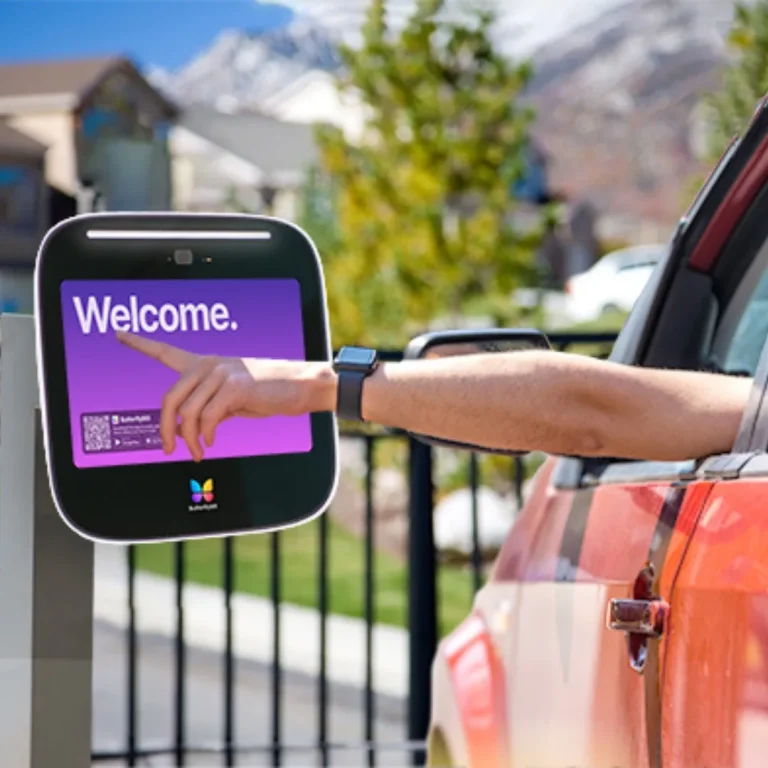
ButterflyMX is a natural alternative when the primary requirement is front-door entry, visitor access, package workflows, and a tenant or resident-facing intercom experience. SmartRent is more relevant for multifamily operators seeking access control within a wider package of smart-home and property automation capabilities. Latch, associated with the DOOR product portfolio, also competes around smart access and building experience. Brivo is generally the stronger comparison when centralized commercial access administration, security operations, and the combination of door events with video are the central requirements.
Broader property platforms such as AppFolio, Entrata, DoorLoop, and Yardi Virtuoso address management workflows that Brivo does not. They may hold tenant, resident, or operational data that informs access, but they should not automatically be treated as equivalent physical security systems. VTS focuses more heavily on leasing, tenant experience, and asset operations, while Brivo controls and observes entry. BestCRE’s analysis is that the buying decision should begin with scope. If the problem is security infrastructure across a portfolio, compare Brivo with dedicated access and video vendors. If the problem is accounting, leasing, maintenance, or an all-in-one multifamily workflow, select the property system first and evaluate Brivo as an integration.
The Bottom Line
Put Brivo on the shortlist when the portfolio needs centralized access control, remote administration, and video-linked incident review across multiple properties. Its combination of cloud management, physical hardware options, APIs, and security analytics is credible for commercial operations. The purchase case is strongest when fragmented local systems, slow credential changes, or difficult investigations create measurable work.
Do not approve it from a software demonstration alone. Require a door-level design, confirmed hardware compatibility, an integration map, site-specific testing, an itemized cost model, and references for the proposed installer. BestCRE’s analysis is that Brivo can become valuable operating infrastructure, but results depend on deployment discipline and ongoing identity governance. Choose it when the organization is prepared to run access control as a managed portfolio process, not as a collection of locks.
About BestCRE
BestCRE.com is the definitive authority on commercial real estate AI, analysis, and investment intelligence. Every article advances the platform’s mission to help CRE professionals identify, evaluate, and adopt the best tools and strategies in the industry. We benchmark platforms using the 9AI Framework so CRE leaders can compare tools with clear evidence. Explore the category map at 20 CRE sectors for deeper coverage across the CRE stack.
Frequently Asked Questions
What is Brivo used for in commercial real estate?
Brivo is a cloud-based physical security platform used to manage building access, credentials, doors, visitors, cameras, alerts, and security events. Commercial property teams can grant or remove access, apply schedules, review activity, and administer multiple locations remotely. It is useful for offices, mixed-use properties, coworking locations, parking facilities, and portfolios with frequent tenant, employee, or contractor changes. Brivo is not a complete property management system. It does not replace lease administration, accounting, work orders, or asset management software. BestCRE’s analysis is that it should be evaluated as a specialized security layer connected to the rest of the property technology stack.
How does Brivo compare with ButterflyMX, SmartRent, and Latch?
Brivo is primarily oriented toward centralized access control, physical security administration, video management, and incident investigation. ButterflyMX is often considered when front-door intercom, visitor entry, and tenant or resident experience are the main requirements. SmartRent combines access with a broader multifamily smart-home and property automation offering. Latch and the wider DOOR portfolio compete in smart access and building experience. The products overlap, but they are not interchangeable. BestCRE’s analysis is that buyers should compare specific workflows, including credential provisioning, video verification, unit access, visitor handling, hardware compatibility, offline behavior, and portfolio reporting. A controlled pilot at a representative building is more informative than comparing feature labels.
How much does Brivo cost?
Brivo does not publish a standard price that captures a complete commercial deployment. Cost depends on the software edition, number of controlled openings, controllers, readers, locks, credentials, cameras, retention requirements, networking, installation, monitoring, integrations, and support arrangement. Existing building conditions can also affect labor and equipment needs. Buyers should request an itemized proposal that separates initial hardware and installation from recurring subscriptions and service. BestCRE’s analysis is that each competing quote should use the same door schedule, camera assumptions, retention period, and support requirements. Contract review should cover annual increases, mobile credentials, API access, replacements, warranty labor, after-hours response, and termination.
Who is Brivo best suited for?
Brivo is best suited for commercial owners, property managers, facilities departments, and security teams that operate multiple locations or many controlled doors. It is especially relevant when access permissions change often, administrators need remote control, or incident reviews require matching door activity with video. Organizations with established identity systems and formal security policies can gain more value because they can connect access provisioning to a reliable source of user information. It is less suitable for a very small site seeking a basic self-installed lock or intercom. BestCRE’s analysis is that the ideal buyer has clear responsibility for credentials, device maintenance, access reviews, and alert response.
Will Brivo’s AI features change how property security teams operate?
Brivo’s video intelligence and natural-language analytic tools could reduce the time required to search footage, define detection rules, and identify events that merit review. Their practical impact will depend on camera quality, placement, lighting, network conditions, configuration, and the team’s response process. These tools should assist trained operators, not serve as unquestioned evidence of identity, intent, or occupancy. BestCRE’s analysis is that future value will come from connecting access, video, visitor, and property data into faster, auditable workflows. Buyers should require controlled testing, documented false-alert handling, privacy review, and human verification before using automated detections for consequential decisions.
Related Reviews
Compare Brivo with other tools BestCRE has scored in the same category: DoorLoop, Entrata, Moved. Explore more CRE AI tool reviews in our Best CRE AI Tools directory. For sector-specific analysis and market intelligence, visit our 20 CRE Sectors hub.