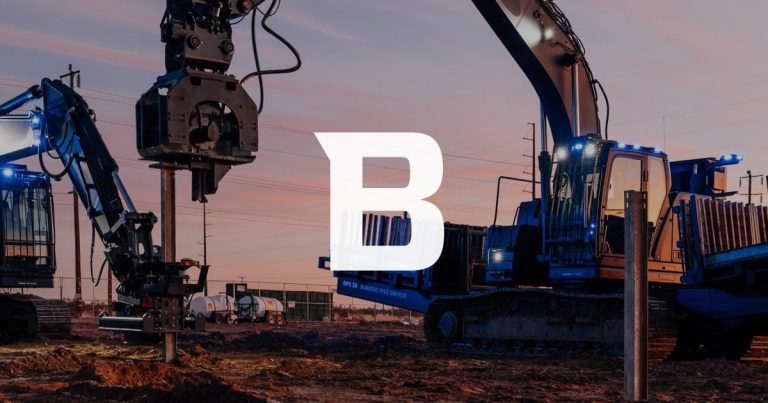
Built Robotics develops autonomous heavy equipment for construction teams, with its current commercial focus centered on utility scale solar. General contractors, specialty contractors, project owners and site teams use its machines to automate repetitive field tasks, particularly moving, positioning and driving foundation piles. For a CRE buyer, the important distinction is that this is physical construction equipment, not project management software. It changes how work is executed on the site rather than how schedules, budgets or documents are administered.
The company began with a broader autonomous equipment proposition, including excavation and trenching applications, but its current positioning emphasizes solar construction. Its RPD 35 distributes piles across a site, while the RPS 25 positions and drives them. Used together, the machines target a labor intensive sequence that affects production rates, worker exposure and foundation quality across large solar fields. The system therefore has the strongest relevance to energy infrastructure developers and contractors, with narrower applicability to conventional office, multifamily, industrial or retail projects.
The operational evidence is more substantial than that of a prototype vendor. Built Robotics reports 50,000 operating hours, 40 deployments and no jobsite injuries, alongside operations in the United States and Australia. These are vendor reported figures rather than an independently audited performance record. Buyers should request project references, incident documentation, production logs and results from soil conditions resembling their own sites before translating those claims into a project schedule or safety case.
BestCRE analysis: Built Robotics is an inventive, commercially credible specialist with a real product and a clearly defined field workflow. It is not a broad CRE construction platform, and its value depends heavily on project scale, foundation design, site conditions and repeatable production. The buying decision should be made by construction operations and safety leaders, with input from estimators, project executives and equipment managers. Conventional CRE owners should treat it as a contractor capability unless they directly manage a substantial solar development program.
What Built Robotics Does and How It Works
Built Robotics applies autonomy, positioning systems and machine controls to heavy construction equipment. Its solar offering separates piling into two coordinated activities. The RPD 35 transports and distributes foundation piles, carrying as many as 224 piles with a maximum payload of 34,000 pounds. The RPS 25 then handles positioning and installation. This division is designed to reduce manual pile shakeout and create a more repeatable flow from material staging to completed foundation. Supported piles can be as long as 19 feet, with published cross sections ranging from W6×7 through W8×28.
For installation, the RPS 25 uses digital design information and onboard guidance to place piles at specified locations, orientations and elevations. Built Robotics states that it can guide a pile within 1.0 degree of plumb and 15 millimeters of design elevation. Those specifications are useful, but they do not by themselves establish finished quality under every soil, weather and survey condition. Buyers need to understand how the system handles refusal, obstructions, damaged piles, changing grades, tolerance exceptions and geotechnical variation. Acceptance criteria should be tied to project specifications and verified through field quality control.
The machines can work as a coordinated fleet, and Built Robotics says fleets can operate for as many as 24 hours per day. Practical utilization will still depend on charging or fueling, maintenance, material replenishment, site access, permitted working hours and human supervision. The company describes an eight layer safety system intended to separate people from hazardous operations. BestCRE analysis: the product’s core value is repeatability at scale. It makes the most sense where thousands of similar foundations create enough volume to justify mobilization, mapping, training and workflow redesign. It is less compelling on irregular sites where crews frequently switch tasks or equipment configurations.
9AI Framework: Dimension by Dimension Analysis
CRE Relevance: 6/10
A score of 6 reflects meaningful construction relevance but limited coverage of mainstream commercial real estate. Built Robotics addresses site execution, safety, schedule and foundation quality, all of which matter to owners and general contractors. However, its present emphasis is utility scale solar piling, a specialized infrastructure workflow rather than a recurring requirement across office, multifamily, hospitality, industrial and retail development. Many CRE principals would encounter the system indirectly through a contractor rather than purchase it themselves. BestCRE analysis: relevance rises considerably for renewable energy developers, engineering and construction firms, and owners building large solar portfolios. It falls for buyers seeking a platform that supports preconstruction, procurement, document control or vertical construction. The technology belongs in the CRE construction ecosystem, but the addressable workflow is narrower than the category leaders.
Data Quality and Sources: 7/10
A score of 7 recognizes that the system works from structured design and positioning information tied to physical installation. That is a stronger data foundation than an AI product relying mainly on unstructured documents or generic language models. Its usefulness still depends on survey control, foundation schedules, site models and accurate design inputs. Incorrect coordinates or incomplete revisions could propagate into field execution, making data governance a project responsibility rather than solely a vendor function. Built Robotics publishes equipment capabilities and operating metrics, but it does not publish a comprehensive technical account of data validation, exception handling or independent performance audits. BestCRE analysis: buyers should test the complete chain from approved design through machine assignment and as built verification. They should also define who controls revisions, how discrepancies are flagged and which record becomes authoritative after installation.
Ease of Adoption: 5/10
A score of 5 reflects the difference between deploying software and changing a heavy construction production system. Adoption involves equipment mobilization, site preparation, operator or supervisor training, safety planning, survey alignment, logistics and coordination with existing crews. The repetitive geometry of a solar field can support adoption once the workflow is established, but initial setup is materially more involved than activating a cloud application. Built Robotics offers REO training, indicating that training is part of the deployment model, although detailed course requirements and implementation timelines are not published. BestCRE analysis: adoption should be staged through a defined pilot area with representative terrain and soils. Contractors already experienced in fleet planning, digital layout and standardized work are better positioned than teams using informal field processes. Owners should expect operational change management, not merely technology onboarding.
Output Accuracy: 7/10
A score of 7 is supported by specific published positioning claims for plumb and design elevation. These targets are directly relevant to installed foundation quality and are more testable than broad promises about productivity. Still, guidance accuracy is not identical to final accepted installation. Soil movement, refusal, pile deformation, calibration, survey error and design changes can affect the result. The vendor does not publish an independent, project level distribution of completed pile tolerances or rework rates. BestCRE analysis: buyers should establish a field acceptance protocol that samples completed piles, reconciles machine records with survey checks and documents exceptions. Contract terms should distinguish guidance capability from warranted finished work. The score reflects credible precision and a measurable output, tempered by limited public evidence about performance across varied ground conditions and full project populations.
Integration and Workflow Fit: 4/10
A score of 4 reflects limited public detail about connections to common construction and CRE systems. The machines necessarily consume design and location information, but Built Robotics does not publish a broad catalog of integrations with project management, scheduling, cost control, building information modeling or asset management platforms. That creates diligence questions about file formats, revision control, telemetry exports, identity management and ownership of operating data. BestCRE analysis: the most important integration is likely between approved engineering data, survey control and the robotic work plan, not a conventional application marketplace. Buyers should request a documented data flow before contracting. They should also confirm whether production records can be exported into the contractor’s daily reporting and quality systems without manual transcription. The product can deliver value without extensive enterprise integration, but limited transparency reduces confidence in portfolio level deployment.
Pricing Transparency: 2/10
A score of 2 reflects the absence of published prices, standard subscription terms or a public cost calculator. Built Robotics invites prospective customers to submit project information, suggesting that commercial terms are developed around the equipment, deployment and job requirements. The vendor does not publish whether typical arrangements are structured as rental, service, purchase, usage based pricing or a combination. It also does not publish standard charges for mobilization, training, maintenance or support. This prevents an owner or contractor from estimating cost without direct engagement. BestCRE analysis: project specific pricing is understandable for heavy equipment, but buyers still need a comparable total cost format. Proposals should separate fixed deployment costs from variable operating charges and identify excluded labor, logistics, consumables and downtime. Financial evaluation should use verified site production assumptions rather than headline capacity.
Support and Reliability: 6/10
A score of 6 reflects the support demands of operating autonomous heavy equipment and the company’s public reference to training. A physical system deployed on active construction sites requires more than a conventional software help desk. Buyers need commissioning, safety orientation, maintenance procedures, remote diagnostics, spare parts and escalation paths when equipment stops production. Built Robotics does not publish detailed service level commitments, response times, staffing coverage or parts availability. BestCRE analysis: the existence of a training program and completed field deployments suggests a functioning deployment capability, but support quality cannot be fully assessed from public information. Contractors should request named support roles, operating hour coverage and documented procedures for recovery, manual control and severe weather. They should also clarify responsibility for preventive maintenance and the commercial treatment of downtime before placing the machines on the critical path.
Innovation and Roadmap: 9/10
A score of 9 reflects a distinctive application of physical AI to a repetitive, hazardous and schedule sensitive construction task. Built Robotics is not adding an AI interface to an existing administrative workflow. It is combining machine autonomy, navigation, equipment control and field safety into a system that performs material distribution and pile installation. Coordinating those capabilities in changing outdoor conditions represents a meaningful technical and operational challenge. The focus on a standardized solar workflow also shows sound product discipline because repetition supports automation. BestCRE analysis: the innovation is substantial, but technical novelty does not guarantee project economics. Buyers should separate the value of the engineering from the value achievable on their sites. The highest returns are likely to appear on large, repeatable projects with predictable foundation designs, adequate access and disciplined material flow.
Market Reputation: 6/10
A score of 6 reflects credible field activity alongside limited public customer detail. Built Robotics reports deployments across two countries and has announced institutional financing, including a Series C raise of $64 million. Those facts support confidence that the company has progressed beyond laboratory development. However, the vendor does not publish a comprehensive customer roster, renewal data, independently verified utilization or broad contractor satisfaction measures. Public operating claims are useful signals, not substitutes for references. BestCRE analysis: reputation should be evaluated at the project and operating team level because performance depends on field execution as much as product capability. Prospective customers should speak with contractors that used the same equipment generation on comparable terrain and pile specifications. The company appears established enough for serious consideration, but the available evidence does not justify the reputation score of a widely adopted construction software platform.
Who Should Use Built Robotics
Built Robotics best suits utility scale solar contractors, renewable energy developers and engineering and construction firms that manage large volumes of repetitive pile installation. The strongest buyer has a predictable pipeline, standardized foundation designs and enough site volume to spread mobilization and training costs. Operations leaders should own the evaluation, with safety, quality, estimating, equipment and project controls participating. A contractor facing constrained labor availability or aggressive production schedules has a clearer reason to test the system than an owner pursuing a single small installation.
CRE owners may also be suitable when they directly develop energy infrastructure, operate large land portfolios with solar programs or procure major site packages through repeat contractor relationships. In those cases, the owner can require bidders to explain how autonomous equipment affects schedule, safety planning and quality verification. BestCRE analysis: owners should generally specify outcomes rather than mandate a machine. The contractor should remain accountable for production and finished work. A controlled pilot is appropriate when the site offers representative soil and geometry, measurable baseline production and enough remaining work to apply lessons from the test.
Who Should Not Use Built Robotics
Built Robotics is not a sensible direct purchase for most office, apartment, hotel, retail or warehouse owners. Those organizations rarely operate heavy equipment or employ the field teams needed to manage autonomous piling. They are better served by evaluating whether their sitework contractor can use the technology effectively. Small projects, irregular layouts and scopes with frequent equipment changes may not provide enough repetition to offset setup, mobilization and training.
Buyers seeking a general construction management system should look elsewhere. Built Robotics does not replace scheduling, document control, cost management, progress capture or design coordination platforms. It also should not be selected solely from vendor production or safety claims. BestCRE analysis: teams unable to maintain reliable survey control, disciplined design revisions and formal safety procedures are poor candidates. Automation can make a controlled process more consistent, but it does not compensate for weak site information or unclear accountability.
Pricing and ROI Analysis
Built Robotics does not publish pricing, standard contract terms or a public product rate card. Prospective customers must request a project proposal. Buyers should ask whether the commercial model includes equipment rental, autonomous system access, field personnel, training, mobilization, maintenance, software and data services. They should also establish who pays for transport, site communications, survey work, standby time and repairs. Without those details, comparisons against conventional crews or competing equipment will be incomplete.
BestCRE analysis: use simple project economics rather than a generic return claim. Calculate the conventional cost per accepted pile by dividing crew, equipment, supervision and expected rework costs by completed compliant piles. Then calculate the robotic alternative using its full project cost divided by the same accepted output measure. For example, if a proposal costs C dollars and avoids L dollars of conventional cost while reducing schedule related cost by S dollars, estimated net benefit is L plus S minus C. The case is positive only when that result remains favorable after downtime, mobilization and contingency are included. Buyers should test conservative, expected and favorable production scenarios.
Integration and CRE Tech Stack Fit
Built Robotics sits closer to field equipment and survey workflows than to the typical CRE application stack. Its critical inputs are foundation design, pile locations, elevation requirements and site control. The vendor does not publish a detailed integration directory for common project management, scheduling, accounting or building information modeling products. Buyers should confirm supported file formats, coordinate systems, revision procedures and export options during technical diligence.
BestCRE analysis: a practical architecture would keep the engineer’s approved design as the controlled source, pass validated installation data to the robotic workflow and return production and quality records to the contractor’s reporting environment. Owners should require clear data ownership, retention and access terms. Direct integrations are less important than reliable revision control and auditable exports, but manual reentry can introduce errors. Portfolio users should also assess whether machine telemetry can be aggregated across projects without creating a separate reporting silo.
Competitive Landscape
Built Robotics has few direct equivalents among the construction software products already rated by BestCRE because it automates physical work. ALICE Technologies is an alternative for contractors seeking AI assisted construction sequencing and schedule analysis, not equipment autonomy. OpenSpace and OnsiteIQ capture and document field conditions, while Resolve supports immersive design coordination. Firmus focuses on design risk, Field Materials on procurement workflows, Civils.ai on civil engineering analysis and Higharc on homebuilding design and data. None directly replaces robotic pile distribution and driving.
The more direct alternatives are conventional pile driving crews, equipment supplied by established heavy machinery manufacturers and specialized solar foundation contractors. Those options may offer greater labor flexibility, established service networks and easier deployment on mixed scopes. Built Robotics becomes more compelling when repetitive production, worker separation from hazards and consistent digital guidance justify a specialized system. BestCRE analysis: buyers should compare complete methods, not machine specifications. The relevant bid comparison includes staffing, mobilization, achievable production, quality control, downtime response and schedule consequences. For a general CRE technology budget, the software peers address broader workflows. For a solar piling package, the real contest is between autonomous execution and a well managed conventional production system.
The Bottom Line
Built Robotics deserves a qualified shortlist for contractors and developers delivering large utility solar projects. Its machines address a real field bottleneck with measurable installation targets and meaningful operating evidence. The product is specialized, however, and the vendor’s limited disclosure on pricing, integrations and independently verified project outcomes leaves important work for procurement and operations teams.
BestCRE analysis: run a paid pilot or project specific evaluation before making the system part of a portfolio standard. Require comparable production logs, accepted pile measurements, safety documentation, support commitments and full cost disclosure. Proceed when conservative economics remain favorable and the contractor can manage survey, logistics and exceptions. Conventional CRE owners without a repeat solar pipeline should not buy the equipment directly. They should instead assess it as one possible method within a contractor’s sitework proposal.
About BestCRE
BestCRE.com is the definitive authority on commercial real estate AI, analysis, and investment intelligence. Every article advances the platform’s mission to help CRE professionals identify, evaluate, and adopt the best tools and strategies in the industry. We benchmark platforms using the 9AI Framework so CRE leaders can compare tools with clear evidence. Explore the category map at 20 CRE sectors for deeper coverage across the CRE stack.
Frequently Asked Questions
What is Built Robotics?
Built Robotics is a construction technology company that develops autonomous heavy equipment. Its current commercial focus is utility scale solar construction, particularly the distribution, positioning and driving of steel foundation piles. The RPD 35 carries and places piles around the site, while the RPS 25 guides and drives them according to project design information. General contractors, solar contractors, developers and project teams are the primary users. It is not a general project management or property operations platform. BestCRE analysis: CRE buyers should view Built Robotics as a specialized field production system. Its relevance is strongest for organizations that build large solar portfolios and much lower for conventional vertical developments that do not contain repetitive piling scopes.
How does Built Robotics compare with construction AI software?
Built Robotics controls physical equipment in the field, while most construction AI products analyze plans, schedules, images, documents or project data. ALICE Technologies examines construction sequencing, OpenSpace documents site conditions and Firmus analyzes design risk. Those platforms may influence decisions, but they do not distribute and install piles. Built Robotics therefore competes more directly with conventional equipment and piling crews than with administrative software. BestCRE analysis: the categories can complement one another. A project might use planning software to optimize the schedule, progress capture to document completion and autonomous equipment to execute repetitive work. Buyers should avoid comparing subscription features alone. The relevant comparison is the total cost, accepted production and operational risk of each construction method.
How much does Built Robotics cost?
Built Robotics does not publish equipment prices, rental rates, subscription fees or standard project charges. Customers must contact the company for a project proposal. A useful quote should separate equipment, autonomy software, mobilization, training, support, maintenance and any required field personnel. It should also state how standby time, transportation, repairs and schedule extensions are treated. BestCRE analysis: compare proposals using cost per accepted pile, not cost per machine hour. Include conventional crew and equipment expense, robotic project charges, supervision, survey work, expected downtime and rework. Any claimed schedule benefit should be valued separately and supported by the project’s actual critical path. Without a detailed scope and production assumption, a headline price would not provide a reliable purchasing comparison.
Who should use Built Robotics?
Built Robotics is best suited to utility scale solar contractors, renewable energy developers and engineering and construction firms with large, repetitive piling programs. Ideal projects have standardized pile designs, reliable survey control, accessible terrain and enough volume to justify equipment mobilization and workforce training. Construction operations, safety, quality and equipment leaders should evaluate the system together. BestCRE analysis: conventional commercial property owners are usually indirect buyers. They should allow a qualified contractor to propose autonomous equipment while retaining contractual responsibility for schedule, safety and finished quality. Small developments, irregular sites and projects with limited repetition are less likely to support attractive economics. A representative pilot is the appropriate starting point for an organization without prior operating experience.
Will Built Robotics expand beyond solar construction?
Built Robotics has previously presented autonomy for construction activities beyond solar piling, including excavation and trenching. Its current public positioning concentrates on utility scale solar, where repeated tasks and large sites create favorable conditions for automation. The company does not publish a binding product roadmap or timetable for expansion into additional CRE construction workflows. BestCRE analysis: broader adoption will depend on whether the company can adapt its safety, control and service model to less standardized sites without weakening project economics. Buyers should make decisions using capabilities available under contract today, not anticipated future products. A contractor considering a long term relationship should ask about equipment compatibility, software support periods, upgrade policies and the portability of training and operating data to later machine generations.
Related Reviews
Compare Built Robotics with other tools BestCRE has scored in the same category: Civils.ai, Field Materials, ALICE Technologies. Explore more CRE AI tool reviews in our Best CRE AI Tools directory. For sector-specific analysis and market intelligence, visit our 20 CRE Sectors hub.