Category: CRE Market Analytics & Data

  • Glide Apps Review: No Code App Builder for CRE Operations and Workflows

    Glide Apps Review: No Code App Builder for CRE Operations and Workflows

    BestCRE 9AI Score

    68/100 · Niche

    Glide Apps ranks #286 of 450 commercial real estate AI tools scored on the 9AI Framework. Nine dimensions, each scored out of 10: CRE relevance, data quality, ease of adoption, output accuracy, integration fit, pricing transparency, support, innovation and market reputation.

    Glide Apps has become one of the most accessible no code platforms for turning spreadsheet data into functional business applications, and for commercial real estate teams that live in spreadsheets for deal tracking, property management, and portfolio operations, the platform offers a direct path from static data to interactive tools. The platform works by connecting to Google Sheets, Excel, CSV, or Airtable data sources and generating mobile and web applications that include user authentication, role based access, filtering, and workflow automation. With a 4.7 out of 5 star rating across more than 800 G2 reviews and a template library of over 400 pre built applications, Glide has established itself as the go to platform for internal business tools. Current pricing starts with a free plan, followed by the Maker plan at $25 per month, Team at $99 per month, and Business at $249 per month.

    What makes Glide relevant to CRE is its ability to convert the spreadsheets that teams already maintain into interactive, shareable applications. A brokerage tracking deal pipeline in Google Sheets can transform that data into a mobile app with search, filtering, status updates, and team notifications. A property manager maintaining tenant information in Excel can build a maintenance request portal that tenants access through a web link. The platform’s AI generation feature allows users to describe the app they want to build in plain language and receive a functional foundation within moments. For CRE teams without development resources, this means custom internal tools that previously required a developer can be built and deployed in hours rather than months.

    Glide Apps earns a 9AI Score of 68 out of 100, reflecting exceptional ease of adoption, strong workflow automation, and genuine utility for CRE operations teams, balanced by limited CRE specificity, per user costs that scale, and the constraint of progressive web app architecture rather than native mobile apps. The result is a practical, fast to deploy platform for CRE teams that need custom internal tools without custom development.

    For category context, review the broader BestCRE sector map at 20 CRE sectors and the full AI tool landscape at Best CRE AI Tools.

    What Glide Apps Does and How It Works

    Glide is a no code platform that converts structured data from spreadsheets and databases into interactive web and mobile applications. Users connect a data source (Google Sheets, Excel, Airtable, or Glide’s native database), and the platform generates an application interface with navigation, data display, forms, and interaction capabilities. The application can be customized visually through a drag and drop editor without writing any code. Users can add authentication, role based access controls, row level security, and per user data filtering, which means different team members see only the information relevant to their role.

    The platform supports workflow automation through scheduled triggers that can run daily, weekly, or monthly, enabling recurring processes like report generation, status updates, and notification distribution. Computed columns allow users to add business logic to their data without modifying the underlying spreadsheet. The AI app generation feature accepts natural language descriptions and produces a functional application structure that users can customize further. For CRE teams, this means describing something like “a deal pipeline tracker with property details, status stages, team assignments, and due dates” and receiving a working application framework within minutes.

    Glide applications run as progressive web apps (PWAs) that function on mobile devices and desktops through a web browser. This means they do not require app store distribution, which simplifies deployment but also means they lack some native mobile features. The platform provides SOC 2 Type 2 compliance and enterprise grade security features, which matters for CRE firms handling sensitive deal and tenant information.

    9AI Framework: Dimension by Dimension Analysis

    CRE Relevance: 4/10

    Glide is a horizontal no code platform with no built in CRE features. It does not include property management templates, deal underwriting models, or market data integrations designed for real estate. However, CRE teams maintain extensive spreadsheet based workflows for deal tracking, tenant management, property operations, and portfolio reporting that map directly onto Glide’s data to application model. The platform’s flexibility means it can be configured for nearly any CRE operational workflow, from maintenance request tracking to investor reporting dashboards. The relevance depends on the team’s willingness to build custom applications. In practice: CRE relevance is moderate as a platform and high as a capability, since any spreadsheet based CRE workflow can be converted into an interactive application.

    Data Quality and Sources: 6/10

    Glide connects to existing data sources rather than generating its own data, which means data quality reflects whatever the CRE team maintains in its spreadsheets or databases. The platform supports real time synchronization with Google Sheets and Airtable, so application data stays current with the underlying source. The native Glide database provides additional structure for teams that want to move beyond spreadsheet limitations. Data integrity features include input validation on forms and computed columns that enforce business logic. In practice: data quality is a pass through from existing sources, with the platform adding structure and accessibility without independently sourcing CRE data.

    Ease of Adoption: 9/10

    Ease of adoption is Glide’s defining strength. The platform is consistently described as the most accessible no code app builder available, with complete beginners building functional applications on their first day. The AI app generation feature further lowers the barrier by creating application foundations from plain language descriptions. The 400 plus template library provides pre built starting points for common use cases. For CRE teams where operations staff, analysts, or property managers need custom tools but lack development skills, Glide provides a genuinely accessible path to application creation. The free plan allows evaluation without financial commitment. In practice: teams can build and deploy a functional internal application within hours of their first session, which is faster than any custom development alternative.

    Output Accuracy: 7/10

    Output accuracy depends on the data source and application configuration. The platform faithfully displays and manipulates the data it connects to, with computed columns and business logic executing reliably. Form submissions, data updates, and workflow automations function as configured. The visual presentation of data is clean and professional, with responsive layouts that work across devices. For CRE applications, accuracy means that deal pipeline statuses, property information, and operational data are displayed and updated correctly. The platform does not introduce data errors, but it also does not validate CRE specific business logic unless configured to do so. In practice: output accuracy is high for data display and manipulation, with reliability determined by the quality of the underlying data and application configuration.

    Integration and Workflow Fit: 7/10

    Glide integrates natively with Google Sheets, Excel, and Airtable as data sources, and supports workflow automation through scheduled triggers and computed columns. The platform also connects with external services through integrations and API capabilities on higher tier plans. For CRE teams, the Google Sheets integration is particularly valuable because many firms already maintain deal data, property lists, and operational tracking in Sheets. The ability to layer an interactive application on top of existing spreadsheets without disrupting current workflows is a meaningful adoption advantage. In practice: integration with spreadsheet based CRE workflows is excellent, with the platform adding interactivity and access control without replacing existing data management processes.

    Pricing Transparency: 7/10

    Pricing transparency is strong. Glide publishes clear pricing across four tiers: free, Maker at $25 per month, Team at $99 per month, and Business at $249 per month. Additional user costs are clearly stated at $5 per user per month on Team and $10 per user per month on Business. The free plan provides genuine functionality for personal use and evaluation. The pricing structure is predictable, though per user costs can accumulate for larger teams. For CRE firms budgeting for internal tools, the cost is significantly lower than custom development. In practice: pricing is transparent and competitive for the value delivered, with clear visibility into scaling costs as team size grows.

    Support and Reliability: 7/10

    Glide provides customer support through standard channels, with a community forum, documentation library, and tutorials available for self service learning. The platform’s 4.7 star rating across 800 plus G2 reviews suggests strong user satisfaction. SOC 2 Type 2 compliance demonstrates operational maturity and security commitment. The platform has been in market for several years with a stable and growing user base, which provides confidence in operational continuity. In practice: support and reliability are solid, with the large community and extensive documentation providing resources beyond direct support channels.

    Innovation and Roadmap: 7/10

    Glide has demonstrated consistent innovation, adding AI app generation, scheduled workflow triggers, and expanded data source support in recent updates. The platform continues to expand its capability set while maintaining its core accessibility advantage. The AI generation feature positions Glide at the intersection of no code development and AI assisted application creation. The roadmap direction appears focused on expanding enterprise capabilities, improving workflow automation, and deepening AI integration. In practice: innovation is steady and focused on making application creation even faster and more capable, which directly benefits CRE teams that need custom tools without development overhead.

    Market Reputation: 7/10

    Glide is well established in the no code platform category, with strong review ratings, a large template library, and consistent recognition in platform comparisons. The 4.7 star G2 rating across 800 plus reviews is among the highest in the no code category. The platform is regularly featured in best of lists for no code development tools. For CRE teams evaluating no code platforms, Glide’s reputation for accessibility and reliability provides confidence in the platform choice. In practice: market reputation is excellent, with particularly strong feedback on ease of use, template quality, and customer satisfaction.

    9AI Score Card Glide Apps
    68
    68 / 100
    Emerging Tool
    No Code App Builder
    Glide Apps
    Glide Apps turns spreadsheet data into custom business applications, enabling CRE teams to build internal tools for deal tracking, operations, and portfolio management.
    9 Dimensions, Scored 1 to 10
    1. CRE Relevance
    4/10
    2. Data Quality & Sources
    6/10
    3. Ease of Adoption
    9/10
    4. Output Accuracy
    7/10
    5. Integration & Workflow Fit
    7/10
    6. Pricing Transparency
    7/10
    7. Support & Reliability
    7/10
    8. Innovation & Roadmap
    7/10
    9. Market Reputation
    7/10
    BestCRE.com, 9AI Framework v2 Reviewed April 2026

    Who Should Use Glide Apps

    Glide Apps is a fit for CRE operations teams, property managers, brokerages, and investment firms that maintain spreadsheet based workflows and need to convert them into interactive, shareable applications. The platform is particularly valuable for firms that need custom internal tools but lack development resources. Common CRE applications include deal pipeline trackers, maintenance request portals, property inspection checklists, tenant directories, and portfolio dashboards. Teams that already manage data in Google Sheets or Airtable can deploy applications quickly because the platform connects directly to existing data without migration. Small to mid size firms that cannot justify custom development costs benefit most from Glide’s accessibility and pricing.

    Who Should Not Use Glide Apps

    Glide is not a fit for CRE teams that need native mobile app store distribution, as the platform produces progressive web apps rather than native iOS or Android applications. Organizations with complex data architectures that require deep integration with enterprise systems like Yardi, MRI, or Salesforce may find Glide’s integration capabilities insufficient. Teams that need advanced financial modeling, underwriting analysis, or data science capabilities will not find those features in a no code app builder. Firms with strict IT governance requirements may need to evaluate whether PWA architecture meets their security and compliance standards. Additionally, large organizations where per user costs compound significantly may find that custom development offers better long term economics.

    Pricing and ROI Analysis

    Glide offers four pricing tiers: free for personal use, Maker at $25 per month, Team at $99 per month (plus $5 per additional user), and Business at $249 per month (plus $10 per additional user). For a CRE firm with a 10 person team on the Team plan, the cost would be approximately $149 per month. ROI comes from eliminating custom development costs and reducing time spent on manual spreadsheet workflows. If building a comparable deal tracking application through custom development would cost $20,000 to $50,000 and take months, Glide delivers equivalent functionality in hours at a fraction of the cost. The platform also reduces operational friction by making data accessible through interactive interfaces rather than static spreadsheets, which improves team coordination and decision speed.

    Integration and CRE Tech Stack Fit

    Glide integrates natively with Google Sheets, Excel, Airtable, and its own native database. The platform supports workflow automation through scheduled triggers and computed columns. API access on higher tier plans enables connections with external services. For CRE teams, the primary integration value is the bidirectional sync with Google Sheets, which means existing spreadsheet data becomes immediately accessible through application interfaces without data migration. The platform also supports embedding Glide apps within existing websites and intranets. For firms that need to connect Glide applications with CRE specific platforms, third party integration tools like Zapier or Make can bridge the gap, though this adds complexity and cost.

    Competitive Landscape

    Glide competes with Bubble, Adalo, AppSheet (Google), and other no code platforms. Its primary differentiation is the combination of extreme accessibility and spreadsheet native architecture. Bubble offers more design flexibility and native app capabilities but has a steeper learning curve. AppSheet, now part of Google Workspace, provides similar spreadsheet to app functionality with tighter Google ecosystem integration. Adalo offers native mobile app building but at higher complexity. For CRE teams that prioritize speed of deployment and ease of use over design flexibility or native mobile capabilities, Glide offers the strongest value proposition in the no code category.

    The Bottom Line

    Glide Apps is the most accessible no code platform for converting spreadsheet data into interactive business applications, and CRE teams that operate on spreadsheets (which is most of them) can deploy custom tools in hours rather than months. The tradeoff is limited CRE specificity, PWA architecture constraints, and per user costs that scale with team size. For CRE operations teams that need deal trackers, property management tools, or portfolio dashboards without development resources, Glide delivers practical value at an accessible price point. The 9AI Score of 68 reflects a well executed platform with exceptional ease of adoption that translates effectively to CRE operational workflows.

    About BestCRE

    BestCRE publishes institutional quality reviews of AI tools shaping commercial real estate. We benchmark platforms using the 9AI Framework so CRE leaders can compare tools with clear evidence. Explore the category map at 20 CRE sectors for deeper coverage across the CRE stack.

    Frequently Asked Questions

    What CRE applications can be built with Glide Apps?

    Glide can be used to build a wide range of CRE internal tools including deal pipeline trackers with status stages and team assignments, property inspection and maintenance request portals, tenant directories with contact information and lease details, portfolio dashboards with key metrics and alerts, investor reporting interfaces, and vendor management systems. Any workflow currently managed in a spreadsheet can be converted into an interactive application with search, filtering, forms, and role based access. The platform’s template library includes starting points for common business applications that can be adapted to CRE use cases.

    How quickly can a CRE team deploy a Glide application?

    Deployment speed is one of Glide’s primary advantages. A team with existing data in Google Sheets can connect that data source and have a functional application running within one to four hours, depending on complexity. The AI app generation feature can produce a foundation within minutes from a text description. More complex applications with custom workflows, multiple user roles, and automated triggers may take a day or two to configure. Compared with custom development timelines of weeks to months, Glide’s deployment speed allows CRE teams to test and iterate on internal tools rapidly, adjusting functionality based on user feedback without development cycles.

    Is Glide secure enough for sensitive CRE deal data?

    Glide provides SOC 2 Type 2 compliance, role based access controls, row level security, and per user data filtering, which represents enterprise grade security for a no code platform. These features allow CRE teams to control who sees which data at a granular level, which is important when applications contain sensitive deal information, financial data, or tenant records. The platform transmits data over encrypted connections and stores data securely in cloud infrastructure. For firms with strict IT governance requirements, the security features on Team and Business plans should be evaluated against organizational standards before deployment.

    How does Glide pricing compare with custom CRE software development?

    Glide’s pricing is dramatically lower than custom development for comparable internal tools. A deal tracking application that might cost $20,000 to $50,000 to build with a developer can be created in Glide for $99 per month on the Team plan. Over a year, the total cost of $1,188 plus per user fees represents a fraction of custom development costs. The tradeoff is that Glide applications are constrained by the platform’s capabilities, which means highly specialized or complex requirements may eventually outgrow the no code environment. For most internal CRE operational tools, Glide’s capabilities are sufficient and the cost advantage is significant.

    Can Glide Apps work as a mobile tool for CRE field teams?

    Glide applications function on mobile devices through the web browser as progressive web apps. They provide a mobile optimized interface that works well for field activities like property inspections, maintenance requests, and on site data entry. Users can add a Glide app to their home screen for quick access, and the application works similarly to a native mobile app for most use cases. The limitation is that PWAs cannot be distributed through the Apple App Store or Google Play Store, which matters for organizations that require app store presence or specific native device features like push notifications or offline functionality.

    Related Reviews

    Compare Glide Apps with other Marketing tools BestCRE has scored: REimagineHome (71/100), Nano Banana (71/100), Henry (68/100) and Adobe Photoshop (68/100). Browse every review in CRE Marketing, the full Best CRE AI Tools directory, or the 20 CRE Sectors hub.

  • Beautiful.ai Review: AI Presentation Design for CRE Pitch Decks

    Beautiful.ai Review: AI Presentation Design for CRE Pitch Decks

    BestCRE 9AI Score

    66/100 · Niche

    Beautiful.ai ranks #326 of 450 commercial real estate AI tools scored on the 9AI Framework. Nine dimensions, each scored out of 10: CRE relevance, data quality, ease of adoption, output accuracy, integration fit, pricing transparency, support, innovation and market reputation.

    Beautiful.ai has built a presentation platform that removes the design bottleneck from pitch deck creation, and for commercial real estate teams that produce investment memos, property marketing decks, tenant proposals, and quarterly reports, the efficiency gain is immediately practical. The platform’s patented Smart Slides technology automatically handles layout, spacing, and typography as users add content, which means every slide looks professionally designed regardless of who built it. More than 100,000 businesses across 193 countries have created over 100 million slides on the platform. Current pricing starts at $12 per month for the Pro plan (billed annually), with Team plans at $40 per user per month. The company raised $45 million from General Catalyst in March 2026, bringing total funding above $61 million, which signals strong investor confidence in the platform’s trajectory.

    What distinguishes Beautiful.ai from standard presentation tools is its AI driven design engine. In March 2026, the company launched its Context Aware AI Workflow, described as its most significant feature release to date. Users enter a single prompt and receive a structured first draft with slide copy, relevant images, and flowing layouts. The DesignerBot feature, powered by Anthropic’s AI technology, handles content ideation and drafting natively within the platform. For CRE professionals who spend hours formatting investment decks or property proposals, this combination of AI content generation and automated design means that a polished first draft can be produced in minutes rather than hours. The design quality is consistent and professional, which matters for firms where presentation materials represent the brand to investors, tenants, and capital partners.

    Beautiful.ai earns a 9AI Score of 66 out of 100, reflecting exceptional ease of adoption, strong design output, and meaningful innovation momentum, balanced by limited CRE specificity and the need for domain expertise to produce investment grade content. The result is a powerful design automation tool that CRE teams can deploy to compress presentation production timelines significantly.

    For category context, review the broader BestCRE sector map at 20 CRE sectors and the full AI tool landscape at Best CRE AI Tools.

    What Beautiful.ai Does and How It Works

    Beautiful.ai is an AI powered presentation platform that combines automated slide design with content generation. The Smart Slides engine applies professional design rules to every slide automatically, adjusting layout, spacing, alignment, and typography as users add or modify content. Users never need to manually position elements or adjust formatting. The platform includes a library of slide templates organized by content type (title slides, comparison charts, timelines, data visualizations, team bios), and the AI adapts each template to the specific content being added.

    The DesignerBot feature generates complete presentation drafts from text prompts. Users describe the presentation topic and audience, and the AI produces a structured deck with slide copy, imagery, and design. The Context Aware AI Workflow introduced in 2026 first generates a text outline, then designs slides based on that outline, which produces more coherent and logically structured presentations than image first approaches. For CRE teams, this means entering a prompt like “investment committee presentation for a 200 unit multifamily acquisition in Austin, Texas” and receiving a structured first draft with relevant sections, data placeholders, and professional formatting.

    The platform supports team collaboration with shared workspaces, brand templates, and centralized asset libraries. Teams can create custom themes that lock in brand colors, fonts, and logo placement, ensuring that all presentations across the organization maintain visual consistency. This brand governance capability is valuable for CRE firms where different team members produce client facing materials that need to represent a unified brand identity.

    9AI Framework: Dimension by Dimension Analysis

    CRE Relevance: 4/10

    Beautiful.ai is a horizontal presentation tool with no built in CRE knowledge. It does not include property specific templates, financial model slide formats, or market data visualizations designed for real estate workflows. However, CRE teams frequently produce presentations (investment memos, tenant proposals, quarterly reports, property marketing decks) and the platform’s design automation accelerates that production significantly. The AI can generate slide structures for CRE topics when prompted with appropriate context, but the financial and market content must come from the user. In practice: CRE relevance is indirect but meaningful, as the platform addresses a universal bottleneck (deck production) that consumes significant time in most CRE organizations.

    Data Quality and Sources: 5/10

    Beautiful.ai does not source external data. The platform’s value is in design and layout rather than data intelligence. Images are sourced from stock libraries, and content is generated from user prompts or the underlying language model. For CRE presentations that require specific market data, transaction comps, or financial projections, users must input that information manually. The AI can structure and present data effectively once provided, but it does not independently verify financial claims or source market statistics. In practice: data quality depends entirely on user inputs, with the platform adding design value rather than analytical value.

    Ease of Adoption: 9/10

    Ease of adoption is Beautiful.ai’s strongest dimension. The Smart Slides engine eliminates the design skill requirement entirely. Users add content and the platform handles all formatting decisions automatically. The DesignerBot generates complete first drafts from simple prompts, which means even team members with no design experience can produce professional looking presentations quickly. The 14 day free trial allows evaluation without commitment. Reviews consistently highlight the platform’s approachability and the speed at which new users become productive. For CRE teams where analysts, associates, and operations staff need to create presentations but lack design training, Beautiful.ai removes the formatting bottleneck entirely. In practice: adoption is nearly instant, with most users producing polished presentations within their first session.

    Output Accuracy: 7/10

    Output accuracy for design quality is consistently high. Every slide produced by the platform meets professional design standards for layout, typography, and visual hierarchy. The Smart Slides engine prevents common design mistakes like misaligned elements, inconsistent spacing, and poor font combinations. For content accuracy, the AI generated text provides a structured starting point but requires review and refinement with domain specific information. Financial slides, market data presentations, and property specific content need human verification for factual accuracy. In practice: design accuracy is excellent and reliable, while content accuracy requires domain expert review for CRE specific materials.

    Integration and Workflow Fit: 6/10

    Beautiful.ai supports export to PowerPoint and PDF formats, which enables compatibility with existing presentation workflows. Team plans include shared workspaces, brand templates, and centralized asset libraries. The platform does not offer deep integrations with CRE specific tools like financial modeling software, property management systems, or market data platforms. For CRE teams, the primary workflow is to generate a deck in Beautiful.ai, export as needed, and distribute through existing channels. The brand template feature allows organizations to create standardized formats that maintain visual consistency across all team members. In practice: integration is adequate for standard presentation workflows, with export capabilities enabling compatibility with existing distribution processes.

    Pricing Transparency: 7/10

    Pricing transparency is strong. Beautiful.ai publishes clear pricing on its website: Pro at $12 per month (billed annually), Team at $40 per user per month (billed annually), and custom Enterprise pricing. A single presentation purchase option at $45 provides a one time use alternative. The 14 day free trial allows full platform evaluation. The pricing structure is straightforward and predictable for budget planning. The gap between Pro ($12) and Team ($40) pricing is notable, which can create a cost concern for small teams that need collaboration features. In practice: pricing is transparent and competitive for individual users, with a clear upgrade path for teams.

    Support and Reliability: 6/10

    Beautiful.ai has a growing support infrastructure backed by significant venture funding ($61 million total). The platform provides customer support through standard channels, with documentation and tutorials available for self service. The 100 million slides created metric demonstrates platform reliability at scale. Enterprise customers receive additional support options. The company’s growth trajectory and funding level suggest continued investment in support infrastructure. In practice: support and reliability are adequate, with the platform’s operational maturity demonstrated by its large user base and consistent availability.

    Innovation and Roadmap: 8/10

    Innovation is a defining strength. The patented Smart Slides technology was foundational, and the evolution to DesignerBot and the Context Aware AI Workflow represents significant advancement. The March 2026 funding round of $45 million signals continued investment in AI capabilities and platform expansion. The integration of Anthropic’s AI technology for content generation positions the platform at the frontier of AI powered design. The roadmap appears focused on making presentations increasingly intelligent, moving from design automation to content generation to contextually aware document creation. In practice: innovation momentum is strong, with meaningful advances in AI powered design that directly benefit presentation heavy teams.

    Market Reputation: 7/10

    Beautiful.ai is well recognized in the AI presentation category, consistently ranked among the top platforms by Zapier, G2, and other review aggregators. The 100,000 business customer base and 100 million slides created provide strong market validation. The company’s venture backing from General Catalyst adds institutional credibility. Reviews highlight design quality and ease of use as primary strengths, with some criticism of limited template flexibility and the price gap between individual and team plans. In practice: market reputation is strong, with Beautiful.ai established as a leading AI presentation platform.

    9AI Score Card Beautiful.ai
    66
    66 / 100
    Emerging Tool
    AI Presentation Platform
    Beautiful.ai
    Beautiful.ai delivers AI powered presentation design with Smart Slides auto layout and DesignerBot for CRE investment decks, proposals, and marketing materials.
    9 Dimensions, Scored 1 to 10
    1. CRE Relevance
    4/10
    2. Data Quality & Sources
    5/10
    3. Ease of Adoption
    9/10
    4. Output Accuracy
    7/10
    5. Integration & Workflow Fit
    6/10
    6. Pricing Transparency
    7/10
    7. Support & Reliability
    6/10
    8. Innovation & Roadmap
    8/10
    9. Market Reputation
    7/10
    BestCRE.com, 9AI Framework v2 Reviewed April 2026

    Who Should Use Beautiful.ai

    Beautiful.ai is a fit for CRE investment firms, brokerages, and operators that produce frequent presentations including investment memos, property marketing decks, tenant proposals, quarterly reports, and capital raising materials. The platform is particularly valuable for organizations where multiple team members create presentations but lack dedicated design support. Firms that present regularly to investors, partners, or tenants and need consistent, professional quality materials will benefit most from the Smart Slides design automation and brand template features. Capital markets teams and investor relations groups that produce pitch books and offering memoranda can use Beautiful.ai to accelerate first draft production significantly.

    Who Should Not Use Beautiful.ai

    Beautiful.ai is not a fit for CRE teams that rarely produce presentations or that have dedicated graphic design staff who already use advanced tools like Adobe Creative Suite. Firms that need highly customized, template breaking designs may find the Smart Slides format constraints limiting. Organizations that require deep integration with financial modeling tools or CRE specific data platforms will not find those capabilities here. Teams that primarily need PowerPoint compatibility with complex embedded financial models may find that the export process does not perfectly preserve all formatting. Additionally, the absence of a free plan means teams must commit financially before fully evaluating the platform, though the 14 day trial mitigates this concern.

    Pricing and ROI Analysis

    Beautiful.ai offers three pricing tiers: Pro at $12 per month (billed annually) for individual users, Team at $40 per user per month (billed annually) with collaboration features, and custom Enterprise pricing. A single presentation purchase at $45 provides a one time option. ROI for CRE teams comes from reduced presentation production time and consistent design quality. If a deal team currently spends 4 to 8 hours formatting an investment committee presentation, Beautiful.ai can reduce that to 1 to 2 hours. For firms producing multiple presentations weekly, the cumulative time savings justify the subscription cost within the first month. The brand template feature also reduces the cost of maintaining design consistency across distributed teams, which can eliminate the need for design agency oversight on routine materials.

    Integration and CRE Tech Stack Fit

    Beautiful.ai supports export to PowerPoint and PDF formats, which provides compatibility with standard CRE distribution workflows. Team plans include shared workspaces, brand templates, and centralized asset libraries. The platform does not natively integrate with CRE financial modeling tools, property management systems, or market data platforms. For CRE teams, the primary workflow is to create presentations in Beautiful.ai, export in the needed format, and distribute through existing channels. The PowerPoint export capability is particularly important for CRE firms that share materials with external partners, investors, or tenants who expect editable PowerPoint files.

    Competitive Landscape

    Beautiful.ai competes with Gamma, Tome, Canva, and traditional tools like PowerPoint and Google Slides in the presentation category. Its primary differentiation is the Smart Slides design automation engine, which produces more consistently professional results than competitor platforms that offer more design flexibility but less design intelligence. Gamma offers a strong AI generation experience with a free tier. Canva provides broader design capabilities beyond presentations. PowerPoint remains the standard for CRE firms that need maximum compatibility and customization. For CRE teams that prioritize design consistency and speed over template flexibility, Beautiful.ai offers the strongest combination of automation and professional output quality.

    The Bottom Line

    Beautiful.ai is a well executed AI presentation platform that addresses a universal productivity bottleneck for CRE teams: the time spent formatting professional quality decks. The Smart Slides engine and DesignerBot AI generation produce consistently polished presentations that represent a firm’s brand effectively without requiring design expertise. The tradeoff is limited CRE specificity and template constraints that may frustrate teams seeking maximum design customization. For CRE firms that produce frequent presentations and want to eliminate design as a bottleneck, Beautiful.ai delivers strong value at an accessible price point. The 9AI Score of 66 reflects an innovative, easy to adopt platform with excellent design output that translates well to CRE presentation workflows when configured with appropriate brand and content inputs.

    About BestCRE

    BestCRE publishes institutional quality reviews of AI tools shaping commercial real estate. We benchmark platforms using the 9AI Framework so CRE leaders can compare tools with clear evidence. Explore the category map at 20 CRE sectors for deeper coverage across the CRE stack.

    Frequently Asked Questions

    Can Beautiful.ai create CRE investment committee presentations?

    Beautiful.ai can generate structured first drafts of investment committee presentations when prompted with appropriate context. The DesignerBot can create slide structures covering deal overview, market analysis, financial summary, risk factors, and investment thesis sections. However, the financial data, market statistics, and property specific information must be provided by the user. The Smart Slides engine ensures professional formatting, and the platform’s data visualization templates can present financial metrics effectively. For investment committee presentations, Beautiful.ai works best as a design accelerator where a CRE professional provides the content and the platform handles all formatting and layout decisions.

    How does Beautiful.ai compare with PowerPoint for CRE teams?

    Beautiful.ai and PowerPoint serve different needs. PowerPoint offers maximum flexibility, customization, and compatibility, which makes it the standard for firms that need complex embedded financial models, highly customized layouts, or universal file sharing. Beautiful.ai offers superior design automation, which means every slide looks professionally designed without manual formatting. For CRE teams, the choice depends on priorities. If the primary concern is design quality and production speed, Beautiful.ai wins. If the primary concern is maximum customization and compatibility with financial modeling add ins, PowerPoint remains the better choice. Many CRE teams use both: Beautiful.ai for marketing and proposal decks, and PowerPoint for financial presentations with embedded models.

    Does Beautiful.ai support team brand consistency for CRE firms?

    Beautiful.ai’s Team and Enterprise plans include brand template features that lock in brand colors, fonts, logo placement, and slide layouts. This means every presentation created by any team member automatically adheres to the firm’s visual identity. For CRE firms where associates, analysts, and marketing staff all create client facing materials, this brand governance eliminates the inconsistency that often occurs when multiple people use generic templates. The centralized asset library ensures that approved images, logos, and design elements are available to all team members. Brand templates can be configured once by a design lead or marketing manager and then used across the organization.

    What is the learning curve for Beautiful.ai?

    The learning curve is minimal. The Smart Slides engine handles design decisions automatically, so users only need to add content. Most team members can produce a professional presentation within 15 to 30 minutes of their first session. The DesignerBot AI generation further reduces the effort by creating complete first drafts from text prompts. The 14 day free trial provides time to evaluate the platform and develop familiarity with the interface. For CRE teams transitioning from PowerPoint or Google Slides, the main adjustment is learning to trust the automated design system rather than manually positioning elements. Once users adapt to this approach, production speed typically increases significantly.

    Can Beautiful.ai export presentations to PowerPoint format?

    Beautiful.ai supports export to PowerPoint (.pptx) and PDF formats. The PowerPoint export allows recipients to open and edit presentations in Microsoft PowerPoint, which is important for CRE firms that share materials with external partners, investors, or tenants who expect editable files. However, some advanced Beautiful.ai design features may not translate perfectly to PowerPoint format, and the automated layout adjustments do not carry over to the exported file. For final distribution of polished materials, PDF export preserves the design more faithfully. For collaborative editing with external parties, PowerPoint export provides the needed compatibility.

    Related Reviews

    Compare Beautiful.ai with other Marketing tools BestCRE has scored: Lofty (72/100), Twain (72/100), Henry (68/100) and Adobe Photoshop (68/100). Browse every review in CRE Marketing, the full Best CRE AI Tools directory, or the 20 CRE Sectors hub.
  • Matterport Review: 3D Digital Twins for Commercial Real Estate

    Matterport Review: 3D Digital Twins for Commercial Real Estate

    BestCRE 9AI Score

    71/100 · Contender

    Matterport ranks #152 of 584 commercial real estate AI tools scored on the 9AI Framework. Nine dimensions, each scored out of 10: CRE relevance, data quality, ease of adoption, output accuracy, integration fit, pricing transparency, support, innovation and market reputation.

    Matterport has defined the 3D digital twin category for commercial real estate and continues to set the standard for immersive property visualization. The platform captures physical spaces and converts them into interactive 3D models, 4K photography, schematic floor plans, and guided video tours from a single scan. Following CoStar Group’s acquisition of Matterport in February 2025 for approximately $5.50 per share in cash and stock, the platform now operates within the largest commercial real estate information ecosystem in the world. That combination of Matterport’s spatial capture technology with CoStar’s data infrastructure, market intelligence, and distribution network creates a value proposition that no standalone virtual tour provider can match. For CRE brokers, owners, operators, and investors, the ability to create a comprehensive digital twin of any asset and integrate it into listing workflows, portfolio management, and facility operations represents a foundational shift in how properties are marketed and managed.

    The platform now serves users across five pricing tiers, from a free evaluation plan to enterprise solutions with custom pricing and dedicated support. Professional service providers report that Matterport tours start at approximately $350 per space for outsourced scanning. The technology supports hardware from Matterport’s own Pro3 camera, third party LiDAR devices, and smartphone based capture using iPhone and Android devices with LiDAR sensors. That hardware flexibility means CRE teams can choose capture quality and cost levels appropriate for their use case, from quick smartphone scans for internal operations to professional grade captures for institutional marketing. Matterport reports that properties with 3D tours receive significantly more engagement than those with static photography alone, which translates directly into leasing velocity and marketing performance.

    Matterport earns a 9AI Score of 71 out of 100, reflecting market leading 3D capture technology, solid CRE relevance, good output quality, and the strategic advantage of CoStar Group backing, balanced by pricing that has increased post acquisition and a learning curve for teams new to spatial capture. The result is the definitive digital twin platform for CRE professionals.

    For category context, review the broader BestCRE sector map at 20 CRE sectors and the full AI tool landscape at Best CRE AI Tools.

    What Matterport Does and How It Works

    Matterport is a spatial data platform that creates photorealistic 3D digital twins of physical spaces. Users capture a space using compatible hardware (Matterport Pro3 camera, third party LiDAR sensors, or a smartphone with LiDAR capability), and the platform processes the scans into a complete digital twin. The resulting model includes an interactive 3D walkthrough, dollhouse view showing the full spatial layout, floor plan measurements, 4K still photography extracted from the 3D data, and guided video tours. All of these outputs are generated from a single capture session, which eliminates the need for separate photography, videography, and floor plan services.

    For commercial real estate applications, the platform serves three primary workflows. First, marketing and leasing teams use Matterport tours to create immersive property listings that allow prospects to virtually walk through spaces before scheduling in person visits. This capability is particularly valuable for out of market investors and tenants evaluating multiple properties simultaneously. Second, operations and facility management teams use digital twins for space planning, maintenance documentation, and as built records that can be referenced without physical site visits. Third, portfolio managers use Matterport to maintain visual documentation across distributed assets, enabling centralized oversight of property conditions and configurations.

    The CoStar acquisition has accelerated the integration of AI capabilities into the platform, including automated property intelligence extraction from 3D models and enhanced data interoperability with CoStar’s commercial real estate information systems. The platform provides an open API and enterprise features including single sign on, batch processing, and administrative controls for organizations managing large portfolios.

    9AI Framework: Dimension by Dimension Analysis

    CRE Relevance: 7/10

    Matterport is a spatial capture platform used across industries with strong CRE use cases. The platform was built for spatial capture and visualization, which maps directly onto core CRE workflows including property marketing, leasing, due diligence documentation, facilities management, and portfolio oversight. The CoStar acquisition further deepens CRE relevance by embedding Matterport within the industry’s dominant data ecosystem. Commercial real estate brokerages, property management firms, investment managers, and developers all have clear use cases for digital twin technology. The platform’s ability to replace multiple service providers (photographer, videographer, floor plan company) with a single capture workflow makes it operationally efficient for CRE teams. In practice: Matterport is relevant to CRE across marketing and operations, though also used outside CRE, and is increasingly becoming a standard tool in institutional property marketing.

    Data Quality and Sources: 7/10

    Data quality is strong, though no accuracy figure is published. The platform produces photorealistic 3D models with accurate spatial measurements, high resolution photography, and detailed floor plans. The Pro3 camera captures at professional grade quality, while LiDAR enabled smartphones provide a lower cost capture option that still produces usable results. The 3D models are dimensionally accurate, which means measurements taken within the digital twin correspond to physical reality. This accuracy is important for CRE applications where square footage verification, space planning, and construction documentation require reliable spatial data. The platform also stores all captured data in the cloud, creating a persistent digital record of property conditions at the time of capture. In practice: data quality is strong for spatial capture, with accuracy sufficient for professional CRE applications.

    Ease of Adoption: 7/10

    Ease of adoption varies by capture method and organizational context. Smartphone based capture using LiDAR devices (iPhone Pro, iPad Pro) has a relatively low learning curve, and most users can produce acceptable scans within their first session. The Matterport Pro3 camera produces higher quality results but requires more training and represents a hardware investment. For organizations that outsource scanning to professional service providers, adoption is straightforward because the internal team only needs to manage and distribute the completed digital twins. The cloud platform interface for viewing, sharing, and managing models is intuitive. For large organizations, enterprise deployment requires IT coordination for SSO integration and account management. In practice: adoption is manageable for most CRE teams, with the learning curve concentrated on the capture process rather than the platform itself.

    Output Accuracy: 7/10

    Output accuracy is a strength, though no accuracy figure is published. The 3D models are dimensionally accurate, with measurement tools built into the viewer that allow users to measure distances, areas, and volumes within the digital twin. The 4K photography extracted from 3D data is high quality and suitable for marketing materials. Floor plans generated from the 3D model are schematically accurate and useful for space planning, though they may not replace architecturally stamped drawings for construction or permitting purposes. The guided video tours provide a polished walkthrough experience that can be customized with information tags and navigation waypoints. For CRE marketing applications, the output quality consistently exceeds what static photography can deliver. In practice: accuracy and quality are good across all output types, with the platform producing professional grade assets from a single capture session.

    Integration and Workflow Fit: 7/10

    Matterport provides a robust API, embed codes for website integration, and enterprise features including SSO and batch processing. The CoStar acquisition positions the platform for deeper integration with the CRE industry’s dominant data systems, though the full scope of integration between Matterport and CoStar’s commercial platforms is still evolving. The platform’s embed capability allows 3D tours to be published on listing websites, marketing platforms, and property management portals. For organizations using commercial listing services, many platforms already support Matterport embed codes. The API enables programmatic management of spaces, which is valuable for portfolio operators managing hundreds or thousands of properties. In practice: integration depth is strong for marketing and listing workflows, with enterprise API capabilities supporting portfolio scale operations.

    Pricing Transparency: 6/10

    Pricing is published on the Matterport website across five tiers, from a free plan (one space) through Starter, Professional, and Business plans to Enterprise with custom pricing. The published pricing provides clear visibility for small to mid size teams. However, post acquisition pricing increases have been noted by users, and the enterprise tier requires a sales conversation. The total cost of Matterport adoption also includes hardware (the Pro3 camera costs approximately $5,000) or outsourced scanning services ($350 or more per space). For CRE teams evaluating total cost, the combination of subscription, hardware, and scanning costs needs to be considered together. In practice: pricing transparency is moderate, with published tiers for smaller teams but enterprise pricing requiring direct engagement.

    Support and Reliability: 7/10

    With CoStar Group backing, Matterport has the operational infrastructure and financial stability to support enterprise CRE clients. The platform provides customer support through multiple channels, with enterprise subscribers receiving dedicated account management and priority support. The cloud platform has established reliability with consistent uptime for hosted 3D models and viewer access. The large installed base of users and active service provider network means that resources, tutorials, and community support are readily available. CoStar’s enterprise sales and support infrastructure adds a layer of institutional support capability. In practice: support and reliability are strong, with the CoStar backing providing institutional grade operational stability.

    Innovation and Roadmap: 8/10

    Matterport has been the innovation leader in spatial capture and digital twin technology since its founding. The evolution from dedicated hardware only capture to smartphone based scanning significantly expanded the addressable market. AI capabilities are being integrated to extract property intelligence from 3D models, automate floor plan generation, and enhance the analytical value of spatial data. The CoStar acquisition provides access to significant R and D resources and a strategic mandate to integrate spatial data with commercial real estate intelligence. The combination of Matterport’s spatial technology with CoStar’s market data creates innovation potential that standalone spatial capture companies cannot match. In practice: innovation is a defining strength, with the CoStar partnership accelerating the platform’s evolution from visualization tool to spatial intelligence platform.

    Market Reputation: 8/10

    Matterport is the recognized market leader in 3D spatial capture and digital twin technology. The brand is synonymous with virtual tours in both residential and commercial real estate. Institutional CRE firms, major brokerages, and property management companies have adopted the platform as a standard part of their marketing and operations toolkit. The CoStar acquisition reinforced Matterport’s market position by aligning it with the dominant CRE information company. Reviews across G2, Capterra, and industry publications consistently rank Matterport as the top platform in its category. The extensive service provider network and active user community further solidify its market presence. In practice: market reputation is very strong, with Matterport being a leading choice for 3D property visualization in CRE.

    9AI Score Card Matterport
    76
    71 / 100
    Solid Platform
    3D Spatial Capture and Visualization
    Matterport
    Matterport delivers 3D digital twin technology for CRE marketing, operations, and portfolio management, now backed by CoStar Group’s data infrastructure.
    9 Dimensions, Scored 1 to 10
    1. CRE Relevance
    7/10
    2. Data Quality & Sources
    7/10
    3. Ease of Adoption
    7/10
    4. Output Accuracy
    7/10
    5. Integration & Workflow Fit
    7/10
    6. Pricing Transparency
    6/10
    7. Support & Reliability
    7/10
    8. Innovation & Roadmap
    8/10
    9. Market Reputation
    8/10
    BestCRE.com, 9AI Framework v2 Reviewed April 2026

    Who Should Use Matterport

    Matterport is a fit for CRE brokerages, property management firms, institutional investors, and developers that need high quality property visualization for marketing, leasing, operations, and portfolio documentation. The platform is particularly valuable for firms marketing properties to out of market buyers or tenants, where virtual walkthroughs can replace or supplement physical site visits. Asset managers with distributed portfolios benefit from the ability to maintain visual records of property conditions across geographies. Facilities and operations teams can use digital twins for space planning, maintenance coordination, and as built documentation. Any CRE organization that currently relies on separate providers for photography, videography, and floor plans can consolidate those services into a single Matterport capture workflow.

    Who Should Not Use Matterport

    Matterport may not be the right fit for CRE teams focused exclusively on data analytics, underwriting, or financial modeling where spatial visualization is not a primary workflow need. Firms with very limited property portfolios (one or two assets) may find the subscription and hardware costs disproportionate to the benefit. Organizations that outsource all marketing to external agencies may prefer to have their agency manage Matterport scanning rather than building internal capture capability. Teams that need architecturally precise as built drawings for construction or permitting purposes should note that Matterport floor plans are schematic and may not replace professionally surveyed architectural drawings.

    Pricing and ROI Analysis

    Matterport pricing spans five tiers: a free plan (one space), Starter (5 to 20 spaces), Professional (up to 150 spaces with 10 users), Business, and Enterprise with custom pricing. Hardware costs include approximately $5,000 for the Pro3 camera, though smartphone based capture using LiDAR equipped devices provides a lower cost alternative. Outsourced scanning services start at approximately $350 per space. ROI for CRE teams comes from multiple channels: consolidated marketing production (replacing separate photography, videography, and floor plan services), faster leasing velocity from enhanced online engagement, reduced travel costs for remote property evaluation, and operational efficiencies from digital documentation. For a brokerage spending $1,000 to $2,000 per listing on separate photography, video, and floor plan services, Matterport can reduce that cost significantly while producing superior interactive assets.

    Integration and CRE Tech Stack Fit

    Matterport provides an API for programmatic space management, embed codes for website integration, and enterprise features including SSO and batch processing. The CoStar acquisition positions the platform for deeper integration with the CRE industry’s dominant data systems, including CoStar, LoopNet, and related commercial listing platforms. Most major CRE listing websites already support Matterport embed codes, which simplifies distribution. For portfolio operators, the API supports automated management of large numbers of spaces, including bulk upload, metadata management, and access control. The platform also integrates with common property management and facilities management workflows through its web based viewer and collaboration features.

    Competitive Landscape

    Matterport competes with alternative 3D capture platforms including Zillow 3D Home (residential focused), EyeSpy360, and various photogrammetry solutions. In the CRE market specifically, Matterport has no direct competitor with equivalent market share, brand recognition, and institutional adoption. The CoStar acquisition further strengthens its competitive position by embedding the platform within the CRE industry’s data infrastructure. Some competitors offer lower cost alternatives for basic virtual tours, but none match Matterport’s combination of 3D model quality, measurement accuracy, floor plan generation, and enterprise management features. For CRE teams evaluating spatial capture technology, Matterport remains the category leader with the broadest ecosystem of compatible hardware, service providers, and distribution channels.

    The Bottom Line

    Matterport is the definitive 3D digital twin platform for commercial real estate, combining industry leading spatial capture technology with the strategic advantage of CoStar Group’s data ecosystem. The platform delivers professional grade 3D tours, photography, floor plans, and video from a single capture session, creating efficiency gains across CRE marketing, leasing, operations, and portfolio management workflows. The tradeoff is pricing that has increased post acquisition and a capture workflow that requires either hardware investment or outsourced services. For CRE organizations that value immersive property visualization as a marketing differentiator and operational tool, Matterport delivers unmatched value. The 9AI Score of 71 reflects a market leading platform with solid CRE relevance, high output quality, and a strategic position within the industry’s dominant data ecosystem.

    About BestCRE

    BestCRE publishes institutional quality reviews of AI tools shaping commercial real estate. We benchmark platforms using the 9AI Framework so CRE leaders can compare tools with clear evidence. Explore the category map at 20 CRE sectors for deeper coverage across the CRE stack.

    Frequently Asked Questions

    How does the CoStar acquisition affect Matterport for CRE users?

    CoStar Group completed its acquisition of Matterport in February 2025, combining Matterport’s spatial capture technology with CoStar’s commercial real estate data infrastructure. For CRE users, this means deeper integration with CoStar’s listing platforms, market data, and analytics systems. The acquisition has accelerated AI feature development and enterprise capability expansion. Some users have noted pricing increases post acquisition, which reflects CoStar’s enterprise positioning strategy. The long term impact is expected to be positive for institutional CRE users who already operate within the CoStar ecosystem, as Matterport becomes more deeply embedded in industry standard workflows.

    What hardware is needed to create Matterport 3D tours?

    Matterport supports three capture methods. The Matterport Pro3 camera (approximately $5,000) produces the highest quality scans with professional grade accuracy. LiDAR equipped smartphones and tablets (iPhone Pro, iPad Pro) provide a lower cost capture option that still produces detailed 3D models suitable for marketing use. Third party 360 cameras compatible with the Matterport platform offer an intermediate option. For CRE teams that prefer not to invest in hardware or training, a network of certified Matterport service providers can handle scanning on a per space basis, with costs starting around $350 per space depending on size and complexity.

    What is the ROI of Matterport for CRE leasing and marketing?

    ROI comes from three primary channels. First, Matterport replaces separate photography, videography, and floor plan services with a single capture workflow, which can reduce per listing marketing costs by 40 to 60 percent for firms that currently outsource these services separately. Second, properties with immersive 3D tours generate higher online engagement, more qualified inquiries, and faster leasing velocity. Third, out of market buyers and tenants can conduct thorough virtual evaluations before committing to site visits, which reduces the number of unproductive showings and accelerates decision timelines. For institutional portfolios, the ability to document property conditions remotely reduces travel costs for asset management teams.

    Can Matterport produce accurate floor plans for CRE spaces?

    Matterport generates schematic floor plans from 3D scan data that include room dimensions, wall placements, and basic spatial layouts. These floor plans are useful for marketing materials, space planning discussions, and general layout documentation. However, they are schematic rather than architecturally precise. For purposes that require professionally stamped architectural drawings, such as construction permitting, code compliance documentation, or detailed renovation planning, Matterport floor plans should be used as reference tools rather than replacements for surveyed architectural drawings. The measurement tools within the 3D viewer provide dimensional accuracy for general planning purposes.

    How does Matterport compare with traditional photography for CRE listings?

    Matterport and traditional photography serve complementary but distinct purposes. Traditional photography excels at producing styled, curated images with controlled lighting and composition that highlight specific property features. Matterport produces comprehensive 3D models that allow prospects to explore spaces interactively, viewing any angle or area they choose. For CRE listings, the most effective approach combines both: Matterport 3D tours for immersive exploration and professional photography for headline images and marketing materials. The advantage of Matterport is that a single capture session produces 3D tours, 4K photography, floor plans, and video tours, which provides more content assets per visit than a traditional photography session alone.

    Related Reviews

    Compare Matterport with other Marketing tools BestCRE has scored: LeaseUp (73/100), Lofty (72/100), Henry (68/100) and Adobe Photoshop (68/100). Browse every review in CRE Marketing, the full Best CRE AI Tools directory, or the 20 CRE Sectors hub.

  • Copy.ai Review: AI Copywriting and GTM Automation for CRE Teams

    Copy.ai Review: AI Copywriting and GTM Automation for CRE Teams

    BestCRE 9AI Score

    67/100 · Niche

    Copy.ai ranks #311 of 450 commercial real estate AI tools scored on the 9AI Framework. Nine dimensions, each scored out of 10: CRE relevance, data quality, ease of adoption, output accuracy, integration fit, pricing transparency, support, innovation and market reputation.

    Copy.ai has evolved from a simple AI copywriting tool into a go to market automation platform that now serves more than 15 million registered users. For commercial real estate marketing and sales teams, the platform offers a combination of AI powered content generation, prospecting automation, and workflow orchestration that can compress the time between lead identification and outreach. The platform supports multiple AI models including GPT 4o and Claude, with a focus on reducing hallucinations and improving output quality. Current pricing starts with a free tier offering 2,000 words per month, with paid plans ranging from $29 to $249 per month depending on features and usage volume. That entry level accessibility makes Copy.ai one of the more approachable AI content tools for CRE teams testing AI driven marketing for the first time.

    What sets Copy.ai apart from pure content generators is its expansion into sales and GTM workflows. The Content Agent Studio, introduced in 2025, allows users to upload three samples of existing content and generate variations that maintain brand voice and structure. Specialized agents now cover prospecting, inbound lead processing, account based marketing, translation, and deal coaching. For CRE brokerages and investment firms that need to combine content marketing with outbound prospecting, this convergence of content and sales automation in a single platform can reduce the number of tools in the stack. The platform’s strength is short to mid form content: listing descriptions, email sequences, social posts, and ad copy rather than long form institutional reports.

    Copy.ai earns a 9AI Score of 67 out of 100, reflecting strong ease of adoption, a generous free tier, and expanding GTM capabilities, balanced by limited CRE specificity and weaker performance on long form content. The result is an accessible, versatile content and sales automation tool that CRE teams can deploy quickly at low cost.

    For category context, review the broader BestCRE sector map at 20 CRE sectors and the full AI tool landscape at Best CRE AI Tools.

    What Copy.ai Does and How It Works

    Copy.ai is an AI content generation and GTM automation platform that uses multiple large language models to produce marketing copy, sales outreach, and workflow automations from structured prompts. Users can generate content through a chat interface, template library, or automated workflows that chain multiple generation steps together. The template library covers short form content including email subject lines, social media posts, ad copy, product descriptions, blog outlines, and sales emails. The workflow automation layer allows teams to build multi step processes that combine AI generation with data inputs and distribution triggers.

    The Content Agent Studio represents the platform’s most significant recent advancement. Teams upload sample content that represents their desired style and structure, and the AI creates agents that can generate unlimited variations while maintaining voice consistency. For a CRE brokerage, this means uploading three strong listing descriptions and having the platform generate variations for new properties that match the firm’s established tone and format. The specialized agents for prospecting, lead processing, and account based marketing extend the platform’s utility beyond content into sales workflow automation.

    Copy.ai also provides a collaborative workspace where teams can share projects, review outputs, and maintain a library of generated content. The platform supports multiple AI models, which allows users to select the model best suited for specific tasks. For CRE teams that need to move quickly from market intelligence to outreach, the combination of content generation and sales automation creates a workflow that is more efficient than managing separate tools for each function.

    9AI Framework: Dimension by Dimension Analysis

    CRE Relevance: 4/10

    Copy.ai is a horizontal content and GTM platform with no built in CRE knowledge. It does not understand cap rates, lease structures, asset classes, or market fundamentals without user provided context. The Content Agent Studio partially addresses this by learning from uploaded CRE content samples, but the platform itself has no domain specific training. The relevance to CRE comes from its ability to accelerate content production for marketing teams that already have domain expertise. For generating listing descriptions, market commentary emails, and social media content, Copy.ai can produce usable first drafts that experienced CRE professionals can refine. For analytical or institutional content, the outputs require significant editing. In practice: CRE relevance is moderate and depends entirely on user configuration and domain knowledge.

    Data Quality and Sources: 5/10

    Copy.ai relies on the training data of its underlying language models and any context provided by users through workflows or the Content Agent Studio. The platform does not independently access CRE market data, transaction records, or property databases. Output quality for factual content depends on what users input as context. The multi model approach (GPT 4o, Claude, and others) provides some flexibility in output quality across different content types. The platform’s focus on reducing hallucinations is a positive signal, but CRE specific claims in generated content should always be verified. In practice: data quality is adequate for marketing copy but insufficient for data driven CRE content without user provided market information.

    Ease of Adoption: 9/10

    Ease of adoption is excellent. The free tier allows teams to test the platform without financial commitment, and the interface is designed for users who are not AI specialists. Templates guide content generation with structured prompts, and the chat interface provides a conversational alternative. The Content Agent Studio requires some initial setup to upload sample content, but the process is intuitive. Reviews consistently praise the platform’s approachability and the speed at which new users can produce content. For CRE teams where marketing staff may not have technical backgrounds, the low barrier to entry is a meaningful advantage. In practice: teams can produce usable content within minutes of signing up, with deeper features available as users become more comfortable with the platform.

    Output Accuracy: 6/10

    Output accuracy is strong for short to mid form marketing content. The platform excels at generating email subject lines, social media posts, ad copy, and brief descriptions that are grammatically correct and tonally appropriate. The Content Agent Studio improves consistency for teams that have invested in training the AI with sample content. However, long form content over 1,500 words tends to become repetitive, and the platform is not optimized for the detailed analytical writing that institutional CRE content often requires. Factual claims in generated content should be verified by domain experts, particularly for market statistics and property specific information. In practice: accuracy is high for short form marketing content, with diminishing quality as output length increases.

    Integration and Workflow Fit: 7/10

    Copy.ai offers workflow automation capabilities that connect content generation with data inputs and distribution channels. The platform supports integrations with common marketing and CRM tools, and the workflow builder allows teams to create automated sequences that combine AI generation with external data. The GTM agents for prospecting and lead processing add sales workflow capabilities that extend beyond content generation. For CRE teams, the most valuable integration potential is the ability to connect property data inputs with automated content generation for listings and outreach. In practice: integration and workflow fit are solid for marketing and sales automation, though deep CRE platform integrations are not available natively.

    Pricing Transparency: 8/10

    Pricing transparency is strong. Copy.ai publishes clear pricing on its website, including a free tier with 2,000 words per month that allows teams to evaluate the platform before committing financially. Paid plans range from $29 to $249 per month, with feature differences clearly outlined for each tier. The free tier is a meaningful differentiator for CRE teams that want to test AI content generation without budget approval. For scaling teams, the pricing structure is predictable and allows for gradual adoption as content volume increases. In practice: pricing is transparent, accessible, and includes a genuine free tier that supports evaluation without financial risk.

    Support and Reliability: 7/10

    With more than 15 million registered users, Copy.ai has a substantial operational footprint and established infrastructure. The platform provides customer support through chat and email, with documentation and tutorials available for self service learning. Reviews cite generally positive support experiences, though some users note that response times can vary. The platform’s multi model architecture provides resilience, as different AI models can be used if one experiences availability issues. In practice: support and reliability are adequate for a platform at this price point, with the large user base providing confidence in operational stability.

    Innovation and Roadmap: 7/10

    Copy.ai has demonstrated strong innovation momentum, evolving from a basic AI copywriting tool into a GTM automation platform. The Content Agent Studio, specialized sales agents, and multi model support represent significant product advancement. The expansion into prospecting, lead processing, and account based marketing signals a roadmap focused on becoming a comprehensive GTM platform rather than a standalone content tool. The addition of new AI models and focus on hallucination reduction show continued investment in output quality. In practice: innovation is a strength, with the platform expanding its capabilities in directions that increase value for marketing and sales teams.

    Market Reputation: 7/10

    Copy.ai is well known in the AI content generation space, with strong brand recognition and a large user base. Reviews on G2, Capterra, and other platforms provide mixed but generally positive feedback, with users praising ease of use and content quality for short form tasks. The platform competes directly with Jasper, Writer, and other AI content tools, and maintains a competitive position through its free tier and expanding GTM capabilities. Coverage in marketing and technology publications reinforces its visibility. In practice: market reputation is solid, with particular strength in accessibility and value for small to mid size teams.

    9AI Score Card Copy.ai
    67
    67 / 100
    Emerging Tool
    AI Content and Sales Automation
    Copy.ai
    Copy.ai combines AI copywriting with GTM automation, offering a free tier and scalable plans for CRE marketing and sales teams that need fast content at volume.
    9 Dimensions, Scored 1 to 10
    1. CRE Relevance
    4/10
    2. Data Quality & Sources
    5/10
    3. Ease of Adoption
    9/10
    4. Output Accuracy
    6/10
    5. Integration & Workflow Fit
    7/10
    6. Pricing Transparency
    8/10
    7. Support & Reliability
    7/10
    8. Innovation & Roadmap
    7/10
    9. Market Reputation
    7/10
    BestCRE.com, 9AI Framework v2 Reviewed April 2026

    Who Should Use Copy.ai

    Copy.ai is a strong fit for CRE marketing teams, brokerage operations, and investment firms that need to produce high volumes of short to mid form content quickly and affordably. The platform is particularly well suited for teams generating listing descriptions, email campaigns, social media content, and sales outreach at scale. The free tier makes it accessible for firms testing AI content generation for the first time, and the Content Agent Studio provides brand consistency for teams that have established content standards. CRE brokerages with active prospecting operations will benefit from the GTM agents that combine content generation with lead identification and outreach automation.

    Who Should Not Use Copy.ai

    Copy.ai is not ideal for CRE teams that need long form institutional content such as detailed market reports, investment memos, or research publications. Content quality degrades above 1,500 words, which limits its utility for comprehensive analytical writing. Teams that require CRE specific data integration, underwriting analysis, or property valuation will not find those capabilities here. Firms with established content workflows that already use Jasper or similar platforms may not gain enough incremental value to justify switching. Organizations that need enterprise level compliance controls, audit trails, or strict content governance may find the platform’s controls insufficient for regulated communications.

    Pricing and ROI Analysis

    Copy.ai offers three pricing tiers: a free plan with 2,000 words per month, paid plans starting at $29 per month, and premium plans up to $249 per month. The free tier provides genuine utility for small teams or individuals testing the platform. ROI for CRE teams comes from accelerated content production and reduced reliance on external copywriters for routine marketing content. If a brokerage marketing coordinator currently spends 10 hours per week on listing descriptions, email campaigns, and social posts, Copy.ai can reduce first draft time by 60 to 80 percent. At $29 per month, the cost is trivial compared with the value of recovered time. The GTM agents add additional ROI through faster prospecting and lead engagement, which can translate directly into deal pipeline for active brokerage teams.

    Integration and CRE Tech Stack Fit

    Copy.ai provides workflow automation capabilities that connect with common marketing and CRM tools. The platform supports integrations through its workflow builder, which allows teams to create automated sequences combining AI generation with external data sources and distribution channels. Deep native integrations with CRE specific platforms like Yardi, MRI, or CoStar are not available. For CRE teams, the platform fits as a content and outreach generation layer that exports into existing marketing and sales workflows. The multi model architecture allows users to select different AI models for different tasks, which provides flexibility in output quality and style.

    Competitive Landscape

    Copy.ai competes directly with Jasper, Writer, and general purpose AI assistants for content generation use cases. Its primary differentiators are the free tier, which no competitor matches at the same utility level, and the expanding GTM automation capabilities that position it beyond pure content generation. Jasper offers deeper brand voice features and SEO integration at a higher price point. Writer focuses on enterprise content governance. General purpose AI assistants offer more flexibility but lack the structured marketing workflows. For CRE teams on a budget or those testing AI content generation for the first time, Copy.ai’s free tier and low entry pricing make it the most accessible option in the category.

    The Bottom Line

    Copy.ai is an accessible, versatile AI content and GTM automation platform that CRE marketing and sales teams can deploy quickly with minimal financial commitment. Its strength is short to mid form content generation with expanding sales automation capabilities, making it well suited for brokerage teams that need fast content and prospecting support. The tradeoff is limited CRE specificity and weaker performance on long form institutional content. For CRE firms entering the AI content space or teams that need a cost effective complement to existing tools, Copy.ai delivers strong value. The 9AI Score of 67 reflects an accessible, innovative platform with broad utility that requires domain expertise from users to produce CRE appropriate outputs.

    About BestCRE

    BestCRE publishes institutional quality reviews of AI tools shaping commercial real estate. We benchmark platforms using the 9AI Framework so CRE leaders can compare tools with clear evidence. Explore the category map at 20 CRE sectors for deeper coverage across the CRE stack.

    Frequently Asked Questions

    Can Copy.ai generate CRE listing descriptions effectively?

    Copy.ai can generate effective listing descriptions when provided with property details, market context, and desired tone through prompts or the Content Agent Studio. The platform excels at producing varied, professional marketing copy from structured inputs. For CRE brokerages, the workflow involves inputting property specifications (square footage, location, amenities, lease terms) and receiving polished listing copy that can be refined by a broker before publication. The Content Agent Studio improves consistency by learning from sample listings that represent the firm’s established format and voice. The key limitation is that Copy.ai does not independently verify property data or market claims, so all factual content requires human review.

    How does Copy.ai compare with Jasper for CRE marketing?

    Copy.ai and Jasper serve similar content generation functions but differ in approach and pricing. Copy.ai offers a free tier and lower starting prices ($29 per month versus Jasper’s $49 per month), making it more accessible for smaller teams. Jasper provides deeper Brand Voice training, a more robust Knowledge Base feature, and native Surfer SEO integration that Copy.ai lacks. Copy.ai differentiates with its GTM automation agents for prospecting and lead processing. For CRE teams focused primarily on content quality and SEO, Jasper may be the stronger choice. For teams that also need sales outreach automation and prefer a lower cost entry point, Copy.ai offers better value.

    Is the free tier of Copy.ai useful for CRE teams?

    The free tier provides 2,000 words per month with access to basic chat and workflow features. For a CRE marketing team, this is enough to generate approximately 5 to 10 listing descriptions, several email drafts, and a handful of social media posts. It serves as a genuine evaluation tool rather than a marketing gimmick. Teams can test the platform’s content quality, interface design, and workflow fit before committing to a paid plan. The limitation is that the free tier does not include advanced features like the Content Agent Studio or specialized GTM agents, so teams should plan to upgrade if initial testing is successful.

    What are the limitations of Copy.ai for long form CRE content?

    Copy.ai’s primary limitation for CRE content is long form generation. Blog posts, market reports, and investment memos over 1,500 words tend to become repetitive and lose analytical depth. The platform is optimized for short to mid form marketing content where variety and volume matter more than sustained analytical argument. For CRE firms that publish detailed market analyses, investor letters, or research reports, Copy.ai should be used as a complement to human writing rather than a replacement. The platform works well for generating sections, outlines, or first drafts that a domain expert can expand and refine into institutional quality long form content.

    Does Copy.ai support team collaboration for CRE marketing departments?

    Copy.ai supports team collaboration through shared workspaces, project folders, and the ability to share generated content across team members. Paid plans include collaboration features that allow multiple users to work within the same account and access shared content templates and workflows. The Content Agent Studio can be configured once and used by the entire team, which maintains brand consistency across multiple content producers. For CRE marketing departments with multiple team members handling different content types or property portfolios, the collaborative features reduce duplication and ensure consistent messaging. Team management and permission controls are available on higher tier plans.

    Related Reviews

    Compare Copy.ai with other Marketing tools BestCRE has scored: BrandWell (74/100), Henry (68/100), Adobe Photoshop (68/100) and Lately (62/100). Browse every review in CRE Marketing, the full Best CRE AI Tools directory, or the 20 CRE Sectors hub.
  • Jasper AI Review: AI Content Generation for CRE Marketing Teams

    Jasper AI Review: AI Content Generation for CRE Marketing Teams

    BestCRE 9AI Score

    68/100 · Niche

    Jasper AI ranks #286 of 450 commercial real estate AI tools scored on the 9AI Framework. Nine dimensions, each scored out of 10: CRE relevance, data quality, ease of adoption, output accuracy, integration fit, pricing transparency, support, innovation and market reputation.

    Jasper AI has established itself as one of the most widely adopted AI content generation platforms in the marketing technology stack, and its relevance to commercial real estate marketing teams continues to grow as brokerages, operators, and investment firms invest more heavily in content driven lead generation. The platform combines large language model capabilities with structured workflows, brand voice memory, and a library of more than 50 content templates covering everything from blog posts and email campaigns to social media copy and paid advertising. Current pricing starts at $49 per month for the Creator plan and $69 per month for the Pro plan, with unlimited word generation across all tiers. For CRE marketing teams that produce high volumes of listing descriptions, market reports, investor communications, and thought leadership content, the efficiency gains from structured AI generation can be substantial.

    What distinguishes Jasper from general purpose AI assistants is its focus on marketing specific workflows. The Brand Voice feature allows teams to train the platform on a firm’s tone, terminology, and messaging standards by providing URLs or sample text. The Knowledge Base lets users upload company specific information so the AI grounds its outputs in actual firm data rather than generic text. These features matter for CRE firms because commercial real estate content requires precise terminology, market specific data references, and a professional institutional tone that generic AI tools often miss. Jasper also integrates with Surfer SEO for real time content optimization, which is valuable for CRE firms pursuing organic search traffic.

    Jasper AI earns a 9AI Score of 68 out of 100, reflecting strong ease of adoption, clear pricing, and a well designed content workflow, balanced by limited CRE specificity and the need for domain expertise to produce institutional quality output. The result is a powerful marketing engine that CRE teams can deploy effectively with the right configuration and oversight.

    For category context, review the broader BestCRE sector map at 20 CRE sectors and the full AI tool landscape at Best CRE AI Tools.

    What Jasper AI Does and How It Works

    Jasper AI is a content generation platform built on top of large language models, designed specifically for marketing teams that need structured, high volume content output with consistent brand voice. Users interact with the platform through a combination of chat based generation, template driven workflows, and a long form document editor. The template library covers common marketing formats including blog posts, social media captions, email sequences, product descriptions, ad copy, and landing page content. For CRE teams, this means the ability to generate listing descriptions, market commentary, investor letters, property highlight sheets, and social media content from structured prompts rather than blank page writing.

    The platform’s Brand Voice feature is its primary differentiator for enterprise teams. Users can train Jasper on their firm’s writing style by providing sample URLs, documents, or text, and the AI then applies that learned voice across all content generation. For a CRE brokerage, this means that listing descriptions, market reports, and client communications maintain a consistent professional tone without manual editing for voice alignment. The Knowledge Base feature allows firms to upload company specific information, market data, and product details that the AI references when generating content. This grounding mechanism reduces hallucination and improves factual accuracy for firm specific outputs.

    Jasper also includes campaign planning tools that help marketing teams coordinate multi channel content strategies. Users can build campaigns with interconnected content pieces across blog, email, social, and advertising channels, with the AI generating drafts for each piece while maintaining message consistency. For CRE firms launching property marketing campaigns or thought leadership series, this orchestration layer reduces the coordination overhead between content types.

    9AI Framework: Dimension by Dimension Analysis

    CRE Relevance: 4/10

    Jasper is a horizontal marketing platform, not a CRE native tool. It does not include built in knowledge of cap rates, lease structures, market fundamentals, or property specific terminology. However, its Brand Voice and Knowledge Base features allow CRE teams to configure the platform with domain specific language, market data, and firm terminology. The relevance to CRE depends entirely on how well a team configures these features. For firms that invest time in training the AI on their content standards and uploading relevant market context, Jasper can produce CRE appropriate marketing content at scale. For teams that expect out of the box CRE expertise, the generic outputs will require significant editing. In practice: Jasper is CRE relevant when configured properly, but requires domain expertise from the user to produce institutional quality content.

    Data Quality and Sources: 6/10

    Jasper’s data quality depends on two inputs: the underlying language model’s training data and the firm specific information uploaded to the Knowledge Base. The language model provides general knowledge and writing capability, but it does not have access to real time CRE market data, transaction records, or property specific information. The Knowledge Base feature addresses this gap by allowing teams to upload market reports, property data, and company information that the AI references during generation. The quality of output is directly proportional to the quality of uploaded context. For CRE firms that maintain current market data and standardized property information, this creates a reliable content pipeline. For firms without structured data inputs, outputs may default to generic marketing language. In practice: data quality is strong when the Knowledge Base is well maintained, but the platform does not independently source CRE market data.

    Ease of Adoption: 8/10

    Ease of adoption is one of Jasper’s strongest dimensions. The interface is intuitive, with template driven workflows that guide users through content generation without requiring prompt engineering expertise. The 50 plus templates cover common marketing formats, and the chat interface provides a familiar conversational interaction model. Reviews consistently highlight the platform’s user friendly design and the speed at which new users can produce usable content. For CRE marketing teams, the learning curve is minimal for basic content generation. More advanced features like Brand Voice training, Knowledge Base management, and campaign orchestration require initial setup time, but the ongoing workflow is straightforward. In practice: most marketing team members can produce usable content within their first session, with deeper configuration unlocking higher quality outputs over time.

    Output Accuracy: 7/10

    Output accuracy for marketing content is generally strong. Jasper produces grammatically correct, well structured copy that follows the conventions of the selected template format. The Brand Voice feature improves tonal accuracy, and the Knowledge Base reduces factual errors for firm specific content. However, accuracy limitations common to all large language models apply: the platform may generate plausible but incorrect market statistics, misrepresent property details, or produce generic claims that lack specificity. For CRE teams, this means that all generated content requires review by a domain expert before publication or distribution. The Surfer SEO integration adds accuracy for search optimization, ensuring that content aligns with ranking factors. In practice: output accuracy is high for structure and tone, but factual accuracy for CRE specific claims requires human verification.

    Integration and Workflow Fit: 7/10

    Jasper integrates with several marketing tools including Surfer SEO for content optimization, Google Docs for collaborative editing, and a browser extension that allows AI generation within other platforms. The campaign planning feature provides a native orchestration layer for multi channel content. For CRE teams, the most valuable integration is the Surfer SEO connection, which provides real time keyword and optimization guidance for firms pursuing organic search visibility. The platform also supports team collaboration with shared workspaces, approval workflows, and permission controls. API access is available for Business plan subscribers who need programmatic content generation. In practice: integration depth is solid for marketing workflows, with the SEO integration being particularly valuable for CRE firms building content marketing programs.

    Pricing Transparency: 7/10

    Pricing transparency is strong. Jasper publishes clear pricing tiers on its website: Creator at $49 per month (or $39 per month billed annually) and Pro at $69 per month (or $59 per month billed annually). Both plans include unlimited word generation, which eliminates the usage anxiety that plagued earlier pricing models with word limits. The Business plan requires a sales conversation for custom pricing. A seven day money back guarantee provides a risk free evaluation period. For CRE teams budgeting for marketing technology, the published pricing makes cost analysis straightforward. The per seat model means costs scale linearly with team size, which is predictable for budget planning. In practice: pricing is transparent, predictable, and competitive relative to other AI content platforms.

    Support and Reliability: 7/10

    Jasper is a well established platform with a large user base and consistent uptime. The company provides customer support through chat and email, with Business plan subscribers receiving dedicated account management. The platform’s knowledge base and documentation are comprehensive, covering everything from basic usage to advanced Brand Voice configuration. Reviews cite responsive support and regular product updates. The company’s position as a market leader in AI content generation provides operational stability that newer or smaller competitors may not match. In practice: support and reliability are strong, with enterprise level service available for Business plan subscribers.

    Innovation and Roadmap: 7/10

    Jasper has maintained a steady pace of innovation, evolving from a simple AI writing tool into a full marketing campaign platform. Recent additions include the campaign planning feature, enhanced Brand Voice capabilities, Knowledge Base grounding, and AI image generation through Jasper Art. The company has also simplified its pricing structure by removing word limits and consolidating plan tiers. The shift toward multi channel campaign orchestration signals a roadmap focused on becoming a complete marketing operating system rather than a standalone writing tool. For CRE teams, the most relevant roadmap elements are continued improvements in Brand Voice accuracy and expanded integration options. In practice: innovation is consistent, with the platform evolving in directions that increase value for marketing teams managing complex content programs.

    Market Reputation: 8/10

    Jasper is widely recognized as one of the leading AI content generation platforms, with a large and active user community, extensive third party reviews, and consistent rankings among top AI marketing tools. The company has raised significant venture funding and has been covered by major technology and marketing publications. G2 and other review platforms show strong ratings for ease of use, content quality, and customer support. For CRE marketing teams evaluating AI content tools, Jasper’s market position provides confidence in platform longevity and continued development. In practice: market reputation is excellent, with Jasper consistently ranked among the top tier of AI content generation platforms.

    9AI Score Card Jasper AI
    68
    68 / 100
    Emerging Tool
    AI Content Generation
    Jasper AI
    Jasper AI delivers structured content generation with brand voice memory, campaign planning, and SEO integration for marketing teams including CRE brokerages and operators.
    9 Dimensions, Scored 1 to 10
    1. CRE Relevance
    4/10
    2. Data Quality & Sources
    6/10
    3. Ease of Adoption
    8/10
    4. Output Accuracy
    7/10
    5. Integration & Workflow Fit
    7/10
    6. Pricing Transparency
    7/10
    7. Support & Reliability
    7/10
    8. Innovation & Roadmap
    7/10
    9. Market Reputation
    8/10
    BestCRE.com, 9AI Framework v2 Reviewed April 2026

    Who Should Use Jasper AI

    Jasper is a strong fit for CRE brokerages, operators, and investment firms that maintain active content marketing programs and need to produce listing descriptions, market commentary, investor communications, blog content, and social media posts at scale. Marketing teams that already have domain expertise but lack the bandwidth to write at volume will benefit most. The Brand Voice and Knowledge Base features are particularly valuable for firms that need consistent messaging across multiple team members and channels. Firms pursuing SEO driven lead generation will benefit from the Surfer SEO integration, which provides optimization guidance during the writing process.

    Who Should Not Use Jasper AI

    Jasper is not a fit for CRE teams that need analytical or underwriting capabilities. The platform generates marketing content, not financial models, valuation analyses, or market intelligence reports based on proprietary data. Teams that lack CRE domain expertise may find that Jasper produces generic content that does not meet institutional quality standards. Firms with very small content needs (fewer than a few pieces per week) may not justify the subscription cost relative to using a general purpose AI assistant. Additionally, organizations that require deeply integrated content management workflows tied to CRE specific platforms may find that Jasper’s integrations are oriented toward general marketing tools rather than real estate technology stacks.

    Pricing and ROI Analysis

    Jasper’s pricing is transparent and structured across three tiers. The Creator plan at $49 per month ($39 annually) is suitable for individual content producers. The Pro plan at $69 per month ($59 annually) adds Brand Voice, Knowledge Base, and SEO integration. The Business plan requires a custom quote for larger teams. All plans include unlimited word generation. ROI for CRE marketing teams comes from reduced time spent on first draft creation, consistent brand voice across team members, and increased content volume. If a marketing coordinator currently spends 15 to 20 hours per week writing content, Jasper can reduce first draft time by 50 to 70 percent, freeing capacity for strategic work. The SEO integration can also improve organic traffic, which has a direct lead generation value for CRE firms.

    Integration and CRE Tech Stack Fit

    Jasper integrates with Surfer SEO for content optimization, Google Docs for collaborative editing, and offers a browser extension for in context AI generation. API access is available on the Business plan for teams that need programmatic content generation. The platform does not natively integrate with CRE specific tools like Yardi, MRI, or CoStar. For CRE teams, the primary integration value is the SEO connection and the ability to export content into existing publishing workflows. The campaign planning feature provides native orchestration for multi channel content strategies. For firms that maintain separate CRM, marketing automation, and content management systems, Jasper fits as a content generation layer that feeds into existing distribution workflows.

    Competitive Landscape

    Jasper competes directly with Copy.ai, Writer, and general purpose AI assistants like ChatGPT and Claude for content generation use cases. Its primary differentiation is the marketing specific workflow design, including Brand Voice training, Knowledge Base grounding, and campaign orchestration. Copy.ai offers similar capabilities at a lower price point but with less emphasis on brand consistency. General purpose AI assistants offer more flexibility but lack the structured marketing templates and team collaboration features. For CRE teams specifically, no competitor offers built in real estate content intelligence, which means the choice among AI content tools comes down to workflow design, brand voice capabilities, and integration fit rather than CRE specific features.

    The Bottom Line

    Jasper AI is a well designed, enterprise ready content generation platform that CRE marketing teams can deploy effectively with proper configuration. Its Brand Voice and Knowledge Base features address the core challenge of producing domain appropriate content at scale, while the campaign planning tools provide orchestration for multi channel marketing programs. The tradeoff is that Jasper requires CRE domain expertise from the user to produce institutional quality content, and it does not independently source real estate market data. For CRE firms investing in content marketing and SEO driven lead generation, Jasper offers a reliable and scalable content engine. The 9AI Score of 68 reflects a mature, well supported platform with strong general capabilities that translate well to CRE marketing when configured with domain specific inputs.

    About BestCRE

    BestCRE publishes institutional quality reviews of AI tools shaping commercial real estate. We benchmark platforms using the 9AI Framework so CRE leaders can compare tools with clear evidence. Explore the category map at 20 CRE sectors for deeper coverage across the CRE stack.

    Frequently Asked Questions

    Can Jasper AI write CRE listing descriptions and market reports?

    Jasper can generate listing descriptions and market commentary when configured with appropriate Brand Voice settings and Knowledge Base inputs. The platform does not have built in CRE data, so the quality of output depends on the information users provide. For listing descriptions, teams can input property details, market context, and desired tone, and Jasper will produce professional copy that follows marketing conventions. For market reports, the AI can structure content around uploaded data points and analysis frameworks. In both cases, a CRE professional should review outputs for accuracy before publication, particularly for market statistics and property specific claims.

    How does Jasper AI pricing compare with other content generation tools?

    Jasper’s pricing starts at $49 per month for Creator and $69 per month for Pro, both with unlimited word generation. This positions it at a premium relative to Copy.ai, which offers a free tier and lower starting prices, but at a discount to enterprise content platforms. The unlimited word generation model is an advantage for high volume teams because it eliminates per word or per output pricing anxiety. For CRE marketing teams producing 20 or more content pieces per month, the per piece cost of Jasper is typically lower than outsourcing to freelance writers or agencies, while also being faster and more consistent.

    Does Jasper AI integrate with SEO tools for CRE content optimization?

    Jasper integrates with Surfer SEO on the Pro and Business plans, providing real time content optimization guidance during the writing process. This integration analyzes target keywords, content structure, and competitive content to suggest improvements that can improve search rankings. For CRE firms pursuing organic traffic for terms like specific market names, property types, or investment strategies, this integration can meaningfully improve content performance. The combination of AI generated first drafts with SEO optimization guidance creates a workflow that produces search friendly content without requiring dedicated SEO expertise.

    What is the learning curve for CRE teams adopting Jasper AI?

    The basic learning curve is minimal. Most team members can produce usable content within their first session using the template library and chat interface. The deeper configuration of Brand Voice and Knowledge Base requires initial setup time, typically a few hours to load sample content and firm specific information. Once configured, the ongoing workflow is straightforward: select a template or describe the content need, review and edit the AI output, and publish. Teams that invest in proper Brand Voice training report significantly better output quality, which reduces the editing time per piece. The overall adoption timeline for a CRE marketing team is typically one to two weeks to reach full productivity.

    Is Jasper AI suitable for investor communications and thought leadership?

    Jasper can produce first drafts of investor letters, thought leadership articles, and market commentary, but these outputs require more careful review than standard marketing content. Investor communications demand precise language, accurate data references, and regulatory appropriate framing that the AI may not consistently deliver without human oversight. The Knowledge Base feature helps by grounding the AI in firm specific data and positioning, but the nuance required for sophisticated investor audiences means that Jasper functions best as a first draft accelerator rather than a finished output generator for this content type. For thought leadership, the platform can structure arguments and generate supporting content quickly, but the strategic insight must come from the human author.

    Related Reviews

    Compare Jasper AI with other Marketing tools BestCRE has scored: Flux (68/100), Synthesia (68/100), Henry (68/100) and Adobe Photoshop (68/100). Browse every review in CRE Marketing, the full Best CRE AI Tools directory, or the 20 CRE Sectors hub.

  • Togal.AI Review: AI Construction Takeoff with 98 Percent Accuracy and Published Pricing

    Togal.AI Review: AI Construction Takeoff with 98 Percent Accuracy and Published Pricing

    BestCRE 9AI Score

    73/100 · Contender

    Togal.AI ranks #50 of 584 commercial real estate AI tools scored on the 9AI Framework. Nine dimensions, each scored out of 10: CRE relevance, data quality, ease of adoption, output accuracy, integration fit, pricing transparency, support, innovation and market reputation.

    Construction estimating departments face a structural capacity problem that directly affects commercial real estate development timelines. Estimating departments feel the same labor squeeze as the rest of the industry. The Associated General Contractors of America and NCCER 2025 Workforce Survey found that 45 percent of respondents experienced project delays due to shortages of their own or their subcontractors’ workers, down from 54 percent in the 2024 survey. Pre construction workflows still depend heavily on manual plan reading and quantity calculation. A 2016 McKinsey analysis, Imagining construction’s digital future, found that large capital projects typically take 20 percent longer to finish than scheduled and are up to 80 percent over budget. CBRE’s construction cost data indicates that faster bid turnaround correlates with better pricing in competitive markets, as general contractors who can respond quickly capture opportunities that slower competitors miss. For commercial real estate developers, the speed and accuracy of construction takeoffs directly affect project budgets, timelines, and the ability to evaluate design alternatives without waiting weeks for cost feedback.

    Togal.AI addresses this challenge with an AI powered takeoff tool built by estimators for estimators. The platform automatically detects, measures, and compares elements directly from construction drawings with up to 98 percent accuracy and 80 percent faster completion than manual methods. Priced transparently at $299 per month per user (billed annually), Togal is trusted daily by thousands of professional builders for commercial and institutional project takeoffs. According to a Togal case study, Total Flooring Contractors used the platform to complete a takeoff for a 30 story high rise within a 48 hour deadline, a task that would have been impossible with manual methods in that timeframe.

    Togal.AI earns a 9AI Score of 73 out of 100, reflecting strong accuracy, transparent pricing, and genuine utility for commercial construction estimating balanced by limited integration depth beyond the takeoff workflow. The platform represents the category leader in AI powered construction takeoff with published performance metrics and clear pricing.

    This review is part of BestCRE’s systematic coverage of commercial real estate AI tools across 20 CRE sectors. For the full AI tools directory, see our Best CRE AI Tools hub.

    What Togal.AI Does and How It Works

    Togal.AI operates as an AI powered construction takeoff platform that automates the detection, measurement, and quantification of building elements from architectural and engineering drawings. The core workflow is designed for maximum simplicity: estimators upload construction drawings in any format (PDF, JPEG, PNG, TIFF), and with a single button press, the AI automatically identifies and measures all detectable elements. The system handles the tedious clicking and counting that traditionally takes estimators hours or days to complete manually, processing plan sheets in minutes instead.

    The AI detection capability goes beyond simple area measurement. The system recognizes specific construction elements, categorizes them by type, and calculates quantities appropriate to each element (areas for flooring, linear measurements for walls, counts for fixtures). This intelligence means estimators do not need to manually identify each element type before measuring, which eliminates one of the most time consuming steps in traditional digital takeoff workflows. The platform supports both AI assisted and manual takeoff within the same environment, allowing estimators to use AI for straightforward elements and manually measure complex or unusual conditions.

    Togal’s drawing comparison feature provides instant quantitative analysis of changes between drawing versions. When architects issue revisions, estimators can immediately see what changed and how it affects quantities rather than performing a full re takeoff. This capability is particularly valuable during the bidding phase when multiple addenda arrive and estimators must quickly assess cost impacts. The 3D visualization tool allows estimators to see their takeoff rendered in three dimensions, which aids in verification and helps communicate scope to project teams. For commercial projects where accuracy directly affects profitability (a 2 percent error on a $10 million project represents $200,000), the platform’s 98 percent accuracy claim and professional workflow design address a critical business need.

    9AI Framework: Dimension by Dimension Analysis

    CRE Relevance: 7/10

    Togal.AI serves the construction estimation workflow that is integral to commercial real estate development. The platform handles commercial scale projects (demonstrated by the 30 story high rise example) and serves the general contractors, subcontractors, and estimating firms that bid on CRE development work. Construction takeoff is a critical step in the pre construction pipeline that determines project budgets, contractor selection, and ultimately the feasibility of CRE development projects. However, the platform serves the construction side rather than the investment, leasing, or asset management workflows that define institutional CRE operations. Its relevance is to the development and capital expenditure side of the CRE lifecycle. In practice: Togal.AI is highly relevant to CRE development and construction workflows, serving the estimating professionals who price the buildings that investors develop.

    Data Quality and Sources: 7/10

    Togal processes construction drawings directly, extracting measurements and quantities from the authoritative source documents that define project scope. The platform’s claimed 98 percent accuracy represents one of the highest published accuracy metrics in the construction takeoff category. The AI models are trained specifically on construction document recognition, enabling detection of building elements that generic image processing would miss. The drawing comparison feature adds a data quality layer by quantifying changes between versions, which helps estimators maintain accuracy as projects evolve through design development. The multi format support (PDF, JPEG, PNG, TIFF) ensures that whatever format drawings arrive in, the AI can process them without conversion. In practice: data quality is good within the AI takeoff category, backed by a published 98 percent accuracy claim and direct processing of construction source documents.

    Ease of Adoption: 8/10

    Togal is designed for professional estimators who understand construction drawings but want to eliminate manual measurement tedium. The one button AI takeoff (hit the green Togal button) represents minimal friction between uploading a drawing and receiving automated measurements. The platform supports the estimator’s existing workflow rather than requiring a fundamentally different approach to takeoff. Estimators can use AI for routine elements and switch to manual measurement for complex conditions within the same environment. Thousands of professional builders use the platform daily, demonstrating adoptability across the construction estimation community. The clear pricing ($299 per month per user) eliminates procurement uncertainty. In practice: adoption is straightforward for any estimator comfortable with digital plan reading, requiring minimal training to achieve productivity gains on the first project.

    Output Accuracy: 8/10

    Togal publishes a 98 percent accuracy claim, which is one of the few concrete performance metrics available among AI takeoff tools. For commercial construction where accuracy directly affects profitability, this level of performance means estimators can trust automated measurements for the majority of elements while focusing manual verification on high value or complex conditions. The 30 story high rise case study demonstrates that accuracy holds at commercial scale, not just for simple residential plans. The drawing comparison feature further supports accuracy by ensuring that estimates reflect the latest design changes rather than outdated versions. The ability to verify AI takeoffs in 3D adds a visual confirmation step that catches errors before they affect bids. In practice: the published 98 percent accuracy and commercial scale case studies provide more confidence than competing platforms that do not publish performance metrics.

    Integration and Workflow Fit: 6/10

    Togal.AI focuses on the takeoff step within the broader estimation workflow. The platform excels at measuring and quantifying, but integration with downstream systems (cost databases, bid management platforms, construction management tools) is not prominently documented. Estimators typically need to transfer quantities from the takeoff tool into their pricing systems, and the depth of export capabilities and API connectivity determines how smoothly that transfer occurs. For firms using standalone spreadsheets for pricing, Togal’s output can be manually transferred. For firms using integrated estimating and bid management platforms, the integration path may require more investigation. The platform does not replace the full estimation workflow (pricing, bid compilation, submission) but handles the measurement component. In practice: Togal excels at the takeoff step but integration with the broader estimation and bid management workflow requires evaluation based on each firm’s specific tech stack.

    Pricing Transparency: 8/10

    Togal publishes clear pricing at $299 per month per user billed annually ($3,588 per user per year). A five person estimating team would pay $17,940 annually at the Growth list price, though the Business tier for four or more users is custom priced with quantity discounts. This transparency is exceptional in the construction technology space where most enterprise tools hide pricing behind sales conversations. The published pricing allows firms to calculate ROI independently, compare against alternatives without engaging sales teams, and make budget decisions quickly. The per user model is straightforward and scalable. There are no hidden implementation fees or minimum commitments prominently mentioned. For buyers who value clarity and the ability to self qualify, Togal’s pricing approach is a significant competitive advantage. In practice: pricing transparency is strong for the published Growth plan, though the Business tier for four or more users is custom priced, still enabling immediate budget evaluation without sales friction.

    Support and Reliability: 7/10

    Togal serves thousands of professional builders with daily use, which demonstrates operational reliability at meaningful scale. The platform has reviews on G2, GetApp, and Software Advice that provide insight into user satisfaction and support quality. The company’s positioning as a tool “built by estimators” suggests domain expertise within the support team. However, detailed SLA documentation, enterprise support tiers, and public uptime metrics are not prominently published. For estimating teams working under bid deadlines where platform availability is critical, the reliability question matters. The platform’s presence across multiple review platforms with generally positive feedback suggests adequate support operations for its user base. In practice: support and reliability appear adequate for the professional estimating market based on review platform feedback and daily use by thousands of builders.

    Innovation and Roadmap: 8/10

    Togal demonstrates meaningful innovation across multiple dimensions of the takeoff workflow. The AI auto detection that identifies and measures building elements from a single button press eliminates the most tedious part of estimation. The drawing comparison feature that quantifies changes between versions addresses a workflow pain point that traditional tools ignore. The 3D visualization capability adds a verification and communication layer that transforms flat measurements into spatial understanding. The combination of these features within a purpose built estimation environment (rather than a generic AI tool applied to construction) shows deep domain understanding. The platform’s continued development and expansion suggest an active roadmap, though specific future features are not publicly detailed. In practice: innovation is demonstrated through multiple AI capabilities that each address distinct estimation pain points, creating a platform that is more than the sum of its individual features.

    Market Reputation: 7/10

    Togal is recognized as a leading AI takeoff platform in the construction technology space, with presence on major review platforms (G2, GetApp, Software Advice) and regular inclusion in industry comparisons and buyer guides. The platform is trusted by thousands of professional builders for daily production work, which provides strong social proof within the estimation community. The Total Flooring Contractors case study demonstrating commercial scale capability adds credibility for larger projects. Industry blog coverage and pricing comparison guides consistently include Togal as a top tier option. However, the platform has not achieved the household name recognition of broader construction technology companies like Procore or Bluebeam, which serve wider audiences. In practice: market reputation is strong within the construction estimating niche, with growing recognition as the AI powered alternative to traditional digital takeoff tools.

    9AI Score Card Togal.AI
    76
    73 / 100
    Solid Platform
    Construction Takeoff and Estimation
    Togal.AI
    Togal.AI delivers AI powered construction takeoffs with 98 percent accuracy and 80 percent time reduction at transparent published pricing for professional estimators.
    9 Dimensions, Scored 1 to 10
    1. CRE Relevance
    7/10
    2. Data Quality & Sources
    7/10
    3. Ease of Adoption
    8/10
    4. Output Accuracy
    8/10
    5. Integration & Workflow Fit
    6/10
    6. Pricing Transparency
    8/10
    7. Support & Reliability
    7/10
    8. Innovation & Roadmap
    8/10
    9. Market Reputation
    7/10
    BestCRE.com, 9AI Framework v2 Reviewed April 2026

    Who Should Use Togal.AI

    Togal.AI is designed for professional construction estimators, general contractors, subcontractors, and estimating firms who perform quantity takeoffs from architectural and engineering drawings as a core part of their business. The platform delivers the most value to firms bidding on commercial projects where speed and accuracy directly affect win rates and profitability. Estimating departments that are capacity constrained (unable to bid on all available opportunities because of manual takeoff bottlenecks) benefit from the 80 percent time reduction that enables more bids per estimator. Firms working on tight bid deadlines (the 48 hour high rise example) can now compete on projects they would previously have to decline. If your estimating team spends most of their time clicking and measuring rather than analyzing and pricing, Togal addresses that imbalance directly.

    Who Should Not Use Togal.AI

    Togal.AI is not appropriate for CRE investment professionals, asset managers, or teams that do not perform construction quantity takeoffs. The platform serves the construction estimation niche specifically and does not address leasing, financing, property management, or investment analysis workflows. Small residential contractors who rarely bid on projects from formal construction drawings may find the $299 monthly cost disproportionate to their use volume. Firms that need a complete estimation platform (including detailed cost databases, bid compilation, and submission management) should understand that Togal handles the measurement step rather than the entire workflow. Teams that prefer fully manual control over every measurement may find the AI approach requires trust building before full adoption.

    Pricing and ROI Analysis

    Togal.AI costs $299 per month per user billed annually ($3,588 per user per year). A five person estimating team would pay $17,940 annually at the Growth list price, though the Business tier for four or more users is custom priced with quantity discounts. ROI is driven by the ability to bid on more projects: if an estimator previously produced three bids per week and can now produce five to seven bids per week (80 percent time reduction on the takeoff step), the incremental revenue from additional won projects quickly exceeds the subscription cost. For a general contractor with a 20 percent win rate and average project value of $500,000, two additional bids per week represents approximately $200,000 in additional monthly contract value. Even accounting for the fact that takeoff is only one step in the estimation process, the time compression enables meaningful revenue growth that dwarfs the $299 monthly investment.

    Integration and CRE Tech Stack Fit

    Togal.AI handles the takeoff (measurement and quantification) step within the broader construction estimation workflow. The platform accepts all drawing formats and produces quantity data that estimators then use in their pricing and bid compilation processes. The depth of integration with downstream systems (cost databases, bid management platforms, ERP systems) is not prominently documented in public materials. For firms that use traditional spreadsheet based pricing after takeoff, Togal’s output can be manually transferred. For firms seeking seamless data flow from takeoff through pricing to bid submission, the integration path requires evaluation. The platform occupies a specific position in the estimation workflow rather than attempting to replace the entire process.

    Competitive Landscape

    Togal.AI competes with traditional digital takeoff tools (PlanSwift, Bluebeam Revu, On Screen Takeoff) and emerging AI powered alternatives (Bobyard for landscaping, Attentive.ai for aerial takeoffs). Its primary differentiation is the combination of published accuracy metrics (98 percent), published pricing ($299 per month), and commercial scale capability (30 story high rise). PlanSwift and Bluebeam offer deeper manual measurement tools but without AI automation. Bobyard focuses on landscaping rather than general commercial. Attentive.ai works from aerial imagery rather than plan documents. For commercial estimating firms that want AI automation with transparent cost and published accuracy, Togal.AI currently offers the strongest combination of these attributes in the market.

    The Bottom Line

    Togal.AI is the leading AI powered construction takeoff platform with published accuracy metrics, transparent pricing, and proven commercial scale performance. The 9AI Score of 73 out of 100 reflects strong accuracy, innovation, and pricing transparency balanced by its focused position as a takeoff tool rather than a complete estimation platform. For professional estimators who want to bid on more projects without hiring more staff, Togal delivers measurable productivity gains at a clear, predictable cost. The platform’s willingness to publish both accuracy (98 percent) and pricing ($299 per month) sets a transparency standard that other construction technology vendors should emulate.

    About BestCRE

    BestCRE is the definitive authority on commercial real estate AI, analysis, and investment intelligence. Every article advances the mission of helping CRE professionals identify, evaluate, and deploy the best technology for their investment and operational workflows. We benchmark platforms using the 9AI Framework so CRE leaders can compare tools with clear, evidence based scoring. Explore the full category map at 20 CRE sectors for deeper coverage across the CRE technology stack.

    Frequently Asked Questions

    How does Togal.AI achieve 98 percent accuracy on construction takeoffs?

    Togal.AI achieves its published 98 percent accuracy through AI models specifically trained on construction document recognition. The platform processes architectural and engineering drawings using computer vision algorithms that detect building elements, classify them by type, and calculate appropriate measurements. The AI is trained on construction specific patterns rather than applying generic image recognition, which enables it to understand the conventions, symbols, and annotations that construction drawings use to represent building elements. The 98 percent accuracy applies to detectable elements within supported drawing types, and the platform allows estimators to manually verify or adjust any measurement where they require additional precision. The combination of specialized training, professional grade algorithms, and human verification capability produces the published accuracy level.

    What drawing formats does Togal.AI support?

    Togal.AI supports all common construction drawing formats including PDF, JPEG, PNG, and TIFF. This broad format support means estimators can process drawings regardless of how they are received from architects, engineers, or general contractors. PDFs are the most common format for construction document distribution, and Togal handles multi page PDF plan sets natively. The image format support (JPEG, PNG, TIFF) accommodates scanned documents, photographed drawings, and older plan sets that may not be available in clean PDF format. This flexibility eliminates the file conversion step that some competing tools require, allowing estimators to begin takeoff immediately upon receiving drawings in whatever format the design team provides.

    How does the drawing comparison feature work?

    Togal’s drawing comparison feature allows estimators to upload two versions of the same drawing and receive an instant quantitative analysis of all changes and modifications between versions. When architects issue addenda or design revisions during the bidding phase, estimators traditionally must perform a full re takeoff or manually compare drawings side by side to identify changes. Togal automates this by highlighting differences and quantifying the impact on measurements. This capability is particularly valuable during competitive bidding when multiple addenda arrive and estimators must quickly assess cost implications without re measuring the entire project. The feature saves hours per revision and reduces the risk of missing scope changes that could affect bid accuracy.

    What is the ROI of Togal.AI for a typical estimating team?

    For a five person estimating team paying $17,940 annually at Growth list pricing ($299 per month per user, with custom Business pricing available for four or more users), ROI is driven by the ability to produce more bids and reduce overtime. If the 80 percent takeoff time reduction enables each estimator to handle two additional bids per week, the team gains ten additional bid opportunities weekly. At a typical 20 percent win rate and average project values of $200,000 to $500,000, two additional won projects per week represents $400,000 to $1,000,000 in incremental monthly contract value. Even accounting for the fact that takeoff is one step in the broader estimation process, the time compression enables meaningful capacity expansion without hiring additional estimators (who are difficult to recruit and expensive to compensate in the current labor market).

    Can Togal.AI handle large commercial projects?

    Yes, Togal.AI has demonstrated capability on large commercial projects. The published case study describes Total Flooring Contractors using the platform to complete a takeoff for a 30 story high rise within a 48 hour deadline, a project that would have been impossible to measure manually in that timeframe. The platform processes multi page plan sets and handles the scale of commercial documentation (which can run into hundreds of sheets for large projects). The AI detection capabilities work across the drawing complexities found in commercial architecture, including multi story buildings, complex floor plates, and detailed specifications. For commercial estimating firms handling institutional scale projects, the platform’s accuracy and speed claims are designed for and validated against commercial complexity rather than just residential simplicity.

    Related Reviews

    Compare Togal.AI with other Construction & Development tools BestCRE has scored: Field Materials (70/100), EquipmentShare (69/100), Civils.ai (69/100) and Karmen (63/100). Browse every review in CRE Construction & Development, the full Best CRE AI Tools directory, or the 20 CRE Sectors hub.
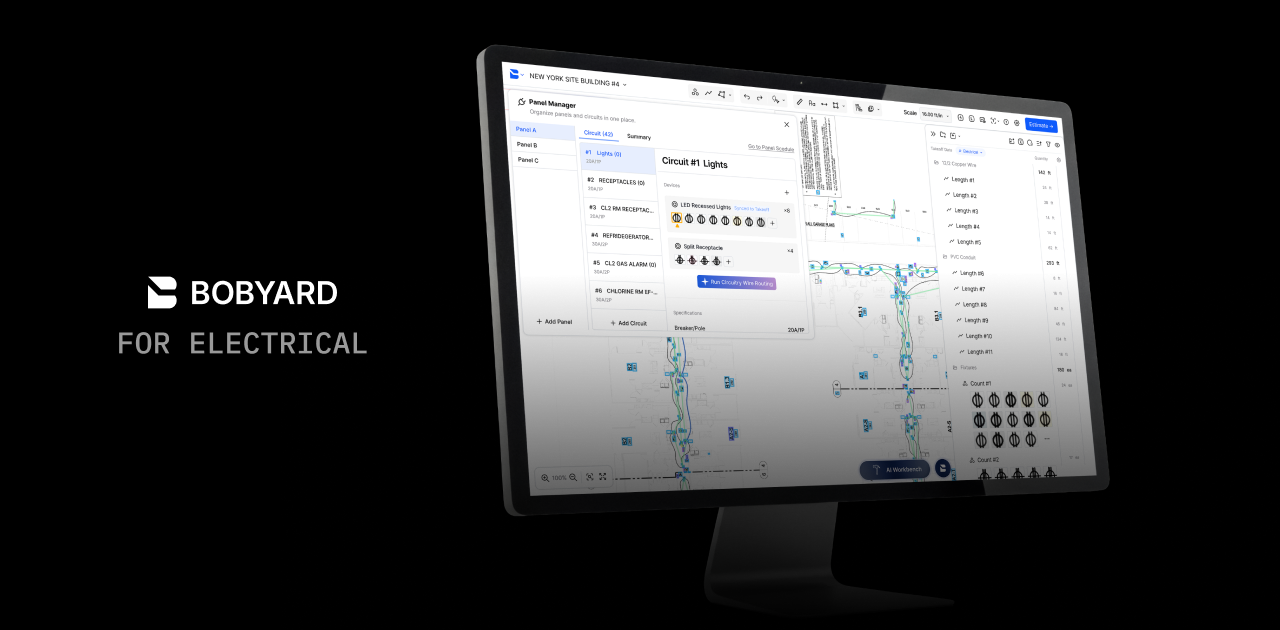
  • Roofr Review: All in One Roofing Sales Platform with AI Measurement and Proposals

    Roofr Review: All in One Roofing Sales Platform with AI Measurement and Proposals

    BestCRE 9AI Score

    69/100 · Niche

    Roofr ranks #271 of 450 commercial real estate AI tools scored on the 9AI Framework. Nine dimensions, each scored out of 10: CRE relevance, data quality, ease of adoption, output accuracy, integration fit, pricing transparency, support, innovation and market reputation.

    Roofing is a $62 billion industry in the United States according to IBISWorld’s 2025 market analysis, yet the vast majority of roofing contractors still operate with fragmented technology stacks that force manual handoffs between measurement, proposal generation, contract signing, and payment collection. The National Roofing Contractors Association found that labor shortages affected 80 percent of roofing firms in 2025, making operational efficiency critical for maintaining margins. JLL’s construction technology report noted that specialty trade contractors are among the last segments of CRE adjacent industries to adopt integrated SaaS platforms, creating an opportunity for consolidation. For commercial property owners and managers, roofing represents a significant capital expenditure category, since roof replacement and maintenance are recurring line items in building capital budgets across institutional portfolios.

    Roofr has emerged as the leading all in one roofing sales platform, serving over 12,000 roofing companies with satellite based aerial measurement reports, branded proposals with e signature, CRM functionality, work order management, invoicing, and payment processing. The company closed a Series B round from TCV and ABC Supply in January 2025 and has grown from 10 to over 150 employees. The platform supports the full contractor workflow from lead capture through measurement, proposal, e signature, work order, production, invoice, and payment. Measurement reports starting at $13 deliver satellite derived roof dimensions including squares, ridges, valleys, hips, rakes, and waste factors in as little as three hours.

    Roofr earns a 9AI Score of 69 out of 100, reflecting strong adoption, transparent pricing, and effective workflow consolidation for roofing contractors balanced by limited direct CRE institutional relevance and developing AI capabilities. The platform represents the leading vertical SaaS solution for roofing operations.

    This review is part of BestCRE’s systematic coverage of commercial real estate AI tools across 20 CRE sectors. For the full AI tools directory, see our Best CRE AI Tools hub.

    What Roofr Does and How It Works

    Roofr operates as an integrated platform that consolidates the roofing contractor’s entire sales and operations workflow into a single system. The core workflow begins with measurement. Contractors can order a satellite based measurement report by entering a property address. Roofr’s measurement team pulls satellite imagery, traces the roof outline, and calculates all relevant dimensions including total squares, ridge lengths, valley lengths, hip measurements, rake measurements, starter requirements, and waste factors. Reports are delivered in PDF and CAD formats, typically within three to six hours depending on the service tier.

    Once measurements are complete, the platform’s proposal builder enables contractors to create professional, branded proposals with multiple pricing options (commonly structured as good, better, and best packages). The drag and drop interface allows customization of materials, labor, and scope without requiring design skills. Homeowners and property managers receive proposals digitally and can approve with integrated e signature from any device. This eliminates the manual process of creating proposals in word processors, printing them, and collecting physical signatures.

    The CRM module manages the full pipeline from lead capture through project completion. Each lead progresses through defined stages (measurement, proposal, signature, work order, production, invoice, payment) with visibility across the entire workflow. For contractors managing dozens of simultaneous projects, this replaces the combination of spreadsheets, separate CRM tools, and paper based tracking that most small to mid size roofing companies use. The platform also handles invoicing and payment collection, completing the loop from initial customer contact to final payment receipt. Roofr’s roadmap includes AI Lead Capture Agents and AI Data Reporting, which would add intelligent automation to the customer acquisition and business analytics workflows.

    9AI Framework: Dimension by Dimension Analysis

    CRE Relevance: 5/10

    Roofr serves roofing contractors who work on commercial and residential properties, but the platform itself is not designed for institutional CRE workflows. Its relevance to CRE exists at the subcontractor level: property managers and owners procure roofing services from the contractors who use Roofr. The measurement and proposal tools are useful for commercial roofing projects, and the platform handles both residential and commercial scope. However, Roofr does not integrate with property management systems, capital expenditure planning tools, or institutional procurement workflows. The connection to CRE is indirect: better tools for roofing contractors improve the quality and speed of service that property owners receive. In practice: Roofr is highly relevant to the roofing trade but tangential to institutional CRE operations, serving the supply side of a service that property portfolios regularly consume.

    Data Quality and Sources: 7/10

    Roofr’s measurement data comes from satellite imagery processed by trained measurement teams and algorithms. The reports include dimensional data (squares, linear measurements, angles) derived from aerial imagery, which provides accuracy sufficient for estimating and proposal purposes. The satellite based approach differs from photogrammetry (used by Hover) and proprietary aerial surveys (used by EagleView), offering a middle ground between cost and precision. Reports are delivered in PDF and CAD formats that contractors can verify and adjust if needed. The CRM data reflects actual business operations rather than external market data. While the measurement methodology has proven sufficient for over 12,000 contractors, it may not match the precision of in person measurement for complex commercial roofs with unusual geometries. In practice: data quality is strong for proposal and estimating purposes, with satellite derived measurements that have proven reliable at scale across thousands of contractor relationships.

    Ease of Adoption: 8/10

    With over 12,000 roofing companies on the platform, Roofr has demonstrated mass adoptability within its target market. The workflow is intuitive: enter an address, receive measurements, build a proposal, send for signature. The drag and drop proposal builder requires no design skills and produces professional output. The platform consolidates seven workflow steps that previously required three or four separate tools, which means contractors simplify their technology stack by adopting Roofr rather than adding complexity. Published pricing and free self measurement options lower the barrier to trial. G2 reviews highlight the proposal builder as particularly well received for ease of use. In practice: Roofr’s adoption success across 12,000 companies demonstrates that the platform is accessible to roofing contractors across a wide range of technical sophistication, from sole proprietors to multi crew operations.

    Output Accuracy: 7/10

    Measurement reports from Roofr include detailed dimensional data that contractors use directly in pricing and material ordering, which implies a level of accuracy sufficient for commercial use. The satellite based methodology has limitations in areas with heavy tree cover, unusual roof geometries, or recent construction not captured in current imagery. For standard residential and commercial roofs, the approach produces reliable results as demonstrated by the platform’s wide adoption. The proposal outputs are as accurate as the measurements and pricing the contractor inputs, with the platform handling calculation and formatting rather than introducing its own estimation assumptions. Published reviews note occasional measurement discrepancies that require manual adjustment, which is expected for satellite derived data. In practice: accuracy is sufficient for competitive bidding and material ordering on standard roof geometries, with occasional adjustments needed for complex commercial structures.

    Integration and Workflow Fit: 6/10

    Roofr consolidates the roofing workflow internally, handling measurement, proposals, CRM, work orders, invoicing, and payments within a single platform. This internal integration is strong. However, external integrations with broader construction management platforms, accounting systems, and CRE enterprise tools are more limited. The platform’s “one platform from leads to payouts” thesis means it aims to replace external tools rather than integrate with them. For roofing contractors whose primary technology needs are covered by Roofr, this self contained approach is effective. For contractors who use separate accounting software (QuickBooks, Sage) or project management tools (Procore), the integration depth with external systems may not match expectations. In practice: internal workflow integration is excellent, but the platform operates more as a self contained ecosystem than as a component in a broader technology stack.

    Pricing Transparency: 8/10

    Roofr publishes pricing on its website, which is refreshingly transparent compared to enterprise CRE platforms. The company overhauled its pricing in March 2026, retiring the previous Pro, Premium, and Elite tiers. Current pricing includes measurement reports starting at $13 per report with delivery in as little as three hours, and Measure Plus add ons at $109 to $169 per month for priority delivery. A free self measurement option allows contractors to trace roofs themselves without purchasing reports. The AI website builder is available at $99 per month. This published pricing structure allows contractors to evaluate costs before engaging with sales and makes budget planning straightforward. In practice: pricing transparency is among the strongest in the construction technology category, with clear per report and subscription costs that enable self qualification.

    Support and Reliability: 7/10

    Roofr serves over 12,000 roofing companies and has grown from 10 to over 150 employees, indicating operational maturity sufficient to support a large user base. The Series B funding from TCV (a prominent growth equity firm) and ABC Supply (the largest wholesale distributor of roofing products in the US) provides both capital and strategic validation. G2 reviews generally reflect positive sentiment on customer support and platform reliability. The measurement delivery timelines (three to six hours) require consistent operational execution at scale, which the company appears to maintain. For a platform handling mission critical sales workflows (proposals that generate revenue), reliability during peak business periods is essential. In practice: support and reliability are adequate for the contractor market, backed by credible investors and demonstrated operational consistency across 12,000 customer relationships.

    Innovation and Roadmap: 7/10

    Roofr’s innovation lies in the consolidation of a fragmented workflow rather than in any single breakthrough technology. The satellite measurement capability, while not unique, is well integrated with the proposal and CRM workflow in a way that creates a seamless experience. The planned AI Lead Capture Agents and AI Data Reporting features on the roadmap suggest continued investment in intelligent automation. The $99 per month AI website builder represents early AI capability in the marketing layer. The company’s trajectory from measurement tool to full operational platform demonstrates strategic product expansion that creates increasing value for existing users. The March 2026 pricing overhaul shows willingness to evolve the business model alongside the product. In practice: innovation is demonstrated through workflow consolidation and strategic product expansion, with planned AI features that could significantly enhance the platform’s intelligence layer.

    Market Reputation: 7/10

    Roofr’s adoption by over 12,000 roofing companies establishes it as the leading vertical SaaS platform for roofing operations. The Series B investment from TCV and ABC Supply provides both financial credibility and industry validation (ABC Supply’s participation as a strategic investor signals confidence from the roofing industry’s largest supplier). G2 reviews reflect positive sentiment, and the platform is regularly featured in roofing industry publications and software comparison guides. The company’s growth from 10 to 150 plus employees in a few years demonstrates strong market traction. Within the roofing vertical, reputation is strong. Within the broader CRE technology ecosystem, recognition is limited because the platform serves a specific trade rather than institutional real estate workflows. In practice: market reputation is excellent within the roofing industry and growing in the broader construction technology landscape, supported by institutional investment and strong adoption metrics.

    9AI Score Card Roofr
    69
    69 / 100
    Emerging Tool
    Roofing Sales and Operations Platform
    Roofr
    Roofr serves 12,000 plus roofing companies with satellite measurement, branded proposals, CRM, and payments in one platform from leads to payouts.
    9 Dimensions, Scored 1 to 10
    1. CRE Relevance
    5/10
    2. Data Quality & Sources
    7/10
    3. Ease of Adoption
    8/10
    4. Output Accuracy
    7/10
    5. Integration & Workflow Fit
    6/10
    6. Pricing Transparency
    8/10
    7. Support & Reliability
    7/10
    8. Innovation & Roadmap
    7/10
    9. Market Reputation
    7/10
    BestCRE.com, 9AI Framework v2 Reviewed April 2026

    Who Should Use Roofr

    Roofr is designed for roofing contractors ranging from sole proprietors to multi crew operations who need to streamline their sales and operations workflow. The platform delivers the most value to contractors currently using three or more separate tools for measurement, proposals, customer management, and payments. Companies submitting multiple bids per week benefit from the integrated workflow that moves from measurement to signed contract faster. Commercial roofing contractors working on property management accounts benefit from the professional proposal presentation and digital signature capabilities. If your roofing business struggles with proposal turnaround time, customer tracking, or payment collection, Roofr consolidates those pain points into a single platform.

    Who Should Not Use Roofr

    Roofr is not appropriate for institutional CRE asset managers, investors, or firms that do not directly perform or manage roofing work. The platform does not serve general contracting, development, or property management workflows beyond the roofing scope. Large commercial roofing contractors with established enterprise systems (ERP, advanced project management) may find the platform’s integration depth insufficient for their technology stack. Firms that need precise measurement from proprietary aerial surveys rather than satellite imagery should evaluate EagleView or similar premium measurement services. Teams focused on non roofing construction trades will not find relevant capabilities in the current version.

    Pricing and ROI Analysis

    Roofr publishes clear pricing on its website. Measurement reports start at $13 per report with delivery in as little as three hours, with a free self measurement option available. The Measure Plus subscription offers priority delivery at $109 to $169 per month. The AI website builder is $99 per month. For a roofing contractor whose average project is $8,000 to $15,000 and who converts 20 to 30 percent of proposals, the investment in faster, more professional proposals can generate significant incremental revenue. If professional proposals increase close rates by even 5 percentage points, the ROI from a $169 monthly subscription is recovered from a single additional closed project. The consolidated workflow also saves administrative time that contractors can redirect to sales activity.

    Integration and CRE Tech Stack Fit

    Roofr is designed as a self contained platform that handles the full roofing sales cycle internally. The platform manages leads, measurements, proposals, contracts, work orders, invoicing, and payments without requiring external tools. For contractors who previously assembled this workflow from separate applications, Roofr replaces rather than integrates. External connections to accounting systems (QuickBooks), construction management platforms, or CRE enterprise tools are not prominently documented. For property managers who procure roofing services, Roofr does not provide a portal or integration point for managing vendor relationships from the owner side. The platform fits the roofing contractor’s tech stack, not the property owner’s tech stack.

    Competitive Landscape

    Roofr competes with EagleView (premium aerial measurement), Hover (photogrammetry based measurement and design), RooferBase (roofing CRM and operations), and JobNimbus (roofing business management). Its differentiation is the integration of measurement, proposals, CRM, and payments in a single platform at an accessible price point. EagleView offers higher precision measurement but at premium pricing and without the integrated sales workflow. Hover provides 3D modeling capabilities but focuses on visualization rather than full sales operations. RooferBase and JobNimbus offer competing CRM and operations features but with different measurement partnerships. Roofr’s 12,000 plus customers and Series B funding establish it as the category leader in integrated roofing sales platforms.

    The Bottom Line

    Roofr is the leading vertical SaaS platform for roofing contractors, combining measurement, proposals, CRM, and payments into a workflow that 12,000 companies depend on daily. The 9AI Score of 69 out of 100 reflects strong adoption, transparent pricing, and effective workflow automation balanced by limited direct CRE institutional relevance. For roofing contractors seeking to professionalize their sales process and consolidate their technology stack, Roofr is the category standard. For CRE property managers and owners, understanding that your roofing vendors use Roofr means expecting faster proposals, digital signatures, and more professional engagement from the contractors who maintain your portfolio’s most critical building envelope component.

    About BestCRE

    BestCRE is the definitive authority on commercial real estate AI, analysis, and investment intelligence. Every article advances the mission of helping CRE professionals identify, evaluate, and deploy the best technology for their investment and operational workflows. We benchmark platforms using the 9AI Framework so CRE leaders can compare tools with clear, evidence based scoring. Explore the full category map at 20 CRE sectors for deeper coverage across the CRE technology stack.

    Frequently Asked Questions

    How accurate are Roofr satellite measurement reports?

    Roofr’s measurement reports are derived from satellite imagery processed by trained measurement teams and algorithms. The reports include total roof squares, ridge lengths, valley lengths, hip measurements, rake measurements, starter requirements, and waste factor calculations delivered in PDF and CAD formats. The accuracy is sufficient for competitive bidding and material ordering, as demonstrated by adoption across 12,000 roofing companies who rely on these measurements for business critical proposals. For standard residential and straightforward commercial roofs, satellite derived measurements provide reliable dimensional data. Complex commercial roofs with unusual geometries, heavy tree cover, or recent modifications not captured in current imagery may require supplemental on site measurement. Contractors can also use the free self measurement tool to verify or supplement satellite reports.

    What does Roofr cost for roofing contractors?

    Roofr overhauled its pricing in March 2026. Measurement reports start at $13 per report with delivery in as little as three hours. The Measure Plus subscription offers priority delivery at $109 per month (six hour delivery) or $169 per month for faster turnaround. A free self measurement option allows contractors to trace roof outlines themselves without purchasing reports. The AI website builder is available at $99 per month. The previous Pro, Premium, and Elite tier structure has been retired. The published pricing makes budgeting straightforward for contractors of any size, and the per report model means firms only pay for measurement when they need it rather than committing to volume they may not use consistently.

    How does Roofr’s proposal builder work?

    Roofr’s drag and drop proposal builder allows contractors to create professional, branded proposals without design skills. Measurement data from satellite reports or self measurement imports directly into the proposal template. Contractors add their pricing for materials, labor, and scope, typically structured as good, better, and best packages that give property owners options at different price points. The proposals include branding elements (logo, colors, company information), detailed scope descriptions, material specifications, and pricing breakdowns. Homeowners and property managers receive proposals digitally and can approve with integrated e signature from any device. The proposal builder is consistently cited in G2 reviews as the platform’s most valued feature for its combination of professional output and ease of use.

    Does Roofr work for commercial roofing projects?

    Roofr handles both residential and commercial roofing projects, with satellite measurement reports available for any address in the United States. Commercial roofing contractors use the platform for measurement, proposals, and CRM just as residential contractors do. For commercial projects, the professional proposal presentation and digital signature capabilities are particularly valuable when working with property management firms that expect polished vendor communications. The measurement reports cover the same dimensional data (squares, ridges, valleys, waste factors) regardless of building type. However, very large or complex commercial roofs may require supplemental on site measurement to capture details that satellite imagery cannot fully resolve, such as multi level roof sections or areas obscured by mechanical equipment.

    What AI features does Roofr currently offer and what is planned?

    Roofr’s current AI capabilities include an AI powered website builder available at $99 per month that helps roofing contractors create professional web presence with minimal effort. The satellite measurement process involves algorithmic processing of aerial imagery, though the primary intelligence comes from trained measurement teams rather than fully autonomous AI. The company’s roadmap includes AI Lead Capture Agents that would automate initial customer engagement and qualification, and AI Data Reporting that would provide intelligent business analytics and insights across the contractor’s operations. These planned features would significantly enhance the platform’s AI dimension by adding autonomous intelligence to customer acquisition and business decision making workflows that currently require manual oversight.

    Related Reviews

    Compare Roofr with other Construction & Development tools BestCRE has scored: Built (76/100), OnsiteIQ (71/100), Field Materials (70/100) and Civils.ai (69/100). Browse every review in CRE Construction & Development, the full Best CRE AI Tools directory, or the 20 CRE Sectors hub.

  • Bobyard Review: AI Powered Takeoff and Estimating for Construction and Landscaping

    Bobyard Review: AI Powered Takeoff and Estimating for Construction and Landscaping

    BestCRE 9AI Score

    64/100 · Niche

    Bobyard ranks #337 of 450 commercial real estate AI tools scored on the 9AI Framework. Nine dimensions, each scored out of 10: CRE relevance, data quality, ease of adoption, output accuracy, integration fit, pricing transparency, support, innovation and market reputation.

    Construction estimating remains one of the most labor intensive bottlenecks in commercial real estate development. Construction has been slow to digitize, with estimating workflows still dominated by manual plan reading and quantity calculations. Labor is a related constraint. The Associated General Contractors of America and NCCER 2025 Workforce Survey found that 83 percent of firms with craft worker openings report those positions are as hard or harder to fill than a year ago. Estimating capacity is hard to add in that environment. The Turner Building Cost Index rose 5.2 percent year over year in the second quarter of 2026, according to Turner Construction, which raises the stakes for firms that must produce accurate, competitive bids quickly enough to win work. For landscaping and site work contractors specifically, the challenge is compounded by the complexity of plan sets that combine planting schedules, irrigation systems, hardscape measurements, and electrical specifications into documents that require specialized expertise to interpret.

    Bobyard addresses this gap with an AI platform that automates quantity takeoffs from construction plans. The platform, which launched Bobyard 2.0, can instantly detect and count planting, irrigation, and electrical symbols, automatically measure pavers, concrete, and other materials, and calculate beds, edges, and hardscape in seconds. The company says the system automates up to 70 percent of the quantity and material takeoff process, and that teams commonly cut takeoff time by 50 to 90 percent, with one customer reporting 5X bid volume. Originally built for landscaping contractors, Bobyard now supports six trades: landscaping, electrical, plumbing, mechanical, interior finishes, and paving.

    Bobyard earns a 9AI Score of 64 out of 100, reflecting genuine innovation in AI powered takeoff automation balanced by limited CRE institutional depth, early trade focus, and developing market reputation. The platform represents an emerging category of AI tools that compress pre construction workflows for specialized contractors.

    This review is part of BestCRE’s systematic coverage of commercial real estate AI tools across 20 CRE sectors. For the full AI tools directory, see our Best CRE AI Tools hub.

    What Bobyard Does and How It Works

    Bobyard operates as an AI powered takeoff platform that reads construction plans and automatically identifies, counts, and measures elements that estimators would otherwise process manually. Users upload plan sheets (PDFs or images) and the platform’s computer vision models identify symbols, shapes, and annotations specific to the trade being estimated. For landscaping plans, the AI recognizes planting symbols and counts them by type, detects irrigation components and maps their distribution, identifies hardscape areas and calculates square footage, and measures linear elements like edging and borders.

    The Bobyard 2.0 platform introduces a unified AI workbench that consolidates multiple estimation workflows into a single environment. The Multi Measure feature allows estimators to draw a single shape and automatically calculate area, perimeter, and volume simultaneously rather than requiring separate measurements for each metric. This addresses a common pain point where estimators must create redundant annotations on plans to capture different dimensional properties of the same element. The platform’s “measure first, price later” model separates the physical quantity takeoff from the pricing step, allowing estimators to complete accurate measurements before applying material costs and labor rates.

    The material and cost integration in Bobyard 2.0 connects measurements directly to pricing databases, so once quantities are established, the system can generate preliminary cost estimates without requiring manual lookup and calculation. For contractors submitting multiple bids per week, the ability to move from plan receipt to quantity takeoff to preliminary pricing in hours rather than days represents a meaningful competitive advantage. The platform’s claimed automation of up to 70 percent of the takeoff process means estimators spend their expertise on the 30 percent that requires human judgment (unusual conditions, site specific factors, scope clarifications) rather than on routine counting and measuring that AI handles more consistently.

    9AI Framework: Dimension by Dimension Analysis

    CRE Relevance: 6/10

    Bobyard serves the construction estimation workflow that is part of the broader CRE development pipeline. However, its primary focus on landscaping takeoffs positions it in a specialized trade niche rather than at the institutional CRE level where decisions about building development, financing, and investment occur. The platform is relevant to general contractors, landscape contractors, and developers who need to price site work as part of larger projects. Its expansion to six construction trades broadens its CRE relevance. For CRE developers managing ground up projects, accurate site work takeoffs inform budget decisions. But the platform does not directly serve the asset management, leasing, or investment workflows that define institutional CRE operations. In practice: Bobyard is relevant to CRE development workflows at the trade contractor level, but its current landscaping focus limits broader institutional CRE applicability.

    Data Quality and Sources: 7/10

    Bobyard’s AI models process construction plan documents directly, extracting measurements and quantities from the source documents that define scope. The data quality depends on the accuracy of the AI’s interpretation of plan symbols, dimensions, and annotations. The platform claims to automate 70 percent of the takeoff process, which implies high accuracy for the elements it handles. The AI symbol detection for planting, irrigation, and electrical components demonstrates domain specific training that goes beyond generic image recognition. Material and cost databases provide pricing context that connects quantities to budgets. However, the platform has not published specific accuracy metrics or error rates that would allow comparison against manual takeoff accuracy. In practice: data quality is grounded in direct plan interpretation with domain trained AI, producing measurements accurate enough for bid preparation at the 70 percent automation level.

    Ease of Adoption: 8/10

    Bobyard is designed for immediate usability by construction estimators who can upload plans and begin receiving automated takeoffs without extensive training or implementation. The platform’s workflow mirrors the mental model of estimators (upload plan, identify elements, measure quantities, apply pricing) while automating the most repetitive steps. The company’s reported takeoff time savings of 50 to 90 percent suggest that users achieve value from their first session. The Multi Measure feature and unified workbench reduce the learning curve by consolidating functions that traditionally require separate tools or multiple passes through a plan set. For trade contractors accustomed to manual measurement or basic PDF takeoff tools, Bobyard represents a meaningful step up in capability without requiring technical expertise. In practice: adoption is designed for immediate productivity gains with a workflow that construction estimators will find intuitive and familiar.

    Output Accuracy: 7/10

    The platform’s claimed automation of 70 percent of the takeoff process, which implies that outputs for those automated elements are accurate enough to trust in bid preparation. The remaining 30 percent requiring human judgment suggests appropriate calibration: the AI handles routine counting and measurement while flagging complex or ambiguous elements for estimator review. The symbol detection capability for planting, irrigation, and electrical components demonstrates specialized accuracy in recognizing and categorizing plan elements. However, published accuracy benchmarks, error rates, or comparison studies against manual takeoffs are not available. For competitive bidding where accuracy directly affects profitability, the 70 percent automation claim positions Bobyard as a productivity tool that augments rather than replaces estimator judgment. In practice: outputs are reliable enough for production use in bid preparation, though estimators should verify automated quantities for complex or high value elements.

    Integration and Workflow Fit: 5/10

    Bobyard integrates materials and costs within its platform but does not prominently document connections to broader construction management systems, accounting platforms, or enterprise CRE tools. The platform operates primarily as a standalone estimation tool where outputs may need to be transferred to other systems for project management, procurement, or financial tracking. For trade contractors using QuickBooks, Sage, or construction specific ERP systems, the integration path is not clearly documented. The “measure first, price later” model suggests that material databases are internal to the platform rather than pulled from external sources. For firms that need estimation outputs to flow into broader project management workflows, manual data transfer may be required. In practice: Bobyard functions effectively as a standalone estimation tool but lacks the documented integration depth that firms with established tech stacks require.

    Pricing Transparency: 5/10

    Bobyard does not prominently publish pricing on its website, though the platform provides an ROI calculator that helps prospective users estimate potential savings. The ROI calculator suggests the company understands the value conversation but chooses not to publish specific tier pricing publicly. The platform appears to operate on a subscription model based on its SaaS architecture, but exact costs per user or per project are not visible. For trade contractors evaluating the tool against alternatives like Togal.AI (which publishes $299 per month per user), the lack of published pricing creates unnecessary friction in the evaluation process. The ROI calculator partially compensates by helping users understand potential value before engaging sales. In practice: pricing requires direct inquiry, though the ROI calculator provides some guidance on expected value that aids budget conversations.

    Support and Reliability: 6/10

    Bobyard is an early stage company that has recently launched its 2.0 platform, indicating active development and investment in the product. The Crunchbase profile confirms venture funding, which signals investor confidence in the team and technology. Coverage in Landscape Management and AI industry publications demonstrates market awareness. However, the platform’s operational history is limited compared to established construction technology companies. Public documentation on support tiers, uptime guarantees, and enterprise reliability is not readily available. For trade contractors who need consistent availability during peak bidding periods, the early stage maturity introduces some uncertainty. In practice: the platform shows active development momentum and credible backing, but limited operational history means reliability is not yet proven at scale over extended periods.

    Innovation and Roadmap: 8/10

    Bobyard demonstrates genuine technical innovation in applying computer vision and AI to construction plan interpretation. The ability to automatically detect and count trade specific symbols (planting, irrigation, electrical) represents specialized AI training that goes beyond generic document processing. The Multi Measure feature that calculates area, perimeter, and volume from a single annotation shows thoughtful product design around estimator workflows. The launch of Bobyard 2.0 with its unified AI workbench and the expansion to six construction trades signals an active roadmap. The claimed 70 percent automation rate positions the platform at the frontier of what current AI can reliably achieve in construction takeoff. In practice: Bobyard represents meaningful innovation in AI applied to construction estimation, with a clear expansion path from landscaping to broader trade categories.

    Market Reputation: 6/10

    Bobyard has achieved visibility in trade publications (Landscape Management) and AI industry media (Artificial Intelligence News), which demonstrates market awareness among its target audience. The Crunchbase profile confirms legitimate venture backing. However, the platform has not yet achieved the widespread adoption or named enterprise client base that established construction technology companies possess. Reviews on G2, Capterra, or other software evaluation platforms are limited. The landscaping industry focus gives the company a clear beachhead market with room to expand, but current reputation is built on potential and early traction rather than proven scale. In practice: market reputation is developing with credible press coverage and investor backing, but the platform has not yet achieved the established presence that reduces buyer risk for institutional adopters.

    9AI Score Card Bobyard
    64
    64 / 100
    Emerging Tool
    Construction Takeoff and Estimation
    Bobyard
    Bobyard automates up to 70 percent of construction takeoffs with AI symbol detection and measurement, enabling estimators to submit 3 to 5 times more bids.
    9 Dimensions, Scored 1 to 10
    1. CRE Relevance
    6/10
    2. Data Quality & Sources
    7/10
    3. Ease of Adoption
    8/10
    4. Output Accuracy
    7/10
    5. Integration & Workflow Fit
    5/10
    6. Pricing Transparency
    5/10
    7. Support & Reliability
    6/10
    8. Innovation & Roadmap
    8/10
    9. Market Reputation
    6/10
    BestCRE.com, 9AI Framework v2 Reviewed April 2026

    Who Should Use Bobyard

    Bobyard is designed for landscaping contractors, general contractors handling site work, and estimators who need to produce quantity takeoffs from plan sets faster than manual methods allow. The platform is particularly valuable for firms bidding on multiple projects simultaneously where estimator bandwidth limits the number of competitive proposals submitted. Companies with dedicated estimation teams that process landscape, irrigation, hardscape, and electrical plans will see the most immediate time savings. Developers who self perform site work or need to validate subcontractor bids can also benefit from rapid independent takeoffs. If your firm loses opportunities because estimators cannot process plans fast enough to meet bid deadlines, Bobyard directly addresses that constraint.

    Who Should Not Use Bobyard

    Bobyard is not appropriate for institutional CRE investors, asset managers, or firms focused on building operations rather than construction. The platform does not serve leasing, financing, or portfolio management workflows. Teams focused on commercial building trades (mechanical, electrical, plumbing, structural) will not find relevant capabilities in the current landscaping focused version, though the expansion to additional trades is planned. Firms that need deep integration with construction management platforms (Procore, PlanGrid, Autodesk Build) may find the standalone nature limiting. Very small operators with occasional projects may not generate enough bid volume to justify subscription costs.

    Pricing and ROI Analysis

    Bobyard’s specific pricing is not published but the company provides an ROI calculator on its website to help prospective users estimate potential savings. The ROI case is compelling: if the platform enables estimators to submit several times more bids while reducing takeoff time by 50 to 90 percent, the incremental revenue from additional won projects can substantially exceed subscription costs. For a landscaping contractor with an average project value of $50,000 and a typical win rate of 20 percent, submitting four additional bids per week (enabled by time savings) could generate $40,000 in incremental weekly revenue. Even at aggressive subscription pricing, the economics favor adoption for any firm submitting regular bids.

    Integration and CRE Tech Stack Fit

    Bobyard operates primarily as a standalone estimation platform. The 2.0 version integrates materials and costs within the platform, allowing users to move from measurement to preliminary pricing without switching tools. However, documented integrations with broader construction management platforms (Procore, Buildertrend, CoConstruct), accounting systems (QuickBooks, Sage), or CRE enterprise tools are not prominently marketed. For trade contractors whose tech stack consists of basic business tools, the standalone nature is acceptable. For firms with established project management workflows that expect estimation data to flow into other systems, manual export or data transfer may be required until integration depth matures.

    Competitive Landscape

    Bobyard competes with AI powered takeoff platforms including Togal.AI ($299 per month per user, claiming 98 percent accuracy and 80 percent time reduction), Attentive.ai (aerial imagery based takeoffs), and traditional digital takeoff tools like PlanSwift, Bluebeam, and On Screen Takeoff. Its primary differentiation is the landscaping industry focus with specialized symbol detection for planting, irrigation, and hardscape elements that general purpose takeoff tools do not handle natively. Togal.AI offers broader construction trade coverage with published pricing and accuracy claims. Traditional tools provide more manual control but less automation. For landscaping contractors specifically, Bobyard’s domain specialization likely provides accuracy advantages over general purpose alternatives.

    The Bottom Line

    Bobyard is an innovative AI takeoff platform that addresses a real productivity bottleneck for landscaping and construction estimators. The 9AI Score of 64 out of 100 reflects genuine technical innovation and strong ease of use balanced by narrow trade focus, early stage maturity, and limited CRE institutional relevance. For landscaping contractors and site work estimators who need to bid more projects faster, the platform delivers measurable time savings. The expansion to six construction trades broadens its applicability to more CRE development workflows. As a specialized estimation tool rather than an enterprise CRE platform, Bobyard occupies a narrow but valuable position in the pre construction technology landscape.

    About BestCRE

    BestCRE is the definitive authority on commercial real estate AI, analysis, and investment intelligence. Every article advances the mission of helping CRE professionals identify, evaluate, and deploy the best technology for their investment and operational workflows. We benchmark platforms using the 9AI Framework so CRE leaders can compare tools with clear, evidence based scoring. Explore the full category map at 20 CRE sectors for deeper coverage across the CRE technology stack.

    Frequently Asked Questions

    What types of construction plans can Bobyard process?

    Bobyard currently processes landscaping related construction plans including planting plans (with automatic symbol detection and counting), irrigation plans (identifying components and mapping distribution), hardscape plans (measuring areas of pavers, concrete, and other materials), and electrical site plans. The platform reads PDF and image format plan sheets that estimators upload directly. Bobyard 2.0 launched with expanded capabilities for landscaping contractors, and the platform now supports six trades: landscaping, electrical, plumbing, mechanical, interior finishes, and paving. The AI models are trained specifically on trade relevant symbols and annotations rather than applying generic document processing, which enables the specialized detection accuracy that trade estimators require.

    How much time does Bobyard save compared to manual takeoff methods?

    Bobyard reports that teams commonly cut takeoff time by 50 to 90 percent compared to manual methods, and that its platform automates up to 70 percent of the quantity and material takeoff process. This time savings enables estimators to submit three to five times more bids per estimator, which directly impacts revenue potential for firms constrained by estimation bandwidth. For a project that would typically require eight hours of manual takeoff work, Bobyard’s automation could compress that to approximately three hours. The remaining time is spent on the 30 percent of elements that require human judgment, such as unusual site conditions, scope clarifications, or non standard specifications that the AI flags for review rather than automating.

    How does Bobyard compare to Togal.AI for construction takeoffs?

    Bobyard and Togal.AI both apply AI to construction takeoff automation but differ in focus and positioning. Togal.AI publishes pricing at $299 per month per user (annual), claims 98 percent accuracy, and supports broader construction trades with a focus on general commercial estimating. Bobyard specializes in landscaping and site work with domain specific symbol detection for planting, irrigation, hardscape, and electrical elements. For landscaping contractors, Bobyard’s specialized AI models likely produce more accurate results for trade specific symbols than general purpose alternatives. For general contractors handling multiple building trades, Togal.AI’s broader trade coverage may provide more immediate value. The choice depends on whether the buyer prioritizes depth in landscape estimation or breadth across construction trades.

    What is the Multi Measure feature in Bobyard 2.0?

    Multi Measure is a Bobyard 2.0 feature that allows estimators to draw a single shape or line on a plan and automatically calculate multiple dimensional properties simultaneously. Instead of creating separate annotations for area, perimeter, and volume of the same element (which traditional takeoff tools require), estimators draw once and receive all relevant measurements at the same time. This addresses a common workflow inefficiency where estimators must trace the same hardscape area three times to get square footage (for material), linear footage (for edging), and cubic volume (for base material). The feature reduces both the time and the error potential inherent in redundant measurement operations.

    Is Bobyard expanding beyond landscaping to other construction trades?

    Yes, Bobyard has expanded beyond landscaping and now supports six trades: landscaping, electrical, plumbing, mechanical, interior finishes, and paving. The platform launched initially for landscaping contractors as its beachhead market, building specialized AI models for planting, irrigation, hardscape, and electrical symbol detection. The planned expansion to additional trades would broaden the platform’s applicability to general contractors, subcontractors in other disciplines, and CRE developers who need takeoff capabilities across multiple scopes of work. The specific trades targeted for expansion have not been publicly detailed, but the platform’s computer vision architecture is designed to be trained on new symbol sets and measurement patterns as new trade modules are developed.

    Related Reviews

    Compare Bobyard with other Construction & Development tools BestCRE has scored: Resolve (71/100), Field Materials (70/100), Civils.ai (69/100) and Firmus (69/100). Browse every review in CRE Construction & Development, the full Best CRE AI Tools directory, or the 20 CRE Sectors hub.
  • GemHaus Review: AI Powered Investment Analysis and Market Intelligence for Real Estate

    GemHaus Review: AI Powered Investment Analysis and Market Intelligence for Real Estate

    BestCRE 9AI Score

    59/100 · Watch

    GemHaus ranks #415 of 450 commercial real estate AI tools scored on the 9AI Framework. Nine dimensions, each scored out of 10: CRE relevance, data quality, ease of adoption, output accuracy, integration fit, pricing transparency, support, innovation and market reputation.

    Real estate investment analysis remains one of the most time intensive workflows in the acquisition process. Deal activity is accelerating, which puts a premium on speed. Green Street tracked $164 billion in sales of commercial properties valued at $25 million or more in the first half of 2026, compared with $126 billion in the first half of 2025. JLL’s 2025 Global Real Estate Technology Survey found that 88 percent of investors, owners and landlords have started piloting AI, and acquisition teams are increasingly turning to technology to shorten the path from initial screening to LOI submission. The National Association of Realtors found that investors analyzing residential and small commercial assets still spend an average of two to four hours per property on basic financial analysis, market context assembly, and comp research before making initial go or no go decisions. For high volume investors screening dozens of deals weekly, this manual analysis creates a structural bottleneck that limits deal flow velocity.

    GemHaus addresses this gap with an AI powered platform that generates instant investment reports for any US address, consolidating market data, rental comparables, pro forma projections, and market intelligence into a single interface. The platform provides free real estate market reports for every US zip code including median home prices, rental yields, days on market, and absorption rates. Users can compare Airbnb versus long term rental returns with comps and rent estimates, analyze on market or off market properties, and generate full investment reports in seconds rather than hours. The platform positions itself as a tool that cuts underwriting time from hours to minutes.

    GemHaus earns a 9AI Score of 59 out of 100, reflecting strong ease of use and quick time to value balanced by limited CRE institutional depth, early stage market presence, and narrow integration capabilities. The platform serves individual investors and small portfolio operators more effectively than institutional CRE teams managing complex commercial assets.

    This review is part of BestCRE’s systematic coverage of commercial real estate AI tools across 20 CRE sectors. For the full AI tools directory, see our Best CRE AI Tools hub.

    What GemHaus Does and How It Works

    GemHaus operates as an investment analysis platform that consolidates multiple data sources into a single interface for rapid property evaluation. The core workflow is straightforward: users enter a US address (either on market or off market) and receive a comprehensive investment report that includes property characteristics, comparable sales, rental estimates for both short term and long term strategies, market trends for the surrounding area, and a financial pro forma with projected returns. The platform eliminates the need to toggle between multiple data providers, spreadsheet models, and market research tools to assemble the basic financial picture of a potential investment.

    The market intelligence layer provides zip code level analytics including median home prices, rental yields, days on market, absorption rates, and trend data. This contextualizes individual property analysis within broader market dynamics, helping investors understand whether local conditions support their investment thesis. The AI component processes multiple data inputs to generate rental estimates and investment insights that account for property specific characteristics and local market conditions simultaneously.

    For investors evaluating short term rental strategies, GemHaus provides Airbnb comparable data alongside traditional long term rental estimates, allowing direct comparison of return profiles without requiring separate research workflows. The pro forma modeling incorporates acquisition costs, operating expenses, financing assumptions, and projected cash flows to produce return metrics that investors use in initial screening decisions. The platform’s emphasis on speed (reports generated in seconds) positions it as a screening and initial analysis tool rather than a replacement for full institutional underwriting. For high volume investors who need to triage large deal pipelines quickly, the ability to evaluate properties in seconds rather than hours represents a meaningful workflow improvement.

    9AI Framework: Dimension by Dimension Analysis

    CRE Relevance: 6/10

    GemHaus serves real estate investment analysis workflows but its primary orientation is toward residential and small portfolio investors rather than institutional commercial real estate teams. The platform handles single family rentals, small multifamily, and short term rental analysis effectively. However, it does not address the complex financial structures, lease abstraction, tenant credit analysis, or multi asset portfolio modeling that define institutional CRE underwriting. The market data focuses on residential metrics such as median home prices and rental yields rather than commercial metrics like cap rates, NOI per square foot, or tenant improvement allowances. For investors operating at the intersection of residential and commercial (small multifamily, SFR portfolios), relevance is higher. In practice: GemHaus serves real estate investors broadly but lacks the institutional CRE depth that larger commercial portfolios require.

    Data Quality and Sources: 6/10

    The platform aggregates data across US markets to provide property level comps, rental estimates, and market trends for every zip code. The breadth of coverage is strong, with reports available for any US address. However, the specific data sources, update frequency, and accuracy benchmarks are not publicly documented. For residential investment analysis, the data appears sufficient for initial screening based on the platform’s claim of cutting underwriting time from hours to minutes. The rental estimate methodology (both long term and Airbnb) relies on AI modeling that processes comparable properties and local market conditions. Without published accuracy metrics or independent validation, the reliability of outputs depends on user verification against known data points. In practice: data coverage is broad across US residential markets, but the absence of published accuracy metrics or source transparency limits confidence for high stakes decisions.

    Ease of Adoption: 8/10

    GemHaus is designed for immediate usability. Users enter an address and receive a report in seconds, with no implementation, integration setup, or training required. Free market reports for every US zip code lower the barrier to initial exploration. The interface consolidates data that would otherwise require multiple tools and manual assembly, which means new users can extract value from their first session. The platform does not require technical expertise or real estate modeling knowledge to generate basic investment analyses. This accessibility makes it particularly attractive to newer investors or those scaling their deal screening without adding analyst headcount. In practice: GemHaus has one of the lowest adoption barriers in the real estate investment tool category, delivering immediate value with no setup or training requirement.

    Output Accuracy: 6/10

    GemHaus generates automated pro forma projections, rental estimates, and market assessments using AI modeling. The accuracy of these outputs depends on the quality of underlying data sources and the sophistication of the estimation models. For initial screening purposes, approximate accuracy may be sufficient to identify properties worth deeper analysis. However, the platform does not publish error rates, confidence intervals, or validation studies that would allow users to calibrate their expectations. For investors making final acquisition decisions, GemHaus outputs would typically require validation against independent data sources and more detailed financial modeling. The speed advantage comes with an implicit trade off: instant analysis may sacrifice some precision compared to manual research conducted over hours. In practice: outputs are useful for rapid screening and deal triage, but should be validated against independent sources before committing capital.

    Integration and Workflow Fit: 4/10

    GemHaus operates as a standalone analysis platform with no documented integrations with CRE property management systems, deal management platforms, or institutional underwriting tools. The platform does not connect to Yardi, MRI, CoStar, Argus, or other enterprise systems that institutional CRE teams use. Outputs are consumed within the GemHaus interface rather than flowing into broader investment workflows. For individual investors using spreadsheets and email, the standalone nature may be acceptable. For firms with established tech stacks that expect data to flow between systems, the lack of integration creates manual work between screening (in GemHaus) and detailed analysis (in other tools). In practice: GemHaus is a standalone screening tool that does not integrate with the enterprise CRE tech stack, limiting its utility for teams with established workflow systems.

    Pricing Transparency: 6/10

    GemHaus offers free market reports for every US zip code, which provides a clear entry point for prospective users. The platform appears to operate on a freemium model where basic reports are available at no cost and premium features or deeper analysis require paid access. However, the specific pricing tiers, feature differentiation between free and paid, and exact costs are not prominently documented in public materials. The platform was noted as being in closed beta or limited availability at various points, which creates uncertainty about current access and pricing. The presence of a free tier is a strength for pricing transparency compared to enterprise platforms that require sales conversations. In practice: the free tier provides good initial visibility, but full pricing structure for premium features is not clearly published.

    Support and Reliability: 5/10

    GemHaus appears to be an early stage platform with limited publicly available information about team size, operational history, and support infrastructure. The platform’s website and public presence suggest a newer entrant to the real estate technology market without the decade plus track record of established competitors. Support documentation, SLA guarantees, and enterprise reliability commitments are not publicly visible. For a tool used primarily for initial investment screening rather than mission critical operations, the reliability requirements are less demanding. However, investors who build workflows around the platform’s availability should understand the inherent risks of depending on early stage technology companies. In practice: limited operational history and public documentation about support infrastructure suggest typical early stage maturity, acceptable for screening use but not yet proven for mission critical workflows.

    Innovation and Roadmap: 7/10

    GemHaus demonstrates innovation in how it consolidates the investment analysis workflow into a single, instant interface. The combination of property data, comparable analysis, rental estimates (both short term and long term), market intelligence, and pro forma modeling in one platform represents a meaningful improvement over the fragmented tool landscape that most investors navigate. The AI powered insights layer adds analytical capability beyond simple data aggregation. The platform’s approach of generating full investment reports in seconds rather than requiring manual assembly shows a clear product vision around speed and accessibility. However, the public roadmap is not documented, and the platform’s evolution since initial launch is not well tracked in public materials. In practice: the core product concept is innovative in its consolidation of multiple analysis workflows, though the long term technology roadmap is not publicly visible.

    Market Reputation: 5/10

    GemHaus has limited publicly visible market traction compared to established investment analysis platforms. The platform does not appear in major industry rankings, has limited review presence on platforms like G2 or Capterra, and does not have prominent case studies or named institutional clients. Its positioning suggests targeting individual investors and small portfolio operators rather than institutional CRE firms. The platform’s inclusion in some industry roundup articles about AI tools for real estate investors provides some visibility, but it has not achieved the market recognition of established competitors like PropStream, Reonomy, or CoStar. For individual investors seeking a quick analysis tool, market reputation may be less important than feature utility. In practice: market reputation is early stage, with limited institutional credibility but growing visibility among individual real estate investors.

    9AI Score Card GemHaus
    59
    59 / 100
    Early Stage
    Investment Analysis and Market Intelligence
    GemHaus
    GemHaus delivers instant AI powered investment reports for any US address, consolidating comps, rental estimates, and pro forma modeling into seconds rather than hours.
    9 Dimensions, Scored 1 to 10
    1. CRE Relevance
    6/10
    2. Data Quality & Sources
    6/10
    3. Ease of Adoption
    8/10
    4. Output Accuracy
    6/10
    5. Integration & Workflow Fit
    4/10
    6. Pricing Transparency
    6/10
    7. Support & Reliability
    5/10
    8. Innovation & Roadmap
    7/10
    9. Market Reputation
    5/10
    BestCRE.com, 9AI Framework v2 Reviewed April 2026

    Who Should Use GemHaus

    GemHaus is designed for individual real estate investors and small portfolio operators who need to screen properties quickly without spending hours on manual financial analysis. The platform is particularly useful for investors evaluating residential rental properties (both single family and small multifamily), comparing short term versus long term rental strategies, and conducting initial market research before committing to deeper due diligence. House flippers, Airbnb operators, and buy and hold investors managing fewer than 50 units will find the most immediate value. If your investment process involves screening dozens of potential acquisitions weekly and you need a fast way to generate preliminary financial analysis, GemHaus compresses that workflow meaningfully.

    Who Should Not Use GemHaus

    GemHaus is not appropriate for institutional CRE teams underwriting complex commercial assets such as office buildings, industrial warehouses, or large retail centers. The platform’s data and modeling are oriented toward residential metrics and do not handle commercial lease structures, tenant credit analysis, or the multi scenario cash flow modeling that institutional underwriting requires. Firms using Argus, Excel based institutional models, or enterprise deal management platforms will not find GemHaus capable of replacing those workflows. Teams that require integration with property management systems, accounting platforms, or investor reporting tools will find the standalone nature limiting. The platform solves a specific problem for residential scale investors, not institutional CRE complexity.

    Pricing and ROI Analysis

    GemHaus offers free real estate market reports for every US zip code, providing an accessible entry point for new users. The platform appears to operate on a freemium model where basic market data and property lookups are available at no cost, with premium features and deeper analysis available through paid access. Specific pricing tiers for premium features are not clearly published in current materials. The platform was previously noted as operating in closed beta, which may affect current availability. ROI for users is driven by time savings: if the platform replaces two to four hours of manual analysis per property with seconds of automated reporting, investors screening ten or more properties weekly save 20 to 40 hours monthly. For the likely price point of a consumer or prosumer SaaS tool, the time savings justify adoption quickly.

    Integration and CRE Tech Stack Fit

    GemHaus operates as a standalone analysis platform without documented integrations to enterprise CRE systems. The platform does not connect to property management software (Yardi, AppFolio, Buildium), deal management platforms (DealPath, Juniper Square), or accounting systems. Users consume analysis within the GemHaus interface and would need to manually transfer insights into their existing workflows. For individual investors using spreadsheets and basic tools, this standalone approach is acceptable. For firms with established technology stacks that expect seamless data flow between systems, GemHaus functions as an isolated screening tool that does not participate in broader workflow automation.

    Competitive Landscape

    GemHaus competes with established investment analysis platforms including PropStream (property data and lead generation), DealCheck (rental property analysis), Mashvisor (Airbnb and rental analytics), and Roofstock (marketplace with analytical tools). Its differentiation is the consolidation of multiple data types into a single instant report: rather than requiring users to check comps in one tool, rental estimates in another, and build a pro forma in a spreadsheet, GemHaus combines all three. PropStream offers deeper data but is more expensive and complex. DealCheck provides strong financial modeling but requires more manual input. For investors who value speed and simplicity over depth and customization, GemHaus occupies a useful position in the tool landscape.

    The Bottom Line

    GemHaus is a fast, accessible investment analysis tool that serves individual real estate investors who need to screen properties quickly. The 9AI Score of 59 out of 100 reflects genuine utility in its target market balanced by limited institutional CRE relevance, early stage maturity, and absence of enterprise integrations. For residential investors who want instant financial analysis without manual spreadsheet work, the platform delivers meaningful time savings. For institutional CRE teams managing complex commercial portfolios, the platform lacks the depth, integration, and market reputation needed for professional adoption. GemHaus is worth watching as it matures, particularly for investors who operate at the intersection of residential and small commercial real estate.

    About BestCRE

    BestCRE is the definitive authority on commercial real estate AI, analysis, and investment intelligence. Every article advances the mission of helping CRE professionals identify, evaluate, and deploy the best technology for their investment and operational workflows. We benchmark platforms using the 9AI Framework so CRE leaders can compare tools with clear, evidence based scoring. Explore the full category map at 20 CRE sectors for deeper coverage across the CRE technology stack.

    Frequently Asked Questions

    What types of properties can GemHaus analyze?

    GemHaus can generate investment reports for any US address, covering both on market and off market properties. The platform’s analysis is oriented toward residential investment properties including single family homes, small multifamily buildings, and properties suitable for short term rental strategies. Users can compare long term rental returns against Airbnb performance for the same property, which is particularly useful for investors evaluating which strategy maximizes returns in a given market. The platform provides market reports for every US zip code, offering broad geographic coverage across the country. However, the analysis is not designed for complex commercial properties such as office buildings, industrial facilities, or large retail centers that require different financial modeling approaches.

    How accurate are GemHaus rental estimates and pro forma projections?

    GemHaus uses AI modeling to generate rental estimates and investment projections based on comparable properties and local market data. The platform does not publish specific accuracy metrics, error rates, or validation studies that would allow users to quantify the reliability of its estimates independently. For initial screening purposes where investors need to quickly determine whether a property warrants deeper analysis, approximate estimates are typically sufficient. However, investors should validate GemHaus outputs against independent data sources (such as actual rental listings, recent comparable sales, and local market knowledge) before making acquisition decisions. The platform is best understood as a screening tool that narrows the funnel rather than a replacement for detailed due diligence.

    Is GemHaus free to use?

    GemHaus offers free real estate market reports for every US zip code, which provides an accessible entry point for new users. The platform appears to operate on a freemium model where basic market data and property analysis are available at no cost, with premium features requiring paid access. The exact pricing structure for premium features is not clearly published in current materials, and the platform has been noted as operating in closed beta or limited availability at various points. Prospective users should check the current website for the most up to date information on access, pricing, and feature availability. The free tier provides sufficient value for initial market exploration and basic property screening without financial commitment.

    How does GemHaus compare to PropStream or DealCheck?

    GemHaus differentiates from PropStream and DealCheck primarily through speed and consolidation. PropStream offers deeper property data, lead generation, and skip tracing capabilities but requires more setup and carries a higher price point (typically $99 per month or more). DealCheck provides robust financial modeling with detailed cash flow projections but requires users to input property details manually rather than generating instant reports. GemHaus combines market data, rental estimates, and pro forma analysis into an instant report generated from a single address input, which is faster than either competitor for initial screening. The trade off is depth: PropStream offers more data fields and DealCheck offers more customizable financial modeling. For investors who prioritize screening speed over analytical depth, GemHaus offers advantages.

    Can institutional CRE teams use GemHaus for commercial property analysis?

    GemHaus is not designed for institutional commercial real estate analysis. The platform’s data models, financial projections, and market intelligence are oriented toward residential investment properties rather than complex commercial assets. Institutional CRE teams underwriting office, industrial, retail, or large multifamily assets need tools that handle commercial lease structures, tenant credit analysis, capital expenditure modeling, and multi scenario cash flow projections. Platforms like Argus, CoStar, and DealPath are designed for those workflows. GemHaus may be useful for institutional teams with residential or SFR portfolio components who need quick market screening, but it should not be considered a substitute for purpose built commercial underwriting tools.

    Related Reviews

    Compare GemHaus with other Property Management & Operations tools BestCRE has scored: DoorLoop (73/100), Entrata (72/100), Wayline (70/100) and HqO (70/100). Browse every review in CRE Property Management & Operations, the full Best CRE AI Tools directory, or the 20 CRE Sectors hub.

  • RealPage AI Revenue Management Review: Dynamic Pricing Optimization for Multifamily Portfolios

    RealPage AI Revenue Management Review: Dynamic Pricing Optimization for Multifamily Portfolios

    BestCRE 9AI Score

    74/100 · Contender

    RealPage AI Revenue Management ranks #22 of 584 commercial real estate AI tools scored on the 9AI Framework. Nine dimensions, each scored out of 10: CRE relevance, data quality, ease of adoption, output accuracy, integration fit, pricing transparency, support, innovation and market reputation.

    Multifamily revenue optimization has become the defining operational challenge for apartment operators competing in a market where occupancy management and rent pricing must be synchronized in real time. The National Multifamily Housing Council reported over 19 million professionally managed apartment units in the United States as of 2025. MSCI’s RCA CPPI US report showed apartment prices falling 1.7 percent in June 2026 from a year earlier, the tenth consecutive month of annual declines. That puts a premium on the incremental NOI that effective revenue management can generate for stabilized portfolios. Cushman and Wakefield’s Q3 2026 US Multifamily MarketBeat reported that national multifamily vacancy declined 30 basis points from the prior quarter to 8.6 percent, the third consecutive quarterly decline, making the balance between occupancy and rent growth more delicate for operators. For institutional operators, the difference between algorithmic pricing and manual rate setting now represents a measurable competitive gap.

    RealPage AI Revenue Management is the industry’s most widely deployed algorithmic pricing solution for multifamily assets. The platform provides AI driven rent recommendations for new leases and renewals, aligns lease expirations to minimize vacancy exposure, and optimizes the balance between occupancy and revenue across portfolios of any scale. The system executes across multiple dimensions including price, demand, credit, and workforce to increase revenues. Early adopters of the latest AI capabilities have reported incremental yield gains, though the evidence comes largely from vendor published case studies rather than independent research. The platform is complemented by DemandX, the industry’s first end to end demand operations solution combining advertising, leasing, and pricing data.

    RealPage AI Revenue Management earns a 9AI Score of 74 out of 100, reflecting industry leading data depth and proven revenue impact balanced by the platform’s enterprise complexity and ongoing regulatory scrutiny around algorithmic pricing in multifamily markets. The result is the most battle tested revenue optimization engine in the apartment sector.

    This review is part of BestCRE’s systematic coverage of commercial real estate AI tools across 20 CRE sectors. For the full AI tools directory, see our Best CRE AI Tools hub.

    What RealPage AI Revenue Management Does and How It Works

    RealPage AI Revenue Management operates as a multi dimensional optimization engine that processes supply and demand signals, competitive market data, lease expiration patterns, and property level performance to generate rent pricing recommendations for every unit in a portfolio. The system does not simply adjust rents based on a single variable like occupancy. Instead, it models the interaction between pricing, lease terms, demand velocity, and seasonal patterns to find the revenue maximizing equilibrium at each property. Recommendations are generated daily and account for both new lease pricing and renewal offers, with the goal of maximizing total portfolio revenue rather than optimizing any single metric in isolation.

    The platform’s lease expiration management capability addresses one of the most common sources of revenue leakage in multifamily operations: clustered expirations that create simultaneous vacancy exposure. By distributing lease terms strategically, the system ensures that turnover events are spread across the calendar rather than concentrated in periods that create downward pricing pressure. The AI modeling weighs the trade off between offering a slightly different lease term (which may require a modest concession) and the long term revenue benefit of avoiding expiration concentration.

    DemandX extends the revenue management capability into the leasing funnel by combining advertising spend data, leasing velocity metrics, and pricing signals into a unified demand operations framework. This means operators can see not just what rent to charge but also how much marketing investment is needed to generate sufficient demand at that price point. The integration of pricing and demand generation into a single analytical framework is unique in the multifamily technology stack and reflects RealPage’s access to one of the largest multifamily data sets in the industry. For portfolio operators managing thousands of units across multiple markets, the system provides both the granular unit level recommendations and the portfolio level strategic intelligence needed to drive consistent NOI growth.

    9AI Framework: Dimension by Dimension Analysis

    CRE Relevance: 9/10

    RealPage AI Revenue Management is built exclusively for multifamily rental properties. Every algorithm, data input, and recommendation output is designed for the specific economics of apartment operations: unit level pricing, lease term optimization, vacancy cost modeling, and renewal strategy. The platform handles the complexity of multifamily pricing where each unit has unique characteristics (floor, view, finish level) that must be priced relative to market conditions and internal portfolio dynamics. There is no ambiguity about CRE relevance here. The platform is one of the most deeply specialized tools in the entire commercial real estate technology ecosystem. In practice: RealPage AI Revenue Management is purpose built for multifamily revenue optimization and has no meaningful application outside that sector.

    Data Quality and Sources: 9/10

    RealPage operates one of the largest multifamily datasets in the industry, drawing from millions of units across its client base to inform pricing models. The system ingests property level data including historical rents, occupancy trends, lease velocity, concession patterns, and competitor pricing. This scale of data creates a network effect: the more properties on the platform, the stronger the competitive intelligence and pricing accuracy for each individual asset. The proprietary dataset provides visibility into actual executed leases rather than asking rents, which is a critical distinction for pricing accuracy. The platform also incorporates macroeconomic signals and local market indicators that influence demand patterns. In practice: the data foundation is among the deepest in CRE technology, leveraging scale that no individual operator could replicate independently.

    Ease of Adoption: 7/10

    RealPage AI Revenue Management is an enterprise product that operates within the broader RealPage ecosystem. For firms already using RealPage as their property management platform, adoption of the revenue management module is relatively straightforward. For firms on other PMS platforms, adoption requires either migrating to RealPage or establishing data connectivity between systems. The platform’s recommendations require operational buy in from on site teams and asset managers who must trust and act on algorithmic pricing rather than relying on gut instinct or manual market surveys. Case studies mention the transition from manual pricing to algorithmic as a meaningful cultural shift that requires training and change management. In practice: adoption is smooth for existing RealPage clients, but the enterprise nature and cultural requirements of algorithmic pricing create meaningful implementation effort for firms new to the approach.

    Output Accuracy: 7/10

    RealPage publishes case study results showing 100 to 200 basis points of incremental yield for early adopters of the latest AI capabilities. The platform’s long history in multifamily pricing means the algorithms have been refined across multiple market cycles including both rising and declining demand environments. Rose Associates reported optimized pricing and reduced vacancies using the system at market rate assets. The multi dimensional approach that considers price, demand, credit, and lease expiration patterns simultaneously produces more nuanced recommendations than simpler rules based systems. However, all algorithmic pricing carries inherent uncertainty in rapidly shifting markets, and the system requires human oversight for extraordinary events. In practice: output accuracy is supported by vendor-published case studies with measurable revenue impact, though operators should maintain awareness of market conditions that may require manual adjustment.

    Integration and Workflow Fit: 7/10

    As part of the broader RealPage platform, AI Revenue Management integrates natively with property management, leasing, accounting, and marketing workflows. Pricing recommendations flow directly into the systems that on site teams use daily, eliminating the need to toggle between analytics platforms and operational tools. The DemandX capability connects pricing decisions to advertising and leasing operations, creating a closed loop that other standalone pricing tools cannot replicate. For firms on the RealPage PMS, the integration is seamless. For firms using competing property management systems, integration depth may be more limited, requiring data feeds or manual implementation of recommendations. In practice: within the RealPage ecosystem, integration is strong, though no native Yardi, MRI, CoStar or Argus connector is documented, and it creates workflow advantages that standalone pricing tools cannot match.

    Pricing Transparency: 5/10

    RealPage operates on enterprise pricing that is negotiated based on portfolio size and module selection. The revenue management capability is typically sold as part of a broader RealPage platform subscription or as an add on module. Specific per unit or per property pricing is not published publicly. However, the platform’s widespread adoption suggests pricing that delivers positive ROI for operators across a range of portfolio sizes, from mid market to institutional. The fact that the product generates measurable incremental revenue (100 to 200 basis points) provides a clear framework for evaluating ROI even without public pricing. In practice: pricing requires a sales conversation, but the measurable revenue impact makes ROI evaluation more straightforward than for platforms with less quantifiable outcomes.

    Support and Reliability: 8/10

    RealPage is one of the largest property technology companies in the world, serving millions of units across thousands of clients. The platform’s operational reliability is proven across more than a decade of production use in multifamily revenue management. Enterprise support infrastructure includes dedicated account management, implementation teams, and ongoing performance consulting. The company provides regular training and change management support to help on site teams adopt algorithmic pricing effectively. Thoma Bravo’s acquisition of RealPage provided additional capital resources for platform investment and stability. In practice: support and reliability benefit from RealPage’s scale as a major property technology company, with institutional grade infrastructure and dedicated support teams for revenue management clients.

    Innovation and Roadmap: 8/10

    RealPage continues to invest in AI capabilities within revenue management, with recent additions including new AI agents, multilingual leasing tools, and the DemandX demand operations platform. The evolution from basic yield management to multi dimensional optimization that spans pricing, demand generation, credit screening, and lease expiration management represents genuine innovation in the category. The company’s access to one of the largest multifamily datasets provides a foundation for continued model improvement that newer competitors cannot replicate quickly. The shift toward AI agents and automation reflects broader industry trends while building on the proven pricing engine. In practice: innovation is consistent and builds on an unmatched data foundation, with DemandX representing a meaningful category expansion beyond pure pricing optimization.

    Market Reputation: 7/10

    RealPage’s revenue management is the most widely deployed algorithmic pricing solution in the multifamily industry, with adoption across major institutional operators and mid market firms, although only one client, Rose Associates, is named in our source material. The platform has been in production for over a decade and has proven itself across multiple market cycles. However, the platform has faced regulatory scrutiny and legal challenges around algorithmic pricing practices, with antitrust concerns raised about the potential for coordinated pricing among competitors sharing data through the same platform. While RealPage’s pricing algorithms survived legal scrutiny in 2025 and emerged with their core functionality intact, the reputational impact of these challenges is real among some market participants. In practice: market reputation is strong based on proven performance and scale, though regulatory and legal headlines have introduced uncertainty that some operators weigh in their vendor selection.

    9AI Score Card RealPage AI Revenue Management
    79
    74 / 100
    Solid Platform
    Revenue Management and Pricing
    RealPage AI Revenue Management
    RealPage delivers AI driven dynamic rent pricing and lease optimization for multifamily portfolios, generating 100 to 200 basis points of incremental yield.
    9 Dimensions, Scored 1 to 10
    1. CRE Relevance
    9/10
    2. Data Quality & Sources
    9/10
    3. Ease of Adoption
    7/10
    4. Output Accuracy
    7/10
    5. Integration & Workflow Fit
    7/10
    6. Pricing Transparency
    5/10
    7. Support & Reliability
    8/10
    8. Innovation & Roadmap
    8/10
    9. Market Reputation
    7/10
    BestCRE.com, 9AI Framework v2 Reviewed April 2026

    Who Should Use RealPage AI Revenue Management

    RealPage AI Revenue Management is designed for multifamily operators and investors managing portfolios where pricing decisions directly impact NOI. The platform delivers the most value at scale: operators managing hundreds or thousands of units across multiple markets where manual pricing becomes impractical and suboptimal. Institutional multifamily investors, REITs, and private equity backed operators benefit from the algorithmic consistency and data depth that the platform provides. Asset managers seeking to maximize revenue while maintaining target occupancy levels will find the multi dimensional optimization approach more sophisticated than manual rate setting or simple rules based alternatives. If your firm operates stabilized multifamily assets and wants to extract every available basis point of revenue without sacrificing occupancy, RealPage’s revenue management is the established solution.

    Who Should Not Use RealPage AI Revenue Management

    The platform is not suited for operators of non residential commercial properties, single family rentals, or firms with very small multifamily portfolios where the investment in enterprise software exceeds the revenue uplift. Operators in highly regulated markets with strict rent control or rent stabilization may find algorithmic pricing constrained by legal limits that reduce the platform’s ability to optimize. Firms that philosophically oppose algorithmic pricing or face investor pressure related to affordability concerns may prefer manual pricing approaches. Organizations not on the RealPage property management platform will face additional integration complexity that reduces the seamless workflow benefits.

    Pricing and ROI Analysis

    RealPage AI Revenue Management is priced as an enterprise module within the broader RealPage platform, with costs negotiated based on portfolio size and module selection. Published ROI data from RealPage indicates that early adopters generated 100 to 200 basis points of incremental yield, which translates to significant NOI improvement at scale. For a 1,000 unit portfolio with average monthly rent of $1,800, even 100 basis points of incremental yield represents approximately $216,000 in additional annual revenue. The platform also drives indirect ROI through reduced vacancy days (by optimizing lease expirations) and more efficient marketing spend (through DemandX). For institutional operators, the revenue management module typically pays for itself many times over through measurable rent growth above what manual pricing would achieve.

    Integration and CRE Tech Stack Fit

    RealPage AI Revenue Management integrates natively within the RealPage ecosystem, connecting to property management, leasing, accounting, and marketing functions without requiring separate data feeds or manual processes. Pricing recommendations appear directly in the systems that leasing teams use daily, which eliminates friction between analytics and execution. The DemandX capability extends integration into advertising and demand generation, creating a closed loop from marketing spend through leasing velocity to pricing optimization. For firms on competing property management platforms, integration depth may be more limited. The platform’s data strength comes partly from the network of properties on the RealPage ecosystem, which creates advantages for firms already within that environment.

    Competitive Landscape

    RealPage competes with Yardi‘s RENTmaximizer, Entrata‘s revenue management capabilities, and standalone pricing platforms like REBA Technology and PriceLabs (which focuses on short term rentals but has expanded into conventional multifamily). RealPage’s primary advantage is data scale: access to one of the largest multifamily datasets provides competitive intelligence that smaller platforms cannot replicate. The DemandX integration of pricing with demand generation is also unique in the market. Yardi offers comparable functionality within its ecosystem, creating a parallel where the choice often follows the PMS selection. Newer entrants offer potentially lower pricing but lack the historical data depth and algorithmic refinement that comes from over a decade of production use.

    The Bottom Line

    RealPage AI Revenue Management is the industry standard for algorithmic multifamily pricing with proven performance metrics and unmatched data scale. The 9AI Score of 74 out of 100 reflects exceptional CRE relevance and data depth balanced by enterprise pricing complexity and the regulatory environment around algorithmic rent optimization. For institutional multifamily operators seeking to maximize revenue across large portfolios, the platform delivers measurable yield improvement that manual pricing cannot match. The evolution toward multi dimensional optimization through DemandX represents continued innovation in a category that RealPage largely created and continues to define.

    About BestCRE

    BestCRE is the definitive authority on commercial real estate AI, analysis, and investment intelligence. Every article advances the mission of helping CRE professionals identify, evaluate, and deploy the best technology for their investment and operational workflows. We benchmark platforms using the 9AI Framework so CRE leaders can compare tools with clear, evidence based scoring. Explore the full category map at 20 CRE sectors for deeper coverage across the CRE technology stack.

    Frequently Asked Questions

    How much incremental revenue can RealPage AI Revenue Management generate?

    RealPage reports that early adopters of the latest AI capabilities generated 100 to 200 basis points of incremental yield compared to their prior pricing approaches. For a portfolio of 1,000 units at average monthly rents of $1,800, 100 basis points translates to approximately $216,000 in additional annual revenue. The actual impact varies based on market conditions, current pricing sophistication, portfolio composition, and how consistently teams implement recommendations. Properties that were previously priced manually typically see larger improvements than those already using some form of yield management. The revenue improvement comes from both higher rents on correctly priced units and reduced vacancy days through optimized lease expiration management.

    Does RealPage AI Revenue Management work with non RealPage property management systems?

    RealPage AI Revenue Management is designed primarily for operators within the RealPage ecosystem, where it integrates natively with property management, leasing, and marketing functions. For firms using competing property management systems such as Yardi, Entrata, or AppFolio, the integration path may be more limited and could require data feeds or manual implementation of pricing recommendations. The platform’s strongest value proposition depends on seamless workflow integration where recommendations flow directly into operational systems. Operators evaluating RealPage revenue management who are not on the RealPage PMS should request specific details about integration capabilities with their current systems during the evaluation process.

    What is DemandX and how does it relate to revenue management?

    DemandX is the industry’s first end to end demand operations solution, combining advertising data, leasing velocity metrics, and pricing signals into a unified optimization framework. While traditional revenue management focuses solely on what rent to charge, DemandX addresses the full demand equation: how much marketing investment is needed to generate sufficient qualified traffic at a given price point, and how leasing team performance affects conversion from traffic to signed leases. This integration means operators can optimize not just pricing but the entire revenue generation pipeline from advertising through leasing to signed leases. DemandX reduces future vacancy exposure by identifying demand shortfalls early and adjusting both marketing spend and pricing to maintain target leasing velocity.

    How has regulatory scrutiny affected RealPage revenue management?

    RealPage’s revenue management platform faced antitrust scrutiny with concerns raised about whether algorithmic pricing tools that incorporate competitor data could facilitate coordinated pricing among operators. Legal challenges in 2024 and 2025 tested these allegations, and the pricing algorithms survived judicial scrutiny, emerging with their core functionality intact according to Multifamily Dive reporting. The company has emphasized the transparency of its recommendations and the independent decision making that operators maintain. Operators evaluating the platform should understand the regulatory landscape and ensure their pricing practices comply with local and federal housing regulations. The legal outcomes reinforced that algorithmic pricing recommendations are legally permissible when operators make independent final decisions.

    What types of multifamily properties benefit most from algorithmic pricing?

    The highest ROI from RealPage AI Revenue Management comes from Class A and B market rate properties in competitive markets where demand elasticity creates meaningful pricing opportunities. Properties with 200 or more units see stronger returns because the statistical models have more data points to optimize and the aggregate revenue impact is larger. Portfolios spread across multiple markets benefit from the platform’s ability to apply market specific intelligence without requiring local pricing expertise at every property. Lease up properties benefit from dynamic pricing that adjusts as absorption progresses. Stabilized assets in markets with moderate to high demand benefit from continuous optimization that captures seasonal and micro market trends that manual pricing typically misses.

    Related Reviews

    Compare RealPage AI Revenue Management with other Property Management & Operations tools BestCRE has scored: DoorLoop (73/100), Brickwise AI (71/100), Mason (70/100) and Moved (66/100). Browse every review in CRE Property Management & Operations, the full Best CRE AI Tools directory, or the 20 CRE Sectors hub.

PRIME 7.00%FED FUNDS 3.88%5-YR UST 4.74% ▲10-YR UST 4.95% ▲SOFR 30D 3.91%Updated Nov 5, 2026
Talk to a CRE Capital Advisor
Sizing a deal? | Curated capital network Tell Us About Your Deal (307) 439-0410