
Category: CRE Property Management & Operations

  • RentalBuddy.ai Review: AI-driven platform matching renters with homes and compatible roommates.

    RentalBuddy.ai Review: AI-driven platform matching renters with homes and compatible roommates.

    BestCRE 9AI Score

    62/100 · Niche

    RentalBuddy.ai ranks #376 of 450 commercial real estate AI tools scored on the 9AI Framework. Nine dimensions, each scored out of 10: CRE relevance, data quality, ease of adoption, output accuracy, integration fit, pricing transparency, support, innovation and market reputation.

    RentalBuddy.ai is a CRE-native, Tier 2 artificial intelligence platform primarily focused on connecting renters with available homes and compatible roommates, operating on a freemium model that peaks at approximately $9 per month. For multifamily property managers and leasing agents, the platform represents a top-of-funnel lead generation and tenant qualification utility rather than a core property management system. While enterprise platforms handle the entire operational lifecycle, RentalBuddy.ai attempts to solve a specific friction point in the leasing process: the roommate search and initial property matchmaking phase. By shifting the burden of finding co-tenants away from leasing offices and onto an algorithmic matching engine, the software aims to accelerate lease-ups for multi-bedroom units that traditionally suffer from longer vacancy periods.

    Evaluating this tool requires understanding its position in the broader commercial real estate technology stack. It is fundamentally a consumer-facing application that yields operational benefits for property managers, rather than a B2B enterprise tool. As of August 2026, the multifamily sector continues to face pressure on occupancy rates, making specialized lead-generation channels more attractive to asset managers. However, because RentalBuddy.ai targets the renter directly, its utility to a CRE principal depends entirely on its localized user adoption. If renters in a specific submarket are not using the application to find roommates, the platform offers zero value to the property operator in that exact geography. Analysts must weigh the low cost of entry against the reality that this is an early-stage, unproven startup attempting to build a two-sided marketplace from scratch.

    What RentalBuddy.ai does and how it works

    At its core, RentalBuddy.ai functions as a dual-sided matching engine. On the consumer side, prospective tenants create profiles detailing their budget, location preferences, lifestyle habits, and roommate compatibility parameters. The artificial intelligence component processes these natural language inputs and structured data points to suggest potential roommates and available rental units. For the commercial real estate operator, the platform acts as a syndication and lead-routing endpoint. Property managers list their available inventory on the network, specifically highlighting multi-bedroom floor plans that often require co-living arrangements to meet income requirements. The algorithm then pushes these listings to pre-matched roommate groups whose combined financial profiles align with the property’s screening criteria.

    The mechanics of the AI matching rely heavily on behavioral clustering and natural language processing of user bios. Instead of basic filters like budget and move-in date, the system attempts to predict co-living success by analyzing lifestyle compatibility markers. When a match is made, the platform facilitates initial communication and allows the grouped users to apply for a listed unit collectively. From the property manager’s perspective, the dashboard provides visibility into these incoming applications, displaying the matched group as a single entity rather than fragmented individual leads. This aggregation theoretically reduces the administrative overhead associated with processing multiple separate applications for a single unit.

    However, the platform currently lacks deep backend processing capabilities. It does not execute the actual lease agreement or perform the final legally binding background checks. Instead, it hands off the matched, highly qualified lead to the property’s existing property management software. The tool serves purely as an intelligent acquisition channel, identifying renters, pairing them up to increase their purchasing power, and directing them toward suitable multifamily assets before stepping out of the transaction flow.

    9AI Framework: the score, dimension by dimension

    Dimension Score
    CRE Relevance 7/10
    Data Quality and Sources 6/10
    Ease of Adoption 8/10
    Output Accuracy 6/10
    Integration and Workflow Fit 4/10
    Pricing Transparency 9/10
    Support and Reliability 5/10
    Innovation and Roadmap 6/10
    Market Reputation 5/10
    Composite 9AI Score 62/100

    CRE Relevance: 7/10

    RentalBuddy.ai occupies a highly specific niche within the multifamily sector of commercial real estate. While it does not address industrial, retail, or office asset classes, its focus on residential leasing solves a genuine operational headache: filling multi-bedroom units. The platform understands the basic parameters of CRE leasing, such as combined income requirements, guarantor structures, and lease terms. However, because it is primarily a consumer-facing application, its direct relevance to a CRE principal is limited to top-of-funnel marketing and lead generation. It does not handle net operating income calculations, maintenance ticketing, or capital expenditure forecasting. The tool is strictly an acquisition channel for residential operators. In practice: Multifamily operators will find it useful for marketing larger floor plans, but commercial asset managers outside of residential real estate will find zero utility here.

    Data Quality and Sources: 6/10

    The platform relies entirely on user-generated inputs to fuel its artificial intelligence matching engine. Prospective renters input their own income levels, lifestyle habits, and preferences, which inherently introduces a high degree of subjective bias and potential inaccuracy. While the algorithm is efficient at clustering these data points to suggest roommates, the underlying data is not verified until the property manager conducts a formal background and credit check through their primary operational software. There is no integration with authoritative financial databases at the initial profile creation stage. Consequently, the leads generated may look perfect on the dashboard but fail during the actual underwriting process. In practice: Analysts should treat the platform’s matched groups as unverified prospects requiring standard, rigorous screening rather than pre-qualified applicants.

    Ease of Adoption: 8/10

    Because the software is designed to appeal to everyday consumers searching for housing, the user interface is highly intuitive and requires zero technical training. For property managers, onboarding consists of creating an account, claiming properties, and uploading available inventory. There are no complex enterprise implementations, lengthy data migrations, or mandatory multi-day training seminars for leasing staff. The dashboard is straightforward, focusing solely on incoming messages and matched lead profiles. However, this simplicity comes at the cost of advanced customization. Property managers cannot easily alter the algorithm’s parameters or build custom reporting dashboards to track lead velocity. In practice: Leasing teams can deploy the platform and begin listing inventory within a single afternoon, requiring no IT department intervention or specialized external consultants.

    Output Accuracy: 6/10

    The core output of RentalBuddy.ai is the suggested match between multiple renters and a specific property. The accuracy of this matching algorithm is difficult to quantify because roommate compatibility is inherently subjective. The natural language processing engine does an adequate job of parsing user bios to prevent obvious mismatches, such as pairing a night-shift worker with a musician. However, the system occasionally struggles with geographic nuances, sometimes suggesting properties that fit the budget but require an impractical commute for the matched users. Furthermore, the AI cannot account for human unpredictability, meaning a mathematically perfect roommate match may still dissolve before signing a lease. In practice: The algorithm successfully filters out egregious mismatches, but leasing agents must still expect a moderate drop-off rate before lease execution.

    Integration and Workflow Fit: 4/10

    As an early-stage Tier 2 application, RentalBuddy.ai operates largely as a standalone silo. It does not currently offer native, bi-directional API connections with major property management systems like Yardi, RealPage, or Entrata. Property managers must manually enter their available inventory into the platform and, conversely, manually extract the lead data to input into their primary CRM for the actual lease execution. There are no automated inventory syncs or dynamic pricing updates pulled from revenue management software. This lack of connectivity forces leasing staff into a swivel-chair workflow, duplicating data entry across multiple screens. In practice: Operations teams must dedicate administrative hours to manually updating listings and transferring lead data, as the software refuses to communicate directly with existing enterprise tech stacks.

    Pricing Transparency: 9/10

    The vendor excels in making its financial model clear and accessible to the public. RentalBuddy.ai operates on a freemium structure, allowing users to create basic profiles and browse listings at no cost. Premium features, which include advanced AI matching filters and priority messaging, are capped at approximately $9 per month. For property managers, basic listing syndication is generally free, with potential future monetization tied to featured listings or premium lead routing. By publishing these exact figures directly on their website, the company eliminates the frustrating enterprise software tradition of hiding costs behind a mandatory sales call. The pricing is straightforward and highly predictable. In practice: Buyers can calculate their exact financial exposure immediately without engaging a sales representative or negotiating a custom enterprise contract.

    Support and Reliability: 5/10

    Given its status as an unproven startup charging less than $10 a month, the support infrastructure is predictably bare-bones. There are no dedicated customer success managers, no 24/7 phone support lines, and no guaranteed service level agreements for uptime. Users and property managers alike are directed to a self-serve knowledge base and a generic email ticketing system. Response times can vary significantly depending on ticket volume, and complex technical issues are often escalated to the core engineering team, causing further delays. While the simple nature of the application means catastrophic failures are rare, users experiencing bugs will find themselves waiting for asynchronous email replies. In practice: Property managers must be comfortable troubleshooting minor issues independently, as immediate, white-glove technical support is entirely absent from this tier.

    Innovation and Roadmap: 6/10

    The company has articulated a clear desire to expand beyond basic roommate matching, but concrete deliverables remain scarce. Current development appears focused on refining the natural language processing models to better interpret user preferences and improving the mobile application interface. The vendor has hinted at future features such as integrated background checks and direct API connections to major CRE platforms, but no firm timelines have been published. As an early-stage company, their engineering resources are likely constrained, meaning ambitious roadmap items may face significant delays. The current product is functional, but the trajectory of future enterprise-grade enhancements remains highly speculative. In practice: Buyers should evaluate and implement the software based strictly on its current capabilities rather than purchasing based on promised future integrations or features.

    Market Reputation: 5/10

    RentalBuddy.ai is a new entrant in the proptech space and lacks the established track record of industry heavyweights. It has not yet accumulated a critical mass of verified case studies, enterprise client testimonials, or long-term retention metrics. While early adopters in specific urban markets report positive experiences with the consumer-facing app, the brand is virtually unknown among institutional asset managers and large-scale multifamily operators. The company is still in the phase of proving its core concept and demonstrating that its two-sided marketplace can achieve sustainable liquidity. Until it secures partnerships with major REITs or property management firms, its reputation remains that of a speculative startup. In practice: Institutional buyers will likely view the platform as too experimental for portfolio-wide deployment until it establishes a proven track record.

    Who should use RentalBuddy.ai

    This platform is best suited for multifamily operators dealing with specific inventory challenges and those operating in high-density urban markets.

    Leasing directors at student housing properties who need to fill multi-bedroom units efficiently.

    Property managers in expensive urban submarkets where co-living is a financial necessity for most renters.

    Independent landlords managing small portfolios of large single-family rentals looking for consolidated applicant groups.

    Marketing analysts seeking low-cost, top-of-funnel lead generation channels outside of traditional listing syndicates.

    Who should look elsewhere

    Commercial real estate professionals outside of the residential sector, or those requiring enterprise-grade automation, will find no value here.

    Asset managers overseeing office, retail, or industrial portfolios.

    Institutional multifamily operators who require strict API integrations with platforms like Entrata or Yardi.

    Leasing teams operating in suburban markets where single-family or single-renter dynamics dominate.

    IT directors who mandate SOC 2 compliance and guaranteed service level agreements for all vendor software.

    Pricing and ROI

    RentalBuddy.ai offers an exceptionally transparent and low-risk pricing model, operating primarily on a freemium basis. Core functionality is entirely free, while premium consumer features peak at approximately $9 per month. For property managers, listing basic inventory on the platform does not currently require a massive enterprise contract or a per-unit monthly fee, which is a stark departure from traditional CRE marketing platforms. Analysts note that this published pricing structure is highly predictable.

    To calculate the return on investment, analysts must look at the cost of vacancy and traditional lead acquisition. If a three-bedroom multifamily unit sits vacant for an extra fifteen days because a single applicant cannot meet the income requirements alone, the property loses thousands of dollars in potential revenue. By utilizing a free or $9 per month tool to instantly connect with a pre-matched group of three roommates who collectively meet the financial criteria, the property manager accelerates the lease-up process. Even if the platform only successfully fills one multi-bedroom unit per year that would have otherwise sat vacant, the ROI is overwhelmingly positive due to the negligible upfront cost. However, the true cost of the software is measured in administrative time, as the lack of integrations requires leasing staff to manually input listings and extract lead data.

    Integration and CRE tech stack fit

    The integration capabilities of RentalBuddy.ai are severely limited, reflecting its status as an early-stage, Tier 2 startup. As of August 2026, the platform operates as a closed ecosystem. It does not offer native API connections to the dominant commercial real estate property management systems such as AppFolio, DoorLoop, or Yardi.

    For a CRE technology stack, this means the software cannot function as a system of record or a direct extension of existing workflows. Property managers cannot automatically push their available inventory from their central database to the RentalBuddy.ai network, nor can they automatically pull matched applicant data back into their CRM for background screening and lease generation. Every action requires manual data entry. Furthermore, the platform lacks connections to dynamic revenue management tools, meaning pricing updates must be adjusted manually to ensure the listings remain accurate. While the consumer-facing application is modern and intuitive, the backend reality for property operators is a disjointed workflow that requires constant human intervention to bridge the gap between the matching engine and the actual leasing software.

    Competitive landscape

    When evaluating RentalBuddy.ai, it is crucial to understand that it does not compete directly with comprehensive property management platforms. Tools like DoorLoop (BestCRE Score: 93), Entrata (BestCRE Score: 88), and AppFolio (BestCRE Score: 86) are end-to-end operational systems that handle accounting, maintenance, and lease execution. RentalBuddy.ai is merely a top-of-funnel marketing channel that sits entirely outside of these heavyweights.

    Its true competitors are other lead generation platforms, listing syndicates, and specialized tenant experience applications. For example, platforms like Moved (BestCRE Score: 87) focus heavily on the tenant onboarding and moving experience, providing utility to the renter while streamlining operations for the property manager. While Moved handles the logistics of the transition, RentalBuddy.ai focuses purely on the matchmaking phase prior to the lease signing.

    Another adjacent competitor is Conduit (BestCRE Score: 87), which focuses on broader CRE data integration and workflow automation. Where Conduit attempts to connect disparate enterprise systems, RentalBuddy.ai remains highly specialized in consumer behavioral matching. If a property manager is struggling with accounting or maintenance tracking, DoorLoop or AppFolio are the required solutions. If the specific operational bottleneck is a high vacancy rate in four-bedroom student housing units, RentalBuddy.ai serves as a highly targeted, albeit manual, alternative to traditional listing services. It is an auxiliary tool, not a replacement for any core system.

    The bottom line

    RentalBuddy.ai is a highly specialized, consumer-centric matchmaking tool that offers niche utility for specific multifamily operators. It is not a comprehensive property management system, and it completely ignores the office, retail, and industrial sectors. The platform’s artificial intelligence effectively parses user behaviors to group compatible roommates, providing property managers with a unique pipeline of aggregated leads for hard-to-fill multi-bedroom units. However, its lack of enterprise integrations, unproven market reputation, and reliance on manual data entry severely limit its scalability for institutional portfolios. At a price point of free to $9 per month, the financial risk is nonexistent, but the administrative burden of operating a standalone silo is real. Buy this tool if you manage student housing or urban multifamily assets and need an inexpensive channel to market large floor plans. Ignore this tool if you require automated workflows, API connectivity, or manage non-residential commercial real estate.

    Frequently asked questions

    Does RentalBuddy.ai integrate with AppFolio or Yardi?

    No. As an early-stage platform, it lacks native API integrations with major property management systems. All inventory updates and lead transfers must be handled manually by your leasing staff.

    Can this software handle commercial office or retail leasing?

    Absolutely not. The platform is strictly designed for residential real estate, specifically matching individual renters with roommates and available multifamily units.

    Does the AI perform legally binding background checks?

    No. The AI matches users based on self-reported data. Property managers must still run official credit and criminal background checks through their primary operational software.

    How much does RentalBuddy.ai cost for property managers?

    The platform operates on a freemium model. Basic listing and profile creation are free, with premium consumer features costing approximately $9 per month.

    Is this tool a replacement for DoorLoop or Entrata?

    No. It is strictly a top-of-funnel lead generation and marketing channel. You still need a core property management system for accounting, maintenance, and lease execution.

    Who is the ideal buyer for this software?

    Leasing directors for student housing or property managers in expensive urban submarkets who struggle to fill multi-bedroom units and need aggregated, multi-tenant applicant groups.

    Related Reviews

    Compare RentalBuddy.ai with other Property Management & Operations tools BestCRE has scored: Moved (87/100), Venn (86/100), Re-Leased (78/100) and Funnel (77/100). Browse every review in CRE Property Management & Operations, the full Best CRE AI Tools directory, or the 20 CRE Sectors hub.

  • Rely Estate Review: Digital rental passport streamlining income and background verification for property managers

    Rely Estate Review: Digital rental passport streamlining income and background verification for property managers

    BestCRE 9AI Score

    67/100 · Niche

    Rely Estate ranks #311 of 450 commercial real estate AI tools scored on the 9AI Framework. Nine dimensions, each scored out of 10: CRE relevance, data quality, ease of adoption, output accuracy, integration fit, pricing transparency, support, innovation and market reputation.

    Rely Estate operates as a Tier 2 commercial real estate-native software platform, primarily engineered to function as a Digital Rental Passport for income and background verification. In the property management and operations sector, verifying tenant credentials traditionally requires fragmented workflows involving manual document collection, disparate credit bureaus, and disconnected communication channels. Rely Estate centralizes this function into a single digital identity for the applicant, aiming to reduce the administrative hours property managers spend on leasing diligence. As of August 2026, the company positions itself strictly within the property operations category, bypassing broader accounting or facility maintenance features to concentrate solely on applicant screening and identity verification.

    Our analysis indicates that Rely Estate targets the friction inherent in the leasing lifecycle. By packaging income verification, credit history, and criminal background checks into a unified passport, the platform shifts the data entry burden from the leasing agent to the prospective tenant. The applicant builds a verified profile that the property manager can review instantly. While the core concept of a digital passport is not entirely novel, the execution here focuses on consolidating the verification layers into a single subscription service. However, because Rely Estate is classified as a Tier 2 vendor, prospective buyers must weigh its specialized verification capabilities against the broader, integrated suites offered by established property management systems. The platform must prove its utility by demonstrating a measurable reduction in screening time and a decrease in fraudulent applications, rather than relying on marketing claims about modernized leasing experiences.

    What Rely Estate does and how it works

    Rely Estate functions mechanically as an applicant-facing portal and a manager-facing dashboard, bridged by automated verification protocols. When a prospective tenant applies for a unit, the property manager initiates a request through the Rely Estate system. The applicant receives a secure link to construct their Digital Rental Passport. Within this environment, the user connects their bank accounts via standard financial APIs to verify income and employment history directly from the source, bypassing the need for manual pay stub uploads which are highly susceptible to forgery. Simultaneously, the platform captures explicit consent to run standardized credit and criminal background checks through integrated third-party data providers.

    On the property management side, the software aggregates these disparate data streams into a standardized, color-coded risk profile. Instead of reviewing a raw credit report alongside separate PDF bank statements, the leasing agent sees a consolidated dashboard indicating whether the applicant meets the property’s predefined criteria for income-to-rent ratios and credit thresholds. The system flags discrepancies, such as a mismatch between stated income and actual bank deposits, requiring the leasing agent to investigate further. The analysis engine focuses entirely on factual data extraction and threshold matching rather than predictive behavioral modeling.

    The Digital Rental Passport remains accessible to the applicant, theoretically allowing them to share their verified profile across multiple properties within the Rely Estate network, though the utility of this feature depends entirely on the platform’s market penetration. For the operator, the mechanical advantage lies in the standardization of the intake process. By forcing all applicants through the same digital verification funnel, the software eliminates exceptions and manual workarounds, ensuring compliance with fair housing regulations through uniform screening criteria. The entire workflow is designed to accelerate the time from application to lease execution by removing the latency of document collection and manual review.

    9AI Framework: the score, dimension by dimension

    Dimension Score
    CRE Relevance 8/10
    Data Quality and Sources 7/10
    Ease of Adoption 8/10
    Output Accuracy 8/10
    Integration and Workflow Fit 7/10
    Pricing Transparency 4/10
    Support and Reliability 6/10
    Innovation and Roadmap 6/10
    Market Reputation 6/10
    Composite 9AI Score 67/100

    CRE Relevance: 8/10

    Rely Estate is explicitly designed for the commercial real estate sector, specifically targeting multifamily and residential property management operations. As a CRE-native platform, it addresses a specific operational bottleneck: the tenant screening and income verification process. Unlike generic identity verification tools used in fintech or e-commerce, this software is structured around the leasing lifecycle and the specific compliance requirements of property management. The Digital Rental Passport concept aligns directly with the needs of leasing agents who require consolidated applicant data to make rapid approval decisions. However, its narrow focus means it only solves one piece of the property operations puzzle, requiring operators to maintain separate systems for accounting, maintenance, and resident communication. In practice: Property managers receive a highly specialized tool for applicant screening that serves the real estate leasing workflow without attempting to be a comprehensive management suite.

    Data Quality and Sources: 7/10

    The platform’s effectiveness relies heavily on the accuracy of third-party financial APIs and background check syndicators. Rely Estate does not generate proprietary data; instead, it aggregates information from banks, payroll providers, and credit bureaus into the Digital Rental Passport. Our analysis shows that the data quality is generally high because it pulls directly from primary financial institutions, significantly reducing the risk of fraudulent pay stubs or altered bank statements. However, the system is still vulnerable to the inherent limitations of these external databases, such as delayed reporting or incomplete criminal records in certain jurisdictions. The software’s value is in structuring this external data into a readable format rather than enhancing the underlying data itself. In practice: Leasing teams can trust the financial data more than manual uploads, but must remain aware that background check accuracy remains dependent on external public record databases.

    Ease of Adoption: 8/10

    Implementing Rely Estate requires minimal technical configuration from the property management team, as the primary interaction occurs on the applicant’s side. The platform operates as a standalone web portal where leasing agents can simply input an applicant’s email address to initiate the workflow. The user interface for the Digital Rental Passport is designed to be intuitive for prospective tenants, guiding them through bank connections and identity verification steps with standard prompts. For the leasing staff, the learning curve is shallow, requiring only basic training on how to read the consolidated risk dashboard and configure the property’s approval thresholds. The primary adoption friction lies in convincing applicants to connect their bank accounts, which can trigger privacy concerns for some demographics. In practice: Operators can deploy the software rapidly with little staff training, though they must prepare for occasional applicant pushback regarding digital financial connections.

    Output Accuracy: 8/10

    The verification outputs provided by Rely Estate are strictly factual, based on the data retrieved from connected financial institutions and credit bureaus. Because the platform focuses on deterministic matching, comparing verified income against a set rent-to-income ratio, the output accuracy is highly reliable. The software avoids speculative AI modeling or predictive tenant scoring, which often introduce bias or opaque decision-making. Instead, it delivers a binary assessment of whether the applicant meets the stated criteria based on the aggregated data. Any inaccuracies in the output are almost exclusively the result of errors in the source data, such as a bank API failing to categorize a deposit correctly, rather than a flaw in the platform’s logic. In practice: Leasing analysts can rely on the platform’s calculations for income ratios and credit thresholds, provided the initial API connections successfully retrieve the applicant’s complete financial history.

    Integration and Workflow Fit: 7/10

    As a specialized screening tool, Rely Estate’s utility is heavily dependent on its ability to communicate with the core property management systems that operators already use. The platform must push the verified Digital Rental Passport data back into systems like Entrata, AppFolio, or DoorLoop to avoid double data entry. Currently, as a Tier 2 vendor, its integration library is developing. While it offers standard API endpoints for data export, deep, bidirectional syncing with legacy accounting software may require custom development or middleware. Operators utilizing modern, API-first management systems will find the integration process straightforward, but those on older, closed-ecosystem platforms will likely face a disconnected workflow where the screening happens in Rely Estate and the results are manually recorded elsewhere. In practice: Buyers must verify exact API compatibility with their existing systems before purchase to ensure the screening data flows automatically into the resident ledger.

    Pricing Transparency: 4/10

    Rely Estate operates on a subscription pricing model, but the company does not publish its exact pricing tiers or per-unit costs on its website. This lack of public pricing data forces prospective buyers into a traditional sales motion to discover the financial commitment required. Based on industry standards for similar verification tools, operators can expect a base platform fee combined with variable costs based on the volume of background checks or the number of units under management. Because the vendor obscures this information, it is impossible for analysts to conduct a preliminary cost-benefit analysis without first engaging the sales team. This opacity is a standard but frustrating practice among Tier 2 CRE software vendors attempting to maximize contract values based on portfolio size. In practice: Analysts must enter negotiations blind and should demand a clear breakdown of platform fees versus per-applicant verification costs during the initial demonstration.

    Support and Reliability: 6/10

    As an unproven startup classified as a Tier 2 vendor, Rely Estate presents inherent risks regarding support infrastructure and long-term reliability. The company does not yet possess the massive customer success teams found at established firms like Entrata or AppFolio. Support is likely handled by a small team, which can result in highly personalized service but may also lead to bottlenecked response times during peak leasing seasons or system outages. The platform’s reliance on third-party financial APIs means that when a bank connection fails, Rely Estate’s support team may have limited ability to resolve the issue directly, requiring them to wait on their own upstream providers. Buyers must carefully evaluate the service level agreements offered in the contract. In practice: Operators should expect capable but potentially slow support resolutions and must establish clear internal protocols for handling applicants when the verification APIs experience downtime.

    Innovation and Roadmap: 6/10

    Rely Estate’s development trajectory focuses on expanding the utility of the Digital Rental Passport. The current roadmap emphasizes adding more specialized verification endpoints, such as integrating with payroll providers for direct employment confirmation and enhancing the fraud detection algorithms used to spot synthetic identities. As a Tier 2 vendor, their engineering resources are concentrated on refining this core verification loop rather than expanding into adjacent property management categories like maintenance or accounting. This focused approach suggests that the product will become increasingly sophisticated in its narrow niche, but it will not evolve into an all-in-one property management suite. Buyers looking for a vendor that will eventually absorb their entire tech stack will find this roadmap lacking. In practice: The software will continue to improve its core screening capabilities, but buyers must be comfortable maintaining a multi-vendor tech stack for the foreseeable future.

    Market Reputation: 6/10

    Rely Estate is currently building its brand within the highly competitive property operations sector. As a Tier 2 startup, it lacks the widespread name recognition and extensive case study library of market leaders. The company is attempting to carve out a niche by focusing strictly on the Digital Rental Passport concept, positioning itself as a specialized alternative to the basic screening tools bundled into larger platforms. Early market feedback suggests that the tool performs its specific verification tasks adequately, but the company has not yet achieved the critical mass necessary to make the portable passport feature truly valuable for applicants across different property networks. The vendor’s reputation will ultimately hinge on its ability to maintain uptime and data security as its user base scales. In practice: Buyers are partnering with an emerging vendor and should conduct rigorous reference checks with current clients of similar portfolio sizes.

    Who should use Rely Estate

    Rely Estate is engineered for property operators who experience high applicant volume and struggle with the administrative burden of manual document verification. It serves organizations looking to modernize their intake process and reduce the liability associated with handling physical financial documents.

    Multifamily operators processing hundreds of applications monthly who need to standardize their income verification protocols.

    Leasing teams experiencing high rates of fraudulent pay stubs or altered bank statements during the screening process.

    Property managers utilizing modern, API-open property management systems capable of receiving third-party screening data.

    Student housing operators who require rapid, digital-first verification workflows to handle concentrated seasonal leasing spikes.

    Who should look elsewhere

    This platform is entirely unsuitable for operators seeking a comprehensive property management system or those managing asset classes where standardized income verification is irrelevant. It is a specialized point solution, not a general operational suite.

    Commercial office or industrial asset managers, as the Digital Rental Passport is strictly designed for residential tenant screening.

    Small portfolio operators (under 50 units) who do not have the applicant volume to justify a dedicated, subscription-based verification tool.

    Firms utilizing closed, legacy accounting systems that cannot integrate with external APIs, which would force manual data entry.

    Buyers looking for an all-in-one platform that includes rent collection, maintenance ticketing, and accounting features.

    Pricing and ROI

    Rely Estate operates on a subscription pricing model, but the vendor does not publish its specific pricing tiers, implementation fees, or per-unit costs on its public website. This opacity requires prospective buyers to engage directly with the sales team to determine the financial requirements. Based on our analysis of the property operations sector, tools functioning as a Digital Rental Passport typically charge a baseline annual platform fee combined with a variable cost per applicant screening or a tiered rate based on the total number of units under management.

    To calculate the return on investment (ROI), analysts must measure the hard costs of the Rely Estate subscription against the administrative hours saved during the leasing process. If a leasing agent spends an average of 45 minutes manually verifying pay stubs, calling previous landlords, and reviewing credit reports, a digital passport that reduces this to 5 minutes yields a savings of 40 minutes per applicant. Multiply this by the hourly rate of the leasing staff and the annual application volume to determine the gross savings. Furthermore, operators must factor in the risk mitigation value of preventing a fraudulent application from resulting in an eviction, which can cost thousands of dollars in legal fees and lost rent. If Rely Estate prevents even a small percentage of these occurrences, the software can justify its unpublished subscription costs for high-volume portfolios.

    Integration and CRE tech stack fit

    The integration fit for Rely Estate depends entirely on the architecture of a firm’s existing property management system (PMS). As a specialized Digital Rental Passport, the software is designed to sit at the very beginning of the tenant lifecycle. To be effective, the verification data collected by Rely Estate must flow automatically into the core PMS to generate the lease agreement and populate the resident ledger.

    Our analysis indicates that Rely Estate will integrate cleanly with modern, API-first platforms. However, operators using older, on-premise software or platforms with closed ecosystems will likely face integration hurdles. In these scenarios, leasing agents may be forced to operate Rely Estate in a silo, reviewing the verification dashboard and then manually typing the approval status and applicant details into the primary accounting system. This duplication of effort negates many of the efficiency gains promised by the software. Before committing to a contract, CRE technology buyers must demand a technical proof of concept to ensure that Rely Estate can achieve bidirectional data sync with their specific operational stack, preventing the creation of isolated data islands.

    Competitive landscape

    The property management and operations category is heavily saturated, forcing Rely Estate to compete against both specialized screening startups and massive, all-in-one platforms. Rely Estate’s primary differentiator is its focus on the Digital Rental Passport, but it faces formidable competition from comprehensive systems that have already scored highly in the BestCRE database.

    For operators seeking an all-encompassing solution, DoorLoop (Scored 93) and AppFolio (Scored 86) offer built-in tenant screening alongside full accounting, maintenance, and resident communication portals. While their verification modules may not feature the exact portable passport branding of Rely Estate, they provide the distinct advantage of a single database, eliminating integration risks entirely. Similarly, Entrata (Scored 88) provides a highly customizable, enterprise-grade platform that handles the entire leasing lifecycle for large multifamily operators, often making third-party screening tools redundant.

    In the specialized operations and tenant experience space, Rely Estate competes for budget against tools like Conduit (Scored 87) and Moved (Scored 87), which focus on different aspects of the resident onboarding and operational workflow. Conduit emphasizes operational connectivity, while Moved streamlines the physical relocation and onboarding process. Rely Estate must prove that its specific approach to income and background verification is vastly superior to the native screening tools provided by DoorLoop or Entrata to justify the addition of another vendor to the tech stack. For most mid-market operators, the convenience of a unified system like AppFolio or Banner (Scored 85) will outweigh the specialized features of a standalone verification portal unless the operator faces severe, chronic issues with application fraud.

    The bottom line

    Rely Estate delivers a highly focused, capable tool for digitizing income and background verification through its Digital Rental Passport. It successfully addresses the pain points of manual document collection and application fraud by forcing prospective tenants through a standardized, API-driven financial verification funnel. However, as an unproven Tier 2 vendor with unpublished pricing, it carries inherent adoption risks. The software is strictly a point solution; it will not replace your core property management system and requires precise integration to be truly effective.

    The decision to purchase hinges on application volume and fraud rates. If your leasing team is drowning in manual pay stub verification or dealing with high eviction rates due to fraudulent applications, Rely Estate offers a targeted, effective remedy. Conversely, if you are already utilizing a comprehensive platform like DoorLoop or Entrata and your current screening process is adequate, adding Rely Estate will unnecessarily complicate your tech stack and increase your software expenditures without providing a proportional operational return.

    Frequently asked questions

    What is the primary function of Rely Estate?

    Rely Estate functions primarily as a Digital Rental Passport for property managers. It automates the tenant screening process by connecting directly to applicants’ bank accounts and payroll providers to verify income, while simultaneously running standardized, compliant credit and criminal background checks.

    Does Rely Estate replace my existing property management system?

    No. Rely Estate is a specialized point solution focused entirely on applicant verification and screening. It does not include accounting, maintenance ticketing, or rent collection features. You must maintain your core property management system alongside this software for daily operations.

    How much does Rely Estate cost?

    Rely Estate operates on a subscription model, but the company does not publish its specific pricing tiers or per-unit costs. Prospective buyers must engage with their sales team to receive a custom quote based on portfolio size and application volume.

    How does the platform verify applicant income?

    The software requires applicants to connect their bank accounts or payroll systems via secure financial APIs. This allows the platform to extract factual deposit and income data directly from the source, eliminating the need for manual pay stub uploads which can be easily forged.

    Is Rely Estate suitable for commercial office leasing?

    No. The platform is explicitly designed for residential and multifamily property management. The screening criteria, background checks, and income verification workflows are structured entirely around consumer data, making the software irrelevant for commercial entity underwriting, industrial asset management, or corporate lease analysis.

    Does Rely Estate offer an open API for integrations?

    Yes, the platform offers API endpoints to export verification data. However, as a Tier 2 vendor, its library of native, plug-and-play integrations is still developing. Buyers must verify technical compatibility with their existing systems during the sales process to ensure data syncs properly.

    Related Reviews

    Compare Rely Estate with other Property Management & Operations tools BestCRE has scored: Venn (86/100), TurboTenant (83/100), Tango Analytics (80/100) and TenantCloud (78/100). Browse every review in CRE Property Management & Operations, the full Best CRE AI Tools directory, or the 20 CRE Sectors hub.
  • Re-Leased Review: AI-powered commercial property management with automated lease extraction

    Re-Leased Review: AI-powered commercial property management with automated lease extraction

    BestCRE 9AI Score

    78/100 · Contender

    Re-Leased ranks #78 of 450 commercial real estate AI tools scored on the 9AI Framework. Nine dimensions, each scored out of 10: CRE relevance, data quality, ease of adoption, output accuracy, integration fit, pricing transparency, support, innovation and market reputation.

    Re-Leased is a cloud-based commercial property management platform designed to centralize lease administration, maintenance operations, and accounting workflows for landlords and third-party managers. Founded in 2013 and headquartered in New Zealand, the platform has grown to support over 40,000 users managing more than 375,000 leases globally. BestCRE classifies Re-Leased as a CRE-Native, Tier 2 solution, specifically noting its primary use case: commercial property management with AI document extraction. Unlike generic property management tools that attempt to serve residential and commercial markets equally, Re-Leased focuses strictly on the complexities of commercial real estate, handling intricate CAM (Common Area Maintenance) reconciliations, multi-entity ownership structures, and critical lease event tracking.

    The introduction of its Credia AI suite represents a significant shift in how the platform handles unstructured data. By embedding artificial intelligence directly into the core property management system, Re-Leased aims to eliminate the manual data entry that traditionally slows down portfolio scaling. Analysts at BestCRE observe that this approach allows commercial operators to transition from reactive administrative tasks to proactive portfolio strategy. However, evaluating this platform requires looking past the artificial intelligence features to assess the underlying accounting architecture and operational workflows. For commercial real estate principals and analysts evaluating a purchase in August 2026, the critical question is whether the operational efficiencies gained through automated lease abstraction and task management justify the migration costs and the custom pricing model.

    What Re-Leased does and how it works

    Re-Leased functions as the central operating system for a commercial real estate portfolio, bridging the gap between property operations and financial management. The core architecture is built around a centralized dashboard that tracks properties, leases, tenants, and compliance requirements. When a new lease is signed, the platform manages the entire lifecycle, automatically generating rent invoices, tracking arrears, and triggering alerts for upcoming critical dates such as rent reviews, lease expiries, and insurance renewals. This event-driven architecture ensures that property managers are not relying on static spreadsheets to track financial obligations or compliance deadlines.

    The mechanical differentiator for Re-Leased is its Credia AI suite, which actively processes data rather than just storing it. The Credia Extract module uses optical character recognition and natural language processing to pull key terms, dates, clauses, and financial obligations directly from PDF lease documents and invoices. Instead of a property manager spending hours manually typing lease abstracts into the database, the system populates the structured data fields automatically, requiring only human verification. Additionally, the Credia Action module monitors connected email inboxes to identify maintenance requests or tenant inquiries, automatically drafting work orders or replies for approval.

    On the financial side, Re-Leased operates a two-way synchronization with major accounting platforms rather than forcing users into a proprietary general ledger. When a property manager approves an expense or generates a rent invoice in Re-Leased, the transaction pushes instantly to the connected accounting software. When the payment clears the bank feed in the accounting system, the receipt syncs back to Re-Leased, updating the tenant’s ledger and clearing the arrears dashboard. This bidirectional data flow maintains a single source of truth across both operational and financial teams, eliminating double entry and reducing reconciliation errors.

    9AI Framework: the score, dimension by dimension

    Dimension Score
    CRE Relevance 9/10
    Data Quality and Sources 8/10
    Ease of Adoption 8/10
    Output Accuracy 8/10
    Integration and Workflow Fit 9/10
    Pricing Transparency 4/10
    Support and Reliability 8/10
    Innovation and Roadmap 8/10
    Market Reputation 8/10
    Composite 9AI Score 78/100

    CRE Relevance: 9/10

    Re-Leased is explicitly engineered for the commercial real estate sector, avoiding the residential compromises found in mixed-use platforms. The database architecture natively understands commercial nuances such as complex CAM recoveries, retail percentage rent calculations, and multi-entity ownership structures. Because it is classified as a CRE-Native, Tier 2 solution, the platform does not require extensive customization to handle commercial lease structures. The system inherently recognizes the difference between gross, net, and modified gross leases, and its automated event trackers are pre-configured for commercial milestones like rent step-ups and compliance certifications. This specialized focus ensures that commercial operators are not forced to adapt their workflows to software built for multifamily operations. In practice: Commercial landlords can deploy the system out-of-the-box for office, industrial, or retail assets without hiring developers to build custom fields for standard commercial lease clauses.

    Data Quality and Sources: 8/10

    The integrity of data within Re-Leased relies heavily on its two-way accounting synchronization and its AI extraction capabilities. By eliminating manual double-entry between property management and accounting systems, the platform inherently reduces human transcription errors. The Credia Extract feature structures unstructured PDF data into standardized database fields, which improves consistency across the portfolio. However, because the system relies on optical character recognition and natural language processing to interpret complex legal documents, the initial data ingestion requires strict human oversight. The platform provides source-document traceability, allowing users to click a data point and view the exact clause in the original PDF, which is critical for auditing. In practice: Analysts can trust the portfolio metrics on the dashboard, provided the administrative team maintains a strict verification protocol when approving the AI-extracted lease data.

    Ease of Adoption: 8/10

    Implementing a comprehensive property management ERP is inherently complex, and Re-Leased requires a structured onboarding process. While the user interface is modern and intuitive compared to legacy on-premise systems, the migration of historical lease data and the configuration of the accounting synchronization demand significant time and technical discipline. The addition of the Credia AI suite actually accelerates the initial data population phase by automating lease abstraction, but teams must still invest time in training the system and learning the new automated workflows. User adoption relies heavily on the administrative staff’s willingness to trust the AI features and abandon legacy spreadsheet trackers. In practice: Organizations should expect a 60-to-90-day implementation window and must assign a dedicated internal project manager to ensure the accounting integrations are mapped correctly before going live.

    Output Accuracy: 8/10

    The financial calculations generated by Re-Leased, such as automated rent escalations and CAM reconciliations, are highly accurate, relying on deterministic logic based on the verified lease data. The variable factor is the output accuracy of the Credia AI suite. While the AI is highly proficient at identifying standard dates, amounts, and party names in commercial leases, highly bespoke or poorly scanned legal documents can result in missed clauses or misinterpreted terms. BestCRE analysis indicates that the AI significantly accelerates the abstraction process but does not replace the need for a paralegal or lease administrator to verify the outputs. The direct citation feature in Credia Advise mitigates risk by forcing the AI to prove its answers. In practice: Users will experience massive time savings in data entry, but must treat the AI-generated lease abstracts as first drafts requiring final human approval.

    Integration and Workflow Fit: 9/10

    Re-Leased excels in its integration architecture, specifically by choosing to partner with best-in-class accounting software rather than building a mediocre proprietary general ledger. The platform features deep, bidirectional synchronization with Xero, QuickBooks Online, NetSuite, Sage Intacct, and Microsoft Dynamics 365. This approach allows property teams to use a specialized operational tool while finance teams remain in their preferred ERP. Beyond accounting, the system connects with Microsoft 365 and Google Workspace for email and calendar syncing, and integrates with specialized tools like Fixflo for maintenance and Docusign for e-signatures. The API is well-documented for custom connections. In practice: Finance directors can maintain strict financial controls in NetSuite or QuickBooks while property managers operate entirely within Re-Leased, with neither team suffering from data silos.

    Pricing Transparency: 4/10

    Re-Leased operates on a custom pricing model and does not publish its software tiers or implementation fees on its website. BestCRE research confirms that the vendor requires prospective buyers to engage with the sales team to receive a quote based on portfolio size, lease volume, and required modules. Per the 9AI Framework rules, a vendor that does not publish pricing cannot exceed a score of 5 in this dimension. The lack of public pricing creates friction for analysts attempting to build early-stage ROI models without committing to sales calls. While custom pricing is standard for mid-market and enterprise ERPs, the opacity prevents quick market comparisons. In practice: Buyers must complete a full discovery process with the Re-Leased sales team to obtain a binding contract price, making rapid budget approvals impossible.

    Support and Reliability: 8/10

    Since its founding in 2013, Re-Leased has established a reliable global support infrastructure, serving over 40,000 users across multiple time zones. The company provides dedicated customer success managers for larger accounts and maintains a comprehensive knowledge base for standard troubleshooting. The support team is generally well-regarded for its responsiveness, particularly regarding the critical accounting integrations where sync errors can halt financial reporting. However, as the platform expands its AI capabilities, support requests are becoming more technical, requiring agents to troubleshoot machine learning outputs rather than simple software bugs. System uptime is consistently high, typical of modern cloud infrastructure. In practice: Property management teams can rely on stable system performance and responsive technical support, though resolving complex AI extraction errors may require escalation to specialized engineering tiers.

    Innovation and Roadmap: 8/10

    Re-Leased demonstrates a highly aggressive and focused innovation roadmap, heavily centered on practical artificial intelligence applications for commercial real estate. The deployment of the Credia AI suite, specifically the Extract, Action, and Advise modules, shows a clear transition from a standard system of record to an active system of intelligence. BestCRE analysis notes that the company is not merely bolting on generic AI chatbots; they are building purpose-built machine learning models trained specifically on commercial lease structures and property management workflows. Future developments appear focused on expanding predictive analytics and further automating maintenance triage. In practice: Customers are investing in a platform that is actively pushing the boundaries of CRE technology, ensuring their operational software will not become obsolete over the next five years.

    Market Reputation: 8/10

    Within the mid-market commercial real estate sector, Re-Leased holds a strong reputation as a premium, specialized alternative to generic property management software. It is highly respected by accounting professionals due to its flawless integration with systems like Xero and QuickBooks Online. While it does not have the massive enterprise market share of legacy giants, it is frequently shortlisted by growing commercial landlords and third-party managers who require modern interfaces and AI capabilities. It competes effectively against platforms like AppFolio (Scored 86) and DoorLoop (Scored 93), particularly when the buyer’s portfolio is strictly commercial rather than mixed-use. In practice: Principals view Re-Leased as a credible, specialized Tier 2 solution that delivers enterprise-grade commercial functionality without the punitive implementation timelines of legacy Tier 1 ERPs.

    Who should use Re-Leased

    Re-Leased is optimized for operators who require specialized commercial functionality and deep accounting integrations.

    Commercial landlords managing office, retail, or industrial portfolios who want to automate lease abstraction and critical date tracking.

    Third-party commercial property management firms that require a dedicated trust accounting module and strict segregation of client funds.

    Finance directors who insist on keeping the general ledger in Xero, QuickBooks Online, or NetSuite rather than migrating to a proprietary property management accounting system.

    Asset managers looking to utilize AI to query lease clauses and extract data from complex legal documents instantly.

    Who should look elsewhere

    This platform is not designed for residential operators or those seeking a unified all-in-one database.

    Pure multifamily or residential property managers, as the platform is explicitly engineered for commercial complexities and lacks residential-specific marketing tools.

    Small operators with fewer than 25 leases who cannot justify the cost of an enterprise-grade system and custom pricing.

    Organizations that require an all-in-one system where the property management software and the general ledger are the exact same proprietary database.

    Buyers who require immediate, transparent pricing to make a software purchase decision today.

    Pricing and ROI

    Re-Leased does not publish its pricing on its website, operating strictly on a custom quote model based on portfolio size, lease volume, and selected modules. BestCRE research confirms that pricing is custom, which restricts the pricing transparency score to a maximum of 5. Prospective buyers must engage with the sales team to determine the exact annual licensing cost and the one-time implementation fees. The platform is generally structured into tiered plans, with the Credia AI features often requiring specific tier access or add-on fees.

    When calculating the return on investment (ROI) for Re-Leased, analysts must look beyond the software license cost and quantify the administrative hours saved. The primary ROI driver is the Credia Extract AI, which can reduce the time required to abstract a 50-page commercial lease from several hours to a few minutes of human verification. For a mid-market firm processing 100 new leases or renewals annually, saving three hours per document at a blended administrative rate of $45 per hour yields over $13,500 in direct labor savings. Furthermore, the automated critical date reminders prevent missed rent escalations and option renewals, which can easily recover the cost of the software through preserved revenue.

    Integration and CRE tech stack fit

    The integration architecture of Re-Leased is one of its most compelling selling points, specifically designed to fit into a modern, decentralized CRE tech stack. Rather than forcing users to adopt a proprietary accounting module, Re-Leased offers deep, bidirectional synchronization with industry-standard financial software, including Xero, QuickBooks Online, NetSuite, Sage Intacct, and Microsoft Dynamics 365. This allows the property management team to operate in a purpose-built commercial real estate environment while the finance team maintains the general ledger in a dedicated ERP.

    Beyond accounting, Re-Leased connects directly with daily productivity tools. It integrates with Microsoft 365 and Google Workspace to sync emails and calendar events, ensuring that all tenant communications and critical dates are captured in the system of record. For operational workflows, it connects with Docusign for executing lease agreements and Fixflo for managing maintenance requests. The platform also offers a custom API, allowing enterprise clients to build bespoke connections to proprietary data warehouses or business intelligence tools like Power BI. This modular approach ensures that Re-Leased can adapt as a company’s technology requirements evolve.

    Competitive landscape

    When evaluating Re-Leased, commercial real estate operators must compare it against both modern cloud platforms and legacy ERPs. In the BestCRE peer group, DoorLoop (scored 93) is a formidable competitor for operators with mixed portfolios. DoorLoop offers exceptional ease of use and transparent pricing, but Re-Leased holds an advantage for strictly commercial portfolios that require complex CAM reconciliations and AI-driven lease abstraction.

    AppFolio (scored 86) is another major alternative. AppFolio Property Manager Commercial provides a highly polished, all-in-one environment with built-in accounting. Buyers must decide between AppFolio’s unified database approach and Re-Leased’s best-of-breed approach (pairing Re-Leased with NetSuite or QuickBooks). For finance teams fiercely loyal to their existing accounting software, Re-Leased is the superior choice.

    Entrata (scored 88) is a powerhouse in the multifamily space, but Re-Leased is far more relevant for office, retail, and industrial operators. Meanwhile, newer entrants like Conduit (Scored 87) and Banner (Scored 85) are pushing modern interfaces, but Re-Leased’s 10-year track record and extensive integration ecosystem provide a safer harbor for mid-market firms. Finally, for organizations struggling with document chaos, Re-Leased’s Credia AI suite directly competes with standalone lease abstraction tools, offering the distinct advantage of having the extracted data flow directly into the property management workflows without requiring third-party API connections.

    The bottom line

    Re-Leased is a highly specialized, technically proficient platform that successfully bridges the gap between commercial property operations and corporate accounting. By refusing to build a mediocre general ledger and instead integrating flawlessly with systems like Xero and NetSuite, it allows commercial real estate firms to deploy best-in-class software for both departments. The addition of the Credia AI suite elevates the platform from a passive database to an active operational assistant, significantly reducing the administrative burden of lease abstraction and task management. While the custom pricing model and the requirement for a structured implementation process may deter small operators, mid-market and enterprise commercial landlords will find the ROI compelling. If your portfolio is strictly commercial and your finance team refuses to abandon their current accounting software, Re-Leased is the definitive operational hub for your tech stack.

    Frequently asked questions

    Does Re-Leased have built-in accounting software?

    No, Re-Leased does not have a proprietary general ledger. Instead, it features deep, two-way integrations with major accounting platforms like Xero, QuickBooks Online, NetSuite, and Sage Intacct. This architectural choice allows finance teams to maintain strict financial controls in their dedicated ERPs while property managers operate in a specialized commercial real estate environment.

    Can Re-Leased automatically extract data from commercial leases?

    Yes, the Credia Extract AI module uses optical character recognition and natural language processing to pull key terms, dates, and financial obligations from PDF lease documents directly into the database. This eliminates hours of manual data entry, though BestCRE analysts recommend maintaining a human verification step to ensure absolute accuracy on complex legal clauses.

    Is Re-Leased suitable for multifamily residential properties?

    While it can technically handle mixed-use assets, Re-Leased is explicitly designed for the complexities of commercial real estate. It lacks the specific residential marketing and leasing tools found in other systems. Pure multifamily operators would be much better served by residential-focused platforms like Entrata or AppFolio, which cater directly to high-volume tenant turnover.

    How much does Re-Leased cost?

    Re-Leased operates entirely on a custom pricing model based on your portfolio size, lease volume, and the specific modules you require. Because pricing is not published publicly on their website, prospective buyers must engage directly with the sales team to complete a discovery process and receive a binding annual contract quote.

    What is Credia Advise in the Re-Leased platform?

    Credia Advise is an AI-powered property intelligence tool that acts as a conversational advisory layer within the platform. Users can ask natural language questions about their leases or portfolio metrics, and the AI provides instant answers. Crucially, it includes direct citations to the source documents, allowing analysts to verify the information immediately.

    Does Re-Leased handle CAM reconciliations?

    Yes, Re-Leased is specifically engineered to handle complex commercial financial calculations. The platform includes dedicated workflows for Common Area Maintenance (CAM) recoveries, service charge reconciliations, and retail percentage rent tracking. This native commercial functionality prevents property managers from having to export data to external spreadsheets to calculate tenant financial obligations.

    Related Reviews

    Compare Re-Leased with other Property Management & Operations tools BestCRE has scored: Moved (87/100), Venn (86/100), Houmify (50/100) and PropertyHero.ai (47/100). Browse every review in CRE Property Management & Operations, the full Best CRE AI Tools directory, or the 20 CRE Sectors hub.

  • PropertyHero.ai Review: AI-driven inventory and maintenance tracking for residential and boutique hospitality assets

    PropertyHero.ai Review: AI-driven inventory and maintenance tracking for residential and boutique hospitality assets

    BestCRE 9AI Score

    47/100 · Watch

    PropertyHero.ai ranks #445 of 450 commercial real estate AI tools scored on the 9AI Framework. Nine dimensions, each scored out of 10: CRE relevance, data quality, ease of adoption, output accuracy, integration fit, pricing transparency, support, innovation and market reputation.

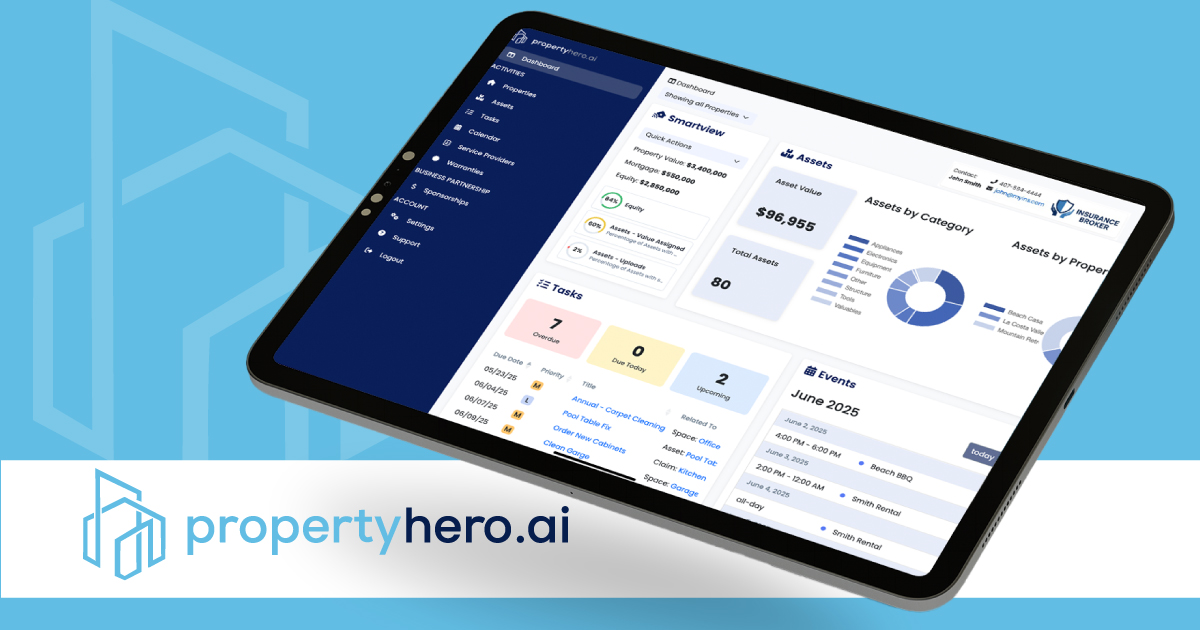
    PropertyHero.ai is an asset management and property maintenance platform designed primarily for individual homeowners, residential property managers, and boutique hospitality operators. According to our BestCRE Master Database, the platform’s primary use case centers on home and rental asset management, specifically focusing on inventory tracking, maintenance requests, and AI-driven property scans. While the commercial real estate software market is saturated with enterprise-grade solutions, PropertyHero.ai targets a distinctly different demographic, emphasizing lightweight digital task management and mobile-friendly usability over complex financial reporting or institutional portfolio analytics. Founded in 2019 and currently operating as an unfunded startup with a very small headcount, the company approaches property technology from a consumer and small-business perspective rather than an institutional commercial real estate lens.

    For commercial principals and analysts evaluating technology acquisitions in August 2026, understanding this positioning is critical. PropertyHero.ai is not built to replace core accounting systems or handle the intricate lease administration required for office, retail, or industrial assets. Instead, it serves as a specialized utility for cataloging physical assets, managing basic work tasks, and automating SMS or email reminders for small maintenance teams. The software attempts to bridge the gap between simple spreadsheet tracking and heavy-duty property management systems by applying basic artificial intelligence to the tedious process of logging property contents and maintenance needs. However, institutional buyers must weigh its consumer-grade origins against the rigorous demands of commercial asset management, recognizing that its architecture and feature set align much closer to residential and short-term rental operations than to traditional commercial real estate workflows.

    What PropertyHero.ai does and how it works

    PropertyHero.ai functions as a mobile-first digital inventory and task management system, utilizing artificial intelligence to streamline the documentation of physical assets and the coordination of property maintenance. At its core, the platform allows users to perform AI scans of rooms or specific items, which the system then categorizes and logs into a centralized digital repository. This functionality is particularly heavily utilized for cataloging furniture, fixtures, and equipment in vacation rentals, hotel rooms, or private residences. When a user scans an area, the software attempts to identify the objects present, extracting relevant data points to populate an asset ledger without requiring manual data entry for every single item. This digital inventory can then be referenced for insurance purposes, replacement planning, or general facility oversight.

    Beyond inventory management, the software incorporates a straightforward maintenance module designed to handle basic work orders and task delegation. Property managers or owners can input maintenance requests, assign them to specific team members or external contractors, and track the progress of each job through a digital dashboard. The system automates follow-up communications by sending SMS and email reminders to ensure tasks do not fall behind schedule. This feature is tailored for small, mobile teams who need a simple interface to acknowledge and update work statuses while on-site, rather than navigating complex enterprise software on a desktop computer.

    The platform also includes basic reporting capabilities that provide a high-level overview of asset health and maintenance efficiency. Users can view the status of all active work orders, review historical maintenance data for specific assets, and export inventory lists. However, the system mechanics remain relatively contained; it does not venture into complex financial modeling, tenant billing, or lease abstraction. The artificial intelligence components are strictly applied to the visual recognition and categorization of physical items during the scanning process, rather than predictive analytics or market data processing. The entire user experience is optimized for mobile devices, reflecting its target audience of on-the-go operators managing physical spaces rather than analysts sitting in a back office.

    9AI Framework: the score, dimension by dimension

    Dimension Score
    CRE Relevance 4/10
    Data Quality and Sources 5/10
    Ease of Adoption 7/10
    Output Accuracy 6/10
    Integration and Workflow Fit 4/10
    Pricing Transparency 5/10
    Support and Reliability 4/10
    Innovation and Roadmap 4/10
    Market Reputation 3/10
    Composite 9AI Score 47/100

    CRE Relevance: 4/10

    PropertyHero.ai is fundamentally designed for residential, hospitality, and personal asset management rather than institutional commercial real estate. While the platform categorizes itself within the broader property management software ecosystem, its core mechanics, such as cataloging personal collectibles, home inventory, and vacation rental assets, do not align with the complex needs of office, retail, or industrial asset managers. The system lacks the necessary infrastructure for commercial lease administration, complex common area maintenance reconciliations, or institutional-grade tenant management. As a general-purpose asset tracker with minimal commercial-specific data structures, its utility for a commercial real estate principal is severely limited. The focus remains squarely on lightweight residential and boutique hospitality applications. In practice: Commercial operators will find the platform lacks the specialized data fields and workflows required for managing traditional commercial asset classes.

    Data Quality and Sources: 5/10

    The quality of data within PropertyHero.ai is heavily dependent on the accuracy of its AI scanning technology and the diligence of the user performing the mobile captures. Because the system relies on visual recognition to populate asset ledgers, the baseline data can suffer from miscategorization or incomplete details if the initial scan is performed in poor lighting or captures obstructed items. Furthermore, the platform does not integrate with external commercial real estate data feeds or standardized property databases, meaning all information is entirely user-generated and siloed. There are no built-in validation rules specific to commercial property metrics, which increases the risk of inconsistent data entry across larger portfolios. In practice: Users must meticulously review and manually correct the AI-generated inventory logs to ensure the underlying asset data remains accurate and actionable.

    Ease of Adoption: 7/10

    One of the distinct advantages of PropertyHero.ai is its straightforward, consumer-friendly interface, which requires virtually no specialized training to operate. The mobile-first design mimics standard consumer applications, allowing property managers, maintenance staff, and even individual homeowners to download the software and begin scanning assets immediately. The setup process bypasses the lengthy implementation cycles typical of enterprise commercial real estate software, focusing instead on immediate usability and rapid deployment for small teams. The inclusion of automated SMS and email reminders further simplifies the onboarding of third-party contractors, who can interact with the system without needing dedicated login credentials or extensive tutorials. In practice: Small maintenance teams and residential operators can fully deploy and begin extracting value from the platform within a matter of hours rather than months.

    Output Accuracy: 6/10

    The accuracy of the platform’s outputs, specifically its AI-driven asset categorization and maintenance tracking logs, is generally adequate for residential and lightweight hospitality use cases. When scanning common household or hotel items, the visual recognition engine performs reasonably well, correctly identifying standard furniture and appliances. However, the system struggles with specialized commercial equipment, HVAC infrastructure, or complex building systems, often requiring manual overrides to correctly classify these critical commercial assets. The maintenance reporting outputs are accurate insofar as they reflect the manual inputs of the field team, but the lack of sophisticated error-checking mechanisms means that human error can easily compromise the reliability of the final reports. In practice: While sufficient for tracking vacation rental furniture, the AI categorization requires significant manual correction when applied to specialized commercial building infrastructure.

    Integration and Workflow Fit: 4/10

    PropertyHero.ai operates largely as a standalone utility, demonstrating significant limitations when evaluated against the integration requirements of a modern commercial real estate technology stack. The platform does not offer native, plug-and-play connections to major commercial accounting systems, lease administration platforms, or enterprise resource planning tools. For a commercial analyst or principal, this lack of connectivity means that asset and maintenance data collected within PropertyHero.ai cannot easily flow into core financial models or institutional reporting dashboards. The system is built to function independently for small-scale operators, rather than as a modular component within a sophisticated, interconnected enterprise architecture. In practice: Commercial firms will be forced to rely on manual data exports and cumbersome workarounds to move information from this platform into their primary accounting and management systems.

    Pricing Transparency: 5/10

    According to the BestCRE Master Database, PropertyHero.ai operates on a free trial and subscription model, but the vendor does not publish comprehensive, tiered pricing schedules on its public-facing materials. Prospective buyers are aware that a subscription is required after the initial trial period, yet the exact cost per unit, per user, or per asset remains obscured until deeper into the sales funnel. For commercial operators accustomed to clear licensing metrics or transparent SaaS tiers, this opacity complicates preliminary budget approvals and return on investment calculations. Without published pricing, it is difficult to benchmark the platform’s cost-effectiveness against established industry standards. In practice: Buyers must engage directly with the vendor’s sales process to uncover the actual financial commitment required to deploy the software across their specific portfolio.

    Support and Reliability: 4/10

    Operating as an unfunded startup with a highly constrained headcount, PropertyHero.ai presents significant support and reliability risks for commercial real estate buyers. The company lacks the extensive customer success infrastructure, dedicated account managers, and 24/7 technical support teams that institutional operators demand from their software vendors. While the platform’s simplicity means that catastrophic failures may be rare, any technical issues, bug fixes, or feature requests will likely face delayed response times due to the sheer lack of personnel. For a commercial firm managing millions of dollars in assets, relying on a micro-team for critical operational software introduces an unacceptable level of vendor risk. In practice: Institutional buyers should expect minimal personalized support and must be prepared to self-troubleshoot most technical issues that arise during daily operations.

    Innovation and Roadmap: 4/10

    The future development trajectory of PropertyHero.ai is severely constrained by its lack of institutional funding and minimal engineering resources. While the initial concept of AI-driven asset scanning is interesting, the company’s ability to iterate on this technology, expand into commercial-specific use cases, or keep pace with heavily capitalized competitors is highly doubtful. The current roadmap appears focused on maintaining basic functionality for its core residential and consumer audience, rather than developing the complex predictive maintenance algorithms or financial integrations required by the commercial real estate sector. Without a significant infusion of capital, the platform is likely to remain a niche, lightweight utility rather than evolving into a comprehensive enterprise solution. In practice: Buyers should purchase the software strictly for its current capabilities, as rapid feature expansion or commercial-grade innovation is highly unlikely.

    Market Reputation: 3/10

    Within the commercial real estate sector, PropertyHero.ai possesses virtually no market reputation or brand recognition. The platform is entirely absent from institutional discussions, enterprise procurement shortlists, and major commercial property management conferences. Its user base is heavily skewed toward individual homeowners, small-scale vacation rental hosts, and boutique operators, meaning that commercial principals will find no relevant case studies or peer references to validate the software’s efficacy for large-scale assets. When compared to established industry heavyweights, this unfunded startup registers as a complete unknown, lacking the track record, client roster, and industry trust required to secure enterprise-level commercial real estate contracts. In practice: Commercial analysts will struggle to find any verified peer reviews or institutional case studies to justify adopting this platform for a commercial portfolio.

    Who should use PropertyHero.ai

    PropertyHero.ai is explicitly tailored for individuals and small teams managing residential properties, short-term rentals, or personal asset collections. The platform delivers the most value to operators who require a simple, mobile-first solution to replace pen-and-paper inventory tracking and basic maintenance scheduling, without the overhead of enterprise software.

    Boutique vacation rental hosts needing to document furniture and fixtures for insurance or turnover purposes.

    Small-scale residential property managers overseeing a limited number of single-family homes.

    Individual homeowners or collectors seeking a digital ledger for personal asset management.

    Independent maintenance contractors looking for a basic tool to receive and update task statuses via mobile.

    Who should look elsewhere

    Commercial real estate principals, institutional asset managers, and enterprise property management firms should actively avoid deploying this platform for commercial assets. The system lacks the foundational architecture, financial integrations, and specialized data structures required to manage office, retail, industrial, or large-scale multifamily portfolios.

    Institutional commercial asset managers requiring complex financial reporting and lease administration.

    Enterprise property management firms that mandate native integrations with core accounting systems.

    Facilities managers overseeing complex commercial building infrastructure and predictive maintenance schedules.

    Firms requiring highly secure, enterprise-grade vendor support and guaranteed service level agreements.

    Pricing and ROI

    Based on our BestCRE Master Database research, PropertyHero.ai utilizes a free trial and subscription-based pricing model. However, the vendor does not publish its specific pricing tiers, per-unit costs, or enterprise licensing fees on its public website. This lack of transparency requires prospective buyers to initiate a free trial or contact the vendor directly to determine the exact financial commitment required for their specific portfolio size. Given the platform’s target demographic of individual homeowners and small-scale residential operators, it is highly probable that the subscription costs are positioned at the lower end of the property technology spectrum, likely operating on a flat monthly fee or a low per-asset charge.

    For a commercial real estate analyst attempting to calculate a return on investment, the opaque pricing structure presents a significant hurdle. If we assume a hypothetical cost of $50 to $100 per month for a small portfolio, the ROI must be derived entirely from the time saved during manual inventory audits and the reduction of lost maintenance requests. For a boutique vacation rental operator, saving five hours a month on inventory checks easily justifies a low-cost subscription. However, for a commercial principal, the inability to integrate this tool with primary financial systems means that any time saved on the front end is immediately lost to manual data entry on the back end, effectively neutralizing any potential ROI for institutional use cases.

    Integration and CRE tech stack fit

    When evaluating PropertyHero.ai for integration fit within a standard commercial real estate technology stack, the platform falls significantly short of enterprise expectations. The software functions primarily as an isolated, standalone mobile application rather than a modular component of a broader digital ecosystem. It lacks native, out-of-the-box API connections to industry-standard commercial property management and accounting systems such as Yardi, MRI Software, or specialized commercial platforms like DoorLoop and AppFolio.

    For commercial operators, this isolation creates immediate operational friction. Asset inventory data and maintenance logs captured within PropertyHero.ai cannot automatically sync with core financial ledgers, lease administration tools, or institutional reporting dashboards. Consequently, analysts and accounting teams are forced to rely on manual CSV exports and redundant data entry to maintain accurate portfolio records. While this lack of connectivity is perfectly acceptable for an individual homeowner or a small vacation rental host who does not utilize complex backend software, it is a disqualifying factor for commercial real estate firms that require synchronized data flows across their entire enterprise architecture to ensure accurate financial reporting and operational efficiency.

    Competitive landscape

    The property management software landscape is fiercely competitive, and PropertyHero.ai occupies a very specific, lightweight niche that contrasts sharply with established commercial and residential platforms. For commercial real estate principals evaluating this tool, it is essential to contextualize it against platforms that actually serve the commercial and large-scale multifamily sectors.

    Compared to heavyweights like AppFolio (BestCRE Score: 86) and Entrata (BestCRE Score: 88), PropertyHero.ai is entirely outmatched. AppFolio and Entrata offer comprehensive, end-to-end property management solutions that include complex accounting, tenant portals, lease administration, and advanced reporting. PropertyHero.ai does not compete in this arena; it is strictly a task and inventory utility. Similarly, when looking at modern, highly rated platforms like DoorLoop (BestCRE Score: 93), which provides exceptional ease of use alongside comprehensive financial and operational tools for mixed portfolios, PropertyHero.ai’s lack of financial infrastructure becomes glaringly apparent.

    Even within the specialized operations and maintenance sub-category, platforms like Conduit (BestCRE Score: 87) and Banner (BestCRE Score: 85) offer significantly more sophisticated workflows tailored specifically for commercial real estate assets. These competitors provide deep integrations with core accounting systems and are built to handle the complexities of commercial building infrastructure, whereas PropertyHero.ai is optimized for cataloging living room furniture and dispatching basic residential repair tickets. Ultimately, PropertyHero.ai competes more directly with consumer-grade home inventory apps and basic task managers like Moved (BestCRE Score: 87) in its lightest applications, rather than any serious commercial real estate software vendor.

    The bottom line

    PropertyHero.ai is a lightweight, mobile-first inventory and maintenance utility designed for homeowners, boutique hospitality operators, and small residential teams. While its AI-driven scanning feature offers a clever approach to cataloging physical assets like furniture and appliances, the platform is fundamentally unsuited for commercial real estate applications. Operating as an unfunded startup with a minimal team, the vendor lacks the infrastructure, market reputation, and support capabilities required by institutional operators. Furthermore, the software’s complete absence of commercial lease administration, complex financial reporting, and native integrations with enterprise accounting systems renders it ineffective for managing office, retail, or industrial portfolios. Commercial principals and analysts should bypass this platform entirely, directing their capital toward established, commercially focused solutions like DoorLoop or AppFolio that possess the architectural depth and connectivity necessary to support institutional asset management and drive measurable operational efficiencies.

    Frequently asked questions

    What is PropertyHero.ai used for?

    PropertyHero.ai is primarily used for home and rental asset management. It allows users to perform AI scans of rooms to catalog inventory and provides a basic digital task management system to handle maintenance requests and dispatch mobile teams effectively across various residential properties.

    Does PropertyHero.ai integrate with commercial accounting software?

    No, the platform does not offer native integrations with enterprise commercial real estate accounting systems like Yardi or MRI. It operates as a standalone mobile application, requiring manual data exports to move inventory or maintenance data into core financial platforms.

    How much does PropertyHero.ai cost?

    The vendor operates on a free trial and subscription model, but specific pricing tiers are not published on their public website. Prospective buyers must initiate a trial or contact the company directly to determine the exact subscription costs for their portfolio.

    Is PropertyHero.ai suitable for office or retail properties?

    No, the software is explicitly designed for residential properties, vacation rentals, and individual asset tracking. It lacks the complex lease administration, common area maintenance reconciliation, and specialized data structures required to manage commercial office, retail, or industrial assets effectively.

    Does the AI feature predict maintenance failures?

    No, the artificial intelligence within PropertyHero.ai is utilized strictly for visual recognition during the mobile scanning process. It helps identify and categorize physical items to populate an inventory ledger, but it does not perform predictive analytics or forecast equipment failures.

    What level of customer support does the vendor provide?

    As an unfunded startup with a very small headcount, the company offers limited support infrastructure. Buyers should not expect the dedicated account managers, 24/7 technical assistance, or guaranteed service level agreements typically provided by enterprise-grade commercial real estate software vendors.

    Related Reviews

    Compare PropertyHero.ai with other Property Management & Operations tools BestCRE has scored: Moved (87/100), Venn (86/100), GemHaus (59/100) and Craftwork (51/100). Browse every review in CRE Property Management & Operations, the full Best CRE AI Tools directory, or the 20 CRE Sectors hub.

  • Moved Review: Automates multifamily resident transitions while generating ancillary revenue for property operators

    Moved Review: Automates multifamily resident transitions while generating ancillary revenue for property operators

    BestCRE 9AI Score

    87/100 · Leader

    Moved ranks #9 of 450 commercial real estate AI tools scored on the 9AI Framework. Nine dimensions, each scored out of 10: CRE relevance, data quality, ease of adoption, output accuracy, integration fit, pricing transparency, support, innovation and market reputation.

    Moved is a commercial real estate property management and operations platform that automates resident move-in and move-out workflows, serving as a dedicated infrastructure layer for multifamily operators. The company positions itself as an ancillary revenue engine, claiming to increase ancillary conversion by an average of 200% while handling the logistical friction of resident transitions. Rather than functioning as a simple checklist inside a broader property management system, Moved operates as a standalone portal that connects directly to the system of record via API. This allows property teams to offload the administrative burden of verifying renters insurance, scheduling loading docks, and coordinating utility setups, which traditionally consume hours of leasing staff time per unit.

    For asset managers and property principals evaluating operational efficiency in Q3 2026, Moved represents a shift toward specialized, workflow-specific software rather than relying entirely on all-in-one platforms. The tool actively monetizes the resident transition by embedding a marketplace of moving, packing, storage, and connectivity services directly into the onboarding sequence. By capturing service opportunities that residents already need, operators can generate additional income without increasing rent. The platform recently acquired Paylode to advance its ancillary revenue capabilities and has secured enterprise rollouts with major operators like Bryten, which implemented the software across its 53,000-unit portfolio. Analysis indicates that while Moved competes for budget against native modules within major property management systems, its focus on compliance risk mitigation and revenue generation provides a distinct financial rationale for adoption.

    What Moved does and how it works

    Moved functions as a resident-facing portal and a backend management dashboard designed specifically to handle the lifecycle of a move. When a lease is signed in the core property management system, an API trigger automatically invites the future resident to the Moved platform. From there, the software guides the resident through a mandatory sequence of onboarding tasks. This includes uploading proof of renters insurance, reserving freight elevators or loading docks, selecting key pickup times, and confirming utility activation. The system programmatically tracks these requirements, sending automated reminders to the resident until all compliance boxes are checked. For the onsite leasing team, this replaces manual email follow-ups and spreadsheet tracking with a centralized dashboard that clearly flags which incoming or outgoing residents are cleared and which are missing documentation.

    Beyond administrative tracking, Moved operates as an embedded marketplace designed to capture ancillary revenue. As residents navigate their required move-in checklist, the platform presents them with options to book professional movers, rent storage units, purchase insurance, and set up internet or cable services through approved vendor partners. Moved sources, manages, and optimizes this vendor network, meaning property teams do not have to negotiate individual referral agreements. When a resident purchases a service through the platform, the property captures a share of that revenue.

    For the move-out process, the mechanics operate in reverse. The platform automates offboarding by guiding departing residents through cleaning requirements, key return procedures, and forwarding address submission for security deposit processing. Analysis suggests the primary mechanical advantage is the decoupling of the move experience from the core accounting and leasing system. By isolating these workflows, Moved ensures that access control, compliance verification, and vendor monetization happen in a controlled environment before the resident ever arrives on site, reducing bottlenecks during peak turnover periods.

    9AI Framework: the score, dimension by dimension

    Dimension Score
    CRE Relevance 10/10
    Data Quality and Sources 9/10
    Ease of Adoption 9/10
    Output Accuracy 9/10
    Integration and Workflow Fit 10/10
    Pricing Transparency 4/10
    Support and Reliability 9/10
    Innovation and Roadmap 9/10
    Market Reputation 9/10
    Composite 9AI Score 87/100

    CRE Relevance: 10/10

    Moved is explicitly engineered for the commercial real estate sector, specifically targeting multifamily property management and operations. Unlike general-purpose task-tracking applications, the platform is structured around the exact logistical realities of apartment building operations. The software natively handles industry-specific compliance requirements like tracking certificates of insurance and utility transfer confirmations. The platform’s recent acquisition of Paylode further cements its focus on multifamily ancillary revenue generation. Because it is a CRE-native tool, it does not require operators to translate generic workflows into property management terms. It directly addresses the operational bottlenecks that occur during peak leasing seasons when onsite teams are overwhelmed by turnover logistics. In practice: Multifamily operators can deploy the platform immediately to handle the specific sequence of leasing, insurance, and physical access requirements inherent to apartment transitions.

    Data Quality and Sources: 9/10

    The integrity of the data within Moved relies heavily on its integration with the primary property management system. Because the platform pulls lease dates, resident contact information, and unit details directly from the system of record via API, it minimizes the risk of manual data entry errors. The software also standardizes the collection of incoming data from residents, such as insurance policy numbers and utility account confirmations, ensuring that onsite teams receive formatted, actionable information rather than unstructured email replies. However, the quality of the vendor marketplace data depends on Moved’s third-party partnerships. Analysis indicates that the platform maintains high data fidelity by restricting residents to structured input fields during the onboarding sequence. In practice: Property managers can rely on the dashboard to present an accurate, real-time status of every resident’s compliance and readiness without cross-referencing multiple spreadsheets.

    Ease of Adoption: 9/10

    Implementing Moved requires minimal technical heavy lifting from onsite teams, as the platform is designed to sit alongside existing property management systems rather than replace them. The company claims properties can start generating ancillary revenue within four weeks of deployment. The resident-facing interface is modeled after modern consumer applications, driving an average engagement rate of over 96%. For leasing staff, the learning curve is shallow; the dashboard simply replaces their existing manual checklists and email templates. The primary adoption hurdle involves change management, convincing onsite teams to stop manually intervening and trust the automated sequence. The vendor marketplace is pre-managed by Moved, removing the burden of sourcing local service providers from the property manager. In practice: Asset managers can roll out the software across a portfolio quickly by enforcing a policy that onsite teams must direct all resident inquiries through the portal.

    Output Accuracy: 9/10

    The primary outputs of Moved are compliance verification flags, automated communication triggers, and ancillary revenue reports. The software excels at deterministic accuracy; a resident either has uploaded a valid certificate of insurance or they have not. By automating the verification of these binary requirements, the platform eliminates the human error associated with manually reviewing policy dates and coverage limits. The accuracy of automated reminders ensures that residents receive the right instructions at the correct intervals before their move date. Furthermore, the financial reporting related to the ancillary revenue marketplace provides precise tracking of conversions and property share. Analysis suggests that the system’s accuracy is only compromised if the underlying API connection to the core property management system experiences latency or synchronization failures. In practice: Leasing teams can confidently hand over keys knowing the system has accurately verified all legal and logistical prerequisites for the move.

    Integration and Workflow Fit: 10/10

    Moved is built specifically to integrate with the major systems of record in the commercial real estate industry. The platform maintains documented API connections with enterprise property management systems including Yardi, RealPage, ResMan, and Entrata. This interoperability is critical, as Moved functions as an infrastructure layer that must constantly sync lease statuses, resident profiles, and unit availability with the core database. By acting as a specialized module that plugs into these larger ecosystems, Moved avoids the trap of trying to be an all-in-one solution. The software also integrates with various third-party service providers to populate its vendor marketplace. Analysis indicates that operators already utilizing Tier 1 property management software will find Moved fits naturally into their existing tech stack without creating data silos. In practice: Technology officers can deploy the platform knowing it will bi-directionally sync resident data with their existing accounting and leasing software.

    Pricing Transparency: 4/10

    Moved operates with custom pricing models and does not publish standard subscription tiers or per-unit costs on its website. This lack of public pricing data forces prospective buyers to engage directly with the sales team to understand the financial commitment. While the company heavily promotes its ability to generate ancillary revenue, which can theoretically offset the cost of the software, the baseline implementation fees and recurring software-as-a-service charges remain opaque. Analysis suggests that pricing likely scales based on unit count and portfolio size, typical for enterprise multifamily software. Because the exact revenue-share splits for the vendor marketplace are also not published, calculating a definitive return on investment requires a custom assessment. In practice: Buyers must enter negotiations without a clear benchmark, making it essential to demand detailed case studies on ancillary revenue offsets during the procurement process.

    Support and Reliability: 9/10

    As an established Tier 2 player in the proptech space, Moved demonstrates a reliable support infrastructure tailored for enterprise multifamily operators. The platform’s ability to secure and maintain portfolio-wide rollouts with major firms like Bryten, which manages over 53,000 units, indicates a high level of operational stability and dedicated account management. The software is designed to function continuously without onsite IT intervention, operating via cloud-based portals and automated API triggers. While specific service level agreements are not publicly detailed, the company’s focus on automating a critical, time-sensitive workflow means system uptime is paramount; a failure during the end-of-month turnover rush would be catastrophic. Analysis of market presence suggests that Moved provides sufficient training and troubleshooting resources to ensure onsite teams can manage exceptions. In practice: Property management firms can expect enterprise-grade reliability and account support capable of handling multi-state portfolio deployments.

    Innovation and Roadmap: 9/10

    Moved demonstrates a clear trajectory toward expanding its monetization capabilities beyond simple task automation. The company’s recent acquisition of Paylode highlights a strategic focus on advancing ancillary revenue automation within residential real estate. This indicates that the development roadmap is heavily weighted toward enriching the vendor marketplace, optimizing conversion rates, and introducing new service categories for residents to purchase. Rather than expanding horizontally into general property management features, Moved is deepening its vertical specialization in the resident transition lifecycle. Analysis suggests future updates will likely incorporate more sophisticated predictive analytics to offer residents highly targeted services based on their specific moving patterns and demographics. In practice: Operators investing in the platform can expect continuous enhancements to the revenue-generating marketplace rather than new core accounting or leasing functionalities.

    Market Reputation: 9/10

    Moved has cultivated a strong reputation among mid-to-large multifamily operators as a specialized solution that solves a painful operational bottleneck. The company is actively trusted by prominent management firms, including AvalonBay, LeFrak, and Milford Management, which lends significant credibility to its claims of improving the resident experience. The recent portfolio-wide implementation by Bryten further solidifies its standing as a viable enterprise tool. In the broader context of CRE tech, Moved is viewed favorably compared to generic checklist features embedded within legacy property management systems, primarily due to its dual focus on automation and revenue generation. The platform’s high resident engagement rates suggest that it successfully balances operational efficiency with consumer-friendly design. In practice: Asset managers can confidently pitch this software to their investment committees, backed by case studies from recognized industry leaders who have validated its performance.

    Who should use Moved

    Moved is designed for multifamily operators who experience significant administrative strain during resident turnover and want to monetize the moving process.

    Enterprise multifamily operators managing thousands of units who need standardized compliance tracking.

    Asset managers looking to generate new ancillary revenue streams without raising rental rates.

    Onsite property managers overwhelmed by manual email follow-ups and spreadsheet-based move-in checklists.

    Portfolios utilizing major property management systems (Yardi, RealPage, Entrata) seeking a specialized onboarding module.

    Who should look elsewhere

    The platform is less suited for operators who do not have the volume to justify a dedicated move-management layer or those who require an all-in-one system.

    Small portfolio owners or independent landlords who can manage turnover with basic spreadsheets.

    Operators using niche or proprietary property management systems that lack open API integration capabilities.

    Commercial office or industrial property managers, as the tool is strictly built for residential transitions.

    Firms strictly opposed to offering third-party vendor services to their residents.

    Pricing and ROI

    Moved does not publish its pricing structure, operating entirely on a custom quote model. This approach is common in enterprise multifamily software, where costs are typically scaled based on total unit count, portfolio complexity, and the depth of required integrations. Because pricing is not publicly available, prospective buyers must complete a direct assessment with the sales team to determine the baseline subscription fees and implementation costs.

    However, the return on investment math for Moved is distinct from traditional software-as-a-service expenses. The company positions the platform as an ancillary revenue engine. By embedding a marketplace of moving, storage, insurance, and connectivity services into the onboarding workflow, the property captures a share of the revenue when residents purchase these services. Moved claims an average 200% increase in ancillary conversion. For a 1,000-unit portfolio with a 50% annual turnover, capturing even modest referral fees on moving services and utility setups can theoretically offset the cost of the software entirely. Analysis indicates that buyers should model their ROI by calculating current administrative hours spent on move-ins, multiplying by staff hourly rates, and adding projected vendor revenue shares against the quoted custom pricing.

    Integration and CRE tech stack fit

    Moved is engineered to function as an infrastructure layer that sits alongside, rather than replaces, the core commercial real estate technology stack. The platform boasts direct API integrations with industry-standard property management systems, including Yardi, RealPage, Entrata, and ResMan. This connectivity is vital, as it allows Moved to automatically pull lease data, resident profiles, and unit statuses directly from the system of record, eliminating duplicate data entry for onsite teams.

    When a lease is executed in the primary system, the integration triggers the onboarding sequence in Moved. Conversely, once a resident completes their required compliance tasks, such as uploading a certificate of insurance, that status is synced back to the core database. Analysis indicates that this bi-directional data flow ensures access control systems and accounting modules remain aligned with the resident’s actual move-in status. By focusing strictly on the resident transition and relying on established Tier 1 software for accounting and leasing, Moved fits cleanly into the modern, modular multifamily tech stack without creating isolated data silos.

    Competitive landscape

    When evaluating Moved, commercial real estate operators must consider how it compares to both native modules within all-in-one platforms and other specialized resident experience tools. The primary competition comes from the major property management systems themselves. Platforms like AppFolio, Entrata, and DoorLoop all offer built-in resident portals and move-in checklists. For operators already paying for these comprehensive systems, activating a native checklist is often free or marginally priced. However, these native tools typically function as basic task trackers rather than revenue-generating marketplaces.

    In the specialized resident onboarding and experience category, Moved competes with platforms like ElevateOS and Updater. Updater similarly focuses on the resident transition, offering utility connections and moving services, and has a strong foothold in the multifamily space. ElevateOS provides broader resident app functionalities that encompass onboarding but extend further into daily amenity management and community engagement. Moved differentiates itself through its heavy emphasis on ancillary revenue automation and its recent acquisition of Paylode, which signals a deeper commitment to monetizing the vendor marketplace. Analysis suggests that while DoorLoop or Entrata might win on platform consolidation, Moved wins in environments where operators specifically want to turn the logistical friction of moving into a measurable revenue stream.

    The bottom line

    Moved delivers a highly specialized, effective solution for one of the most operationally dense phases of multifamily property management: the resident transition. By decoupling the move-in and move-out workflows from the core property management system, it provides onsite teams with a dedicated, automated environment to handle compliance, scheduling, and communication. Its true differentiator is the embedded vendor marketplace, which transforms a traditional cost center into a measurable ancillary revenue stream. While the lack of transparent pricing requires buyers to conduct careful ROI modeling, the platform’s ability to integrate cleanly with Tier 1 systems like Yardi and Entrata makes it a low-risk technical addition. For enterprise operators managing high-turnover portfolios, Moved is a definitive buy. It successfully automates the logistical friction of apartment transitions while actively generating income, making it a superior choice to the basic checklist features found in legacy all-in-one platforms.

    Frequently asked questions

    Does Moved replace our existing property management software?

    No. Moved is designed to integrate via API with your existing system of record, such as Yardi, RealPage, or Entrata. It handles the specific workflows of resident onboarding and offboarding, while your core software continues to manage accounting and leasing.

    How does Moved generate ancillary revenue for properties?

    The platform features an embedded marketplace where residents can book movers, buy insurance, and set up utilities during their onboarding process. When residents purchase these services through the portal, the property captures a share of that revenue.

    Is the pricing for Moved publicly available?

    No, Moved operates on a custom pricing model. Costs are generally scaled based on portfolio size, unit count, and the specific integrations required. Prospective buyers must contact their sales team for a customized assessment and quote.

    Can Moved track renters insurance compliance?

    Yes. The software requires incoming residents to upload proof of renters insurance as part of their mandatory move-in checklist. The system tracks these documents and flags any missing or non-compliant policies for the onsite leasing team.

    How long does it take to implement the software?

    According to the company, properties can typically deploy the platform and begin generating ancillary revenue within four weeks. The timeline depends on the complexity of the API integration with your primary property management system.

    What happens when a resident moves out?

    The platform automates the offboarding process by guiding departing residents through necessary steps, such as cleaning checklists, key return instructions, and submitting a forwarding address for security deposit returns, reducing manual work for property staff.

    Related Reviews

    Compare Moved with other Property Management & Operations tools BestCRE has scored: Venn (86/100), TurboTenant (83/100), RentZoro (73/100) and Viabot (62/100). Browse every review in CRE Property Management & Operations, the full Best CRE AI Tools directory, or the 20 CRE Sectors hub.
  • Mason Review: AI property management assistant automating maintenance coordination and resident communication

    Mason Review: AI property management assistant automating maintenance coordination and resident communication

    BestCRE 9AI Score

    70/100 · Contender

    Mason ranks #240 of 450 commercial real estate AI tools scored on the 9AI Framework. Nine dimensions, each scored out of 10: CRE relevance, data quality, ease of adoption, output accuracy, integration fit, pricing transparency, support, innovation and market reputation.

    Mason is an AI property management assistant built by Enduring Labs, Inc. to automate the desk work associated with maintenance coordination, vendor management, and resident communication. As of August 2026, the company focuses on acting as a middleman between tenants, owners, and vendors, processing work orders and handling the logistical overhead of property operations. A hard fact from our research confirms that Mason’s primary use case is automating desk work, specifically targeting the administrative burden of running in-house maintenance teams or dispatching third-party vendors. The platform is designed to handle tasks that typically consume the day-to-day hours of a property manager or maintenance coordinator, such as answering emergency lines, performing maintenance intake, and generating invoices.

    For commercial real estate principals and analysts evaluating operational software, Mason represents a highly specialized alternative to the broader toolsets offered by legacy platforms. While established peers like DoorLoop, Entrata, and AppFolio provide comprehensive property management systems, Mason is positioned as an additive AI layer that executes specific workflows. Analysis indicates that the tool is particularly focused on capturing maintenance margins by optimizing the routing, scheduling, and billing of in-house technicians. By intercepting tenant communications via SMS and processing the resulting work orders, the software aims to reduce the overhead that typically erases the financial benefits of internalizing maintenance operations. However, as an early-stage entrant, buyers must weigh its specialized automation against the proven stability of larger, more generalized systems.

    What Mason does and how it works

    Mason operates primarily as a conversational interface and workflow automation engine for property maintenance and tenant communications. When a resident experiences a maintenance issue, they communicate directly with Mason through standard SMS channels, eliminating the need for tenants to download a dedicated application or log into a separate portal. The AI system ingests these text messages, categorizes the urgency of the request, and performs initial troubleshooting or intake data collection. If the issue requires physical intervention, Mason automatically generates a work order and begins the coordination phase.

    For property management firms utilizing in-house maintenance teams, the software acts as an automated dispatcher. It evaluates the geographical location of the property, the specific skills required for the repair, and the availability of technicians to optimize routing and scheduling. The system dispatches the technician, tracks their time and materials, and collects photographic documentation of the completed job. Once the work is finished, Mason compiles this data into clean invoices, ensuring that billable hours and material costs flow directly into the financial ledger without requiring manual data entry from a coordinator. For firms relying on third-party vendors, the system manages the vendor communication loop, requesting quotes, scheduling the visit, and tracking the invoice.

    Beyond maintenance, Mason handles general resident inquiries and after-hours emergency lines. Analysis shows that the platform relies on large language models to interpret tenant requests and formulate appropriate responses based on the property’s specific policies and data. The system requires human oversight, and firms typically employ a coordinator to monitor Mason’s active work orders, refine the AI’s prompts, and intervene when a situation requires escalation. This human-in-the-loop mechanic ensures that while the software processes the bulk of the repetitive communication, complex or sensitive issues are flagged for a property manager’s attention.

    9AI Framework: the score, dimension by dimension

    Dimension Score
    CRE Relevance 8/10
    Data Quality and Sources 7/10
    Ease of Adoption 8/10
    Output Accuracy 8/10
    Integration and Workflow Fit 8/10
    Pricing Transparency 4/10
    Support and Reliability 6/10
    Innovation and Roadmap 8/10
    Market Reputation 6/10
    Composite 9AI Score 70/100

    CRE Relevance: 8/10

    Mason is entirely dedicated to the property management sector, making its core architecture highly specific to the operational realities of real estate. Unlike general-purpose AI assistants, this tool is trained on the specific workflows of maintenance intake, vendor dispatch, and resident communication. The data models are structured around properties, units, tenants, and work orders, directly mirroring the daily realities of a property manager. While it currently leans heavily toward residential and single-family rental operations, the underlying mechanics of tracking time, materials, and vendor compliance apply directly to commercial property management. Analysis suggests that its focus on capturing maintenance margins addresses a universal pain point for real estate operators trying to internalize facilities management. In practice: The system understands the difference between a routine drywall repair and an after-hours plumbing emergency without requiring custom configuration.

    Data Quality and Sources: 7/10

    The system relies heavily on the quality of the data it extracts from unstructured SMS conversations with tenants. By forcing communication through text messages, Mason captures a raw, chronological log of resident interactions, which it then structures into standardized work orders. The software mandates photographic documentation and time-tracking from technicians before closing a job, establishing a verifiable audit trail for every maintenance ticket. However, because the input data originates from tenants who may provide inaccurate or incomplete descriptions of property issues, the initial data quality can be highly variable. Analysis indicates that the AI’s ability to ask follow-up questions during the intake process mitigates some of this variability, but human verification remains necessary for complex diagnostics. In practice: The platform converts messy text message threads into structured, auditable maintenance records with attached photographic proof.

    Ease of Adoption: 8/10

    Implementation benefits significantly from the fact that residents do not need to adopt new software. By operating through standard SMS, the tenant-facing friction is virtually zero. For the property management staff, adoption involves redirecting maintenance lines to Mason’s phone numbers and establishing the initial prompt instructions for the AI. The company offers a 90-day pilot program, which lowers the barrier to entry for firms wanting to test the system’s capabilities. However, integrating an autonomous agent into a live operational environment requires staff to transition from doing the work to managing the AI doing the work. Analysis shows this shift necessitates training coordinators to monitor dashboards and refine AI instructions rather than manually dispatching vendors. In practice: Tenants simply text a phone number, while staff must learn to supervise an automated workflow rather than execute it.

    Output Accuracy: 8/10

    The accuracy of Mason’s outputs depends on its ability to correctly classify maintenance issues and dispatch the appropriate resources. Research indicates that while the natural language processing accurately handles routine inquiries and standard maintenance requests, the system is designed with a mandatory human-in-the-loop failsafe. Property management firms must employ a coordinator to review the AI’s actions, catching misinterpretations or edge cases that the model fails to resolve. The invoicing output is highly accurate, as it pulls directly from the time and materials logged by the technicians on-site. However, analysis suggests that the AI’s conversational accuracy can occasionally falter if a tenant uses highly ambiguous language or reports multiple unrelated issues in a single message. In practice: The software accurately processes standard maintenance logic but relies on human coordinators to catch and correct edge-case misinterpretations.

    Integration and Workflow Fit: 8/10

    Mason is built to function alongside existing property management systems rather than replace them. Research confirms that the platform connects with industry-standard software such as AppFolio, RentVine, and PropertyWare. This interoperability is critical, as it allows Mason to read tenant data, verify lease status, and write completed work orders and invoices back into the primary ledger. Analysis indicates that by sitting on top of these core systems, Mason acts as an active communication layer while leaving the foundational accounting and property data intact. The depth of these API connections dictates the tool’s effectiveness; if a specific legacy ERP is not supported, the automated data flow breaks down, requiring manual dual-entry. In practice: The tool functions as an active extension of your existing database, pushing and pulling data from platforms like AppFolio without requiring migration.

    Pricing Transparency: 4/10

    Enduring Labs does not publish standardized pricing tiers for Mason on its website. Research confirms that the company utilizes a custom pricing model, requiring prospective buyers to book a demo to receive a quotation. The vendor does publicly state that all plans include a 90-day pilot with no long-term commitment, which provides some financial protection during the evaluation phase. Because exact costs are hidden, it is impossible to independently verify the entry-level financial requirements or the scaling costs as unit counts increase. Analysis suggests that pricing is likely based on the volume of units managed or the number of active work orders processed monthly. Due to the total lack of public pricing data, the platform receives a heavily penalized score in this dimension. In practice: Buyers must engage the sales team and complete a demonstration to understand the financial commitment.

    Support and Reliability: 6/10

    As an early-stage, Tier 2 startup, Enduring Labs lacks the decades of proven operational stability demonstrated by legacy peers like Entrata or AppFolio. Research shows the company was founded recently and operates with a small, highly technical team based in San Francisco. While the founders possess strong backgrounds from major technology firms, the support infrastructure is still developing. The company emphasizes a highly hands-on, in-person approach to early customer support, often visiting client offices to observe software usage and push live updates. However, analysis indicates that this bespoke, founder-led support model is difficult to scale as the customer base grows. Buyers must accept the inherent risks of relying on a young company for critical operational infrastructure. In practice: Users receive highly personalized, rapid support directly from the engineering team, but lack the security of a mature, enterprise-grade support department.

    Innovation and Roadmap: 8/10

    Mason demonstrates a highly aggressive approach to product development, heavily focused on applied artificial intelligence. The engineering team actively publishes insights on deploying large language models in production environments, indicating a deep commitment to advancing the core technology. Research shows the company is continuously refining its ability to automate complex logistical tasks, such as optimizing the routing and utilization of in-house maintenance technicians. Analysis suggests the roadmap is heavily influenced by direct customer observation, with developers building features to solve immediate, on-the-ground operational bottlenecks rather than theoretical problems. The focus remains on expanding the agentic capabilities of the software, moving from simple communication to autonomous financial and logistical execution. In practice: The platform evolves rapidly based on real-world maintenance data, constantly pushing the boundaries of what property management tasks can be fully automated.

    Market Reputation: 6/10

    Mason is currently building its market presence and remains largely unknown compared to established category leaders. The company manages interactions for approximately 4,000 homes, which is a fractional footprint compared to the millions of units processed by peers like DoorLoop or Conduit. Research indicates that early adopters are primarily medium-to-large single-family rental operators and regional property management firms. These initial clients report positive outcomes regarding the automation of maintenance overhead, but the sample size of public testimonials is extremely limited. Analysis shows that while the founding team has strong credibility in the venture capital and technology sectors, the brand has not yet achieved widespread recognition among commercial real estate operators. In practice: The software is highly regarded by a small cluster of early adopters but lacks the widespread industry validation required for a higher reputation score.

    Who should use Mason

    Mason is designed for operators who are burdened by the logistical overhead of property maintenance and tenant communication.

    Property management firms operating an in-house maintenance crew that want to optimize routing and capture more margin.

    Operators managing high volumes of maintenance work orders (200+ per month) seeking to reduce the administrative load on their coordinators.

    Firms utilizing AppFolio, RentVine, or PropertyWare looking to add an AI communication layer without changing their core accounting system.

    Principals who want to standardize the resident experience and ensure every maintenance request is documented with photos and time logs.

    Who should look elsewhere

    Certain organizations will find this specialized tool either unnecessary or incompatible with their operational structure.

    Enterprise commercial operators seeking a single, all-in-one ERP to replace their entire technology stack.

    Firms using proprietary or obscure legacy property management software that lacks modern API integration capabilities.

    Highly risk-averse institutions that require software vendors to have a decade of proven financial stability and enterprise-grade SLA guarantees.

    Operators with very low maintenance volumes where the cost of an AI automation tool would exceed the administrative savings.

    Pricing and ROI

    Enduring Labs does not publish pricing for Mason on its public website. Our research confirms that the company utilizes a custom pricing model, requiring prospective buyers to engage with their sales team to receive a specific quotation. The only publicly available commercial term is that all plans include a 90-day pilot program with no long-term commitment, allowing operators to test the software before signing an annual contract.

    Because exact costs are not published, calculating a precise return on investment requires analyzing baseline operational expenses. Analysis indicates the primary ROI driver for Mason is the reduction of administrative overhead and the recapture of maintenance margins. For a firm processing 300 work orders per month, a human coordinator might spend 15 minutes per ticket on intake, dispatch, and invoicing, totaling 75 hours of labor monthly. If Mason automates 70 percent of this workflow, the firm saves over 50 hours of staff time. Furthermore, by optimizing the routing of an in-house maintenance team, the software increases the number of billable jobs a technician can complete. If AI routing allows a team of five technicians to each complete one additional billable hour per day at a rate of $85, the firm generates an additional $8,500 in monthly revenue, which should easily offset the anticipated subscription cost of the software.

    Integration and CRE tech stack fit

    Mason is engineered to function as a specialized operational layer that sits on top of a firm’s existing commercial real estate technology stack. Research confirms that the software integrates directly with major property management systems, including AppFolio, RentVine, and PropertyWare. This architectural approach is highly advantageous for operators who are satisfied with their current accounting and general ledger software but require more sophisticated communication and dispatch capabilities.

    By connecting to these core databases via API, Mason can automatically pull resident contact information, lease statuses, and unit details to inform its conversational AI. Once a maintenance task is completed, the system pushes the logged hours, material costs, and photographic documentation back into the primary ERP to generate the final invoice. Analysis indicates that this bidirectional data flow is critical for maintaining a single source of truth across the portfolio. However, operators utilizing custom-built databases or legacy on-premise systems may face significant integration hurdles. The platform’s reliance on SMS infrastructure also means it must integrate smoothly with the firm’s existing telecom setup, often requiring the porting of existing maintenance phone numbers into the Mason environment to ensure continuity for the residents.

    Competitive landscape

    The market for property management software is densely populated, but Mason occupies a specific niche focused on AI-driven operational automation rather than comprehensive accounting. When evaluating Mason, buyers must consider both legacy property management systems and emerging AI solutions.

    AppFolio (BestCRE Score: 86) and Entrata (BestCRE Score: 88) represent the traditional, all-in-one approach. These platforms offer built-in maintenance modules and resident portals. While they provide unmatched stability and deep accounting features, their communication tools often lack the autonomous, conversational AI capabilities that Mason provides. Operators choosing these legacy systems typically rely on manual dispatching by human coordinators.

    DoorLoop (BestCRE Score: 93) is a highly rated alternative that offers a more modern, user-friendly interface for property management. Like AppFolio, it is a comprehensive system, but it has been aggressively expanding its automation features. DoorLoop is better suited for operators who want to upgrade their entire technology stack, whereas Mason is ideal for those who want to keep their current ERP but add an AI assistant.

    In the realm of specialized AI tools, operators might evaluate Conduit (BestCRE Score: 87) or Relevance AI (BestCRE Score: 85). While Relevance AI provides a broader platform for building custom autonomous agents across various real estate workflows, Mason offers an out-of-the-box, highly specific solution engineered exclusively for maintenance and resident communication. Analysis suggests that Mason’s narrow focus on capturing in-house maintenance margins gives it a distinct advantage over general-purpose AI builders for operators dealing with high volumes of physical work orders.

    The bottom line

    Mason is a highly specialized, highly effective tool for a very specific operational bottleneck: the administrative burden of maintenance coordination. Do not purchase this software expecting a comprehensive property management system or a sophisticated financial modeling tool. It is an execution engine designed to manage text messages, route technicians, and generate invoices. For operators running in-house maintenance teams who are bleeding margin to administrative overhead, Mason is a compelling acquisition. The ability to intercept SMS requests and automatically dispatch technicians directly impacts the bottom line by increasing billable hours. However, as an unproven Tier 2 startup with custom pricing, it carries inherent vendor risk. Conservative institutions should wait for the company to mature, but forward-thinking operators managing high volumes of work orders should utilize the 90-day pilot to test the AI’s capabilities against their current manual processes.

    Frequently asked questions

    Does Mason replace my existing property management software?

    No, Mason is designed to integrate with your existing property management software, such as AppFolio, RentVine, or PropertyWare [1.1.8]. It functions as an additive AI communication and dispatch layer, reading tenant data from your primary system and writing completed invoices back to your ledger.

    How do tenants communicate with the Mason AI assistant?

    Tenants communicate with Mason entirely through standard SMS text messaging. There is no requirement for residents to download a separate application or log into a web portal, which significantly reduces friction and ensures higher engagement when reporting maintenance issues or asking policy questions.

    Can Mason handle after-hours maintenance emergencies?

    Yes, Mason operates continuously and acts as the first line of defense for after-hours emergency calls and texts. The AI categorizes the urgency of the incoming request based on your specific property guidelines and can automatically route severe issues to on-call technicians immediately.

    Does the software support third-party vendor management?

    Yes, while Mason is highly optimized for routing in-house maintenance teams, it also manages external vendors. The system can request quotes, schedule site visits with the tenant, and track the receipt of third-party invoices, ensuring no communication is lost between the vendor and the resident.

    How much does Mason cost for property managers?

    Enduring Labs does not publish standardized pricing for Mason. The company utilizes a custom pricing model, and exact costs require completing a sales demonstration. However, they do offer a 90-day pilot program without a long-term commitment, allowing operators to evaluate the financial return directly.

    Will Mason eliminate the need for a maintenance coordinator?

    No, Mason is designed to augment your staff, not entirely replace them. The system requires a human-in-the-loop coordinator to monitor the AI’s active work orders, refine conversational prompts, and intervene when complex or sensitive resident situations require human judgment and escalation.

    Related Reviews

    Compare Mason with other Property Management & Operations tools BestCRE has scored: Moved (87/100), Venn (86/100), MagicDoor (66/100) and Assembly HOA (62/100). Browse every review in CRE Property Management & Operations, the full Best CRE AI Tools directory, or the 20 CRE Sectors hub.
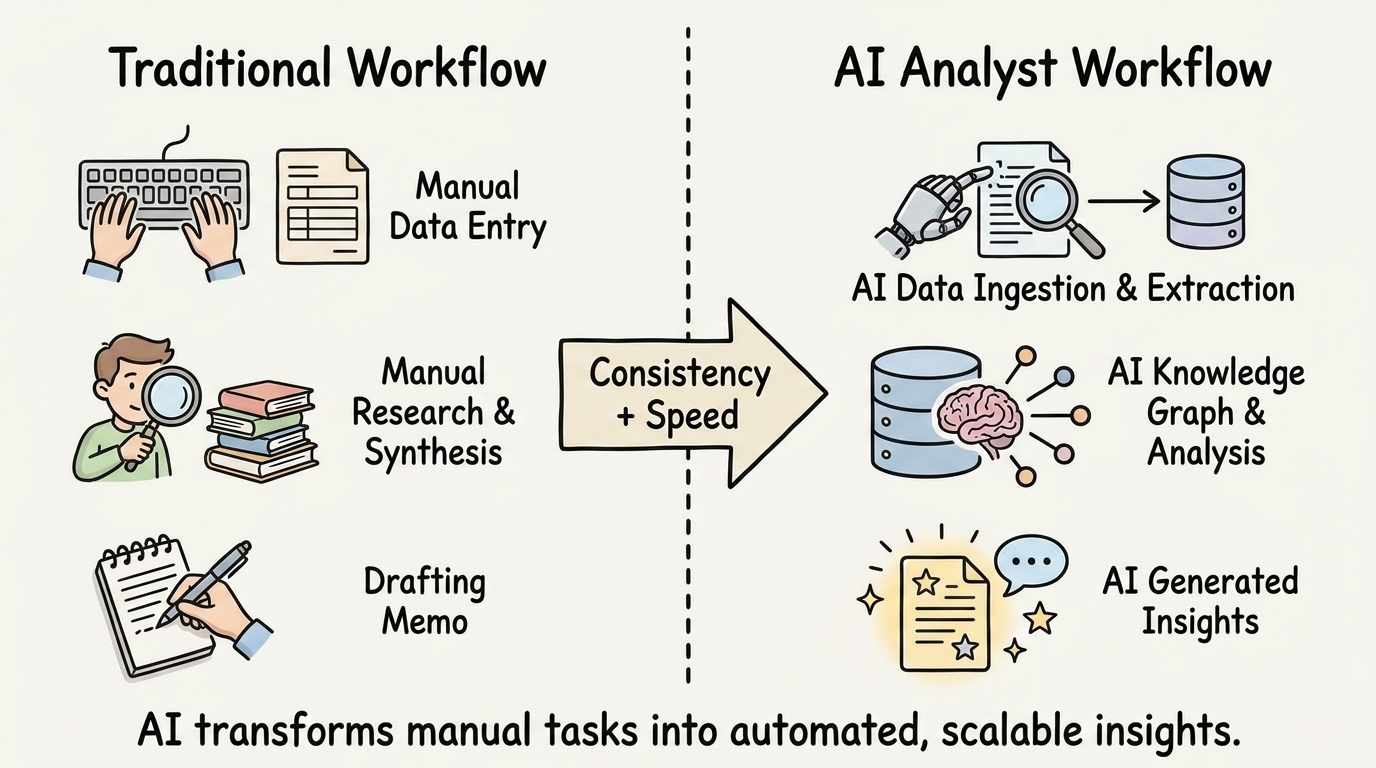
  • MagicDoor Review: AI-powered rental management automating collections and communications for property operators

    MagicDoor Review: AI-powered rental management automating collections and communications for property operators

    BestCRE 9AI Score

    66/100 · Niche

    MagicDoor ranks #326 of 450 commercial real estate AI tools scored on the 9AI Framework. Nine dimensions, each scored out of 10: CRE relevance, data quality, ease of adoption, output accuracy, integration fit, pricing transparency, support, innovation and market reputation.

    MagicDoor is an AI-powered rental management software platform focused on automating collections and communications, currently classified as a CRE-Native, Tier 2 application in the BestCRE Master Database. Operating within the commercial real estate property management and operations category, the tool targets operators seeking to reduce the administrative burden of tenant interactions and payment tracking. As of August 2026, the company has elected not to disclose its pricing details publicly, requiring prospective buyers to engage directly with their sales team to understand the financial commitment required for deployment. This positions MagicDoor as a specialized utility rather than a broad ecosystem platform, distinguishing it from legacy property management systems that attempt to handle all aspects of asset management.

    Our analysis indicates that MagicDoor enters a crowded market segment where established players have already set high expectations for functionality. By narrowing its focus strictly to the automation of rent collection workflows and routine tenant communications, the software attempts to solve specific operational bottlenecks rather than replacing entire accounting or facility management suites. The platform utilizes artificial intelligence to parse tenant messages, draft contextual responses, and trigger automated follow-ups for delinquent accounts. For a commercial real estate principal or analyst evaluating a purchase, the primary question is whether this focused functionality justifies adding another layer to the existing technology stack, especially when compared to comprehensive alternatives that already score highly in our assessments.

    What MagicDoor does and how it works

    MagicDoor functions primarily as an intelligent communication and ledger-monitoring layer that sits between property managers and tenants. The core mechanic involves the system ingesting incoming tenant communications via email, text message, or a dedicated portal, and applying natural language processing to categorize the intent of the message. If a tenant asks about a late fee policy or reports a minor maintenance issue, the artificial intelligence drafts a response based on the specific property rulebook and historical data. Property managers can set the system to either automatically reply for low-risk inquiries or hold drafts for human approval. This reduces the daily inbox volume that site staff must process manually.

    The second major component is its automated collections engine. MagicDoor connects to the property primary ledger to monitor payment statuses in real time. When an account falls into arrears, the software initiates a programmed sequence of communications. Instead of sending generic, static templates, the artificial intelligence adjusts the tone and frequency of the messages based on the tenant payment history and previous interactions. For example, a chronically late tenant receives a different sequence than a long-term tenant who missed a payment for the first time. The system tracks engagement with these messages, logging when they are opened and whether the tenant has clicked through to the payment portal.

    From an operational standpoint, the platform aggregates these interactions into a central dashboard, providing asset managers with visibility into collection metrics and communication response times. The dashboard highlights accounts requiring immediate human intervention, effectively triaging the collections workload. By automating the repetitive elements of collections and tenant inquiries, MagicDoor aims to increase the capacity of property management teams without requiring additional headcount. However, our analysis notes that the effectiveness of these mechanics relies entirely on the accuracy of the underlying property data and the strict configuration of communication parameters during setup.

    9AI Framework: the score, dimension by dimension

    Dimension Score
    CRE Relevance 8/10
    Data Quality and Sources 7/10
    Ease of Adoption 7/10
    Output Accuracy 8/10
    Integration and Workflow Fit 7/10
    Pricing Transparency 4/10
    Support and Reliability 6/10
    Innovation and Roadmap 7/10
    Market Reputation 5/10
    Composite 9AI Score 66/100

    CRE Relevance: 8/10

    MagicDoor is classified as a CRE-Native platform, meaning its architecture and data models are designed specifically for commercial and multifamily real estate operations rather than general business applications. The system understands industry-specific concepts such as lease structures, common area maintenance charges, and eviction notice periods. This domain specificity allows the artificial intelligence to interpret tenant communications with a higher degree of contextual accuracy than a generic customer service chatbot. However, as a Tier 2 application focusing strictly on collections and communications, it lacks the broader asset management capabilities found in comprehensive property management suites. The tool solves a narrow set of problems deeply rather than attempting to address the entire real estate lifecycle. In practice: The software requires minimal training on real estate terminology but will only address a fraction of a property manager daily responsibilities.

    Data Quality and Sources: 7/10

    The effectiveness of MagicDoor depends heavily on the quality of the data it ingests from external property management systems and rent rolls. Because the platform relies on historical payment data and lease terms to generate automated communications, any discrepancies in the source ledger will result in incorrect late notices or inaccurate tenant responses. The system does not inherently clean or standardize incoming data; it assumes the connected ledger is the single source of truth. Our analysis shows that portfolios with poorly maintained lease abstracts or delayed payment posting schedules will struggle to generate accurate automated workflows. The artificial intelligence models themselves are trained on standard real estate interactions, but the localized output is entirely dependent on the client data hygiene. In practice: Operators must audit and correct their existing rent rolls and ledger entries before deploying the platform to avoid sending erroneous delinquency notices.

    Ease of Adoption: 7/10

    Deploying MagicDoor involves mapping existing lease data and communication templates into the proprietary engine. The user interface is straightforward, focusing on a centralized inbox and a collections dashboard that requires little technical expertise to navigate. However, the initial configuration of the artificial intelligence parameters demands significant time from senior property managers. Teams must define the specific tone and escalation paths for different tenant profiles, which can be a tedious process for portfolios with highly variable lease agreements. Once configured, the daily operation is highly automated, but the upfront investment in workflow design is substantial. The lack of published pricing also complicates the procurement phase, adding friction to the initial adoption process. In practice: Implementation requires a dedicated operational lead to map communication workflows before site-level staff can begin using the system.

    Output Accuracy: 8/10

    When evaluating the accuracy of automated responses and collection notices, the platform performs well within its strictly defined operational boundaries. The natural language processing engine accurately categorizes routine tenant inquiries regarding payment portals, ledger balances, and standard lease clauses. For the collections module, the system correctly calculates late fees and triggers escalation sequences based on the programmed rules. However, our analysis indicates that the artificial intelligence occasionally struggles with complex, multi-part tenant emails that combine a maintenance request with a dispute over a specific utility charge. In these edge cases, the system defaults to holding the message for human review, which is a safe fallback but slightly reduces the overall automation rate. The generated text is professional and avoids hallucinations when constrained to ledger data. In practice: The system reliably handles standard payment inquiries but correctly defers complex tenant disputes to human property managers.

    Integration and Workflow Fit: 7/10

    As a specialized operational layer, MagicDoor must communicate continuously with a property primary accounting and property management software. The platform provides application programming interfaces designed to sync ledger balances, lease expirations, and tenant contact information in real time. Our analysis indicates that while the tool connects effectively with major industry databases, the depth of these integrations varies. For standard data points like outstanding balances, the synchronization is highly reliable. However, writing complex data back into the primary ledger, such as modifying a late fee structure based on an AI-negotiated payment plan, often requires manual intervention or custom development work. The platform acts primarily as a read-heavy application, pulling data to inform its communications rather than serving as the central system of record. In practice: Buyers should verify the exact read and write capabilities of the software with their specific accounting system before committing.

    Pricing Transparency: 4/10

    MagicDoor operates with a completely opaque pricing model, as the company has not disclosed any cost details publicly. Prospective buyers cannot access standard software-as-a-service tiers, per-unit costs, or implementation fees without entering a direct sales process. This lack of transparency forces commercial real estate analysts to invest time in vendor meetings simply to determine if the tool fits within their operational budget. Based on our framework rules, a vendor that does not publish pricing cannot score higher than a five in this category. This approach makes it difficult to calculate an expected return on investment during the initial evaluation phase and prevents quick comparisons against competitors who list their base rates online. The hidden pricing structure suggests enterprise-style negotiations rather than standardized subscription plans. In practice: Analysts must engage the sales team directly and should demand a detailed breakdown of implementation costs and recurring unit fees.

    Support and Reliability: 6/10

    As an unproven startup in the Tier 2 category, MagicDoor has yet to establish a long-term track record of support reliability across large-scale enterprise deployments. The company provides standard technical assistance, including email support and an assigned customer success representative during the onboarding phase. However, there is limited evidence regarding their ability to handle high-volume support tickets during critical periods, such as the first of the month when rent collection activities peak. Buyers must rely on service level agreements negotiated during the contract phase, as public metrics on uptime and average resolution times are not available. The framework dictates that unproven startups cannot exceed a score of six in this dimension, reflecting the inherent risk of adopting software from a newer vendor without a deep history of client retention. In practice: Organizations should negotiate strict service level agreements and demand dedicated support contacts for critical collection periods.

    Innovation and Roadmap: 7/10

    The development trajectory for MagicDoor focuses heavily on expanding the capabilities of its natural language processing engine and adding predictive analytics to its collections module. The company has outlined plans to introduce sentiment analysis, which would allow the system to gauge tenant frustration levels and escalate specific communications to senior management automatically. Additionally, there are planned updates to support multi-lingual communications, addressing a significant need in diverse metropolitan markets. While these planned features align well with the operational needs of commercial real estate managers, they remain in the development phase. The current iteration is strictly a rules-based automation tool with basic artificial intelligence drafting capabilities. The roadmap indicates a clear understanding of property management pain points, but execution will determine its ultimate value. In practice: Buyers should evaluate the platform based entirely on its current collection and communication features rather than future predictive analytics promises.

    Market Reputation: 5/10

    MagicDoor is currently building its brand presence within the commercial real estate technology sector, but as an unproven startup, its market reputation remains limited. It does not yet possess the widespread industry recognition or extensive case studies associated with legacy property management platforms. Early adopters report satisfaction with the specific communication automation features, but the sample size of verified user feedback is too small to draw definitive conclusions about enterprise-scale performance. The lack of published pricing and a relatively quiet marketing presence further contribute to its low profile. Under the 9AI framework, an unproven startup cannot score above a six in market reputation, reflecting the reality that the company has not yet weathered multiple economic cycles or proven its long-term viability to institutional investors. In practice: Prospective clients must conduct thorough reference checks with current users holding similar portfolio sizes before signing a contract.

    Who should use MagicDoor

    MagicDoor is designed for specific operational profiles within the commercial and multifamily real estate sectors. The tool provides the most value to organizations that struggle with high volumes of routine tenant communications and manual collection processes. It is best suited for teams that already have a stable primary ledger but need a specialized communication layer to handle administrative overflow.

    Mid-sized property management firms seeking to increase their door count without proportionally increasing their administrative headcount.

    Asset managers overseeing portfolios with historically high delinquency rates who require structured, automated follow-up sequences to improve cash flow.

    Operators of workforce housing or large multifamily complexes where the volume of basic tenant inquiries overwhelms on-site staff.

    Portfolios with highly standardized lease agreements and late fee policies that can be easily mapped into an automated rules engine.

    Who should look elsewhere

    This platform is not a comprehensive property management system and will not solve fundamental operational issues stemming from poor data hygiene or disorganized accounting practices. Organizations requiring an all-in-one solution will find this tool insufficient for their needs.

    Firms looking for a complete property management suite to handle accounting, maintenance dispatch, and marketing simultaneously.

    Operators of highly complex commercial assets, such as specialized retail or industrial properties, where lease terms and collection protocols require manual negotiation.

    Small portfolios where the cost of implementing and maintaining a specialized AI communication layer outweighs the time saved on manual email drafting.

    Companies with strict budget transparency requirements that cannot engage in lengthy sales negotiations to discover baseline software costs.

    Pricing and ROI

    MagicDoor has elected to keep its pricing details entirely confidential, meaning no base rates, per-unit fees, or implementation costs are published for public review. This lack of transparency requires prospective buyers to engage directly with the sales team to obtain a custom quote based on their specific portfolio size and integration requirements. Based on our analysis of similar Tier 2 operational tools in the current market, buyers should anticipate a model that includes a significant upfront implementation fee to cover the complex mapping of lease data and communication workflows, followed by a recurring monthly subscription based on the total number of active units or total square footage under management.

    To calculate the return on investment, analysts must quantify the current cost of manual collections and communication drafting. If a property manager spends twenty hours per month tracking delinquent accounts, drafting notices, and responding to basic ledger inquiries, at an hourly rate of forty dollars, the manual cost is eight hundred dollars per month per manager. If MagicDoor can automate eighty percent of these tasks, the operational savings amount to six hundred and forty dollars per manager monthly. Furthermore, if the automated sequences reduce average days delinquent by even two days across a large portfolio, the improved cash flow and reduction in bad debt can quickly offset the undisclosed subscription costs. However, without published pricing, confirming this return on investment requires a formal vendor proposal.

    Integration and CRE tech stack fit

    Integrating MagicDoor into an existing commercial real estate technology stack requires careful planning, as the platform must function as a synchronized layer on top of your primary system of record. Because MagicDoor focuses exclusively on communications and collections, it relies entirely on the data housed within your core accounting or property management software. Our analysis indicates that the tool is designed to pull tenant contact information, lease terms, and real-time ledger balances via application programming interfaces.

    For the system to operate effectively, the data flow must be continuous and bidirectional. While the platform excels at reading data to trigger automated emails and text messages, writing data back, such as logging a communication event into the primary ledger tenant file, can sometimes require custom configuration. Buyers must verify that their current property management system permits third-party applications to extract and update ledger data without imposing excessive API usage fees. If the primary system restricts data access, MagicDoor will be unable to accurately calculate late fees or halt automated notices when a payment is manually posted, severely limiting its utility within the broader tech stack.

    Competitive landscape

    When evaluating MagicDoor, commercial real estate analysts must compare it against both specialized communication tools and comprehensive property management platforms that have recently upgraded their own automation capabilities. DoorLoop, which scored a 93 in our assessments, represents a formidable alternative. While DoorLoop is a full property management system rather than a specialized layer, its built-in automated rent collection and communication features are highly refined, making a secondary tool like MagicDoor potentially redundant for DoorLoop users. Similarly, Entrata, scoring an 88, offers an extensive suite of operational tools with deep automation for multifamily operators, providing a single-system approach that many enterprise portfolios prefer over stacking multiple Tier 2 applications.

    AppFolio, scoring an 86, also competes directly for the attention of property managers. AppFolio has heavily invested in artificial intelligence to automate routine workflows, including tenant communications and delinquency tracking. For operators already utilizing AppFolio, adding MagicDoor would likely introduce unnecessary complexity.

    In the realm of specialized artificial intelligence tools, Relevance AI, scoring an 85, offers customizable AI agents that can be trained for property management tasks. While Relevance AI requires more technical configuration than MagicDoor, it provides greater flexibility for firms wanting to build bespoke operational workflows beyond just collections. Conduit, scoring an 87, also operates in the automation space and presents a strong alternative for data integration and workflow management. Ultimately, MagicDoor must prove that its hyper-focused collections engine outperforms the native features of these higher-scoring, established platforms.

    The bottom line

    MagicDoor offers a highly specific solution to a universal property management problem: the administrative drain of rent collections and routine tenant communications. For mid-sized operators struggling with delinquency follow-ups and inbox management, the platform provides a structured, automated workflow that reduces manual administrative hours. However, as an unproven startup with undisclosed pricing, it carries inherent procurement and adoption risks. The decision to purchase hinges entirely on your current technology stack. If your organization relies on a legacy accounting system with poor communication features, MagicDoor serves as a valuable modernization layer. Conversely, if you are already utilizing high-scoring comprehensive platforms like DoorLoop or AppFolio, the marginal benefit of adding this specialized tool will not justify the integration effort or the additional subscription cost. Buyers should demand a strict proof of concept to verify data synchronization before committing capital.

    Frequently asked questions

    Does MagicDoor replace our existing property management accounting software?

    No. MagicDoor is a specialized operational layer designed to handle communications and automated collections. It does not possess full accounting, maintenance dispatch, or general ledger capabilities. It must be integrated with your primary property management system to function correctly and pull accurate tenant balance data.

    How much does MagicDoor cost to implement and run?

    The company does not publish its pricing details publicly. Prospective buyers must engage directly with their sales team to receive a custom quote. Based on industry standards for similar operational tools, expect an initial implementation fee followed by a recurring subscription based on unit count.

    Can the AI negotiate payment plans with delinquent tenants?

    The artificial intelligence operates strictly within the rules and parameters configured by the property manager during setup. While it can offer pre-approved payment plan options based on your established policies, it does not autonomously negotiate terms outside of those strict operational boundaries.

    What happens if a tenant disputes a charge via email?

    The natural language processing engine is trained to recognize complex disputes or issues that fall outside routine inquiries. When it detects a dispute regarding a specific charge or maintenance issue, the system automatically halts the automated sequence and flags the message for human review.

    Is MagicDoor suitable for complex commercial retail portfolios?

    It is generally less effective for highly complex commercial assets. Retail and industrial leases often feature highly individualized terms, percentage rent calculations, and custom collection protocols that are difficult to map into a standardized automated rules engine without extensive manual oversight.

    How long does it take to deploy this software?

    Deployment timelines vary based on the cleanliness of your existing data and the complexity of your communication workflows. Because senior staff must map out specific escalation paths and tone guidelines for the AI, operators should plan for a multi-week configuration process before launching to tenants.

    Related Reviews

    Compare MagicDoor with other Property Management & Operations tools BestCRE has scored: Moved (87/100), Venn (86/100), Leni AI (66/100) and 1VALET (63/100). Browse every review in CRE Property Management & Operations, the full Best CRE AI Tools directory, or the 20 CRE Sectors hub.

  • Leni AI Review: An AI analyst for property management connecting directly with Yardi and RealPage

    Leni AI Review: An AI analyst for property management connecting directly with Yardi and RealPage

    BestCRE 9AI Score

    66/100 · Niche

    Leni AI ranks #326 of 450 commercial real estate AI tools scored on the 9AI Framework. Nine dimensions, each scored out of 10: CRE relevance, data quality, ease of adoption, output accuracy, integration fit, pricing transparency, support, innovation and market reputation.

    Leni AI operates as a commercial real estate artificial intelligence analyst designed specifically for property management and operations, functioning primarily by integrating directly with enterprise systems like Yardi and RealPage. Classified in the BestCRE Master Database as a Tier 2, CRE-Native application, the software attempts to bridge the gap between static property management databases and dynamic, conversational query interfaces. Rather than replacing core accounting or property management software, Leni AI sits on top of these existing databases to parse rent rolls, evaluate lease expirations, and extract operational insights without requiring users to manually export data into spreadsheets. As of August 2026, the property management software category is heavily contested by established platforms adding their own intelligence layers, making third-party overlay tools a distinct but challenging sub-category for buyers to evaluate.

    The core value proposition analyzed here is whether a dedicated AI overlay provides enough operational efficiency to justify an additional enterprise contract alongside expensive primary systems. BestCRE approaches this evaluation by examining how well Leni AI handles the complexities of commercial real estate data structures, which are notoriously messy and inconsistent across different portfolios. Because the company targets institutional operators and asset managers, expectations for data security, integration stability, and output precision are exceptionally high. Our analysis indicates that while the concept addresses a genuine pain point for asset managers tired of navigating clunky legacy interfaces, the practical execution relies entirely on the cleanliness of the underlying Yardi or RealPage data. Buyers must weigh the utility of conversational data retrieval against the reality of enterprise software deployment timelines.

    What Leni AI does and how it works

    At its core, Leni AI functions as a conversational interface for a commercial real estate firm’s existing property management databases. When an asset manager or regional director wants to know the blended lease renewal rate across a specific multifamily portfolio or the upcoming tenant improvement liabilities for a retail center, they type the question into Leni AI rather than building a custom report in Yardi or RealPage. The software uses natural language processing to interpret the query, translates it into a database search, retrieves the specific data points from the connected property management system, and synthesizes the numbers into a readable text summary or basic data visualization.

    Beyond simple data retrieval, the software acts as an automated analyst for routine operational reporting. Users can set up recurring queries to monitor specific key performance indicators, such as weekly changes in physical occupancy, delinquency rates by property type, or maintenance ticket resolution times. The system parses the raw data flowing from the underlying property management software and flags anomalies that might otherwise require manual auditing by a junior analyst. For example, if utility expenses at a specific property spike twenty percent month-over-month, Leni AI is designed to highlight this variance in a daily or weekly briefing format, directing the property manager’s attention to the specific ledger entries causing the increase.

    The mechanics of this process depend entirely on API connections. Leni AI does not store the system of record data; it queries it. This means the tool’s effectiveness is strictly bound by the permissions and data structures established within the host systems. If a firm uses non-standard chart of accounts or custom fields in RealPage that the API does not map correctly, the AI will fail to retrieve accurate answers. The software includes a mapping phase during onboarding where these custom fields are theoretically aligned with Leni AI’s data models, allowing the natural language engine to understand the firm’s specific internal terminology for different operational metrics.

    9AI Framework: the score, dimension by dimension

    Dimension Score
    CRE Relevance 9/10
    Data Quality and Sources 7/10
    Ease of Adoption 6/10
    Output Accuracy 7/10
    Integration and Workflow Fit 8/10
    Pricing Transparency 4/10
    Support and Reliability 6/10
    Innovation and Roadmap 7/10
    Market Reputation 5/10
    Composite 9AI Score 66/100

    CRE Relevance: 9/10

    Leni AI is purpose-built for commercial real estate, earning its CRE-Native classification in the BestCRE database. Unlike generic natural language processing wrappers, the underlying data models are trained to understand industry-specific terminology like capitalization rates, triple net leases, and loss to lease calculations. The system recognizes the hierarchical relationship between a portfolio, a property, a building, a unit, and a lease, which is a structural requirement that generalist AI tools consistently fail to grasp. This specialization means asset managers do not need to spend months teaching the software basic real estate accounting principles before it can generate a useful variance report. In practice: The software understands the difference between economic and physical vacancy out of the box.

    Data Quality and Sources: 7/10

    Because Leni AI operates as an overlay, its data quality score reflects its ability to parse and map external information rather than generating its own proprietary datasets. The software relies heavily on the cleanliness of the user’s Yardi or RealPage environments. If a property manager inconsistently logs lease concessions in the primary system, Leni AI will confidently return flawed insights. However, the tool does include basic validation checks to flag missing fields or illogical dates, such as a lease expiration occurring before a commencement date, which provides a minor auditing benefit. The AI cannot fix bad data, but it can occasionally highlight it. In practice: Your insights will only be as reliable as the data entry habits of your property management team.

    Ease of Adoption: 6/10

    Deploying an enterprise AI overlay is rarely a quick process, and Leni AI requires significant upfront configuration. While the user interface itself is highly intuitive, functioning much like a standard chat window, the backend API connections demand dedicated IT resources to establish secure data pipelines. Mapping custom chart of accounts and specific ledger codes from legacy systems into Leni AI’s standardized model takes weeks of testing to ensure queries return accurate numbers. Training end-users is minimal, but the technical deployment creates a high barrier to entry for firms lacking dedicated technology staff or external implementation consultants. In practice: Expect a multi-week technical onboarding phase before end-users can actually type their first question.

    Output Accuracy: 7/10

    The natural language generation is highly competent at summarizing numerical data without hallucinating figures, a critical requirement for financial reporting. When querying rent rolls or operating statements, Leni AI restricts its answers to the exact figures pulled via API, avoiding the generative errors common in broader AI tools. However, complex queries involving multiple variables, such as asking for a weighted average lease expiry adjusted for specific tenant termination options, can sometimes confuse the logic engine, resulting in incomplete calculations. Users must learn to structure their questions precisely to avoid misinterpretation by the parsing layer. In practice: Simple data retrieval is highly accurate, but complex multi-step financial calculations require manual verification.

    Integration and Workflow Fit: 8/10

    The software’s primary selling point is its direct integration with Yardi and RealPage, which covers a massive share of the institutional commercial real estate market. The API connections are built specifically to handle the complex relational databases of these two giants, allowing for relatively deep data extraction compared to generic middleware. However, firms using alternative property management systems like MRI or specialized accounting tools will find the integration capabilities severely lacking, requiring custom development work that diminishes the product’s value. For its target demographic, the connectivity is highly functional, but it is not universally compatible across the broader proptech ecosystem. In practice: The tool is an excellent fit for Yardi and RealPage shops, but highly problematic for firms outside that specific duopoly.

    Pricing Transparency: 4/10

    As noted in the BestCRE Master Database, Leni AI utilizes an enterprise pricing model and does not publish its costs publicly. Because the vendor obscures its tier structures, base fees, and implementation costs, it cannot exceed a score of 5 in this dimension. Buyers must engage in a protracted sales cycle simply to determine if the software fits their budget. Analysis of similar Tier 2 AI overlays suggests pricing is likely tied to the number of units, square footage under management, or API call volume, but the lack of public documentation makes independent verification impossible. In practice: You will have to sit through multiple vendor demonstrations before receiving a customized price quote.

    Support and Reliability: 6/10

    As a Tier 2, unproven startup in the commercial real estate technology space, Leni AI carries inherent vendor risk, capping its score at 6 for this dimension. While early adopters report highly personalized attention from the founding engineering team, this white-glove approach is rarely scalable as the customer base grows. The company lacks the extensive documentation, 24/7 global support desks, and certified third-party integration partners that characterize established Tier 1 vendors. If an API connection breaks during a critical reporting period, users are entirely dependent on a small internal team to push a fix. In practice: Support is currently highly responsive but lacks the mature infrastructure necessary to guarantee long-term enterprise reliability.

    Innovation and Roadmap: 7/10

    The development pace for Leni AI is aggressive, reflecting the rapid evolution of the broader artificial intelligence sector in August 2026. The company is actively expanding its natural language processing capabilities to handle unstructured data, such as reading PDF lease agreements to cross-reference clauses against the structured data in Yardi. Future updates aim to include predictive analytics for tenant churn and automated budget variance narratives. While these features are promising, buyers should evaluate the tool based on its current data retrieval capabilities rather than future promises of predictive intelligence. In practice: The product updates frequently, but core stability must remain the priority over experimental new features.

    Market Reputation: 5/10

    Leni AI suffers from the typical visibility issues of an unproven startup, strictly limiting its market reputation score to a maximum of 6. Within niche circles of forward-thinking asset managers, the tool is viewed as a clever solution to legacy software limitations. However, it lacks the widespread industry validation, extensive case studies, and proven long-term ROI required to challenge established incumbents. Many institutional buyers remain hesitant to grant a Tier 2 startup deep API access to their core financial systems due to perceived security and longevity risks. In practice: The tool is highly regarded by early adopters but remains largely unknown to the broader commercial real estate market.

    Who should use Leni AI

    Leni AI is best suited for organizations that have a massive volume of structured data trapped in legacy systems and need faster ways to extract insights without hiring additional junior analysts. The ideal user is focused on portfolio oversight rather than day-to-day accounting entries.

    Asset managers overseeing large multifamily or commercial portfolios who need immediate answers to variance questions without waiting for the accounting department to run custom reports.

    Firms deeply entrenched in the Yardi or RealPage ecosystems that are frustrated by the native reporting interfaces of those platforms.

    Directors of operations who want to automate the daily distribution of key performance indicators to regional property managers.

    Who should look elsewhere

    Organizations lacking clean data or using incompatible primary systems will find no value in this overlay. Furthermore, firms without the technical resources to manage a complex API integration should avoid this tool.

    Small property management firms with fewer than one thousand units, as the enterprise implementation costs will vastly outweigh the time saved on reporting.

    Firms utilizing MRI, AppFolio, or custom-built SQL databases, as the out-of-the-box integrations are strictly focused on Yardi and RealPage.

    Companies with poor data hygiene where property managers frequently bypass standard fields in favor of unstructured notes, which the AI cannot reliably parse.

    Accounting departments looking for a tool to generate audited financial statements, as this is an operational insight tool, not a certified ledger.

    Pricing and ROI

    Leni AI operates strictly on an enterprise pricing model, meaning the vendor does not publish its costs, subscription tiers, or implementation fees publicly. Because of this lack of transparency, buyers must engage directly with the sales team to receive a custom quote. Based on our analysis of similar Tier 2 API overlays in the commercial real estate sector, pricing is typically structured around the total volume of assets under management, either measured by unit count for multifamily or square footage for commercial properties, alongside a hefty one-time implementation fee to cover the complex data mapping process.

    When calculating the return on investment, buyers must weigh the undisclosed annual software cost against the human capital hours saved. If an asset management team spends forty hours a month manually exporting RealPage data into Excel to build portfolio variance reports, and an analyst costs the firm roughly sixty dollars an hour fully burdened, the hard savings equate to roughly twenty-eight thousand dollars annually. To achieve a positive ROI, the Leni AI contract and amortized implementation fees must fall comfortably below this threshold, while also factoring in the soft benefits of faster decision-making. Until the company publishes standard rates, buyers must perform this math rigorously during the proposal stage.

    Integration and CRE tech stack fit

    The entire functional premise of Leni AI rests on its integration fit within a commercial real estate technology stack. The software is explicitly engineered to connect with Yardi and RealPage, utilizing API endpoints to map directly to their complex relational databases. For firms utilizing these two specific platforms, Leni AI acts as a highly effective intelligence layer, bypassing the notoriously rigid native reporting modules of the host systems.

    However, this deep specialization comes at the cost of broader market compatibility. The tool does not currently offer native, plug-and-play integrations with other major property management systems like MRI, Entrata, or AppFolio. If your firm uses a diverse tech stack across different joint venture partnerships, Leni AI will only be able to query the portions of your portfolio housed within its supported systems, creating dangerous blind spots in portfolio-wide reporting. Furthermore, establishing the initial API connection requires administrative credentials and a thorough understanding of your firm’s custom data fields, meaning your internal IT director or a third-party database consultant must be actively involved in the deployment process.

    Competitive landscape

    The landscape for commercial real estate operational software in August 2026 is highly competitive, and Leni AI faces pressure from both primary systems and alternative AI overlays. When evaluating Leni AI, buyers must first look at the native capabilities of their existing platforms. Both Yardi and RealPage are actively developing their own internal artificial intelligence and natural language reporting tools. While these native features are often slower to market and less flexible than a dedicated third-party tool like Leni AI, they require zero additional integration effort and are included in existing enterprise licensing agreements.

    For firms looking outside their primary systems, Leni AI competes against several highly rated platforms in the BestCRE database. DoorLoop (Scored 93) and AppFolio (Scored 86) offer comprehensive property management solutions that increasingly incorporate automated reporting and AI-driven insights directly into their core products, negating the need for an external overlay for mid-market firms. Entrata (Scored 88) provides a highly connected platform with strong API capabilities that often satisfy the reporting needs of large multifamily operators without requiring third-party extraction tools.

    In the specific realm of data aggregation and AI overlays, Conduit (Scored 87) and Relevance AI (Scored 85) present formidable alternatives. Conduit excels at unifying disparate data sources across broader tech stacks beyond just Yardi and RealPage, while Relevance AI offers more generalized artificial intelligence capabilities that can be trained on proprietary firm data. Leni AI must prove its specialized CRE-native focus justifies its selection over these broader, highly rated integration platforms.

    The bottom line

    Leni AI offers a compelling, specialized solution for a very specific type of commercial real estate operator: institutional asset managers frustrated by the reporting limitations of Yardi and RealPage. If your firm struggles to extract timely operational insights from these systems and relies heavily on manual spreadsheet manipulation, this AI analyst provides a highly relevant, CRE-native alternative. However, as a Tier 2 startup with unpublished enterprise pricing, the risk profile is elevated. The software is entirely dependent on the cleanliness of your underlying data and offers zero value to firms operating outside its narrow integration ecosystem. Do not purchase Leni AI expecting it to fix bad accounting practices or organize unstructured data. Buy it only if you have a massive, well-maintained Yardi or RealPage database and need a faster, conversational method to interrogate your own operational metrics.

    Frequently asked questions

    Does Leni AI replace my current property management software?

    No. Leni AI is an overlay tool that requires a primary system of record to function. It sits on top of your existing database to extract and analyze data, meaning you must maintain your core subscriptions to platforms like Yardi or RealPage.

    How much does Leni AI cost for a mid-sized portfolio?

    The company utilizes an enterprise pricing model and does not publish its rates publicly. Costs are generally customized based on the size of your portfolio, unit count, and the complexity of the required API integrations. You must contact their sales team for a specific quote.

    Can Leni AI fix incorrect data entries in my rent roll?

    No. The software functions as a read-only analyst. While it can highlight anomalies or flag missing fields in your data, it cannot write corrections back into your primary database. Your property management team must manually fix errors in the host system.

    What systems does the software integrate with out of the box?

    The platform is specifically designed to integrate directly with Yardi and RealPage. If your firm utilizes other primary property management systems like MRI, Entrata, or AppFolio, you will likely face significant custom development costs or total incompatibility. Buyers should verify API access before signing a contract.

    Is my financial data used to train their public AI models?

    Enterprise AI overlays typically partition client data to ensure proprietary financial information is not fed into public learning models. However, because Leni AI is an unproven startup, buyers must mandate strict data privacy clauses and security audits during the procurement process to guarantee absolute data isolation.

    How long does it take to implement the software?

    Because it requires mapping custom chart of accounts and establishing secure API connections with legacy databases, implementation is not instantaneous. Buyers should expect a multi-week technical onboarding phase involving their internal IT staff before end-users can reliably query the system for accurate financial insights.

    Related Reviews

    Compare Leni AI with other Property Management & Operations tools BestCRE has scored: Moved (87/100), Venn (86/100), Inspiren (67/100) and Domos (66/100). Browse every review in CRE Property Management & Operations, the full Best CRE AI Tools directory, or the 20 CRE Sectors hub.

  • IronLedger.ai Review: AI agent automating accounts payable and expense tracking for multifamily properties

    IronLedger.ai Review: AI agent automating accounts payable and expense tracking for multifamily properties

    BestCRE 9AI Score

    73/100 · Contender

    IronLedger.ai ranks #162 of 450 commercial real estate AI tools scored on the 9AI Framework. Nine dimensions, each scored out of 10: CRE relevance, data quality, ease of adoption, output accuracy, integration fit, pricing transparency, support, innovation and market reputation.

    IronLedger.ai is a commercial real estate accounting automation platform built to eliminate the manual data entry associated with accounts payable, receipt collection, and expense tracking. Backed by Y Combinator in the Q3 2025 batch, the company specifically targets property managers handling multifamily, industrial, and mixed-use portfolios. By deploying artificial intelligence agents that interact directly with field staff via SMS text messages and email, the software attempts to solve the chronic issue of missing receipts and miscoded property expenses. The core value proposition centers on automating the extraction of data from unstructured invoices and mapping those costs to the correct property-level entities. Our analysis indicates that while the broader proptech market is saturated with generic financial tools, IronLedger.ai distinguishes itself by addressing the specific, multi-entity accounting structures required in commercial real estate operations.

    Evaluating this platform requires separating its ambitious technical claims from its current reality as an early-stage startup. Founded by a former Rippling engineer and a real estate investor, the software is designed to intercept expenses at the point of purchase, utilizing either its own corporate charge cards or integrations with existing credit providers. It then automatically executes complex workflows like property billbacks and multi-tiered approval routing. However, prospective buyers must weigh these operational efficiencies against the inherent risks of adopting a Tier 2, unproven vendor for critical financial infrastructure. While established peers like DoorLoop and AppFolio offer comprehensive, albeit less automated, accounting modules, IronLedger.ai represents a specialized, high-risk, high-reward overlay for firms struggling with high transaction volumes and complex entity structures.

    What IronLedger.ai does and how it works

    At its core, IronLedger.ai functions as an intelligent accounts payable and expense management overlay that sits between field employees and your primary accounting system. The product mechanics begin when a transaction occurs. When a maintenance technician makes a purchase, the AI agent sends an automated text message requesting the receipt. The employee replies with a photo. The platform’s extraction engines capture the vendor name, date, total amount, and line-item details. Based on historical data, the system automatically codes the transaction to the appropriate general ledger account and assigns it to the correct property entity.

    Beyond simple receipt capture, the software executes complex commercial real estate workflows, most notably automated billbacks and multi-entity expense splitting. If an invoice applies to multiple properties, the platform calculates the appropriate fractional allocations and charges the respective property accounts directly. This eliminates the need for corporate accounts to front capital and wait for reimbursement. Vendors can also email bills directly to a designated inbox where the AI extracts the data and routes it through a customizable approval hierarchy based on the organization chart.

    The platform also offers its own AI-enabled corporate charge cards, allowing administrators to set granular spending controls. Managers can restrict transaction sizes or limit purchases to specific merchant categories, such as hardware stores. If a transaction falls outside these parameters, the system can decline the charge or instantly text a supervisor for one-click approval. Once all data is captured, coded, and approved, the software pushes the finalized journal entries directly into the primary property management system, ensuring the general ledger remains synchronized without manual data entry.

    9AI Framework: the score, dimension by dimension

    Dimension Score
    CRE Relevance 9/10
    Data Quality and Sources 8/10
    Ease of Adoption 9/10
    Output Accuracy 8/10
    Integration and Workflow Fit 8/10
    Pricing Transparency 4/10
    Support and Reliability 6/10
    Innovation and Roadmap 8/10
    Market Reputation 6/10
    Composite 9AI Score 73/100

    CRE Relevance: 9/10

    IronLedger.ai scores exceptionally well here because it is entirely native to the commercial real estate sector. Unlike generic expense management platforms that struggle with the complex ownership structures of real estate portfolios, this software is built explicitly for multi-entity accounting. The platform natively understands property-level splits, corporate billbacks, and the distinct workflows of maintenance technicians operating in the field. By focusing exclusively on the friction points between property managers, contractors, and developers, the developers have created a highly specialized tool that aligns directly with industry-standard chart of accounts structures. Our research confirms the system is designed to handle the specific nuances of multifamily and industrial asset classes. In practice: The software eliminates the manual reconciliation required when a single vendor invoice spans multiple distinct property LLCs.

    Data Quality and Sources: 8/10

    The platform relies heavily on the quality of its optical character recognition and natural language processing to extract data from unstructured receipts and invoices. Our analysis indicates that the system performs reliably when processing standard vendor invoices and digital receipts. However, data quality can degrade when handling crumpled, handwritten, or poorly photographed receipts submitted by field staff via text message. The system attempts to mitigate this by prompting users for clarification when confidence scores are low, but human oversight remains a necessity for ensuring pristine ledger entries. The reliance on text-based input introduces a variable that requires strict compliance from field teams. In practice: Expect high accuracy on emailed PDF invoices but prepare for occasional manual corrections on field-submitted hardware store receipts.

    Ease of Adoption: 9/10

    Deployment and daily usage represent a significant strength for this platform. Because the primary user interface for field staff operates entirely through standard SMS text messaging and email, the training burden is remarkably low. There is no requirement for maintenance technicians to download a specialized mobile application or learn a complex dashboard. For the accounting team, the web interface is straightforward, focusing purely on exception handling and approvals rather than manual data entry. This frictionless approach to data collection drastically reduces the friction typically associated with rolling out new expense management protocols across a distributed workforce. In practice: Field employees can begin submitting coded expenses on day one simply by replying to automated text messages on their existing smartphones.

    Output Accuracy: 8/10

    While the extraction technology is highly capable, the final output accuracy depends on the system’s ability to correctly map extracted data to the appropriate general ledger codes. The AI utilizes historical transaction data and context from text messages to predict the correct coding. For routine, recurring expenses from known vendors, the accuracy is exceptional. However, novel purchases or vaguely described expenses can result in misclassifications. The platform includes a mandatory review step for flagged items, ensuring that anomalies do not contaminate the primary accounting system. Buyers must understand that this is an augmentation tool, not a complete replacement for a trained property accountant. In practice: The system will accurately code the vast majority of routine utility and maintenance bills, but complex capital expenditures require human verification.

    Integration and Workflow Fit: 8/10

    A specialized accounts payable tool is only as valuable as its ability to communicate with the primary system of record. IronLedger.ai currently advertises direct integrations with major property management systems, specifically noting compatibility with Rent Manager and Yardi. These connections allow the software to pull the existing chart of accounts, vendor lists, and property entities, while pushing finalized journal entries back into the ledger. However, our analysis notes that the breadth of integrations is currently limited compared to mature platforms like Entrata or AppFolio. Buyers utilizing niche or legacy accounting software may find themselves reliant on flat-file exports, which diminishes the automation value. In practice: Firms using Rent Manager will experience a highly synchronized workflow, while those on unsupported platforms face integration hurdles.

    Pricing Transparency: 4/10

    The vendor operates on a paid subscription model, but specific pricing tiers, implementation fees, and transaction costs are completely absent from their public-facing materials. Buyers are forced to request a demonstration to obtain even baseline cost estimates. This lack of transparency makes it impossible for analysts to calculate an initial return on investment without engaging the sales team. While the company claims to save large portfolios tens of thousands of dollars annually, the opaque pricing structure prevents independent verification of these claims during the early evaluation phase. A vendor that does not publish pricing cannot exceed 5 on pricing_transparency. In practice: Prospective buyers must commit to a sales cycle to discover if the software fits within their operational budget.

    Support and Reliability: 6/10

    As a product of the Y Combinator Q3 2025 batch, the company is in its infancy. The founding team possesses strong technical and real estate credentials, but the support infrastructure is currently limited to a small, flat team based in New York City. There is no evidence of a 24/7 global support operation, dedicated account management tiers, or extensive self-serve knowledge bases typical of mature enterprise software. While early adopters often receive highly personalized attention directly from the founders, this model is inherently unscalable. An unproven startup cannot exceed 6 on support_reliability or market_reputation. In practice: Users will likely experience highly responsive but informal support, which poses a continuity risk for enterprise-scale property management firms.

    Innovation and Roadmap: 8/10

    The development velocity of this platform is aggressive, reflecting its venture-backed startup DNA. The team is actively shipping complex features like AI-enabled corporate cards with granular spending controls and automated multi-entity billbacks. Their roadmap indicates a clear trajectory toward expanding the AI agent’s capabilities beyond accounts payable to encompass bank reconciliations and month-end close automation. The architecture utilizes modern vector databases and foundational models, positioning the software to rapidly adopt advancements in artificial intelligence. This focus on deep, workflow-specific automation suggests a strong commitment to solving the most tedious aspects of property accounting. In practice: Buyers are investing in a rapidly evolving product that will likely introduce significant new automation capabilities on a quarterly basis.

    Market Reputation: 6/10

    The company is currently building its initial customer base and lacks the extensive track record of established peers like Conduit or Banner. While they claim to process transactions for over 80,000 multifamily units, independent verification of widespread market adoption is limited. The reputation relies heavily on the pedigree of its founders and its backing by a premier startup accelerator. Early case studies highlight significant time savings, but the broader commercial real estate market has yet to fully validate the platform’s long-term stability and security. An unproven startup cannot exceed 6 on support_reliability or market_reputation. In practice: Adopting this software requires a willingness to partner with an early-stage company rather than relying on a universally recognized industry standard.

    Who should use IronLedger.ai

    IronLedger.ai is uniquely positioned for organizations that struggle with the logistical challenges of decentralized purchasing and complex corporate structures. The platform delivers the highest value to firms where field employees frequently make out-of-pocket or corporate card purchases that require tedious manual reconciliation.

    Operators of mid-to-large multifamily portfolios (1,000+ units) seeking to reduce accounts payable headcount.

    Property management firms managing multiple distinct LLCs that require precise, automated expense splitting and billbacks.

    Organizations with highly mobile maintenance teams that historically fail to submit physical receipts on time.

    Forward-thinking finance directors willing to beta-test early-stage AI tools to achieve aggressive operational efficiencies.

    Who should look elsewhere

    Conversely, this platform introduces unnecessary risk and complexity for organizations with simple financial structures or strict requirements for enterprise-grade vendor stability. Firms that already utilize the comprehensive, built-in accounting modules of top-tier property management systems may find this overlay redundant.

    Small operators or single-entity owners who process a low volume of monthly invoices and do not require automated billbacks.

    Highly risk-averse institutions that mandate 10 years of vendor operating history and SOC 2 Type II compliance for all financial software.

    Companies utilizing legacy or obscure accounting systems that lack the API infrastructure necessary for direct integration.

    Firms that strictly forbid the use of SMS text messaging for transmitting financial data or receipts.

    Pricing and ROI

    IronLedger.ai operates on a paid subscription model, but specific pricing details, tier structures, and implementation fees are not published on their website. Prospective buyers must engage directly with the sales team to obtain a customized quote based on portfolio size and transaction volume. Our analysis indicates that pricing for AI accounts payable tools in this category typically involves a base platform fee coupled with a per-transaction or per-unit cost. The company also offers its own AI-enabled corporate charge cards, which likely generate interchange revenue for the vendor, potentially offsetting some of the direct software subscription costs for the buyer.

    To evaluate the return on investment, buyers must calculate the fully burdened cost of their current manual accounts payable process. The vendor claims to save roughly 20 hours of administrative work for every 100 transactions processed. For a mid-sized property management firm processing 500 invoices and receipts monthly, this translates to approximately 100 hours saved. Assuming a fully burdened property accountant rate of $45 per hour, the software could theoretically generate $4,500 in monthly operational savings. If the unpublished subscription cost falls below this threshold, the platform delivers a positive financial return. However, buyers must also factor in the soft costs of implementation and the potential disruption of transitioning field staff to a new receipt submission protocol.

    Integration and CRE tech stack fit

    The utility of any third-party accounts payable tool is entirely dependent on its ability to integrate with your existing commercial real estate tech stack. IronLedger.ai currently highlights direct integrations with major industry platforms, specifically naming Rent Manager and Yardi. These connections are critical, as they allow the AI agent to pull the most current chart of accounts, vendor databases, and property entity structures directly from the system of record. When a transaction is approved, the software pushes the finalized journal entry back into the primary ledger, eliminating duplicate data entry.

    However, our research indicates that the integration ecosystem is still developing. Buyers utilizing other major systems like Entrata, AppFolio, or standard corporate accounting tools like QuickBooks or Sage Intacct must carefully verify the depth of API connectivity during the evaluation phase. If a direct API connection is unavailable, firms will be forced to rely on CSV flat-file exports to transfer data. This manual workaround severely degrades the automated value proposition of the software and introduces the risk of version control errors during the month-end close process.

    Competitive landscape

    The market for commercial real estate accounting automation is highly competitive, forcing buyers to choose between specialized point solutions and comprehensive suite platforms. IronLedger.ai competes directly with the native accounts payable modules built into dominant property management systems. For instance, platforms like AppFolio (BestCRE Score: 86) and Entrata (BestCRE Score: 88) offer comprehensive, fully integrated accounting features that, while perhaps less automated on the receipt-capture front, provide a single source of truth without the need for third-party overlays. Firms already deeply entrenched in these ecosystems may find it difficult to justify the added complexity of a separate AI agent.

    In the realm of specialized financial tools, IronLedger.ai faces competition from platforms like Conduit (BestCRE Score: 87) and Banner (BestCRE Score: 85), which also target the operational inefficiencies of real estate finance. Conduit offers highly sophisticated data integration capabilities, while Banner provides strong expense management features. Furthermore, generic corporate spend management platforms like Ramp or Brex offer similar text-to-receipt functionality and corporate cards, though they lack the native understanding of property-level billbacks and multi-entity real estate structures.

    IronLedger.ai differentiates itself by hyper-focusing on the specific friction points of multifamily and industrial property management, namely, the interaction between mobile maintenance teams and centralized accounting departments. By combining AI text-message agents with real estate-specific workflows, it attempts to carve out a niche for operators who find generic tools inadequate but consider legacy property management software too cumbersome for field staff.

    The bottom line

    IronLedger.ai is a high-potential, specialized automation tool designed to eliminate the manual drudgery of commercial real estate accounts payable. By utilizing AI to process receipts via text message and automate complex multi-entity billbacks, the platform directly addresses the operational bottlenecks that plague distributed property management teams. However, as an early-stage, venture-backed startup with unpublished pricing, it carries inherent adoption risks. The software is not a replacement for a comprehensive property management system, but rather a tactical overlay for firms struggling with high transaction volumes and missing field receipts. Finance directors managing large multifamily portfolios should strongly consider evaluating the platform, provided they have the risk tolerance to partner with an unproven vendor and the technical infrastructure to support direct API integrations with their primary ledger.

    Frequently asked questions

    Does IronLedger.ai replace my current property management software?

    No. The platform is designed to integrate with your existing system of record, such as Rent Manager or Yardi. It acts as an intelligent overlay specifically for automating accounts payable, expense tracking, and receipt collection, pushing the finalized data back into your primary ledger.

    How do field employees submit their receipts?

    Field staff do not need to download a separate mobile application. When a purchase is made, the AI agent sends an automated SMS text message. The employee simply replies to the text with a photo of the receipt and a brief description of the expense.

    Can the software handle expenses split across multiple properties?

    Yes. The platform is natively built for commercial real estate and automatically calculates fractional allocations for complex portfolios. It can split a single vendor invoice across multiple distinct property LLCs and charge the respective accounts directly. This entirely eliminates the need for manual billback calculations by your accounting team.

    Are we required to use IronLedger’s corporate charge cards?

    No, you are not strictly required to use them. While the company offers its own AI-enabled corporate cards that provide granular spending controls and instant approval routing, the software can also integrate with your existing credit card providers. This flexibility allows you to automate receipt collection without changing banks.

    How much does the subscription cost?

    The vendor does not publish its pricing tiers, implementation fees, or transaction costs online. Prospective buyers must request a demonstration and engage with the sales team to receive a customized quote based on their specific portfolio size, transaction volume, and integration requirements.

    Is this platform suitable for small, single-property operators?

    Our analysis indicates that the software delivers the highest return on investment for mid-to-large portfolios handling high transaction volumes across multiple entities. Small operators with simple financial structures and low invoice counts will likely find the platform unnecessary and should rely on basic accounting software.

    Related Reviews

    Compare IronLedger.ai with other Property Management & Operations tools BestCRE has scored: Moved (87/100), Venn (86/100), Tenex (68/100) and Rely Estate (67/100). Browse every review in CRE Property Management & Operations, the full Best CRE AI Tools directory, or the 20 CRE Sectors hub.

  • Houmify Review: Consumer real estate agent matching platform masquerading as commercial property management software

    Houmify Review: Consumer real estate agent matching platform masquerading as commercial property management software

    BestCRE 9AI Score

    50/100 · Watch

    Houmify ranks #443 of 450 commercial real estate AI tools scored on the 9AI Framework. Nine dimensions, each scored out of 10: CRE relevance, data quality, ease of adoption, output accuracy, integration fit, pricing transparency, support, innovation and market reputation.

    Houmify is an AI-driven real estate marketplace and agent-matching platform that monetizes through a commission model [1]. Despite its classification in commercial real estate databases, a structural analysis of the platform reveals a consumer-centric architecture built entirely around residential home buyers, sellers, and mortgage refinancing. The core engine operates as a lead-generation funnel rather than a true property management or operations system. For commercial principals evaluating operations software in August 2026, Houmify represents a fundamental category mismatch. It does not manage rent rolls, automate commercial lease abstracts, or handle complex CAM reconciliations. Instead, it deploys a generative AI chatbot to answer basic real estate questions and ultimately route users to a network of residential brokers and home service professionals.

    The platform attempts to differentiate itself by offering cashback opportunities and rebates on home purchases, which is a standard residential brokerage play rather than an enterprise commercial software feature [1]. The user interface is heavily optimized for consumer ease of use, featuring a Copilot mode that guides individuals through mortgage refinancing and home maintenance tasks. While this consumer-grade design ensures high adoption among retail users, it lacks the sophisticated data architecture required by commercial asset managers. Commercial real estate firms require rigorous financial controls, multi-entity accounting, and tenant portal integrations. Houmify provides none of these. Analysts must view this tool strictly as a residential brokerage and contractor referral network, entirely divorced from the operational realities of commercial property management.

    What Houmify does and how it works

    At its technical core, Houmify functions as an intelligent routing engine disguised as a conversational assistant. Users interact with an AI chatbot, branded as a Copilot, that ingests natural language queries regarding property valuation, mortgage rates, and general real estate transactions. The system parses these inputs to profile the user’s intent, categorizing them as a buyer, seller, or homeowner seeking maintenance. Once the intent is mapped, the platform queries its internal directory of real estate agents, mortgage brokers, and home service contractors. The matching algorithm evaluates parameters such as transaction type, service area, and price range to recommend specific professionals. This is not a system of record for property data; it is a matchmaking layer designed to capture lead data and facilitate introductions [1].

    Beyond the initial introduction, Houmify tracks the transaction lifecycle to enforce its commission model. When a user successfully closes a transaction with a matched agent, the platform captures a referral fee, a portion of which is sometimes returned to the buyer as a rebate [1]. The AI assistant remains active post-match, offering automated advice on home upkeep and refinancing options. However, the depth of this advice is limited to publicly available residential data and standard homeowner tips, rather than proprietary commercial market intelligence. The platform does not ingest rent rolls, parse commercial leases, or integrate with facility management sensors.

    From a structural perspective, the software relies entirely on consumer engagement to generate value. It lacks the administrative backend required for property operations. There are no modules for work order dispatching, vendor compliance tracking, or commercial lease administration. The platform’s mechanics are strictly confined to the top of the residential sales funnel. Users seeking to manage existing commercial assets will find the interface devoid of operational tools, as the architecture is explicitly built to facilitate single-family residential transactions and contractor introductions rather than ongoing portfolio management.

    9AI Framework: the score, dimension by dimension

    Dimension Score
    CRE Relevance 4/10
    Data Quality and Sources 5/10
    Ease of Adoption 8/10
    Output Accuracy 5/10
    Integration and Workflow Fit 3/10
    Pricing Transparency 5/10
    Support and Reliability 5/10
    Innovation and Roadmap 6/10
    Market Reputation 4/10
    Composite 9AI Score 50/100

    CRE Relevance: 4/10

    Houmify fundamentally lacks applicability to the commercial real estate sector. The platform is engineered explicitly for residential consumers, focusing on home buyer rebates, single-family mortgage refinancing, and residential contractor matching. It does not possess the structural capacity to handle commercial lease abstractions, multi-tenant building operations, or complex asset management workflows. While the database classification lists it as a commercial tool, an architectural review confirms it is a consumer lead-generation engine. Commercial operators evaluating this system will find it entirely disconnected from their operational requirements, as it processes no commercial property data. In practice: Commercial principals should bypass this platform entirely, as it offers zero utility for managing office, retail, or industrial assets.

    Data Quality and Sources: 5/10

    The platform relies on a combination of public residential data and self-reported inputs from its network of agents and contractors. Because it functions primarily as a matchmaking directory, the quality of its outputs is highly dependent on the accuracy of the profiles maintained by third-party service providers. The AI assistant trains on standard residential real estate principles, which limits its analytical depth. There is no proprietary commercial market data, nor does the system integrate with authoritative commercial listing services. The data architecture is sufficient for guiding retail consumers but falls short of the rigorous standards expected by institutional analysts. In practice: Users must independently verify all contractor credentials and agent track records, as the platform’s vetting mechanisms are opaque.

    Ease of Adoption: 8/10

    Because Houmify is designed for retail consumers, its user interface is highly intuitive and requires zero technical training. Users simply interact with a conversational chat interface to begin their property journey. The Copilot feature guides individuals step-by-step through complex residential concepts like refinancing, removing friction from the onboarding process. There are no complex enterprise deployment cycles, data migration phases, or system configuration requirements. A user can create an account and begin querying the AI assistant immediately. This consumer-grade accessibility is the platform’s strongest technical achievement, even if the underlying utility is limited. In practice: Anyone capable of using a standard web browser or chat application can fully operate the platform within minutes.

    Output Accuracy: 5/10

    The conversational AI engine is prone to the standard limitations of generative models trained on broad internet data. When tasked with answering general residential real estate questions, the chatbot provides plausible but generic advice. However, its recommendations regarding mortgage rates, property valuations, and refinancing strategies lack the precision required for binding financial decisions. The matching algorithm successfully connects users with agents based on proximity and stated specialization, but the qualitative accuracy of these matches is subjective. The system cannot guarantee the performance of the professionals it recommends, acting only as an introductory layer. In practice: The AI’s financial and property advice should be treated as a preliminary guide rather than authoritative counsel.

    Integration and Workflow Fit: 3/10

    Houmify operates as a closed consumer ecosystem with virtually no enterprise integration capabilities. It does not connect with industry-standard commercial property management systems like Yardi, MRI, or Entrata. There are no published APIs for syncing data with commercial accounting software or enterprise resource planning tools. The platform is designed to be a standalone destination for home buyers and sellers, entirely isolated from the commercial tech stack. Any data generated within the platform, such as chat transcripts or matched agent profiles, must be manually exported if a user wishes to record it elsewhere. In practice: Commercial operators cannot connect this tool to their existing infrastructure, rendering it useless for automated enterprise workflows.

    Pricing Transparency: 5/10

    The platform monetizes through a commission model, capturing referral fees when a user closes a transaction with a matched agent or contractor [1]. While the basic chat interface is accessible without upfront software licensing fees, the exact mechanics of the commission splits and buyer rebates are not published on the primary marketing pages. This lack of explicit fee schedules prevents users from accurately calculating the financial impact prior to engagement. Because it does not charge standard enterprise SaaS subscription tiers, traditional software ROI calculations do not apply. In practice: Users will only discover the true cost structure during the final stages of a real estate transaction when commission agreements are signed.

    Support and Reliability: 5/10

    As an unproven startup founded in the early 2020s, Houmify lacks the mature support infrastructure of established enterprise vendors. Customer service is primarily handled through the same automated chat interface used for real estate queries, with human escalation available via email. There are no published service level agreements (SLAs), dedicated commercial account managers, or 24/7 technical support hotlines. The company’s focus on consumer volume means that individual support tickets may experience variable response times. The platform’s operational stability is adequate for consumer web traffic but untested in mission-critical enterprise environments. In practice: Users must rely heavily on self-service troubleshooting and automated responses for day-to-day support needs.

    Innovation and Roadmap: 6/10

    The company has demonstrated a willingness to pivot its architecture, transitioning from a basic social-networking model to an AI-driven matching engine based on eligibility and specialization. The integration of a Copilot feature for mortgage refinancing indicates a focus on deepening the consumer transaction lifecycle. However, the product roadmap remains strictly confined to the residential sector. There is no evidence of planned commercial features, enterprise integrations, or advanced portfolio analytics. The development trajectory is focused entirely on capturing a larger share of the residential brokerage and home services market. In practice: Buyers should expect future updates to enhance consumer chat capabilities rather than add enterprise property management functionality.

    Market Reputation: 4/10

    Within the commercial real estate sector, Houmify is entirely unknown. It does not compete with heavyweights like AppFolio or DoorLoop, nor does it possess the enterprise credibility of Conduit or Relevance AI. Its reputation is isolated to early-adopter residential consumers and the specific agents participating in its referral network. While it has garnered some positive feedback on consumer product directories, institutional investors and commercial asset managers do not recognize it as a viable software vendor. The platform’s identity is firmly entrenched in the retail home-buying space. In practice: Commercial operators will find no peer validation or enterprise case studies to justify adopting this platform.

    Who should use Houmify

    While misclassified as a commercial tool, Houmify serves a specific retail demographic. The platform is engineered for individuals navigating the complexities of single-family homeownership and residential transactions.

    First-time home buyers seeking automated guidance on the purchasing process and potential commission rebates.

    Residential homeowners looking for a centralized directory to find vetted maintenance contractors and service professionals.

    Retail consumers exploring preliminary mortgage refinancing options who prefer a conversational chat interface over traditional search engines.

    Independent residential real estate agents willing to pay referral fees in exchange for inbound consumer leads.

    Who should look elsewhere

    Commercial operators will find absolutely no utility in this platform. It lacks the data structures, financial controls, and enterprise integrations necessary for institutional asset management.

    Commercial property managers requiring lease abstraction, rent collection, and CAM reconciliation tools.

    Institutional asset managers who need multi-entity accounting and portfolio-level financial reporting.

    Enterprise IT directors looking for property technology that integrates directly with Yardi, MRI, or standard commercial stacks.

    Multifamily operators needing tenant portals, automated work order dispatching, and compliance tracking.

    Pricing and ROI

    Pricing for Houmify is fundamentally different from standard commercial real estate software, as it does not operate on a traditional SaaS subscription model. Instead, the platform relies entirely on a commission and referral fee structure [1]. Specific percentage splits and dollar amounts are not published on the public-facing website, making upfront financial modeling difficult. When a consumer uses the platform to find an agent and successfully closes on a property, Houmify captures a portion of the broker’s commission. The platform actively markets buyer rebates, returning a fraction of this captured fee to the consumer to incentivize adoption [1].

    For commercial operators, this pricing model is entirely irrelevant. There are no per-unit, per-square-foot, or user-seat licenses to evaluate. Because the software does not manage operational workflows or automate administrative tasks, traditional ROI math, such as calculating hours saved on lease abstraction or labor reductions in accounting, cannot be applied. The financial utility of the platform is strictly limited to the residential consumer receiving a rebate at closing, or the residential agent acquiring a lead at the cost of a referral fee. Commercial analysts evaluating this tool will find no enterprise pricing tiers, no enterprise service agreements, and no measurable operational return on investment. The lack of published commission splits further complicates any attempt to quantify the exact financial benefit even for its intended retail audience.

    Integration and CRE tech stack fit

    Houmify operates completely outside the established commercial real estate technology ecosystem. An architectural review confirms that the platform is a closed consumer application with zero enterprise integration fit. It does not offer native connectors, middleware support, or published APIs to interface with industry-standard property management systems such as Yardi, MRI, Entrata, or AppFolio.

    For a commercial operator, the inability to sync data across the tech stack is a fatal flaw. The platform cannot pull rent rolls from accounting software, nor can it push maintenance requests into an enterprise work order system. All interactions occur within the isolated environment of the Houmify chat interface. If a user generates a valuable insight or matches with a contractor, that data must be manually copied and pasted into external systems of record. The software is explicitly designed to serve as a standalone destination for retail home buyers rather than a modular component of a commercial technology stack. IT directors evaluating operations software in August 2026 must immediately disqualify this platform, as it guarantees the creation of a disconnected data silo.

    Competitive landscape

    Because Houmify is misclassified in commercial databases, comparing it to true property management platforms highlights a massive capability gap. When evaluated against actual category peers like DoorLoop (93) and Entrata (88), Houmify fails to meet even the most basic enterprise requirements. DoorLoop provides dedicated accounting, tenant portals, and lease management for commercial portfolios, whereas Houmify offers none of these structural necessities. Entrata dominates the institutional multifamily space with comprehensive operational workflows, making Houmify’s consumer chatbot appear entirely inadequate for professional asset management.

    If an operator is looking for AI-driven workflow automation in the commercial sector, Relevance AI (85) and Conduit (87) are the appropriate alternatives. These platforms allow commercial firms to build custom AI agents that actually integrate with enterprise data, automating tasks like lease abstraction and financial modeling. Houmify, by contrast, restricts its AI to answering generic residential queries and routing leads to local brokers.

    For residential agents seeking lead generation, which is Houmify’s actual market, the platform competes with established consumer networks like Zillow Premier Agent or Realtor.com. However, for the commercial principal reading this analysis, the competitive landscape is clear. Any established property management system, including AppFolio (86) or Banner (85), provides infinitely more utility for managing commercial assets. Houmify does not compete in the commercial software market; it merely occupies space in the database due to a superficial real estate categorization.

    The bottom line

    Commercial real estate principals must strictly avoid Houmify for property management or operations. The platform is a residential lead-generation tool and consumer chat interface, entirely devoid of the financial controls, lease administration capabilities, and enterprise integrations required to manage commercial assets. Its presence in commercial software databases is a categorical error. While the user interface is accessible and the rebate model may appeal to retail home buyers, the underlying architecture offers zero utility for institutional operators. Do not attempt to adapt this consumer application for commercial workflows. Firms needing operational software should immediately direct their capital toward proven platforms like DoorLoop or AppFolio, which possess the rigorous data structures necessary for professional asset management. Houmify is a residential matchmaking service, and it has no place in a commercial real estate technology stack.

    Frequently asked questions

    Does Houmify integrate with commercial property management software like Yardi or MRI?

    No. Houmify operates as a closed consumer ecosystem and offers zero enterprise integrations. It lacks APIs or native connectors for standard commercial real estate platforms, meaning it cannot sync rent rolls, accounting data, or work orders with your existing technology stack.

    Can Houmify automate commercial lease abstraction or CAM reconciliations?

    The platform cannot handle any commercial lease data. It is engineered exclusively for residential consumers, focusing on home buyer rebates, single-family mortgage refinancing, and contractor matching. It possesses no structural capacity for commercial financial operations or lease management.

    How does Houmify charge for its software?

    Houmify does not charge traditional SaaS subscription fees. Instead, it monetizes through a commission model, capturing referral fees when users close residential transactions with matched agents. Specific commission splits and buyer rebate percentages are not published on their public website [1].

    Is Houmify suitable for managing multifamily apartment portfolios?

    No. The platform is designed for individual retail home buyers and sellers, not institutional multifamily operators. It lacks essential portfolio management features such as tenant portals, automated rent collection, multi-entity accounting, and enterprise-grade maintenance dispatching.

    What kind of AI capabilities does Houmify provide?

    Houmify deploys a generative AI chatbot, branded as Copilot, to answer basic residential real estate questions and guide consumers through mortgage refinancing. The AI primarily functions as an intelligent routing engine to connect users with local residential brokers and contractors [1].

    Why is Houmify listed in commercial real estate databases?

    Its inclusion is a categorical error based on a broad definition of property technology. Despite its classification, structural analysis confirms it is entirely a consumer-facing residential application with no viable use cases for commercial asset managers or institutional investors.

    Related Reviews

    Compare Houmify with other Property Management & Operations tools BestCRE has scored: Moved (87/100), Venn (86/100), Surface AI (68/100) and BuildScience (68/100). Browse every review in CRE Property Management & Operations, the full Best CRE AI Tools directory, or the 20 CRE Sectors hub.

PRIME 7.00%FED FUNDS 3.88%5-YR UST 4.89% ▼10-YR UST 5.09% ▼SOFR 30D 3.89%Updated Oct 20, 2026
Talk to a CRE Capital Advisor
Sizing a deal? | Curated capital network Tell Us About Your Deal (307) 439-0410