DocuSign is a publicly traded software company that provides electronic signature and intelligent agreement management solutions for businesses worldwide. According to the BestCRE master database, the platform operates on a paid model, with published eSignature pricing starting at $10 per month for individual users and scaling up to $95 per user per month for advanced enterprise tiers. While originally designed to digitize basic contract execution, the platform has evolved significantly. By August 2026, the company expanded its focus beyond simple electronic signatures to encompass the entire contract lifecycle, introducing its Intelligent Agreement Management suite and an artificial intelligence engine named Iris.
For commercial real estate professionals, DocuSign serves as the foundational infrastructure for executing leases, purchase agreements, broker commissions, and non-disclosure agreements. The platform is inherently horizontal, meaning it serves all industries rather than focusing exclusively on commercial real estate. However, its widespread adoption makes it a standard utility within the sector. Principals and analysts evaluating the software must understand that while it lacks proprietary property data or native market analytics, its value lies in workflow automation and transaction velocity. The introduction of artificial intelligence capabilities allows users to extract key clauses, track renewal dates, and audit large volumes of contracts during due diligence. This review examines how the platform fits into a modern commercial real estate technology stack, assessing its utility for brokerages, property management firms, and institutional investors who require strict governance over their legal documentation.
What DocuSign does and how it works
At its core, DocuSign digitizes the process of sending, signing, and storing legal documents. Users upload a contract, assign signature fields to specific recipients, and route the document via email or SMS. The system tracks the document’s status in real time, capturing a legally binding audit trail of who signed, when, and from what IP address. For commercial real estate transactions, this eliminates the need for physical paperwork, wet signatures, and overnight shipping, directly accelerating the deal cycle.
Beyond basic signature capture, the platform offers DocuSign Rooms for Real Estate, a specialized workspace designed to manage complex transactions. This feature allows brokers and transaction coordinators to group all documents related to a specific property into a single digital folder. Users can configure task lists, manage broker approvals, and control access permissions for buyers, sellers, and legal counsel. The system also includes digital form libraries, granting agents secure access to current state and local association forms, with data form-fill capabilities that populate information across multiple documents to prevent repetitive data entry.
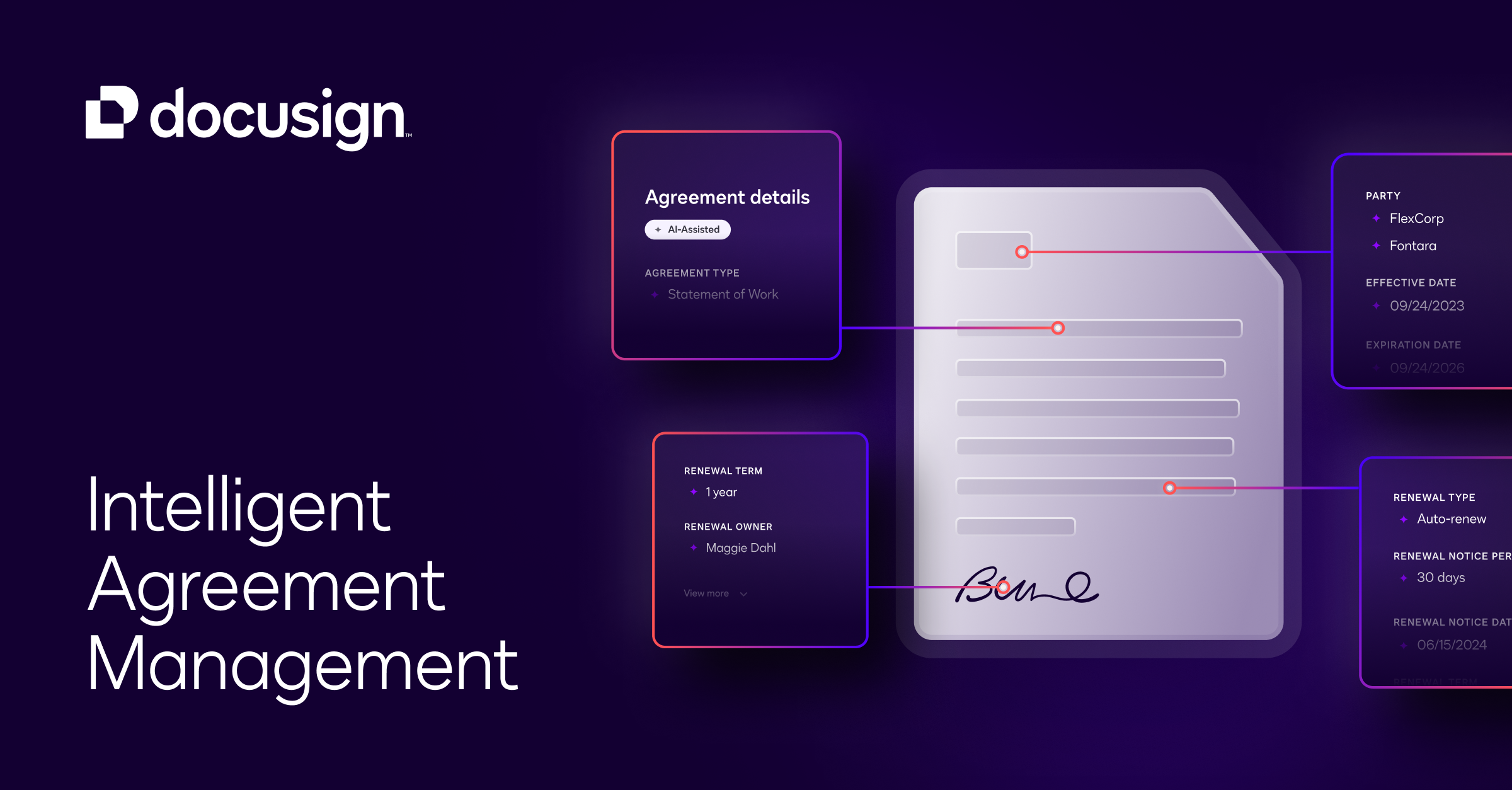
In recent updates, the company introduced Intelligent Agreement Management (IAM) powered by its artificial intelligence engine, Iris. This engine transforms static PDF contracts into structured data. During an acquisition or portfolio audit, analysts can run the AI across thousands of historical leases to automatically extract key attributes like expiration dates, rent escalations, and termination clauses. The AI can also suggest document types, validate data inputs, and flag non-standard legal language against a company’s predefined playbook. Instead of manually reading every page of a lease agreement, legal and transaction teams can use these agentic workflows to summarize terms, identify risks, and export the structured data directly into their property management systems or customer relationship management platforms.
9AI Framework: the score, dimension by dimension
CRE Relevance: 5/10
DocuSign is a horizontal software platform built for every major industry, from healthcare to finance. It does not provide proprietary commercial real estate data, market analytics, or property intelligence. Consequently, it operates strictly as a workflow and execution mechanism rather than a source of industry knowledge. While it offers specialized modules like Rooms for Real Estate and integrates with major industry CRMs, the core architecture remains generalized. Users must bring their own contracts, data, and processes to the platform. The software excels at handling leases and purchase agreements, but buyers should not expect native commercial real estate insights or market comparables. In practice: The platform acts as a blank canvas for transaction execution, requiring users to supply the actual real estate content and context.
Data Quality and Sources: 7/10
Because the platform does not supply external market data, data quality is measured by the accuracy of its AI extraction and the integrity of its audit trails. The Iris AI engine demonstrates high proficiency in identifying standard contract attributes, such as dates, monetary values, and party names, from uploaded documents. However, complex commercial leases with highly bespoke clauses or nested addendums can occasionally confuse the extraction models, requiring human verification. The system mitigates this by providing an interface where users can easily accept or reject AI recommendations before the data is committed to the system of record. The signature audit trails remain mathematically secure and legally defensible. In practice: Users can trust the signature certificates completely, but should implement a brief human review step for AI-extracted lease clauses.
Ease of Adoption: 9/10
The platform is widely recognized for its highly intuitive user interface. Most commercial real estate professionals have encountered the software as a signer, which significantly reduces the friction of adopting it as a sender. Setting up basic templates and routing rules takes only minutes, and the mobile application allows brokers to execute agreements directly from their phones during property tours. Advanced features, such as configuring the Intelligent Agreement Management workflows or training the AI on custom legal playbooks, require more technical configuration and administrative oversight. However, the company provides extensive documentation and onboarding support to guide teams through these complex deployments. In practice: Basic electronic signature functionality can be deployed in a single afternoon, while advanced AI workflows require a dedicated implementation phase.
Output Accuracy: 8/10
The primary output of the platform is a legally binding, executed contract accompanied by a comprehensive certificate of completion. This certificate captures timestamps, IP addresses, and authentication methods, ensuring the document holds up under strict legal scrutiny. Regarding its newer artificial intelligence capabilities, the system accurately categorizes document types and extracts standard metadata with high precision. When analyzing commercial real estate documents, the AI performs exceptionally well on standardized association forms but requires careful tuning when processing highly customized institutional lease agreements. The platform includes smart data validation to prevent incorrect data entry, ensuring that extracted attributes match expected formats before triggering subsequent automated actions. In practice: The legal enforceability of the signed documents is absolute, while the AI extraction provides a highly accurate baseline that accelerates manual review.
Integration and Workflow Fit: 9/10
The platform offers over a thousand pre-built connections, making it one of the most connected applications in the enterprise software ecosystem. For commercial real estate, it connects directly with major systems like Salesforce, Yardi, and Lone Wolf. Using middleware like Real Synch, brokerages can push transaction data from their CRM into the platform to automatically generate forms, and then push the executed documents back into their accounting systems to trigger commission payouts. The open application programming interface (API) allows institutional investors to build custom connections to proprietary databases. This extensive interoperability ensures that executed contracts do not remain isolated in a separate silo. In practice: The software easily embeds into almost any existing commercial real estate technology stack, eliminating the need for duplicate data entry.
Pricing Transparency: 7/10
The vendor publishes its baseline pricing clearly, but the total cost of ownership can become complex for enterprise users. As of August 2026, the eSignature Personal plan costs $10 per month when billed annually, while the Standard plan is $25 per user per month. The Intelligent Agreement Management (IAM) plans start at $65 per user per month. However, buyers must pay attention to envelope limits. The Personal plan restricts users to five envelopes per month, and even unlimited plans often cap automated API sends at 100 per user per year. Additional fees apply for SMS delivery, identity verification, and API overages. In practice: Small teams can rely on the published sticker price, but high-volume brokerages must carefully model their envelope usage to avoid unexpected overage fees.
Support and Reliability: 9/10
As a mature, publicly traded enterprise software provider, the company delivers exceptional system uptime and reliability. The platform rarely experiences unplanned outages, which is critical for brokerages executing time-sensitive purchase agreements or lease renewals. Standard support is included with all paid plans, featuring extensive knowledge bases, community forums, and email assistance. Enterprise customers can purchase premium support packages that provide dedicated account managers, faster response times, and customized training sessions. The sheer size of the user base means that solutions to common configuration issues are readily available online, and third-party consultants frequently specialize in deploying the platform for complex real estate organizations. In practice: The platform provides enterprise-grade stability, ensuring that critical transactions are never delayed by software downtime.
Innovation and Roadmap: 8/10
The company has successfully transitioned from a basic electronic signature tool to a comprehensive agreement management platform. The recent introduction of the Iris artificial intelligence engine demonstrates a clear commitment to automating the entire contract lifecycle. The roadmap focuses heavily on agentic workflows, allowing the software to not only extract data but also take independent actions based on predefined triggers, such as automatically routing a lease for legal review if the AI detects a non-standard rent escalation clause. This shift toward intelligent, automated governance positions the platform to remain highly relevant as commercial real estate firms increasingly seek to mine their historical contracts for business intelligence. In practice: Buyers are investing in a platform that will continuously introduce advanced artificial intelligence capabilities to streamline complex legal and administrative tasks.
Market Reputation: 10/10
The software holds an undisputed position as the default standard for electronic signatures across the global business landscape. In commercial real estate, it is universally recognized and trusted by brokers, landlords, tenants, and legal counsel. This ubiquity is a significant asset; clients never question the security or validity of a document sent through the platform. While some competitors offer lower prices or unlimited envelopes, they often lack the same level of instant brand recognition. The company’s reputation for security, compliance, and ease of use makes it the safest choice for institutional players who require strict adherence to data privacy regulations and corporate governance standards. In practice: Sending a contract through this platform signals professionalism and ensures immediate trust from all parties involved in the transaction.
Who should use DocuSign
The platform is best suited for organizations that prioritize transaction security, compliance, and workflow automation.
- Commercial real estate brokerages needing a standardized, legally compliant method for executing high volumes of representation agreements and purchase contracts.
- Property management firms looking to automate the lease renewal process and integrate executed documents directly into accounting systems like Yardi.
- In-house legal teams at institutional investment firms who require artificial intelligence to audit historical contracts during portfolio acquisitions.
- Transaction coordinators managing complex deals who need a centralized digital workspace to track document approvals and broker compliance.
Who should look elsewhere
Despite its market dominance, the platform is not the right fit for every real estate professional.
- Solo agents or part-time brokers with very low transaction volumes who can utilize free alternatives for occasional signatures.
- Firms seeking a platform that provides native commercial real estate market data, property comparables, or demographic analytics.
- Budget-conscious teams looking for unlimited document sends at a flat monthly rate, as the envelope limits can become cost-prohibitive.
Pricing and ROI
As of August 2026, the company publishes its pricing on its website, structured across several tiers based on functionality and user count. The entry-level eSignature Personal plan costs $10 per month when billed annually ($120 per year) but is strictly limited to five envelopes per month. The Standard plan costs $25 per user per month ($300 annually) and includes basic workflows. For advanced features, the Business Pro plan is $40 per user per month.
The newer Intelligent Agreement Management suite, which includes the Iris artificial intelligence engine and advanced contract lifecycle features, starts at $65 per user per month for the standard tier, with professional tiers reaching $95 per user per month. These plans typically require a minimum of three seats, creating a functional starting floor of $225 to $285 per month.
For a commercial real estate firm, the return on investment math is straightforward. A brokerage executing 50 leases a month saves dozens of hours previously spent on physical document routing, data entry, and compliance tracking. If the $40 Business Pro license saves an agent just two hours of administrative work per month, the software pays for itself immediately. However, buyers must monitor envelope limits and API usage, as exceeding the annual allowance of automated sends will trigger overage fees that can impact the overall cost-effectiveness.
Integration and CRE tech stack fit
The platform’s ability to integrate into the commercial real estate technology stack is one of its strongest competitive advantages. It features over a thousand pre-built integrations with major business applications. For commercial brokers, the software connects directly with Salesforce, allowing agents to generate letters of intent or commission agreements automatically based on CRM opportunity stages.
In property management, integrations with platforms like Yardi mean that tenant information can be merged directly into lease agreements, and the executed PDF is automatically saved back to the tenant’s ledger. The platform also connects directly with real estate-specific back-office systems such as Lone Wolf, ensuring that transaction data flows directly into accounting modules to expedite broker commission payouts. For firms using custom databases, the open application programming interface enables developers to embed signing experiences directly into proprietary portals. Solutions like Real Synch further expand these capabilities, acting as middleware to connect the software with niche real estate tools, ensuring that data silos are eliminated and manual re-keying is entirely avoided.
Competitive landscape
While the platform is the dominant force in the market, several real alternatives exist for commercial real estate professionals. PandaDoc is a strong competitor, particularly for teams focused on document generation and proposal tracking. PandaDoc offers a highly visual document builder and includes a free tier that is often more generous than the entry-level options discussed here. Adobe Sign is another major enterprise alternative, frequently chosen by firms already heavily invested in the Adobe Creative Cloud ecosystem, offering deep native integrations with Acrobat and Microsoft enterprise products.
For budget-conscious brokerages frustrated by envelope limits, Xodo Sign and Signeasy provide compelling alternatives. These platforms often offer more predictable pricing models with unlimited document sends, making them attractive for high-volume, low-margin leasing operations.
Within the BestCRE database, artificial intelligence tools like CompStak (Score: 88) and Happenstance AI (Score: 84) serve entirely different purposes, focusing on market data and deal sourcing rather than document execution. However, when comparing pure workflow and contract analysis, the platform’s Intelligent Agreement Management suite competes with dedicated contract lifecycle management tools. While smaller competitors may win on price, they struggle to match the sheer breadth of integrations, the sophisticated artificial intelligence extraction capabilities of the Iris engine, and the universal brand trust that this platform commands during high-stakes commercial negotiations.
The bottom line
DocuSign remains the definitive choice for commercial real estate firms that require a highly secure, universally trusted platform for executing and managing contracts. While the pricing structure and envelope limits can frustrate smaller teams, the platform’s evolution into Intelligent Agreement Management justifies the premium for serious operations. The addition of the Iris artificial intelligence engine elevates the software from a simple signature tool to a critical component of transaction due diligence and portfolio management. If you are a solo agent executing a few deals a year, cheaper alternatives will suffice. However, if you are scaling a commercial brokerage, managing a large property portfolio, or operating an institutional investment firm, the workflow automation, extensive CRM integrations, and unparalleled market reputation make this platform a mandatory foundational investment for your technology stack.
Frequently asked questions
Does the platform provide commercial real estate market data or comparables?
No. The software functions strictly as a horizontal workflow and electronic signature platform. It does not provide proprietary property data, market analytics, or demographic information for the sector. Users must upload their own contracts and supply all relevant transaction data to effectively utilize the system for commercial real estate deals.
What happens if I exceed my monthly envelope limit?
If you exceed the envelope limit on your specific subscription plan, you may be temporarily restricted from sending new documents or charged a premium overage fee for each additional envelope. High-volume commercial brokerages should proactively negotiate custom enterprise limits with their account representatives to avoid unexpected operational costs.
Can the artificial intelligence review my commercial leases automatically?
Yes. The Iris artificial intelligence engine can automatically extract key clauses, expiration dates, and financial terms from uploaded commercial leases. Furthermore, it can compare these extracted terms against your company’s predefined legal playbook, instantly flagging any non-standard language or risky clauses so that your legal team can perform a targeted manual review.
Does the software integrate with my existing property management system?
The platform offers extensive, pre-built integrations with major commercial real estate operating systems, including Yardi, Lone Wolf, and Salesforce. Additionally, it features an open application programming interface that allows your internal developers to connect the software directly to custom proprietary databases, ensuring transaction data flows automatically across your entire technology stack.
Are the electronic signatures legally binding for commercial real estate transactions?
Yes. The electronic signatures comply fully with major international electronic signature laws, including the ESIGN Act and UETA. The platform automatically generates a comprehensive certificate of completion for every transaction, which tracks exact timestamps, authentication methods, and IP addresses, ensuring strict legal enforceability in the event of a contract dispute.
Is there a free version available for low-volume agents?
The company does offer a free plan, but it is primarily designed for individuals who simply need to sign documents sent by others. It only allows you to send a lifetime total of three envelopes, making it entirely insufficient for ongoing commercial real estate business use or active leasing operations.