redIQ is a commercial real estate underwriting platform specifically designed for multifamily investors, brokers, and lenders. As confirmed by BestCRE research, its primary use case is multifamily deal underwriting, turning raw documents into standardized data. Acquired by Radix, the platform attacks the most time-consuming phase of acquisitions: manual data entry. Instead of analysts spending hours rekeying rent rolls and trailing twelve-month (T12) operating statements into custom models, redIQ automates the extraction and standardization of these financial documents. The tool is built to parse messy, inconsistent PDF and Excel files from various property management systems and convert them into a uniform format ready for analysis.
For acquisition teams evaluating dozens of deals weekly, the bottleneck is rarely the financial modeling itself, but rather the preparation of the inputs. redIQ addresses this friction directly. By standardizing the ingestion process, the software allows principals and analysts to review potential acquisitions faster and with fewer manual errors. The platform does not force users to abandon their proprietary underwriting models. Instead, it acts as a data pipeline, bridging the gap between the chaotic financials provided by sellers and the rigorous, structured formats required by institutional buyers. This specialized focus on multifamily assets means the system understands the nuances of apartment building financials, from complex utility bill-backs to varied concession structures, making it a staple in the tech stacks of heavy transaction volume firms.
What redIQ does and how it works
The core engine of redIQ relies on its document parsing capabilities to ingest rent rolls and operating statements. Users upload raw files—often messy PDFs or Excel exports from systems like Yardi or RealPage—directly into the platform. The system’s dataIQ module reads these documents, identifies line items, and maps them to a standardized chart of accounts. A recent feature addition, SmartMap+, automates the mapping of operating statements with color-coded confidence ratings. This allows analysts to quickly scan the output, verify the machine’s work, and manually correct any anomalies or unrecognized codes before proceeding.
Once the data is standardized, users have two primary paths for financial modeling. They can use valuationIQ, the platform’s proprietary web-based underwriting model, which now supports both Windows and macOS environments. Alternatively, and more commonly for institutional teams, they can use QuickSync. QuickSync is an Excel plugin that pushes the standardized data directly into a firm’s proprietary underwriting model. By mapping the redIQ output to specific cells in their custom spreadsheets, analysts eliminate the tedious copy-and-paste process. The plugin maintains version control and ensures that any updates to the source documents in the web platform flow cleanly into the local Excel file.
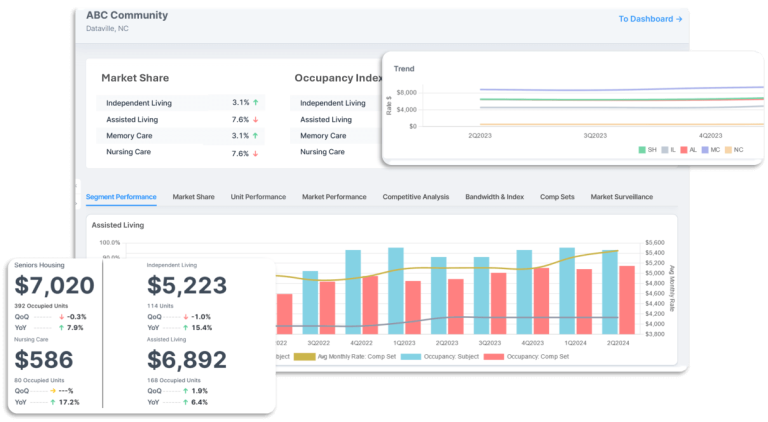
Beyond basic data extraction, the platform provides analytical overlays to help teams spot trends and discrepancies. The system automatically flags anomalies in the rent roll, such as lease expirations clustered in a single month or unexpected spikes in bad debt. With the recent integration of Radix Research, users also gain access to market intelligence directly within the interface, allowing them to benchmark the property’s performance against local competitors. This combination of document digitization, Excel integration, and market context provides a complete workflow for evaluating multifamily assets.
9AI Framework: the score, dimension by dimension
CRE Relevance: 10/10
redIQ is entirely dedicated to commercial real estate, with a hyper-focus on the multifamily sector. The platform is engineered specifically to handle the complexities of apartment building financials, recognizing the varied formats produced by different property management software systems. Unlike generic optical character recognition tools, it understands the context of a trailing twelve-month operating statement and the specific line items of a multifamily rent roll. This deep specialization ensures that the tool correctly interprets nuances like loss to lease, bad debt, and varied concession structures without requiring extensive user training. It is a purpose-built solution for a specific asset class. In practice: Multifamily deal teams can deploy the software immediately without needing to teach the system how to read a standard apartment rent roll.
Data Quality and Sources: 9/10
The accuracy of the extracted data relies on a combination of automated parsing and user verification. The system’s SmartMap+ feature uses confidence scoring to highlight which line items were mapped successfully and which require human review. This hybrid approach ensures that the final dataset is highly reliable, as analysts are forced to verify low-confidence extractions before pushing the numbers into their models. The platform excels at identifying anomalies and mismatched totals, acting as a safeguard against the mathematical errors often found in seller-provided financials. The resulting standardized data is consistently clean and ready for institutional-grade underwriting. In practice: Analysts spend their time verifying highlighted exceptions rather than hunting for hidden errors across hundreds of spreadsheet rows.
Ease of Adoption: 8/10
Implementing the platform requires a shift in the initial stages of a firm’s underwriting workflow, but the learning curve is manageable. The interface is intuitive, and the process of uploading and mapping documents is straightforward. The most significant adoption hurdle is configuring the QuickSync plugin to communicate correctly with a firm’s proprietary Excel model. This initial setup requires mapping the standardized outputs to the correct input cells, which takes time and precision. However, once this bridge is established, the daily operation becomes highly efficient. The company provides dedicated customer success managers to assist with onboarding and model integration. In practice: Teams will need to dedicate a few hours upfront to map their custom Excel models, but will recoup that time on their first few live deals.
Output Accuracy: 9/10
The platform delivers highly precise outputs, provided the user engages with the verification tools. Because the system flags uncertain mappings with color-coded confidence ratings, the risk of bad data silently corrupting an underwriting model is low. The extraction engine is specifically trained on multifamily documents, giving it a distinct advantage over generic data extraction software when interpreting complex or poorly formatted rent rolls. If a document is entirely illegible or features an extreme edge case, the company offers a manual processing service with a 24-hour turnaround, ensuring that accuracy is never compromised by software limitations. In practice: The combination of smart flagging and human-in-the-loop verification guarantees that the numbers flowing into your model match the source documents exactly.
Integration and Workflow Fit: 9/10
The software is designed to integrate deeply with Microsoft Excel, which remains the undisputed standard for commercial real estate financial modeling. The QuickSync plugin is the crucial link, allowing standardized data to flow directly from the web platform into local, proprietary spreadsheets. This approach respects the reality that most institutional buyers will never abandon their custom models for a third-party web interface. Recent updates have expanded compatibility, bringing the proprietary valuationIQ model to macOS users. Furthermore, following its acquisition, the platform is increasingly integrated with the broader Radix ecosystem, pulling in market research and benchmarking data. In practice: The tool fits perfectly into traditional workflows by feeding data directly into the custom Excel models your team already trusts.
Pricing Transparency: 4/10
The vendor operates with a custom pricing model and does not publish its subscription tiers or exact costs publicly. BestCRE research confirms that pricing details are entirely custom, requiring interested buyers to engage with the sales team for a quote. Costs typically scale based on the volume of deals processed, the size of the firm, and the specific modules required, such as the QuickSync Excel plugin or access to the proprietary valuation models. This lack of public pricing creates friction for smaller shops attempting to evaluate the software’s return on investment before committing to a sales demonstration. In practice: Buyers must complete a full sales cycle and scoping call to determine if the platform fits within their technology budget.
Support and Reliability: 9/10
As a Tier 1, established vendor in the commercial real estate space, the company provides institutional-grade support. Every account is assigned a dedicated customer success manager to handle onboarding, training, and troubleshooting. For complex financial modeling questions or issues with the QuickSync plugin, clients have access to a team of in-house financial analysts. This specialized support is highly valuable, as the support staff actually understands commercial real estate underwriting, rather than just basic software troubleshooting. Additionally, the fallback option of having the vendor’s team manually process difficult documents ensures that operations never halt due to software limitations. In practice: When a messy rent roll fails to parse, you can rely on their experienced team to manually process it within a day.
Innovation and Roadmap: 8/10
The platform’s development trajectory has accelerated since its acquisition by Radix. As of Q3 2026, the roadmap indicates a focus on embedding more contextual market data and improving the automation of operating statement categorization. The integration of Radix Research directly into the interface demonstrates a clear strategy to evolve from a pure data extraction tool into a comprehensive market intelligence and underwriting platform. Recent updates, such as the SmartMap+ automated mapping feature and expanded macOS compatibility, show a commitment to removing friction from the user experience. While the core functionality of parsing documents is mature, the ongoing development ensures the tool remains highly relevant. In practice: Users can expect continuous improvements in mapping automation and deeper integrations with external market data sources.
Market Reputation: 9/10
The software holds a dominant position among institutional multifamily investors and top-tier brokerages. It is widely recognized as the industry standard for standardizing rent rolls and trailing twelve-month financials in the apartment sector. The platform processes a massive volume of multifamily transactions annually, giving it unparalleled exposure to different document formats and edge cases. Competitors exist, but few have achieved the same level of market penetration specifically within the multifamily asset class. The recent acquisition by Radix has only strengthened its position, backing the established tool with a larger organization dedicated to multifamily analytics. In practice: If you are buying or selling institutional multifamily assets, you will inevitably interact with deal financials processed through this platform.
Who should use redIQ
redIQ is built for high-volume multifamily deal teams that need to process financial documents quickly and accurately. It is best suited for organizations that spend excessive analyst hours on manual data entry.
- Institutional multifamily acquisition teams evaluating dozens of deals per month.
- Investment sales brokerages needing to standardize seller financials for offering memorandums.
- Lenders and debt funds requiring rapid, consistent underwriting of apartment portfolios.
- Firms with complex, proprietary Excel models that want to automate their data inputs via the QuickSync plugin.
Who should look elsewhere
The platform’s hyper-focus on multifamily assets and enterprise-grade features makes it a poor fit for certain types of real estate professionals.
- Retail, office, or industrial investors, as the parsing engine is optimized for apartment rent rolls.
- Low-volume buyers who only underwrite a few deals a year, where the software subscription would outweigh the time saved.
- Firms looking for a fully automated valuation tool without human verification.
Pricing and ROI
As noted in our research, redIQ operates with custom pricing and does not publish its rates publicly. Interested buyers must engage with the sales team to receive a quote tailored to their specific needs. The final cost typically depends on several factors, including the size of the firm, the number of user licenses required, and the anticipated volume of deals processed annually. Organizations must also determine which modules they need, such as the core data extraction tools, the valuationIQ web model, or the highly popular QuickSync Excel plugin.
When calculating the return on investment, firms should focus on the reduction in manual analyst hours. Consider an acquisition team that underwrites ten deals per week. If an analyst spends an average of two hours manually rekeying and formatting a messy rent roll and trailing twelve-month operating statement for each deal, that equals twenty hours of manual labor weekly. By reducing that data entry time to fifteen minutes per deal using automated extraction and the QuickSync plugin, the firm saves seventeen hours per week. At an analyst fully-loaded cost of sixty dollars per hour, this represents over fifty thousand dollars in annual savings, easily justifying an enterprise software subscription while freeing up highly paid staff to focus on actual deal analysis and market research.
Integration and CRE tech stack fit
The true power of redIQ lies in its ability to integrate with the tools commercial real estate professionals already use, specifically Microsoft Excel. The platform does not force acquisition teams to abandon their heavily customized, proprietary underwriting models. Instead, through the QuickSync plugin, it acts as a reliable data pipeline directly into those local spreadsheets. This ensures that the software fits neatly into existing tech stacks without requiring a massive operational overhaul.
Beyond Excel, the platform’s acquisition by Radix has led to deeper integrations within the broader multifamily technology ecosystem. Users can now access Radix Research directly within the interface, pulling market context and benchmarking data into their underwriting workflow. While it excels at document ingestion and Excel integration, firms will still rely on separate platforms like Dealpath for pipeline management or Cherre for broad portfolio data aggregation. The software serves a highly specific, crucial function—digitizing seller financials—and passes that clean data downstream to the rest of the firm’s analytical and management tools.
Competitive landscape
The landscape for commercial real estate data extraction and underwriting automation is highly competitive, with several strong alternatives depending on a firm’s specific needs. For multifamily-focused teams, HelloData (scored 91) is a formidable competitor. While redIQ focuses heavily on standardizing the internal financial documents provided by sellers, HelloData excels at automating external market research, instantly pulling competitor leasing trends, concessions, and availability to inform the underwriting process. Firms often use these tools in tandem or weigh them based on whether their biggest bottleneck is document processing or market surveying.
For organizations looking for broader data aggregation and valuation across multiple asset classes, Cotality (scored 91) offers massive datasets and institutional-grade automated valuation models that cover nearly all United States properties. CompStak (scored 88) provides crowdsourced lease and sales comparables, which is vital for verifying the market assumptions that go into a standardized underwriting model.
If a firm needs document intelligence that extends beyond multifamily assets into retail, office, and industrial, platforms like Primer offer data extraction from offering memorandums and rent rolls across all property types, mapping directly into Excel. However, within the specific niche of multifamily rent roll and operating statement standardization, redIQ maintains a distinct advantage due to its decade of specialized training on apartment financials and its deep entrenchment in the workflows of top investment sales brokerages.
The bottom line
Stop paying analysts to do the work of a machine. If your firm acquires or brokers institutional multifamily properties, manually rekeying rent rolls and operating statements is an unacceptable waste of expensive talent. redIQ solves this specific, painful bottleneck better than almost any other tool on the market. It is not a magical black box that will underwrite a deal for you, nor is it suitable for retail or office investors. It is a highly specialized data pipeline that converts chaotic seller financials into clean, standardized inputs for your proprietary Excel models. Despite the friction of custom pricing and the initial setup time required to map your spreadsheets, the return on investment is undeniable for high-volume teams. Buy this software to eliminate manual data entry, reduce mathematical errors, and allow your acquisitions team to focus on actual real estate analysis rather than formatting cells.
Frequently asked questions
Does redIQ work for office or retail properties?
No. The platform is specifically engineered for the multifamily sector. Its parsing engine and standardized chart of accounts are trained to understand apartment rent rolls and trailing twelve-month operating statements. It will not accurately process commercial leases or complex retail expense recoveries.
Do I have to use their web-based underwriting model?
No. While the platform includes its own proprietary model called valuationIQ, most institutional clients use the QuickSync plugin. This allows you to push the standardized data directly into your firm’s existing, proprietary Excel spreadsheets for highly customized financial deal analysis.
What happens if the software cannot read a messy rent roll?
The system uses confidence scoring to highlight uncertain data extractions for manual review. If a document is entirely illegible or completely non-standard, the vendor provides a dedicated manual processing service, returning the standardized data to your deal team within 24 hours.
Is the software compatible with Apple computers?
Yes. Following recent platform updates, the proprietary valuationIQ web model is now fully compatible with macOS environments. This allows Mac users to generate complete property valuations and analyze standardized financials without experiencing frustrating operating system conflicts or requiring virtual machines.
Does the platform provide market comparables?
Yes. Following its recent acquisition by Radix, the platform has successfully integrated Radix Research directly into the main user interface. This upgrade provides analysts with vital local market intelligence, benchmarking data, and competitor context during the active deal underwriting process.
How much time does it actually save per deal?
For a standard multifamily transaction, analysts typically reduce the time spent formatting and entering data from several hours down to fifteen to thirty minutes. The exact savings depend on the complexity of the source documents and familiarity with the mapping tools.