CityBldr appears to be discontinued: its website no longer loads and we found no active product page. We keep this review for reference, and the tool no longer counts in the 9AI rankings.
Active alternatives BestCRE has scored: Prospect by Buildout (89/100), Crexi (84/100) and Searchland AI (83/100).
Point solutions come and go. Much of what CityBldr did can now be built in house on your own agents and models, with nothing to lose if a vendor folds: see how firms build it themselves, or talk to us about building it for your firm.
CityBldr is an artificial intelligence platform designed to identify redevelopment potential and off-market sites for commercial real estate investors and developers. According to BestCRE research, the platform operates on a success-based pricing model with no upfront cost, directly aligning its fees with successful transactions. Founded to help users locate and value underutilized properties, CityBldr aggregates disparate data points to calculate the highest and best use for specific parcels. The tool primarily targets the acquisitions phase, scanning large geographic areas to flag properties where the current use generates less value than a potential redevelopment.
For commercial real estate principals and analysts, sourcing viable development sites often involves tedious manual research and fragmented data analysis. CityBldr attempts to automate this workflow by modeling buildable units, environmental constraints, and local zoning codes to estimate the development potential of individual or assembled parcels. As a CRE-Native, Tier 2 database, its primary utility lies in surfacing opportunities that traditional listing platforms miss. While competitors like Crexi and LoopNet focus on active market listings, CityBldr functions as an acquisitions engine for off-market discovery. Our analysis indicates that the platform is best suited for groups actively engaged in land assemblage and ground-up development, rather than those seeking stabilized yield-generating assets. By calculating a redevelopment value, the software provides a quantitative basis for approaching property owners. This review evaluates the platform’s utility for acquisition teams operating in Q3 2026, measuring its capabilities against established industry benchmarks and peer tools like ProspectNow and PropertyRadar.
What CityBldr does and how it works
CityBldr functions as a predictive analytics engine that evaluates land for its highest and best use. The core mechanic involves scanning thousands of parcels within a target market and applying machine learning algorithms to public and proprietary datasets. The system models local zoning regulations, floor area ratios, and building constraints to calculate what can legally and physically be built on a given site. It then compares the current market value of the existing property against the projected value of the land if it were redeveloped. When the potential redevelopment value significantly exceeds the current use value, the platform flags the site as an acquisition target.
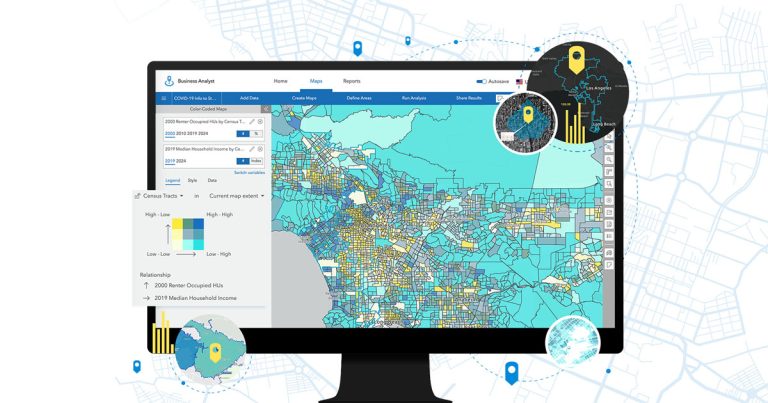
A primary feature of the software is its ability to identify multi-parcel assemblage opportunities. Instead of evaluating sites in isolation, the algorithm assesses adjacent parcels to determine if combining them would unlock higher density or more profitable zoning designations. Users view color-coded maps that highlight underutilized properties, allowing acquisition analysts to prioritize outreach based on the spread between current value and projected redevelopment value. The platform also generates estimated property valuations and rent comparisons, which serve as a baseline for underwriting before a team commits resources to a deep financial model.
Because the platform targets off-market acquisitions, it acts as a lead generation tool for developers and investors. Once a target is identified, the system provides data to facilitate outreach to existing property owners. Our analysis shows that by focusing exclusively on redevelopment potential and off-market sites, CityBldr bypasses the highly competitive inventory found on traditional listing sites. The mechanics are designed to reduce the time spent on initial site feasibility studies, replacing manual zoning research and spreadsheet-based density calculations with automated, data-driven site selection.
9AI Framework: the score, dimension by dimension
CRE Relevance: 9/10
CityBldr is a CRE-Native, Tier 2 database built explicitly for commercial real estate acquisitions and development. Unlike general-purpose data aggregators, the platform’s architecture is designed around the specific workflows of land assemblage, zoning analysis, and site feasibility. The primary use case of identifying redevelopment potential and off-market sites ensures that every feature serves the commercial real estate developer or investor. By modeling buildable units and environmental constraints, the tool addresses the exact pain points of acquisition analysts tasked with sourcing new projects. Our analysis indicates that its narrow focus on highest and best use calculations makes it highly relevant for its target audience, though it offers little utility for property management or lease administration. In practice: Acquisition teams use the platform to replace manual zoning code research with automated site feasibility screening.
Data Quality and Sources: 8/10
The platform relies on a combination of public records, tax history, demographic data, and municipal zoning codes to fuel its predictive models. By synthesizing these disparate sources, the software calculates development potential and flags underutilized parcels. However, the accuracy of these calculations is inherently tied to the quality and timeliness of municipal data, which can vary significantly across different jurisdictions. Details regarding the exact frequency of data updates are not published, meaning users must verify critical zoning changes independently. Our analysis suggests that while the aggregation of multiple data points per parcel provides a strong foundation for early-stage feasibility, the data should be treated as directional rather than definitive. In practice: Analysts rely on the data to filter out unviable sites but must still conduct formal zoning verification during the due diligence period.
Ease of Adoption: 8/10
Implementing CityBldr requires a shift in how acquisition teams source deals, moving from relationship-based or broker-led sourcing to a data-driven approach. Because the platform features a visual, map-based interface with color-coded utilization metrics, the learning curve for basic navigation is relatively low. However, our analysis indicates that fully integrating the tool’s predictive analytics into an existing underwriting workflow requires dedicated training. The platform does not publish detailed documentation on its onboarding process or standard implementation timelines. Since the pricing model involves no upfront cost and is success-based, the financial barrier to entry is eliminated, which typically accelerates organizational approval and user adoption. In practice: New users can immediately begin scanning maps for color-coded assemblage opportunities, though mastering the underlying valuation assumptions takes time.
Output Accuracy: 8/10
CityBldr’s primary outputs are its estimates of redevelopment value and its identification of assemblage opportunities. The platform uses machine learning to project what can be built and what that future development is worth. Because these outputs are predictive, they carry inherent assumptions about construction costs, market rents, and municipal approval processes. Our analysis shows that while the algorithm excels at identifying mathematical spreads between current and future values, real-world development involves political and physical variables that software cannot fully anticipate. The accuracy of its highest and best use calculations serves as an excellent starting point, but it cannot replace a formal appraisal or architectural test fit. In practice: Developers use the output to justify initial outreach to property owners, knowing the exact economics will shift during formal underwriting.
Integration and Workflow Fit: 6/10
Information regarding CityBldr’s ability to connect with external commercial real estate software is not published. The vendor does not publicly detail available APIs, direct CRM integrations, or export capabilities to standard financial modeling tools like Excel or ARGUS. For a platform focused on off-market acquisitions, the inability to verify automated data flow into tools like Salesforce or Dealpath is a limitation. Our analysis indicates that users likely operate the platform as a standalone research environment, manually transferring identified leads and site data into their proprietary tracking systems. Without published integration pathways, enterprise buyers must assume a siloed workflow. In practice: Analysts must manually export or copy site parameters from the platform into their internal underwriting spreadsheets and deal management CRMs.
Pricing Transparency: 8/10
BestCRE research verifies that CityBldr operates on a success-based pricing model with no upfront cost. This structure is highly transparent in its mechanism, directly aligning the vendor’s compensation with the successful acquisition or transaction of a property. By eliminating subscription fees, the platform removes the initial capital expenditure typically associated with Tier 2 data providers. However, the exact percentage or fee structure applied upon a successful deal is not published on the public website. Our analysis suggests this model is highly attractive to developers looking to minimize overhead during the sourcing phase, provided they are comfortable sharing transaction economics. In practice: Acquisition teams can deploy the software without budget approval for software-as-a-service fees, paying the vendor only when a sourced deal officially closes.
Support and Reliability: 7/10
As a specialized technology provider rather than a legacy data conglomerate, CityBldr’s support infrastructure appears tailored to its success-based business model. Because the vendor only generates revenue when clients close deals, our analysis suggests a strong internal incentive to assist users in identifying and pursuing viable properties. However, specific service level agreements, dedicated account management details, and standard response times are not published. It is unknown if users have access to 24/7 technical support or if assistance is limited to standard business hours. Given its status as a growing firm, buyers should expect personalized but potentially less standardized support compared to legacy platforms like REIS or LoopNet. In practice: Users should expect support interactions to focus heavily on deal viability and transaction facilitation rather than traditional software troubleshooting.
Innovation and Roadmap: 9/10
CityBldr demonstrates a clear trajectory of innovation by applying machine learning to complex municipal zoning codes and land assemblage strategies. The ability to programmatically identify multi-parcel development opportunities represents a significant advancement over traditional, manual parcel-by-parcel research. While the vendor does not publish a formal product roadmap, its core focus on predictive analytics and highest and best use calculations positions it well ahead of basic public record aggregators. Our analysis indicates that future iterations will likely need to incorporate real-time construction cost data and more granular environmental constraints to maintain a competitive edge. The current capability to automate site feasibility studies shows a strong commitment to advancing acquisition technology. In practice: Users benefit from an evolving algorithm that continuously refines its ability to spot profitable land assemblages before competitors do.
Market Reputation: 8/10
Within the niche of land assemblage and off-market development sourcing, CityBldr has established a distinct identity. It is recognized for targeting the specific inefficiencies of urban redevelopment, earning attention from industry publications and development firms. However, it does not possess the universal brand recognition of general-purpose platforms like Crexi or ProspectNow. Because it operates on a success-based model rather than a standard SaaS subscription, its user base is likely more specialized, consisting primarily of active developers and opportunistic investors. Our analysis shows that the firm is viewed as a specialized tactical tool rather than a foundational data utility. Its reputation is built on its unique approach to uncovering hidden land value. In practice: Industry professionals view the platform as a specialized partner for off-market discovery rather than a traditional software vendor.
Who should use CityBldr
CityBldr is engineered for groups that actively pursue off-market land acquisitions and ground-up development projects. The success-based pricing model makes it accessible to firms that want to scale their sourcing efforts without increasing their software overhead.
Ground-up developers: Teams looking for automated site selection and highest-and-best-use calculations to feed their development pipeline.
Land assemblage specialists: Investors who focus on acquiring adjacent parcels to unlock higher density zoning and institutional-grade project sizes.
Off-market acquisition analysts: Professionals tasked with finding deals outside of heavily brokered channels like Crexi or LoopNet.
Urban infill investors: Groups targeting underutilized properties in dense municipalities where zoning changes create hidden value.
Who should look elsewhere
The platform offers little utility for professionals focused on stabilized assets, active market listings, or traditional property management. Its predictive models are built for development, not operational efficiency.
Core and Core-Plus investors: Buyers seeking fully stabilized, yield-generating properties will not benefit from redevelopment analytics.
Leasing brokers: Professionals focused on filling vacancies in existing structures do not need land assemblage or zoning data.
Property managers: The software lacks any features for tenant communication, maintenance tracking, or rent collection.
Passive limited partners: Investors who allocate capital to existing syndications rather than actively sourcing raw land.
Pricing and ROI
According to BestCRE research, CityBldr operates on a success-based pricing model with no upfront cost. This means there are no published monthly or annual software-as-a-service (SaaS) subscription fees to access the platform’s core data and predictive analytics. Instead, the vendor acts as a partner in the acquisition process, earning a fee or commission only when a transaction sourced through the platform successfully closes. The exact percentage or structure of this success fee is not published on the public website and must be negotiated directly with the vendor.
Our analysis indicates this model fundamentally shifts the return on investment (ROI) calculation for acquisition teams. Traditional data platforms require a fixed capital outlay, meaning the software must generate enough leads to justify the sunk cost. With CityBldr, the upfront financial risk is zero. The ROI is measured by the time saved during the site selection process and the profit margin of the completed development, minus the vendor’s success fee. For example, if an analyst typically spends 20 hours a week manually researching zoning codes and tax records to find one viable off-market site, automating that process frees up roughly 1,000 hours annually. If the platform successfully identifies a multi-parcel assemblage that yields a $5 million development profit, the success fee paid to the vendor is easily absorbed by the newly unlocked equity.
Integration and CRE tech stack fit
Information regarding CityBldr’s integration capabilities with external commercial real estate software is not published. The vendor does not publicly disclose the availability of an open API, nor does it list native connections to popular industry CRMs like Salesforce, Dealpath, or Hubspot. Furthermore, there is no published documentation detailing automated data exports to financial modeling platforms such as ARGUS or standard Excel underwriting templates.
Our analysis suggests that due to this lack of published connectivity, users should expect to operate the platform as a standalone environment within their technology stack. Acquisition analysts will likely use the software at the very top of the funnel to identify and evaluate underutilized parcels. Once a target site is selected and the initial redevelopment value is verified, the analyst must manually transfer the property details, zoning data, and owner information into their firm’s proprietary deal-tracking system. While the absence of automated integrations creates a siloed workflow, it is a common limitation among highly specialized, early-stage predictive analytics tools. Firms evaluating the software must account for the manual data entry required to move a lead from the discovery phase into the formal underwriting and pipeline management phases.
Competitive landscape
CityBldr occupies a highly specific niche in the commercial real estate technology landscape, focusing almost entirely on off-market redevelopment and land assemblage. When comparing alternatives, buyers must differentiate between active listing platforms and off-market data providers. Traditional marketplaces like Crexi (BestCRE Score: 84) and LoopNet (BestCRE Score: 76) are excellent for finding properties currently for sale, but they do not provide the predictive zoning and highest-and-best-use analytics required for proactive land assemblage.
For off-market discovery, ProspectNow (BestCRE Score: 80) and PropertyRadar (BestCRE Score: 79) serve as closer operational peers. Both platforms allow users to search tax records, identify property owners, and filter for specific property characteristics to generate acquisition leads. However, our analysis indicates that these tools function primarily as data aggregators and contact databases. They require the user to manually determine if a site is underutilized. In contrast, CityBldr automates the feasibility process by algorithmically calculating the spread between current value and potential redevelopment value.
Another peer in the predictive analytics space is Mercator.ai (BestCRE Score: 72), which focuses on identifying early-stage construction and development signals. While Mercator helps users find projects that are already in motion, CityBldr is designed to originate the project from scratch by finding the raw dirt. Ultimately, firms choosing this platform are prioritizing automated zoning analysis and assemblage identification over the broad, general-purpose property data offered by legacy competitors like REIS (BestCRE Score: 77).
The bottom line
CityBldr is a specialized, high-utility platform for commercial real estate teams explicitly focused on ground-up development and land assemblage. By eliminating upfront subscription fees in favor of a success-based pricing model, the vendor removes the financial friction typically associated with adopting new predictive analytics software. Our analysis determines that the tool’s ability to automate zoning research and calculate highest-and-best-use scenarios offers a distinct advantage over manual site selection methods. However, the lack of published integration pathways means it will likely remain a siloed application at the top of your acquisition funnel. If your firm’s strategy relies on acquiring stabilized, yield-generating assets or purchasing active market listings, this platform provides zero value. Conversely, if your mandate is to uncover hidden density and orchestrate off-market assemblages in complex urban environments, CityBldr is a highly targeted instrument that justifies its implementation through its risk-free pricing structure.
Frequently asked questions
Does CityBldr charge a monthly subscription fee?
No. According to BestCRE research, the platform operates entirely on a success-based pricing model with no upfront cost. Instead of paying a recurring software-as-a-service fee, users partner with the vendor and pay a commission or fee only when a property sourced through the platform is successfully acquired or transacted.
Can I use this tool to find active commercial real estate listings?
CityBldr is not designed to function as a traditional listings marketplace like Crexi or LoopNet. Its primary use case is identifying off-market sites and calculating redevelopment potential. Our analysis shows it is best utilized by developers seeking underutilized parcels rather than investors looking for properties actively marketed by brokers.
Does the platform integrate directly with Salesforce or ARGUS?
Information regarding native integrations with external CRMs or financial modeling tools is not published by the vendor. Our analysis indicates that users should expect to operate the software as a standalone platform, requiring manual data entry to transfer identified leads and zoning data into internal deal-tracking systems.
How does the software identify land assemblage opportunities?
The platform applies machine learning to municipal zoning codes, tax records, and environmental constraints to evaluate adjacent parcels. By calculating the potential density and highest-and-best-use of combined lots, it flags groups of properties where the projected redevelopment value significantly exceeds the current market value of the individual homes or buildings.
Is the zoning and development data guaranteed to be accurate?
While the software aggregates multiple data points to estimate buildable units and development potential, the outputs are predictive. Our analysis suggests that the data is excellent for initial site feasibility and lead generation, but users must still perform formal zoning verification and architectural test fits during due diligence.
Who is the ideal user for this software?
The ideal user is a commercial real estate developer, acquisition analyst, or land assemblage specialist focused on off-market urban infill projects. Because the tool specifically calculates redevelopment value and identifies underutilized sites, it is highly effective for teams looking to build ground-up projects rather than buy stabilized assets.
Related Reviews
Compare CityBldr with other Acquisitions tools BestCRE has scored: Searchland AI (83/100), Propmarker (70/100), Admyral AI (62/100) and Superlocal (61/100). Browse every review in CRE Acquisitions, the full Best CRE AI Tools directory, or the 20 CRE Sectors hub.