
Category: CRE Financing & Lending

  • Intex Review: Cash flow modeling for CMBS and structured securities

    Intex Review: Cash flow modeling for CMBS and structured securities

    BestCRE 9AI Score

    71/100 · Contender

    Intex ranks #213 of 455 commercial real estate AI tools scored on the 9AI Framework. Nine dimensions, each scored out of 10: CRE relevance, data quality, ease of adoption, output accuracy, integration fit, pricing transparency, support, innovation and market reputation.

    Intex is a specialist cash flow modeling and data analytics provider for securitized products. Its users include investors, issuers, underwriters, dealers, arrangers and rating agencies working across CMBS, RMBS, ABS and CLO securities. In a commercial real estate workflow, Intex sits downstream from property underwriting and loan surveillance. It helps an analyst translate assumptions about collateral performance into projected payments, losses and valuation implications for individual CMBS bonds. That makes it highly relevant to structured finance desks, but much less applicable to property owners, leasing teams and investment sales brokers.

    The company was founded in 1985 and remains independent and privately owned. Its principal advantage is a maintained library of cash flow models covering more than 50,000 securitization deals. Those models encode transaction waterfalls, payment rules and other deal mechanics that would otherwise require extensive manual interpretation and implementation. Intex says its coverage of supported securities in the United States, Canada, the United Kingdom and continental Europe is close to complete, with additional coverage across several other international markets.

    Analysis: The product should be viewed as financial market infrastructure rather than a general CRE analytics application. A CMBS analyst can use it to examine how prepayments, defaults, losses, recoveries and other assumptions move through a transaction. A property acquisitions team cannot use it as a substitute for rent comparables, property operating data, market forecasts or asset management software. Its value depends on whether the buyer needs security level cash flow analysis and whether that need occurs frequently enough to justify a specialist system.

    The buying case is strongest when reproducibility, deal coverage and confidence in waterfall mechanics matter more than interface simplicity. Its long operating history and position within securitization workflows support a strong reputation. The tradeoffs are equally clear: pricing is not published, implementation can involve technical work, and the product addresses a narrower part of CRE than platforms such as CoStar, Green Street or Trepp. Buyers should test coverage for their exact securities, required fields, scenarios and delivery method before signing a contract.

    What Intex Does and How It Works

    Intex creates and maintains cash flow models for structured finance transactions. Each model represents the contractual rules that determine how collections from underlying assets are allocated among bond classes and other accounts. For CMBS users, this allows loan and collateral assumptions to be translated into security level results without rebuilding every transaction waterfall internally. Analysts can change assumptions, run scenarios and compare the resulting principal, interest, loss and timing outcomes across bonds. The practical benefit is consistency when examining structures that differ materially in their priorities, triggers and allocation rules.

    The product family includes user interface platforms, Excel plug ins, client resident APIs, web service APIs and integrations used by third party applications. This gives buyers several deployment paths. An individual researcher may work through a supplied interface or spreadsheet workflow, while a quantitative team can call models from internal valuation, risk or portfolio systems. Traders can evaluate securities, researchers can study cohorts, portfolio managers can assess risk, and structuring teams can test proposed transactions. The vendor also provides related data analytics, although the defining capability remains the cash flow model library.

    A typical workflow begins with selecting a deal and security, supplying market and collateral assumptions, and running the applicable transaction model. The output can inform valuation, scenario analysis, relative value work, risk reporting or portfolio decisions. Intex does not eliminate the need to form defensible assumptions about property loans, recoveries or market conditions. It calculates the consequences of those assumptions through the security structure. Analysis: This distinction is critical. Model fidelity can be excellent while an investment conclusion remains weak if the analyst supplies unrealistic collateral inputs, overlooks changing servicer information or treats a scenario as a forecast.

    9AI Framework: Dimension by Dimension Analysis

    CRE Relevance: 7/10

    Intex earns a 7 for CRE relevance because CMBS analysis is directly tied to commercial mortgage performance, yet the product operates at the securitization layer rather than the property operating layer. It is highly pertinent to investors assessing conduit, single asset and other commercial mortgage securities. It can help connect loan performance assumptions to bond cash flows, credit exposure and valuation. It is not designed for prospecting, leasing, property management, development feasibility or conventional acquisitions underwriting. Analysis: The relevance score therefore depends heavily on the buyer’s seat. For a dedicated CMBS desk, Intex can be central infrastructure. For a CRE owner or broker without structured credit exposure, it is peripheral. The score reflects meaningful CRE application with a deliberately narrow professional audience.

    Data Quality and Sources: 9/10

    Intex earns a 9 for data quality because its central product is an actively maintained library of transaction specific models and related structured finance information. Its longevity and broad global coverage indicate a mature process for interpreting documents and updating models across supported asset classes. The value is not simply a collection of loan records. It is the structured representation of payment rules, triggers, accounts and security relationships required to calculate deal cash flows. Analysis: That creates a substantial advantage over teams attempting to build and maintain waterfalls internally. Buyers should still validate whether every required private transaction, historical field and collateral attribute is available under their proposed subscription. The vendor does not publish a field by field completeness audit, correction rate or independent data quality benchmark.

    Ease of Adoption: 6/10

    Intex earns a 6 for ease of adoption. The availability of interfaces and Excel connectivity gives analysts practical entry points, while APIs support more sophisticated deployments. However, structured security modeling has an inherently steep learning curve. Users must understand bond structures, collateral assumptions, scenario construction and interpretation of outputs. A familiar spreadsheet surface does not remove that domain requirement. Enterprise adoption may also require mapping identifiers, building valuation conventions, establishing assumption governance and connecting results to portfolio or risk systems. Analysis: Experienced CMBS analysts should become productive more quickly than general CRE professionals, but this is not a casual analytics subscription. Buyers should request a workflow demonstration using representative deals and confirm training, documentation and implementation responsibilities before purchase.

    Output Accuracy: 9/10

    Intex earns a 9 for output accuracy because transaction level cash flow mechanics are its defining competency. Maintained deal models can reduce errors that arise when analysts manually code complex waterfalls or interpret payment priorities inconsistently. The platform is positioned as an objective calculation layer used for valuation, scenario analysis, trading and risk work. Accuracy nevertheless has two components: the implementation of contractual mechanics and the assumptions supplied by the user. Intex can model an assumption correctly without making that assumption probable. Analysis: Buyers should distinguish model verification from forecast validation, maintain controlled assumption sets and reconcile selected outputs against trustee reports or other authoritative records. The vendor does not publish a universal error rate, so the score reflects product specialization, operating history and workflow role rather than a disclosed accuracy statistic.

    Integration and Workflow Fit: 8/10

    Intex earns an 8 for integration because it offers several routes into institutional workflows, including Excel plug ins, client resident APIs, web service APIs and third party integrations. That range supports both analyst driven use and automated portfolio, valuation or risk processes. Firms can incorporate modeled cash flows into internal applications rather than forcing every user into one interface. The main constraints are likely to be implementation effort, licensing terms, data mapping and the specialist knowledge required to test results. Analysis: This is a stronger integration posture than a closed research portal, particularly for quantitative investors and large financial institutions. It does not mean deployment is effortless. Buyers should confirm authentication, supported environments, identifiers, response formats, throughput limits and rights to store or redistribute derived outputs.

    Pricing Transparency: 3/10

    Intex earns a 3 for pricing transparency because the vendor does not publish subscription prices, package ranges or standard implementation charges. Prospective customers must contact the company for a commercial proposal. That approach may reflect differences in asset coverage, delivery method, number of users and permitted applications, but it prevents buyers from estimating total cost before a sales process. It also makes direct comparison with alternatives more difficult. Analysis: Procurement teams should request a detailed schedule covering licenses, model libraries, API access, environments, onboarding, support, renewals and usage restrictions. They should also ask which costs change with users, portfolios or transaction coverage. The score is below average because pricing opacity is material for smaller teams deciding whether specialist modeling infrastructure can clear their budget threshold.

    Support and Reliability: 7/10

    Intex earns a 7 for support. The company lists operations or representation in the Boston area, London and Shanghai, which is consistent with serving an international institutional client base. A maintained model library also implies ongoing operational work beyond delivering static software. Still, the vendor does not publish detailed service levels, standard response times, onboarding duration or the support provisions included with each license. Analysis: Effective support is particularly important here because users may need to distinguish a model question from a data issue, an assumption problem or a local integration defect. Buyers should assess access to product specialists, escalation procedures, release communication and coverage across their trading hours. The score recognizes an established service footprint while withholding higher marks because publicly available support commitments are limited.

    Innovation and Roadmap: 6/10

    Intex earns a 6 for innovation. Its principal strength is disciplined maintenance of complex transaction models across markets, not a highly visible push into generative AI or novel CRE interfaces. The company offers modern delivery choices such as web services and supports third party products, but the underlying value proposition is established and specialized. Analysis: For this category, conservative engineering can be an advantage. A calculation engine used in valuation and risk work should prioritize consistency, auditability and coverage over fashionable features. Even so, buyers looking for natural language research, automated property intelligence or modern visual exploration may find other platforms more ambitious. The vendor does not publish enough technical detail about AI capabilities or development velocity to justify a higher innovation score.

    Market Reputation: 9/10

    Intex earns a 9 for market reputation. It has operated for decades and describes its models as serving investors, issuers, underwriters, arrangers, dealers and rating agencies in global securitization markets. Its role in structured finance workflows and its extensive model library give it institutional credibility that younger analytics vendors cannot easily reproduce. Analysis: Reputation is especially valuable when different counterparties need a common modeling reference, although reputation should not substitute for buyer testing. The vendor does not publish a customer count, retention rate or complete client roster. Prospective users should therefore request relevant references and confirm adoption among their actual counterparties. The score reflects longevity, specialization and apparent market standing, while stopping short of a perfect result because independently comparable customer metrics are not public.

    9AI Score Card Intex
    71
    71 / 100
    Solid Platform
    Structured Finance Analytics
    Intex
    Intex provides maintained deal models that let CMBS investors, issuers and analysts test payment waterfalls, collateral assumptions and security performance.
    9 Dimensions, Scored 1 to 10
    1. CRE Relevance
    7/10
    2. Data Quality & Sources
    9/10
    3. Ease of Adoption
    6/10
    4. Output Accuracy
    9/10
    5. Integration & Workflow Fit
    8/10
    6. Pricing Transparency
    3/10
    7. Support & Reliability
    7/10
    8. Innovation & Roadmap
    6/10
    9. Market Reputation
    9/10
    BestCRE.com, 9AI Framework v2 Reviewed October 2026

    Who Should Use Intex

    Intex best suits dedicated CMBS investors, structured products research teams, dealers, issuers, arrangers and rating analysts that repeatedly need security level cash flows. It is particularly compelling when the team covers many transactions, compares bonds across vintages or must run changing default, loss, recovery and prepayment assumptions through complicated payment structures. Quantitative and risk teams are also credible buyers when they need a maintained calculation engine inside internal valuation, portfolio or stress testing systems.

    A suitable buyer will already understand structured finance and have a clear process for creating collateral assumptions. The organization should value standardized waterfall calculations, reproducible scenarios and broad deal coverage more than a general property research experience. Analysis: The strongest purchase case is not merely that Intex saves analyst time. It is that internal model maintenance would be costly, inconsistent or difficult to govern across a portfolio. Teams should identify representative transactions, required outputs and reconciliation tests before evaluating the product, then judge it against those specific workflows.

    Who Should Not Use Intex

    Intex is not the right primary platform for property owners, leasing brokers, developers or acquisitions teams seeking rent comparables, ownership records, tenant intelligence, foot traffic, market forecasts or operating benchmarks. Those buyers would receive more direct value from CRE property and market platforms. Even debt professionals focused solely on originating whole loans may find the securitization emphasis too removed from their daily workflow.

    Small teams with occasional CMBS questions should also be cautious. The domain knowledge, procurement effort and undisclosed price may be difficult to justify when analysis is infrequent. Analysis: Buyers who mainly need surveillance data or credit commentary, rather than independent waterfall calculations, should compare Trepp, CRED iQ and Morningstar Credit Analytics before committing. Intex becomes more persuasive when accurate cash flow modeling itself is a recurring operational requirement.

    Pricing and ROI Analysis

    Intex does not publish standard prices, package tiers or implementation fees. Buyers must request a quote. The final commercial structure may depend on asset classes, model coverage, user count, interface choice, API access and usage rights, but the vendor does not publicly specify those variables. A serious proposal request should separate software access, data or model libraries, integration services, training, support and renewal terms. Buyers should also clarify whether derived cash flows can be stored, shared internally or passed into other systems.

    Analysis: A simple ROI test is to estimate annual hours spent building, checking and maintaining waterfalls, then multiply those hours by the fully loaded cost of the employees involved. Add the expected cost of avoidable modeling errors and delayed decisions, but keep that estimate conservative. Compare the total with the complete annual contract and implementation cost. If a five person team saves three hours per person each week, the annual time saving equals 780 hours before considering error reduction. That calculation is illustrative, not a claim about typical Intex customers or results.

    Integration and CRE Tech Stack Fit

    Intex can fit into a CRE credit stack through its interfaces, Excel plug ins and APIs. A research analyst can use modeled outputs alongside loan surveillance and market data, while an engineering team can feed cash flows into valuation, portfolio management or risk systems. Third party integrations may also let firms access Intex calculations through products they already license. Buyers should identify whether direct access or an existing integrated platform provides the cleaner commercial and technical route.

    The product does not replace upstream property, lease or loan data systems. Those sources inform assumptions, while Intex applies assumptions through securitization mechanics. Analysis: The most effective architecture keeps those roles distinct and records the inputs used for every run. Integration testing should cover security identifiers, scenario conventions, model versions, output fields, error handling and reconciliation. Firms should also confirm data retention rights and whether API capacity supports scheduled portfolio processing.

    Competitive Landscape

    Trepp is the clearest CRE focused alternative for many buyers. It combines CMBS and commercial mortgage information with surveillance, research and analytics that can be easier to connect to individual loans and properties. A team whose main problem is monitoring collateral or researching credit events may prefer Trepp. Intex has the sharper identity when detailed transaction cash flow mechanics and security scenario calculations are the deciding requirements. Some institutions may use both because the products address overlapping but distinct layers of analysis.

    CRED iQ is another alternative for users prioritizing CRE debt intelligence, surveillance and distress analysis. It may be more approachable for professionals investigating loans, properties and servicer developments rather than constructing bond cash flows. Morningstar Credit Analytics is relevant for credit research, structured finance analysis and institutional risk workflows. Buyers should compare exact asset coverage, model access, surveillance fields, scenario controls and export rights, not broad category labels.

    Analysis: CoStar and Green Street are credible alternatives only when the actual need is property or market intelligence. CoStar is stronger for broad property, transaction and market research, while Green Street is oriented toward CRE research, valuation context and market insight. Neither should be treated as a direct replacement for a specialist securitization cash flow engine. The purchasing decision should begin with the analytical object: property, loan, deal or bond. Intex is most defensible when the answer is deal or bond.

    The Bottom Line

    Buy Intex when CMBS or other structured security cash flow analysis is a recurring, consequential part of the investment process. Its maintained deal models, institutional history and multiple delivery options make it a strong reference engine for specialists. Require a trial or structured evaluation using difficult securities from the actual portfolio, and reconcile the outputs before approving a contract.

    Do not buy it merely because the organization works in commercial real estate or occasionally reviews CMBS. Analysis: The narrow focus, technical learning curve and unpublished pricing demand a concrete use case. If the team primarily needs property data, market research or loan surveillance, start elsewhere. If it needs repeatable waterfall calculations at scale, Intex deserves a finalist position alongside Trepp and other structured finance platforms.

    About BestCRE

    BestCRE.com is the definitive authority on commercial real estate AI, analysis, and investment intelligence. Every article advances the platform’s mission to help CRE professionals identify, evaluate, and adopt the best tools and strategies in the industry. We benchmark platforms using the 9AI Framework so CRE leaders can compare tools with clear evidence. Explore the category map at 20 CRE sectors for deeper coverage across the CRE stack.

    Frequently Asked Questions

    What is Intex used for in commercial real estate?

    Intex is a cash flow modeling and analytics platform for securitized products, including CMBS. Commercial real estate credit professionals use it to model how assumptions about mortgage collateral affect payments to individual bond classes. The models represent transaction rules such as payment priorities, triggers, accounts and loss allocation. Users can test defaults, losses, recoveries, prepayments and other assumptions, then examine resulting principal and interest cash flows. It is primarily relevant to CMBS investors, issuers, dealers, researchers, risk teams and rating analysts. It is not a general property intelligence product and does not replace leasing data, rent comparables, ownership research, property management software or a conventional acquisition model.

    How does Intex compare with Trepp?

    Intex is most clearly differentiated by its maintained transaction cash flow models across CMBS and other securitized asset classes. Trepp is more closely associated with commercial mortgage data, loan and deal surveillance, research and CRE credit analytics. Analysis: A bond analyst focused on waterfall mechanics and scenario driven security cash flows may favor Intex, while a professional focused on collateral monitoring, loan research and servicing developments may favor Trepp. The products can be complementary rather than mutually exclusive. Buyers should run the same representative deals through each proposed workflow and compare coverage, assumptions, model controls, exports, integration options and reconciliation results. Contract rights and total pricing should also be compared because public list prices are unavailable.

    How much does Intex cost?

    Intex does not publish standard subscription prices, package tiers or implementation charges. Prospective customers need to contact the company for a quote. The proposal should identify which asset classes and model libraries are included, how many users can access the product, whether API or Excel connectivity costs extra, and what support, training and implementation services are covered. Buyers should also ask about renewal terms, usage limits and rights governing stored or shared outputs. Analysis: Cost should be evaluated against the internal effort required to build, validate and maintain transaction models, plus the operational value of consistent calculations. Without a written scope and complete fee schedule, buyers cannot make a reliable comparison with Trepp, CRED iQ or Morningstar Credit Analytics.

    Who should buy Intex?

    Intex is best suited to institutional teams that analyze CMBS, RMBS, ABS or CLO securities frequently enough to require repeatable transaction level cash flows. Likely buyers include structured credit investors, trading desks, issuers, arrangers, underwriters, rating analysts, portfolio managers and risk teams. It is especially relevant when staff would otherwise need to code and maintain many complex waterfalls internally. Analysis: The ideal customer already has expertise in structured finance and a disciplined process for creating collateral assumptions. Property owners, leasing brokers and acquisitions professionals without securitized credit responsibilities are unlikely to receive equivalent value. Smaller teams should confirm that the volume and importance of their bond analysis justify the learning, integration and subscription burden before beginning procurement.

    Will AI change how Intex is used?

    AI could make structured finance research easier by helping analysts find documents, explain deal terms, organize assumptions and investigate unusual outputs. It should not remove the need for controlled transaction models, documented inputs and expert review. Intex does not publicly describe enough about its AI roadmap to assess specific future capabilities. Analysis: Its defensible role is the calculation layer that represents contractual cash flow mechanics. AI may improve the interface around that layer, but buyers should be skeptical of any system that produces bond conclusions without showing assumptions, model versions and traceable results. During procurement, ask how the vendor plans to support natural language workflows, automated quality checks and model governance while preserving reproducibility and auditability.

    Related Reviews

    Compare Intex with other Financing & Lending tools BestCRE has scored: CompStak (76/100), Cherre (74/100), Google Gemini (70/100) and Oxane Partners (69/100). Browse every review in CRE Financing & Lending, the full Best CRE AI Tools directory, or the 20 CRE Sectors hub.

  • BRDG Review: Construction draw automation that remains publicly unverified

    BRDG Review: Construction draw automation that remains publicly unverified

    BestCRE 9AI Score

    31/100 · Watch

    BRDG ranks #450 of 450 commercial real estate AI tools scored on the 9AI Framework. Nine dimensions, each scored out of 10: CRE relevance, data quality, ease of adoption, output accuracy, integration fit, pricing transparency, support, innovation and market reputation.

    BRDG is described as an AI product for construction lenders and developers seeking to automate document heavy loan draw approvals. In that workflow, borrowers submit invoices, inspection evidence, lien documentation and budget updates before a lender releases funds. A capable system can organize those submissions, identify missing items and give reviewers a defensible record of each approval. BRDG reportedly focuses on that narrow operational problem rather than attempting to serve every stage of commercial mortgage origination or asset management.

    The buyer problem is real. Construction draws frequently involve inconsistent files, repeated follow up and manual comparison against budgets and prior disbursements. BRDG reports draw cycles that are 5.5 days faster across $600 million in active projects. That is a potentially meaningful result for lenders carrying many concurrent projects, but the company does not publish enough methodology to establish how the comparison was calculated, what portion resulted from software, or whether the performance persists across different lending programs.

    The central issue in this review is product verification. BRDG’s current public website describes operational software for superyacht port calls, not construction lending. It discusses allocation tracking, offline handovers and signatures between maritime participants. It also says that important functions are still being built and that no customer fleet is available to name. The site identifies a maritime operating company and does not present a construction loan draw platform, CRE product demonstration, lender case study or implementation documentation.

    BestCRE analysis: this mismatch outweighs the conceptual appeal of the stated construction lending use case. A buyer cannot responsibly evaluate security, draw controls, AI behavior, integrations, implementation requirements or commercial terms when the public product identity points to another industry. BRDG may be developing a separate CRE offering, changing direction or sharing a name with another venture, but none of those explanations is publicly established. Until the vendor supplies a working construction lending demonstration and referenceable deployments, BRDG belongs on a discovery list, not a procurement shortlist.

    What BRDG Does and How It Works

    In the proposed CRE workflow, BRDG sits between a developer’s draw submission and a lender’s approval process. The intended job is to collect the supporting package, organize documents around the relevant project and draw, and reduce the manual effort required to determine whether a request is complete. AI would be most useful here for document classification, field extraction, exception identification and comparison with an approved construction budget. The vendor does not publicly document which of these functions are currently operational, which require human review, or which document types and loan structures are supported.

    A credible construction draw system must preserve the relationship among requested amounts, line items, prior funding, retainage, change orders, inspections and evidence of payment. It should also expose discrepancies rather than merely generate a summary. BRDG’s stated emphasis on automating approvals suggests a workflow and decision support layer, but public technical details are absent. The vendor does not publish extraction accuracy, validation rules, model providers, confidence thresholds, audit controls, role permissions or procedures for correcting an AI generated error. It also does not explain whether the system recommends approval, routes work to a reviewer or can initiate a disbursement.

    The publicly accessible BRDG product description instead covers maritime job funding records and signed handovers. Some concepts, including immutable activity records, dual confirmation and evidence captured at the point of work, could translate well to construction lending. That connection is analysis, not a documented CRE capability. The website says BRDG does not hold or move money, and it describes parts of its maritime workflow as unfinished for Q4 2026. Consequently, buyers should not assume that escrow, payment processing, automated loan servicing or production grade construction controls exist. The practical next step is a live demonstration using an anonymized draw package, followed by verification of every extracted field, exception and audit event.

    9AI Framework: Dimension by Dimension Analysis

    CRE Relevance: 4/10

    The stated use case is highly specific to commercial real estate construction lending. Draw review is a specialized workflow involving project budgets, inspections, invoices, change orders, retainage and evidence supporting each disbursement. That focus would ordinarily support a high CRE relevance score. The score is limited because BRDG’s public website presents maritime port call software and does not describe construction lending at all. There is no public CRE interface, lender case study, supported document list or explanation of how the product handles loan level controls. BestCRE analysis: conceptual relevance is not the same as a verifiable product. BRDG receives credit for targeting a genuine CRE bottleneck, but buyers cannot yet confirm that a deployable CRE system exists behind the proposition.

    Data Quality and Sources: 3/10

    Construction draw decisions depend on accurate source documents and correct relationships among budget lines, prior draws, invoices and inspection evidence. BRDG does not publish its CRE data model, extraction coverage, validation procedures or supported file formats. It also does not explain how duplicate invoices, revised documents, handwritten materials or conflicting amounts are handled. No independently verifiable benchmarks show completeness or field level performance. BestCRE analysis: an AI system in this category should preserve source citations and make every extracted value traceable to a page and document. The maritime website describes records that cannot be quietly overwritten, which is a sensible design principle, but it does not establish construction lending data quality. The score therefore reflects an attractive potential structure with little public evidence of CRE data ingestion or validation.

    Ease of Adoption: 3/10

    BRDG addresses a workflow that can benefit from a focused interface, particularly when lenders still coordinate submissions through email and spreadsheets. A narrow draw intake and review product could be easier to adopt than a full loan operating system. However, the vendor does not publish onboarding steps, configuration requirements, implementation timing, training resources or migration procedures. Buyers cannot see whether developers must use a new portal, whether external inspectors receive accounts, or how existing project budgets enter the system. The current public product is framed for a different industry, creating additional uncertainty about readiness. BestCRE analysis: adoption risk is high until BRDG demonstrates an end to end construction draw with actual user roles, permissions and exception handling. Ease should be judged from observed workflow, not the simplicity of the pitch.

    Output Accuracy: 3/10

    BRDG does not publish accuracy rates, error distributions, testing methodology or customer verified outcomes for CRE document review. A shorter processing cycle does not by itself prove that amounts, classifications or approval recommendations are correct. Construction lenders need to know whether outputs are direct extractions, calculated values, policy exceptions or model generated judgments. They also need page level citations, confidence indicators and a clear human approval boundary. None of those controls is publicly documented for the stated CRE product. BestCRE analysis: output accuracy remains unproven rather than demonstrably poor. The score recognizes that the workflow could produce useful structured results, but it applies a substantial penalty for absent validation evidence. Buyers should test a representative set containing change orders, partial invoices, retainage and inconsistent supporting documents before relying on any result.

    Integration and Workflow Fit: 3/10

    Mortgage Automator is identified as an integration partner, which is relevant because construction lenders benefit when draw status and approved amounts connect to their broader loan records. BRDG does not publicly describe the integration’s direction, available objects, authentication method, update frequency or implementation status. No public API documentation, webhook catalog or list of accounting, inspection, storage and payment connections is available. The maritime website also does not mention the lending integration. BestCRE analysis: one relevant partner suggests awareness of lender workflow, but it is insufficient to establish practical interoperability. Buyers should request a data flow diagram and confirm whether BRDG reads loan and budget information, writes approved draw data back, attaches source documents and preserves an auditable identifier across systems. Until those functions are demonstrated, integration should be treated as limited.

    Pricing Transparency: 1/10

    BRDG does not publish pricing for a construction lending product. There is no public subscription rate, project fee, per draw charge, implementation cost, minimum commitment or description of what support is included. Buyers therefore cannot compare its total cost with internal review labor or established construction management platforms without contacting the vendor. This lack of disclosure requires a score no higher than five under the BestCRE framework, and the product identity uncertainty justifies a lower result. BestCRE analysis: early products often use negotiated pricing, but an enterprise buyer still needs a written schedule covering configuration, integrations, storage, additional users, renewal increases and termination access to records. BRDG should also clarify whether fees apply to active projects, committed loans, processed documents or completed draws.

    Support and Reliability: 3/10

    The vendor does not publish CRE support hours, response targets, escalation procedures, implementation staffing or a customer success model. It is also unclear whether lenders receive dedicated onboarding, document template configuration or assistance investigating incorrect extractions. The public website offers direct founder contact in the context of the maritime product, which may provide responsive access during an early pilot, but founder availability is not equivalent to an operational support program. BestCRE analysis: support requirements are material because draw processing is time sensitive and interruptions can delay funding. Prospective customers should require named escalation contacts, service coverage, incident notification terms and procedures for correcting records without erasing the audit trail. The score reflects possible high touch engagement from a young vendor while recognizing that no scalable CRE support structure is publicly established.

    Innovation and Roadmap: 6/10

    Applying AI to construction draw packages is a sensible and valuable specialization. The strongest version of this product would combine document extraction, budget reconciliation, exception routing and an immutable approval history while keeping a human lender responsible for the final release. BRDG’s reported focus on accelerating approvals is more targeted than generic document chat tools. Concepts described on its maritime website, including offline evidence capture, independent signatures and append only corrections, also show thoughtful attention to proof and auditability. BestCRE analysis: these ideas earn an above average innovation score, but the score stops short of leadership because the CRE implementation is not publicly demonstrated. Innovation in lending must be visible in controls, accuracy and operational results, not only in positioning. Established competitors already provide mature draw management workflows.

    Market Reputation: 2/10

    BRDG is a young company with little public evidence of adoption in construction lending. The vendor does not publish named CRE customers, lender testimonials, third party assessments or detailed case studies. Its stated headquarters are in Montreal, Canada, while its public website identifies a maritime venture operated through a different corporate description. The reason for that discrepancy is not published. A pre seed financing of CAD 850,000 is associated with the company, but financing alone does not establish product maturity or customer confidence. BestCRE analysis: market reputation is currently weak because identity, deployment and references are difficult to verify. This is not a finding that the product fails. It means a buyer must conduct unusually careful diligence, including corporate verification, customer calls and confirmation that the demonstrated software is the same product covered by the contract.

    9AI Score Card BRDG
    31
    31 / 100
    Early Stage
    Construction Lending Software
    BRDG
    BRDG claims faster construction draw approvals, but its public presence does not currently substantiate a usable CRE lending product, customer base or implementation path.
    9 Dimensions, Scored 1 to 10
    1. CRE Relevance
    4/10
    2. Data Quality & Sources
    3/10
    3. Ease of Adoption
    3/10
    4. Output Accuracy
    3/10
    5. Integration & Workflow Fit
    3/10
    6. Pricing Transparency
    1/10
    7. Support & Reliability
    3/10
    8. Innovation & Roadmap
    6/10
    9. Market Reputation
    2/10
    BestCRE.com, 9AI Framework v2 Reviewed October 2026

    Who Should Use BRDG

    BRDG is most relevant to construction lenders that process enough draws for manual document handling and repeated borrower follow up to create visible delays. The best prospective buyer is an innovation oriented lender willing to run a controlled pilot, provide representative documents and keep existing approval controls in place. Such a lender should have staff capable of evaluating extraction quality, security and workflow fit rather than expecting a finished enterprise platform. Developers managing several lender specific submission processes may also find value if BRDG can create cleaner, more complete packages before review.

    The product may suit a smaller lending team that wants focused draw automation without replacing its entire loan origination or servicing environment. Mortgage Automator users have the clearest stated connection, although the actual integration must be verified. BestCRE analysis: the right engagement is a limited proof of concept using historical draws with known outcomes. Success criteria should include document completeness, field accuracy, reviewer time, exception quality and full traceability to source pages. A buyer should proceed only if BRDG can demonstrate the CRE product directly, identify the contracting entity and provide credible references or equivalent operational evidence.

    Who Should Not Use BRDG

    BRDG is not currently appropriate for lenders that require a proven, widely deployed platform with public customer references, documented service commitments and an established integration ecosystem. Regulated institutions with formal vendor risk programs are likely to find the public information insufficient. Teams seeking immediate replacement of construction administration, servicing, payments and inspection management should also look elsewhere because BRDG does not publicly establish that breadth.

    Developers processing only occasional draws may not generate enough repetitive work to justify a separate system, particularly when pricing is unknown. Buyers unwilling to participate in product validation should prefer a more mature alternative. BestCRE analysis: any organization expecting automated approval without human review should avoid that design entirely. Construction disbursement decisions contain contractual and fraud risks that require accountable oversight. The mismatch between BRDG’s stated CRE proposition and its maritime website is a clear pause point until the vendor provides a coherent explanation and a production demonstration.

    Pricing and ROI Analysis

    BRDG does not publish construction lending pricing. The vendor provides no public information about subscription tiers, per project fees, per draw charges, implementation costs, integration fees or contract minimums. It also does not state whether a trial or paid pilot is available. Buyers should request an itemized proposal showing every recurring and one time cost, the usage metric that drives expansion, included support, data export rights and any limits on document storage. The proposal should identify the exact legal entity supplying the CRE product.

    BestCRE analysis: simple ROI math should begin with fully loaded reviewer cost, not an assumed percentage improvement. If a lender processes 80 draws per month and saves 45 minutes on each, the gross capacity benefit is 60 staff hours monthly. Multiply those hours by the lender’s fully loaded hourly cost, then subtract monthly software, implementation and oversight expenses. This is an illustrative method, not a BRDG performance claim. The business case should also account for rework caused by errors. A paid pilot is justified only if measured savings and control improvements exceed the full cost while approval authority remains with the lender.

    Integration and CRE Tech Stack Fit

    BRDG identifies Mortgage Automator as an integration partner, giving it a potentially useful path into the loan record used by some private lenders. The vendor does not publish technical documentation describing synchronized fields, supported triggers or whether the connection is in production. Buyers should confirm how projects, borrowers, budgets, draws, approvals and source documents move between systems, and which platform remains the authoritative record.

    No public integrations are identified for accounting systems, inspection providers, cloud storage, payment platforms or larger loan servicing environments. There is also no published API documentation. BestCRE analysis: BRDG currently looks more appropriate as a controlled workflow layer than as the center of a lender’s technology stack. Procurement should require export testing, access controls, audit logs, data retention terms and failure handling. Avoid any deployment that creates a second ungoverned copy of critical draw data or requires staff to reconcile systems manually.

    Competitive Landscape

    Built is the most obvious alternative for lenders seeking an established construction finance platform with broader project monitoring and draw administration capabilities. Rabbet also focuses directly on construction finance, offering workflows around documents, budgets, draws and project visibility. Land Gorilla is another mature option, particularly for institutions that value inspection and construction risk management alongside draw processing. These products warrant evaluation when deployment history, breadth and institutional controls matter more than experimenting with a narrowly framed AI entrant.

    BRDG’s potential advantage is focus. If its AI can organize submissions, reconcile evidence and surface exceptions with reliable citations, it may reduce reviewer effort without requiring a full platform replacement. That proposition remains unverified publicly. Rabbet and Land Gorilla have each scored in the established middle band of this BestCRE category, reflecting usable specialization with room for improvement. BRDG scores materially lower because buyers cannot yet validate the CRE product, not because the underlying workflow lacks value.

    BestCRE analysis: shortlist BRDG only as an exploratory option beside at least one established provider. Use the same anonymized draw package for every demonstration and compare missing item detection, budget reconciliation, reviewer controls, source traceability and integration effort. A polished summary should carry little weight unless the vendor can show how every figure was derived and corrected.

    The Bottom Line

    BRDG targets a costly friction point in construction lending, and its reported cycle improvement deserves investigation. The concept is credible, the specialization is useful and the Mortgage Automator relationship could support a practical entry point. Those positives are not enough to recommend purchase because the publicly accessible BRDG identity describes maritime software rather than a CRE lending platform.

    The decision is to monitor or pilot, not deploy broadly. Require a live CRE demonstration, production architecture, security documentation, written pricing, integration proof and referenceable users before beginning procurement. Run historical packages with known results and preserve human approval throughout the test. If BRDG can resolve the identity mismatch and demonstrate accurate, traceable draw review, it may become a credible specialist. Until then, Built, Rabbet and Land Gorilla are safer shortlist candidates for buyers who need an operational system now.

    About BestCRE

    BestCRE.com is the definitive authority on commercial real estate AI, analysis, and investment intelligence. Every article advances the platform’s mission to help CRE professionals identify, evaluate, and adopt the best tools and strategies in the industry. We benchmark platforms using the 9AI Framework so CRE leaders can compare tools with clear evidence. Explore the category map at 20 CRE sectors for deeper coverage across the CRE stack.

    Frequently Asked Questions

    What is BRDG construction lending software?

    BRDG is described as an AI product for construction lenders and developers that automates document heavy draw approval work. The intended workflow appears to involve organizing draw submissions, reviewing supporting evidence and helping lenders reach funding decisions faster. Public verification is limited, however. BRDG’s accessible website currently describes software for superyacht port call coordination, allocation tracking and signed handovers rather than commercial real estate lending. It does not show a construction draw interface, supported document list, lender case study or production deployment. BestCRE analysis: treat BRDG as an early product proposition until the vendor demonstrates the CRE system, identifies the contracting entity and provides evidence that its lending workflow is operational.

    How does BRDG compare with Built, Rabbet and Land Gorilla?

    BRDG appears more narrowly focused on using AI to reduce work inside construction draw review. Built offers a broader construction finance platform, while Rabbet specializes in construction finance workflows and project data. Land Gorilla combines construction risk management, draw administration and inspection related capabilities. Those competitors have more visible market presence and clearer product footprints. BRDG may prove attractive if its focused automation produces accurate, source linked exceptions without forcing a full platform replacement. That claim is not yet publicly demonstrated. Buyers should compare all products using the same historical draw package and measure completeness, field accuracy, reviewer control, auditability and integration effort rather than relying on demonstration speed or generated summaries.

    How much does BRDG cost?

    BRDG does not publish pricing for its construction lending product. No public subscription fee, per draw rate, implementation charge, minimum contract or pilot price is available. Buyers should request a complete proposal that separates software, onboarding, integration, storage and support costs. It should also explain what causes fees to increase and how data can be exported when the contract ends. BestCRE analysis: calculate value from verified reviewer time saved and reduced rework, then subtract every implementation and operating cost. Do not price the business case from the vendor’s reported cycle result alone because the underlying methodology is not published. A limited paid pilot with predefined accuracy and time criteria is a more defensible first commitment than an enterprise agreement.

    Who should use BRDG?

    BRDG is best suited to construction lenders with recurring draw volume, substantial manual document review and enough operational discipline to evaluate an early product. A prospective customer should be comfortable running a controlled pilot while retaining existing approval and disbursement controls. Mortgage Automator users may have the most natural stated integration path, although the connection should be demonstrated with the buyer’s own workflow. Developers preparing repeated lender submissions could also benefit if BRDG improves package completeness. It is less suitable for institutions requiring proven scale, public references, formal service commitments and broad integrations from day one. BestCRE analysis: the ideal buyer is an informed design partner, not an organization seeking an immediately proven system of record.

    Can BRDG become a credible construction lending platform?

    Yes, but it must close a substantial evidence gap. The targeted workflow has clear value, and document extraction, budget reconciliation, exception routing and source linked audit records could form a strong specialist product. BRDG must first present a coherent public CRE identity, demonstrate the working application and explain how AI outputs are validated. It should publish supported workflows, security controls, integration details, commercial terms and evidence from real lending deployments. BestCRE analysis: the next stage should prioritize verifiability over additional claims. Referenceable pilots and transparent product documentation would improve buyer confidence more than a broader feature list. Until that evidence appears, established construction finance platforms remain the lower risk choice for active procurement.

    Related Reviews

    Compare BRDG with other Financing & Lending tools BestCRE has scored: CRED iQ (71/100), TreasuryView (69/100), Snapdocs (64/100) and Maxwell (62/100). Browse every review in CRE Financing & Lending, the full Best CRE AI Tools directory, or the 20 CRE Sectors hub.
  • Briq Review: Automates construction finance forecasting and pursuit workflows

    Briq Review: Automates construction finance forecasting and pursuit workflows

    BestCRE 9AI Score

    63/100 · Niche

    Briq ranks #359 of 450 commercial real estate AI tools scored on the 9AI Framework. Nine dimensions, each scored out of 10: CRE relevance, data quality, ease of adoption, output accuracy, integration fit, pricing transparency, support, innovation and market reputation.

    Briq is an AI software company serving general contractors and specialty contractors. Its core relevance to commercial real estate sits inside the construction company rather than the ownership organization. Historically, the platform has focused on financial automation, planning and cash forecasting for contractors, addressing workflows that often remain divided among accounting systems, project management software and spreadsheets. Briq now presents Otto as an orchestration layer for construction work, with Lead Genius identifying potential projects, scoring pursuits and managing outreach. That broader positioning suggests an expansion from finance operations toward the front end of the contractor revenue cycle.

    For a CRE principal, Briq matters indirectly but materially. Contractor forecasting, billing administration and cash visibility influence whether a project team recognizes cost pressure early, maintains adequate working capital and produces dependable reports. A contractor using structured automation may spend less time assembling internal numbers and more time resolving exceptions. That does not make Briq an owner-side development platform. It does make the product relevant when the buyer is a construction company, a vertically integrated developer with substantial self-perform operations or an owner seeking better financial discipline from an affiliated contractor.

    The strongest part of the proposition is its focus on construction-specific back-office work. Generic automation software can move data, but construction finance involves job cost structures, committed costs, forecasts, billing cycles, retention and fragmented system records. Briq is designed around that operating context. Analysis: this specialization should make its workflows more useful than a general automation platform, provided the contractor’s source data is organized and the required accounting and project systems are supported.

    The principal buying risk is product clarity. Briq’s current public message emphasizes AI orchestration and project pursuit, while many buyers will still associate the company with financial planning and automation. Prospects should establish exactly which modules are available, which workflows are production-ready and how Otto relates to the established finance products. Briq deserves consideration for contractor finance transformation, but it should not be evaluated as a universal CRE development system or purchased on the strength of broad AI claims alone.

    What Briq Does and How It Works

    Briq applies automation to recurring construction business processes that otherwise require finance employees to collect, normalize and reconcile information across systems. In a typical contractor environment, project and accounting records live in separate applications, while forecasts and management reporting are completed in spreadsheets. Briq is intended to connect those records with repeatable workflows, enabling teams to organize financial data, support planning and produce forward-looking views of cash and operating performance. The practical objective is not simply faster reporting. It is to reduce manual handoffs and establish a more consistent process for moving information from operational systems into finance decisions.

    Its forecasting value depends on the quality and timeliness of those connected records. Historical transactions, job cost information, commitments and operating assumptions can inform forecasts, but the software cannot correct weak cost coding or unresolved project data by itself. Analysis: a disciplined implementation should therefore begin with a narrow set of high-frequency processes, such as forecast preparation or finance data entry, and establish exception ownership before expanding. Buyers should test whether Briq preserves an audit trail, identifies source records, supports approval controls and lets finance personnel adjust assumptions without obscuring the original data.

    Briq’s newer Otto product direction adds an orchestration concept across construction work. Lead Genius is presented as finding projects before a formal request for proposal, scoring pursuits, conducting outreach and creating a record of the activity. This moves Briq upstream from project finance into business development. The appeal is a connected process in which software agents execute defined work while retaining evidence of their actions. The unresolved question is how consistently these newer capabilities connect with the financial automation foundation. During diligence, buyers should request a live demonstration using their own pursuit stages, cost structure and systems. They should also distinguish automated retrieval and workflow execution from predictive conclusions. A useful evaluation should measure exception rates, reconciliation effort, forecast variance and staff time under controlled conditions, rather than treating the presence of AI as proof of better decisions.

    9AI Framework: Dimension by Dimension Analysis

    CRE Relevance: 7/10

    Briq earns a 7 for CRE relevance because it addresses construction operations that directly affect commercial development delivery, but it is not a comprehensive CRE ownership platform. General contractors, specialty contractors and vertically integrated builders can apply it to finance, forecasting and pursuit workflows. Those functions influence project viability, liquidity and execution, yet the primary user is usually the contractor’s finance or business development organization rather than an acquisitions, leasing or asset management team. The product is therefore CRE-adjacent, with strong construction specificity. Analysis: its relevance rises when a developer also operates a construction business or needs contractor-level financial controls. It falls for investors seeking property underwriting, market intelligence, lease administration or portfolio reporting. Buyers should judge Briq against the operating model of the construction entity, not the entire real estate lifecycle.

    Data Quality and Sources: 7/10

    Briq earns a 7 for data quality because its potential value rests on structured financial and operational records already produced by construction systems. Job cost data, accounting entries, commitments and planning assumptions can support useful analysis when consistently coded and refreshed. Construction records are often fragmented, however, and public information does not establish a universal data coverage standard or independent benchmark for completeness. Analysis: Briq can improve the movement and organization of data, but it cannot make inconsistent source records inherently reliable. Contractors with disciplined cost codes, controlled master data and timely project updates should obtain better results than firms relying on irregular spreadsheets. Buyers should inspect field mapping, validation rules, duplicate handling, refresh frequency and record lineage during a pilot. They should also determine whether exceptions are visible to finance staff rather than silently incorporated into forecasts.

    Ease of Adoption: 6/10

    Briq earns a 6 for ease of adoption. The product targets familiar pain points, including repetitive finance work, spreadsheet consolidation and forecasting, which should make the business case understandable to contractor leadership. Implementation is still likely to require process mapping, source-system access, data normalization and agreement on approval responsibilities. The vendor does not publish a standard implementation duration that can be applied to every customer. Analysis: adoption should be manageable for a contractor with an executive sponsor and an accountable finance systems owner, but it is unlikely to be a simple self-service deployment. The newer orchestration and pursuit capabilities may also involve sales processes and communication policies beyond the finance team. Buyers should start with one measurable workflow, document its current labor and error rate, then expand only after users trust the exceptions and audit record.

    Output Accuracy: 6/10

    Briq earns a 6 for output accuracy because construction forecasting remains sensitive to source quality, project assumptions and human judgment. Automation can reduce transcription errors and apply a process consistently, but forecasts are not verified facts. Publicly available information does not provide an independent, broadly applicable accuracy benchmark for Briq’s financial predictions or pursuit scoring. Analysis: the platform’s outputs should be treated as decision support, with finance and operations leaders retaining responsibility for assumptions and approvals. Buyers should ask how models respond to missing records, delayed cost postings, unusual contract structures and changing schedules. A pilot should compare Briq’s forecast with the existing process across completed reporting cycles, then separate data errors from model or workflow errors. Accuracy is acceptable only when users can trace an output to its inputs, understand adjustments and override conclusions through controlled procedures.

    Integration and Workflow Fit: 7/10

    Briq earns a 7 for integration because its purpose requires connections to the systems contractors already use for accounting, project management and operational records. That orientation is a practical advantage over isolated planning tools. The actual score for an individual buyer will depend on the precise applications, modules, data objects and write-back permissions supported in the proposed deployment. Public integration references should not be interpreted as proof that every workflow is available in both directions. Analysis: Briq fits best as an automation and planning layer around established systems of record, not as an automatic replacement for them. Buyers should require a field-level integration design before signing. That design should cover authentication, refresh schedules, failed transactions, duplicate prevention, permissions, audit logs and responsibility for maintaining connectors after upstream software changes.

    Pricing Transparency: 3/10

    Briq earns a 3 for pricing transparency because the vendor does not publish standardized subscription prices for buyers to evaluate without a sales process. The absence of public packaging makes it difficult to compare total cost across modules, users, entities, integrations and implementation requirements. Construction software frequently needs configuration, but that does not eliminate the need for a clear commercial model. Analysis: buyers should request a detailed proposal separating software, implementation, connector work, training, support and any usage-based charges. Renewal increases, minimum commitments and costs for adding business units should be stated explicitly. A credible comparison must also normalize pricing against alternatives that charge by user, project or company. Briq may still deliver an attractive return, but the buyer cannot establish that from public pricing information alone, which materially limits this dimension.

    Support and Reliability: 6/10

    Briq earns a 6 for support. Construction finance automation requires more than generic technical assistance because integration failures, mapping changes and accounting-period deadlines can create operational consequences. Briq offers an enterprise-oriented product, but the vendor does not publish enough standardized information to establish universal response times, staffing ratios or resolution performance. Analysis: support quality should be evaluated contractually rather than inferred from sales demonstrations. Buyers should identify the implementation lead, post-launch account owner and escalation path for finance-critical incidents. They should also ask whether assistance covers connector troubleshooting, workflow changes and model behavior, or only platform availability. References from customers with similar accounting systems and company structures are especially important. The score reflects a plausible support model for a specialized platform, tempered by limited public evidence that would justify a higher rating across all deployments.

    Innovation and Roadmap: 8/10

    Briq earns an 8 for innovation because it combines construction finance specialization with an expanding orchestration model. Moving from dashboards toward software agents that execute defined work, preserve a record and connect pursuit activity with operating processes is a meaningful product direction. Lead Genius also addresses an earlier stage of the contractor lifecycle than traditional financial planning software. Analysis: the innovative element is not AI terminology itself, but the attempt to coordinate multi-step construction workflows across existing records and applications. The limitation is that breadth can outrun clarity. Buyers need to determine which agent actions are available today, where human approval occurs and whether the newer capabilities share data cleanly with the finance platform. Briq receives a high innovation score for its workflow ambition, not a presumption that every promoted use case has equal maturity.

    Market Reputation: 7/10

    Briq earns a 7 for market reputation. It is an established specialist in construction technology and has reached a Series B financing stage with a reported $30 million round, providing more external validation than an early experimental product. It also occupies a recognizable position around contractor finance automation. That said, market visibility is not equivalent to independently verified performance, and the vendor does not publish all customer retention, deployment success or usage metrics needed for a top score. Analysis: Briq has sufficient presence to merit a serious enterprise evaluation, but reference diligence remains necessary, particularly as its message expands from finance into broader orchestration and lead generation. Buyers should speak with customers matching their accounting environment, trade mix and operating scale. The score recognizes credible market standing while reserving higher marks for platforms with broader independently documented adoption and outcomes.

    9AI Score Card Briq
    63
    63 / 100
    Emerging Tool
    Construction Financial Automation
    Briq
    Briq helps contractors automate back-office finance and forecasting, while its newer Otto positioning extends the platform toward pursuit management and broader workflow orchestration.
    9 Dimensions, Scored 1 to 10
    1. CRE Relevance
    7/10
    2. Data Quality & Sources
    7/10
    3. Ease of Adoption
    6/10
    4. Output Accuracy
    6/10
    5. Integration & Workflow Fit
    7/10
    6. Pricing Transparency
    3/10
    7. Support & Reliability
    6/10
    8. Innovation & Roadmap
    8/10
    9. Market Reputation
    7/10
    BestCRE.com, 9AI Framework v2 Reviewed October 2026

    Who Should Use Briq

    Briq is best suited to general and specialty contractors whose finance teams spend substantial time moving information between accounting software, project platforms and planning spreadsheets. The strongest buyer has repeatable processes, reasonably consistent cost coding and enough transaction volume to justify automation. Chief financial officers, controllers, financial planning leaders and construction technology executives are the likely sponsors. A vertically integrated developer may also be a fit when it operates a meaningful contracting arm and wants contractor-level cash visibility alongside its development activities.

    The newer Otto and Lead Genius direction may interest contractors seeking a more structured pursuit process, particularly when business development activity is dispersed across inboxes, individual relationships and incomplete records. Analysis: the ideal buyer should have a defined pursuit strategy before automating outreach or scoring. It should also be willing to run a measured pilot and assign people to review exceptions. Briq is more compelling when leadership wants to redesign a workflow, not merely place an AI interface over an unchanged process. Buyers with clear baselines for staff time, forecast variance or pursuit conversion can evaluate the product more credibly.

    Who Should Not Use Briq

    Briq is not the natural choice for a CRE investment manager seeking acquisitions underwriting, rent roll analysis, lease administration, property operations or portfolio performance reporting. Those buyers need software centered on properties and investment structures rather than contractor business processes. A developer that outsources all construction and has little access to contractor accounting records may also struggle to obtain sufficient value. In those cases, an owner-side development management platform is likely to align more closely with internal workflows.

    Very small contractors with limited transaction volume should be cautious because implementation effort can outweigh the value of automating a simple process. Firms with inconsistent job coding, outdated accounting records or no owner for finance systems should correct those foundations first. Analysis: buyers should also defer adoption if they cannot define approval controls for automated actions or evaluate the newer pursuit features under their communication and data policies. Briq should not become an excuse to automate a process that the organization has not agreed upon.

    Pricing and ROI Analysis

    Briq does not publish standard pricing. Prospective customers should expect a sales-led quotation shaped by product scope, company structure, integrations and implementation requirements, although the precise pricing variables must be confirmed with the vendor. A complete proposal should distinguish the recurring subscription from configuration, data work, training and connector costs. Buyers should also request pricing for additional entities, workflows and modules, together with renewal terms and any limits tied to users, transactions or automated actions. Without that breakdown, comparison with competing products will be unreliable.

    Analysis: a simple return calculation should use verified internal costs rather than assumed vendor savings. Multiply the monthly hours currently spent on the targeted workflow by the fully loaded hourly cost, then add the expected value of avoided corrections or faster decisions. Subtract the annualized software and implementation cost. For example, if a buyer documents 100 staff hours per month at $60 per hour, the labor baseline is $72,000 annually before error costs. That is an illustrative calculation, not a Briq performance claim. The purchase is financially credible only if a controlled pilot demonstrates recoverable time or improved decisions and the benefit exceeds total ownership cost by the buyer’s required margin.

    Integration and CRE Tech Stack Fit

    Briq should be evaluated as a layer around construction accounting, project management and planning systems. Its usefulness depends on obtaining dependable data without creating another manual export routine. During diligence, the buyer should map every required object, including jobs, cost codes, commitments, invoices, forecasts and cash records, to the proposed connector. It should confirm whether each connection is read-only or supports write-back, how frequently it refreshes and what happens when records fail validation.

    For a broader CRE stack, Briq is most relevant inside the contractor environment. An owner may still receive better reporting as a downstream benefit, but the product does not replace an owner-side system for development budgets, draw administration or portfolio oversight. Analysis: the cleanest architecture keeps accounting and project applications as systems of record while Briq handles selected automation and planning workflows. Buyers should avoid duplicate master data and require export access so that information can move into business intelligence, audit and owner-reporting processes.

    Competitive Landscape

    Adaptive is the closest alternative when the buyer’s primary concern is contractor financial planning, forecasting and cash visibility. A comparison should focus on construction-specific planning mechanics, model flexibility, implementation burden and how each product connects to the accounting environment. Briq may appeal more to buyers attracted to automation across several back-office workflows, particularly if its orchestration direction matches their operating plan. The decision should rest on a scenario-based demonstration using the buyer’s own jobs and reporting structure.

    Northspyre serves a different center of gravity. It is designed around owner and developer project delivery, so it is generally the more relevant evaluation for a real estate principal managing development budgets, contracts and project outcomes. Briq is better aligned with the contractor’s corporate finance and operating workflow. Vertically integrated organizations may reasonably examine both categories because owner controls and contractor forecasting solve different problems. Buyers should resist treating the products as interchangeable simply because each touches construction financial data.

    Trunk Tools is another construction AI alternative, with greater emphasis on making project information accessible to field and project teams. Datagrid may be considered where flexible agent workflows across business data are the priority, while Field Materials focuses more narrowly on materials and purchasing processes. Analysis: Briq’s differentiator is the combination of contractor finance automation, forecasting and an emerging orchestration layer. Its competitive weakness is the need to prove how coherently those capabilities work together in the current product.

    The Bottom Line

    Contractors with material finance workload and fragmented forecasting processes should place Briq on a serious shortlist. The purchase case is strongest when the buyer can identify one costly workflow, connect dependable source data and require traceable exceptions and approvals. Run a pilot through real reporting cycles, then compare labor, corrections and forecast variance with the existing process. Do not accept a generic AI demonstration as evidence of operating value.

    CRE owners without an internal construction business should usually choose an owner-side development platform instead. For contractor buyers, proceed only after clarifying the relationship among Briq’s finance products, Otto and Lead Genius, along with module pricing and integration responsibilities. Analysis: Briq has a differentiated construction focus and an ambitious direction, but the buying decision should depend on verified workflow performance and commercial clarity. It is a credible specialist, not a universal construction system.

    About BestCRE

    BestCRE.com is the definitive authority on commercial real estate AI, analysis, and investment intelligence. Every article advances the platform’s mission to help CRE professionals identify, evaluate, and adopt the best tools and strategies in the industry. We benchmark platforms using the 9AI Framework so CRE leaders can compare tools with clear evidence. Explore the category map at 20 CRE sectors for deeper coverage across the CRE stack.

    Frequently Asked Questions

    What is Briq construction software?

    Briq is an AI software platform for construction companies, particularly general and specialty contractors. Its established use case centers on automating back-office finance, supporting planning and improving cash forecasting from construction business data. Briq also presents Otto as an orchestration layer for construction work. Within that direction, Lead Genius focuses on finding potential projects, scoring pursuits, conducting outreach and recording the resulting activity. For commercial real estate buyers, the distinction matters: Briq primarily serves the contractor organization, not the property investment or asset management team. A vertically integrated developer with its own construction operations may still find it relevant. Analysis: buyers should evaluate each proposed module separately and confirm how the newer pursuit capabilities connect with finance workflows.

    How does Briq compare with other construction AI platforms?

    Briq is differentiated by its emphasis on contractor finance automation and forecasting, now combined with a broader workflow orchestration message. Adaptive is a relevant comparison for construction financial planning and cash management. Northspyre is generally better aligned with owner and developer project controls, while Trunk Tools concentrates more on making project information useful to construction teams. Field Materials focuses on materials and purchasing workflows. Analysis: the right comparison depends on the buyer’s system of record and operating problem. Contractors should test Briq with actual job cost and finance scenarios. Owners should first determine whether they need contractor business automation or owner-side development controls, because those are distinct categories despite overlapping data.

    How much does Briq cost?

    Briq does not publish standard pricing, so buyers need a direct proposal from the vendor. The quotation should identify the recurring platform charge, included modules, implementation services, data preparation, integrations, training, support and any usage-based limits. Buyers should also ask what happens to pricing when they add entities, users or automated workflows. Analysis: calculate potential value from a documented baseline. Measure the staff hours currently required for the selected process, apply fully loaded labor cost and add only defensible benefits from fewer corrections or faster decisions. Compare that annual benefit with the full ownership cost, including internal implementation time. A pilot should validate the expected savings before the organization commits to a broad deployment.

    Who should use Briq?

    Briq is most appropriate for general contractors and specialty contractors with finance processes spread across accounting software, project systems and spreadsheets. Likely sponsors include chief financial officers, controllers, planning leaders and construction technology executives. Vertically integrated developers may also be suitable when they operate a substantial contracting business. The organization should have consistent job and cost structures, accessible source data and an employee accountable for workflow ownership. Analysis: Briq is less suitable for a pure property investor seeking underwriting, leasing or asset management software, and it may be excessive for a very small contractor with limited administrative volume. The best candidates can define a measurable workflow and test it through real reporting cycles before expanding.

    Where is Briq’s product heading?

    Briq’s public direction points beyond construction finance toward broader AI orchestration. Otto is positioned around coordinating construction work, while Lead Genius extends the platform into project discovery, pursuit scoring, outreach and activity records. That direction could connect business development, operational workflows and finance more closely over time. It also creates diligence questions about product maturity and scope. Analysis: buyers should ask which agent actions are currently available, where human approval is required, how records pass between modules and which roadmap items are not yet generally available. Future potential should not be included in the return calculation until functionality can be demonstrated under the buyer’s own systems, controls and data policies.

    Related Reviews

    Compare Briq with other Construction & Development tools BestCRE has scored: Field Materials (70/100), Civils.ai (69/100), ArchSynth (62/100) and Foundation (60/100). Browse every review in CRE Construction & Development, the full Best CRE AI Tools directory, or the 20 CRE Sectors hub.

  • TreasuryView Review: Debt and cash control for CRE finance teams

    TreasuryView Review: Debt and cash control for CRE finance teams

    BestCRE 9AI Score

    69/100 · Niche

    TreasuryView ranks #271 of 450 commercial real estate AI tools scored on the 9AI Framework. Nine dimensions, each scored out of 10: CRE relevance, data quality, ease of adoption, output accuracy, integration fit, pricing transparency, support, innovation and market reputation.

    TreasuryView is debt and treasury management software for finance teams, fund managers and property owners that have outgrown spreadsheet based loan administration. Its practical CRE use is straightforward: consolidate bank debt, intercompany loans, deposits and cash pools, then calculate interest, accruals, repayments and balances from one controlled system. The product targets the recurring work between loan closing and accounting, when finance staff must monitor changing rates, upcoming payments, facility availability and reporting dates across multiple entities.

    For a CRE owner, that workflow can become difficult well before the portfolio is institutionally large. A workbook may contain loan terms, another file may hold rate resets, and separate schedules may support monthly close, lender reporting and cash forecasts. TreasuryView replaces much of that repeated assembly. Users can enter loans directly, upload a structured Excel template, create records through an API or use an AI assisted import process that is identified as beta.

    The strongest part of the proposition is specialization. TreasuryView is not presenting itself as a broad property management platform or a loan origination marketplace. It concentrates on borrower side debt administration, including fixed and floating rates, several repayment structures, commitment fees, undrawn amounts and loans with multiple legs. That focus makes the product more relevant to CRE finance than a generic treasury application, although its broader positioning still includes other industries and intercompany finance teams.

    BestCRE analysis: TreasuryView looks most credible as a controlled calculation and reporting layer for an owner that needs more discipline than Excel but does not need a large enterprise treasury management system. Published entry pricing and a self service trial reduce procurement friction. The main reservations are its limited public market footprint, thin published evidence about implementation support and an AI capability that should be evaluated as an assisted data entry feature, not autonomous treasury management.

    What TreasuryView Does and How It Works

    TreasuryView stores the contractual inputs needed to model each borrowing arrangement. Supported structures include fixed and floating rate loans, bullet, linear and annuity repayments, deposits, cash pools, refinancings and construction to term facilities. A record can contain multiple legs with separate currencies and terms. The system then produces schedules showing rates, interest, accrual days, repayments and outstanding balances. Users can adjust payment rows to reconcile the modeled schedule with a bank statement, an important control when actual cash movements differ from the original agreement.

    Reporting is organized around a selected date rather than a static spreadsheet tab. A finance team can calculate balances, accrued interest, cash flows, next payments, reset dates and maturities for the relevant period, then filter or group the results. Floating rate instruments use market rates available through the product’s Market Data Hub. Reports can be exported to Excel, preserving a familiar downstream format for controllers, auditors and investment teams. TreasuryView also advertises derivative valuation and interest rate risk functions, but buyers should verify instrument coverage, valuation methods and governance against their actual hedge portfolio.

    Loan creation can begin with a form, an Excel template, an API or AI assisted import. In the beta import workflow, the system analyzes an uploaded spreadsheet, extracts instrument details, presents the populated record for verification and imports it after review. That human checkpoint matters because debt documents contain amendments, definitions and conditional terms that may not appear cleanly in a source table. BestCRE analysis: the useful automation is not merely extracting fields. It is converting approved terms into repeatable calculations for every reporting date. Buyers should test day count conventions, rate floors, lookback rules, fees, irregular periods and amendment histories before relying on the resulting schedules.

    9AI Framework: Dimension by Dimension Analysis

    CRE Relevance: 8/10

    TreasuryView earns an 8 for CRE relevance because its central problem is familiar to borrowers and fund managers: controlling debt terms, interest calculations, facility capacity and payment schedules across entities and properties. Construction to term structures, multiple loan legs, commitment fees and undrawn amounts are particularly pertinent to real estate ownership. The platform is CRE native in its use case, even though it also serves general finance teams and public sector users. It does not appear to extend into underwriting, property operations, rent rolls, valuations or lender origination. BestCRE analysis: this is a strong fit for the treasury layer of a CRE stack, not a complete financing platform. The score stops short of the top range because buyers will still need other systems for asset data, covenant source documents, accounting and investment performance.

    Data Quality and Sources: 7/10

    TreasuryView earns a 7 for data quality. It can centralize loan terms, apply market rates and maintain calculation inputs in a more controlled form than loosely governed workbooks. Structured templates, direct entry and API creation offer sensible ways to establish records. The AI assisted import includes a verification step, which is appropriate because extracted data should not enter a debt register without review. However, the quality of the output remains dependent on complete source terms, correct amendments and accurate user approval. The vendor does not publish independent error studies, extraction benchmarks or detailed data lineage standards. BestCRE analysis: the underlying model appears fit for conventional debt administration, but buyers should run a parallel validation against loan agreements and existing schedules. Complex definitions and document exceptions are where otherwise clean debt data tends to fail.

    Ease of Adoption: 8/10

    TreasuryView earns an 8 for ease of adoption. It offers direct entry, spreadsheet upload, an Excel template, an API and assisted import, so teams can choose a migration route that matches the condition of their current debt register. A free trial, no required credit card and published monthly plans create a relatively low friction buying path. The interface is positioned around recognizable finance tasks rather than a long enterprise implementation. BestCRE analysis: adoption should be easiest for a finance team with a clean workbook and clearly assigned loan ownership. It will be harder when terms are scattered through PDFs, amendments, emails and bank statements. The vendor states that teams can begin quickly, but buyers should treat migration, reconciliation and approval design as real implementation work. Ease of signup is not the same as readiness for financial reporting.

    Output Accuracy: 7/10

    TreasuryView earns a 7 for output accuracy. Its calculated schedules reduce risks associated with broken spreadsheet references, copied formulas and manually entered reference rates. Reporting by a chosen date should also improve consistency between monthly close periods. Still, output accuracy cannot be assumed merely because calculations are automated. Loan agreements may contain nonstandard day counts, floors, margins, business day adjustments, delayed draw mechanics, capitalization provisions and amendments. Derivative valuation creates an additional standard of scrutiny. The vendor does not publish an independent assurance report on calculation accuracy or public benchmark results for modeled instruments. BestCRE analysis: TreasuryView can become a dependable calculation source after configuration and testing, but each material instrument should be reconciled before production use. Buyers should also establish review controls for rate sources, schedule overrides and changes to contractual terms.

    Integration and Workflow Fit: 6/10

    TreasuryView earns a 6 for integration. The published REST API can pass data to accounting software, while Excel export supports familiar reporting and reconciliation workflows. API based loan creation also creates options for connecting an internal data warehouse or transaction system. These are useful foundations, but the publicly described integration story is not yet broad enough to assume direct connectivity with the major CRE accounting, property management and investment management platforms. The vendor does not publish a comprehensive catalog of certified CRE integrations. BestCRE analysis: technical teams can probably connect TreasuryView where a capable API and controlled exports are sufficient. Buyers seeking packaged connections to Yardi, MRI, fund accounting systems or lender portals should ask for exact references and data flow diagrams. The score reflects workable openness, not a proven plug and play ecosystem.

    Pricing Transparency: 8/10

    TreasuryView earns an 8 for pricing transparency because it publishes a starting point of €250 per month, offers a 30 day trial and states that plans can be canceled monthly. That is materially clearer than the quote only approach common in financial software. The published starting price does not reveal every cost driver, however. Buyers still need to confirm user limits, instrument limits, entity limits, market data charges, derivative functionality, FX features, API access, onboarding and support tiers. The vendor also needs to explain whether pricing changes with portfolio complexity or enterprise requirements. BestCRE analysis: the entry point is transparent enough for initial budgeting and comparison, but it is not a complete total cost schedule. A serious evaluation should request a written configuration and renewal quote based on expected loans, entities, currencies and integrations.

    Support and Reliability: 6/10

    TreasuryView earns a 6 for support. The company publishes support, knowledge base and learning center destinations, indicating that users have self service resources available. The relatively direct product model may also reduce dependence on consultants for a basic deployment. What is not publicly established is equally important: the vendor does not publish detailed response commitments, escalation procedures, implementation staffing, support hours or named customer success coverage for each plan. BestCRE analysis: this is probably adequate for a capable finance team managing conventional instruments, but support quality should be tested during the trial rather than inferred from website resources. Buyers should submit a realistic modeling question, ask for help reconciling a schedule and observe the speed and precision of the response. Enterprises should also request contractual service levels, incident communication practices and business continuity procedures.

    Innovation and Roadmap: 7/10

    TreasuryView earns a 7 for innovation. Its best idea is not replacing treasury judgment with AI. It is combining assisted loan import, market rate application, repeatable calculations and date specific reporting in a focused borrower workflow. The AI import can reduce initial data entry when the source spreadsheet is reasonably structured, while the verification stage preserves human responsibility. The company also signals an upcoming AI based treasury assistant, but a future label is not evidence of a production capability. BestCRE analysis: TreasuryView is applying current automation methods to a neglected middle market process with good practical judgment. It does not yet demonstrate an AI advantage that competitors could not reproduce. The score recognizes useful workflow design and controlled assistance, while withholding credit for announced functions until their accuracy, permissions, audit history and customer value can be evaluated.

    Market Reputation: 5/10

    TreasuryView earns a 5 for market reputation. The product addresses a credible problem and presents specific capabilities, but the vendor has a limited public profile compared with established CRE software and treasury management providers. It does not publish a substantial CRE customer roster, audited adoption figures or a broad set of detailed case studies. Public information about company scale and long term operating history is also limited. One attributed user comment is not enough to establish market standing across institutional real estate. BestCRE analysis: buyers should view TreasuryView as a promising specialist that still requires vendor diligence. Ask for references from organizations with similar debt structures, reporting obligations and accounting environments. The score is intentionally restrained because product fit can be strong even when market validation remains early. A larger body of verifiable CRE deployments would support a higher rating.

    9AI Score Card TreasuryView
    69
    69 / 100
    Emerging Tool
    Debt Management Software
    TreasuryView
    TreasuryView centralizes bank and intercompany loans, calculates balances and interest by reporting date, and gives growing CRE finance teams an accessible spreadsheet replacement.
    9 Dimensions, Scored 1 to 10
    1. CRE Relevance
    8/10
    2. Data Quality & Sources
    7/10
    3. Ease of Adoption
    8/10
    4. Output Accuracy
    7/10
    5. Integration & Workflow Fit
    6/10
    6. Pricing Transparency
    8/10
    7. Support & Reliability
    6/10
    8. Innovation & Roadmap
    7/10
    9. Market Reputation
    5/10
    BestCRE.com, 9AI Framework v2 Reviewed October 2026

    Who Should Use TreasuryView

    TreasuryView best suits a CRE owner, operator or fund manager whose finance team maintains a growing debt register in Excel and repeatedly rebuilds interest, accrual and cash flow schedules. The strongest buyer profile has multiple bank facilities or intercompany loans, floating rates, several legal entities and recurring reporting dates, but lacks the need or budget for a broad enterprise treasury platform. A controller, finance director or treasury manager should own the system, with documented review responsibility for imported terms and schedule changes.

    It also suits lean investment managers that need clearer visibility into balances, maturities, rate resets, undrawn capacity and commitment fees without buying a full property management suite. The system may be especially useful when construction financing converts into permanent debt or one facility contains multiple legs. BestCRE analysis: buyers will obtain the most value when debt administration is a visible monthly burden, source data is reasonably organized and Excel remains an accepted reporting destination. A successful customer will treat TreasuryView as a controlled debt subledger and calculation layer, while maintaining contractual documents and accounting records in their proper systems.

    Who Should Not Use TreasuryView

    TreasuryView is not the best fit for a lender seeking origination, borrower intake, underwriting, servicing workflows or collateral inspections. It is designed around the borrower’s debt and treasury view. A CRE firm primarily looking for property accounting, lease administration, asset management, waterfall calculations or portfolio valuation should also begin elsewhere. Those functions sit outside the product’s stated center of gravity.

    Large institutions requiring extensive bank connectivity, payment execution, global cash positioning, complex hedge accounting and a mature catalog of packaged integrations may need a broader treasury management system. Very small owners with only one or two simple fixed rate loans may not save enough time to justify another system. BestCRE analysis: firms with heavily negotiated instruments should avoid committing until they have modeled their hardest examples. If the system cannot represent the agreement’s actual rate mechanics, amendments and fees, attractive reporting will not compensate for an incomplete debt record.

    Pricing and ROI Analysis

    TreasuryView publishes monthly SaaS plans starting at €250 and offers a full functionality free trial. It states that the trial ends automatically, requires no credit card and can be started without consultants. That provides an unusually testable entry path for this category. The starting figure should not be mistaken for a final enterprise quote. The vendor does not publish complete pricing for every plan, feature, integration, support level or portfolio configuration. Buyers should confirm whether market data, API access, derivatives, FX functions, onboarding and additional users or instruments create separate charges.

    BestCRE analysis: simple ROI math should use fully loaded staff cost and verified time saved, not vendor averages. If a finance professional costs the organization €60 per working hour and TreasuryView removes five hours of recurring work each month, the gross labor benefit is €300 per month. At the published entry price, that hypothetical case roughly covers the subscription before considering implementation, review time or error reduction. A team should measure its current monthly process during the trial, include reconciliation and approval effort, then compare the result with a written annual cost. The purchase case is strongest when it removes repeated schedule construction rather than merely moving the same manual work into another interface.

    Integration and CRE Tech Stack Fit

    TreasuryView can export results to Excel and pass information to accounting software through a REST API. Those two routes cover common CRE requirements: spreadsheet based review for asset and finance teams, plus structured exchange with accounting or internal reporting systems. The API also supports creating loan records, which can reduce duplicate entry when a firm has an established data platform. Buyers should define which system owns contractual terms, calculated interest, actual cash payments and journal entries before connecting anything.

    The vendor does not publish a comprehensive list of direct integrations with major CRE platforms. BestCRE analysis: assume that connections to Yardi, MRI, investment management tools, data warehouses or lender systems will require validation and possibly internal development. Ask for authentication methods, field documentation, update behavior, error handling and audit logs. A practical architecture is to keep TreasuryView as the debt calculation layer, send approved outputs to accounting and analytics, and retain signed loan documents in the firm’s document repository. Avoid creating competing master records across all three.

    Competitive Landscape

    LoanBoss is the closest specialist comparison for a CRE borrower that wants loan administration, covenant awareness and portfolio level debt visibility. TreasuryView appears more broadly treasury oriented, with intercompany loans, market rates, cash pools, FX options and derivative functions in its scope. The choice should turn on instrument modeling, reporting controls and accounting fit, not feature count. A buyer should load the same complex facility into both products and compare setup effort, schedule results and amendment handling.

    Pereview Software is a broader real estate investment management alternative. It can be more appropriate when debt data must sit beside assets, funds, valuations and investment reporting. Yardi, including its Virtuoso capabilities and wider product ecosystem, is relevant for firms already centered on Yardi accounting and operations. Those platforms may reduce system fragmentation, but they also represent a larger operational commitment than a focused debt tool.

    Trepp, CRED iQ and Blooma serve different parts of the CRE credit information and underwriting market, while Rabbet and Land Gorilla concentrate more heavily on construction finance workflows. Snapdocs, Maxwell and CommLoan address transaction, mortgage or lending processes rather than borrower treasury administration. BestCRE analysis: TreasuryView should win when the requirement is controlled borrower side debt calculation without adopting a full enterprise suite. It should lose when proprietary market intelligence, lender origination, construction draw administration or native property accounting is the primary job.

    The Bottom Line

    TreasuryView is worth a trial for a CRE finance team that spends meaningful time maintaining loan schedules, looking up floating rates and rebuilding period reports in spreadsheets. Its domain fit, published entry price and multiple import paths make evaluation unusually practical. Treat the product as a debt calculation and reporting system, not as a substitute for source agreements, accounting controls or treasury judgment.

    BestCRE analysis: proceed if the platform can reproduce your most complicated loans and produce reconcilable outputs with an acceptable approval trail. Require written answers on security, support, integrations, rate sources and total pricing before committing. Pass if you need a full lender workflow, comprehensive property software or institutional treasury infrastructure. TreasuryView’s current limitation is not the clarity of its use case. It is the amount of independent market evidence available to confirm performance at scale.

    About BestCRE

    BestCRE.com is the definitive authority on commercial real estate AI, analysis, and investment intelligence. Every article advances the platform’s mission to help CRE professionals identify, evaluate, and adopt the best tools and strategies in the industry. We benchmark platforms using the 9AI Framework so CRE leaders can compare tools with clear evidence. Explore the category map at 20 CRE sectors for deeper coverage across the CRE stack.

    Frequently Asked Questions

    What is TreasuryView?

    TreasuryView is cloud based debt and treasury management software for finance teams that want to replace spreadsheet based loan tracking. For commercial real estate owners and fund managers, it centralizes bank facilities, intercompany loans, deposits and cash pools. Users record contractual terms, and the system calculates interest, accruals, repayment schedules and balances for a selected reporting date. It also tracks items such as upcoming payments, rate resets, maturities, undrawn amounts and commitment fees. Results can be exported to Excel or exchanged with other software through an API. BestCRE analysis: its strongest role is as a borrower side debt subledger and calculation layer. It is not a property management system, lender origination platform or replacement for signed credit agreements.

    How does TreasuryView compare with LoanBoss and Yardi?

    TreasuryView and LoanBoss are the most direct comparisons when a CRE borrower wants better control of a debt portfolio. TreasuryView emphasizes bank and intercompany loan calculations, market rates, treasury reporting and broader functions such as FX and derivative analysis. Buyers should compare how each product handles their actual facility structures, amendments, fees, covenants and reporting controls. Yardi is a broader ecosystem spanning property operations and accounting, making it more attractive when debt information must remain inside an established Yardi environment. Pereview is another option when investment and asset data need to share a wider platform. BestCRE analysis: choose TreasuryView for focused borrower treasury work, and choose a broader suite when integrated property or fund operations matter more than rapid debt system adoption.

    How much does TreasuryView cost?

    TreasuryView publishes SaaS plans starting at €250 per month. It also offers a free trial that does not require a credit card and ends automatically. The vendor does not publish a complete price matrix covering all users, instruments, entities, support tiers, market data, integrations or enterprise features. Prospective customers should request a written quote based on their actual debt portfolio and confirm whether API access, derivative valuation, FX functions, onboarding or added capacity cost extra. BestCRE analysis: the visible starting price makes TreasuryView easier to budget than quote only products, but total cost still requires diligence. Use the evaluation period to measure actual labor reduction and reconciliation effort, then compare those results against the full subscription and implementation cost.

    Who should use TreasuryView for commercial real estate?

    TreasuryView is best suited to CRE owners, operators and fund managers whose finance teams administer several loans, entities or rate structures in spreadsheets. It becomes more useful when the portfolio includes floating rates, intercompany debt, construction to term facilities, commitment fees, undrawn capacity or recurring lender and management reports. Controllers, treasury managers and finance directors are the most natural system owners. Firms with one simple loan may find the platform unnecessary, while institutions needing payment execution, extensive bank connectivity or global hedge accounting may require a larger treasury suite. BestCRE analysis: the ideal customer has enough debt complexity to make manual schedules risky and repetitive, but wants a focused system that can be adopted without a major enterprise software program.

    Will TreasuryView’s AI replace manual loan setup?

    TreasuryView’s AI assisted import is designed to read an existing spreadsheet, extract instrument details and populate a loan record for verification. It is identified as beta, so buyers should expect human review rather than autonomous setup. The company also promotes an upcoming AI treasury assistant, but production scope, accuracy and release details are not published. BestCRE analysis: the near term value of AI is reducing transcription, not interpreting every provision in a credit agreement. Amendments, rate floors, irregular periods, fee definitions and conditional clauses still require finance or legal review. Buyers should test the import on representative files, record every correction and confirm that the approved terms produce accurate schedules. Future AI functions deserve credit only after permissions, audit trails and measurable performance are demonstrated.

    Related Reviews

    Compare TreasuryView with other Financing & Lending tools BestCRE has scored: Rabbet (73/100), Snapdocs (64/100), Maxwell (62/100) and BRDG (31/100). Browse every review in CRE Financing & Lending, the full Best CRE AI Tools directory, or the 20 CRE Sectors hub.
  • LoanBoss Review: Portfolio debt management for complex CRE borrowers

    LoanBoss Review: Portfolio debt management for complex CRE borrowers

    BestCRE 9AI Score

    69/100 · Niche

    LoanBoss ranks #271 of 450 commercial real estate AI tools scored on the 9AI Framework. Nine dimensions, each scored out of 10: CRE relevance, data quality, ease of adoption, output accuracy, integration fit, pricing transparency, support, innovation and market reputation.

    LoanBoss is CRE debt management software for owners, fund managers and treasury teams that need a reliable view of obligations across a portfolio. It replaces loan spreadsheets, scattered abstracts and calendar reminders with a centralized system for tracking balances, payment mechanics, covenants, extensions, hedges, reserves and critical dates. The operational change is straightforward: debt administration becomes a portfolio process instead of a collection of asset-level files.

    The product is unusually specific about the loans it supports. Its stated coverage includes agency, balance sheet, bridge, CMBS, construction and life company debt. LoanBoss models floating-rate resets, varied amortization schedules, draws, paydowns, interest-only periods, prepayment provisions and lender-specific covenant definitions. That depth matters because apparently similar CRE loans can produce different cash requirements once day-count conventions, business-day adjustments, rate lookbacks and servicing provisions are applied.

    BestCRE analysis: LoanBoss is most compelling for borrowers confronting a heavy maturity wall or maintaining debt with numerous exceptions. Its value is not merely storing documents. It is converting negotiated terms into calculations, reminders and portfolio reporting that can inform refinancing, extension and disposition decisions. Live hedge values, projected interest expense, prepayment costs and forward covenant testing can help a treasury team compare alternatives before requesting lender quotes or committing to an asset strategy.

    The principal buying questions concern implementation discipline, integrations, pricing and public proof of scale. Loan terms still must be abstracted and configured correctly before automated outputs deserve trust. LoanBoss describes onboarding, loan abstracts, integrations, customer support and SOC 2 compliance, but it does not publish enough detail to evaluate every deployment path from public information alone. Pricing is also not published. The verdict is favorable for sophisticated borrower-side debt operations, provided buyers validate abstraction controls, source-system connections and total cost during diligence.

    What LoanBoss Does and How It Works

    LoanBoss creates a portfolio-level record of CRE debt and then applies each loan’s contractual mechanics. Users can track principal activity, amortization, floating indices, payment conventions, interest-only periods, custom draws and accounting overrides. The system covers reserves, escrows, recourse and burn-down provisions, insurance requirements, lease conditions and lender approvals. For construction and transitional loans, it also tracks advance conditions, completion requirements, stabilization milestones, forced-funding dates and extension conditions. This turns a static loan abstract into an operating model tied to ongoing obligations.

    Compliance testing is a central mechanic. LoanBoss automates DSCR and debt-yield calculations while allowing lender-specific adjustments, rather than assuming one portfolio-wide formula. Teams can project future covenant performance, test extension requirements and receive reminders for notice dates or scheduled changes. Prepayment modeling covers structures such as lockouts, fixed percentages, spread maintenance, yield maintenance, make-whole calculations, swap breakage and defeasance. The platform also presents hedge requirements, mark-to-market values, replacement cap costs and swap settlement calculations using current market inputs.

    At the reporting layer, users can aggregate maturities, rates, balances and other debt metrics across the portfolio, then export information for internal reporting. LoanBoss promotes weighted average maturity and weighted average rate analysis, centralized monthly updates, debt valuation and future interest-expense scenarios. Agency borrowers can model monthly re-amortization for floating-rate loans and produce SREO reporting based on agency templates. BestCRE analysis: the distinguishing feature is the combination of granular loan logic and portfolio visibility. Many systems can hold balances and dates, but fewer attempt to model bespoke borrower obligations, prepayment economics and covenant definitions within the same environment. Accuracy nevertheless depends on correct abstracts, configuration and continuing data maintenance.

    9AI Framework: Dimension by Dimension Analysis

    CRE Relevance: 9/10

    LoanBoss earns a 9 for CRE relevance because the product is built around borrower-side commercial mortgage administration rather than adapted from general treasury software. Its coverage of agency, balance sheet, bridge, CMBS, construction and life company loans reflects the structures encountered by institutional owners and fund managers. Features such as debt-yield testing, defeasance, extension notices, recourse burn-down, construction draws, reserves and agency reporting sit directly inside CRE workflows. The platform also addresses portfolio questions that become acute during refinancing cycles, including maturity concentration, future interest expense and prepayment economics. BestCRE analysis: this is specialized enough to serve as a system of record for debt teams, although prospective buyers should confirm support for their exact lender language and any uncommon partnership or preferred-equity structures.

    Data Quality and Sources: 8/10

    LoanBoss earns an 8 for data quality because its model captures more than headline loan fields. It accounts for floating indices, day-count rules, business-day adjustments, amortization methods, lender-specific covenant adjustments, custom cash flows and prepayment conventions. That level of structure can preserve contractual meaning that is lost in ordinary spreadsheets. The product also supports live market inputs for hedge values and certain prepayment calculations. The limitation is procedural: public information does not establish error rates, reconciliation frequency or the precise quality-control method used for every loan abstract. BestCRE analysis: buyers should request a sample abstraction, trace key fields to executed documents and test several difficult calculations against lender statements. Strong schema depth supports a high score, but dependable portfolio data still requires disciplined onboarding and exception management.

    Ease of Adoption: 7/10

    LoanBoss earns a 7 for ease of adoption. Centralizing debt records and automating recurring tests should reduce the monthly burden on treasury and asset-management teams once implementation is complete. The product describes onboarding, abstracts and customer support, which indicates that configuration assistance is part of the operating model. However, complex CRE loans contain bespoke definitions, amendments and data dependencies that cannot be migrated responsibly with a simple file upload. Users also need governance for ownership of balances, property operating inputs and document changes. BestCRE analysis: adoption should be manageable for an organized borrower with accessible loan files and a designated internal owner. It will be slower for portfolios assembled through acquisitions, where amendments are incomplete or debt data is distributed among servicers, accountants and asset managers.

    Output Accuracy: 8/10

    LoanBoss earns an 8 for output accuracy because it explicitly models calculations that are commonly mishandled in simplified debt schedules. Examples include floating-rate re-amortization, lender-adjusted DSCR and debt yield, future prepayment costs, swap settlement values and custom amortization patterns. The ability to represent the actual convention behind each loan is a prerequisite for accurate results. Still, the vendor does not publish independent accuracy studies, calculation error rates or a comprehensive methodology for validating every output. BestCRE analysis: the platform appears capable of producing decision-grade calculations, but no buyer should treat automation as a substitute for controls. During selection, teams should compare representative outputs with servicer records, legal documents and independent treasury calculations. Material refinancing, defeasance and hedge decisions should retain an appropriate review process.

    Integration and Workflow Fit: 6/10

    LoanBoss earns a 6 for integration. The vendor presents integrations as part of the product, and its reporting and export functions should make it possible to move debt information into recurring portfolio workflows. Yet the public product information does not provide a sufficiently complete connector catalog, API specification or supported-system matrix to justify a higher rating. That uncertainty matters because useful covenant testing may depend on property financials, while balance reconciliation may depend on accounting systems or servicer data. BestCRE analysis: LoanBoss can still fit well as the debt layer between source records and management reporting, but integration scope must be demonstrated. Buyers should bring their accounting, asset-management, data-warehouse and business-intelligence requirements into the sales process and confirm which connections are automated, which use scheduled files and which remain manual.

    Pricing Transparency: 3/10

    LoanBoss earns a 3 for pricing transparency because the vendor does not publish subscription prices, implementation fees, contract minimums or the variables used to calculate a quote. Buyers must schedule a sales conversation to understand total cost. This approach is common in enterprise CRE software, especially when portfolios and loan complexity differ, but it makes early comparison harder. It also prevents a buyer from estimating the cost of adding loans, entities or users without vendor input. BestCRE analysis: request a written proposal that separates recurring software charges from abstraction, implementation, integration, training and future portfolio-growth costs. The contract should also explain renewal increases, service levels, data-export rights and charges for correcting or updating loan configurations. Unpublished pricing does not make the product unattractive, but it materially reduces procurement efficiency.

    Support and Reliability: 8/10

    LoanBoss earns an 8 for support because the product emphasizes onboarding, loan abstracts and customer assistance, all of which are important for a calculation-heavy debt platform. Its published customer testimonial also describes the team as a partner, although a vendor-selected testimonial cannot establish typical service quality. The underlying workflow makes knowledgeable support particularly valuable: a generic help desk may not be sufficient when a user is interpreting a covenant adjustment, extension test or unusual prepayment clause. The vendor does not publish comprehensive support response metrics or service-level results. BestCRE analysis: buyers should assess the assigned implementation team, CRE debt expertise and escalation process rather than relying solely on software demonstrations. Reference calls should address amendment handling, calculation disputes, turnaround times and support after the initial portfolio load.

    Innovation and Roadmap: 7/10

    LoanBoss earns a 7 for innovation. Its strongest advances are practical rather than dependent on broad claims about artificial intelligence. The platform combines detailed loan mechanics, live market inputs, portfolio reporting and forward scenarios in one borrower-oriented environment. Real-time defeasance estimates, hedge mark-to-market values, replacement cap costs, future covenant projections and interest-expense stresses can shorten analyses that otherwise require several spreadsheets and outside data sources. BestCRE analysis: this is meaningful workflow innovation because it makes complex debt terms continuously usable, not merely searchable. The score stops short of the highest tier because public information does not establish uniquely advanced AI models, autonomous decision systems or independently validated forecasting advantages. Buyers should judge the product on calculation coverage and operating utility, not on the presence of an AI newsletter or generalized AI positioning.

    Market Reputation: 6/10

    LoanBoss earns a 6 for market reputation. It has a focused CRE identity, visible product depth and a named testimonial from The Connor Group. The vendor also states that it maintains SOC 2 compliance, an important trust signal for portfolio financial data. However, LoanBoss does not publish enough information about customer count, assets or debt tracked, retention, implementation volume or broad independent user reviews to support a higher reputation score. BestCRE analysis: the company appears credible within its specialized borrower niche, but buyers should verify market standing through references that resemble their own portfolio. Ask for customers with comparable loan types, scale, reporting cadence and integration needs. The platform’s public footprint is narrower than established data providers such as Trepp, so diligence should distinguish product capability from institutional breadth.

    9AI Score Card LoanBoss
    69
    69 / 100
    Emerging Tool
    Debt Management Software
    LoanBoss
    LoanBoss centralizes complex CRE debt terms, covenant tests, maturity exposure, hedging data and prepayment calculations across borrower portfolios.
    9 Dimensions, Scored 1 to 10
    1. CRE Relevance
    9/10
    2. Data Quality & Sources
    8/10
    3. Ease of Adoption
    7/10
    4. Output Accuracy
    8/10
    5. Integration & Workflow Fit
    6/10
    6. Pricing Transparency
    3/10
    7. Support & Reliability
    8/10
    8. Innovation & Roadmap
    7/10
    9. Market Reputation
    6/10
    BestCRE.com, 9AI Framework v2 Reviewed October 2026

    Who Should Use LoanBoss

    LoanBoss best suits CRE owners, private equity real estate managers, family offices, REITs and fund treasury teams carrying a varied debt portfolio. The strongest fit is an organization with floating-rate loans, extension options, hedges, bespoke covenants, construction draws or complicated prepayment language. These buyers often maintain overlapping spreadsheets across asset management, accounting and treasury, making it difficult to answer a basic question about portfolio exposure without reconciling several versions. LoanBoss offers the most value when management needs a consistent portfolio view and analysts repeatedly rebuild the same calculations.

    It is also well suited to borrowers planning refinancing, sales or recapitalizations across a concentrated maturity period. Forward interest projections, covenant scenarios, notice reminders and date-specific prepayment estimates can improve planning before the team approaches lenders or approves an asset strategy. BestCRE analysis: the ideal buyer has enough loan complexity to justify implementation, assigns an internal debt-data owner and expects to use the system for recurring decisions rather than occasional reporting. A portfolio with agency, bridge, CMBS and construction exposure is more likely to realize value than one containing a few straightforward fixed-rate mortgages.

    Who Should Not Use LoanBoss

    LoanBoss is less suitable for a small operator with only a handful of simple, fixed-rate loans and no recurring covenant or hedge workload. In that situation, a controlled spreadsheet, calendar process and accounting report may meet the need at lower cost. The same caution applies to firms seeking loan origination, lender CRM or borrower underwriting as their primary workflow. LoanBoss is centered on managing debt after closing, not operating a lender’s complete origination pipeline.

    It may also be a poor fit for organizations unwilling to standardize ownership of loan data or complete a careful implementation. Automation cannot repair missing amendments, conflicting balances or undefined covenant inputs by itself. Buyers requiring an extensive library of documented, ready-made connectors should verify availability before committing because the vendor does not publish a complete integration catalog. BestCRE analysis: teams should defer purchase if they cannot identify who will approve abstracts, maintain operating inputs and reconcile exceptions after launch.

    Pricing and ROI Analysis

    LoanBoss does not publish pricing, contract minimums, implementation charges or a standard packaging structure. Prospective customers must request a demonstration and proposal. The quote should identify whether fees depend on loan count, property count, portfolio size, user seats, loan complexity or service scope. Buyers should also ask whether abstraction, historical data migration, integrations, training, amendments and ongoing calculation support are included. Without those details, a headline subscription quote cannot be compared reliably with competing platforms or internal labor.

    BestCRE analysis: simple ROI math should begin with hours avoided, not assumed revenue. If a debt team spends 80 staff hours each month updating schedules, testing covenants and preparing reports, and LoanBoss removes 30 of those hours, annual time savings equal 360 hours. Multiply that figure by the buyer’s fully loaded hourly cost, then add the expected value of fewer missed notices or calculation errors. Compare the result with recurring fees, implementation expense and internal administration time. Buyers should use their own verified inputs because the vendor does not publish a standard return estimate.

    Integration and CRE Tech Stack Fit

    LoanBoss can occupy the debt-management layer between executed loan documents, servicing information, property financials and portfolio reporting. Outputs can support treasury reviews, refinancing plans and management dashboards, while centralized loan terms reduce dependence on disconnected asset-level schedules. The product describes integrations and exportable reporting, but the vendor does not publish a complete list of supported accounting, asset-management, data-warehouse or business-intelligence platforms.

    BestCRE analysis: integration diligence should follow actual data flows. Buyers should test how balances enter the system, how property NOI reaches covenant calculations, how amendments are reflected and how approved results leave for reporting. They should also determine whether each connection uses an API, scheduled file exchange or manual upload. LoanBoss may work effectively beside systems such as Yardi, MRI or Juniper Square, but specific compatibility and connector availability should be confirmed directly rather than assumed.

    Competitive Landscape

    Trepp is the clearest alternative when a buyer’s priority is market data, CMBS surveillance, research and lender-side intelligence. Its institutional footprint and data breadth exceed LoanBoss’s public profile, while LoanBoss is more directly oriented toward a borrower’s own obligations and custom loan mechanics. Pereview Software addresses broader investment and portfolio management workflows, so it may appeal to firms seeking one environment for assets, funds and reporting. LoanBoss is the more focused choice when debt administration itself is the operational problem.

    TreasuryView is another relevant comparison for portfolio debt and treasury visibility. Buyers should examine calculation depth, abstraction services, scenario flexibility and system connections across both products. Rabbet and Land Gorilla are stronger comparisons for construction finance workflows, particularly draw administration and lender controls, rather than comprehensive borrower-side debt oversight. CRED iQ and Blooma emphasize credit intelligence, surveillance or underwriting use cases. BestCRE analysis: LoanBoss should make the shortlist when complex borrower obligations and maturity planning dominate the requirement. It is less likely to win when the buyer primarily needs market surveillance, origination, construction draw collaboration or a broad investment-management suite.

    The Bottom Line

    LoanBoss is a strong specialist for CRE borrowers whose debt portfolios have outgrown spreadsheets. Its detailed treatment of covenants, amortization, hedges, prepayment provisions, extensions and construction mechanics supports a score profile near the upper end of borrower-side debt tools. The product deserves serious evaluation when maturities are concentrated or management needs faster answers about refinancing and interest exposure.

    The purchase decision should remain conditional on a calculation trial and commercial diligence. Give LoanBoss representative loans with difficult amendments, covenant definitions and prepayment language, then reconcile its outputs against approved internal work. Confirm integration methods, abstraction responsibilities, support commitments and the full multiyear price. BestCRE analysis: buy if the platform materially reduces recurring debt administration while passing those controls. Keep a simpler process if portfolio complexity does not justify implementation.

    About BestCRE

    BestCRE.com is the definitive authority on commercial real estate AI, analysis, and investment intelligence. Every article advances the platform’s mission to help CRE professionals identify, evaluate, and adopt the best tools and strategies in the industry. We benchmark platforms using the 9AI Framework so CRE leaders can compare tools with clear evidence. Explore the category map at 20 CRE sectors for deeper coverage across the CRE stack.

    Frequently Asked Questions

    What is LoanBoss?

    LoanBoss is commercial real estate debt management software for borrowers, including property owners, fund managers and treasury teams. It centralizes loan terms, balances, payment schedules, covenants, critical dates, reserves, hedges and prepayment provisions across a portfolio. The platform supports multiple CRE loan structures, including agency, balance sheet, bridge, CMBS, construction and life company debt. Its purpose is to replace fragmented loan spreadsheets and manual reminders with a structured operating record. LoanBoss is not primarily a loan marketplace or lender origination system. BestCRE analysis: its strongest use is ongoing administration and scenario planning after loans close, particularly when negotiated terms differ materially across assets.

    How does LoanBoss compare with Trepp?

    LoanBoss and Trepp overlap around CRE debt intelligence, but their centers of gravity differ. LoanBoss focuses on a borrower’s own portfolio, modeling contractual payment rules, covenant tests, extensions, hedges, draws and prepayment economics. Trepp is better known for commercial mortgage data, CMBS surveillance, research and market intelligence across a much broader universe. A borrower may therefore use LoanBoss for internal debt operations while using Trepp for external market context. BestCRE analysis: choose based on the primary question. LoanBoss is more relevant when the question is what this portfolio owes, permits or risks. Trepp is more relevant when the question concerns securities, comparables, market performance or credit surveillance.

    How much does LoanBoss cost?

    LoanBoss does not publish standard prices, subscription tiers, implementation fees or contract minimums. Buyers need to contact the vendor for a proposal based on their portfolio and service requirements. Ask whether the quote changes with loan count, asset count, users, complexity or integrations. Also separate recurring software charges from abstraction, migration, training, custom connections and later amendments. BestCRE analysis: calculate value from verified internal labor savings and avoided operational risk. For example, estimate the monthly hours currently spent updating debt schedules, testing covenants and preparing reports, then multiply the hours expected to be saved by the team’s fully loaded cost. Compare that amount with the complete multiyear contract cost.

    Who should use LoanBoss?

    LoanBoss is best suited to CRE owners, real estate funds, REITs, family offices and treasury groups managing numerous or complicated loans. It becomes particularly relevant when a portfolio includes floating-rate debt, hedges, construction draws, extension options, lender-specific covenants, reserves or complex prepayment terms. Organizations approaching a concentrated maturity period may also benefit from portfolio-level forecasts and date-specific scenario work. It is less compelling for a small owner with a few straightforward fixed-rate mortgages that can be controlled through accounting reports and a carefully maintained schedule. BestCRE analysis: the strongest buyer has a dedicated debt-data owner, recurring reporting needs and enough complexity for automation to offset implementation and subscription costs.

    Will LoanBoss use AI to automate CRE loan management?

    LoanBoss publishes AI-related content, but public information does not establish a fully autonomous loan-management system or disclose detailed model performance. The near-term opportunity is likely to be assisted abstraction, exception detection, document comparison and faster explanation of portfolio changes. Those functions could reduce manual review, but contractual calculations should remain tied to approved source terms and auditable rules. BestCRE analysis: buyers should evaluate future AI features through controls rather than labels. Ask what documents train or inform each output, whether customer data is retained, how users verify extracted fields, and whether calculations can be traced to the governing clause. Human approval remains appropriate for material covenant, hedge, extension and prepayment decisions.

    Related Reviews

    Compare LoanBoss with other Financing & Lending tools BestCRE has scored: LendingWise (70/100), Snapdocs (64/100), Mortgage Automator (64/100) and Maxwell (62/100). Browse every review in CRE Financing & Lending, the full Best CRE AI Tools directory, or the 20 CRE Sectors hub.
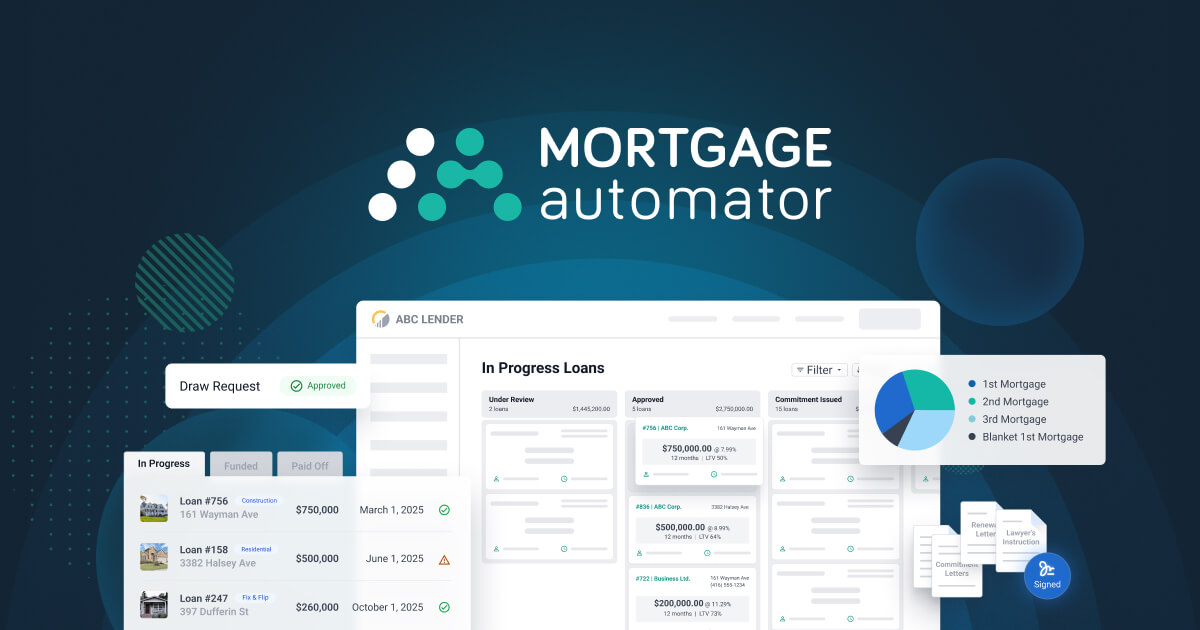
  • Mortgage Automator Review: Origination and servicing software for private lenders

    Mortgage Automator Review: Origination and servicing software for private lenders

    BestCRE 9AI Score

    64/100 · Niche

    Mortgage Automator ranks #337 of 450 commercial real estate AI tools scored on the 9AI Framework. Nine dimensions, each scored out of 10: CRE relevance, data quality, ease of adoption, output accuracy, integration fit, pricing transparency, support, innovation and market reputation.

    Mortgage Automator is loan origination and servicing software built primarily for private lenders, mortgage investment funds and internal servicing teams. Its place in the commercial real estate workflow is operational rather than analytical: it moves a loan from application and document collection through servicing, payment administration and investor or fund management. That breadth matters for bridge and private credit shops that otherwise coordinate loan files, borrower communications and servicing records across several systems. The product also offers borrower and broker portals, workflow automation and construction draw management.

    For a CRE buyer, the central attraction is consolidation. Mortgage Automator is positioned to replace a collection of spreadsheets, document folders, task trackers and point applications with one operating environment. A lender can begin a deal in the origination module, maintain the resulting loan in servicing and connect relevant activity to fund and investor administration. This is a more consequential proposition than adding another underwriting widget because the system can become part of the lender’s daily recordkeeping and borrower communication process.

    The limitation is specialization. Mortgage Automator is CRE adjacent rather than a purpose-built institutional CRE platform. It serves private lending workflows that can include commercial property, construction and fix-and-flip loans, but it is not presented as a source of property intelligence, market comparables, surveillance data or institutional credit research. Buyers should therefore separate two questions: whether the platform can operate their loans effectively, and whether it can perform the deeper property analysis required by their credit policy. The answer may be yes to the first and incomplete on the second.

    BestCRE’s analysis is that Mortgage Automator is most compelling for a private lender seeking one system across origination and servicing, particularly when construction draws or fund administration are meaningful operational burdens. Its MCP server, which connects loan data to ChatGPT and Claude, is a notable product direction, although access to an AI interface does not by itself establish reliable credit analysis. Public pricing is not available, and the vendor does not publish enough standardized performance evidence to make a purchase decision without a configured demonstration, security review and reference calls.

    What Mortgage Automator Does and How It Works

    The loan origination component is designed to start, process and manage new loans. In practical terms, that means collecting application information, organizing documents, advancing files through defined stages and coordinating work among the lender, borrower and broker. Borrower and broker portals provide an external channel for applications and document sharing, reducing dependence on email attachments. Automation can handle recurring tasks and workflow triggers, although buyers should ask the vendor to demonstrate exactly which events, approvals and exceptions can be configured without custom work. The important test is whether the platform reflects the lender’s actual credit and closing process rather than forcing staff into a generic residential mortgage sequence.

    After closing, the servicing component supports ongoing loan management. The product’s value proposition is continuity between the information gathered during origination and the records needed for administration after funding. Fund management tools extend that operating model to funds and investors, which is relevant to private lenders that both originate loans and manage outside capital. Construction draw management covers construction and fix-and-flip budgets, with BRDG identified as a partner in this area. Buyers should test budget setup, draw requests, inspections, approvals, retainage treatment, change handling and the resulting audit trail because construction servicing becomes difficult at the exceptions, not at the initial budget entry.

    Mortgage Automator also markets integrations, workflow automation and an MCP server that can connect loan data to ChatGPT and Claude. The MCP capability could let authorized users query or act on loan information through a conversational interface, subject to the implemented permissions and controls. BestCRE’s analysis is that this is useful as an access layer, not proof that the underlying data is complete or that generated answers are suitable for credit decisions. A serious evaluation should examine source citations, record permissions, logging, data retention and the handling of ambiguous questions. The vendor does not publish comprehensive accuracy benchmarks for AI generated responses, so lenders should keep human review around financial, servicing and compliance outputs.

    9AI Framework: Dimension by Dimension Analysis

    CRE Relevance: 7/10

    Mortgage Automator earns a 7 for CRE relevance because its private lending, bridge lending, fund administration and construction draw workflows overlap materially with commercial real estate finance. A lender financing income property, construction or transitional assets can use the system to coordinate application intake, closing activities and post-closing administration. The inclusion of servicing is particularly relevant because many CRE lending products stop at origination or underwriting. The score does not rise higher because Mortgage Automator is not presented as an institutional CRE intelligence platform. It does not appear to center property comparables, rent rolls, lease analysis, market research or portfolio surveillance based on third-party CRE datasets. BestCRE’s analysis is that the product fits the operating layer of a private CRE lender better than the analytical layer of a bank, debt fund or institutional investment manager.

    Data Quality and Sources: 6/10

    Mortgage Automator earns a 6 for data quality. Its end-to-end structure should help preserve borrower, loan, document and servicing information across the life of a loan, reducing re-entry between separate origination and servicing products. Borrower and broker portals can also move information collection closer to its source. Those are meaningful process advantages, but they do not establish that incoming data is correct, normalized or complete. The vendor does not publish independent data quality studies, field completion rates or standardized error benchmarks. BestCRE’s analysis is that quality will depend heavily on configuration, required fields, user discipline, integrations and migration work. Buyers should inspect validation rules, duplicate handling, document versioning, calculation sources and audit history. They should also test whether changes to loan terms flow consistently into servicing, fund reporting and any connected AI interface.

    Ease of Adoption: 7/10

    Mortgage Automator earns a 7 for ease of adoption. Combining origination, servicing, portals and fund tools can simplify the user environment for a private lender that currently relies on fragmented software and spreadsheets. Product segmentation for individual lenders, internal servicers, fund managers and credit unions also suggests that workflows can be matched to distinct operating models. Adoption is still more involved than installing a narrow application because the platform may hold core loan records, payment processes, documents and investor information. Data migration, charting of loan products, user permissions and staff training require deliberate implementation. BestCRE’s analysis is that smaller private lenders with a clear process owner should find the concept approachable, while firms replacing established servicing infrastructure should expect a controlled transition. A demonstration using real loan scenarios is necessary to judge navigation and configuration.

    Output Accuracy: 6/10

    Mortgage Automator earns a 6 for output accuracy. An integrated loan record can reduce discrepancies caused by copying information between origination, servicing and fund administration systems. Workflow automation may also improve consistency for recurring tasks. However, the vendor does not publish independent calculation accuracy tests, servicing reconciliation results or AI response benchmarks. That absence matters because payment schedules, balances, fees, investor allocations and construction draw records can have financial consequences. The MCP server adds another output channel but does not guarantee that a language model will interpret loan data correctly. BestCRE’s analysis is that accuracy should be treated as configurable and testable rather than assumed. Prospective buyers should run parallel calculations across representative fixed, interest-only, extension, default and payoff scenarios, then test amendments and backdated changes. AI answers should identify their underlying records and remain subject to human confirmation.

    Integration and Workflow Fit: 6/10

    Mortgage Automator earns a 6 for integration. The product explicitly offers integrations and identifies BRDG as a construction draw partner, which supports a meaningful private lending use case. Its MCP server also creates a modern connection path between authorized loan information and conversational systems such as ChatGPT and Claude. Still, the vendor does not publish a complete integration inventory, supported data objects, synchronization behavior or implementation requirements in the available public product description. That makes it difficult to assess fit with accounting, banking, document, payment, CRM and business intelligence systems before a sales process. BestCRE’s analysis is that the integration story is promising but must be verified at the field and workflow level. Buyers should distinguish native connections from API access, file exports and vendor-assisted custom work, then confirm ownership of monitoring, error recovery and ongoing maintenance.

    Pricing Transparency: 4/10

    Mortgage Automator earns a 4 for pricing transparency. The vendor provides a pricing section on its site navigation, but specific public prices are not established in the available public product information. Buyers therefore cannot calculate expected subscription cost, implementation expense or module premiums without contacting sales. The vendor also does not publicly specify whether pricing depends on users, loans, balances, transactions, entities or selected capabilities. This is a material procurement limitation for smaller lenders that need to qualify affordability before investing time in demonstrations. BestCRE’s analysis is that the platform may still offer sound value, but value cannot be compared cleanly until the proposal separates recurring fees, onboarding, migration, training, integrations, portals, draw management and AI access. Contract discussions should also cover minimum terms, renewal adjustments, support tiers and charges for data extraction.

    Support and Reliability: 7/10

    Mortgage Automator earns a 7 for support. The company publicly provides a help center, contact channels and customer success content, indicating that implementation and ongoing assistance are established parts of the offering. That is important for servicing software because configuration errors can persist across payment processing, reporting and borrower communication. The public information does not establish response time commitments, named account coverage, after-hours availability or the scope of included onboarding. BestCRE’s analysis is that support appears credible for the platform’s target private lending audience, but buyers should turn general assurances into contractual expectations. References should be asked about migration, issue escalation and help with nonstandard loan structures. The purchase agreement should define support hours, severity levels, response targets, training resources and responsibility for integration failures. A lender should also confirm how support differs across subscription tiers and regions.

    Innovation and Roadmap: 8/10

    Mortgage Automator earns an 8 for innovation. The combination of origination, servicing, fund management, portals and construction draw functionality is more operationally ambitious than a single-purpose loan workflow product. The MCP server is the clearest differentiator because it offers a way to connect controlled loan information to ChatGPT and Claude rather than limiting users to fixed screens and reports. BestCRE’s analysis is that this direction could improve search, summarization and workflow access for lending teams. It also introduces governance questions that the buyer must resolve. Innovation should be judged by permission enforcement, traceability and practical time savings, not by the presence of a conversational interface alone. The score remains below the top tier because the vendor does not publish independent evidence showing that its AI connection improves decision quality or produces consistently accurate answers across complex servicing scenarios.

    Market Reputation: 7/10

    Mortgage Automator earns a 7 for market reputation. It has a clear identity in private lending software and publishes customer success stories addressing growth and operating speed. Its breadth across origination and servicing also indicates a more established product proposition than an early single-feature application. The vendor does not publish a verified total customer count, retention rate or independent market share figure, so its scale cannot be assessed precisely from public information. BestCRE’s analysis is that the company has credible recognition within private lending but does not carry the same broad institutional CRE data reputation as Trepp or the category visibility of some larger mortgage technology providers. Buyers should seek references from lenders with similar asset types, loan structures, servicing volumes and fund arrangements. A recognizable logo is less informative than evidence that the platform handles comparable operational complexity.

    9AI Score Card Mortgage Automator
    64
    64 / 100
    Emerging Tool
    Private Lending Software
    Mortgage Automator
    Mortgage Automator puts origination, servicing, fund administration, borrower access and construction draw workflows in one system designed primarily for private lenders.
    9 Dimensions, Scored 1 to 10
    1. CRE Relevance
    7/10
    2. Data Quality & Sources
    6/10
    3. Ease of Adoption
    7/10
    4. Output Accuracy
    6/10
    5. Integration & Workflow Fit
    6/10
    6. Pricing Transparency
    4/10
    7. Support & Reliability
    7/10
    8. Innovation & Roadmap
    8/10
    9. Market Reputation
    7/10
    BestCRE.com, 9AI Framework v2 Reviewed October 2026

    Who Should Use Mortgage Automator

    Mortgage Automator should make the shortlist for private lenders and mortgage investment funds that originate and service their own loans. It is especially relevant when the same team needs to coordinate borrower intake, broker communication, loan documents, servicing tasks and investor or fund administration. Bridge lenders and construction or fix-and-flip lenders may gain additional value from construction draw management and the BRDG partnership. The strongest buyer profile has repeatable loan products, identifiable workflow owners and a desire to make one platform the operational record across the loan life cycle.

    It also suits a growing lender moving beyond spreadsheets or a collection of lightly connected applications. An internal servicing team that wants continuity from closing into administration is a logical user, as is a fund manager that needs loan operations and capital management in the same environment. BestCRE’s analysis is that the product will deliver the clearest benefit where staff currently re-enter the same information, chase documents by email or reconcile records between origination and servicing. Buyers interested in conversational access to loan data may find the MCP server valuable, provided their security and review procedures are mature.

    Who Should Not Use Mortgage Automator

    Mortgage Automator is less suitable for institutional CRE investors seeking property acquisition analysis, market forecasting, lease abstraction, comparable sales or portfolio surveillance from a large external dataset. Those buyers need an analytics or intelligence platform, and Mortgage Automator should not be mistaken for one. A bank with highly customized core systems, complex regulatory reporting and extensive enterprise integration requirements may also find that a private lending platform requires too much adaptation.

    A lender seeking only construction draw administration should compare focused products before adopting a broader operating system. Likewise, a business satisfied with its current origination and servicing platforms may not justify the disruption of replacing both merely to gain portals or AI access. BestCRE’s analysis is that the product is a poor fit when no executive owns process standardization, data cleanup and implementation. Organizations that cannot test servicing calculations, permission models and migration results should postpone adoption because the operational risk exceeds the likely near-term efficiency gain.

    Pricing and ROI Analysis

    Mortgage Automator does not publish sufficiently specific pricing for an independent buyer to determine total cost from public information. Prospects should request a written proposal that separates subscription fees from implementation, historical data migration, training, integrations, borrower and broker portals, construction draw capabilities, fund management and MCP access. The proposal should define the pricing unit and identify minimum commitments, usage thresholds, support entitlements, renewal terms and export charges. Without those details, comparisons against competitors can understate the cost of switching and operating the platform.

    Analysis: a buyer can frame return on investment without assuming an undisclosed price. Multiply the monthly hours currently spent on duplicate entry, document chasing, servicing reconciliation and manual reporting by the fully loaded hourly cost of the employees performing that work. Add measurable costs from existing software that would actually be retired, then subtract implementation labor and the quoted annual platform expense. The result is a simple first-year benefit estimate. Do not count theoretical staff reductions or applications that will remain in use. The investment case is strongest when the lender can document frequent handoffs between origination and servicing, recurring errors or a material construction draw workload.

    Integration and CRE Tech Stack Fit

    Mortgage Automator’s natural position is near the center of a private lender’s technology stack because it spans origination and servicing rather than feeding a single task. Borrower and broker portals cover external intake, while fund management and construction draw functions extend the record downstream. BRDG is the named construction draw partner. The vendor also promotes integrations, but a complete public catalog and detailed object coverage are not published in the available product information.

    The MCP server can connect loan data to ChatGPT and Claude, creating a potential interface for questions and workflow assistance. BestCRE’s analysis is that buyers should treat this as a governed integration, not a general AI permission slip. Test access controls by role, record-level restrictions, source traceability, logging and data retention. For the broader stack, obtain a field map covering CRM, accounting, banking, payments, document storage and reporting. Confirm whether each connection is native, API based or file based, and identify which party owns failed synchronization and schema changes.

    Competitive Landscape

    Land Gorilla, Rabbet and Built are the most relevant alternatives when construction lending administration and draw management drive the purchase. These products are more directly associated with construction loan workflows, while Mortgage Automator’s distinction is the combination of origination and servicing for private and bridge lenders. A buyer should compare inspection and draw controls, budget management, exception handling and audit history, then decide whether specialized construction depth or broader loan lifecycle coverage matters more. The BRDG partnership strengthens Mortgage Automator’s construction proposition, but it also makes the division of responsibility between connected products an important diligence question.

    For lenders focused on mortgage origination workflow and borrower experience, Maxwell and Snapdocs merit consideration, although their market positioning and workflow emphasis differ from Mortgage Automator’s private lending orientation. CommLoan is another relevant name for commercial mortgage marketplace and lending workflows. Trepp, Blooma and CRED iQ address different parts of CRE credit intelligence, underwriting or surveillance and should be considered complements or alternatives only when the actual need is analysis rather than loan administration.

    BestCRE’s analysis is that Mortgage Automator wins consideration when a private lender values one operating environment from application through servicing and fund administration. It is less differentiated when the buyer needs only a narrow draw tool or institutional property intelligence. Competitive demonstrations should use the same representative loan, including an amendment, draw exception, payment issue and payoff, so workflow breadth can be compared against actual depth.

    The Bottom Line

    Private lenders that originate, service and fund their own loans should put Mortgage Automator on the shortlist. Its combination of loan origination, servicing, portals, fund tools and construction draw management addresses a real operational gap between deal intake and post-closing administration. The MCP server adds an interesting access layer for firms prepared to govern AI use. The decision should depend on configured workflow fit and calculation testing, not feature count.

    Do not buy before obtaining a complete price, integration map, security response and references from comparable lenders. Run representative loans through origination, amendment, servicing, draw and payoff scenarios, then reconcile every financial output. BestCRE’s analysis is that Mortgage Automator is a strong specialist for private lending operations, but not a substitute for CRE market data or institutional property analytics. Choose it when consolidating the loan lifecycle creates measurable value, and choose a narrower competitor when construction administration or credit intelligence is the only unresolved problem.

    About BestCRE

    BestCRE.com is the definitive authority on commercial real estate AI, analysis, and investment intelligence. Every article advances the platform’s mission to help CRE professionals identify, evaluate, and adopt the best tools and strategies in the industry. We benchmark platforms using the 9AI Framework so CRE leaders can compare tools with clear evidence. Explore the category map at 20 CRE sectors for deeper coverage across the CRE stack.

    Frequently Asked Questions

    What is Mortgage Automator?

    Mortgage Automator is loan origination and servicing software aimed primarily at private lenders, mortgage investment funds and internal servicing teams. It supports the operating lifecycle of a loan, including application intake, document sharing, workflow management, servicing and fund or investor administration. Borrower and broker portals provide external access for applications and documents, while construction draw management addresses construction and fix-and-flip budgets. The product also offers integrations and an MCP server that can connect authorized loan data to ChatGPT and Claude. BestCRE’s analysis is that it is best understood as a private lending operating platform. It is not primarily a source of commercial property market data, comparable sales, lease analytics or institutional surveillance.

    How does Mortgage Automator compare with Land Gorilla, Rabbet and Built?

    Mortgage Automator competes with Land Gorilla, Rabbet and Built where construction lenders need budget and draw administration, but its broader proposition includes both loan origination and servicing. That can make it more attractive to a private lender seeking one operating system across application, closing and post-closing work. Land Gorilla, Rabbet and Built should receive closer attention when construction lending controls are the dominant requirement. BestCRE’s analysis is that buyers should avoid comparing feature labels alone. Use the same loan scenario to test budget setup, draw requests, inspections, exceptions, approvals, amendments, payment administration and payoff. Also confirm whether Mortgage Automator’s BRDG-supported draw workflow keeps a complete audit trail across systems and who handles integration failures.

    How much does Mortgage Automator cost?

    Mortgage Automator does not publish sufficiently specific prices for an independent buyer to calculate total cost from public information. Prospects need a sales proposal. Ask the vendor to separate recurring subscription fees from implementation, migration, training, integrations, portals, fund management, construction draw functionality, support and MCP access. The proposal should also identify the pricing unit, minimum term, usage limits, renewal rules and any charge for exporting data. Analysis: compare the quoted annual cost with documented savings from applications that will be retired and staff time currently spent on duplicate entry, document chasing and reconciliation. Exclude speculative savings. This produces a more defensible return calculation than relying on a generic efficiency claim.

    Who is Mortgage Automator best for?

    Mortgage Automator is best suited to private lenders, bridge lenders, mortgage investment funds and internal servicing teams that want continuity between origination and loan administration. The fit is strongest when a business handles recurring borrower and broker communication, services its own portfolio, manages investor capital or administers construction draws. It may also suit a growing lender moving from spreadsheets and loosely connected applications into a defined workflow. BestCRE’s analysis is that the ideal buyer has an internal owner for implementation, documented loan processes and enough operational repetition to justify consolidation. Institutional CRE investors seeking market intelligence, lease analysis or property surveillance should look elsewhere or treat Mortgage Automator as an operating system alongside dedicated analytical tools.

    Will Mortgage Automator’s MCP server improve lending decisions?

    The MCP server may make authorized loan information easier to query through ChatGPT or Claude, but it does not automatically improve credit decisions. Its value will depend on the completeness of the underlying records, user permissions, source traceability and the way the connected model handles ambiguous questions. The vendor does not publish independent benchmarks establishing the accuracy of AI generated answers across complex lending or servicing scenarios. BestCRE’s analysis is that the near-term benefit is more likely to come from faster information access, summarization and workflow assistance than autonomous underwriting. Buyers should test record-level access, citations, logging, retention and error handling, while requiring human review for calculations, servicing actions, compliance matters and credit conclusions.

    Related Reviews

    Compare Mortgage Automator with other Financing & Lending tools BestCRE has scored: CRED iQ (71/100), Smart Capital Center (70/100), Snapdocs (64/100) and Maxwell (62/100). Browse every review in CRE Financing & Lending, the full Best CRE AI Tools directory, or the 20 CRE Sectors hub.
  • Smart Capital Center Review: AI underwriting and portfolio monitoring for CRE teams

    Smart Capital Center Review: AI underwriting and portfolio monitoring for CRE teams

    BestCRE 9AI Score

    70/100 · Contender

    Smart Capital Center ranks #240 of 450 commercial real estate AI tools scored on the 9AI Framework. Nine dimensions, each scored out of 10: CRE relevance, data quality, ease of adoption, output accuracy, integration fit, pricing transparency, support, innovation and market reputation.

    Smart Capital Center is a CRE specific investment and lending platform used by lenders, investors and asset managers. It targets the repetitive work surrounding financial statement analysis, rent roll review, underwriting, borrower intake and portfolio monitoring. Instead of treating each document as a separate spreadsheet exercise, the platform uses AI agents to extract information, standardize it and carry the resulting analysis through the deal or loan lifecycle. That focus makes it especially relevant to credit and asset management teams handling recurring borrower submissions.

    For lenders, the central proposition is continuity. Financial information enters through connected systems or borrower workflows, then feeds analysis, model preparation and ongoing surveillance. The vendor says its agents can monitor covenants, maturities and market changes continuously. This is a meaningful distinction from document extraction products that stop after populating a model. Analysis: the potential value is highest where the same team must both underwrite new loans and watch a sizable existing portfolio.

    The platform also serves acquisitions and asset management workflows, although its strongest identity remains lender oriented. Public customer statements describe faster processing of property financials, more consistent application review and reduced model preparation time. Named users include JLL and KeyBank Real Estate Capital. Those references establish credible enterprise use, but buyers should still distinguish individual customer outcomes from results they can expect across their own property types, document formats and approval processes.

    BestCRE views Smart Capital Center as a serious candidate for institutions seeking one environment for underwriting and surveillance. Its CRE specificity, broad workflow coverage and stated connections to established accounting and servicing systems are strengths. The main diligence issues are commercial and operational: pricing is not public, implementation details are limited, and independently verified accuracy benchmarks are not published. A controlled pilot using difficult historical files is therefore more useful than a polished demonstration.

    What Smart Capital Center Does and How It Works

    Smart Capital Center ingests borrower and property information, including financial statements and rent rolls, and converts it into structured data for review and analysis. The platform is designed to standardize inconsistent source documents, reconcile extracted information and reduce repeated entry into financial models. Users can then apply the normalized data to screening, underwriting and investment analysis. Public descriptions also position property, market, tenant and news information alongside the submitted documents, giving analysts context beyond the borrower package. The vendor says its database covers more than 120 million properties and draws on more than one billion current data points. The composition, update frequency and licensing terms of every underlying source are not published.

    The lender workflow extends beyond initial sizing. Borrower portals and intelligent workflows can support document collection, while AI agents monitor loan conditions, covenant performance, maturities and market changes after closing. Alerts are intended to direct analysts toward exceptions requiring attention. This can reduce the need to reopen files, compare successive submissions manually and maintain separate tracking spreadsheets. Analysis: the useful feature is not autonomous credit approval, but a persistent analytical layer that carries structured information from intake into surveillance. Credit committees should retain human review, particularly when source documents contain unusual accounting treatments, missing periods or borrower supplied adjustments.

    For investors and asset managers, the same foundation supports deal screening, acquisitions underwriting and portfolio analysis. Teams can compare asset performance with market information, examine financial and rent roll data, and monitor risks or potential upside through disposition. Smart Capital Center presents modules as parts of a shared platform, which may reduce handoffs between acquisition, lending and asset management groups. It advertises connections with Yardi, SS&C, Precision and Midland Enterprise, along with other accounting systems and data platforms. Exact connector scope, writeback capability, synchronization frequency and implementation requirements should be confirmed during procurement because the vendor does not publish a complete technical integration catalog.

    9AI Framework: Dimension by Dimension Analysis

    CRE Relevance: 9/10

    Smart Capital Center earns a 9 because its product design follows recognizable CRE lending and investment workflows rather than adding a property vocabulary to a general document tool. It addresses borrower intake, property financial statements, rent rolls, underwriting, covenants, maturities, market context and asset monitoring. Those functions map directly to work performed by originators, underwriters, credit teams and asset managers. Its coverage from first review through portfolio surveillance is particularly valuable for lenders that otherwise divide the process among spreadsheets, document repositories and servicing reports. Analysis: the missing point comes from breadth. A platform serving lenders, investors and asset managers may not match every specialist system at each stage, and buyers must validate support for their exact property types, credit policies and model conventions.

    Data Quality and Sources: 8/10

    Smart Capital Center earns an 8 for combining borrower documents with a large property and market information layer. The stated coverage is substantial, and the product appears designed to reconcile and standardize financial information rather than merely transcribe fields. That is important in CRE, where inconsistent account labels, reporting periods and rent roll formats can make clean extraction only the first step. The vendor also says market comps, tenant information and news can inform analysis. However, it does not publish a complete source inventory, field level lineage standard, refresh schedule or coverage analysis by geography and asset class. Analysis: buyers should treat headline database scale as evidence of breadth, not proof that the necessary records are complete for a specific portfolio. A pilot should trace key figures back to their source documents and external datasets.

    Ease of Adoption: 7/10

    Smart Capital Center earns a 7 for addressing familiar tasks and fitting around systems that many institutional CRE teams already use. Document extraction and prepared analysis can deliver visible value without requiring users to redesign credit policy on the first day. A shared workflow may also reduce switching among spreadsheets, email and servicing platforms. Adoption will still depend on model mapping, permissions, exception rules, data migration and agreement about which system remains authoritative. The vendor does not publish typical implementation duration, required internal staffing or training commitments. Analysis: teams with standardized chart of accounts, document checklists and approval rules should adopt faster than organizations whose underwriting practices vary by originator. Buyers should test how nonstandard statements are handled and how reviewers correct data, record overrides and preserve an audit trail before expanding beyond a pilot group.

    Output Accuracy: 7/10

    Smart Capital Center earns a 7 because public customer accounts indicate that extracted and standardized financial information can support real operating workflows, including model preparation and rent roll analysis. Automated reconciliation is a useful safeguard, and persistent monitoring can surface changes that periodic manual reviews miss. Still, the vendor does not publish independent accuracy tests, error rates by document type, confidence thresholds or benchmark results against human analysts. CRE statements frequently contain scanned pages, custom account names, partial periods and handwritten changes, all of which can affect results. Analysis: accuracy should be evaluated as a controlled process, not a single percentage. Buyers should measure field extraction, period classification, calculation logic, source traceability and exception detection separately. Material credit outputs should remain subject to analyst verification, with special attention to borrower adjustments and unusual lease structures.

    Integration and Workflow Fit: 8/10

    Smart Capital Center earns an 8 because it publicly identifies connections with important CRE accounting, asset management and servicing environments, including Yardi, SS&C, Precision and Midland Enterprise. That places it closer to institutional workflows than a standalone AI interface requiring repeated exports. The platform also emphasizes using shared numbers across origination, closing and portfolio management, which can reduce duplicate entry if the integrations work as represented. The limitation is technical transparency. Public information does not specify which products and versions are supported, whether each connection is native or custom, what data can be written back, or how conflicts are resolved. Analysis: procurement teams should request an architecture diagram, field mappings, authentication methods, synchronization schedules, error handling procedures and ownership boundaries. Integration deserves the score, but the final assessment depends on the exact systems already installed.

    Pricing Transparency: 3/10

    Smart Capital Center earns a 3 because it does not publish subscription prices, module fees, implementation charges or minimum commitments. Buyers must book a demonstration and obtain a proposal before they can compare total cost with alternatives. Enterprise pricing can reasonably vary with portfolio size, modules, users, integrations and document volume, but the absence of even indicative tiers makes early budgeting difficult. It also prevents buyers from determining whether acquisition underwriting, lending and asset management functions are bundled or purchased separately. Analysis: request a three year cost schedule that separates licenses, setup, data access, integrations, training, support and usage charges. Contract diligence should also cover renewal increases, overage calculations, data export and termination assistance. The score reflects visibility, not an assertion that the product is expensive or inexpensive.

    Support and Reliability: 6/10

    Smart Capital Center earns a 6 because its enterprise positioning, demonstrations and named implementations suggest hands-on sales and onboarding support. Complex financial mapping and integration work would be difficult to deliver without vendor involvement. The security material also indicates attention to institutional requirements, which commonly brings structured implementation and account management processes. However, the vendor does not publish standard support hours, response targets, escalation paths, onboarding duration, professional service rates or a public service level agreement. Analysis: buyers should evaluate support as part of the product rather than an afterthought. Ask who configures models, who investigates extraction errors, how urgent portfolio alerts are handled and whether a named customer success contact is included. References from customers with similar portfolios and technology stacks would provide stronger evidence than general testimonials about speed or productivity.

    Innovation and Roadmap: 8/10

    Smart Capital Center earns an 8 for applying AI across a connected CRE workflow rather than limiting it to chat, search or document extraction. The concept of persistent AI analysts working across intake, underwriting, market context and portfolio monitoring is differentiated and operationally relevant. Linking transaction work with postclosing surveillance can also create useful continuity because newly extracted information does not disappear after a credit decision. The product is not alone in applying AI to CRE finance, and several competitors now automate document processing, underwriting and risk review. Analysis: the innovative element is the breadth and persistence of the workflow, not the mere presence of AI. Buyers should determine whether agents take defined, auditable actions or simply present generated observations. The strongest proof would include transparent source links, configurable rules and reliable escalation when confidence is low.

    Market Reputation: 7/10

    Smart Capital Center earns a 7 based on public associations with recognized CRE organizations and financial institutions. JLL and KeyBank Real Estate Capital provide more meaningful validation than anonymous logos, and the vendor publishes customer accounts describing use in financial analysis and model preparation. It also identifies use by an insurance company and other lending organizations, although some customers remain unnamed. The company says it has analyzed more than 500 billion dollars in CRE transactions, but the methodology behind that cumulative figure is not publicly detailed. Analysis: the available evidence supports credibility, not category dominance. The vendor does not publish customer count, retention, contract expansion or broad independent satisfaction data. Buyers should request references that match their asset classes, loan volume, regulatory obligations and integration environment before assigning significant weight to headline customer outcomes.

    9AI Score Card Smart Capital Center
    70
    70 / 100
    Solid Platform
    CRE Lending Software
    Smart Capital Center
    Smart Capital Center combines document extraction, underwriting, market data and ongoing loan monitoring, giving lenders one workflow from borrower intake through portfolio surveillance.
    9 Dimensions, Scored 1 to 10
    1. CRE Relevance
    9/10
    2. Data Quality & Sources
    8/10
    3. Ease of Adoption
    7/10
    4. Output Accuracy
    7/10
    5. Integration & Workflow Fit
    8/10
    6. Pricing Transparency
    3/10
    7. Support & Reliability
    6/10
    8. Innovation & Roadmap
    8/10
    9. Market Reputation
    7/10
    BestCRE.com, 9AI Framework v2 Reviewed October 2026

    Who Should Use Smart Capital Center

    Smart Capital Center best suits banks, insurance lenders, debt funds and commercial mortgage organizations with enough recurring financial review to justify workflow configuration. The strongest candidate receives many borrower statements and rent rolls, prepares standardized models, tracks covenants and then monitors the same loans after closing. Such a buyer can test value across several linked tasks rather than trying to justify the platform solely through document extraction. Credit leaders who want consistent screening across analysts may also benefit, provided their policies can be expressed as clear rules and reviewed exceptions.

    Institutional investors and asset managers are another fit when acquisitions and portfolio teams share data but currently operate in separate files. The platform may be useful for organizations seeking market context beside property level reporting and wanting analysts to focus on exceptions rather than routine normalization. Analysis: the ideal buyer has defined source systems, repeatable underwriting conventions and staff assigned to data governance. It should also be willing to run a measured pilot with representative documents, including difficult files, before rolling the system across the portfolio.

    Who Should Not Use Smart Capital Center

    Small sponsors or brokers handling a limited number of transactions may find the platform broader than necessary, particularly because pricing is not public and enterprise setup may require integration and configuration work. Teams seeking only a quick debt marketplace, lender search or capital introduction service should consider products designed specifically for placement rather than an underwriting and monitoring environment. Organizations without repeatable models or clear document standards may struggle to separate software issues from their own process inconsistency.

    Smart Capital Center is also a weaker fit for buyers demanding fully autonomous credit decisions or published accuracy guarantees. Its outputs should support professional judgment, not replace source review and formal approval controls. Firms that cannot provide representative files for testing, define authoritative systems or assign an internal owner should delay purchase. Analysis: if the expected benefit depends on perfect extraction from every document, the business case is too fragile. Start only when error handling, overrides and human review can be incorporated into normal operations.

    Pricing and ROI Analysis

    Smart Capital Center does not publish pricing. There are no public package prices, per user rates, document fees, implementation charges or minimum contract terms. Its site directs prospective customers to book a demonstration, indicating a negotiated enterprise sale. Buyers should request pricing by module and clarify whether borrower intake, underwriting, market data, portfolio monitoring and integrations carry separate charges. The proposal should identify any limits tied to users, properties, loans, document pages, data calls or storage, along with training, support and renewal terms.

    Analysis: calculate return using verified internal labor rather than vendor productivity claims. If a team processes 300 packages annually and saves two analyst hours on each, the gross capacity benefit is 600 hours. Multiply those hours by the organization’s fully loaded hourly cost, then subtract annual software, implementation, integration and oversight expenses. Add value from faster decisions or earlier risk detection only when the buyer can measure it conservatively. Run the calculation again using half the expected time saving and include the cost of human validation. A purchase is defensible when the conservative case clears the institution’s hurdle and the pilot confirms reliable outputs on representative documents.

    Integration and CRE Tech Stack Fit

    Smart Capital Center advertises integration with Yardi, SS&C, Precision and Midland Enterprise, plus other accounting systems and data platforms. That makes it relevant to lenders and asset managers whose core records already sit in servicing, accounting or property management applications. Its shared data model could reduce repeated imports between underwriting and monitoring. Buyers should confirm the precise product edition, supported objects, historical depth and direction of data flow for every required connection.

    The main diligence question is whether Smart Capital Center becomes a system of engagement, a calculation layer or another system of record. Analysis: most institutions should preserve authoritative balances and approved terms in their established core systems while using Smart Capital Center for ingestion, analysis and alerts. Request documentation for APIs, single sign on, role permissions, audit logs, failed synchronization handling and data exports. Security claims include SOC 2 Type II compliance, encryption, multifactor authentication and private United States based servers. The vendor also states that client data is not used to train its models.

    Competitive Landscape

    Blooma is the closest broad alternative for lenders wanting CRE origination, underwriting and portfolio intelligence. CRED iQ is a stronger comparison when surveillance, loan performance and market intelligence are the priority. Trepp remains important for established data, analytics and risk workflows, particularly around securitized commercial mortgages. Smart Capital Center differentiates itself through lender focused AI agents spanning borrower documents, modeling and continuing monitoring. Analysis: buyers should compare actual workflow depth, source coverage and exception handling rather than treating every AI claim as equivalent.

    Clik.ai is worth considering when document extraction and automated underwriting are the central requirements. Lev is more oriented toward financing workflows and capital placement, so it may fit borrowers and intermediaries differently from an institutional lender platform. CommLoan also addresses commercial mortgage origination and matching rather than presenting the same broad asset monitoring proposition. Analysis: Smart Capital Center is most compelling when one purchase must connect underwriting with portfolio oversight. A narrower alternative may be preferable when the buyer already has capable surveillance systems or needs only one stage of the financing process.

    BestCRE has scored Blooma at 73, CRED iQ at 71, Trepp at 74 and CommLoan at 71 within CRE financing and lending. Those results place the comparison group in a competitive middle band rather than identifying a universal winner. Smart Capital Center should be tested against the incumbent system and one specialist alternative using identical files. Compare correction time, traceability, model fidelity, alert usefulness and total cost. The vendor producing the fastest demonstration is not necessarily the product that will survive credit review and portfolio scale.

    The Bottom Line

    Smart Capital Center belongs on the shortlist for institutional CRE lenders that want document analysis, underwriting and portfolio monitoring in one environment. Its domain focus, named enterprise users and integration claims provide enough evidence to justify a pilot. The decision should hinge on performance against the buyer’s hardest statements and rent rolls, not the clean files chosen for a demonstration.

    Proceed if the vendor can show source traceability, controlled corrections, useful exception alerts and workable connections to the existing stack. Negotiate pricing only after defining modules, usage assumptions and implementation responsibility. Analysis: do not make a broad deployment commitment until a representative pilot proves time savings without weakening review controls. Buyers needing only capital placement, basic extraction or market data can likely choose a narrower product with less operational change.

    About BestCRE

    BestCRE.com is the definitive authority on commercial real estate AI, analysis, and investment intelligence. Every article advances the platform’s mission to help CRE professionals identify, evaluate, and adopt the best tools and strategies in the industry. We benchmark platforms using the 9AI Framework so CRE leaders can compare tools with clear evidence. Explore the category map at 20 CRE sectors for deeper coverage across the CRE stack.

    Frequently Asked Questions

    What is Smart Capital Center?

    Smart Capital Center is an AI powered platform for commercial real estate investment, lending and asset management. It is designed for lenders, investors and portfolio teams that analyze property financial statements, rent rolls, borrower submissions and market information. The software structures incoming data, supports underwriting and financial model preparation, and continues monitoring assets or loans after the initial decision. Its lender workflow includes borrower intake, covenant and maturity tracking, risk alerts and portfolio review. The product is CRE specific rather than a general document assistant. Analysis: its most important proposition is continuity, because information extracted during underwriting can remain available for later surveillance instead of being confined to a spreadsheet prepared for one approval.

    How does Smart Capital Center compare with Blooma and CRED iQ?

    Smart Capital Center, Blooma and CRED iQ overlap in CRE lending intelligence, but their emphasis differs. Smart Capital Center presents a broad workflow connecting document analysis, underwriting, market context and ongoing monitoring through AI agents. Blooma is a close alternative for loan origination, underwriting and portfolio intelligence. CRED iQ is particularly relevant when loan surveillance, performance information and market analysis are central. Analysis: the right comparison depends on the buyer’s bottleneck. Use identical borrower packages and portfolio scenarios to test extraction corrections, model fidelity, source traceability and alert quality. Buyers should also compare integrations, data rights, implementation work and total contract cost. Product demonstrations alone will not reveal how each system handles inconsistent historical documents.

    How much does Smart Capital Center cost?

    Smart Capital Center does not publish pricing, package tiers, implementation fees or minimum contract terms. Prospective buyers must contact the vendor for a demonstration and negotiated proposal. Ask for separate costs covering software modules, users, document or data volume, external datasets, integrations, setup, training, support and renewal increases. Also clarify whether underwriting and portfolio monitoring are bundled. Analysis: estimate value from measured labor savings during a pilot. Multiply verified hours saved by the team’s fully loaded hourly cost, then deduct every recurring and one time expense. Use a conservative scenario that reduces the expected saving and includes human validation. This method gives a more defensible purchase case than applying customer productivity claims directly to a different organization.

    Who should use Smart Capital Center?

    Smart Capital Center is best suited to banks, insurance lenders, debt funds, mortgage organizations, institutional investors and asset managers processing recurring CRE financial information. It fits teams that receive many borrower statements and rent rolls, prepare standardized underwriting models, monitor covenants and maintain sizable portfolios. Organizations with documented approval rules and established accounting or servicing systems are better positioned to implement it successfully. Smaller sponsors, occasional borrowers and brokers seeking only lender introductions may not need its breadth. Analysis: the strongest buyer has enough repeated analytical work to offset setup costs, a designated data owner and the ability to test representative documents. Human credit review should remain part of the operating model, particularly for exceptions and unusual accounting treatments.

    Can Smart Capital Center replace CRE underwriting analysts in the future?

    Smart Capital Center is better evaluated as an analyst productivity and monitoring system than as an independent credit authority. Its AI agents can extract and standardize documents, prepare analysis, add market context and flag portfolio changes. Those capabilities may shift analysts toward exceptions, judgment and borrower questions. They do not remove the need to verify source data, interpret unusual accounting, apply institutional policy or approve a loan. The vendor does not publish evidence that its system can assume complete responsibility for credit decisions. Analysis: future value will depend on stronger auditability, source lineage, configurable controls and measured accuracy across difficult documents. Buyers should design governance now, including review thresholds, override records and clear accountability for every material output.

    Related Reviews

    Compare Smart Capital Center with other Financing & Lending tools BestCRE has scored: Rabbet (73/100), LoanBoss (69/100), Snapdocs (64/100) and Maxwell (62/100). Browse every review in CRE Financing & Lending, the full Best CRE AI Tools directory, or the 20 CRE Sectors hub.
  • CRED iQ Review: CRE loan intelligence with multifamily rent analytics

    CRED iQ Review: CRE loan intelligence with multifamily rent analytics

    BestCRE 9AI Score

    71/100 · Contender

    CRED iQ ranks #214 of 450 commercial real estate AI tools scored on the 9AI Framework. Nine dimensions, each scored out of 10: CRE relevance, data quality, ease of adoption, output accuracy, integration fit, pricing transparency, support, innovation and market reputation.

    CRED iQ is a commercial real estate intelligence platform used by lenders, CMBS investors, servicers and analysts. Its core role is to shorten the research required to understand a property, its financing and its position within the securitized mortgage market. Instead of assembling loan information from scattered filings and property research from separate systems, a user can investigate CRE debt and collateral through one specialized environment. The product is firmly CRE-native, with workflows organized around properties, loans, borrowers, securitizations and credit events rather than generic company records.

    The platform is most relevant when a decision depends on both asset performance and capital structure. A lender can use it for market screening, underwriting context and portfolio surveillance. A CMBS investor can examine collateral and loan performance across deals. A servicer or credit analyst can investigate emerging stress and compare an exposure with similar assets. These are research and decision-support functions. CRED iQ does not replace a lender’s underwriting policy, servicing system, valuation process or final credit judgment.

    Prism expands the proposition beyond securitized debt research. It introduces unit-level multifamily rent analytics through its Prism product. Delivery options include a REST API, bulk feed and MCP server, making the dataset usable in internal models and AI-assisted research as well as through vendor interfaces. That combination distinguishes CRED iQ from products focused only on debt securities, transaction comparables or apartment market surveys.

    BestCRE analysis: CRED iQ is a strong specialist rather than a complete lending operating system. Its value rises for organizations that repeatedly analyze securitized loans, multifamily rents or both. It is less compelling for a small borrower seeking financing, a construction lender managing draws or an originator that mainly needs document automation and closing workflow. Buyers should evaluate coverage at the markets, property types and loan vintages they actually monitor, then test whether the platform reduces research time without obscuring source-level evidence.

    What CRED iQ Does and How It Works

    CRED iQ organizes commercial mortgage and property information for search, comparison and ongoing credit research. Users can move from a property or loan to related securitization and performance information, then examine the collateral behind an exposure. This structure matters because CRE credit questions rarely stop at a single record. An analyst may need to connect property characteristics, financing terms, reported performance and servicing developments before reaching a view. The platform is designed to make those relationships easier to follow than they would be across filings, spreadsheets and disconnected data subscriptions.

    For surveillance work, CRED iQ helps teams identify and investigate loans that warrant attention. The practical workflow is to filter a population, examine relevant records, compare exposures and carry findings into an investment, servicing or risk process. Output accuracy still depends on the underlying reporting cycle, entity matching and the analyst’s interpretation. Securitized loan data can be detailed, but it is not equivalent to real-time borrower reporting. BestCRE analysis: the product should be treated as a research layer with traceable evidence, not as an autonomous credit decision engine.

    Prism adds a different but complementary mechanism. It collects multifamily listing observations, resolves them to properties and units, and turns them into rent analytics that can support market studies, underwriting and monitoring. Unit-level information can expose asking-rent and availability patterns that broad market averages miss. The REST interface suits targeted requests from internal applications, while bulk delivery supports warehouses and recurring models. The MCP option is notable because it can expose governed CRED iQ data to compatible AI clients without forcing every interaction through a traditional dashboard. Buyers should still test historical depth, refresh behavior, field definitions, duplicate handling and coverage in their target submarkets before operational use.

    9AI Framework: Dimension by Dimension Analysis

    CRE Relevance: 9/10

    CRED iQ earns a 9 for CRE relevance because the product is built around commercial properties, mortgage loans, securitizations, servicing developments and multifamily rents. Those objects map directly to underwriting, surveillance and investment research rather than requiring a buyer to adapt a general data platform. The audience is also unusually specific: lenders, CMBS investors, servicers and analysts can use the same underlying relationships for different credit questions. Prism broadens the usefulness for apartment underwriting and market analysis without moving outside the CRE domain. BestCRE analysis: the missing point reflects scope, not weak specialization. CRED iQ is not a complete origination, servicing, draw-management or closing platform, and users still need systems of record and workflow tools around it.

    Data Quality and Sources: 8/10

    CRED iQ scores 8 for data quality. Its value rests on connecting loan, property and securitization records, while Prism adds frequently collected apartment listing observations at a granular level. That breadth can give analysts a more useful research base than isolated deal records or market averages. However, listing data represents advertised availability and asking terms, not necessarily executed leases, collections or concessions captured perfectly in every case. Securitized loan information also follows reporting and servicing processes that can introduce timing gaps. Buyers should run a sample validation against known assets and source documents before relying on any field at scale. BestCRE analysis: the datasets appear well matched to their intended workflows, but no external data product eliminates source latency, matching errors or local coverage variation.

    Ease of Adoption: 7/10

    CRED iQ receives a 7 for ease of adoption. A CRE credit professional should recognize the platform’s core entities and research logic, which lowers the conceptual learning curve. Teams can begin with direct research before committing engineering resources to data delivery. Adoption becomes more involved when the buyer wants bulk ingestion, internal model integration or AI access through MCP. Those routes require field mapping, identity resolution, permissions, data governance and monitoring for schema or coverage changes. The vendor does not publicly provide enough detail to quantify implementation time for every delivery method. BestCRE analysis: adoption should be manageable for a data-literate lender or investment team, but the full value depends on defined workflows and ownership. A subscription without analyst training or downstream integration could become another underused research tab.

    Output Accuracy: 7/10

    CRED iQ scores 7 for output accuracy. The platform can improve consistency by giving analysts structured records and repeatable comparisons, but its outputs remain evidence for human judgment rather than verified future outcomes. Credit conclusions can change when borrower reporting arrives, servicing status is updated or a local rent observation proves unrepresentative. Multifamily listings also require careful interpretation because asking rent is not the same as effective rent, achieved rent or net operating income. Buyers should inspect source attribution, timestamps, null values and revision behavior during a pilot. BestCRE analysis: CRED iQ can produce decision-useful research when users understand the provenance and limitations of each field. It should not be scored like an accounting system whose entries are controlled by the property owner or servicer.

    Integration and Workflow Fit: 8/10

    CRED iQ earns an 8 for integration. REST access supports application-level queries, bulk delivery can populate a warehouse or analytical environment, and the MCP server creates a direct path into compatible AI workflows. This range is stronger than a dashboard-only approach and lets sophisticated teams choose between interactive research and governed machine consumption. Integration quality still depends on documentation, identifiers, licensing terms, rate limits, schema stability and the buyer’s own data architecture. Public information does not establish every supported connector or implementation condition. BestCRE analysis: the available delivery patterns fit modern lender and investor stacks particularly well, but buyers should not assume that an API automatically resolves entity matching or workflow design. A proof of concept should test both technical access and the usability of returned fields.

    Pricing Transparency: 3/10

    CRED iQ scores 3 for pricing transparency because the vendor does not publish standard subscription prices, API charges, bulk-data fees or MCP access terms. A prospective buyer therefore cannot estimate total cost from public information or compare packages without entering a sales process. Customized pricing is understandable for enterprise data products because coverage, users and delivery volumes differ, but it places more work on the customer and makes early budgeting difficult. Buyers should request a written breakdown covering platform seats, datasets, historical access, redistribution rights, implementation, usage limits, renewals and termination data. BestCRE analysis: low transparency does not mean poor value, but it does increase procurement friction. The score could improve materially if CRED iQ published package boundaries, representative pricing ranges or a clear explanation of which capabilities require separate licenses.

    Support and Reliability: 6/10

    CRED iQ receives a 6 for support. Specialized CRE data products usually require help with coverage questions, field interpretation and integration, not merely password resets. CRED iQ’s intended institutional audience makes knowledgeable support especially important when a user is tracing a securitized loan or validating a rent observation. The vendor does not publish enough information about guaranteed response times, support tiers, onboarding hours, implementation staffing or service-level commitments to justify a higher score. Buyers should ask who handles data questions, how corrections are escalated and whether API or bulk-feed incidents receive technical support. BestCRE analysis: the product’s focused domain suggests the potential for useful specialist assistance, but support quality should be verified through references and contract terms rather than inferred from the platform’s capabilities.

    Innovation and Roadmap: 9/10

    CRED iQ earns a 9 for innovation. Combining established commercial mortgage intelligence with granular apartment listing analytics creates a useful bridge between debt surveillance and current property-market signals. The MCP server is particularly forward-looking because it provides a structured way for compatible AI systems to access licensed CRE information, subject to the customer’s permissions and controls. That is more meaningful than adding a generic chat box to an existing database. The score does not assume that AI access makes the underlying data infallible or that every buyer needs it. BestCRE analysis: innovation here is practical because it expands how analysts can consume and combine domain data. The remaining point reflects the need to prove governance, citation behavior and measurable workflow improvement as these newer access patterns move into production environments.

    Market Reputation: 7/10

    CRED iQ scores 7 for market reputation. It operates in a demanding segment where buyers compare products against established names such as Trepp, and its focus on securitized CRE intelligence gives it a credible position among debt professionals. The Prism expansion also makes the company relevant to a broader group of multifamily analysts. However, the vendor does not publish enough verified information about customer counts, retention, market share or independently measured adoption to support a top-tier score. BestCRE analysis: CRED iQ appears to be a serious specialist with a differentiated product direction, but buyers should still request references from organizations with similar portfolios and workflows. Reputation in institutional data markets should be judged through coverage performance, service responsiveness and renewal experience, not brand visibility alone.

    9AI Score Card CRED iQ
    71
    71 / 100
    Solid Platform
    CRE Lending Intelligence
    CRED iQ
    CRED iQ combines securitized commercial mortgage research with Prism, a unit-level multifamily rent dataset distributed through applications, feeds and APIs.
    9 Dimensions, Scored 1 to 10
    1. CRE Relevance
    9/10
    2. Data Quality & Sources
    8/10
    3. Ease of Adoption
    7/10
    4. Output Accuracy
    7/10
    5. Integration & Workflow Fit
    8/10
    6. Pricing Transparency
    3/10
    7. Support & Reliability
    6/10
    8. Innovation & Roadmap
    9/10
    9. Market Reputation
    7/10
    BestCRE.com, 9AI Framework v2 Reviewed October 2026

    Who Should Use CRED iQ

    CRED iQ best suits banks, debt funds, mortgage REITs, CMBS investors, special servicers and advisory teams that repeatedly investigate commercial mortgage collateral. It is particularly relevant when analysts spend meaningful time joining loan records, property information and securitization context by hand. Portfolio surveillance teams can use it to narrow a large universe into exposures requiring review, while investment teams can use it to form a faster initial view before reading source documents. Organizations with dedicated data or quantitative staff are positioned to gain additional value from programmatic delivery.

    Multifamily lenders, investors and market researchers are another strong fit, especially when unit-level asking-rent evidence would improve underwriting or monitoring. Prism can support internal rent models, comparable-property analysis and local supply research, while the API and bulk feed allow the information to sit beside proprietary portfolio data. BestCRE analysis: the ideal buyer has recurring analytical volume, a clear owner for data quality and a defined decision that the product should improve. During evaluation, that buyer should use a representative set of known assets and measure research time, field completeness and decision relevance.

    Who Should Not Use CRED iQ

    CRED iQ is less suitable for borrowers or small brokerage teams that only need occasional financing quotes, contact data or transaction marketing support. It is also not the natural choice for lenders whose main problem is application intake, document collection, borrower communication, construction draws or digital closing. Those workflows require operational software rather than a research and data platform. A buyer seeking a single end-to-end loan origination system would need additional products around CRED iQ.

    Teams without recurring CMBS, credit-surveillance or multifamily research needs may struggle to justify an institutional data subscription. The platform is also a weak fit when users expect listing observations to substitute directly for executed leases or property financial statements. BestCRE analysis: buyers who lack data governance or analyst capacity should first define how records will be validated and used. If the expected workflow ends with exporting occasional search results, a narrower data source or project-based research engagement may be more economical.

    Pricing and ROI Analysis

    CRED iQ does not publish standard pricing for its core platform, Prism, API access, bulk feeds or MCP delivery. Public package limits, minimum commitments, per-user charges and implementation fees are also not stated. Buyers should seek a proposal that separates interface access from data licensing and specifies included users, permitted uses, historical depth, refresh frequency, download rights, API limits and renewal increases. Contract review should also address whether derived data can remain in internal models after termination and whether affiliates or external advisers may access the service.

    BestCRE analysis: calculate ROI with the team’s own labor and decision volume. If five analysts each save three hours per week and a fully loaded analyst hour costs $100, the annual gross time value is $78,000, calculated as five multiplied by three, multiplied by 52, multiplied by $100. Compare that figure with the complete annual contract and implementation cost, then discount it for adoption risk. This is an illustrative model, not a claim about CRED iQ’s price or customer results. Buyers should separately value avoided data purchases or better decisions only when they can document those benefits.

    Integration and CRE Tech Stack Fit

    CRED iQ can fit into a modern CRE stack at three levels. Analysts can use the vendor’s application for direct research, developers can request records through REST, and data teams can load recurring deliveries into a warehouse. From there, firms can connect the information to portfolio dashboards, underwriting models, surveillance queues or internal search tools. The MCP server offers an additional route for controlled AI access, provided the receiving client and the organization’s security policies support that protocol.

    Implementation should begin with identifiers and intended decisions. Property addresses, loan IDs, securitization references and internal asset IDs will not always align automatically, so teams need matching rules and exception handling. Buyers should also test authentication, entitlements, field-level provenance, update cadence and behavior when records are revised. BestCRE analysis: the architecture is attractive for sophisticated users, but the contract and data dictionary matter as much as the transport method. Public information does not identify a complete catalog of native integrations with loan origination, servicing or CRM systems.

    Competitive Landscape

    Trepp is the closest established alternative for buyers centered on CMBS and commercial mortgage analytics. BestCRE scored Trepp 74 in this category, reflecting its recognized market position and focused debt intelligence. A head-to-head evaluation should test the exact loan universe, historical depth, surveillance workflow, source traceability and export rights each team requires. CRED iQ’s case is strongest where buyers value the combination of securitized debt research and newer multifamily rent intelligence, rather than debt analytics alone.

    For apartment rent and listing analysis, HelloData is a relevant specialist comparison. CompStak is more appropriate when the priority is lease and sales comparables, while MSCI Real Capital Analytics is a major alternative for transaction and capital-market research. These products are not direct substitutes in every workflow. A lender may reasonably use one for mortgage surveillance and another for transactions or lease evidence. BestCRE analysis: CRED iQ should win or lose on coverage overlap, data provenance, delivery flexibility and analyst productivity, not on the length of its feature menu.

    Operational lending platforms address a different problem. Blooma, scored 73 by BestCRE, focuses more directly on CRE underwriting and portfolio workflows, while Rabbet, also scored 73, is oriented toward construction finance administration. Snapdocs and Maxwell, each scored 82, are stronger references for mortgage process technology but are not close substitutes for institutional CRE intelligence. Buyers should first decide whether their bottleneck is information, analysis or transaction execution. CRED iQ belongs on the shortlist when information and analytical context are the constraint.

    The Bottom Line

    CRED iQ merits a serious pilot for lenders, CMBS investors and multifamily analysts that need more than a property search tool. Its strongest proposition is the connection between commercial mortgage intelligence and granular rent evidence, supported by delivery options that can serve both human analysts and internal systems. BestCRE analysis: this is one of the more distinctive specialist offerings in the category, particularly for organizations building data-driven credit and surveillance processes.

    Do not buy it solely because the dataset sounds broad or because MCP access is new. Select known loans and apartment assets, compare the returned evidence with internal records, and measure whether the product changes research speed or decision quality. Require clear licensing and support terms before signing. If securitized debt and multifamily rents are recurring parts of the workflow, CRED iQ is a strong candidate. If the real need is loan origination, closing or servicing operations, choose a workflow platform instead.

    About BestCRE

    BestCRE.com is the definitive authority on commercial real estate AI, analysis, and investment intelligence. Every article advances the platform’s mission to help CRE professionals identify, evaluate, and adopt the best tools and strategies in the industry. We benchmark platforms using the 9AI Framework so CRE leaders can compare tools with clear evidence. Explore the category map at 20 CRE sectors for deeper coverage across the CRE stack.

    Frequently Asked Questions

    What is CRED iQ?

    CRED iQ is a commercial real estate intelligence platform for lenders, CMBS investors, servicers and analysts. It organizes property, loan and securitization information so users can research collateral, compare exposures and monitor credit developments. Its Prism product extends the offering into unit-level multifamily rent analytics derived from apartment listing activity. The company is therefore closer to a specialized data and research provider than to a loan origination or servicing system. BestCRE analysis: its defining value is the ability to examine debt-market context and property-market evidence within one vendor relationship. Users still need to validate important fields against source documents and retain their own underwriting, valuation and credit policies.

    How does CRED iQ compare with Trepp?

    CRED iQ and Trepp both address institutional commercial mortgage and CMBS research, making Trepp the most direct comparison for many debt teams. The decision should turn on coverage for the buyer’s actual loans, historical depth, surveillance tools, field provenance, exports, licensing and service. CRED iQ differentiates itself with Prism multifamily rent analytics and multiple machine-delivery options, including MCP. Trepp brings an established position in commercial mortgage data and analytics. BestCRE analysis: neither vendor should be selected from a generic feature comparison. Run the same sample portfolio through both products, document missing or conflicting records, and ask analysts which system gets them from an alert to defensible evidence more quickly.

    How much does CRED iQ cost?

    CRED iQ does not publish standard prices for platform subscriptions, Prism data, API access, bulk delivery or MCP access. Buyers need a custom proposal and should not assume every dataset or delivery method is included in the initial license. Ask for separate charges, user limits, usage caps, implementation costs, renewal terms and rights to store or use derived data. Pricing should be evaluated against a measured pilot rather than an estimated benefit supplied by the vendor. BestCRE analysis: calculate the annual value of analyst hours saved, subtract internal implementation and governance costs, and apply a conservative adoption factor. The contract is attractive only if the resulting value comfortably exceeds the full subscription cost.

    Who should use CRED iQ?

    CRED iQ is best suited to CRE lenders, debt funds, mortgage REITs, CMBS investors, servicers and research teams with recurring loan or collateral analysis. Multifamily organizations can also benefit when asking-rent and availability observations improve underwriting, asset monitoring or market studies. The strongest buyer has analysts who currently combine multiple sources by hand and a data team capable of using APIs or bulk files when needed. It is less appropriate for an occasional borrower, a small team seeking basic property contacts or an originator whose primary need is document collection and closing workflow. BestCRE analysis: fit depends more on analytical frequency and portfolio exposure than on company size alone.

    Can CRED iQ support AI underwriting workflows?

    CRED iQ can support AI-assisted research because its data is available through programmatic channels, including an MCP server designed for compatible AI clients. That can let an approved assistant retrieve CRE information within a governed workflow, subject to licensing, permissions and the receiving system’s controls. It should not be interpreted as autonomous underwriting. An AI system can misread context, combine fields incorrectly or present stale information with excessive confidence. BestCRE analysis: the near-term opportunity is evidence retrieval, comparison and analyst drafting, with citations back to source records. Buyers should test access controls, logging, provenance, update handling and human review before allowing outputs to influence credit decisions.

    Related Reviews

    Compare CRED iQ with other Financing & Lending tools BestCRE has scored: LoanBoss (69/100), TreasuryView (69/100), Snapdocs (64/100) and Maxwell (62/100). Browse every review in CRE Financing & Lending, the full Best CRE AI Tools directory, or the 20 CRE Sectors hub.
  • Rabbet Review: Construction draw control for lenders and developers

    Rabbet Review: Construction draw control for lenders and developers

    BestCRE 9AI Score

    73/100 · Contender

    Rabbet ranks #162 of 450 commercial real estate AI tools scored on the 9AI Framework. Nine dimensions, each scored out of 10: CRE relevance, data quality, ease of adoption, output accuracy, integration fit, pricing transparency, support, innovation and market reputation.

    Rabbet is CRE software for two parties that regularly exchange the same construction information but manage it for different purposes: real estate developers requesting capital and lenders controlling its release. Rabbet Development organizes project budgets, costs, documents, forecasts, and draw packages for owners and development teams. Rabbet Construction Lending gives banks, credit unions, private lenders, and other capital providers a controlled process for reviewing draws, monitoring loan budgets, routing approvals, and documenting decisions.

    The workflow Rabbet changes is construction draw administration, a process often held together by spreadsheets, email attachments, invoices, lien waivers, inspection reports, and repeated reconciliation. Developers need to prove that requested costs are eligible and properly documented. Lenders need to compare each request with the approved budget, prior funding, loan terms, reserves, and internal policy. Rabbet structures that exchange without pretending the two sides have identical responsibilities or should operate in one shared system.

    For developers, the practical value is broader than producing a draw package. Incoming invoices, commitments, change orders, anticipated costs, and funding schedules update a connected project record. The system can flag incomplete documentation and cost exposure before a request reaches the lender. For lenders, submitted materials are classified and associated with approved budget lines, while review paths can vary by loan type, threshold, or participant. Portfolio reporting then provides oversight beyond the individual draw.

    BestCRE analysis: Rabbet is one of the more complete CRE native choices for organizations that consider construction finance administration a material operating function. Its appeal is strongest where recurring draws, complex capital structures, audit requirements, and multiple active projects make generic document storage inadequate. The principal buying questions are less about feature breadth and more about implementation effort, integration depth, control configuration, and total cost. Public pricing is unavailable, so buyers need a scoped demonstration and commercial proposal before determining value.

    What Rabbet Does and How It Works

    Rabbet Development creates a financial operating record for a development project. Teams establish budgets, track commitments and invoices, record executed or potential changes, monitor remaining amounts, and forecast expected cost at completion. Documents are collected centrally and associated with the relevant project information rather than left in disconnected folders. As costs arrive, the platform updates budget positions and identifies lines moving toward an overrun. Draw packaging uses the same live data, with missing invoices, lien waivers, or approvals flagged before submission.

    Rabbet Construction Lending receives and organizes borrower draw packages, then ties submitted costs to the approved loan budget. Reviewers can reconcile the current request against previous draws, remaining balances, interest reserves, and policy requirements. Approval routing can reflect loan structure, monetary thresholds, and participating parties. The system records actions, reviewers, and supporting documents as the decision progresses, creating an audit trail that is more defensible than approvals scattered across email. Portfolio dashboards surface performance, exposure, and schedule deviation across the loan book.

    The distinction between the two products matters. Rabbet is not simply a borrower portal attached to a lender application, and it is not a developer budget tool that happens to export a draw request. Each system addresses its buyer’s controls while standardizing the information exchanged between them. Integrations are positioned around accounting and accounts payable systems for developers, and core banking, loan origination, and business intelligence systems for lenders. BestCRE analysis: buyers should confirm which records move automatically, whether synchronization is one way or bidirectional, how exceptions are handled, and where the authoritative budget remains after deployment.

    9AI Framework: Dimension by Dimension Analysis

    CRE Relevance: 9/10

    Rabbet earns a 9 for CRE relevance because its core objects and workflows are specific to real estate development and construction lending. Budgets, commitments, anticipated costs, change orders, lien waivers, draw packages, reserves, approvals, and portfolio exposure are not generic project management abstractions here. They are central records. The product also recognizes that a developer preparing a request and a lender approving it need different controls, even when both use much of the same underlying information. Support for commercial construction, consumer construction, and homebuilder lending broadens the addressable market without diluting the CRE foundation. BestCRE analysis: the missing point reflects specialization itself. Rabbet is not a complete asset management, property operations, leasing, valuation, or permanent debt platform, so buyers seeking one system across the full property life cycle will still need adjacent applications.

    Data Quality and Sources: 8/10

    Rabbet earns an 8 for data quality. Its strongest design choice is connecting documents and transaction detail to budget lines, funding activity, approvals, and project forecasts. That structure should reduce the ambiguity created when invoices, waivers, and spreadsheets are stored separately. Automated classification and reconciliation can make submitted information easier to review, while missing document flags encourage completeness before funding. Still, software cannot guarantee that a source invoice is legitimate, a change order is properly authorized, or a borrower forecast is realistic. BestCRE analysis: data quality will depend on configuration, disciplined intake, accounting synchronization, and the review process surrounding exceptions. Buyers should test duplicate detection, revised invoices, split coding, retainage, reallocations, contingency transfers, and historical migrations. Rabbet does not publicly disclose enough technical performance data to support a higher score for extraction or classification accuracy.

    Ease of Adoption: 8/10

    Rabbet earns an 8 for ease of adoption because the product maps closely to work that construction finance teams already perform. Users encounter familiar concepts such as budgets, draws, supporting documents, approvals, forecasts, and funding sources rather than having to translate their process into a generic work management system. Separate products for developers and lenders should also keep each interface focused on the user’s responsibilities. Adoption will nevertheless require more than account creation. Existing budgets must be loaded, approval rules configured, document requirements defined, users assigned, and integrations tested. BestCRE analysis: organizations with standardized processes and a clear system owner should adopt Rabbet more easily than decentralized firms where every project manager or relationship team handles draws differently. The vendor publishes support access and documentation, but detailed public information about implementation duration, training packages, and migration services is limited.

    Output Accuracy: 8/10

    Rabbet earns an 8 for output accuracy because its reports and draw packages are assembled from connected project and loan records rather than manually recombined at the end of a reporting period. Reconciliation against approved budgets, monitoring of remaining balances, and documentation checks create useful controls around financial outputs. Audit trails also make it easier to trace a figure or decision back to its source and reviewer. The score is not higher because accurate output remains conditional on accurate inputs, correct coding, current integrations, and suitable approval configuration. BestCRE analysis: prospective buyers should run parallel tests using completed draws with known answers, including retainage, reallocations, partial invoices, multiple funding sources, and late changes. Rabbet publishes customer performance claims, but it does not publish independent accuracy benchmarks for document extraction, budget matching, forecasts, or compliance checks.

    Integration and Workflow Fit: 7/10

    Rabbet earns a 7 for integration. The product is designed to connect with accounting and accounts payable tools on the developer side, and with core banking, loan origination, and business intelligence systems on the lender side. That is the correct architecture for its role because Rabbet should coordinate construction finance activity without unnecessarily replacing the general ledger, payment system, or lending record. The limitation is public specificity. Rabbet presents integrations as a product capability, but buyers still need to verify connectors, supported objects, synchronization frequency, field mapping, authentication, error handling, and any extra implementation fees for their exact stack. BestCRE analysis: integration quality is especially important when the same budget can be edited in multiple systems. A buyer should define the authoritative source for budgets, commitments, disbursements, vendors, and loan balances before contracting, then test reconciliation and recovery from failed transfers.

    Pricing Transparency: 4/10

    Rabbet earns a 4 for pricing transparency. The vendor states that developer and lender pricing is based on active projects, which gives buyers a useful indication that cost may scale with live usage rather than every historical record. It does not publish dollar prices, package thresholds, minimum commitments, implementation charges, integration fees, support tiers, or contract terms. That prevents a buyer from estimating total ownership cost without engaging sales. It also makes direct comparison with alternatives difficult because apparently similar per project structures can treat archived projects, inactive loans, users, modules, and data migration differently. BestCRE analysis: Rabbet may still price competitively for teams replacing substantial manual administration, but that cannot be established from public information. Buyers should request a multiyear quote showing every recurring and one time charge, volume assumptions, renewal terms, overage treatment, and the cost of adding portfolios or business units.

    Support and Reliability: 7/10

    Rabbet earns a 7 for support. The company provides a support path and documentation, and its product positioning indicates that implementation must accommodate different teams, approval structures, loan types, and accounting environments. Customer case studies also indicate experience with operational construction finance workflows. However, the vendor does not publicly provide enough detail about standard response times, service hours, assigned account management, implementation staffing, escalation policies, or contractual service levels to justify a higher score. BestCRE analysis: support quality is consequential here because a delayed answer during a draw cycle can affect funding and vendor payment timing. Buyers should ask who owns configuration after launch, how urgent draw issues are prioritized, whether support is included in the subscription, how integration failures are handled, and what assistance is available during portfolio migration. References should come from customers with similar loan or project volume and organizational complexity.

    Innovation and Roadmap: 8/10

    Rabbet earns an 8 for innovation. Its meaningful innovation is not novelty for its own sake, but the use of connected financial and document records to improve a fragmented process shared by developers and lenders. The separate product strategy acknowledges that each side needs purpose built controls while allowing information to arrive in a more standardized form. Automated document classification, budget association, exception flags, approval routing, forward cost visibility, and portfolio oversight move the workflow beyond spreadsheet tracking and static file storage. BestCRE analysis: this is a practical application of automation to high friction CRE administration. The score stops short of 9 because Rabbet does not publicly provide enough technical detail to evaluate the distinctiveness of its automation, model governance, or measurable accuracy relative to competitors. Buyers should evaluate demonstrated handling of exceptions, since ordinary documents are rarely the hardest part of construction finance.

    Market Reputation: 7/10

    Rabbet earns a 7 for market reputation. It has visible positioning in construction finance, named customer case studies, published industry reports, and a product scope that addresses both established lenders and professional development organizations. The company also states that it is SOC 2 compliant and publishes security information covering encryption, access control, privacy, and audit trails. Those signals support institutional consideration. BestCRE analysis: the public record is sufficient to regard Rabbet as a credible specialist, but not sufficient for an elite reputation score. The vendor does not publish comprehensive customer counts, retention rates, independently verified market share, or broad third party performance benchmarks. Prospective buyers should request references matched by institution type, portfolio size, loan complexity, and integration environment. Lenders should also complete their normal vendor risk, business continuity, information security, and model governance reviews rather than treating customer logos as validation.

    9AI Score Card Rabbet
    73
    73 / 100
    Solid Platform
    Construction Loan Management
    Rabbet
    Rabbet connects budgets, documents, approvals, draws, and portfolio reporting across separate products built for real estate developers and construction lenders.
    9 Dimensions, Scored 1 to 10
    1. CRE Relevance
    9/10
    2. Data Quality & Sources
    8/10
    3. Ease of Adoption
    8/10
    4. Output Accuracy
    8/10
    5. Integration & Workflow Fit
    7/10
    6. Pricing Transparency
    4/10
    7. Support & Reliability
    7/10
    8. Innovation & Roadmap
    8/10
    9. Market Reputation
    7/10
    BestCRE.com, 9AI Framework v2 Reviewed October 2026

    Who Should Use Rabbet

    Rabbet is best suited to construction lenders that administer recurring draws across a meaningful portfolio and need consistent documentation, approval, budget, and audit controls. Banks, credit unions, private credit firms, asset managers, service providers, equity partners, and HUD lenders are named audiences. The strongest fit is an organization where loan administrators spend substantial time sorting borrower submissions, matching costs to budgets, checking reserves, routing approvals, and preparing portfolio reports. Credit and risk leaders should also consider it when they lack timely visibility across active construction loans.

    On the development side, Rabbet suits owners, developers, asset managers, affordable housing developers, and development service providers that need stronger cost forecasting and repeatable lender submissions. Finance and accounting teams can use it to connect invoices and commitments with project budgets, while project managers can identify missing documentation and developing cost exposure. BestCRE analysis: the ideal buyer has several active projects, standardized financial controls, and enough draw complexity that spreadsheet maintenance creates delay or uncertainty. A designated process owner and willingness to integrate accounting data will improve the odds of a successful deployment.

    Who Should Not Use Rabbet

    Rabbet is unlikely to be the right first purchase for a small developer with one uncomplicated project, infrequent draws, and a reliable spreadsheet process. The implementation and subscription may be difficult to justify if there are few documents, no portfolio reporting requirement, and limited coordination among team members. Firms primarily seeking construction scheduling, field management, procurement, property operations, leasing, valuation, or investor relations should choose software centered on those functions.

    Lenders should look elsewhere if they need a complete loan origination system, servicing ledger, core banking platform, or general document repository rather than specialized construction administration. BestCRE analysis: organizations unwilling to standardize draw requirements or define ownership of budget data may simply transfer inconsistent processes into a new application. Buyers that require published self service pricing will also find Rabbet frustrating. Its commercial terms require a sales conversation, and important implementation and connector details need direct confirmation.

    Pricing and ROI Analysis

    Rabbet does not publish dollar pricing. It states that customers pay for active projects, but does not publicly define price bands, minimum portfolio commitments, included users, implementation fees, connector charges, data migration costs, or premium support options. Developer and lender buyers should therefore request separate, itemized proposals. The quote should identify what makes a project active, how paused or completed projects are treated, whether historical records remain accessible, and how pricing changes when volume moves above or below the contracted estimate.

    BestCRE analysis: simple ROI math should begin with avoidable labor, not vendor claims. If five employees each save three hours per draw cycle, the organization saves 15 staff hours per cycle. Multiply those hours by fully loaded hourly cost and annual draw volume, then add the estimated value of fewer corrections, faster approvals, and improved portfolio oversight. Compare that benefit with subscription, implementation, integration, training, and internal administration costs. Buyers should use a conservative savings assumption and require a pilot or reference evidence before counting faster funding as financial return.

    Integration and CRE Tech Stack Fit

    Rabbet’s developer product is intended to connect with accounts payable and accounting systems, while its lender product is positioned to connect with core banking, loan origination, and business intelligence tools. That division fits a typical CRE stack: Rabbet manages construction specific workflow and supporting records, while financial postings and enterprise reporting remain in established systems. Centralized document intake can also reduce dependence on shared drives and email folders.

    BestCRE analysis: a product demonstration should follow one transaction across the entire stack, from invoice or borrower submission through approval, funding, accounting entry, and portfolio report. Buyers should verify named connectors, available APIs, import and export formats, update frequency, permissions, duplicate handling, and reconciliation controls. They should also determine whether attachments and audit history can be exported in usable form. The integration score reflects good strategic fit but limited public detail about the depth and operating behavior of every connection.

    Competitive Landscape

    Built is the most direct broad alternative for lenders and developers evaluating construction finance workflow, particularly when payments, inspections, and ecosystem breadth are priorities. Land Gorilla is a credible comparison for construction lending, draw management, inspections, and risk controls, with particular visibility in residential and consumer construction finance. BRDG is another construction lending workflow option worth assessing where lender administration is the center of the requirement. Each should be compared on loan type support, document intake, inspection workflow, disbursement controls, integrations, and implementation model.

    Northspyre is a relevant alternative for real estate owners and developers focused on project delivery, budgeting, forecasting, and portfolio analytics. Its comparison with Rabbet is strongest on the developer side, while Rabbet’s distinct lender product gives it a broader position across the draw exchange. Trepp and Blooma address important CRE lending analysis and risk workflows, but they are not direct substitutes for detailed construction draw administration. Snapdocs and Maxwell are stronger in mortgage transaction or origination workflows than in institutional CRE development management.

    BestCRE analysis: Rabbet’s clearest differentiator is serving both sides of construction finance through separate systems built around related information. That does not automatically make it the best choice. A lender should favor the product that best matches its controls, servicing environment, and borrower experience. A developer should prioritize forecast quality, accounting fit, document discipline, and lender acceptance. Run the same completed project or loan through finalists and compare exception handling, not just the standard demonstration.

    The Bottom Line

    Rabbet should make the shortlist for construction lenders and professional developers that treat draw administration as a core financial control. Its CRE specific data model, separate lender and developer products, connected documents, budget monitoring, approval workflow, and portfolio reporting form a coherent operating system for a process that is frequently fragmented. The product appears particularly valuable when scale and auditability matter more than having a lightweight, self configured tool.

    The buying decision should remain conditional. BestCRE analysis: proceed to a structured pilot if Rabbet can demonstrate your hardest draw, integrate with the authoritative accounting or lending systems, and provide acceptable export, security, support, and commercial terms. Do not purchase solely on time saving claims or a polished standard workflow. Unpublished pricing and limited public integration detail require diligence. For simple portfolios, the economics may not work. For complex, recurring construction activity, Rabbet is a strong specialist.

    About BestCRE

    BestCRE.com is the definitive authority on commercial real estate AI, analysis, and investment intelligence. Every article advances the platform’s mission to help CRE professionals identify, evaluate, and adopt the best tools and strategies in the industry. We benchmark platforms using the 9AI Framework so CRE leaders can compare tools with clear evidence. Explore the category map at 20 CRE sectors for deeper coverage across the CRE stack.

    Frequently Asked Questions

    What is Rabbet construction loan software?

    Rabbet is real estate software for construction finance administration. Rabbet Development helps owners, developers, and asset managers control project budgets, anticipated costs, invoices, change orders, funding schedules, documents, and lender draw packages. Rabbet Construction Lending helps banks, credit unions, private lenders, and other capital providers receive draw submissions, reconcile requests with approved budgets, route reviews, monitor balances and reserves, document decisions, and report across portfolios. The products are separate because developers and lenders have different responsibilities, even though they exchange related project information. BestCRE analysis: Rabbet is best understood as a specialized financial workflow and control layer. It does not replace every accounting, loan origination, servicing, scheduling, or property management system.

    How does Rabbet compare with Built and Land Gorilla?

    Rabbet, Built, and Land Gorilla all address parts of construction finance administration, but buyers should compare them against their exact loan types and operating models. Rabbet’s notable distinction is its separate products for developers and lenders, linking project cost management and draw preparation on one side with review, approval, and portfolio risk oversight on the other. Built is a direct broad competitor with construction finance, payment, and ecosystem capabilities. Land Gorilla is particularly relevant for lenders evaluating draw management, inspections, and construction risk controls, including consumer construction workflows. BestCRE analysis: no comparison should be decided from feature labels alone. Test the same completed draw in each product, including exceptions, retainage, reallocations, multiple funding sources, and revised documents, then compare integrations, audit history, support, implementation, and total cost.

    How much does Rabbet cost?

    Rabbet does not publish dollar pricing. The company states that pricing is based on active projects, but it does not publicly specify minimum commitments, per project rates, included seats, implementation charges, integration fees, migration costs, support tiers, or contract length. A useful quote should define precisely when a project becomes active, when billing stops, how completed records remain accessible, and whether different modules or loan types change the price. BestCRE analysis: calculate value from conservative labor savings and control improvements. Multiply hours saved per draw by annual draw volume and fully loaded staff cost, then compare that amount with all subscription and launch expenses. Ask for a multiyear proposal, renewal limits, overage rules, and customer references with similar portfolio characteristics before deciding.

    Who should use Rabbet?

    Rabbet is suited to real estate developers, owners, asset managers, affordable housing developers, and development service providers managing recurring construction costs and draws. It also fits banks, credit unions, private credit firms, asset managers, service providers, equity partners, and HUD lenders that need standardized draw review, budget monitoring, approvals, audit records, and portfolio visibility. BestCRE analysis: the strongest buyer has multiple active projects or loans, repeated document exchange, formal approval requirements, and employees spending meaningful time reconciling spreadsheets and attachments. A smaller organization with one simple project may not generate enough savings to justify implementation. Firms seeking field scheduling, general accounting, loan origination, servicing, leasing, or property operations as the primary function should evaluate software built specifically for those jobs.

    Can Rabbet support a growing construction portfolio?

    Rabbet is designed for portfolio use, with project or loan information consolidated into dashboards and reports. Its lender product supports approval routing, budget reconciliation, reserve monitoring, policy checks, and audit records, while its developer product rolls project data into forward looking capital and cost views. Those capabilities can help a team add volume without reproducing every manual task. BestCRE analysis: future scalability depends on more than application features. Buyers should test permission administration, bulk configuration, portfolio segmentation, integration throughput, data export, support capacity, and performance with their expected document volume. They should also ask how new business units, loan programs, accounting entities, and approval policies are added. Rabbet can be a credible growth platform, but the vendor should demonstrate the buyer’s projected operating state before contract execution.

    Related Reviews

    Compare Rabbet with other Financing & Lending tools BestCRE has scored: Smart Capital Center (70/100), Snapdocs (64/100), Mortgage Automator (64/100) and Maxwell (62/100). Browse every review in CRE Financing & Lending, the full Best CRE AI Tools directory, or the 20 CRE Sectors hub.
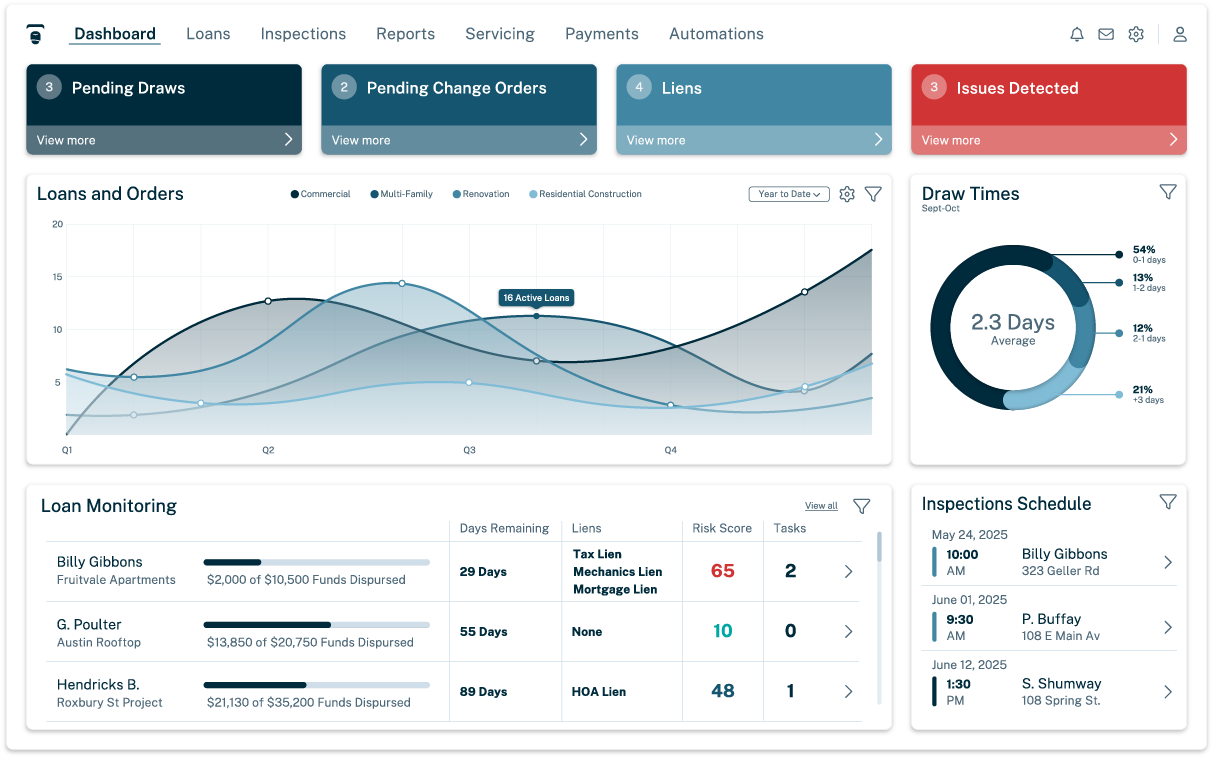
  • Land Gorilla Review: Construction loan draws, inspections and risk controls

    Land Gorilla Review: Construction loan draws, inspections and risk controls

    BestCRE 9AI Score

    74/100 · Contender

    Land Gorilla ranks #143 of 450 commercial real estate AI tools scored on the 9AI Framework. Nine dimensions, each scored out of 10: CRE relevance, data quality, ease of adoption, output accuracy, integration fit, pricing transparency, support, innovation and market reputation.

    Land Gorilla is a construction loan management platform built primarily for banks, credit unions and other lenders administering construction debt. Its strongest fit is not generic commercial mortgage origination. It addresses the operational work that begins after a construction loan is approved: collecting draw requests, validating supporting documents, ordering inspections, monitoring liens, tracking budgets and maintaining an auditable record. Commercial construction, acquisition and development, multifamily, builder finance, fix and flip, and SBA lending are among the workflows it supports.

    The practical appeal is consolidation. Many lenders still coordinate construction draws through spreadsheets, email, shared drives, inspection vendors and core banking records that do not reflect project level progress. Land Gorilla places those activities in a lender-controlled system of record and gives borrowers, builders, inspectors and internal staff defined ways to participate. That structure can reduce duplicate entry and make exceptions more visible, although the outcome depends on configuration, staff discipline and the quality of incoming documents.

    The product extends beyond basic draw tracking. Its ecosystem includes inspection ordering, borrower and builder portals, reporting, risk scoring, servicing, lien monitoring, document processing and APIs. Land Gorilla markets draw funding as 80% faster, but buyers should treat that as a vendor claim rather than a universal implementation result. The relevant diligence question is whether the lender’s current approval chain, inspection turnaround and core system connections permit comparable improvement.

    BestCRE analysis: Land Gorilla is one of the more complete lender-side platforms in its niche and earns particular credit for combining residential and commercial construction workflows. It is less compelling for a borrower seeking capital, an equity owner managing development costs or a lender that originates only occasional construction loans. Pricing is not publicly posted, so buyers cannot establish value from the website alone. A serious evaluation should include a configured demonstration, API review, sample inspection outputs, security documentation and a pilot using representative loans.

    What Land Gorilla Does and How It Works

    Land Gorilla organizes each construction loan around its budget, draw history, documents, project status and approval workflow. A borrower or builder can submit a draw through the customer-facing OneSite experience, while lender staff review the request against available budget and required evidence. Inspections, title updates and other controls can be incorporated into the process before funds are approved. This replaces fragmented handoffs with a tracked sequence of requests, reviews, exceptions and decisions. The lender retains the operating view, which matters because construction administration is ultimately a collateral and compliance function.

    Document automation is a substantial part of the proposition. Intelligent Document Processing converts information from submitted files into structured data and supports invoice tracking and document creation. DocTracker is positioned for invoice and waiver intake and verification, helping staff reconcile downstream payment records. Land Gorilla says its document processing can cut data entry and document management time by more than 97%. BestCRE analysis: the useful test is not the headline rate, but field-level performance on the buyer’s own invoices, lien waivers and draw packages, including poor scans, inconsistent contractor formats and exceptions requiring human judgment.

    The wider control layer includes inspection scheduling, reports with visual evidence, real-time risk alerts, lien monitoring, dashboards and portfolio reporting. Risk scoring is intended to surface troubled projects before issues become expensive, while servicing capabilities support ongoing construction portfolio administration. Custom connections and an open API let institutions connect Land Gorilla with surrounding systems, although the vendor does not publish enough technical detail on its public site to determine the scope, implementation effort or real-time behavior of every connection. Buyers should map each required data exchange, establish the system responsible for every field and test reconciliation before treating Land Gorilla as the authoritative construction record.

    9AI Framework: Dimension by Dimension Analysis

    CRE Relevance: 9/10

    Land Gorilla scores 9 for CRE relevance because its commercial construction workflows address a distinct, high-consequence part of real estate lending. Budget control, draw review, inspections, lien position, project progress and exception management are native construction credit concerns, not generic document tasks relabeled for property users. The platform also covers acquisition and development, multifamily, builder finance, fix and flip, SBA and other construction use cases. Its lender orientation is especially relevant to banks and credit unions that need repeatable administration across a portfolio. The score stops short of 10 because Land Gorilla spans consumer construction as well as commercial lending, and it is not a complete CRE deal platform. It does not replace underwriting, relationship management, loan origination or asset management systems across every property debt workflow.

    Data Quality and Sources: 8/10

    Land Gorilla scores 8 for data quality. Its operating model brings budgets, draw requests, inspections, invoices, lien information, waivers and project records into a structured loan file. Purpose-built intake should produce more usable data than disconnected email attachments and manually maintained spreadsheets. Inspection reports with photos and video can add valuable evidence concerning completion. However, the platform remains dependent on information supplied by borrowers, builders, inspectors, title sources and lender staff. Automated extraction does not make a questionable invoice or incomplete waiver correct. BestCRE analysis: buyers should test representative documents, correction workflows, duplicate detection, budget coding and the lineage from source file to approved draw. The vendor does not publicly publish broad, independently verified extraction accuracy results, so institutions should not assume uniform performance across document types.

    Ease of Adoption: 7/10

    Land Gorilla scores 7 for ease of adoption. The OneSite customer experience, centralized workflow and role-specific participation can simplify day-to-day work after implementation. A lender moving from email and spreadsheets should gain clearer task ownership and a more consistent borrower submission process. The constraint is organizational rather than cosmetic. Construction administration often contains unwritten exceptions, differing approval limits and local practices that must be translated into system rules. Data migration, templates, permissions, inspection procedures and connections to servicing or core platforms also require planning. BestCRE analysis: adoption should be treated as an operating model project, not merely a software launch. A lender with an executive sponsor and standardized construction policies is likely to progress faster than one attempting to preserve every branch-level variation. Public implementation timelines are not published.

    Output Accuracy: 8/10

    Land Gorilla scores 8 for output accuracy because its outputs are tied to controlled construction loan records, budget positions, submitted evidence and inspection activity. Workflow controls can reduce calculation mistakes, missing documentation and inconsistent approval records. Centralized reporting should also make it easier to reconcile a loan’s current status than a collection of spreadsheets. Accuracy still depends on configuration and source integrity. An incorrectly mapped budget line, stale inspection, missing change order or erroneous extracted value can flow into reporting if controls fail. Risk scores and alerts should be understood as decision support, not an independent conclusion that a project is healthy. BestCRE analysis: buyers should test calculations, permission boundaries, exception handling and audit trails with known scenarios. The vendor does not publish independent benchmarks covering every automated output, so contractual acceptance criteria are appropriate.

    Integration and Workflow Fit: 8/10

    Land Gorilla scores 8 for integration. An open API and custom connection capability are meaningful strengths for lenders that need a construction system to exchange information with origination, core banking, servicing, document and reporting platforms. The product also presents native integrations through a marketplace. This is more credible than treating CSV exports as an integration strategy. Nevertheless, the existence of an API does not answer questions about endpoint coverage, event notifications, authentication, rate limits, historical data access or who maintains each connector. Those details are not comprehensively published. BestCRE analysis: the buyer should conduct a technical design session before contracting, including field ownership, update frequency, failure handling and reconciliation. The score reflects strong architecture potential, while reserving two points for integration scope and implementation effort that must be confirmed institution by institution.

    Pricing Transparency: 3/10

    Land Gorilla scores 3 for pricing transparency. The vendor does not publish subscription prices, implementation fees, usage tiers or inspection charges on its public website. Prospective customers are directed toward a sales conversation and demonstration, leaving buyers unable to estimate total cost before discovery. That is common in bank technology, where pricing can vary with portfolio size, modules, users, transaction volume and integrations, but it still weakens comparability. BestCRE analysis: buyers should request a five-year cost schedule separating platform subscription, implementation, data migration, API work, training, support, document processing, inspection services and optional modules. They should also identify minimum commitments and price adjustments. The product may create substantial operating value, but opaque pricing means value cannot be judged responsibly from public information alone.

    Support and Reliability: 8/10

    Land Gorilla scores 8 for support. Construction loan administration is specialized, and Land Gorilla provides more than a bare application through its inspection capabilities, learning resources, compliance library and construction lending content. Public customer statements describe assistance with implementing construction loan management and improving operational processes. That domain orientation can matter when a lender is formalizing its program rather than simply replacing software. Still, detailed public commitments concerning response times, escalation paths, named account resources and service credits are not published. BestCRE analysis: support quality should be evaluated contractually and through reference calls with institutions of similar size and loan mix. Buyers should clarify coverage hours, critical incident handling, implementation ownership, release management and responsibility for third-party inspection issues. The score recognizes visible domain depth without assuming service levels that are not public.

    Innovation and Roadmap: 8/10

    Land Gorilla scores 8 for innovation. The product applies document extraction, invoice and waiver tracking, automated workflows, risk scoring, lien monitoring and mobile-friendly stakeholder participation to a process that remains highly manual at many lenders. Its most useful innovation is not any single AI feature. It is the combination of evidence collection, controls and portfolio visibility around the construction draw lifecycle. The open API also gives institutions room to build around the platform rather than accept a closed application boundary. BestCRE analysis: AI claims should be assessed through measurable exception rates and staff time saved, particularly because construction documents vary widely. The company is advancing a specialized workflow, but automated document handling and predictive alerts are increasingly expected capabilities. Continued differentiation will depend on accuracy, explainability and the depth of connected lender workflows.

    Market Reputation: 8/10

    Land Gorilla scores 8 for market reputation. The company is established as a recognizable specialist in construction loan management and publishes customer commentary from banks, credit unions and mortgage lenders. The breadth of named roles discussing draw administration, inspections, servicing and borrower experience suggests the platform is used in substantive operational settings. It also participates in the market as a domain company rather than a general software vendor entering CRE opportunistically. However, the vendor does not publicly disclose complete customer counts, retention data or independently audited satisfaction measures. Testimonials are useful evidence of fit but are selected by the vendor. BestCRE analysis: reference checks remain necessary, particularly with lenders running comparable commercial volume, regulatory requirements and integration architecture. The score reflects credible category standing while avoiding assumptions about undisclosed scale or customer outcomes.

    9AI Score Card Land Gorilla
    74
    74 / 100
    Solid Platform
    Construction Loan Management
    Land Gorilla
    Land Gorilla gives construction lenders one system for draw administration, inspections, lien monitoring, document processing, portfolio reporting and borrower communication.
    9 Dimensions, Scored 1 to 10
    1. CRE Relevance
    9/10
    2. Data Quality & Sources
    8/10
    3. Ease of Adoption
    7/10
    4. Output Accuracy
    8/10
    5. Integration & Workflow Fit
    8/10
    6. Pricing Transparency
    3/10
    7. Support & Reliability
    8/10
    8. Innovation & Roadmap
    8/10
    9. Market Reputation
    8/10
    BestCRE.com, 9AI Framework v2 Reviewed October 2026

    Who Should Use Land Gorilla

    Land Gorilla should make the shortlist for banks, credit unions and specialty lenders with a recurring construction portfolio and a dedicated administration function. It is particularly relevant when draw requests move through email, budget balances live in spreadsheets and inspections or title updates are coordinated separately. Institutions offering commercial construction, acquisition and development, multifamily, builder finance or a mixture of consumer and commercial construction can benefit from a common operating layer. The strongest buyer has standardized credit policies, enough draw volume to justify workflow automation and clear ownership across lending, operations, credit and technology.

    It also suits lenders that view construction administration as a risk control rather than clerical processing. Teams seeking better evidence for approvals, earlier visibility into project problems, consistent lien monitoring and auditable stakeholder communication should find the scope attractive. An open API improves the fit for institutions prepared to connect construction data with origination, servicing, core banking and enterprise reporting. BestCRE analysis: appoint a business owner before procurement and make that person responsible for defining workflows, exceptions and success measures. Land Gorilla is most valuable when the institution is willing to standardize the process around reliable portfolio data.

    Who Should Not Use Land Gorilla

    Land Gorilla is unlikely to be the right purchase for a CRE borrower, developer or equity owner whose primary need is sourcing capital, managing investor reporting or controlling an internal development budget. It is designed around lender administration and collateral protection. Firms seeking a broad loan origination system, CRM or marketplace should evaluate products built for those functions. A lender making only a handful of simple construction loans may also struggle to justify the implementation and integration effort.

    The platform is a weaker fit for institutions unwilling to change informal processes or assign internal implementation ownership. Software cannot resolve unclear draw policies, inconsistent budget structures or undefined approval authority on its own. Buyers requiring public, self-service pricing will also find the sales process frustrating because costs are not posted. BestCRE analysis: if the institution mainly needs lightweight draw tracking, a narrower product or a disciplined existing system may offer better economics. If it needs end-to-end mortgage automation beyond construction administration, Land Gorilla should be assessed as one component rather than the entire lending stack.

    Pricing and ROI Analysis

    Land Gorilla does not publish pricing for its construction loan software, customer portal, servicing, document processing, risk scoring, lien monitoring or API work. It also does not publicly itemize implementation, migration, training or inspection costs. Buyers should expect a tailored proposal based on selected products and operating scope, but the exact pricing model must be confirmed with the vendor. A defensible comparison requires a multiyear total covering subscription fees, professional services, integrations, transaction charges, inspection expenses, support tiers and future increases.

    BestCRE analysis: calculate ROI from the buyer’s own draw economics. Multiply annual draw volume by the current staff minutes spent on intake, document entry, reconciliation, inspection coordination and status communication. Subtract the expected minutes after a controlled pilot, then multiply the difference by fully loaded labor cost. Add avoided costs from retiring overlapping tools, but keep potential credit loss reduction separate because it is harder to attribute. Compare that annual benefit with the full annualized platform and implementation cost. The investment is financially credible only if tested savings exceed the proposal by a comfortable margin after allowing for exceptions, training and integration maintenance.

    Integration and CRE Tech Stack Fit

    Land Gorilla can occupy the construction administration layer between loan origination and ongoing servicing. Draw status, budgets, project records and inspection results may need to move between the platform and a lender’s core, document repository, data warehouse and reporting environment. The open API and custom connection options are positive signals, and the integration marketplace may reduce work for supported systems. Buyers should confirm actual connector availability rather than infer compatibility from general API language.

    BestCRE analysis: create a field-level architecture before implementation. Define which system owns borrower identity, loan balance, construction budget, disbursement status and final documents. Then specify update timing, exception queues and reconciliation responsibility. Ask for API documentation, security methods, sandbox access and examples of failed transaction handling. Land Gorilla should not become another isolated operational database. Its value rises when approved draw information and risk signals reach the systems used by finance, credit, servicing and portfolio management without requiring repeated manual entry.

    Competitive Landscape

    Built is the clearest broad alternative for lenders comparing construction finance administration platforms. Rabbet is also relevant where stakeholders need construction finance workflows and project-level cost visibility. BRDG should be evaluated for construction lending operations, while Mortgage Automator is a wider private lending platform that may appeal to lenders wanting origination and servicing functions around their loan portfolio. Product boundaries vary, so buyers should compare configured workflows rather than category labels.

    Land Gorilla’s distinction is its lender-side construction loan system of record, supported by inspections, lien monitoring, document processing, servicing capabilities and an open API. It is especially credible for regulated financial institutions combining commercial and consumer construction products. Built may be attractive to buyers seeking a large construction finance ecosystem. Rabbet may fit teams emphasizing project financial administration and collaboration. Mortgage Automator may be more suitable when private lending automation beyond construction draws is the central requirement.

    BestCRE analysis: run the same scripted demonstration with each finalist. Use one commercial loan containing retainage, change orders, partial invoices, lien waivers, an inspection discrepancy and a budget reallocation. Measure staff actions, exception visibility, audit history and data returned to other systems. Published feature grids will not reveal how much manual work remains. Land Gorilla should win only if its deeper lender controls and inspection ecosystem outweigh its undisclosed pricing and the implementation burden for the buyer’s particular stack.

    The Bottom Line

    Land Gorilla is a strong choice for a construction lender that needs a controlled system for draws, inspections, documents, liens and portfolio oversight. Its CRE relevance is high, its lender focus is clear and its API strategy gives larger institutions a credible path to integration. BestCRE would place it on the shortlist for banks and credit unions with meaningful construction volume, especially those replacing spreadsheets and fragmented vendor workflows.

    The buying decision should remain conditional. Pricing is opaque, automation performance requires testing and successful adoption demands process standardization. Require a pilot using difficult real files, confirm API coverage, inspect the audit trail and obtain references from comparable commercial lenders. Proceed if Land Gorilla materially reduces handling time while preserving approval controls and clean data exchange. Pass if the business case depends mainly on unverified risk savings or if the institution lacks an owner for implementation.

    About BestCRE

    BestCRE.com is the definitive authority on commercial real estate AI, analysis, and investment intelligence. Every article advances the platform’s mission to help CRE professionals identify, evaluate, and adopt the best tools and strategies in the industry. We benchmark platforms using the 9AI Framework so CRE leaders can compare tools with clear evidence. Explore the category map at 20 CRE sectors for deeper coverage across the CRE stack.

    Frequently Asked Questions

    What is Land Gorilla?

    Land Gorilla is construction loan management software for banks, credit unions and other lenders. It supports the administration of construction debt after approval by organizing draw requests, budgets, supporting documents, inspections, lien activity, project status and reporting. Its commercial use cases include commercial construction, acquisition and development, multifamily, builder finance, fix and flip, and SBA lending. It also supports consumer construction workflows. Borrowers, builders, inspectors and lender employees can participate through defined interfaces, while the lender maintains the central operating record. It is not primarily a capital marketplace, developer accounting product or general CRM. BestCRE analysis: its central value is replacing fragmented construction administration with a controlled, auditable lender workflow.

    How does Land Gorilla compare with Built and Rabbet?

    Land Gorilla, Built and Rabbet all address parts of construction finance, but buyers should compare the exact lender workflow rather than assume equivalent scope. Land Gorilla emphasizes lender-controlled draw administration, inspections, lien monitoring, document processing, servicing and API connectivity across commercial and consumer construction. Built is a major alternative for construction lenders seeking a broad construction finance platform. Rabbet is relevant for construction finance administration and project cost collaboration. BestCRE analysis: Land Gorilla is particularly persuasive for regulated lenders prioritizing collateral controls and inspection operations. The right comparison uses a shared test loan with budget changes, waivers, inspection exceptions and partial approvals. Buyers should count staff actions, examine the audit history and confirm what data each platform can exchange with core lending systems.

    How much does Land Gorilla cost?

    Land Gorilla does not publish its software prices, implementation charges, integration fees or inspection costs on its public website. A buyer must request a proposal based on the required products and operating scope. The quote should separate subscription fees from implementation, migration, training, API development, document processing, inspection services, premium support and optional modules. It should also disclose minimum commitments, usage limits and future price adjustments. BestCRE analysis: compare the complete multiyear cost with measured labor savings from a pilot, not with optimistic vendor assumptions. Count the current time spent receiving draws, entering invoice data, coordinating inspections, resolving exceptions and answering status questions. Include continuing integration maintenance and internal administration when calculating the payback period.

    Who should use Land Gorilla?

    Land Gorilla is best suited to banks, credit unions and specialty lenders with recurring construction loan volume and a formal draw administration process. It is particularly relevant when staff rely on email, spreadsheets, shared folders and separate inspection vendors to manage commercial construction, acquisition and development, multifamily, builder finance or mixed consumer and commercial portfolios. The strongest candidates want standardized approvals, defensible records, better borrower communication and earlier visibility into project exceptions. BestCRE analysis: the platform is most likely to succeed when the lender appoints a business owner, documents its approval rules and commits technical resources to integration. Occasional construction lenders, developers seeking internal cost control and firms primarily shopping for origination or capital placement software should consider narrower or differently focused alternatives.

    How could Land Gorilla evolve after 2026?

    Land Gorilla is likely to face growing buyer demand for more explainable risk signals, stronger document automation and deeper connections to core lending data, although the vendor has not published a definitive roadmap covering every future capability. The important direction is not simply adding more AI labels. Lenders will need automated findings that identify their source documents, show confidence, preserve reviewer decisions and fit existing credit controls. BestCRE analysis: Land Gorilla’s opportunity is to turn project evidence into earlier, defensible intervention without creating an opaque scoring layer. Buyers evaluating the platform in Q4 2026 should ask about roadmap commitments, model governance, human review, data retention, configurable alerts and API access to derived findings. Contract decisions should rely on current functionality, not promised future releases.

    Related Reviews

    Compare Land Gorilla with other Financing & Lending tools BestCRE has scored: Rabbet (73/100), Intex (71/100), Snapdocs (64/100) and Maxwell (62/100). Browse every review in CRE Financing & Lending, the full Best CRE AI Tools directory, or the 20 CRE Sectors hub.

PRIME 7.00%FED FUNDS 3.88%5-YR UST 4.69% ▼10-YR UST 4.90% ▼SOFR 30D 3.91%Updated Nov 6, 2026
Talk to a CRE Capital Advisor
Sizing a deal? | Curated capital network Tell Us About Your Deal (307) 439-0410