Author: Best CRE Research

  • Gamma Review: AI presentation builder that turns outlines into polished slide decks instantly

    BestCRE 9AI Score

    67/100 · Niche

    Gamma ranks #116 of 131 commercial real estate AI tools scored on the 9AI Framework.

    Gamma is a general-purpose AI presentation and document creation platform that generates visual slide decks, documents, and webpages from text prompts or uploaded outlines. Founded to eliminate the manual formatting hours spent in legacy software like Microsoft PowerPoint, Gamma uses a web-native, card-based interface rather than fixed-dimension slides. According to BestCRE’s Master Database, Gamma operates on a Free/Paid pricing model and its primary use case is AI presentation creation from outlines or documents. For commercial real estate professionals, this means translating a dry text summary of a market report or a bulleted list of property highlights into a formatted, client-ready pitch deck in minutes. The software aims to handle the graphic design workload, allowing users to focus entirely on the core narrative of their pitch.

    However, because it is a horizontal tool built for a mass audience, Gamma contains zero proprietary commercial real estate data. It does not know the difference between a cap rate and a cash-on-cash return unless you explicitly provide that context in your prompt. The platform relies heavily on a credit system where AI generation and subsequent edits consume a monthly allowance. While it has gained massive traction among general business users and consultants for its speed, CRE analysts must weigh its rapid drafting capabilities against the realities of strict corporate branding guidelines and the platform’s known limitations when exporting its web-native cards back into traditional PowerPoint files. Ultimately, it serves as a powerful design assistant rather than an analytical engine.

    What Gamma does and how it works

    At its core, Gamma functions as an AI-powered drafting assistant for visual collateral. Users begin by selecting a format—presentation, document, or webpage—and providing input. This input can be a simple text prompt, a pasted outline, or an uploaded document such as a raw investment memo or market research report. Gamma’s AI processes the text, structures a narrative arc, and automatically generates a series of cards (its version of slides). The engine applies a unified theme, selects complementary color palettes, and populates the cards with relevant layouts, icons, and AI-generated or stock imagery.

    Once the initial draft is generated, users interact with the Gamma Agent, an AI chatbot embedded in the editor. Instead of manually dragging text boxes or resizing images, users type commands like ‘make this section more concise,’ ‘change the layout to a three-column grid,’ or ‘swap the image for a modern office building.’ The AI executes these formatting changes instantly. The editor also includes standard manual controls for users who prefer to tweak text, fonts, and media directly, ensuring full control over the final product.

    For output, Gamma hosts presentations natively via web links, allowing for interactive elements like embedded videos or expandable detail blocks that do not fit on a standard printed page. For offline use or corporate compliance, users can export the finished product to PDF or Microsoft PowerPoint. However, because Gamma’s architecture is based on fluid web blocks rather than fixed 16:9 slides, exporting to PowerPoint often requires manual cleanup to fix shifted text boxes or non-standard slide dimensions before presenting to an investment committee.

    9AI Framework: the score, dimension by dimension

    Dimension Score
    CRE Relevance 4/10
    Data Quality and Sources 5/10
    Ease of Adoption 9/10
    Output Accuracy 6/10
    Integration and Workflow Fit 5/10
    Pricing Transparency 9/10
    Support and Reliability 6/10
    Innovation and Roadmap 8/10
    Market Reputation 8/10
    Composite 9AI Score 67/100

    CRE Relevance — 4/10

    Gamma is a horizontal, industry-agnostic application. It possesses no native commercial real estate data, market analytics, or property databases. Its value to a CRE firm lies entirely in its utility as a formatting and drafting engine. If an analyst pastes a well-researched market summary into Gamma, the tool will format it beautifully. If asked to generate a market report from scratch, it will rely on generic, potentially outdated internet data and hallucinations. It is a workflow accelerator, not a source of industry truth. The platform does not understand complex real estate financial metrics or specialized asset class nuances. In practice: CRE teams must supply 100 percent of the domain expertise and factual data, using Gamma strictly as a design assistant.

    Data Quality and Sources — 5/10

    As a generative AI tool, Gamma’s output quality depends entirely on the input provided. When fed a detailed, structured outline, the platform accurately maps the text to visual layouts. When asked to generate content autonomously, it exhibits the same hallucination risks as any foundational LLM, often producing plausible but factually incorrect statements. Furthermore, the AI-selected stock imagery defaults to generic business settings that rarely match the specific asset classes or submarkets required for a credible real estate pitch. Generating images natively through the AI often yields strange architectural artifacts that fail professional scrutiny. In practice: Analysts must rigorously fact-check all AI-generated text and manually replace generic stock photos with actual property imagery.

    Ease of Adoption — 9/10

    This is Gamma’s strongest attribute. The platform is entirely browser-based, requiring no installation or complex onboarding. The interface is highly intuitive, borrowing familiar elements from modern workspace tools. A first-time user can create an account, paste an outline, and generate a complete presentation in under ten minutes. The learning curve is practically non-existent for basic generation, though mastering the AI chat commands for precise formatting takes a few sessions. Gamma removes the friction of starting with a blank page, which is notoriously the most time-consuming part of drafting a new pitch deck. In practice: Teams can begin using the software immediately with zero formal training, realizing measurable time savings on day one.

    Output Accuracy — 6/10

    The visual output within Gamma’s native web environment is consistently polished and professional. However, accuracy degrades significantly during the export process. Because Gamma builds cards rather than fixed-dimension slides, exporting to PowerPoint often results in layout collapse. Text boxes may shift, multi-column layouts can stack vertically, and custom web fonts are replaced by default system fonts, altering the intended design. PDF exports maintain their visual fidelity but lose all interactive elements. For teams that strictly require offline files, these export quirks present a major hurdle. In practice: Users should plan to present directly from the browser link or budget 20 to 30 minutes for manual formatting corrections after exporting to PowerPoint.

    Integration and Workflow Fit — 5/10

    Gamma operates largely as a standalone platform. It does not integrate natively with core CRE tech stack components like Argus, Yardi, or VTS. While it allows users to embed external web content, such as Airtable views or YouTube videos, into its cards, it lacks direct data pipelines to pull live property metrics or financial models into a presentation. The primary integration pathway is its export functionality to PowerPoint and Google Slides, which, as noted, is imperfect. It essentially functions as a siloed environment where the final aesthetic layer is applied to data generated elsewhere. In practice: Gamma sits outside the traditional CRE data ecosystem, functioning as an isolated endpoint for final presentation drafting.

    Pricing Transparency — 9/10

    Gamma publishes its pricing tiers clearly on its website. The freemium model includes a Free tier with a one-time allocation of 400 credits. Paid plans include Plus at $8 per user per month (billed annually) and Pro at $15 per user per month (billed annually). The Pro tier removes Gamma branding and unlocks custom fonts and advanced analytics. There is also an Ultra tier at $90 per month for advanced AI model access. The credit system dictates how many AI generations and edits a user can perform, which is clearly documented. In practice: Buyers can easily calculate their software costs upfront, though heavy users must monitor their credit consumption to avoid unexpected bottlenecks.

    Support and Reliability — 6/10

    Gamma provides customer support primarily through email and an online help center. While the platform itself is highly stable with minimal downtime, user reviews indicate that support response times can be sluggish, particularly regarding billing inquiries or refund requests. The reliance on automated AI responses for initial support tickets can frustrate users experiencing complex technical issues or credit disputes. There is no dedicated account manager or priority phone support for standard commercial real estate users unless they negotiate a custom enterprise contract. In practice: Users should expect a self-serve troubleshooting experience and anticipate multi-day delays when requiring human intervention for administrative issues.

    Innovation and Roadmap — 8/10

    Gamma ships product updates at a rapid pace, consistently adding new AI capabilities, layout options, and integration features. The development team is highly responsive to general user feedback, frequently refining the AI agent’s ability to interpret complex formatting commands. However, because the user base is broad, the roadmap prioritizes general business features over industry-specific needs. CRE professionals should not expect native integrations with real estate software or specialized financial modeling layouts anytime soon. The focus remains on improving the core generative design engine. In practice: The tool will continue to improve as a general design assistant, but it will not evolve into a specialized real estate application.

    Market Reputation — 8/10

    Gamma has established a strong reputation as a leading AI presentation tool, frequently cited alongside competitors like Beautiful.ai and Jasper AI. It enjoys high praise on platforms like Product Hunt for its speed and aesthetic output. However, its reputation is somewhat polarized; while the product experience is widely loved, the credit-based billing system and the limitations of its PowerPoint exports are frequent points of criticism among professional users. Despite these complaints, it remains one of the most popular tools for rapid document generation in the broader tech market. In practice: It is highly regarded for early-stage drafting and internal presentations, but corporate users remain skeptical of its viability for strict, brand-compliant external deliverables.

    Who should use Gamma

    Gamma is best suited for professionals who need to generate visually appealing collateral quickly and are not bound by rigid corporate PowerPoint templates.

    • Investment sales brokers drafting initial property teasers or market overviews.
    • Marketing teams looking to rapidly prototype layouts for offering memorandums.
    • Principals who prefer to present from web links rather than static files.
    • Independent analysts who lack dedicated graphic design support.

    Who should look elsewhere

    Firms with strict branding requirements or workflows deeply entrenched in legacy Microsoft products will find Gamma frustrating.

    • Institutional teams that require pixel-perfect compliance with corporate PowerPoint templates.
    • Analysts who need to link live Excel financial models directly to presentation slides.
    • Firms operating in highly secure environments that prohibit web-based document hosting.

    Pricing and ROI

    As of August 2026, Gamma operates on a freemium model with pricing clearly published on its website. The Free tier provides a one-time allocation of 400 credits, which is sufficient for evaluating the tool but inadequate for regular professional use. The Plus plan costs $8 per user per month (billed annually) and removes the watermark while providing unlimited basic AI generation. The Pro plan, at $15 per user per month (billed annually), is the minimum viable tier for commercial real estate firms. It allows for custom branding, custom fonts, and detailed analytics on presentation views. An Ultra plan is available for $90 per month, offering access to advanced AI models and higher limits.

    From an ROI perspective, the math is compelling for small teams. If an analyst earning $100,000 annually spends four hours a week formatting slides, that equates to roughly $10,000 in labor costs per year. If Gamma reduces that formatting time by just 50 percent, the $180 annual cost of a Pro license yields an immediate and massive return. However, this ROI diminishes rapidly if the team spends hours manually fixing PowerPoint exports to meet strict corporate brand standards. Buyers should weigh the subscription cost against the actual time saved in their specific workflow.

    Integration and CRE tech stack fit

    Gamma’s fit within the commercial real estate tech stack is minimal. It is a standalone web application designed to replace, rather than integrate with, traditional presentation software. It does not connect to industry-standard databases like CoStar or Reonomy, nor does it pull live data from portfolio management tools like VTS or Yardi.

    The platform supports embedding external content, meaning users can paste links from Airtable, Google Sheets, or YouTube directly into a Gamma card for interactive viewing. However, this is a one-way display feature, not a true data integration. The most critical integration for CRE professionals is the export to Microsoft PowerPoint. As noted, this export process is flawed due to the architectural differences between Gamma’s web-native cards and PowerPoint’s fixed slides. Firms relying on complex Excel-to-PowerPoint data links will find that Gamma completely breaks this workflow. Gamma is best utilized as an isolated tool for rapid drafting, rather than a connected node in a broader data ecosystem.

    Competitive landscape

    Gamma competes in a crowded market of AI-enhanced marketing and presentation tools, sitting alongside peers like Beautiful.ai (BestCRE Score: 89), Jasper AI (BestCRE Score: 89), and Copy.ai (BestCRE Score: 87).

    Compared to Beautiful.ai, Gamma offers more flexibility in layout and a stronger AI drafting engine. Beautiful.ai forces users into strict design constraints to ensure presentations look professional, which is excellent for brand compliance but can feel restrictive. Gamma’s card-based system is more fluid, acting almost like a hybrid between a document and a slide deck. However, Beautiful.ai provides superior, cleaner exports to PowerPoint.

    When compared to text-first AI tools like Jasper AI or Copy.ai, Gamma differentiates itself by handling the entire visual design process. While Jasper AI excels at writing the copy for an offering memorandum, the user must still copy and paste that text into InDesign or PowerPoint. Gamma handles both the text structuring and the visual layout simultaneously.

    For CRE firms evaluating these options, the choice comes down to the final deliverable. If the goal is to produce a traditional, brand-compliant PowerPoint file, Beautiful.ai or native Microsoft Copilot are better alternatives. If the goal is to quickly generate modern, web-hosted presentations or interactive one-pagers, Gamma is the superior tool. Its speed is unmatched, provided the user is willing to adapt to its web-native format.

    The bottom line

    Gamma is a highly effective drafting engine that eliminates the busywork of initial presentation design. For independent brokers, boutique firms, and marketing teams looking to rapidly turn outlines into visual narratives, it offers unmatched speed and a highly intuitive interface. The $15 per month Pro plan easily justifies its cost in time savings alone.

    However, institutional commercial real estate teams must approach it with caution. Gamma is not a substitute for Microsoft PowerPoint if your firm requires strict template compliance, live Excel data linking, or flawless offline files. The friction introduced during the export process often negates the time saved during the drafting phase. Purchase Gamma to accelerate your internal communications, market overviews, and early-stage pitch drafts, but keep your legacy software for the final, committee-facing deliverables.

    Compare inside the same category: Matterport (92) · Jasper AI (89) · Beautiful.ai (89) · Dan AI (87) · Copy.ai (87). The full ranking is in the BestCRE AI Index; the category view is at CRE AI tools by category.

    Frequently asked questions

    Can Gamma pull property data directly from CoStar or VTS?

    No. Gamma is a general-purpose design tool with no native integrations to commercial real estate databases. All property data, financial metrics, and market statistics must be manually entered or pasted into the prompt by the user before generating the presentation.

    Does Gamma export cleanly to Microsoft PowerPoint?

    Exporting to PowerPoint often results in formatting issues. Because Gamma uses fluid, web-native cards rather than fixed 16:9 slides, text boxes may shift and custom fonts may not render correctly. Users should budget extra time for manual cleanup before sending these files to clients or investment committees.

    Is the Free plan sufficient for a CRE analyst?

    No. The Free plan provides a one-time allocation of 400 credits, which is quickly consumed by generating and editing just a few presentations. Professional users will need the Pro plan for continuous use, custom branding, and the ability to export without watermarks.

    Can I use my company’s custom fonts and colors?

    Yes, but only on the paid Pro tier, which costs $15 per month. This tier allows users to upload custom fonts, define specific hex codes for brand colors, and remove all Gamma watermarks from the final output, making it essential for corporate use.

    Does Gamma write the content for my pitch deck?

    Gamma can generate text based on a short prompt, but it lacks industry-specific knowledge. For accurate commercial real estate presentations, you should provide a detailed outline or upload a draft document for the AI to format, rather than relying on it to write the analysis.

    Are Gamma presentations secure for confidential client data?

    Gamma uses standard encryption, but as a web-hosted platform, presentations and documents live on their servers. Firms with strict security protocols prohibiting cloud-hosted collateral should carefully review Gamma’s enterprise terms before uploading sensitive financial data, rent rolls, or proprietary client information.

  • Evisort Review: Enterprise contract intelligence applied to commercial real estate lease abstraction

    BestCRE 9AI Score

    70/100 · Contender

    Evisort ranks #108 of 130 commercial real estate AI tools scored on the 9AI Framework.

    Evisort is a general-purpose AI contract intelligence and search platform that commercial real estate firms increasingly evaluate for lease abstraction and document management. Classified in the BestCRE master database as a Tier 1 CRE-Adjacent solution, the platform operates on a paid subscription model aimed at enterprise legal and operations teams. Unlike purpose-built real estate software, Evisort was designed to ingest, analyze, and extract data from any type of corporate contract, from vendor agreements to complex commercial leases. This broad horizontal focus means the underlying natural language processing engine is highly trained on standard legal phrasing, but it lacks the specialized, out-of-the-box real estate ontology found in native industry applications.

    For commercial real estate principals and analysts evaluating a purchase in Q1 2026, the primary question is whether an enterprise-grade legal technology platform can adequately handle the idiosyncrasies of rent rolls, tenant improvement allowances, and complex renewal options. Evisort brings significant processing power to document intelligence, utilizing proprietary artificial intelligence to turn static PDFs into searchable, structured data. However, applying this system to a real estate portfolio requires a deliberate configuration effort. Buyers must weigh the benefits of a highly capitalized, widely adopted legal tech platform against the necessity of teaching the system how to interpret specialized commercial real estate clauses. The platform excels at volume and speed, yet demands a knowledgeable human operator to bridge the gap between general contract law and specific property management requirements.

    What Evisort does and how it works

    Evisort functions as a central repository and analytical engine for legal documents, utilizing artificial intelligence to automatically identify, extract, and categorize key data points from uploaded files. When a user uploads a batch of commercial leases, amendments, or vendor contracts, the system applies optical character recognition to convert image-based text into machine-readable formats. The core engine then scans the text against pre-trained algorithms designed to recognize standard contractual elements such as parties, effective dates, governing law, and expiration dates. Users can search across their entire document database using natural language queries, bypassing the need to manually open and read individual files to find specific clauses or terms.

    For commercial real estate applications, users must train the system to identify industry-specific provisions. This is achieved through a custom extraction builder, where analysts highlight examples of co-tenancy clauses, operating expense exclusions, or specific use restrictions across multiple documents. The machine learning model observes these human inputs and begins to predict and extract similar clauses in future uploads. Once the data is extracted, Evisort populates a structured dashboard that allows users to track obligations, set automated alerts for critical dates like lease expirations or option exercise windows, and export the structured data into spreadsheet formats or connected enterprise systems.

    The platform also includes a proprietary generative AI component that allows users to ask direct questions about their contracts. An analyst might ask the system to summarize the assignment rights within a specific retail lease, and the tool will generate a text response based solely on the contents of that document. While this accelerates the initial review process, the generated summaries require verification against the source text, which the platform facilitates by providing direct hyperlink highlights to the exact paragraph where the information was sourced.

    9AI Framework: the score, dimension by dimension

    Dimension Score
    CRE Relevance 5/10
    Data Quality and Sources 8/10
    Ease of Adoption 7/10
    Output Accuracy 8/10
    Integration and Workflow Fit 7/10
    Pricing Transparency 4/10
    Support and Reliability 8/10
    Innovation and Roadmap 8/10
    Market Reputation 8/10
    Composite 9AI Score 70/100

    CRE Relevance — 5/10

    As a general-purpose legal technology platform, Evisort lacks the native commercial real estate data structures found in specialized tools. The system was built to handle non-disclosure agreements, vendor contracts, and employment agreements alongside commercial leases. Consequently, it does not inherently understand the relationship between a master lease, a rent roll, and a property management system without extensive user configuration. While the underlying text extraction engine is powerful, buyers must invest time to build custom models for standard real estate metrics like pro-rata share, base year calculations, and complex breakpoint structures. The platform treats a lease as just another contract rather than a specialized financial instrument. In practice: Buyers will need to dedicate internal analyst hours to train the system on real estate specific terminology before achieving high utility.

    Data Quality and Sources — 8/10

    The platform delivers high-quality data extraction for standard legal provisions, driven by extensive training on millions of corporate contracts. Optical character recognition capabilities are highly accurate, successfully converting poor-quality scans and legacy PDFs into searchable text. When extracting standard dates, party names, and financial figures, the system rarely produces false positives. However, data quality can degrade slightly when the system encounters highly unstructured or heavily negotiated commercial real estate addendums that deviate from standard legal phrasing. The platform mitigates this by maintaining strict provenance, always linking extracted data points directly back to the source text for human verification. In practice: The system provides a highly reliable baseline of extracted data, provided users verify complex financial clauses manually.

    Ease of Adoption — 7/10

    Deploying the platform requires a structured implementation phase, typical of enterprise software. Users must map their existing folder structures, establish permission hierarchies, and configure custom extraction rules. The user interface is clean and modern, making basic searches and document uploads intuitive for non-technical staff. However, the custom AI training module, while designed to be accessible without coding knowledge, requires a logical approach and a deep understanding of contract structures. Organizations will need a dedicated administrator to oversee the initial setup and ongoing model training to ensure the system aligns with their specific portfolio management needs. In practice: Expect a multi-week onboarding period where key personnel must actively participate in configuring the tool for real estate applications.

    Output Accuracy — 8/10

    For general contract intelligence, the extraction accuracy is exceptionally high. The system consistently identifies standard clauses, limitation of liability, and termination rights with precision. In commercial real estate scenarios, the accuracy of custom-trained models depends heavily on the volume and consistency of the training data provided by the user. If an analyst trains the system on fifty identical retail leases, the accuracy for subsequent identical leases will be near perfect. Conversely, applying that same model to a highly bespoke office lease may yield incomplete extractions. The generative AI summarization feature is heavily constrained to prevent hallucination, ensuring outputs remain grounded in the uploaded text. In practice: Accuracy is directly proportional to the effort invested in custom model training and the uniformity of the lease portfolio.

    Integration and Workflow Fit — 7/10

    The platform offers standard application programming interfaces designed to connect with major enterprise resource planning systems, customer relationship management tools, and cloud storage providers like SharePoint or Google Drive. However, because it is a CRE-adjacent tool, it lacks native, out-of-the-box integrations with industry-standard property management software such as Yardi, MRI, or RealPage. Getting extracted lease data from Evisort into a specialized real estate accounting system will typically require custom development work, middleware, or reliance on flat-file exports. For firms using generic enterprise systems like Salesforce or SAP, the integration pathways are significantly more mature and documented. In practice: Real estate firms should budget for custom integration work if they intend to push extracted lease data directly into specialized property management databases.

    Pricing Transparency — 4/10

    The vendor operates on a paid enterprise subscription model but does not publish specific pricing tiers, user minimums, or implementation fees on its website. Prospective buyers must engage with the sales team to receive a custom quote, which is typically based on document volume, user count, and the specific modules required. This lack of public pricing makes it difficult for commercial real estate analysts to perform preliminary return on investment calculations without entering a sales cycle. Industry checks suggest the entry point is geared toward mid-market and enterprise organizations, potentially pricing out smaller property management firms or boutique investment shops looking for a simple extraction tool. In practice: Buyers must commit to a discovery process with the sales team to uncover baseline costs and implementation fees.

    Support and Reliability — 8/10

    As a well-capitalized, Tier 1 technology provider, the company delivers institutional-grade support and high system availability. Enterprise contracts typically include dedicated customer success managers, technical support service level agreements, and detailed onboarding programs. The platform is hosted on secure cloud infrastructure with strict data encryption, meeting demanding corporate compliance standards. Routine maintenance and platform updates are handled efficiently with minimal downtime. The vendor provides extensive documentation, training academies, and user communities to assist administrators in troubleshooting and optimizing their custom extraction models. In practice: Users can rely on enterprise-tier stability and a responsive support apparatus capable of supporting large-scale, global deployments.

    Innovation and Roadmap — 8/10

    The company maintains a strong focus on advancing its core artificial intelligence capabilities, frequently releasing updates to its natural language processing and generative AI modules. Their engineering efforts are heavily directed toward improving the speed of document ingestion, expanding the capabilities of the custom extraction builder, and refining the conversational AI interface for contract querying. While these advancements benefit all users, the roadmap is driven by the broader legal technology market rather than specific commercial real estate needs. Buyers should expect continuous improvements in general contract analytics, but they should not anticipate the release of specialized real estate features like automated rent roll generation. In practice: The platform will continue to evolve rapidly in general AI capabilities, though real estate specific enhancements will remain entirely user-driven.

    Market Reputation — 8/10

    Within the broader legal technology and contract lifecycle management sectors, the platform is highly regarded and frequently cited as a market leader. It holds a strong reputation among corporate legal departments and procurement teams for its ability to organize massive, unstructured contract repositories. In the commercial real estate sector, however, its reputation is still developing as an adjacent solution. Firms that have successfully deployed the tool praise its processing power and search capabilities, while critics often point to the heavy lifting required to adapt it for specialized lease abstraction tasks compared to native real estate tools. In practice: The vendor is a proven entity in enterprise software, offering a safe, highly functional choice for organizations willing to adapt a horizontal tool to vertical needs.

    Who should use Evisort

    Evisort is best suited for organizations that require a unified platform to manage a wide variety of corporate agreements alongside their real estate documents. It fits well within firms that have the internal resources to customize and train AI models.

    • Enterprise corporate real estate teams managing diverse portfolios of leases, vendor agreements, and service contracts.
    • Institutional investors with dedicated legal operations teams capable of building custom extraction models.
    • Firms seeking a highly secure, enterprise-grade document repository with advanced natural language search capabilities.
    • Organizations prioritizing general contract intelligence over specialized property management integrations.

    Who should look elsewhere

    Firms looking for immediate, out-of-the-box lease abstraction with native connections to property management systems will find this platform requires too much configuration. It is not designed for teams lacking the time or personnel to train custom AI models.

    • Boutique commercial real estate operators needing a plug-and-play lease abstraction tool.
    • Firms requiring native API connections to Yardi, MRI Software, or RealPage.
    • Analysts looking for automated generation of rent rolls or specialized real estate financial models.
    • Organizations with small document volumes where enterprise pricing cannot be justified.

    Pricing and ROI

    Evisort operates on a paid subscription model, but specific pricing details are not published on their website. The vendor requires prospective buyers to engage in a sales process to receive a customized quote. Industry analysis indicates that pricing is typically structured around total document volume, the number of active users, and access to premium features like generative AI querying or custom extraction builders. Because it is positioned as an enterprise-grade legal technology platform, the entry cost is generally substantial, requiring a significant commitment compared to lightweight, single-purpose extraction tools.

    To calculate the return on investment, commercial real estate firms must measure the cost of the software and the internal labor required for setup against the time saved during document review. If an analyst currently spends four hours manually abstracting a complex commercial lease, and Evisort reduces that time to one hour through automated extraction and search, the firm saves three hours per document. For a portfolio of one thousand leases, this equates to three thousand hours of analyst time saved. Multiplying those hours by the fully loaded hourly rate of the analyst provides the gross financial benefit. Buyers must then subtract the annualized subscription cost and the amortized cost of the initial custom model training phase to determine the true net return on the software investment.

    Integration and CRE tech stack fit

    Integrating Evisort into a commercial real estate technology stack requires careful planning due to its status as a CRE-adjacent platform. The software excels at connecting with horizontal enterprise systems. It offers well-documented application programming interfaces and native connectors for major customer relationship management platforms like Salesforce, enterprise resource planning systems like SAP, and cloud storage solutions including Microsoft SharePoint and Google Workspace. This makes it highly effective for corporate legal and procurement departments.

    However, for specialized real estate operations, the integration fit is less direct. The platform does not currently offer native, plug-and-play integrations with industry-standard property management and accounting systems such as Yardi, MRI Software, or RealPage. To push extracted lease data—such as rent steps, expiration dates, or tenant improvement allowances—directly into these core real estate databases, firms will need to utilize flat-file exports or invest in custom API development. Buyers must evaluate whether their internal IT teams have the capacity to build and maintain these custom bridges, or if they are comfortable relying on manual data uploads to keep their property management systems synchronized with the contract intelligence platform.

    Competitive landscape

    When evaluating Evisort, commercial real estate buyers must compare it against both purpose-built real estate AI tools and other horizontal contract intelligence platforms. The most direct comparisons in the BestCRE master database are native real estate solutions like Prophia (scored 94) and Findable (scored 87). Prophia is specifically designed for commercial real estate, offering out-of-the-box lease abstraction, automated rent roll generation, and deep understanding of complex building data. For firms solely focused on lease abstraction, Prophia will deploy faster and require significantly less custom training than Evisort. Similarly, Findable provides strong real estate document management and classification without the need to build custom extraction models from scratch.

    Other alternatives include RETS AI (scored 86) and MRI Software AI (scored 76). RETS AI offers specialized data extraction tailored for real estate transactions, while MRI Software AI provides the distinct advantage of native integration within the broader MRI property management ecosystem. Evisort competes most favorably when a firm needs to analyze a massive volume of non-real estate contracts alongside their leases. If a corporate enterprise needs to abstract vendor agreements, non-disclosure agreements, and employment contracts using the same platform as their real estate documents, Evisort’s horizontal capabilities become a significant advantage. However, for dedicated commercial real estate operators, the purpose-built alternatives generally offer a faster path to value and higher initial accuracy for complex property-level financial data.

    The bottom line

    Evisort is a highly capable, enterprise-grade contract intelligence platform that brings significant processing power to document search and data extraction. However, its classification as a CRE-adjacent tool means it requires substantial configuration to function effectively as a dedicated lease abstraction solution. Commercial real estate firms should only purchase this software if they possess the internal resources to train custom AI models and have a mandate to manage a broad spectrum of corporate contracts beyond just commercial leases. For dedicated property managers and real estate investment trusts seeking immediate, out-of-the-box lease abstraction with native property management system integrations, purpose-built alternatives will offer a superior return on investment. Evisort is an infrastructure play for large corporate legal operations, not a plug-and-play tool for specialized real estate analysts.

    Compare inside the same category: Prophia (94) · Findable (87) · RETS AI (86) · Wilson AI (82) · MRI Software AI (76). The full ranking is in the BestCRE AI Index; the category view is at CRE AI tools by category.

    Frequently asked questions

    Does Evisort integrate natively with Yardi or MRI?

    No, Evisort does not offer native, out-of-the-box integrations with specialized property management systems like Yardi or MRI Software. Pushing extracted lease data into these platforms requires custom API development, third-party middleware, or manual flat-file exports, which buyers must factor into their implementation timelines.

    Can Evisort automatically generate a real estate rent roll?

    The platform cannot automatically generate a formatted real estate rent roll out-of-the-box. Because it is a general contract intelligence tool, users must first train the AI to extract specific financial data points from leases, and then export that data to build a rent roll externally.

    Is pricing for Evisort publicly available?

    No, the vendor operates on a paid enterprise subscription model but does not publish specific pricing details on its website. Prospective buyers must engage directly with the sales team to receive a customized quote based on document volume, user count, and required feature modules.

    How does the platform handle poor quality scanned PDFs?

    The software utilizes advanced optical character recognition technology to process poor quality scans and legacy image-based PDFs. It is highly effective at converting these difficult files into searchable, machine-readable text, allowing the artificial intelligence engine to accurately extract standard contractual clauses and dates.

    Does the software require coding skills to customize?

    Customizing the extraction models does not require traditional coding skills. The platform features a no-code extraction builder where users highlight relevant text within documents to train the machine learning algorithms. However, it does require a logical approach and a deep understanding of contract structures.

    Is Evisort considered a native commercial real estate tool?

    No, the BestCRE master database classifies it as a Tier 1 CRE-Adjacent solution. It was built to analyze all types of corporate contracts, meaning it lacks the specialized, out-of-the-box real estate ontology found in purpose-built lease abstraction software like Prophia or Findable.

  • DocuSign Review: The industry standard for electronic signatures and intelligent agreement management

    BestCRE 9AI Score

    80/100 · Contender

    DocuSign ranks #67 of 129 commercial real estate AI tools scored on the 9AI Framework.

    DocuSign is a publicly traded software company that provides electronic signature and intelligent agreement management solutions for businesses worldwide. According to the BestCRE master database, the platform operates on a paid model, with published eSignature pricing starting at $10 per month for individual users and scaling up to $95 per user per month for advanced enterprise tiers. While originally designed to digitize basic contract execution, the platform has evolved significantly. By August 2026, the company expanded its focus beyond simple electronic signatures to encompass the entire contract lifecycle, introducing its Intelligent Agreement Management suite and an artificial intelligence engine named Iris.

    For commercial real estate professionals, DocuSign serves as the foundational infrastructure for executing leases, purchase agreements, broker commissions, and non-disclosure agreements. The platform is inherently horizontal, meaning it serves all industries rather than focusing exclusively on commercial real estate. However, its widespread adoption makes it a standard utility within the sector. Principals and analysts evaluating the software must understand that while it lacks proprietary property data or native market analytics, its value lies in workflow automation and transaction velocity. The introduction of artificial intelligence capabilities allows users to extract key clauses, track renewal dates, and audit large volumes of contracts during due diligence. This review examines how the platform fits into a modern commercial real estate technology stack, assessing its utility for brokerages, property management firms, and institutional investors who require strict governance over their legal documentation.

    What DocuSign does and how it works

    At its core, DocuSign digitizes the process of sending, signing, and storing legal documents. Users upload a contract, assign signature fields to specific recipients, and route the document via email or SMS. The system tracks the document’s status in real time, capturing a legally binding audit trail of who signed, when, and from what IP address. For commercial real estate transactions, this eliminates the need for physical paperwork, wet signatures, and overnight shipping, directly accelerating the deal cycle.

    Beyond basic signature capture, the platform offers DocuSign Rooms for Real Estate, a specialized workspace designed to manage complex transactions. This feature allows brokers and transaction coordinators to group all documents related to a specific property into a single digital folder. Users can configure task lists, manage broker approvals, and control access permissions for buyers, sellers, and legal counsel. The system also includes digital form libraries, granting agents secure access to current state and local association forms, with data form-fill capabilities that populate information across multiple documents to prevent repetitive data entry.

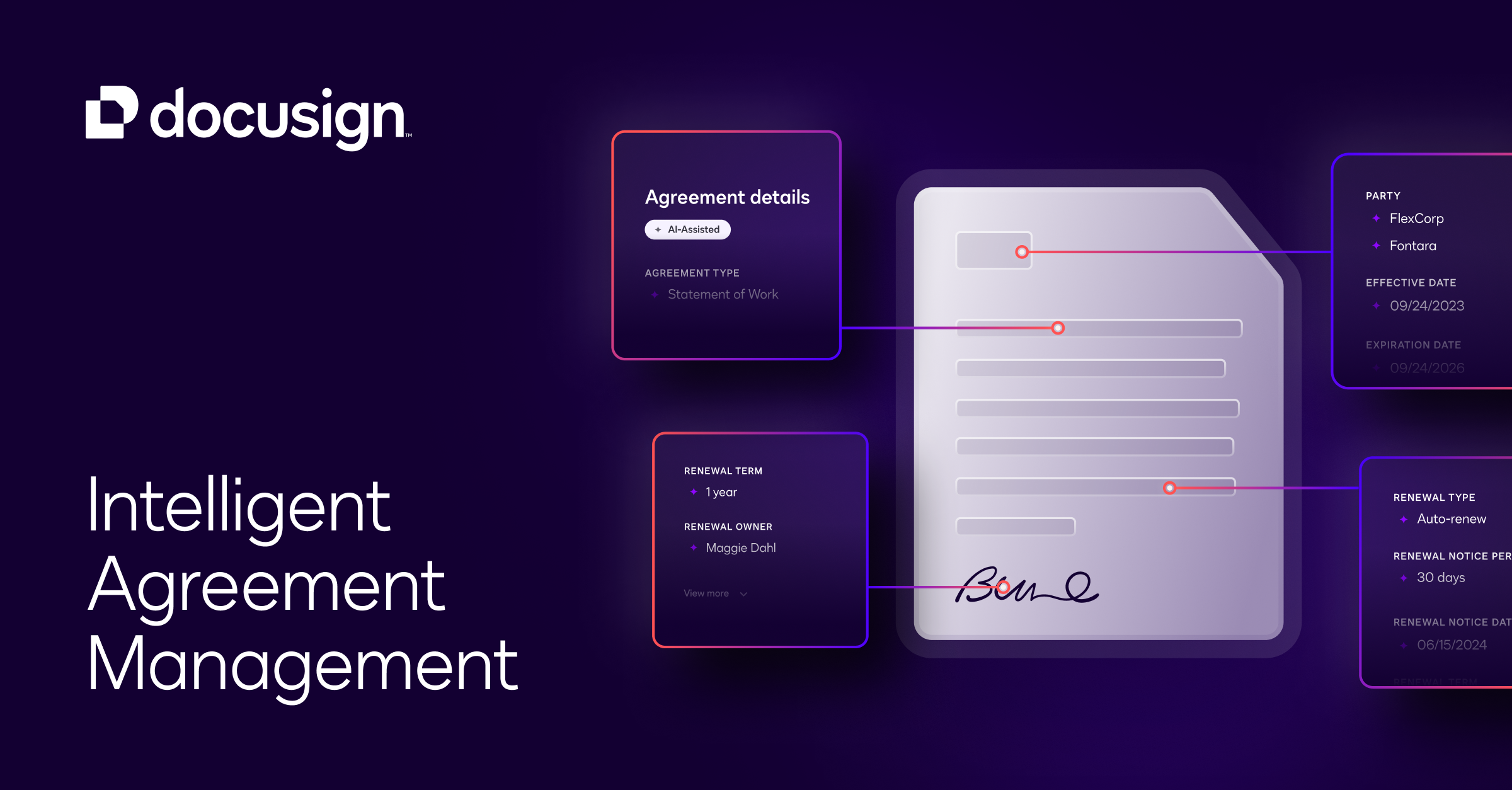
    In recent updates, the company introduced Intelligent Agreement Management (IAM) powered by its artificial intelligence engine, Iris. This engine transforms static PDF contracts into structured data. During an acquisition or portfolio audit, analysts can run the AI across thousands of historical leases to automatically extract key attributes like expiration dates, rent escalations, and termination clauses. The AI can also suggest document types, validate data inputs, and flag non-standard legal language against a company’s predefined playbook. Instead of manually reading every page of a lease agreement, legal and transaction teams can use these agentic workflows to summarize terms, identify risks, and export the structured data directly into their property management systems or customer relationship management platforms.

    9AI Framework: the score, dimension by dimension

    Dimension Score
    CRE Relevance 5/10
    Data Quality and Sources 7/10
    Ease of Adoption 9/10
    Output Accuracy 8/10
    Integration and Workflow Fit 9/10
    Pricing Transparency 7/10
    Support and Reliability 9/10
    Innovation and Roadmap 8/10
    Market Reputation 10/10
    Composite 9AI Score 80/100

    CRE Relevance — 5/10

    DocuSign is a horizontal software platform built for every major industry, from healthcare to finance. It does not provide proprietary commercial real estate data, market analytics, or property intelligence. Consequently, it operates strictly as a workflow and execution mechanism rather than a source of industry knowledge. While it offers specialized modules like Rooms for Real Estate and integrates with major industry CRMs, the core architecture remains generalized. Users must bring their own contracts, data, and processes to the platform. The software excels at handling leases and purchase agreements, but buyers should not expect native commercial real estate insights or market comparables. In practice: The platform acts as a blank canvas for transaction execution, requiring users to supply the actual real estate content and context.

    Data Quality and Sources — 7/10

    Because the platform does not supply external market data, data quality is measured by the accuracy of its AI extraction and the integrity of its audit trails. The Iris AI engine demonstrates high proficiency in identifying standard contract attributes, such as dates, monetary values, and party names, from uploaded documents. However, complex commercial leases with highly bespoke clauses or nested addendums can occasionally confuse the extraction models, requiring human verification. The system mitigates this by providing an interface where users can easily accept or reject AI recommendations before the data is committed to the system of record. The signature audit trails remain mathematically secure and legally defensible. In practice: Users can trust the signature certificates completely, but should implement a brief human review step for AI-extracted lease clauses.

    Ease of Adoption — 9/10

    The platform is widely recognized for its highly intuitive user interface. Most commercial real estate professionals have encountered the software as a signer, which significantly reduces the friction of adopting it as a sender. Setting up basic templates and routing rules takes only minutes, and the mobile application allows brokers to execute agreements directly from their phones during property tours. Advanced features, such as configuring the Intelligent Agreement Management workflows or training the AI on custom legal playbooks, require more technical configuration and administrative oversight. However, the company provides extensive documentation and onboarding support to guide teams through these complex deployments. In practice: Basic electronic signature functionality can be deployed in a single afternoon, while advanced AI workflows require a dedicated implementation phase.

    Output Accuracy — 8/10

    The primary output of the platform is a legally binding, executed contract accompanied by a comprehensive certificate of completion. This certificate captures timestamps, IP addresses, and authentication methods, ensuring the document holds up under strict legal scrutiny. Regarding its newer artificial intelligence capabilities, the system accurately categorizes document types and extracts standard metadata with high precision. When analyzing commercial real estate documents, the AI performs exceptionally well on standardized association forms but requires careful tuning when processing highly customized institutional lease agreements. The platform includes smart data validation to prevent incorrect data entry, ensuring that extracted attributes match expected formats before triggering subsequent automated actions. In practice: The legal enforceability of the signed documents is absolute, while the AI extraction provides a highly accurate baseline that accelerates manual review.

    Integration and Workflow Fit — 9/10

    The platform offers over a thousand pre-built connections, making it one of the most connected applications in the enterprise software ecosystem. For commercial real estate, it connects directly with major systems like Salesforce, Yardi, and Lone Wolf. Using middleware like Real Synch, brokerages can push transaction data from their CRM into the platform to automatically generate forms, and then push the executed documents back into their accounting systems to trigger commission payouts. The open application programming interface (API) allows institutional investors to build custom connections to proprietary databases. This extensive interoperability ensures that executed contracts do not remain isolated in a separate silo. In practice: The software easily embeds into almost any existing commercial real estate technology stack, eliminating the need for duplicate data entry.

    Pricing Transparency — 7/10

    The vendor publishes its baseline pricing clearly, but the total cost of ownership can become complex for enterprise users. As of August 2026, the eSignature Personal plan costs $10 per month when billed annually, while the Standard plan is $25 per user per month. The Intelligent Agreement Management (IAM) plans start at $65 per user per month. However, buyers must pay attention to envelope limits. The Personal plan restricts users to five envelopes per month, and even unlimited plans often cap automated API sends at 100 per user per year. Additional fees apply for SMS delivery, identity verification, and API overages. In practice: Small teams can rely on the published sticker price, but high-volume brokerages must carefully model their envelope usage to avoid unexpected overage fees.

    Support and Reliability — 9/10

    As a mature, publicly traded enterprise software provider, the company delivers exceptional system uptime and reliability. The platform rarely experiences unplanned outages, which is critical for brokerages executing time-sensitive purchase agreements or lease renewals. Standard support is included with all paid plans, featuring extensive knowledge bases, community forums, and email assistance. Enterprise customers can purchase premium support packages that provide dedicated account managers, faster response times, and customized training sessions. The sheer size of the user base means that solutions to common configuration issues are readily available online, and third-party consultants frequently specialize in deploying the platform for complex real estate organizations. In practice: The platform provides enterprise-grade stability, ensuring that critical transactions are never delayed by software downtime.

    Innovation and Roadmap — 8/10

    The company has successfully transitioned from a basic electronic signature tool to a comprehensive agreement management platform. The recent introduction of the Iris artificial intelligence engine demonstrates a clear commitment to automating the entire contract lifecycle. The roadmap focuses heavily on agentic workflows, allowing the software to not only extract data but also take independent actions based on predefined triggers, such as automatically routing a lease for legal review if the AI detects a non-standard rent escalation clause. This shift toward intelligent, automated governance positions the platform to remain highly relevant as commercial real estate firms increasingly seek to mine their historical contracts for business intelligence. In practice: Buyers are investing in a platform that will continuously introduce advanced artificial intelligence capabilities to streamline complex legal and administrative tasks.

    Market Reputation — 10/10

    The software holds an undisputed position as the default standard for electronic signatures across the global business landscape. In commercial real estate, it is universally recognized and trusted by brokers, landlords, tenants, and legal counsel. This ubiquity is a significant asset; clients never question the security or validity of a document sent through the platform. While some competitors offer lower prices or unlimited envelopes, they often lack the same level of instant brand recognition. The company’s reputation for security, compliance, and ease of use makes it the safest choice for institutional players who require strict adherence to data privacy regulations and corporate governance standards. In practice: Sending a contract through this platform signals professionalism and ensures immediate trust from all parties involved in the transaction.

    Who should use DocuSign

    The platform is best suited for organizations that prioritize transaction security, compliance, and workflow automation.

    • Commercial real estate brokerages needing a standardized, legally compliant method for executing high volumes of representation agreements and purchase contracts.
    • Property management firms looking to automate the lease renewal process and integrate executed documents directly into accounting systems like Yardi.
    • In-house legal teams at institutional investment firms who require artificial intelligence to audit historical contracts during portfolio acquisitions.
    • Transaction coordinators managing complex deals who need a centralized digital workspace to track document approvals and broker compliance.

    Who should look elsewhere

    Despite its market dominance, the platform is not the right fit for every real estate professional.

    • Solo agents or part-time brokers with very low transaction volumes who can utilize free alternatives for occasional signatures.
    • Firms seeking a platform that provides native commercial real estate market data, property comparables, or demographic analytics.
    • Budget-conscious teams looking for unlimited document sends at a flat monthly rate, as the envelope limits can become cost-prohibitive.

    Pricing and ROI

    As of August 2026, the company publishes its pricing on its website, structured across several tiers based on functionality and user count. The entry-level eSignature Personal plan costs $10 per month when billed annually ($120 per year) but is strictly limited to five envelopes per month. The Standard plan costs $25 per user per month ($300 annually) and includes basic workflows. For advanced features, the Business Pro plan is $40 per user per month.

    The newer Intelligent Agreement Management suite, which includes the Iris artificial intelligence engine and advanced contract lifecycle features, starts at $65 per user per month for the standard tier, with professional tiers reaching $95 per user per month. These plans typically require a minimum of three seats, creating a functional starting floor of $225 to $285 per month.

    For a commercial real estate firm, the return on investment math is straightforward. A brokerage executing 50 leases a month saves dozens of hours previously spent on physical document routing, data entry, and compliance tracking. If the $40 Business Pro license saves an agent just two hours of administrative work per month, the software pays for itself immediately. However, buyers must monitor envelope limits and API usage, as exceeding the annual allowance of automated sends will trigger overage fees that can impact the overall cost-effectiveness.

    Integration and CRE tech stack fit

    The platform’s ability to integrate into the commercial real estate technology stack is one of its strongest competitive advantages. It features over a thousand pre-built integrations with major business applications. For commercial brokers, the software connects directly with Salesforce, allowing agents to generate letters of intent or commission agreements automatically based on CRM opportunity stages.

    In property management, integrations with platforms like Yardi mean that tenant information can be merged directly into lease agreements, and the executed PDF is automatically saved back to the tenant’s ledger. The platform also connects directly with real estate-specific back-office systems such as Lone Wolf, ensuring that transaction data flows directly into accounting modules to expedite broker commission payouts. For firms using custom databases, the open application programming interface enables developers to embed signing experiences directly into proprietary portals. Solutions like Real Synch further expand these capabilities, acting as middleware to connect the software with niche real estate tools, ensuring that data silos are eliminated and manual re-keying is entirely avoided.

    Competitive landscape

    While the platform is the dominant force in the market, several real alternatives exist for commercial real estate professionals. PandaDoc is a strong competitor, particularly for teams focused on document generation and proposal tracking. PandaDoc offers a highly visual document builder and includes a free tier that is often more generous than the entry-level options discussed here. Adobe Sign is another major enterprise alternative, frequently chosen by firms already heavily invested in the Adobe Creative Cloud ecosystem, offering deep native integrations with Acrobat and Microsoft enterprise products.

    For budget-conscious brokerages frustrated by envelope limits, Xodo Sign and Signeasy provide compelling alternatives. These platforms often offer more predictable pricing models with unlimited document sends, making them attractive for high-volume, low-margin leasing operations.

    Within the BestCRE database, artificial intelligence tools like CompStak (Score: 88) and Happenstance AI (Score: 84) serve entirely different purposes, focusing on market data and deal sourcing rather than document execution. However, when comparing pure workflow and contract analysis, the platform’s Intelligent Agreement Management suite competes with dedicated contract lifecycle management tools. While smaller competitors may win on price, they struggle to match the sheer breadth of integrations, the sophisticated artificial intelligence extraction capabilities of the Iris engine, and the universal brand trust that this platform commands during high-stakes commercial negotiations.

    The bottom line

    DocuSign remains the definitive choice for commercial real estate firms that require a highly secure, universally trusted platform for executing and managing contracts. While the pricing structure and envelope limits can frustrate smaller teams, the platform’s evolution into Intelligent Agreement Management justifies the premium for serious operations. The addition of the Iris artificial intelligence engine elevates the software from a simple signature tool to a critical component of transaction due diligence and portfolio management. If you are a solo agent executing a few deals a year, cheaper alternatives will suffice. However, if you are scaling a commercial brokerage, managing a large property portfolio, or operating an institutional investment firm, the workflow automation, extensive CRM integrations, and unparalleled market reputation make this platform a mandatory foundational investment for your technology stack.

    Compare inside the same category: CompStak (88) · Dan AI (87) · Happenstance AI (84) · Uniti AI (68) · PARES AI (60). The full ranking is in the BestCRE AI Index; the category view is at CRE AI tools by category.

    Frequently asked questions

    Does the platform provide commercial real estate market data or comparables?

    No. The software functions strictly as a horizontal workflow and electronic signature platform. It does not provide proprietary property data, market analytics, or demographic information for the sector. Users must upload their own contracts and supply all relevant transaction data to effectively utilize the system for commercial real estate deals.

    What happens if I exceed my monthly envelope limit?

    If you exceed the envelope limit on your specific subscription plan, you may be temporarily restricted from sending new documents or charged a premium overage fee for each additional envelope. High-volume commercial brokerages should proactively negotiate custom enterprise limits with their account representatives to avoid unexpected operational costs.

    Can the artificial intelligence review my commercial leases automatically?

    Yes. The Iris artificial intelligence engine can automatically extract key clauses, expiration dates, and financial terms from uploaded commercial leases. Furthermore, it can compare these extracted terms against your company’s predefined legal playbook, instantly flagging any non-standard language or risky clauses so that your legal team can perform a targeted manual review.

    Does the software integrate with my existing property management system?

    The platform offers extensive, pre-built integrations with major commercial real estate operating systems, including Yardi, Lone Wolf, and Salesforce. Additionally, it features an open application programming interface that allows your internal developers to connect the software directly to custom proprietary databases, ensuring transaction data flows automatically across your entire technology stack.

    Are the electronic signatures legally binding for commercial real estate transactions?

    Yes. The electronic signatures comply fully with major international electronic signature laws, including the ESIGN Act and UETA. The platform automatically generates a comprehensive certificate of completion for every transaction, which tracks exact timestamps, authentication methods, and IP addresses, ensuring strict legal enforceability in the event of a contract dispute.

    Is there a free version available for low-volume agents?

    The company does offer a free plan, but it is primarily designed for individuals who simply need to sign documents sent by others. It only allows you to send a lifetime total of three envelopes, making it entirely insufficient for ongoing commercial real estate business use or active leasing operations.

  • Canva Review: Accessible design platform for commercial real estate marketing collateral and presentations

    BestCRE 9AI Score

    80/100 · Contender

    Canva ranks #66 of 128 commercial real estate AI tools scored on the 9AI Framework.

    Canva is a general-purpose design platform used heavily for marketing collateral and presentations, offering a published Pro tier at approximately $12.99 per user per month. In the commercial real estate sector, analysts and marketing coordinators rely on it to produce offering memorandums, pitch decks, and property flyers without requiring advanced graphic design credentials. As a Tier 1, CRE-adjacent application, it bypasses the steep learning curves of traditional Adobe products while providing enough template flexibility to maintain brand standards across brokerages. Our analysis indicates that its recent additions of generative AI tools for image creation and text editing have further reduced the time required to assemble property marketing packages.

    Despite its widespread adoption, commercial real estate principals must evaluate the platform with a skeptical eye regarding its lack of industry-specific data integrations. Unlike specialized CRE platforms, it does not pull live property data, rent rolls, or demographic statistics directly into its designs. Users must manually input or import this critical information, introducing potential points of friction and error for high-volume leasing or investment sales teams. As of March 2026, the platform remains a horizontal tool rather than a vertical-specific solution. However, its low cost of entry and immediate utility make it a standard fixture in the marketing stacks of both boutique firms and global brokerages, operating alongside tools like Beautiful.ai and Jasper AI.

    What Canva does and how it works

    At its core, the platform operates as a cloud-based graphic design application utilizing a drag-and-drop interface. Users begin by selecting a canvas size or a pre-formatted template, such as a presentation deck or a standard letter-sized flyer. The workspace provides a central canvas surrounded by toolbars containing text, shapes, stock photography, and uploaded brand assets. For commercial real estate applications, a marketing coordinator typically uploads property photos, floor plans, and corporate logos into a dedicated brand kit. They then drag these elements into frames within a template to construct an offering memorandum or a lease brochure. The platform handles alignment, layer management, and basic photo editing natively in the browser, removing the necessity for local software installations.

    Recent updates have integrated generative AI features directly into the design workflow. Users can prompt the system to generate placeholder text for property descriptions, remove backgrounds from exterior building shots, or expand the borders of a photograph to fit a specific aspect ratio. These AI capabilities function as embedded utilities rather than standalone applications, allowing an analyst to refine a property flyer without leaving the active document. The platform also includes collaboration mechanics, enabling multiple team members to edit a pitch deck simultaneously, leave comments on specific design elements, and lock certain brand assets to prevent unauthorized alterations by junior staff.

    Export and distribution mechanics form the final phase of the workflow. Users can download completed collateral in various formats, including high-resolution PDFs for commercial printing or compressed files for email distribution. The system also generates direct viewing links, which function similarly to a lightweight virtual data room for pitch decks, tracking basic engagement metrics. While it lacks the spatial rendering capabilities of a tool like Matterport, its mechanics are strictly focused on compiling 2D visual and textual data into consumable marketing formats for prospective tenants and investors.

    9AI Framework: the score, dimension by dimension

    Dimension Score
    CRE Relevance 5/10
    Data Quality and Sources 7/10
    Ease of Adoption 10/10
    Output Accuracy 8/10
    Integration and Workflow Fit 6/10
    Pricing Transparency 10/10
    Support and Reliability 9/10
    Innovation and Roadmap 8/10
    Market Reputation 9/10
    Composite 9AI Score 80/100

    CRE Relevance — 5/10

    The system operates as a horizontal, general-purpose application rather than a specialized commercial real estate product. Because it contains no proprietary property data, rent roll analytics, or native demographic integrations, it cannot exceed a baseline score for industry relevance. Users must supply all industry-specific intelligence, from cap rates to floor plans, manually importing them into the workspace. Our analysis confirms that while the platform is heavily utilized by brokerages for property marketing, the software itself possesses zero inherent knowledge of the built environment. It relies entirely on the operator to adapt its blank canvases and generic corporate templates to the specific requirements of an offering memorandum or a tenant rep pitch. In practice: CRE teams must build their own property templates from scratch or adapt generic corporate layouts to fit industry standards.

    Data Quality and Sources — 7/10

    The quality of data within this platform refers strictly to its provided asset libraries, including stock photography, vector graphics, and typography. The Pro tier grants access to millions of high-resolution images and premium fonts, which generally meet the visual standards required for institutional property marketing. However, its AI-generated text and imagery often produce generic or architecturally inaccurate results if prompted to create building exteriors or market summaries. Because the system does not ingest structured CRE data, the accuracy of the final marketing numbers depends entirely on the user’s manual inputs. The platform acts as a visual container rather than a data validation engine. In practice: Analysts must rigorously verify all financial metrics and property details typed into the templates, as the software provides no data verification.

    Ease of Adoption — 10/10

    The platform excels in user onboarding, requiring almost zero formal training for new analysts or marketing coordinators to begin producing collateral. Its drag-and-drop mechanics and intuitive interface bypass the steep learning curves associated with professional design software. A new user can typically assemble a basic property flyer within their first hour of logging in. The centralization of brand kits—where administrators lock in approved colors, logos, and fonts—ensures that even users with no graphic design background can maintain corporate standards. This accessibility drives its widespread adoption across both boutique shops and enterprise brokerages, minimizing the time lost to software training. In practice: Brokerages can deploy this tool to junior analysts immediately, eliminating the bottleneck of waiting for a dedicated graphic designer to format simple property brochures.

    Output Accuracy — 8/10

    When evaluating output accuracy, the focus shifts to how reliably the platform translates user intent into a finished design file. The software consistently exports high-fidelity PDFs and presentation links that preserve formatting, typography, and image resolution across different devices. However, the generative AI tools for image manipulation can sometimes introduce unwanted artifacts or unnatural lighting when altering property photos, requiring manual correction. The alignment tools and grid snapping functions are dependable, ensuring that financial tables and property matrices line up correctly in the final offering memorandum. The output is visually precise, provided the user exercises discipline in their layout. In practice: The exported marketing collateral maintains strict visual fidelity, but users should avoid relying on the AI image generation for realistic architectural modifications.

    Integration and Workflow Fit — 6/10

    As a CRE-adjacent tool, its integration capabilities are broad but lack depth for industry-specific workflows. It connects easily with general enterprise software, allowing users to import files from Google Drive, Dropbox, and Microsoft OneDrive. However, it offers no native hooks into commercial real estate databases like CoStar, Yardi, or VTS. This absence means that analysts cannot automatically populate a property flyer with live availability data or financial metrics from their portfolio management systems. Users are forced to rely on manual data entry or static CSV uploads to build charts, which breaks the chain of automated data flow within a modern brokerage tech stack. In practice: Marketing teams must manually copy and paste property data from their CRM or financial models into the design templates.

    Pricing Transparency — 10/10

    The vendor maintains excellent clarity regarding its commercial model, publishing exact figures directly on its website. The primary offering scales predictably, with the Pro tier priced at approximately $12.99 per user per month. There is also a functional Free tier, though it restricts access to premium assets and brand kit controls essential for corporate use. Enterprise pricing for large teams requires a custom quote, which is standard practice, but the baseline per-user cost provides a clear anchor for budgeting. This straightforward, published approach allows commercial real estate principals to calculate exact annual software expenditures without engaging in opaque sales negotiations. In practice: A brokerage can accurately forecast its marketing software budget based on exact headcount before ever contacting a sales representative.

    Support and Reliability — 9/10

    Operating as a Tier 1 global enterprise software provider, the company delivers highly stable infrastructure with minimal documented downtime. The cloud-based architecture ensures that users rarely lose work, thanks to continuous auto-saving and reliable version history mechanics. Support is primarily routed through extensive documentation, automated chatbots, and email ticketing, which is sufficient for a design tool but lacks the immediate, white-glove phone support expected from specialized, high-cost CRE platforms. Despite this, the sheer scale of its user base means that solutions to almost any interface issue can be found quickly via community forums or basic web searches. In practice: Teams can rely on the platform for critical, time-sensitive pitch deadlines, though they must self-serve most technical troubleshooting through online documentation.

    Innovation and Roadmap — 8/10

    The company demonstrates a consistent cadence of feature releases, particularly in the realm of generative artificial intelligence. Over the past year, they have embedded AI-driven text generation, automated presentation drafting, and sophisticated image editing tools directly into the primary workspace. While these updates are designed for a broad consumer and enterprise audience rather than specifically for commercial real estate, they directly benefit marketing coordinators looking to accelerate collateral production. Our analysis suggests their development trajectory will continue to focus on AI automation and enterprise collaboration features, keeping them competitive against specialized presentation tools like Beautiful.ai. In practice: Users can expect regular updates that automate tedious design tasks, though they should not anticipate any CRE-specific data features in future releases.

    Market Reputation — 9/10

    The platform enjoys ubiquitous recognition and a strong reputation across multiple industries, including commercial real estate. It is widely viewed as the default alternative to complex professional design suites, praised for democratizing graphic design for non-designers. Within the CRE sector, it is frequently utilized by mid-market brokerages and independent sponsors who lack dedicated in-house design departments. While some high-end institutional firms may still prefer traditional desktop publishing software for complex, multi-hundred-page offering memorandums, this tool is universally respected for rapid, everyday collateral creation. It holds a firm position alongside other highly-rated adjacent tools like Copy.ai in the modern analyst’s toolkit. In practice: Principals will find minimal resistance when introducing this software to their teams, as most incoming analysts are already familiar with its interface.

    Who should use Canva

    This platform delivers the highest return on investment for commercial real estate teams that need to produce professional marketing collateral at a high velocity without expanding their dedicated graphic design headcount.

    • Boutique Brokerages: Firms lacking an in-house marketing department that need to generate property flyers, offering memorandums, and pitch decks quickly.
    • Junior Analysts: Professionals tasked with assembling market reports and lease comparables who require an intuitive interface rather than complex design software.
    • Independent Sponsors: Solo operators raising capital who must present polished, institutional-grade pitch materials to prospective limited partners.
    • Marketing Coordinators: Administrative staff managing high volumes of standard property listings who benefit from locked brand templates and drag-and-drop mechanics.

    Who should look elsewhere

    Firms requiring deep data integration, complex automated reporting, or highly bespoke, multi-layered graphic design will find the platform’s horizontal nature limiting.

    • Institutional Investment Banks: Teams producing highly complex, 200-page offering memorandums that require the advanced typography and layout controls of professional desktop publishing software.
    • Data-Heavy Portfolio Managers: Operators looking to automatically generate marketing tear sheets directly from live Yardi or VTS data feeds without manual entry.
    • Architectural Firms: Professionals needing to manipulate raw CAD files, render 3D space, or perform exacting vector-based architectural modifications.

    Pricing and ROI

    The vendor operates on a highly transparent, freemium subscription model. The baseline Free tier offers basic design functionality but restricts access to premium templates, advanced AI tools, and crucial brand kit management. For commercial real estate applications, the Pro tier is the practical minimum, publicly priced at approximately $12.99 per user per month. Enterprise pricing is available for larger organizations requiring advanced administrative controls, single sign-on, and workflow approvals, though these rates require a custom quote based on headcount.

    From an ROI perspective, the math heavily favors adoption for mid-market teams. A dedicated freelance graphic designer typically charges between $50 and $150 per hour to format a standard offering memorandum or pitch deck. By equipping an existing junior analyst or administrative assistant with a $156 annual software license, a brokerage can bring basic collateral production in-house. If the platform saves a team from outsourcing just two hours of external design work per year, the software fully pays for itself. Furthermore, the time saved by utilizing pre-built templates and locked brand assets allows brokers to get property listings to market days faster, accelerating the potential for transaction revenue. The low financial risk makes it an easy acquisition for almost any CRE operating budget.

    Integration and CRE tech stack fit

    When evaluating integration fit within a commercial real estate tech stack, this platform functions primarily as an isolated endpoint rather than a connected node. It integrates smoothly with standard corporate infrastructure, offering plugins for Google Workspace, Microsoft Teams, and Slack, which aids in collaborative reviews and file sharing. Users can easily pull in assets from cloud storage providers like Dropbox or Box.

    However, its utility drops when attempting to connect with industry-specific databases. There are no native API connections to CoStar for market analytics, Yardi for property management data, or Altus Argus for financial modeling. Analysts cannot build a dynamic link between their Excel cash flow models and a chart inside the design platform; any update to the underwriting requires a manual update to the marketing deck. While it sits comfortably alongside other CRE-adjacent tools like Jasper AI or Copy.ai for content generation, it forces a workflow where data is finalized elsewhere and manually pasted into the presentation layer. It serves as the final visual wrapper in the tech stack, entirely dependent on human operators to bridge the gap between financial data and marketing output.

    Competitive landscape

    The competitive landscape for commercial real estate marketing and presentation software is divided between general-purpose design tools and specialized, AI-driven presentation builders. The most direct alternative for presentation drafting is Beautiful.ai (scored 89), which enforces strict design rules to prevent users from breaking formatting. Beautiful.ai is often preferred by analysts who want the software to handle alignment automatically, whereas this platform requires manual placement of elements but offers greater creative freedom.

    For teams focused heavily on text generation for property descriptions, adjacent tools like Jasper AI (scored 89) and Copy.ai (scored 87) serve as complementary or alternative solutions. While those platforms specialize in generating marketing copy, they lack the visual layout capabilities evaluated here. For immersive property marketing, Matterport (scored 92) operates in a completely different visual category, providing 3D spatial data rather than 2D print collateral.

    At the enterprise level, the primary competitor remains Adobe Creative Cloud, specifically InDesign and Illustrator. Adobe offers vastly superior technical control, typography management, and handling of massive, data-heavy offering memorandums. However, Adobe requires significant training and commands a much higher price point. Finally, for teams building custom internal marketing apps or directories, Glide Apps (scored 87) presents an alternative way to display property data interactively, though it is not designed for static PDF generation. Ultimately, this platform competes by offering the lowest barrier to entry for static visual design.

    The bottom line

    Commercial real estate principals should authorize the purchase of this platform for their marketing coordinators and junior analysts. It provides an immediate, low-cost solution to the persistent bottleneck of formatting property flyers, pitch decks, and basic offering memorandums. While it lacks the deep data integrations and industry-specific intelligence of purpose-built CRE software, its sheer ease of use and transparent pricing model eliminate the risk of adoption. Do not expect it to replace a professional graphic designer for high-stakes, institutional-grade portfolio memorandums, nor should you expect it to automate your financial reporting. However, for the daily volume of standard leasing brochures and market updates, it is an essential, highly efficient utility. It allows brokers to bring acceptable, brand-compliant marketing collateral to market faster, making the $12.99 monthly user fee an inconsequential expense relative to the operational velocity it provides.

    Compare inside the same category: Matterport (92) · Jasper AI (89) · Beautiful.ai (89) · Dan AI (87) · Copy.ai (87). The full ranking is in the BestCRE AI Index; the category view is at CRE AI tools by category.

    Frequently asked questions

    Can this software connect directly to CoStar or Yardi to pull property data?

    No. The platform does not offer native integrations with commercial real estate databases. Analysts must manually input property metrics, rent rolls, and demographic data into the design templates, or import static charts generated from other software.

    Is the platform suitable for creating large, 100-page offering memorandums?

    While possible, it is not optimal for massive documents. The browser-based interface can become sluggish with highly complex, multi-page files containing high-resolution assets. Institutional teams typically prefer traditional desktop publishing software for extensive offering memorandums.

    Does the vendor offer custom templates specifically for commercial real estate?

    The platform includes thousands of generic corporate templates, including basic real estate flyers and presentations. However, brokerages will generally need to build or adapt their own custom templates to meet specific industry standards and corporate branding requirements.

    How does the pricing model work for a mid-sized brokerage team?

    The vendor publishes a Pro tier at approximately $12.99 per user per month. For larger teams requiring centralized billing, single sign-on, and strict brand controls, enterprise plans are available but require a custom quote based on total headcount.

    Can multiple analysts work on the same pitch deck simultaneously?

    Yes. The software features strong real-time collaboration mechanics. Multiple users can edit a document concurrently, leave targeted comments, and review version history, making it highly effective for teams co-authoring a marketing presentation.

    Do the AI features generate accurate architectural images for property marketing?

    Our analysis shows the generative AI tools are useful for basic background removal or expanding generic imagery, but they should not be trusted to accurately modify specific architectural details or generate realistic building exteriors for actual property listings.

  • TenantCloud Review: Affordable cloud property management software for small to midsize commercial portfolios

    BestCRE 9AI Score

    78/100 · Contender

    TenantCloud ranks #73 of 127 commercial real estate AI tools scored on the 9AI Framework.

    TenantCloud is a cloud-based property management platform designed to centralize rent collection, screening, and accounting for real estate operators. Priced transparently with tiers ranging from a free basic version up to $18 to $60 per month, the software targets cost-conscious principals and independent landlords who need fundamental operational tools without the enterprise overhead. In the commercial real estate sector, where complex lease structures and triple-net reconciliations often force firms into expensive, legacy enterprise resource planning systems, TenantCloud offers a stripped-down, highly functional alternative for smaller portfolios. Our analysis indicates that while it lacks the deep algorithmic forecasting found in higher-priced competitors, its core utility remains highly attractive for operators managing mixed-use, light industrial, or boutique retail assets.

    The platform operates as a CRE-Native, Tier 1 database system, meaning it is built specifically around the property, unit, and lease hierarchy rather than adapting a generic CRM framework. By focusing strictly on the mechanics of property operations—specifically rent collection, screening, and accounting—the vendor avoids the feature bloat that plagues many legacy systems. For a CRE analyst or principal evaluating a purchase in August 2026, the primary question is whether this lightweight architecture can support the specific accounting nuances of their commercial leases. The system excels at standardizing monthly receivables and centralizing maintenance requests, but operators with highly complex common area maintenance recovery models may find the out-of-the-box reporting requires manual external adjustments.

    What TenantCloud does and how it works

    At its core, TenantCloud digitizes the entire tenant lifecycle from initial vacancy marketing to move-out reconciliation. The platform allows operators to syndicate listings to major rental networks, process digital applications, and run background or credit screening directly through the interface. Once a lease is executed, the system acts as the primary ledger and communication portal. The rent collection module automates invoicing, tracks late fees, and processes electronic payments, directly depositing funds into the operator’s designated accounts. This eliminates the manual processing of physical checks and provides a clear, auditable trail of all incoming revenue.

    The accounting engine is built on a double-entry ledger system tailored for real estate assets. Users can track income and expenses at the property, building, or unit level, allowing for granular financial analysis of portfolio performance. The software includes built-in templates for standard financial reports, such as profit and loss statements, rent rolls, and tax preparation documents. Additionally, the maintenance module provides a centralized ticketing system where tenants can submit requests with photos and videos. Property managers can then assign these tickets to internal staff or external vendors, track the status of repairs, and process vendor payments directly within the same ecosystem.

    For commercial operators, the utility of these features depends heavily on lease simplicity. The platform handles gross leases and modified gross leases with ease, automatically generating recurring invoices based on the primary lease terms. However, our analysis shows that for complex retail or office assets requiring detailed percentage rent calculations or intricate multi-tenant reconciliations, users must manually calculate these variables and input them as custom charges. The system does not natively parse complex commercial lease clauses into automated billing events, meaning it functions best as a reliable execution layer rather than an advanced lease abstraction tool.

    9AI Framework: the score, dimension by dimension

    Dimension Score
    CRE Relevance 8/10
    Data Quality and Sources 7/10
    Ease of Adoption 9/10
    Output Accuracy 8/10
    Integration and Workflow Fit 7/10
    Pricing Transparency 10/10
    Support and Reliability 7/10
    Innovation and Roadmap 6/10
    Market Reputation 8/10
    Composite 9AI Score 78/100

    CRE Relevance — 8/10

    TenantCloud is fundamentally structured around real estate operations, earning its CRE-Native classification. The platform understands the hierarchy of portfolios, properties, units, and tenants, which is essential for accurate reporting and management. While originally popularized among residential and multifamily landlords, its core architecture applies directly to smaller commercial assets like strip centers, light industrial parks, and mixed-use buildings. It handles standard lease terms, rent schedules, and maintenance tracking natively. However, it lacks specialized commercial modules for complex CAM reconciliations, percentage rent, or detailed commercial lease abstraction. Therefore, its relevance is highest for operators with straightforward lease structures rather than institutional office or retail owners. In practice: Commercial operators with gross leases will find immediate utility, while those managing complex triple-net retail assets will need to handle reconciliations externally.

    Data Quality and Sources — 7/10

    The system enforces strict relational data entry, ensuring that financial transactions are permanently tied to specific leases, units, and properties. This architectural choice prevents orphaned data and maintains the integrity of the general ledger. Because tenant screening, rent collection, and maintenance requests all occur within the same database, the platform minimizes the data degradation typically caused by manual entry across disparate systems. Users cannot easily overwrite historical ledger entries without leaving an audit trail, which is critical for accurate tax reporting and potential asset disposition. However, the lack of advanced data validation for custom commercial lease fields means users must self-police their manual inputs. In practice: The software maintains a clean, reliable financial ledger provided the initial lease terms are entered accurately by the operator.

    Ease of Adoption — 9/10

    Designed specifically for independent operators and smaller portfolios, the platform prioritizes immediate usability over extensive customization. New users can create an account, input their property details, and begin inviting tenants within a single afternoon. The user interface is highly intuitive, relying on standard web conventions rather than the complex, nested menus typical of legacy enterprise software. The vendor provides self-serve onboarding materials, and the absence of a lengthy implementation phase is a significant advantage for resource-constrained teams. Migrating historical data from spreadsheets is straightforward via CSV uploads, though mapping complex historical accounting data requires careful formatting. In practice: A moderately tech-savvy property manager can fully deploy the system and begin collecting rent online within forty-eight hours without requiring external IT consultants.

    Output Accuracy — 8/10

    The platform’s accounting module relies on standard double-entry principles, ensuring that the financial reports it generates are mathematically precise. Rent rolls, profit and loss statements, and tax preparation reports accurately reflect the data entered into the ledger. The automated late fee calculations and recurring rent invoices execute exactly according to the parameters set during lease creation. Where accuracy can falter is in the manual calculation of commercial-specific charges; because the system does not automatically calculate complex CAM pass-throughs, the accuracy of those specific invoices depends entirely on the user’s external math. Assuming correct inputs, the system’s outputs are highly reliable for standard financial and operational reporting. In practice: The software produces exact, audit-ready financial statements for straightforward transactions but relies on user precision for complex commercial billing.

    Integration and Workflow Fit — 7/10

    The software offers a focused set of native integrations rather than an open marketplace of third-party connections. It connects reliably with major payment gateways to facilitate rent collection and integrates with standard background check providers for tenant screening. Additionally, it offers synchronization with mainstream general accounting tools like QuickBooks Online, which is critical for operators who prefer to keep their corporate accounting separate from their property-level ledgers. However, it does not offer deep API access or pre-built connectors for advanced CRE tech stack components like specialized lease abstraction AI, advanced valuation models, or enterprise CRM systems. In practice: The platform fits well into a basic small-business tech stack but will create data silos if forced into an institutional-grade enterprise architecture.

    Pricing Transparency — 10/10

    The vendor excels in this category, publishing exact, straightforward pricing directly on their website. The tiers include a Free version for basic functionality, alongside paid tiers ranging from $18 to $60 per month. This transparent approach eliminates the need for lengthy sales negotiations and allows buyers to calculate their exact operational costs before creating an account. The pricing model is highly favorable for operators scaling their portfolios, as it avoids the per-unit pricing traps that can exponentially increase costs in competing platforms. All features associated with each tier are clearly delineated, with no hidden implementation fees or mandatory training costs. In practice: An analyst can model the exact software expense for the next five years in minutes without ever speaking to a sales representative.

    Support and Reliability — 7/10

    Support for the platform is tiered based on the user’s subscription level. Users on the free or lower-cost tiers primarily rely on a comprehensive knowledge base and a ticket-based email support system. Response times for these tiers are generally adequate for non-emergency issues but may frustrate operators facing immediate payment processing errors. The highest tier, at $60 per month, includes priority phone support, which significantly improves resolution times for critical operational bottlenecks. While the support infrastructure is not designed to provide the dedicated account management found in six-figure enterprise contracts, it is entirely proportional to the price point. In practice: Operators should subscribe to the highest pricing tier if they require immediate, voice-based troubleshooting for critical rent collection or accounting issues.

    Innovation and Roadmap — 6/10

    The vendor maintains a steady, predictable development cycle focused on incremental improvements to core property management functions. Recent updates have prioritized user experience, mobile application stability, and expanded payment options rather than experimental technologies. While competitors like Relevance AI are heavily focused on integrating generative artificial intelligence into their workflows, TenantCloud remains focused on fundamental operational execution. The roadmap indicates a commitment to serving the independent landlord and small commercial operator, meaning buyers should not expect rapid deployment of advanced algorithmic forecasting or automated lease abstraction features. The platform evolves reliably, but conservatively. In practice: Buyers are purchasing a stable, mature product for today’s needs rather than a rapidly shifting platform experimenting with untested commercial real estate technologies.

    Market Reputation — 8/10

    Within the small-to-medium business property management sector, the platform holds a strong reputation as a highly cost-effective, reliable tool. It is frequently cited as the logical upgrade path for operators transitioning away from manual spreadsheet management. While it does not carry the institutional prestige of platforms like Entrata or AppFolio, it is widely respected for delivering on its core promises without overcharging. The user community is active, and independent reviews consistently highlight the platform’s value proposition. However, among large-scale commercial operators, it is generally viewed as too lightweight for complex portfolio management. In practice: The software is highly regarded by independent operators and boutique firms, though institutional investors will likely require a platform with a heavier enterprise pedigree.

    Who should use TenantCloud

    TenantCloud is explicitly designed for operators who need core functionality without enterprise-level complexity or cost. It serves as an excellent foundational system for smaller portfolios transitioning away from manual processes.

    • Independent sponsors managing mixed-use properties or small strip centers with straightforward gross leases.
    • Boutique property management firms overseeing portfolios of fewer than 500 units that require strict cost control.
    • Cost-conscious principals looking for a transparent, flat-fee pricing model rather than per-unit billing.
    • Operators who primarily need reliable online rent collection and basic double-entry accounting in a single interface.

    Who should look elsewhere

    Institutional operators and firms with highly complex commercial lease structures will find the platform’s specialized capabilities lacking. The system is not built to handle intricate algorithmic forecasting or automated multi-tenant reconciliations.

    • Institutional retail operators requiring automated, multi-tiered CAM reconciliations and percentage rent calculations.
    • Enterprise firms needing deep API integrations with advanced valuation models or corporate ERP systems.
    • Operators managing large-scale, Class A office buildings with highly customized, non-standard lease clauses.
    • Firms requiring dedicated, white-glove account management and custom implementation services.

    Pricing and ROI

    The vendor operates with exceptional pricing transparency, publishing exact figures that allow for immediate financial modeling. The software utilizes a tiered, flat-rate pricing structure rather than the per-unit pricing models favored by competitors like AppFolio or Entrata. The entry-level tier is Free, providing basic property management tools suitable for operators just starting out. The premium tiers range from $18 to $60 per month, unlocking advanced features such as priority support, QuickBooks Online integration, and customizable lease templates. For a commercial principal managing a 50-unit mixed-use portfolio, the maximum software cost is capped at $720 annually. When compared to legacy systems that may charge $1.50 to $3.00 per unit monthly—plus thousands in implementation fees—the return on investment is immediate. The ROI math is straightforward: if the platform’s automated rent collection reduces late payments by just one fraction of a percent, or saves a bookkeeper five hours of manual entry per month at $40 an hour, the $60 monthly subscription pays for itself multiple times over. Our analysis shows this flat-fee model is highly advantageous for scaling portfolios, as adding new properties does not trigger an automatic increase in software overhead.

    Integration and CRE tech stack fit

    In the context of a commercial real estate tech stack, TenantCloud functions best as a standalone operational hub rather than a node in a highly interconnected enterprise architecture. The platform includes native integrations with essential operational services, including major payment processing gateways for rent collection and standardized background check APIs for tenant screening. Crucially for financial analysts, the higher pricing tiers offer direct synchronization with QuickBooks Online, allowing property-level general ledger data to flow into corporate accounting systems without manual dual-entry. However, the system lacks an open API framework or a dedicated marketplace for third-party commercial applications. It will not natively connect to advanced lease abstraction tools, predictive valuation software, or specialized commercial CRM platforms like those used by institutional brokers. For boutique operators, the existing integrations cover the necessary bases of payments, screening, and accounting. For enterprise firms attempting to build a highly customized, automated data pipeline across multiple best-in-class software products, the platform’s closed ecosystem will present a significant structural limitation.

    Competitive landscape

    When evaluating TenantCloud against peers in the CRE Property Management & Operations category, the primary differentiators are cost and complexity. AppFolio (BestCRE Score: 86) and Entrata (BestCRE Score: 88) offer significantly more advanced feature sets, including deep commercial modules for CAM reconciliations and advanced corporate accounting. However, both require lengthy implementation periods, mandate high minimum monthly fees, and utilize per-unit pricing models that can quickly become cost-prohibitive for smaller operators. DoorLoop (BestCRE Score: 93) serves as the closest direct competitor, offering a similarly modern, user-friendly interface targeting the SMB market. While DoorLoop provides slightly better customization for commercial leases and a more aggressive innovation roadmap, TenantCloud maintains a distinct advantage in pure cost-efficiency due to its flat-rate $18 to $60 per month pricing. For operators focused heavily on artificial intelligence and automated data workflows, Relevance AI (BestCRE Score: 85) provides specialized algorithmic capabilities that TenantCloud explicitly avoids in favor of core operational stability. Conduit (BestCRE Score: 87) also targets a different operational segment, focusing more heavily on workflow automation and reporting rather than serving as the primary accounting ledger. Banner (BestCRE Score: 85) is another alternative often considered by mid-market operators, offering strong financial reporting, but again at a higher price point and complexity level. Ultimately, TenantCloud wins on transparent affordability and ease of use, sacrificing the deep commercial functionality found in higher-priced, enterprise-grade alternatives. Buyers must weigh whether the massive savings in software overhead justify the manual workarounds required for complex commercial leases.

    The bottom line

    TenantCloud delivers exactly what it promises: a highly affordable, functional, and user-friendly property management system for independent operators. It strips away the bloat and expense of enterprise software, providing reliable rent collection, tenant screening, and double-entry accounting for a transparent flat monthly fee. For principals managing mixed-use assets, small retail centers, or boutique portfolios, it is an exceptional entry-level platform that immediately professionalizes operations and eliminates spreadsheet dependency. However, it is not a commercial real estate powerhouse. Firms managing complex triple-net leases, requiring automated CAM reconciliations, or demanding deep API integrations will quickly outgrow its capabilities. The decision rests entirely on portfolio complexity. If your leases are straightforward and your primary goal is cost-effective operational efficiency, TenantCloud is a highly recommended purchase. If your assets require intricate commercial accounting and institutional reporting, you must look to more expensive, specialized competitors.

    Compare inside the same category: DoorLoop (93) · Entrata (88) · Conduit (87) · AppFolio (86) · Banner (85). The full ranking is in the BestCRE AI Index; the category view is at CRE AI tools by category.

    Frequently asked questions

    Does TenantCloud handle commercial CAM reconciliations automatically?

    No, the platform does not feature automated common area maintenance (CAM) reconciliations. Commercial operators must calculate complex pass-throughs and percentage rent manually outside the system, then enter them into the ledger as custom charges for invoicing.

    Can I migrate my existing property data from spreadsheets?

    Yes, the software allows users to upload historical data, including property details, financial ledgers, and tenant information, via standard CSV files. The vendor provides detailed templates to ensure the data maps correctly into the new system during the initial onboarding process.

    Does the platform support multiple bank accounts for different properties?

    Yes, operators can securely link multiple distinct bank accounts directly to the system. This functionality allows property managers to precisely route rent payments and direct maintenance expenses to the specific operating accounts associated with individual properties or distinct ownership entities.

    Is there a mobile application available for tenants and managers?

    Yes, the vendor provides dedicated mobile applications for both iOS and Android operating systems. Property managers can track maintenance and accounting on the go, while tenants can use the application to pay rent and submit repair tickets directly from their smartphones.

    How does the software handle tenant background screening?

    The platform integrates natively with third-party screening providers to offer credit, criminal, and eviction history reports. Operators can require prospective tenants to pay the screening fee directly during the digital application process, eliminating out-of-pocket costs for the landlord.

    Are there any hidden implementation or setup fees?

    No, the vendor operates with strict pricing transparency. There are no mandatory implementation fees, training costs, or hidden setup charges. Users simply pay the published flat monthly subscription rate, ranging from a free tier up to $60 per month.

  • StackSource Review: Tech-enabled debt placement marketplace pairing algorithmic matching with human capital advisors

    BestCRE 9AI Score

    66/100 · Niche

    StackSource ranks #113 of 126 commercial real estate AI tools scored on the 9AI Framework.

    StackSource operates as a tech-enabled debt placement marketplace and commercial real estate financing platform that pairs algorithmic lender matching with human capital advisors. Founded to digitize the traditionally opaque commercial mortgage brokerage process, the platform allows sponsors and developers to expose their loan requests to a broad network of lenders simultaneously. Rather than relying purely on automated software, StackSource utilizes an advisor-mediated model where internal finance professionals guide the deal outreach. A critical hard fact for prospective buyers evaluating the platform’s stability: StackSource was acquired by Max Benjamin Partners in April 2024 following a funding crunch, which has subsequently influenced its transition toward a software-as-a-service model while maintaining its core brokerage services.

    For commercial real estate principals and analysts, the platform attempts to solve the inefficiency of manual lender outreach. The core value proposition centers on replacing the fragmented process of calling relationship banks with a centralized digital package. By tracking the financing programs of hundreds of active capital sources across banks, debt funds, and private equity, the system aims to rank lender appetite based on asset type, geography, and leverage requirements. However, buyers must weigh the benefits of this hybrid approach against fully automated alternatives. While the human element provides necessary judgment for complex mid-market transactions, it inherently introduces friction that extends the timeline from submission to term sheet compared to purely AI-native competitors in the current August 2026 landscape.

    What StackSource does and how it works

    At its core, StackSource functions as a digital financing portal where commercial real estate borrowers construct a single, comprehensive loan package to solicit multiple bids. The mechanical workflow begins with the sponsor uploading property financials, rent rolls, trailing twelve-month statements, and borrower track record data into the platform. The system then parses these documents to structure a standardized financing request. Instead of broadcasting the deal blindly, StackSource employs an algorithmic matching engine that evaluates the specific deal parameters—such as asset class, loan size, desired leverage, and geographic location—against a proprietary database of active lender programs. This initial sorting mechanism filters out incompatible capital sources and identifies the highest-probability targets for the specific transaction profile.

    Once the algorithm generates a targeted lender list, the platform’s hybrid model takes over. Unlike fully automated marketplaces that instantly route the package to lenders, StackSource inserts a human capital advisor into the workflow. This advisor reviews the algorithmic matches, performs a bankability pre-screen that the software alone does not execute, and manages the actual outreach process. The advisor handles the nuanced communications, negotiates preliminary terms, and fields lender questions, effectively acting as a tech-enabled mortgage broker. Borrowers track this entire sequence through a centralized dashboard, which provides visibility into which lenders have viewed the package, who has passed, and where term sheets are pending.

    For the lender side of the marketplace, the platform provides an interface to define their current credit box and appetite. Lenders receive standardized deal summaries that match their stated criteria, reducing the noise of unqualified inbound requests. The system includes messaging tools and secure data rooms to facilitate diligence once a lender expresses interest. While this architecture provides a highly organized digital experience, the sequential nature of advisor-managed outreach means the velocity of the transaction relies heavily on human execution rather than pure computational speed, typically resulting in a multi-day wait for initial term sheets.

    9AI Framework: the score, dimension by dimension

    Dimension Score
    CRE Relevance 9/10
    Data Quality and Sources 7/10
    Ease of Adoption 7/10
    Output Accuracy 8/10
    Integration and Workflow Fit 5/10
    Pricing Transparency 5/10
    Support and Reliability 6/10
    Innovation and Roadmap 6/10
    Market Reputation 6/10
    Composite 9AI Score 66/100

    CRE Relevance — 9/10

    StackSource was built exclusively for the commercial real estate sector, focusing entirely on the nuances of property financing and debt placement. The platform demonstrates a deep understanding of CRE capital markets, natively handling complex asset classes, leverage metrics, and sponsor track records. It does not attempt to serve residential mortgages or generic corporate finance, which ensures the data architecture aligns precisely with commercial underwriting standards. The system’s ability to categorize lender preferences by specific property types and regional constraints reflects a high degree of industry specialization. However, its reliance on human advisors to bridge the gap on highly complex or non-standard deals indicates that the software itself still requires manual intervention for edge cases. In practice: The platform speaks the language of CRE finance natively but relies on human advisors to translate complex deal structures.

    Data Quality and Sources — 7/10

    The effectiveness of any debt placement marketplace hinges entirely on the accuracy and depth of its lender network data. StackSource maintains a proprietary database tracking the financing programs of hundreds of active capital sources. While this provides a solid foundation for mid-market deals, the static nature of some lender criteria requires constant manual updating by the platform’s team. Compared to networks boasting thousands of active programs, the depth here is more curated, which can sometimes limit exposure on highly specialized asset types. The data extracted from borrower uploads is generally accurate, though it depends heavily on the cleanliness of the original sponsor documents. In practice: Users receive reliable lender matches for conventional deals, but the database depth may fall short for highly niche or distressed asset financing.

    Ease of Adoption — 7/10

    Implementing StackSource requires minimal technical configuration from the borrower’s perspective, as the platform operates as a managed service accessed via a web portal. The user interface is straightforward, guiding sponsors through the document upload and deal structuring phases with clear prompts. Because the heavy lifting of lender outreach is handled by internal capital advisors, the learning curve for the actual software is practically nonexistent. However, this ease of use comes at the cost of control; users must adapt to the platform’s specific workflow and communication cadences rather than integrating the tool into their own internal processes. The transition to a SaaS model introduces more self-service elements, but the core experience remains highly guided. In practice: Adoption is immediate due to the managed-service model, though users sacrifice granular control over the outreach mechanics.

    Output Accuracy — 8/10

    The platform’s algorithmic matching engine provides a strong baseline for identifying compatible lenders, but the true accuracy of the output relies on the human capital advisors. Because the software does not perform a fully automated structural viability assessment upfront, the initial matches are based on high-level parameters rather than deep underwriting constraints. The advisors correct these automated assumptions by applying human judgment before executing the outreach. This hybrid approach ensures that the term sheets ultimately presented to the borrower are highly accurate and executable, avoiding the false positives that plague purely automated matching systems. The financial summaries generated from borrower documents are precise, provided the inputs are standard. In practice: The final term sheets and lender matches are highly reliable, primarily because human advisors filter out the algorithmic false positives.

    Integration and Workflow Fit — 5/10

    As a standalone debt marketplace, StackSource operates primarily outside of a sponsor’s existing technology ecosystem. The platform does not offer deep, bi-directional API connections with major commercial real estate property management systems or enterprise resource planning tools. Users must manually export financial data from their internal systems and upload it into the StackSource portal. While the platform provides a secure environment for document storage and communication during the transaction lifecycle, it functions as an isolated destination rather than an embedded utility. For firms looking to centralize their entire pipeline within a custom tech stack, this lack of interoperability presents a structural limitation. In practice: The software acts as a siloed transaction portal requiring manual data entry rather than an integrated component of a broader CRE tech stack.

    Pricing Transparency — 5/10

    StackSource operates on a paid model, but the company does not publish its exact software pricing or fee structures publicly on its website. Historically, the platform has charged closing fees that vary based on the specific deal size and complexity, functioning similarly to a traditional mortgage broker. The recent transition toward a SaaS model suggests potential subscription tiers, but these details remain opaque to prospective buyers researching the tool independently. Because the vendor does not publish pricing, it cannot exceed a score of 5 in this category based on our evaluation framework. Buyers must engage directly with the sales team to understand the financial commitment required for their specific pipeline. In practice: Prospective users cannot evaluate the cost-benefit ratio without committing to a direct sales consultation to uncover the hidden fee structure.

    Support and Reliability — 6/10

    The platform provides hands-on support through its capital advisors, ensuring that users are never left navigating the software in isolation. This human-in-the-loop model guarantees that technical issues or deal-specific questions are addressed promptly by industry professionals rather than generic customer service representatives. However, the company’s corporate stability is a factor buyers must consider; StackSource was acquired by Max Benjamin Partners in April 2024 following a funding crunch. While the acquisition stabilized the operation, this history places it in the category of a recovering entity rather than a dominant, unshakeable incumbent. Consequently, long-term reliability relies heavily on the new parent company’s continued investment in the platform. In practice: Day-to-day transaction support is excellent due to the advisor model, but historical corporate instability warrants cautious optimism regarding long-term platform continuity.

    Innovation and Roadmap — 6/10

    Following its acquisition, StackSource has focused on transitioning from an internal tool and traditional brokerage model into a broader SaaS product. The roadmap emphasizes expanding its multi-tenant architecture and improving the algorithmic matching capabilities to serve external brokers and lenders directly. However, the pace of innovation appears measured compared to AI-native competitors that are rapidly deploying generative models for automated underwriting and instant term sheet generation. The development focus remains heavily on stabilizing the core marketplace infrastructure and refining the user interface rather than introducing entirely novel computational finance features. The platform’s evolution is practical but conservative within the fast-moving proptech sector. In practice: The development trajectory prioritizes architectural stability and incremental SaaS features over aggressive deployment of experimental artificial intelligence capabilities.

    Market Reputation — 6/10

    StackSource built a recognizable brand as an early mover in the digital debt placement space, successfully processing significant transaction volume prior to 2024. It is well-regarded for its user-friendly interface and the professionalism of its capital advisors. However, the 2024 funding crunch and subsequent acquisition have impacted its perception among institutional players, shifting its reputation from a high-growth disruptor to a stabilized, mid-market utility. It competes effectively for sponsors in the $2 million to $20 million range but lacks the dominant market share of larger, deeply capitalized competitors. The platform is viewed as a reliable, if traditional, tech-enabled broker rather than a pure software powerhouse. In practice: The market views the platform as a competent hybrid brokerage for mid-sized deals, though its momentum was demonstrably slowed by past capitalization challenges.

    Who should use StackSource

    StackSource is best suited for mid-market commercial real estate professionals who value a guided, advisory approach to debt placement over pure software automation. It serves as an effective bridge for teams that want digital organization but still require human expertise to navigate lender negotiations.

    • Sponsors executing conventional transactions in the $2 million to $20 million range who lack dedicated internal capital markets teams.
    • Developers seeking to expand their lender network beyond local relationship banks without taking on the burden of manual outreach.
    • Borrowers with moderately complex deal structures that require a human advisor to contextualize the narrative for prospective lenders.
    • Regional operators who prioritize a clean, centralized digital dashboard to track the status of their financing requests.

    Who should look elsewhere

    The platform introduces friction for firms that require instant execution or possess highly specialized financing needs that fall outside conventional lender boxes. Buyers seeking pure software infrastructure to manage their own proprietary lender relationships will find the hybrid model restrictive.

    • Institutional borrowers with deep, existing direct lender relationships who only need pipeline management software.
    • Firms seeking instantaneous, AI-generated term sheets without human intermediation delaying the outreach process.
    • Sponsors executing highly complex, distressed, or non-standard asset transactions that require a massive, unrestricted capital network.
    • Teams requiring deep API connectivity to embed financing workflows directly into their existing property management systems.

    Pricing and ROI

    StackSource operates under a paid model, but the company does not publish its specific pricing tiers or transaction fee structures publicly on its website. Historically, the platform has functioned similarly to a tech-enabled mortgage brokerage, charging closing fees that typically vary depending on the complexity and size of the transaction. With its recent transition toward a SaaS model following its 2024 acquisition, there is potential for subscription-based access for external brokers or high-volume sponsors, but these granular details require direct engagement with their sales team. Because exact pricing is not published, buyers must approach the platform with the expectation of negotiating fees on a per-deal basis. To calculate the return on investment, a commercial real estate sponsor must weigh the platform’s closing fee against the standard cost of a traditional mortgage broker, which often charges 1% or more. If StackSource’s algorithmic matching and advisor outreach secure a loan with a 25 basis point reduction in the interest rate through broader market exposure, the total interest savings on a $10 million loan over a standard five-year hold period will easily eclipse the platform’s initial transaction fee. However, without transparent upfront pricing, calculating an exact ROI baseline requires securing a customized proposal from their team.

    Integration and CRE tech stack fit

    Within a commercial real estate technology stack, StackSource functions primarily as an independent, standalone application rather than an integrated utility. The platform does not currently offer native, bi-directional API integrations with major property management systems like Yardi or RealPage, nor does it connect directly to enterprise underwriting platforms such as Dealpath or Argus. Consequently, analysts must manually export rent rolls, trailing twelve-month financials, and operating statements from their core systems to upload them into the StackSource portal. While this manual data transfer is standard for the debt placement process, it limits the platform’s utility for firms attempting to build a fully automated, end-to-end digital pipeline. The platform does provide secure internal data rooms and communication channels, effectively replacing email and spreadsheets for the duration of the financing transaction. However, once the loan closes, the data remains siloed within the StackSource environment, requiring users to manually extract the final debt metrics back into their internal portfolio management software.

    Competitive landscape

    The digital debt placement and CRE financing software category has matured significantly by August 2026, offering buyers distinct operational models. StackSource competes directly with platforms like Lev, which provides a highly digitized financing process focused heavily on AI-driven automation and rapid term sheet generation. While StackSource relies on human capital advisors to mediate the outreach, Lev attempts to automate the packaging and matching process more aggressively, appealing to sponsors who prioritize pure speed over human guidance. YieldStack is another direct alternative, offering a larger database of over 5,000 active lender programs and faster execution times by utilizing AI-native matching without the mandatory advisor bottleneck. For buyers evaluating the broader CRE transaction and workflow space, BestCRE has reviewed several adjacent peers. Snapdocs (scored 82) dominates the digital closing and workflow automation segment, offering superior integration capabilities and enterprise-grade infrastructure that StackSource currently lacks. Blooma (scored 73) provides advanced AI-driven origination and underwriting analytics specifically for lenders, representing a more sophisticated computational approach to the debt lifecycle. Finance Lobby (scored 70) operates as a pure marketplace matching brokers and lenders, offering a more decentralized model compared to StackSource’s managed advisory service. Ultimately, StackSource remains a viable choice for borrowers who specifically want a tech-enabled broker rather than a pure software platform, but it faces intense pressure from competitors offering faster, fully automated matching engines and deeper lender networks.

    The bottom line

    StackSource delivers a competent, tech-enabled brokerage experience for mid-market commercial real estate sponsors, but it falls short of being a pure AI software powerhouse. The platform’s core strength lies in its ability to combine algorithmic lender matching with the practical judgment of human capital advisors, ensuring that complex deals are presented accurately to the market. However, this human-in-the-loop model inherently sacrifices the speed and scalability offered by fully automated competitors. Furthermore, the lack of published pricing and the historical corporate instability surrounding its 2024 acquisition demand careful evaluation from prospective buyers. If your firm requires a guided, hands-on approach to debt placement and values centralized digital organization over instantaneous execution, StackSource is a practical solution. Conversely, institutional teams seeking deep API integrations, massive automated lender networks, and instant AI-generated term sheets should look toward higher-velocity alternatives in the current market.

    Compare inside the same category: Snapdocs (82) · Blooma (73) · Finance Lobby (70). The full ranking is in the BestCRE AI Index; the category view is at CRE AI tools by category.

    Frequently asked questions

    Does StackSource charge a software subscription fee or a closing fee?

    The company does not publish its exact pricing model publicly. Historically, it operates like a tech-enabled broker, charging a closing fee based on the transaction size and complexity [1.1.8]. Recent shifts toward a SaaS model may introduce subscription options, but buyers must contact sales for specific details.

    How long does it take to receive a term sheet through the platform?

    Because StackSource utilizes human capital advisors to manage the lender outreach process, it typically takes several days to over a week to receive initial term sheets. This sequential, advisor-managed model is noticeably slower than platforms relying entirely on automated, instant AI matching.

    Can I integrate StackSource directly with my property management software?

    No, the platform operates as a standalone application. It does not offer native API integrations with core property management systems like Yardi or RealPage, requiring users to manually export and upload their financial documents and rent rolls into the portal.

    Does the platform support highly complex or distressed asset financing?

    While the platform handles conventional commercial real estate assets well, its curated lender network may lack the depth required for highly specialized, non-standard, or distressed transactions. Borrowers with complex edge cases often require larger, unrestricted capital networks to find suitable financing.

    What happened to StackSource in 2024?

    In April 2024, StackSource was acquired by Max Benjamin Partners following a period of funding challenges. This acquisition stabilized the company and prompted a strategic transition toward expanding its software-as-a-service offerings while maintaining its core tech-enabled brokerage capabilities for commercial real estate deals.

    Does the software perform an automated bankability pre-screen?

    The software itself does not execute a deep structural viability assessment upfront. Instead, the algorithmic matching relies on high-level deal parameters, and the internal human capital advisors perform the nuanced bankability screening before initiating actual outreach to the matched lenders.

  • Snapdocs Review: Digital mortgage closing platform automating e-signatures and document workflows

    BestCRE 9AI Score

    82/100 · Contender

    Snapdocs ranks #56 of 125 commercial real estate AI tools scored on the 9AI Framework.

    Snapdocs is a digital mortgage closing platform designed to automate e-signatures, document workflows, and notary scheduling for real estate lenders and settlement teams. Operating as a Tier 1, CRE-native solution in the BestCRE database, the platform currently powers one in four United States mortgage transactions. For commercial real estate principals and lending analysts, the software addresses the historically manual “stare and compare” phases of loan origination and closing. Rather than relying on physical paperwork and manual data entry, Snapdocs digitizes the entire lifecycle of the closing process, supporting wet, hybrid, eNote, and Remote Online Notarization (RON) executions.

    Our analysis indicates that while the tool originated with a heavy footprint in residential volume, its application in commercial real estate financing has expanded as institutional lenders demand faster execution and stricter compliance. The platform utilizes artificial intelligence to classify documents, tag signature lines, and perform Closing Disclosure (CD) balancing. By cross-referencing fees and flagging discrepancies instantly, the system eliminates the need for analysts to manually reconcile line items prior to a closing appointment. Snapdocs also provides an eVault and trailing document management system, which organizes post-closing files directly into the lender’s system of record. Evaluating Snapdocs alongside peers like Blooma (BestCRE Score: 73) and Finance Lobby (BestCRE Score: 70), buyers will find an enterprise-grade infrastructure built for high-volume transaction environments, though smaller bridge lenders may find the enterprise deployment model heavy for low-volume operations.

    What Snapdocs does and how it works

    Snapdocs functions as a centralized digital closing room that connects commercial real estate lenders, title companies, escrow agents, and borrowers. At its core, the platform ingests loan documents from a lender’s Loan Origination System (LOS) and prepares them for execution. The software uses proprietary artificial intelligence to automatically read, classify, and tag incoming PDFs. It identifies which documents require wet signatures, which are eligible for e-signatures, and where notary stamps are mandated. This automated tagging replaces the manual setup typically required by closing coordinators, significantly reducing the preparation time for complex commercial loan packages.

    During the pre-closing phase, Snapdocs executes automated Closing Disclosure (CD) balancing. The AI engine extracts fee data from the settlement agent’s documents and compares it against the lender’s LOS records. If there is a discrepancy—even down to a single penny—the system flags the error for immediate review rather than requiring an analyst to manually audit the files. Borrowers and guarantors are then granted access to a secure portal where they can preview the closing package and complete eligible e-signatures ahead of the formal closing appointment. For the remaining documents, the platform includes a notary scheduling module that dispatches qualified agents from a network of over 140,000 professionals.

    Post-closing, the mechanics shift to quality control and trailing document management. Snapdocs scans the executed package to verify that all required signatures, dates, and stamps are present. The system automatically routes the finalized documents back into the appropriate folders within the LOS and securely stores electronic promissory notes in its integrated eVault. Our analysis shows that this automated routing prevents trailing documents from being lost in email threads and ensures immediate compliance for secondary market delivery or warehouse line funding.

    9AI Framework: the score, dimension by dimension

    Dimension Score
    CRE Relevance 8/10
    Data Quality and Sources 9/10
    Ease of Adoption 8/10
    Output Accuracy 9/10
    Integration and Workflow Fit 9/10
    Pricing Transparency 4/10
    Support and Reliability 9/10
    Innovation and Roadmap 9/10
    Market Reputation 9/10
    Composite 9AI Score 82/100

    CRE Relevance — 8/10

    Snapdocs holds a CRE-native, Tier 1 classification in the BestCRE database, reflecting its deep integration into the real estate lending ecosystem. While the platform processes a massive volume of residential mortgages, its architecture directly supports the complexities of commercial real estate financing. Commercial loan packages often involve complex entity structures, multiple guarantors, and extensive collateral documentation. The platform’s ability to handle custom document sets and route them to multiple signing parties aligns with commercial transaction requirements. However, our analysis notes that out-of-the-box templates are heavily skewed toward standard consumer disclosures, meaning commercial lenders will need to invest time in configuring the AI to recognize proprietary commercial loan agreements and intercreditor documents. In practice: Commercial lenders must train the system on their specific document types to achieve the same automation benefits seen in standardized residential workflows.

    Data Quality and Sources — 9/10

    The platform relies on optical character recognition and machine learning to extract data from uploaded closing documents. Snapdocs claims its proprietary AI technology achieves over 99 percent accuracy in eliminating errors during the closing process. By automating the extraction of fee data for Closing Disclosure balancing, the system minimizes human keystroke errors that frequently occur when analysts manually transfer numbers between settlement statements and loan origination systems. Our analysis confirms that the data quality is highly dependent on the legibility of the source documents provided by third-party title companies. If a settlement agent uploads a low-resolution scan, the AI may require manual intervention to verify line items. In practice: Analysts can trust the automated fee reconciliation for digitally generated PDFs, but must maintain manual oversight when processing poorly scanned third-party title documents.

    Ease of Adoption — 8/10

    Implementing a digital closing platform across an enterprise requires significant change management. Snapdocs provides a structured onboarding process, but adoption involves coordinating internal lending teams, external title companies, and third-party legal counsel. The software’s interface is generally straightforward for borrowers and notaries, but the backend setup for lenders requires mapping document types and configuring automated workflows. Because the platform connects multiple disparate parties, the primary friction point is often training external settlement agents to operate within the Snapdocs portal rather than using their traditional email workflows. Our analysis indicates that while the technical deployment is well-supported, the operational shift demands dedicated internal project management. In practice: Lenders should expect a multi-month rollout phase focused heavily on training external title and escrow partners to ensure high utilization rates.

    Output Accuracy — 9/10

    Snapdocs excels in producing error-free executed document packages. The platform’s automated quality control module scans every returned document to ensure signatures are applied in the correct locations, dates are formatted properly, and notary stamps are legible. This immediate validation prevents funding delays caused by missed signatures—a common issue in high-volume commercial closings. For Closing Disclosure balancing, the system accurately identifies penny-level discrepancies between the lender’s system and the title company’s ledger. Our analysis shows that the output accuracy is highly reliable when the system’s rules engine is correctly configured during implementation. The automated trailing document management further ensures that final policies and recorded deeds are accurately filed. In practice: The software effectively eliminates the need for analysts to perform a manual “stare and compare” audit on fully executed closing packages.

    Integration and Workflow Fit — 9/10

    The platform is engineered to operate as a central hub connected to existing real estate technology stacks. Snapdocs offers deep, two-way integrations with major Loan Origination Systems, including Encompass, Mortgage Cadence, MeridianLink, Vesta, and Finastra Mortgagebot. In August 2026, the company expanded its footprint by integrating with MeridianLink Consumer to digitize home equity closings. For commercial lenders using custom-built origination platforms, Snapdocs provides an open API to facilitate secure data streams. The software also integrates directly with point-of-sale systems like LenderLogix, allowing data to flow from initial application through to the final signature without requiring dual entry. Our analysis views this connectivity as a major advantage over isolated point solutions. In practice: Lenders can initiate, monitor, and finalize closings entirely within their existing LOS without forcing staff to toggle between multiple applications.

    Pricing Transparency — 4/10

    Snapdocs operates with a custom pricing model and does not publish its software tiers or transaction fees publicly. As per BestCRE evaluation rules, a vendor that does not publish pricing cannot exceed a score of 5 in this dimension. The cost structure typically involves implementation fees combined with a per-transaction charge based on closing volume. Our analysis suggests that enterprise agreements are negotiated individually, which limits the ability of prospective buyers to benchmark costs prior to engaging the sales team. While the company outlines the return on investment through reduced labor costs and faster funding times, the lack of upfront pricing creates friction for mid-market commercial lenders trying to estimate their initial capital expenditure. In practice: Buyers must commit to the discovery and scoping process with a sales representative to obtain actionable pricing data.

    Support and Reliability — 9/10

    As a Tier 1 provider powering millions of closings annually, Snapdocs maintains an enterprise-grade support infrastructure. The company provides hands-on customer service for lenders, title companies, and borrowers, recognizing that a technical failure during a live closing appointment can delay funding and breach contract terms. The platform’s reliability is backed by its scale; managing one in four United States mortgage transactions requires high uptime and redundant server architecture. Our analysis indicates that the support team is particularly effective at resolving connectivity issues between the platform and third-party loan origination systems. Furthermore, the company offers advisory and consulting services to help lenders establish and scale their eClosing strategies. In practice: Lenders benefit from a highly responsive support apparatus capable of resolving critical transaction roadblocks before funding deadlines expire.

    Innovation and Roadmap — 9/10

    Snapdocs consistently deploys new features aimed at fully digitizing the mortgage lifecycle. Recent updates include AI-powered Closing Disclosure balancing and an advanced Quality Control module that automatically routes post-closing documents into designated LOS folders. The company is actively expanding its capabilities in Remote Online Notarization (RON) and eVault storage, anticipating a market shift toward entirely paperless transactions. In 2026, the firm partnered with MeridianLink to accelerate digital home equity closings, demonstrating a commitment to broadening its asset class coverage. Our analysis shows that the development roadmap is heavily focused on applying machine learning to eliminate remaining manual data entry tasks across both residential and commercial lending workflows. In practice: Buyers are investing in a platform that actively reduces manual processing steps through continuous artificial intelligence and machine learning updates.

    Market Reputation — 9/10

    Snapdocs is widely recognized as the dominant digital closing provider in the real estate finance sector. Founded in 2013, the company has built a network of over 125 lenders, 100,000 settlement teams, and 140,000 qualified notaries. Processing over 3 million closings to date, its market penetration is unmatched among standalone eClosing vendors. The platform is trusted by major institutions, including Trustmark and America First Credit Union, which report significant improvements in operational efficiency and borrower satisfaction. While competitors exist, Snapdocs is frequently cited as the industry standard for bridging the gap between lenders and title companies. Our analysis confirms that the firm’s reputation for stability and scale makes it a safe, defensible choice for enterprise procurement teams. In practice: Selecting Snapdocs carries zero reputational risk for a CTO, given its massive established footprint and proven execution history.

    Who should use Snapdocs

    Snapdocs is engineered for high-volume lending operations that need to standardize the closing process across multiple external partners. It is best suited for organizations that have already digitized their front-end origination and are looking to eliminate the final paper-based bottlenecks at the closing table.

    • Commercial and residential lenders processing high volumes of standardized loan documents.
    • Institutions utilizing major Loan Origination Systems (like Encompass or MeridianLink) seeking native integration.
    • Lenders experiencing high error rates or funding delays due to manual Closing Disclosure balancing.
    • Operations teams looking to automate post-closing quality control and trailing document management.

    Who should look elsewhere

    The platform’s enterprise architecture and custom pricing model make it less suitable for low-volume originators or those dealing exclusively in highly bespoke, unstructured debt instruments.

    • Boutique commercial bridge lenders closing a low volume of highly customized, non-standard transactions.
    • Firms operating without a centralized Loan Origination System to anchor the integration.
    • Organizations unwilling to enforce new software adoption on their external title and escrow partners.

    Pricing and ROI

    Snapdocs operates on a custom pricing model, and specific software costs are not published publicly. Because the company does not disclose its tiers, buyers must engage directly with the sales team to receive a quote. Based on our analysis of enterprise software in the CRE lending space, pricing is typically structured around an upfront implementation fee to cover LOS integration and workflow configuration, followed by a per-transaction fee tied to the volume of executed closings.

    To calculate the return on investment, CRE principals should measure the current labor hours spent on manual tasks. For example, if an analyst spends one hour per loan performing Closing Disclosure balancing and trailing document tracking, a firm processing 1,000 loans annually expends 1,000 hours on administrative verification. By automating these steps with AI, Snapdocs allows that labor to be reallocated toward underwriting and origination. Additionally, the platform reduces the hard costs associated with shipping physical documents and minimizes the financial penalties or delayed funding costs caused by missing signatures. While the lack of published pricing requires a formal scoping process, the operational savings in high-volume environments generally offset the software licensing fees.

    Integration and CRE tech stack fit

    Snapdocs is built to integrate deeply into the existing commercial real estate technology stack, specifically targeting the connection between a lender’s Loan Origination System (LOS) and external settlement agents. The platform offers native, two-way integrations with major industry systems including Encompass, Mortgage Cadence, MeridianLink, Vesta, and Finastra Mortgagebot. This allows closing teams to initiate orders, monitor transaction progress, and receive executed documents without ever leaving their primary system of record.

    For firms utilizing proprietary or custom-built origination platforms, Snapdocs provides an open API to facilitate data transfer. The software also connects with point-of-sale (POS) systems, such as LenderLogix, ensuring that borrower data flows consistently from the initial application through to the final digital signature. By automatically routing post-closing documents back into the correct LOS folders and depositing electronic notes into an eVault, the platform effectively closes the loop on the digital mortgage lifecycle. Our analysis confirms that this extensive interoperability is a primary driver of the platform’s high adoption rate among enterprise lenders.

    Competitive landscape

    The digital mortgage closing sector is highly competitive, with several platforms attempting to bridge the gap between lenders and settlement agents. Snapdocs’ most direct competitor is Qualia, a dominant platform that combines an enterprise title and escrow production system with a digital closing room. While Snapdocs focuses heavily on serving the lender’s workflow and integrating with LOS platforms, Qualia is deeply entrenched on the title company side of the transaction.

    LendingPad is another alternative, operating as a cloud-native LOS that includes built-in capabilities to modernize and speed up the lending process, though it serves as a broader origination system rather than a specialized closing overlay. For firms focused specifically on electronic signatures and eVault capabilities, eOriginal (now part of Wolters Kluwer) is a formidable competitor, particularly in the management of digital promissory notes and secondary market asset transfers.

    When compared to BestCRE peers like Blooma (Score: 73), which focuses on AI-driven commercial loan underwriting, Snapdocs (Score: 74) operates further downstream in the transaction lifecycle. Finance Lobby (Score: 70) operates upstream as a marketplace connecting brokers and commercial lenders. Snapdocs distinguishes itself from general-purpose e-signature tools like DocuSign by offering mortgage-specific AI, such as Closing Disclosure balancing, and maintaining a proprietary network of over 140,000 specialized real estate notaries.

    The bottom line

    Snapdocs is the definitive enterprise solution for lenders seeking to digitize and automate the real estate closing process. By applying artificial intelligence to historically manual tasks like Closing Disclosure balancing and document tagging, the platform eliminates the “stare and compare” busywork that drains analyst productivity. Its deep integrations with major Loan Origination Systems ensure that data flows accurately from approval to funding without dual entry.

    However, this is not a lightweight tool for casual use. The custom pricing model and the necessity of onboarding external title partners require a committed change management effort. For boutique commercial lenders executing a low volume of highly bespoke transactions, the implementation lift may outweigh the benefits. But for mid-market and enterprise lenders processing standardized commercial or residential volume, Snapdocs is an essential infrastructure investment that drastically reduces operational friction, prevents funding delays, and delivers a modern, error-free closing experience.

    Compare inside the same category: Blooma (73) · Finance Lobby (70). The full ranking is in the BestCRE AI Index; the category view is at CRE AI tools by category.

    Frequently asked questions

    Does Snapdocs integrate directly with Encompass?

    Yes, Snapdocs offers a direct, two-way integration with Encompass, allowing lenders to order, manage, and receive completed closing documents directly within the Encompass system without logging into a separate portal.

    How does Snapdocs handle Closing Disclosure balancing?

    The platform utilizes artificial intelligence to automatically extract and compare fee data from settlement documents against the lender’s system of record, instantly flagging any penny-level discrepancies for review.

    Can Snapdocs process Remote Online Notarizations (RON)?

    Yes, the platform supports all closing types, including traditional wet signatures, hybrid closings, eNotes, and fully digital transactions utilizing Remote Online Notarization (RON).

    Is Snapdocs pricing published online?

    No, Snapdocs utilizes a custom pricing model. Costs are not published publicly and typically involve an implementation fee alongside per-transaction charges based on the lender’s total closing volume.

    What is the Snapdocs notary network?

    The platform includes an integrated scheduling module connected to a network of over 140,000 qualified notary signing agents, allowing lenders and title companies to quickly dispatch professionals for physical closing appointments.

    Does Snapdocs store electronic promissory notes?

    Yes, Snapdocs includes an eVault solution designed to securely store electronic promissory notes (eNotes) and manage their transfer to secondary market investors in compliance with industry regulations.

  • Shovels.ai Review: AI-powered building permit data and API for commercial real estate site selection

    BestCRE 9AI Score

    80/100 · Contender

    Shovels.ai ranks #64 of 124 commercial real estate AI tools scored on the 9AI Framework.

    Shovels.ai is a commercial real estate data platform whose primary use case is providing AI-powered permit data and building permit information across the United States. In an industry where site selection and development feasibility often stall during the municipal research phase, this platform provides an API-first approach to querying local construction activity. Rather than forcing analysts to manually scrape county websites or rely on static quarterly reports, the software continuously ingests records from thousands of jurisdictions. It then applies machine learning to standardize disparate municipal formats into a unified schema, making it possible to compare construction momentum in Florida directly against zoning approvals in Texas.

    As of August 2026, the company has positioned itself as a critical infrastructure layer for CRE developers, investors, and geospatial analysts. By treating a building permit not just as a compliance document but as a leading indicator of market activity, the platform allows users to map emerging development zones before ground breaks. BestCRE classifies this system as a CRE-Native, Tier 1 database, reflecting its deep specialization in the built environment. While the market is crowded with legacy data brokers, this vendor differentiates itself through high-frequency updates and direct integrations with modern data warehouses. The result is a highly programmatic tool designed for technical teams that need to feed live construction signals into their proprietary underwriting models. This focus on developer-friendly infrastructure ensures that quantitative funds can maintain a significant informational advantage in highly competitive markets.

    What Shovels.ai does and how it works

    At its core, Shovels.ai functions as a massive, continuously updating pipeline for municipal building records. The system programmatically extracts data from over 2,750 jurisdictions, capturing everything from new commercial construction and multifamily developments to electrical upgrades and demolition approvals. Because local governments use wildly different naming conventions and classification systems, the software utilizes natural language processing to categorize each permit into standardized tags. This means a user searching for commercial HVAC upgrades will receive accurate results regardless of whether the local county labeled it as one code or another.

    Beyond basic permit extraction, the platform builds relational profiles for both properties and contractors. Every permit is mapped to a specific parcel using geographic identifiers, which allows users to view the complete construction history of a single address or aggregate activity across a census tract. Furthermore, the system resolves contractor identities, linking disparate records to create a unified profile of a builder’s activity. A CRE developer can query the database to find which general contractors have pulled the most multifamily permits in a specific metropolitan statistical area over the last twelve months, effectively using the tool for vendor vetting and procurement.

    The delivery mechanism is heavily weighted toward technical integration. Users interact with the data via a REST API, direct database shares into platforms like Snowflake and BigQuery, or through pre-built geospatial layers for Esri ArcGIS. While there is a web interface for manual lookups, the true mechanical advantage lies in its programmability. Analysts can set up automated alerts for specific zoning changes or construction milestones, feeding these signals directly into their firm’s site selection algorithms or market monitoring dashboards.

    9AI Framework: the score, dimension by dimension

    Dimension Score
    CRE Relevance 10/10
    Data Quality and Sources 10/10
    Ease of Adoption 8/10
    Output Accuracy 9/10
    Integration and Workflow Fit 10/10
    Pricing Transparency 4/10
    Support and Reliability 6/10
    Innovation and Roadmap 9/10
    Market Reputation 6/10
    Composite 9AI Score 80/100

    CRE Relevance — 10/10

    As a Tier 1 CRE-Native database, Shovels.ai is fundamentally engineered for the built environment. Every data point it processes—from zoning decisions to contractor activity—directly impacts commercial real estate underwriting, site selection, and development feasibility. Unlike generalist data scrapers that happen to capture municipal records, this platform understands the specific metadata required by real estate professionals, such as parcel boundaries, property use codes, and valuation estimates. The tool’s ability to isolate commercial from residential activity, and to track leading indicators like municipal council decisions, proves it was designed with the developer and investor in mind. It solves a highly specific, notoriously difficult data bottleneck in the CRE lifecycle. In practice: Real estate principals use this data to identify emerging submarkets by tracking early spikes in commercial permit density long before new inventory hits the market.

    Data Quality and Sources — 10/10

    The platform ingests over 170 million permits, covering approximately 85 percent of the United States population. Data quality in the municipal sector is historically poor, plagued by typos, missing fields, and inconsistent formatting. Shovels.ai mitigates this by applying machine learning models to clean, standardize, and enrich the raw records. The system cross-references addresses with established parcel datasets, ensuring spatial accuracy. While no permit database is entirely free of gaps—especially in rural or technologically lagging counties—the vendor maintains a high standard of transparency, providing a coverage dashboard that explicitly shows where data is thin. The entity resolution for contractor names is particularly effective, merging variations of a company name into a single reliable profile. In practice: Data scientists at CRE firms can trust the standardized schema to run accurate time-series analyses without spending weeks cleaning the raw municipal inputs.

    Ease of Adoption — 8/10

    Adopting this platform requires a distinct level of technical maturity. While the vendor offers a basic web dashboard for simple lookups, the primary value is unlocked through its API and data warehouse integrations. Firms without dedicated data engineers or GIS specialists will face a steep learning curve. Setting up automated pipelines into Snowflake or configuring custom layers in ArcGIS demands specialized knowledge. However, for technical teams, the developer experience is excellent. The API documentation is comprehensive, the data dictionary is well-maintained, and the endpoints are logically structured. The company also provides command-line tools for rapid data extraction. It is not a plug-and-play application for the average broker, but rather a sophisticated infrastructure component for quantitative teams. In practice: A firm will need to allocate engineering hours to build the initial data pipelines and integrate the permit signals into their existing proprietary dashboards.

    Output Accuracy — 9/10

    Translating fragmented government records into a reliable dataset is a complex technical challenge. The platform’s natural language processing models demonstrate high accuracy in classifying permit types, successfully distinguishing between minor renovations and ground-up commercial construction. The geographic mapping is precise, linking permits to exact parcel boundaries rather than relying on rough zip code approximations. However, the accuracy of the output is ultimately constrained by the quality of the municipal input. If a county fails to digitize a record or inputs an incorrect valuation, the system can only do so much to correct the error. Despite these inherent limitations, the AI-driven normalization process significantly reduces false positives and ensures that cross-jurisdictional comparisons are mathematically sound. In practice: Analysts can confidently present market momentum reports to their investment committees, knowing the underlying permit classifications have been rigorously standardized across different state lines.

    Integration and Workflow Fit — 10/10

    The platform excels in its ability to embed itself into a modern commercial real estate technology stack. By offering native data shares for Snowflake, BigQuery, and Databricks, it bypasses the need for complex extract, transform, and load processes, allowing enterprise teams to query the data immediately. For spatial analysis, the deep integration with Esri ArcGIS is a major advantage, enabling GIS teams to overlay live permit activity onto their existing demographic and property boundary maps. The REST API is highly performant, supporting integrations with CRM systems or custom underwriting software. The vendor also partners with enrichment tools like Clay, facilitating automated workflows for lead generation and contractor outreach. In practice: An enterprise data team can connect the database to their Snowflake instance in minutes, instantly merging national construction signals with their internal portfolio metrics.

    Pricing Transparency — 4/10

    The vendor operates with a custom pricing model for its primary enterprise offerings, which obscures the true cost of adoption for prospective buyers. While the company provides an API and data warehouse integrations, the exact financial commitment required for nationwide access, historical data, and high-volume querying is not published on their primary marketing channels. Buyers must engage in a traditional sales cycle to obtain a quote tailored to their specific data consumption needs. This lack of upfront clarity makes it difficult for analysts to budget for the tool during the initial evaluation phase. As per BestCRE guidelines, a vendor that does not publish pricing cannot exceed a score of 5 in this dimension. In practice: Procurement teams must initiate contact with the sales department and undergo a scoping process to determine the exact annual cost for their required data coverage.

    Support and Reliability — 6/10

    As a venture-backed startup that has raised capital to expand its coverage, the company demonstrates strong operational stability, though it lacks the decades-long track record of legacy data providers. Customer support is highly regarded by early adopters, with the engineering team frequently assisting clients in optimizing their API queries and spatial joins. The platform’s uptime is excellent, and the semi-monthly data refresh cycles are executed consistently. The vendor maintains an active knowledge base and provides detailed release notes when API endpoints are updated. However, relying on a younger company for critical infrastructure always carries a marginal degree of risk regarding long-term corporate independence. In practice: Technical users receive rapid, highly competent assistance from the vendor’s engineering staff when troubleshooting complex database queries or spatial mapping issues.

    Innovation and Roadmap — 9/10

    The company maintains an aggressive and highly visible development cycle. Recent updates include the introduction of predictive decisions data, which tracks city council zoning changes and development approvals to forecast future construction before permits are even filed. The vendor has also integrated natural language querying capabilities, allowing users to interrogate the database using conversational prompts. Furthermore, their strategic acquisition of ReZone demonstrates a clear commitment to expanding beyond raw permits into comprehensive zoning and land-use intelligence. The engineering team consistently ships new features, such as enhanced contractor entity resolution and expanded geographic coverage, proving they are actively anticipating the future needs of quantitative real estate teams. In practice: Clients benefit from a continuously evolving dataset that increasingly focuses on predictive market signals rather than just historical construction records.

    Market Reputation — 6/10

    Within the niche of proptech developers and quantitative real estate funds, the platform has cultivated a strong reputation as a modern, reliable alternative to legacy permit scrapers. Technical leaders frequently praise the clean schema and developer-friendly documentation. Partnerships with established geospatial giants like Esri and Precisely have further validated the company’s standing in the enterprise market. However, among traditional, non-technical commercial real estate brokers, brand awareness remains relatively low. The tool is known as a specialized instrument for data scientists rather than a household name in the broader brokerage community. Despite this, its focused approach has earned it high marks from its core target audience. In practice: Data engineers evaluating permit providers frequently short-list this vendor due to its strong word-of-mouth credibility within the spatial analytics community.

    Who should use Shovels.ai

    This platform is highly recommended for:

    • Quantitative investment funds requiring programmatic access to leading market indicators for algorithmic site selection.
    • Enterprise development firms with in-house GIS teams utilizing Esri ArcGIS to map competitive construction activity.
    • Commercial real estate lenders needing to monitor construction progress and contractor activity across a large, geographically diverse portfolio.
    • Proptech software developers building proprietary applications that require a reliable, normalized feed of municipal data.

    Who should look elsewhere

    This platform is not suitable for:

    • Traditional investment sales brokers looking for a simple, ready-made dashboard of property ownership contacts.
    • Small development shops without dedicated data engineering or spatial analytics personnel to process API feeds.
    • Firms seeking historical data in highly rural or unincorporated areas where municipal digitization remains non-existent.
    • Users expecting a CRM-style interface for managing daily broker workflows and client communications.

    Pricing and ROI

    Because Shovels.ai employs a custom pricing model for its Enterprise Data Licenses, exact costs are not published for enterprise buyers. Organizations looking to ingest the full national dataset via Snowflake, BigQuery, or high-volume API must undergo a scoping process with the sales team. The final contract value typically depends on the geographic footprint required, the frequency of data refreshes, and the specific fields accessed, such as contractor histories or predictive zoning decisions.

    For a commercial real estate firm, the return on investment math centers on time saved and opportunities captured. A mid-sized development group might currently spend hundreds of analyst hours per quarter manually checking municipal websites for zoning approvals and competitive permit filings. If a custom data feed costs a firm $25,000 annually, the expense is quickly offset by the elimination of manual data entry and the reduction of expensive third-party consulting reports. More importantly, the ROI is realized when the platform’s early signals allow a developer to secure land in an emerging corridor three months before competing firms notice the uptick in commercial activity. The cost of the data is negligible compared to the margin gained on a single successful early-market acquisition.

    Integration and CRE tech stack fit

    Shovels.ai is engineered specifically to integrate into modern, sophisticated commercial real estate technology stacks. For data engineering teams, the platform’s ability to deliver data directly into Snowflake, Databricks, and Google BigQuery is its most significant architectural advantage. This eliminates the need for custom scraping scripts and allows firms to immediately join the permit data with their internal property management or financial modeling datasets.

    On the spatial analysis front, the integration with Esri ArcGIS is exceptional. The vendor provides hosted feature layers that allow GIS professionals to drop live permit data directly onto their existing maps, layering it over demographic trends and parcel boundaries provided by partners like Regrid. For teams building custom applications, the REST API is well-documented and supports webhooks for real-time alerts. Furthermore, the platform integrates with modern enrichment tools like Clay, enabling automated workflows where a new commercial permit triggers a sequence to find the developer’s contact information and push it into a CRM like Salesforce. This flexibility makes it a highly adaptable component for quantitative CRE teams.

    Competitive landscape

    The market for municipal data is highly fragmented, but Shovels.ai competes against several distinct classes of software. When evaluating CRE permitting and zoning tools, BestCRE has scored peers such as LandScout AI (87), PermitFlow (76), GreenLite (71), ReZone (70), GatherGov (70), and Snaptrude (70).

    Compared to PermitFlow and GreenLite, which focus heavily on the workflow of actually acquiring permits and managing the municipal approval process, Shovels.ai is strictly a data intelligence play. It does not help you submit a permit; it helps you analyze everyone else’s permits.

    For site selection and zoning intelligence, LandScout AI remains the category leader due to its comprehensive generative AI interface and broader focus on land feasibility. However, Shovels.ai offers deeper, more granular historical contractor data and superior API programmability for enterprise data teams. It is worth noting that Shovels.ai recently acquired ReZone, effectively absorbing a direct competitor in the zoning and municipal decisions space to bolster its predictive capabilities.

    Other alternatives include legacy providers like BuildZoom and ConstructionMonitor. BuildZoom has a massive dataset but is heavily skewed toward residential contractors and lacks the enterprise data warehouse integrations that modern quantitative funds require. ConstructionMonitor provides reliable data but relies on older delivery methods like email reports rather than live REST APIs. Ultimately, for teams that want raw, normalized data delivered directly into Snowflake or ArcGIS, Shovels.ai offers a more modern, developer-centric architecture than the legacy alternatives.

    The bottom line

    Shovels.ai is a highly specialized, technically demanding platform that delivers exceptional value to the right user. It is not a casual research tool for the average broker. Instead, it is a heavy-duty data infrastructure component designed for quantitative funds, enterprise developers, and GIS teams who need programmatic access to construction signals. If your firm relies on manual municipal research or static quarterly reports, this database will drastically accelerate your market analysis. The requirement for technical expertise to fully utilize the API and data warehouse integrations is a barrier to entry, but it is also the platform’s greatest strength. For CRE organizations equipped to ingest and model large spatial datasets, Shovels.ai provides a critical informational advantage, turning fragmented local government records into actionable, predictive intelligence for site selection and market monitoring.

    Compare inside the same category: LandScout AI (87) · PermitFlow (76) · GreenLite (71) · ReZone (70) · GatherGov (70). The full ranking is in the BestCRE AI Index; the category view is at CRE AI tools by category.

    Frequently asked questions

    Does Shovels.ai provide contact information for property owners?

    No. The platform focuses strictly on building permit data, contractor histories, and zoning decisions. While it accurately identifies the contractors and business entities listed on the permits, it does not function as a traditional property ownership contact database for broker cold-calling.

    How far back does the historical permit data go?

    The historical depth varies significantly by jurisdiction, depending on exactly when the local municipality digitized their records. In major metropolitan areas, the data often spans over a decade, while smaller rural counties may only have a few years of digital history available.

    Can I connect the data directly to my firm’s Snowflake account?

    Yes. The vendor offers native data shares for Snowflake, Google BigQuery, and Databricks. This architecture allows enterprise data teams to query the entire normalized database immediately, without needing to build or maintain custom API extraction pipelines on their own servers.

    Does the platform cover both residential and commercial permits?

    Yes. The database ingests all permit types and uses machine learning to categorize them. Commercial real estate analysts can easily filter the data to isolate specific commercial activities, such as new multifamily construction, retail renovations, or large-scale industrial HVAC upgrades.

    Is there a map interface for non-technical users?

    The vendor provides a basic web application that allows for manual address lookups and CSV downloads. However, for advanced spatial analysis, non-technical users typically rely on their firm’s GIS team to pipe the data into Esri ArcGIS for visual mapping.

    How often is the municipal data updated?

    The database is refreshed continuously as local jurisdictions publish new records, with millions of new permits added every month. Most enterprise clients choose to receive automated updates via the API or data warehouse shares on a daily or weekly basis.

  • redIQ Review: Multifamily underwriting software that converts raw financials into standardized Excel models

    BestCRE 9AI Score

    83/100 · Contender

    redIQ ranks #49 of 123 commercial real estate AI tools scored on the 9AI Framework.

    redIQ is a commercial real estate underwriting platform specifically designed for multifamily investors, brokers, and lenders. As confirmed by BestCRE research, its primary use case is multifamily deal underwriting, turning raw documents into standardized data. Acquired by Radix, the platform attacks the most time-consuming phase of acquisitions: manual data entry. Instead of analysts spending hours rekeying rent rolls and trailing twelve-month (T12) operating statements into custom models, redIQ automates the extraction and standardization of these financial documents. The tool is built to parse messy, inconsistent PDF and Excel files from various property management systems and convert them into a uniform format ready for analysis.

    For acquisition teams evaluating dozens of deals weekly, the bottleneck is rarely the financial modeling itself, but rather the preparation of the inputs. redIQ addresses this friction directly. By standardizing the ingestion process, the software allows principals and analysts to review potential acquisitions faster and with fewer manual errors. The platform does not force users to abandon their proprietary underwriting models. Instead, it acts as a data pipeline, bridging the gap between the chaotic financials provided by sellers and the rigorous, structured formats required by institutional buyers. This specialized focus on multifamily assets means the system understands the nuances of apartment building financials, from complex utility bill-backs to varied concession structures, making it a staple in the tech stacks of heavy transaction volume firms.

    What redIQ does and how it works

    The core engine of redIQ relies on its document parsing capabilities to ingest rent rolls and operating statements. Users upload raw files—often messy PDFs or Excel exports from systems like Yardi or RealPage—directly into the platform. The system’s dataIQ module reads these documents, identifies line items, and maps them to a standardized chart of accounts. A recent feature addition, SmartMap+, automates the mapping of operating statements with color-coded confidence ratings. This allows analysts to quickly scan the output, verify the machine’s work, and manually correct any anomalies or unrecognized codes before proceeding.

    Once the data is standardized, users have two primary paths for financial modeling. They can use valuationIQ, the platform’s proprietary web-based underwriting model, which now supports both Windows and macOS environments. Alternatively, and more commonly for institutional teams, they can use QuickSync. QuickSync is an Excel plugin that pushes the standardized data directly into a firm’s proprietary underwriting model. By mapping the redIQ output to specific cells in their custom spreadsheets, analysts eliminate the tedious copy-and-paste process. The plugin maintains version control and ensures that any updates to the source documents in the web platform flow cleanly into the local Excel file.

    Beyond basic data extraction, the platform provides analytical overlays to help teams spot trends and discrepancies. The system automatically flags anomalies in the rent roll, such as lease expirations clustered in a single month or unexpected spikes in bad debt. With the recent integration of Radix Research, users also gain access to market intelligence directly within the interface, allowing them to benchmark the property’s performance against local competitors. This combination of document digitization, Excel integration, and market context provides a complete workflow for evaluating multifamily assets.

    9AI Framework: the score, dimension by dimension

    Dimension Score
    CRE Relevance 10/10
    Data Quality and Sources 9/10
    Ease of Adoption 8/10
    Output Accuracy 9/10
    Integration and Workflow Fit 9/10
    Pricing Transparency 4/10
    Support and Reliability 9/10
    Innovation and Roadmap 8/10
    Market Reputation 9/10
    Composite 9AI Score 83/100

    CRE Relevance — 10/10

    redIQ is entirely dedicated to commercial real estate, with a hyper-focus on the multifamily sector. The platform is engineered specifically to handle the complexities of apartment building financials, recognizing the varied formats produced by different property management software systems. Unlike generic optical character recognition tools, it understands the context of a trailing twelve-month operating statement and the specific line items of a multifamily rent roll. This deep specialization ensures that the tool correctly interprets nuances like loss to lease, bad debt, and varied concession structures without requiring extensive user training. It is a purpose-built solution for a specific asset class. In practice: Multifamily deal teams can deploy the software immediately without needing to teach the system how to read a standard apartment rent roll.

    Data Quality and Sources — 9/10

    The accuracy of the extracted data relies on a combination of automated parsing and user verification. The system’s SmartMap+ feature uses confidence scoring to highlight which line items were mapped successfully and which require human review. This hybrid approach ensures that the final dataset is highly reliable, as analysts are forced to verify low-confidence extractions before pushing the numbers into their models. The platform excels at identifying anomalies and mismatched totals, acting as a safeguard against the mathematical errors often found in seller-provided financials. The resulting standardized data is consistently clean and ready for institutional-grade underwriting. In practice: Analysts spend their time verifying highlighted exceptions rather than hunting for hidden errors across hundreds of spreadsheet rows.

    Ease of Adoption — 8/10

    Implementing the platform requires a shift in the initial stages of a firm’s underwriting workflow, but the learning curve is manageable. The interface is intuitive, and the process of uploading and mapping documents is straightforward. The most significant adoption hurdle is configuring the QuickSync plugin to communicate correctly with a firm’s proprietary Excel model. This initial setup requires mapping the standardized outputs to the correct input cells, which takes time and precision. However, once this bridge is established, the daily operation becomes highly efficient. The company provides dedicated customer success managers to assist with onboarding and model integration. In practice: Teams will need to dedicate a few hours upfront to map their custom Excel models, but will recoup that time on their first few live deals.

    Output Accuracy — 9/10

    The platform delivers highly precise outputs, provided the user engages with the verification tools. Because the system flags uncertain mappings with color-coded confidence ratings, the risk of bad data silently corrupting an underwriting model is low. The extraction engine is specifically trained on multifamily documents, giving it a distinct advantage over generic data extraction software when interpreting complex or poorly formatted rent rolls. If a document is entirely illegible or features an extreme edge case, the company offers a manual processing service with a 24-hour turnaround, ensuring that accuracy is never compromised by software limitations. In practice: The combination of smart flagging and human-in-the-loop verification guarantees that the numbers flowing into your model match the source documents exactly.

    Integration and Workflow Fit — 9/10

    The software is designed to integrate deeply with Microsoft Excel, which remains the undisputed standard for commercial real estate financial modeling. The QuickSync plugin is the crucial link, allowing standardized data to flow directly from the web platform into local, proprietary spreadsheets. This approach respects the reality that most institutional buyers will never abandon their custom models for a third-party web interface. Recent updates have expanded compatibility, bringing the proprietary valuationIQ model to macOS users. Furthermore, following its acquisition, the platform is increasingly integrated with the broader Radix ecosystem, pulling in market research and benchmarking data. In practice: The tool fits perfectly into traditional workflows by feeding data directly into the custom Excel models your team already trusts.

    Pricing Transparency — 4/10

    The vendor operates with a custom pricing model and does not publish its subscription tiers or exact costs publicly. BestCRE research confirms that pricing details are entirely custom, requiring interested buyers to engage with the sales team for a quote. Costs typically scale based on the volume of deals processed, the size of the firm, and the specific modules required, such as the QuickSync Excel plugin or access to the proprietary valuation models. This lack of public pricing creates friction for smaller shops attempting to evaluate the software’s return on investment before committing to a sales demonstration. In practice: Buyers must complete a full sales cycle and scoping call to determine if the platform fits within their technology budget.

    Support and Reliability — 9/10

    As a Tier 1, established vendor in the commercial real estate space, the company provides institutional-grade support. Every account is assigned a dedicated customer success manager to handle onboarding, training, and troubleshooting. For complex financial modeling questions or issues with the QuickSync plugin, clients have access to a team of in-house financial analysts. This specialized support is highly valuable, as the support staff actually understands commercial real estate underwriting, rather than just basic software troubleshooting. Additionally, the fallback option of having the vendor’s team manually process difficult documents ensures that operations never halt due to software limitations. In practice: When a messy rent roll fails to parse, you can rely on their experienced team to manually process it within a day.

    Innovation and Roadmap — 8/10

    The platform’s development trajectory has accelerated since its acquisition by Radix. As of Q3 2026, the roadmap indicates a focus on embedding more contextual market data and improving the automation of operating statement categorization. The integration of Radix Research directly into the interface demonstrates a clear strategy to evolve from a pure data extraction tool into a comprehensive market intelligence and underwriting platform. Recent updates, such as the SmartMap+ automated mapping feature and expanded macOS compatibility, show a commitment to removing friction from the user experience. While the core functionality of parsing documents is mature, the ongoing development ensures the tool remains highly relevant. In practice: Users can expect continuous improvements in mapping automation and deeper integrations with external market data sources.

    Market Reputation — 9/10

    The software holds a dominant position among institutional multifamily investors and top-tier brokerages. It is widely recognized as the industry standard for standardizing rent rolls and trailing twelve-month financials in the apartment sector. The platform processes a massive volume of multifamily transactions annually, giving it unparalleled exposure to different document formats and edge cases. Competitors exist, but few have achieved the same level of market penetration specifically within the multifamily asset class. The recent acquisition by Radix has only strengthened its position, backing the established tool with a larger organization dedicated to multifamily analytics. In practice: If you are buying or selling institutional multifamily assets, you will inevitably interact with deal financials processed through this platform.

    Who should use redIQ

    redIQ is built for high-volume multifamily deal teams that need to process financial documents quickly and accurately. It is best suited for organizations that spend excessive analyst hours on manual data entry.

    • Institutional multifamily acquisition teams evaluating dozens of deals per month.
    • Investment sales brokerages needing to standardize seller financials for offering memorandums.
    • Lenders and debt funds requiring rapid, consistent underwriting of apartment portfolios.
    • Firms with complex, proprietary Excel models that want to automate their data inputs via the QuickSync plugin.

    Who should look elsewhere

    The platform’s hyper-focus on multifamily assets and enterprise-grade features makes it a poor fit for certain types of real estate professionals.

    • Retail, office, or industrial investors, as the parsing engine is optimized for apartment rent rolls.
    • Low-volume buyers who only underwrite a few deals a year, where the software subscription would outweigh the time saved.
    • Firms looking for a fully automated valuation tool without human verification.

    Pricing and ROI

    As noted in our research, redIQ operates with custom pricing and does not publish its rates publicly. Interested buyers must engage with the sales team to receive a quote tailored to their specific needs. The final cost typically depends on several factors, including the size of the firm, the number of user licenses required, and the anticipated volume of deals processed annually. Organizations must also determine which modules they need, such as the core data extraction tools, the valuationIQ web model, or the highly popular QuickSync Excel plugin.

    When calculating the return on investment, firms should focus on the reduction in manual analyst hours. Consider an acquisition team that underwrites ten deals per week. If an analyst spends an average of two hours manually rekeying and formatting a messy rent roll and trailing twelve-month operating statement for each deal, that equals twenty hours of manual labor weekly. By reducing that data entry time to fifteen minutes per deal using automated extraction and the QuickSync plugin, the firm saves seventeen hours per week. At an analyst fully-loaded cost of sixty dollars per hour, this represents over fifty thousand dollars in annual savings, easily justifying an enterprise software subscription while freeing up highly paid staff to focus on actual deal analysis and market research.

    Integration and CRE tech stack fit

    The true power of redIQ lies in its ability to integrate with the tools commercial real estate professionals already use, specifically Microsoft Excel. The platform does not force acquisition teams to abandon their heavily customized, proprietary underwriting models. Instead, through the QuickSync plugin, it acts as a reliable data pipeline directly into those local spreadsheets. This ensures that the software fits neatly into existing tech stacks without requiring a massive operational overhaul.

    Beyond Excel, the platform’s acquisition by Radix has led to deeper integrations within the broader multifamily technology ecosystem. Users can now access Radix Research directly within the interface, pulling market context and benchmarking data into their underwriting workflow. While it excels at document ingestion and Excel integration, firms will still rely on separate platforms like Dealpath for pipeline management or Cherre for broad portfolio data aggregation. The software serves a highly specific, crucial function—digitizing seller financials—and passes that clean data downstream to the rest of the firm’s analytical and management tools.

    Competitive landscape

    The landscape for commercial real estate data extraction and underwriting automation is highly competitive, with several strong alternatives depending on a firm’s specific needs. For multifamily-focused teams, HelloData (scored 91) is a formidable competitor. While redIQ focuses heavily on standardizing the internal financial documents provided by sellers, HelloData excels at automating external market research, instantly pulling competitor leasing trends, concessions, and availability to inform the underwriting process. Firms often use these tools in tandem or weigh them based on whether their biggest bottleneck is document processing or market surveying.

    For organizations looking for broader data aggregation and valuation across multiple asset classes, Cotality (scored 91) offers massive datasets and institutional-grade automated valuation models that cover nearly all United States properties. CompStak (scored 88) provides crowdsourced lease and sales comparables, which is vital for verifying the market assumptions that go into a standardized underwriting model.

    If a firm needs document intelligence that extends beyond multifamily assets into retail, office, and industrial, platforms like Primer offer data extraction from offering memorandums and rent rolls across all property types, mapping directly into Excel. However, within the specific niche of multifamily rent roll and operating statement standardization, redIQ maintains a distinct advantage due to its decade of specialized training on apartment financials and its deep entrenchment in the workflows of top investment sales brokerages.

    The bottom line

    Stop paying analysts to do the work of a machine. If your firm acquires or brokers institutional multifamily properties, manually rekeying rent rolls and operating statements is an unacceptable waste of expensive talent. redIQ solves this specific, painful bottleneck better than almost any other tool on the market. It is not a magical black box that will underwrite a deal for you, nor is it suitable for retail or office investors. It is a highly specialized data pipeline that converts chaotic seller financials into clean, standardized inputs for your proprietary Excel models. Despite the friction of custom pricing and the initial setup time required to map your spreadsheets, the return on investment is undeniable for high-volume teams. Buy this software to eliminate manual data entry, reduce mathematical errors, and allow your acquisitions team to focus on actual real estate analysis rather than formatting cells.

    Compare inside the same category: Cotality (91) · HelloData (91) · CompStak (88) · Cherre (86) · Akkio (86). The full ranking is in the BestCRE AI Index; the category view is at CRE AI tools by category.

    Frequently asked questions

    Does redIQ work for office or retail properties?

    No. The platform is specifically engineered for the multifamily sector. Its parsing engine and standardized chart of accounts are trained to understand apartment rent rolls and trailing twelve-month operating statements. It will not accurately process commercial leases or complex retail expense recoveries.

    Do I have to use their web-based underwriting model?

    No. While the platform includes its own proprietary model called valuationIQ, most institutional clients use the QuickSync plugin. This allows you to push the standardized data directly into your firm’s existing, proprietary Excel spreadsheets for highly customized financial deal analysis.

    What happens if the software cannot read a messy rent roll?

    The system uses confidence scoring to highlight uncertain data extractions for manual review. If a document is entirely illegible or completely non-standard, the vendor provides a dedicated manual processing service, returning the standardized data to your deal team within 24 hours.

    Is the software compatible with Apple computers?

    Yes. Following recent platform updates, the proprietary valuationIQ web model is now fully compatible with macOS environments. This allows Mac users to generate complete property valuations and analyze standardized financials without experiencing frustrating operating system conflicts or requiring virtual machines.

    Does the platform provide market comparables?

    Yes. Following its recent acquisition by Radix, the platform has successfully integrated Radix Research directly into the main user interface. This upgrade provides analysts with vital local market intelligence, benchmarking data, and competitor context during the active deal underwriting process.

    How much time does it actually save per deal?

    For a standard multifamily transaction, analysts typically reduce the time spent formatting and entering data from several hours down to fifteen to thirty minutes. The exact savings depend on the complexity of the source documents and familiarity with the mapping tools.

  • ProspectNow Review: Unmask property owners and predict commercial real estate transactions with targeted data

    BestCRE 9AI Score

    80/100 · Contender

    ProspectNow ranks #62 of 122 commercial real estate AI tools scored on the 9AI Framework.

    ProspectNow, now officially known as Prospect by Buildout following its 2022 acquisition, operates as a commercial real estate property and owner intelligence platform. Designed primarily for brokers, investors, and lenders, the platform specializes in piercing LLC veils to provide contact information for property owners across the United States. According to the BestCRE master database record, its primary use case is owner contacts and sell-likely modeling for acquisitions. The system tracks over 100 million residential and commercial properties, offering users a pathway to bypass gatekeepers and reach decision-makers directly through phone numbers, mailing addresses, and email data. For acquisitions teams, this top-of-funnel data is critical for building proprietary deal pipelines before assets hit the broader market.

    As of August 2026, the commercial real estate data landscape is highly saturated, forcing platforms to differentiate through predictive analytics rather than just static data provision. ProspectNow attempts to solve the cold-outreach problem by employing a proprietary algorithm that flags properties likely to sell or refinance within the next 12 months. The vendor claims these flagged assets are significantly more likely to transact than the baseline market average. While the core product has existed since 2008, its integration into the broader Buildout ecosystem has formalized its role as a top-of-funnel prospecting engine for institutional and boutique firms alike. Analysts evaluating this software must weigh its predictive claims against the inherent decay rate of contact data, as phone numbers and emails frequently change. The platform competes directly with heavyweights like Crexi and PropertyRadar, demanding a critical look at whether its specific machine learning models justify the investment for an acquisitions team focused on off-market deal flow.

    What ProspectNow does and how it works

    At its core, ProspectNow functions as a massive directory of property ownership records, specifically engineered to unmask the individuals behind corporate entities. When an analyst searches for a specific commercial asset or filters a geographic area by property type, the platform queries public records, tax assessments, and proprietary datasets to identify the true owner. Instead of returning a generic LLC name and a registered agent address, the system provides the names of managing members along with their associated phone numbers and email addresses. This allows acquisitions professionals to build targeted call lists and direct mail campaigns without spending hours cross-referencing state registry databases.

    The second major mechanical component is the platform’s predictive analytics engine. ProspectNow applies a machine learning model to historical transaction data, mortgage records, and property characteristics to assign a likely seller score to each asset. The algorithm looks for patterns—such as holding periods, loan maturity dates, and neighborhood turnover rates—to predict which owners might be motivated to sell or refinance in the upcoming year. Users can toggle a filter to isolate these high-probability targets, theoretically concentrating their outreach efforts on a smaller, higher-converting pool of prospects rather than blanketing an entire zip code.

    Beyond data retrieval, the software includes built-in workflow tools designed to manage the outreach process. Users can log calls, track emails, and organize prospects into digital pipelines directly within the interface. For teams already utilizing external systems, ProspectNow allows for bulk data exports, enabling analysts to push owner records and contact details into third-party customer relationship management platforms or marketing automation software. The integration with Buildout also means that brokers can transition a prospected lead directly into a marketing package or listing agreement within the same software ecosystem.

    9AI Framework: the score, dimension by dimension

    Dimension Score
    CRE Relevance 9/10
    Data Quality and Sources 8/10
    Ease of Adoption 9/10
    Output Accuracy 8/10
    Integration and Workflow Fit 8/10
    Pricing Transparency 5/10
    Support and Reliability 9/10
    Innovation and Roadmap 7/10
    Market Reputation 9/10
    Composite 9AI Score 80/100

    CRE Relevance — 9/10

    ProspectNow is entirely dedicated to the real estate sector, earning its classification as a CRE-Native, Tier 1 database. The platform was built specifically to solve the distinct challenges of commercial property prospecting, namely identifying true owners hidden behind opaque LLC structures and predicting transaction timing. Every feature, from the property filters to the mortgage history tracking, is tailored for brokers, investors, and lenders operating in the commercial space. Unlike generic lead generation databases that scrape broad B2B contact info, this tool anchors every piece of data to a physical asset and its specific financial lifecycle. In practice: Acquisitions analysts will find the data taxonomy perfectly aligned with commercial real estate workflows, requiring zero adaptation to fit standard industry use cases.

    Data Quality and Sources — 8/10

    Aggregating contact information for millions of property owners inherently involves dealing with data decay. ProspectNow pulls from public records, private databases, and internal sources, which means the accuracy of phone numbers and emails can vary significantly by market and property type. While the platform successfully identifies the managing members of most LLCs, users will inevitably encounter disconnected numbers or outdated email addresses, a common limitation across all contact databases. The transaction and mortgage histories are generally highly accurate, as they rely on recorded county data. However, the contact details require a degree of skepticism and manual verification. In practice: Users should expect a solid baseline of accurate contacts but must be prepared to supplement with skip-tracing for highly coveted, hard-to-reach owners.

    Ease of Adoption — 9/10

    The platform features a straightforward, web-based interface that requires minimal technical expertise to navigate. New users can typically begin running property searches and exporting lists within their first hour of logging in. The search parameters are intuitive, utilizing standard commercial real estate filters like building size, asset class, and geographic boundaries. Training resources, including webinars and video tutorials through the Buildout Academy, provide adequate support for onboarding new analysts. Because it operates as a cloud-hosted software without complex on-premise installation requirements, deployment across a distributed acquisitions team is highly efficient. In practice: An analyst can transition from initial login to executing their first targeted owner outreach campaign in a single afternoon.

    Output Accuracy — 8/10

    The platform’s standout feature is its predictive analytics model, which flags properties likely to sell or refinance. Evaluating the accuracy of this output is complex; while the algorithm utilizes logical data points like loan maturity and holding periods, no model can account for human unpredictability. Users report that the likely seller tags do yield higher engagement rates than cold calling un-flagged properties, but it is not a crystal ball. The property data itself—square footage, lot size, and zoning—matches standard public records, though occasional discrepancies occur in non-disclosure states. In practice: The predictive modeling should be treated as a prioritization filter to focus outreach efforts, rather than an absolute guarantee of owner motivation.

    Integration and Workflow Fit — 8/10

    Following its acquisition, ProspectNow has been tightly woven into the Buildout software suite, creating a streamlined workflow for firms already using Buildout for marketing and deal management. For those utilizing outside systems, the platform supports standard CSV exports, allowing users to migrate contact lists into Salesforce, HubSpot, or specialized CRE CRMs. While it lacks native, one-click API connections to every obscure third-party tool on the market, the export functionality is sufficient for most standard tech stacks. The ability to push data out ensures that the platform can serve as a top-of-funnel data feeder rather than a siloed application. In practice: Teams can easily extract owner data to fuel their existing marketing automation and CRM pipelines without significant friction.

    Pricing Transparency — 5/10

    ProspectNow operates on a paid subscription model, but the vendor obscures exact costs for its enterprise and nationwide tiers behind a demo request wall. Historically, basic regional plans were advertised around $119 per user per month, but current pricing for full commercial access requires direct engagement with their sales team. This lack of upfront clarity prevents prospective buyers from accurately calculating initial budget requirements without committing to a sales pipeline. Because the vendor does not publish full pricing details on its public-facing website, the score for this dimension is strictly capped. In practice: Buyers must engage directly with a sales representative to obtain a customized quote based on their specific geographic and user-seat requirements.

    Support and Reliability — 9/10

    Backed by the infrastructure of Buildout, the platform offers a stable and reliable support system. Users have access to live email support, a 24/7 in-app chatbot, and comprehensive documentation. The 2022 acquisition brought institutional backing to the software, ensuring that server uptime and maintenance schedules meet professional enterprise standards. Customer reviews generally highlight responsive support teams, though some legacy users have noted shifts in account management protocols post-acquisition. The platform is far from an unproven startup, boasting a track record that dates back to 2008 and a large, active user base. In practice: Acquisitions teams can rely on the platform to remain operational during critical business hours with accessible channels for troubleshooting.

    Innovation and Roadmap — 7/10

    Since becoming Prospect by Buildout, the platform’s development has heavily prioritized integration with its parent company’s ecosystem rather than launching entirely novel features. The predictive algorithm receives periodic refinements, but the core user experience has remained relatively static. The vendor’s focus appears to be on maintaining data integrity and improving the synergy between prospecting and deal execution within the Buildout suite. While this ensures stability, it means users looking for aggressive advancements in generative AI or highly experimental data visualization may find the roadmap conservative compared to newer proptech entrants. In practice: Buyers are investing in a mature, proven data engine rather than a platform expected to rapidly introduce experimental new technologies.

    Market Reputation — 9/10

    ProspectNow holds a strong, established position in the commercial real estate data sector. It is widely recognized among brokers and investors as a reliable tool for owner discovery and initial outreach. Scoring well against peers, it sits comfortably in the middle of the pack—below Crexi (84) but highly competitive with PropertyRadar (79) and REIS (77). The platform’s longevity since 2008 grants it significant credibility, and the Buildout acquisition only solidified its status as a staple in the CRE tech stack. While some users express frustration with inevitable data decay, the overall consensus is that it delivers on its primary value proposition. In practice: The software is a known quantity in the industry, trusted by thousands of professionals to supply the raw materials for their daily prospecting.

    Who should use ProspectNow

    The platform is engineered for professionals who rely on outbound communication to generate off-market deal flow. It provides the necessary data to bypass traditional listing services and speak directly with decision-makers.

    • Acquisitions Analysts: Teams tasked with building proprietary pipelines of off-market commercial assets will benefit heavily from the LLC piercing and owner contact data.
    • Commercial Brokers: Agents looking to win new listings can utilize the predictive analytics to target owners who are mathematically more likely to sell in the near future.
    • Real Estate Investors: Boutique investment firms seeking direct-to-seller negotiations can use the platform to identify distressed or aging assets and contact the managing partners directly.
    • Commercial Lenders: Debt originators can filter for properties with upcoming loan maturities to pitch refinancing options directly to the current owners.

    Who should look elsewhere

    While highly effective for top-of-funnel prospecting, the software is not a substitute for deep financial modeling or institutional-grade market research. Certain professionals will find the tool outside their scope of need.

    • Passive Investors: Individuals or funds that only purchase fully marketed, stabilized assets through institutional brokers will not need this level of outbound prospecting data.
    • Property Managers: Teams focused strictly on operations, tenant relations, and facility maintenance will find little utility in a database designed for property acquisition and sales.
    • Macro-Market Economists: Analysts requiring high-level demographic trends, broad economic forecasting, or deep rent-roll analytics should look toward specialized research terminals rather than a contact database.

    Pricing and ROI

    According to the BestCRE master database record, ProspectNow operates on a paid subscription model. However, the vendor does not publish its exact current pricing tiers for nationwide or enterprise access on its public website, requiring prospective buyers to request a demo to obtain a quote. Historically, basic regional access was advertised at approximately $119 per user per month, but comprehensive commercial data plans and multi-seat licenses are strictly customized based on the firm’s specific needs and geographic footprint. Because the exact figures are not published, firms must enter the sales pipeline to accurately forecast their software budget.

    When calculating the return on investment (ROI) for this platform, acquisitions teams must evaluate the cost of the software against the value of a single off-market transaction. If an enterprise license costs a firm $5,000 annually, uncovering just one off-market industrial facility or multifamily complex that results in a successful acquisition will cover the software cost exponentially. The true expense lies in the human capital required to execute the outreach. The ROI is only realized if the firm has dedicated analysts or associates actively calling the provided phone numbers and mailing the addresses. If the data sits unused, the subscription becomes a pure liability.

    Integration and CRE tech stack fit

    ProspectNow fits neatly into the top of the commercial real estate technology stack as a primary data feeder. Because it was acquired by Buildout, the platform offers immediate, native synergy with the Buildout suite of marketing and CRM tools. For firms already utilizing Buildout to generate offering memorandums or manage their brokerage pipeline, adding this prospecting engine creates a highly efficient, closed-loop system from initial cold call to final deal execution.

    For organizations operating outside the Buildout ecosystem, the platform relies heavily on manual data exports. Users can download property and contact lists in standard CSV formats, which can then be uploaded into industry-standard CRMs like Salesforce, HubSpot, or specialized platforms like Apto and Rethink. While this lacks the immediate gratification of a bidirectional API sync, it is a standard workflow for most acquisitions teams. The exported data is clean and formatted logically, minimizing the need for extensive spreadsheet manipulation before uploading. Ultimately, the software is designed to supply raw materials to your existing communication tools, fitting easily alongside email marketing software and auto-dialers.

    Competitive landscape

    The commercial real estate data market is highly competitive, and ProspectNow faces direct challenges from several established platforms. Crexi, which scored an 84 in the BestCRE framework, is a formidable alternative. While Crexi is primarily known as a marketplace, its PRO subscription offers extensive property records and owner contact data, often with a more modern interface and broader market visibility. For teams that want both a listing platform and a prospecting tool, Crexi presents a compelling all-in-one solution.

    PropertyRadar, scoring a 79, is another direct competitor, particularly strong in the western United States. PropertyRadar excels in hyper-local data filtering and offers excellent list-building capabilities, though it often leans slightly more toward residential and small multifamily investors than pure institutional commercial assets. ReZone, scoring a 70, offers a different approach by focusing heavily on zoning data and development potential, making it a better alternative for land developers rather than value-add buyers.

    Compared to legacy research terminals like REIS (77), ProspectNow is far more focused on outbound contact data rather than macro-economic rent trends. Finally, emerging AI platforms like Mercator.ai (72) are beginning to challenge traditional databases by using natural language processing to identify early market signals, though they currently serve a slightly different use case. Buyers must decide if they prioritize ProspectNow’s specific likely seller algorithm over the broader marketplace features of Crexi or the hyper-local targeting of PropertyRadar.

    The bottom line

    ProspectNow delivers a highly focused, functional tool for commercial real estate professionals who need to bypass LLC anonymity and contact property owners directly. It is not a comprehensive market research terminal, nor does it pretend to be. The platform’s value hinges entirely on its predictive analytics and its ability to supply actionable contact data for off-market outreach. If your firm relies on cold calling, direct mail, or targeted email campaigns to generate acquisitions, this software provides the necessary raw materials to keep your pipeline full. However, buyers must be prepared to manage the inevitable data decay associated with any contact database. For teams willing to put in the manual labor of dialing and verifying, ProspectNow is a justified investment that competes strongly with alternatives like PropertyRadar, especially for those already utilizing the Buildout ecosystem.

    Compare inside the same category: Crexi (84) · PropertyRadar (79) · REIS (77) · LoopNet (76) · Mercator.ai (72). The full ranking is in the BestCRE AI Index; the category view is at CRE AI tools by category.

    Frequently asked questions

    Does ProspectNow provide accurate phone numbers for LLC owners?

    The platform uses public and private data to identify managing members of LLCs and provides associated phone numbers [1.1.1]. While many contacts are accurate, users should expect a standard rate of data decay, meaning some numbers will be disconnected or incorrect, requiring occasional manual skip-tracing.

    How does the likely seller algorithm actually work?

    The predictive model analyzes historical transaction data, mortgage maturity dates, holding periods, and local market trends to flag properties. It identifies patterns common to assets that have recently transacted, applying those characteristics to current inventory to predict upcoming sales or refinances.

    Can I export the owner data to my own CRM?

    Yes, the platform allows users to export property and contact data into standard CSV files. These files can be easily formatted and uploaded into third-party CRM systems like Salesforce or HubSpot, making it simple to build targeted marketing campaigns.

    Is ProspectNow only for commercial real estate?

    While highly optimized for commercial assets, the database also includes information on over 100 million residential properties. However, its tools for LLC piercing and commercial mortgage tracking make it exceptionally valuable for commercial brokers and acquisitions teams.

    Did Buildout change the software after acquiring it?

    Following the 2022 acquisition, the core functionality of the database remained intact, but it was rebranded as Prospect by Buildout. The parent company has focused on integrating the data smoothly into its existing suite of brokerage and deal management tools.

    Are there hidden fees for exporting data?

    Subscription plans typically include a set number of owner unmasking credits or export limits per month. High-volume users or enterprise teams may need to negotiate custom limits, so it is vital to clarify export caps during the initial sales demonstration.

PRIME 6.75%FED FUNDS 3.63%5-YR UST 4.39% 10-YR UST 4.69% SOFR 30D 3.64%Updated Aug 23, 2026
Talk to a CRE Capital Advisor
Sizing a deal? | Curated capital network Tell Us About Your Deal (307) 439-0410