Category: CRE Brokerage & Transactions

  • AscendixRE CRM Review: Salesforce CRM structured for commercial real estate

    AscendixRE CRM Review: Salesforce CRM structured for commercial real estate

    BestCRE 9AI Score

    71/100 · Contender

    AscendixRE CRM ranks #214 of 450 commercial real estate AI tools scored on the 9AI Framework. Nine dimensions, each scored out of 10: CRE relevance, data quality, ease of adoption, output accuracy, integration fit, pricing transparency, support, innovation and market reputation.

    AscendixRE CRM is a commercial real estate customer relationship management system built on Salesforce. It is designed for brokerages, landlord representation groups, leasing teams, investment sales professionals, capital markets groups and other firms whose work revolves around relationships, properties and transactions. Instead of forcing those users into a generic sales vocabulary, the product organizes records around familiar CRE entities, including properties, spaces, leases, listings, deals, contacts and companies. That structure is the main reason to consider AscendixRE.

    The workflow it changes is the movement of market knowledge from individual inboxes and spreadsheets into a shared operating system. Brokers can connect contacts with properties, requirements, pursuits and completed transactions, while managers can examine pipelines and activity across the firm. Leasing teams can use stacking plans and availability records to understand occupancy at the building level. The practical objective is institutional memory: when one broker learns something important about an owner, tenant or asset, the information can remain accessible to the wider team.

    The value proposition is strongest when a firm wants CRE functionality without abandoning the Salesforce ecosystem. Salesforce supplies the underlying CRM foundation, permissions and customization environment, while Ascendix adds real estate terminology and workflows. That combination can support a more sophisticated deployment than a lightweight brokerage CRM, but it also introduces administrative and implementation demands. Buyers should treat AscendixRE as a configurable business system, not as an application every team can adopt immediately without planning.

    BestCRE’s analysis is that AscendixRE offers above average CRE relevance and credible enterprise potential, particularly for firms already committed to Salesforce. Its limitations are equally important. Data quality still depends on disciplined entry and migration, pricing is not sufficiently transparent for straightforward comparison, and extensive configuration can become expensive or cumbersome. AscendixRE deserves a shortlist position when property and lease relationships matter deeply, but smaller teams seeking simplicity should compare it carefully with ClientLook, RealNex, Apto and Buildout.

    What AscendixRE CRM Does and How It Works

    AscendixRE places CRE records into a connected data model. A user can maintain people and company records alongside properties, spaces, leases, listings, inquiries and deals, rather than keeping each category in a separate workbook. Relationships between records provide the useful context. A contact can be associated with a company and transaction, a transaction with a property, and a lease with the relevant space. Search, views, reports and activity histories then operate across those connections. The result is a system designed to answer practical questions about ownership, occupancy, availability, prospects and deal progress.

    For leasing workflows, stacking plans present building occupancy and availability in a visual format. Teams can use those records to track tenants, suites, lease terms and open space, subject to the fields configured and maintained by the firm. Brokerage managers can monitor opportunities and pipeline stages, while brokers can record calls, tasks, meetings and follow ups against the appropriate relationships. Comparable transactions can also be maintained within the CRM, allowing deal evidence to sit near the contacts, assets and pursuits that give it context. Ascendix offers related search and document generation products, although buyers should confirm which capabilities are included in their proposed package.

    The Salesforce foundation supplies a broad customization and integration layer. Administrators can adapt fields, processes, permissions, reports and dashboards to the organization’s operating model. That flexibility is valuable for firms with distinct service lines or approval processes, but every customization creates a governance obligation. Ascendix also promotes an AI Suite that connects models such as Claude and ChatGPT with CRM information. BestCRE’s analysis is that this direction is useful only when permissions, record completeness and source attribution are well controlled. Buyers should request demonstrations using representative CRE records and should verify AI features, licensing, data handling and availability in the exact edition being evaluated.

    9AI Framework: Dimension by Dimension Analysis

    CRE Relevance: 9/10

    A score of 9 reflects a product designed around commercial real estate rather than a generic contact database with renamed fields. Property, space, lease, listing, transaction, comparable and stacking plan concepts address the daily information model of brokerage and leasing teams. The system can connect people and companies to physical assets and active pursuits, which is essential for relationship driven CRE work. Its applicability extends across tenant representation, landlord representation, investment sales, capital markets and land brokerage, although each practice may require different configuration. BestCRE’s analysis is that the product loses one point because CRE relevance does not guarantee an immediately complete workflow. Commission accounting, marketing, research, underwriting and transaction execution may still require companion products, configuration or integrations. Buyers should map every required workflow against the proposed edition rather than assuming the CRE label covers the entire brokerage stack.

    Data Quality and Sources: 7/10

    A score of 7 recognizes that AscendixRE provides a coherent structure for property, lease, contact and transaction information, which is a meaningful advantage over disconnected spreadsheets. Salesforce permissions, validation rules and configurable fields can support controlled records when implemented carefully. The platform can also preserve relationships among assets, occupants, owners, brokers and opportunities. It does not, however, make the underlying information correct by itself. Duplicate contacts, stale availability, incomplete lease dates and inconsistent comparable records remain possible when teams lack ownership and review procedures. The vendor does not publish a universal accuracy rate for customer data, and such a figure would be difficult to interpret across private databases. BestCRE’s analysis is that buyers should evaluate migration quality, deduplication, required fields, update responsibilities and external data sources as separate workstreams. Strong governance could justify this score, while weak adoption would quickly reduce the practical quality of the database.

    Ease of Adoption: 6/10

    A score of 6 captures the tension between familiar CRE concepts and the demands of a Salesforce based implementation. Brokers should recognize properties, spaces, leases, contacts and deals more readily than they would recognize a generic sales schema. Configurable views and workflows can also remove irrelevant fields once the system is tuned. The challenge is that configuration, migration, permissions, reporting and user training require decisions. A firm moving from personal spreadsheets must agree on definitions and operating rules before the CRM becomes dependable. Mobile and daily activity capture also need testing with the actual broker population. BestCRE’s analysis is that AscendixRE is easier to understand than building a CRE system from an empty Salesforce instance, but it is not necessarily the fastest product to deploy or administer. Buyers should ask for a role based pilot and measure whether brokers can complete recurring tasks without administrative help.

    Output Accuracy: 7/10

    A score of 7 reflects the dependable relationship between structured CRM records and conventional reports, searches, pipeline views and stacking plans. When source records are current and fields are configured correctly, outputs should provide a useful representation of the firm’s activity and inventory. The limitation is inherited from every operational CRM: reports reproduce the information and definitions supplied to the system. A lease expiration report can still be wrong when dates are missing, a pipeline can be overstated when stages are not maintained, and a stacking plan can become stale when changes are not entered. AI generated answers introduce another verification requirement. The vendor does not publish a broadly applicable accuracy measure for those outputs. BestCRE’s analysis is that firms should test calculations, permissions, source links and exception handling with known records before relying on dashboards or AI responses for client communication or executive reporting.

    Integration and Workflow Fit: 8/10

    A score of 8 is justified by AscendixRE’s position on Salesforce, an established platform with extensive integration and customization options. For organizations already using Salesforce, the CRM can sit within an existing identity, permissions and reporting environment rather than becoming another isolated contact system. Email, calendar, document and data connections may be possible through Salesforce capabilities, Ascendix products, third party applications or custom integration. Availability and cost will depend on the chosen architecture. BestCRE’s analysis is that this is a considerable strength for firms with technical resources and a defined system of record. It is less compelling for small teams that want a closed, preconfigured product with minimal administration. Buyers should verify every required connector in writing, including supported direction of sync, field mapping, duplicate handling, failure alerts, licensing and ownership of ongoing maintenance. Platform potential should not be mistaken for an included integration.

    Pricing Transparency: 4/10

    A score of 4 reflects inadequate public clarity for a buyer trying to estimate total cost without entering a sales process. Ascendix discusses products, services and pricing pathways, but the vendor does not publish a complete, dependable price schedule covering the relevant CRM edition, Salesforce requirements, implementation, migration, support, optional products and AI capabilities. That makes direct comparison difficult because the license price, if quoted alone, may not represent the operating cost. BestCRE’s analysis is that buyers should request a multiyear proposal separating software subscriptions, Salesforce licenses, implementation, data work, training, support, integrations and optional modules. Renewal assumptions and minimum commitments should also be explicit. The lack of transparent packaging does not mean the product is overpriced, but it shifts more diligence onto the customer and prevents AscendixRE from scoring above the framework’s published pricing ceiling.

    Support and Reliability: 8/10

    A score of 8 recognizes that Ascendix is not only a software vendor but also a real estate technology and Salesforce services provider. That combination can matter during discovery, configuration, migration and process design, especially when a brokerage lacks an internal Salesforce administrator. The company publicly presents implementation, customization, system integration, assessment and administrative services alongside its products. This creates a credible path for resolving problems that cross the boundary between the application and the underlying platform. The vendor does not publish enough standardized service level information to assume identical support terms for every customer. BestCRE’s analysis is that buyers should distinguish included product support from separately billed consulting or administration. References should be sought from firms of similar size and complexity, and contracts should specify response targets, escalation paths, release responsibilities, named resources, training scope and post launch ownership.

    Innovation and Roadmap: 7/10

    A score of 7 reflects a useful combination of CRE data structures, visual stacking plans, Salesforce configurability and emerging AI access to CRM information. Connecting language models with permissioned property, client and pipeline records is more relevant than adding a generic writing assistant to a brokerage product. Ascendix also approaches innovation as a systems problem, with search, document generation and custom integration surrounding the core CRM. Yet the practical value depends on implementation detail. Buyers need evidence that AI responses are grounded in authorized records, identify their sources, respect access controls and provide predictable failure behavior. The vendor does not publish standardized performance results that would justify a higher score. BestCRE’s analysis is that Ascendix has a credible architecture for applied CRE AI, but buyers should evaluate available production features rather than product direction. A controlled demonstration should include missing data, conflicting records and restricted information.

    Market Reputation: 8/10

    A score of 8 reflects Ascendix’s long specialization in real estate technology, its visible Salesforce expertise and the maturity implied by maintaining multiple CRE oriented products and services. The company states that it has worked in real estate technology since 1996 and reports more than 300 delivered projects. Those claims support a stronger reputation assessment than would be appropriate for an early stage vendor with limited operating evidence. Ascendix also addresses recognizable brokerage, leasing, capital markets and ownership workflows rather than entering CRE as a recent horizontal expansion. The vendor does not publish enough independently standardized information about active AscendixRE customers, renewal rates or deployment outcomes to award the highest marks. BestCRE’s analysis is that prospective buyers should still request current references from comparable firms, ask how long those customers have used the product and examine whether implementations remained maintainable after their initial consulting engagement.

    9AI Score Card AscendixRE CRM
    71
    71 / 100
    Solid Platform
    CRE Brokerage CRM
    AscendixRE CRM
    AscendixRE gives brokerages a CRE specific Salesforce data model for managing relationships, properties, leases, availability, transactions and related documents.
    9 Dimensions, Scored 1 to 10
    1. CRE Relevance
    9/10
    2. Data Quality & Sources
    7/10
    3. Ease of Adoption
    6/10
    4. Output Accuracy
    7/10
    5. Integration & Workflow Fit
    8/10
    6. Pricing Transparency
    4/10
    7. Support & Reliability
    8/10
    8. Innovation & Roadmap
    7/10
    9. Market Reputation
    8/10
    BestCRE.com, 9AI Framework v2 Reviewed October 2026

    Who Should Use AscendixRE CRM

    AscendixRE should be considered by established brokerages and leasing organizations that need a shared property and relationship database, especially when Salesforce is already part of the firm’s technology strategy. It fits teams whose work requires connections among owners, tenants, contacts, spaces, leases, listings, comparables and active transactions. Landlord representation groups that need building level occupancy views are particularly logical candidates. Investment sales and capital markets teams may also benefit when they want deal pipelines and institutional relationship history in one configurable environment.

    The strongest buyer has an executive sponsor, a clear process owner and enough administrative capacity to govern fields, permissions and reporting. Firms replacing several spreadsheets or an improvised generic CRM can gain meaningful visibility, but only if brokers agree to consistent data entry. BestCRE’s analysis is that AscendixRE suits organizations willing to treat CRM implementation as an operating change rather than a software purchase. It is also attractive when the firm expects custom workflows or integrations and values access to a vendor that understands both Salesforce and CRE. A pilot should include ordinary brokers, research staff, managers and administrators.

    Who Should Not Use AscendixRE CRM

    Very small teams seeking an inexpensive contact manager with immediate setup may find AscendixRE heavier than necessary. Salesforce administration, migration decisions and workflow configuration can create overhead that is difficult to justify when only a few users need contacts, notes and basic deal tracking. Firms unwilling to appoint a data owner should also be cautious. The property and lease model becomes valuable through consistent maintenance, not merely through installation.

    AscendixRE is also a weak fit when the primary requirement is underwriting, commission accounting, transaction document execution or a public marketplace rather than relationship and property management. Those needs may require additional software even after the CRM is deployed. Buyers demanding fully published pricing and predictable self service deployment will encounter limited transparency. BestCRE’s analysis is that organizations with a strong preference against Salesforce should choose another platform unless Ascendix can demonstrate a compelling workflow benefit that outweighs the added platform dependency.

    Pricing and ROI Analysis

    Ascendix does not publish a complete current price schedule that allows a buyer to calculate the total cost of AscendixRE CRM, required Salesforce licensing, implementation, migration, training, integrations, support and optional AI or companion products. Pricing should therefore be treated as quote based. Buyers should require an itemized proposal and confirm whether each charge is per user, organizational, recurring or one time. They should also ask about minimum users, contract length, renewal increases, sandbox access, data storage, API usage, support boundaries and the cost of future configuration changes.

    Analysis: A simple ROI test should compare annual ownership cost with the value of time saved and opportunities retained. Suppose a brokerage has 20 users and expects each person to save one hour per week. Multiply 20 by 52 hours, then multiply the resulting 1,040 hours by the firm’s realistic loaded hourly cost. Add an evidence based estimate for improved conversion or reduced missed follow ups, but keep that benefit separate because it is less certain. Compare the total with subscription, platform, implementation, administration and integration costs over the same period. The numbers here illustrate the method, not Ascendix pricing or a promised outcome. A conservative case should exclude speculative revenue and include internal implementation time.

    Integration and CRE Tech Stack Fit

    AscendixRE fits most naturally where Salesforce is already the strategic CRM platform or where the buyer deliberately wants Salesforce as the foundation. It can place CRE specific records inside that environment while drawing on its permissions, reporting and application ecosystem. Ascendix also offers related search and document generation products. Buyers should confirm whether those products are included, separately licensed or dependent on particular Salesforce editions.

    For the broader CRE stack, the important question is not whether an integration is theoretically possible but who supports it after launch. Email, calendars, accounting systems, marketing tools, data providers, commission platforms and document repositories can have different sync requirements. BestCRE’s analysis is that every proposed connection should be documented with source ownership, update frequency, field mapping, error monitoring and deletion behavior. A custom integration can be appropriate for a larger firm, but it introduces maintenance cost whenever either system changes.

    Competitive Landscape

    ClientLook is the clearest alternative for brokerage teams prioritizing accessibility and a managed CRM experience over extensive Salesforce configuration. RealNex combines CRM with a broader collection of brokerage functions, making it relevant when buyers prefer fewer vendors. Apto is another Salesforce based CRE CRM and therefore deserves a direct workflow, implementation and ownership cost comparison. Buildout should be considered when property marketing and deal workflow are central to the purchase, although buyers must compare the precise modules rather than treating every product under a vendor name as equivalent.

    AscendixRE differentiates itself through a purpose-built property, lease and stacking plan model placed on an enterprise CRM foundation. BestCRE’s analysis is that this gives it more structural depth than a simple broker contact manager and greater customization potential than many packaged alternatives. The tradeoff is administrative weight. A buyer should run the same scripted demonstration across finalists, covering a new prospect, property search, listing pursuit, lease update, comparable entry, pipeline review and management report.

    CompStak and Ten-X address different portions of the transaction and data landscape and are not direct replacements for a brokerage CRM. DocuSign is primarily relevant to agreement workflow, while AI oriented products such as Dan AI and Happenstance AI focus more narrowly on automation or relationship discovery. They may complement a CRM rather than replace it. The final choice should follow the system of record requirement, not the longest feature sheet.

    The Bottom Line

    Put AscendixRE on the shortlist if the firm needs Salesforce with a genuine CRE data model and is prepared to govern it properly. Its treatment of properties, leases, spaces, relationships and transactions is materially better aligned with brokerage work than a generic CRM configuration. The strongest case exists for established teams that need shared institutional knowledge, building level leasing information and configurable reporting across multiple professionals or service lines.

    Do not buy it solely because Salesforce offers broad possibilities or because AI has been added to the product family. Require a scoped demonstration, an itemized ownership model, current customer references and a migration plan. BestCRE’s analysis is that AscendixRE is a credible, mature choice with high CRE relevance, but successful adoption depends on disciplined implementation. Smaller teams or firms wanting a simple turnkey system should test ClientLook, RealNex and Buildout before committing.

    About BestCRE

    BestCRE.com is the definitive authority on commercial real estate AI, analysis, and investment intelligence. Every article advances the platform’s mission to help CRE professionals identify, evaluate, and adopt the best tools and strategies in the industry. We benchmark platforms using the 9AI Framework so CRE leaders can compare tools with clear evidence. Explore the category map at 20 CRE sectors for deeper coverage across the CRE stack.

    Frequently Asked Questions

    What is AscendixRE CRM?

    AscendixRE CRM is a commercial real estate customer relationship management system built on Salesforce. It organizes information around CRE records such as properties, spaces, leases, listings, contacts, companies, comparable transactions and deals. Brokerages and leasing teams can use it to record relationship history, follow opportunities, review pipeline activity and maintain shared property intelligence. Visual stacking plans can help represent occupancy and availability at the building level. Its central advantage is the connection between relationship data and real estate data, rather than treating every prospect as a generic sales lead. BestCRE’s analysis is that AscendixRE should be evaluated as a configurable operating system for brokerage information. It requires decisions about migration, fields, permissions, reporting and user responsibilities, so its value depends substantially on implementation and ongoing data discipline.

    How does AscendixRE compare with ClientLook and RealNex?

    AscendixRE stands apart through its Salesforce foundation and its configurable CRE data model. That combination can support complex permissions, reporting, integrations and workflows for firms prepared to administer them. ClientLook may appeal more to brokerage teams that prioritize ease, service and a more contained CRM experience. RealNex is relevant when a buyer wants CRM alongside a broader set of brokerage applications. BestCRE’s analysis is that no comparison should rely on feature checkboxes alone. Buyers should give each vendor the same records and ask users to complete a prospecting sequence, property search, listing pursuit, lease update and pipeline review. AscendixRE is likely to win when Salesforce alignment and customization are decisive. A lighter competitor may win when rapid adoption, limited administration and predictable operating simplicity matter more.

    How much does AscendixRE CRM cost?

    Ascendix does not publish a complete price schedule that establishes the total current cost of the CRM, Salesforce licensing, implementation, migration, integrations, training, support and optional products. Buyers must request a tailored quote. The proposal should separate recurring software fees from one time professional services and identify any minimum user or contract requirements. It should also explain which Salesforce edition is required and whether search, document generation or AI capabilities carry separate charges. BestCRE’s analysis is that comparisons should use a multiyear ownership model rather than a quoted per user amount. Include internal administration, data cleanup, future workflow changes and connector maintenance. Ask the vendor to document renewal terms and support boundaries so a lower initial implementation estimate does not obscure later operating costs.

    Who should use AscendixRE CRM?

    AscendixRE is best suited to commercial real estate brokerages, landlord representation teams, leasing groups, investment sales professionals and capital markets organizations that need to connect people, companies, properties, spaces, leases and transactions. It is particularly appropriate when Salesforce is already approved or strategically preferred. Larger teams with multiple offices or service lines may benefit from shared permissions, reporting and institutional relationship history. BestCRE’s analysis is that the ideal customer has an executive sponsor, an operational owner and access to Salesforce administration. Teams must be willing to define fields, clean migrated records and enforce update responsibilities. A small brokerage that only needs contacts, notes and a basic pipeline may find the platform too involved. A successful buyer values configurability enough to accept the governance and implementation work that accompanies it.

    Will AscendixRE AI replace traditional CRM workflows?

    No. AI can make CRM information easier to search, summarize or use in routine work, but it does not remove the need for accurate records, permissions and defined processes. Ascendix promotes an AI Suite that connects models such as Claude and ChatGPT with CRM data. The useful future scenario is an assistant that can answer questions from authorized property, client and pipeline records while identifying the underlying sources. Buyers should not assume every promoted capability is included in their CRM package or ready for every workflow. BestCRE’s analysis is that firms should evaluate AI with controlled examples involving missing fields, conflicting records and restricted contacts. Human review remains necessary for client communications, transaction decisions and sensitive information. The forward value will depend less on model novelty than on record quality, security controls and reliable connections to the firm’s live systems.

    Related Reviews

    Compare AscendixRE CRM with other Brokerage & Transactions tools BestCRE has scored: Deal Ground (76/100), DocuSign (72/100), PropTracer (70/100) and Brevitas (69/100). Browse every review in CRE Brokerage & Transactions, the full Best CRE AI Tools directory, or the 20 CRE Sectors hub.

  • RealNex Review: Connected CRM analysis marketing and deal management

    RealNex Review: Connected CRM analysis marketing and deal management

    BestCRE 9AI Score

    71/100 · Contender

    RealNex ranks #152 of 584 commercial real estate AI tools scored on the 9AI Framework. Nine dimensions, each scored out of 10: CRE relevance, data quality, ease of adoption, output accuracy, integration fit, pricing transparency, support, innovation and market reputation.

    RealNex is a commercial real estate platform for brokers, investors, asset managers and brokerage teams that want one system spanning prospecting, relationship management, underwriting, marketing and transaction execution. Its central proposition is operational consolidation. Instead of keeping contacts in a generic CRM, valuation work in separate models, collateral in design tools and transaction documents in another portal, a team can manage those activities through connected RealNex modules. The platform is particularly relevant to investment sales, tenant representation and leasing teams whose work revolves around properties, owners, occupiers and recurring market relationships.

    The suite is organized around several named products. Navigator provides the workspace, KRM handles knowledge and relationship management, MarketEdge supports financial modeling and presentations, Bridge supports tours and negotiations, MarketPlace distributes listings, and Vault supplies controlled deal rooms. Mobile access, reporting, visual media and an intelligence layer extend the core workflow. The practical benefit is not simply having more features. It is keeping property records, contacts, activity history, pipeline stages, analysis and marketing work connected to the same underlying account.

    RealNex is strongest when evaluated as a broker operating system, not as an isolated AI application. Its CRE specific structure distinguishes it from horizontal customer management software, while its breadth separates it from narrower prospecting or document products. The company presents decades of sector experience and names established commercial brokerage brands in customer testimonials. RealNex also promotes a national property database and a listing audience, although buyers should verify geographic coverage, record freshness and relevance to their target markets during diligence.

    BestCRE analysis: RealNex earns consideration from firms that genuinely intend to consolidate workflow and maintain disciplined data. The platform will be less compelling if a brokerage wants only a lightweight CRM or already has preferred systems for underwriting, marketing and transaction management. Its newer AI capabilities sound strategically coherent because they use relationship and property information held in KRM. Still, claims about valuation assistance, lead scoring and opportunity identification should be tested against actual deals. The buying decision should rest on workflow fit, migration quality, user adoption and contract economics, not the breadth of the feature menu alone.

    What RealNex Does and How It Works

    RealNex organizes brokerage knowledge around properties and the people, companies, activities and opportunities connected to them. KRM functions as the relationship and pipeline layer, allowing teams to record ownership, prospect activity, transaction history, alerts and deal progress. This property centered structure matters because a broker may have several relationships attached to the same asset and may revisit that asset through multiple sales, leases or valuation assignments. Navigator brings those records into a common workspace, while the mobile application gives brokers access away from their desks. Insights adds management reporting through Power BI dashboards, giving leaders a way to review pipeline, contacts and listings from the information their team records.

    MarketEdge addresses analysis and presentation production. RealNex describes financial modeling, broker opinions of value, offering memorandums and more than 250 branded presentation templates within this part of the suite. Bridge supports transaction work such as tour books, proposals and collaborative negotiation. MarketPlace lets users publish and search listings, while Vault provides a CRE specific deal room with controlled access, nondisclosure agreement handling and engagement analytics. Together, these components can move a property from prospecting and valuation through marketing, buyer or tenant engagement and closing without recreating the same record in several unrelated applications.

    The Intelligence offering applies AI to information stored in KRM. RealNex positions it for market trend analysis, property valuation and profiling, prospect targeting, lead scoring and marketing strategy drafting. BestCRE analysis: grounding AI in a brokerage’s proprietary relationship history is more useful than offering a generic chat interface, but the quality of the result will depend heavily on record completeness, data normalization and permission controls. RealNex also offers visual services for virtual tours, aerial presentations, renderings and property videos derived from three dimensional models. Buyers should distinguish between included platform functions, separately priced modules and services, and partner delivered capabilities. Public descriptions establish broad functionality, but they do not replace a live test using the buyer’s own properties, contacts, underwriting assumptions and approval process.

    9AI Framework: Dimension by Dimension Analysis

    CRE Relevance: 9/10

    A score of 9 reflects how directly RealNex maps to commercial brokerage work. The platform is structured around properties, owners, occupiers, listings, tours, valuation assignments, marketing packages and transaction stages. That is materially different from adapting a general sales CRM to CRE terminology after implementation. Investment sales brokers can connect prospecting, underwriting, offering materials and deal room activity, while leasing and tenant representation teams can use property searches, tour books, proposals and negotiations. Asset managers and research staff also have relevant workflows, though brokerage remains the clearest center of gravity. BestCRE analysis: RealNex stops short of a perfect score because breadth does not guarantee equal depth for every asset class, market or institutional process. Buyers should test the exact workflows, fields and reports required by their specialties.

    Data Quality and Sources: 7/10

    RealNex receives a 7 for data quality, held there by the lack of published accuracy benchmarks, though its design encourages a connected record of properties, people, companies, interactions and transactions. The company also promotes a national database containing millions of United States properties and a substantial MarketPlace audience. Those figures describe scale, not necessarily accuracy, completeness or timeliness in an individual market. The more defensible data advantage is the brokerage’s own KRM history, provided staff enter information consistently and duplicate records are controlled. BestCRE analysis: data quality will vary by migration, local coverage and user discipline. Prospective customers should sample known ownership records, verify contact lineage, inspect update processes and measure duplicates before committing. They should also determine which fields come from RealNex, partners, public records or internal users. The vendor does not publish independent accuracy benchmarks for its property or contact data.

    Ease of Adoption: 7/10

    A score of 7 recognizes that RealNex can reduce application switching while still requiring meaningful implementation work. A unified environment is easier to navigate than a collection of unrelated tools once users understand the operating model. RealNex says most teams can be running within days and describes concierge onboarding for imports, configuration and training. Buyers should treat that as a vendor statement rather than a universal implementation timeline. Migration complexity depends on record volume, field cleanliness, historical activities, permissions, document locations and required integrations. BestCRE analysis: smaller firms with a clear data owner should have a manageable path, while larger brokerages may need staged deployment and formal governance. The platform’s breadth can also raise the training burden because brokers must learn several connected workflows. A pilot should test daily activity capture, mobile use and management reporting, not merely administrative setup.

    Output Accuracy: 6/10

    RealNex scores 6 because, without published validation, its established analysis and presentation functions appear closely aligned with CRE conventions, while the newer AI outputs require stronger buyer verification. MarketEdge supports financial models, valuations, broker opinions of value and client presentations. Accuracy in those products still depends on correct rent rolls, expenses, growth assumptions, capitalization rates and financing inputs. Intelligence adds valuation assistance, trend analysis, lead scoring and drafted marketing strategy, but RealNex does not publish independent error rates or validation studies for these outputs. BestCRE analysis: users should regard AI recommendations as analyst support, not final conclusions. A proper trial should compare results with completed transactions and manually reviewed underwriting, then document acceptable variance and required approvals. Marketing drafts need factual and compliance review, while valuation outputs need experienced judgment. The connected data model is a credible foundation, but it does not eliminate input errors or model uncertainty.

    Integration and Workflow Fit: 7/10

    RealNex earns a 7 for integration. It combines numerous functions internally, which reduces some integration requirements, and the vendor says APIs can connect other systems or support enterprise projects. Known relationships include Terrakotta and CCIM Technologies. Terrakotta can complement RealNex with prospecting and outreach capabilities, while the CCIM connection is relevant to practitioners using established CRE analysis resources. However, public information does not provide a complete integration catalog, detailed connector specifications or standard synchronization behavior for every common brokerage application. BestCRE analysis: buyers should request a written architecture showing which integrations are native, partner managed, API based or dependent on services. They should test contact matching, activity synchronization, ownership of system records and error handling. Firms with established accounting, email, data warehouse or marketing systems may find integration diligence more consequential than teams adopting most of the RealNex suite.

    Pricing Transparency: 6/10

    The pricing transparency score is 6 because RealNex publishes a per user model, a free MarketPlace tier and a one time implementation fee, yet does not publish confirmed dollar rates or complete pricing for a buyer to estimate the full cost of deployment from public information alone. The suite contains multiple modules, services and potential enterprise connections, so a headline subscription would not necessarily represent the final cost even if one were displayed. Buyers need to know whether pricing is per user, per office, per module or based on another metric. They should also request costs for onboarding, data migration, configuration, training, premium support, API access, visual services and contract renewal. BestCRE analysis: the absence of a clear public cost model makes initial comparison harder, particularly for small brokerages. A useful proposal should separate required and optional components, state implementation assumptions and show the cost of adding users or modules over the contract term.

    Support and Reliability: 7/10

    RealNex scores 7 for support, held there by the absence of published service levels, based on its stated onboarding and training structure. The company describes concierge assistance with data import and configuration, live webinar sessions, a video library, ongoing support and a dedicated success manager with services support. These resources are appropriate for a platform that touches both administrative configuration and revenue producing brokerage work. The long operating history described by the company also suggests institutional familiarity with CRE terminology and workflows. BestCRE analysis: support quality still needs contractual verification because availability, response targets and assigned resources may vary by plan. Buyers should ask who owns migration mapping, how training is delivered to new hires and what happens when an integration fails. References from customers of comparable size are more informative than general testimonials. Support should be evaluated during the pilot by submitting realistic workflow and data questions.

    Innovation and Roadmap: 7/10

    A 7 reflects, absent published AI evaluations, a thoughtful combination of mature brokerage tools with AI grounded in relationship and property records. RealNex is not merely adding text generation to a generic interface. Its stated approach connects KRM data with opportunity identification, valuation support, prospect scoring, market analysis and marketing strategy. The broader platform also joins analysis, presentation production, listing exposure, collaborative transaction work, controlled deal rooms, dashboards and visual media. BestCRE analysis: the innovation lies in workflow connection and proprietary data context rather than an independently proven breakthrough model. The company does not publish technical evaluations that demonstrate how its AI performs against expert brokers or specialized valuation systems. Buyers should examine source traceability, permission boundaries, correction workflows and whether outputs improve after new activity is recorded. Innovation deserves credit only when it produces repeatable decisions or time savings under real operating conditions.

    Market Reputation: 8/10

    RealNex receives an 8 for market reputation. It has a long association with commercial real estate technology, presents itself as having more than 40 years of sector heritage and publishes testimonials from recognizable brokerage organizations and professionals. The platform also maintains relationships with CRE industry providers, including Terrakotta and CCIM Technologies. This gives buyers more evidence of sector commitment than they would have with a young general software entrant. BestCRE analysis: the public record supports credibility, but it does not establish universal satisfaction or adoption across every brokerage segment. RealNex does not publish independently verified customer retention, product usage or service performance metrics. Prospective buyers should request references matching their firm size, specialty and geography, then ask specifically about migration, broker adoption, reporting, support response and renewal economics. Reputation is a useful filter, not a substitute for operational diligence.

    9AI Score Card RealNex
    76
    71 / 100
    Solid Platform
    Brokerage Operations Platform
    RealNex
    RealNex combines property centered CRM, financial analysis, marketing, listings and deal rooms, making it most useful to brokerages seeking fewer disconnected systems.
    9 Dimensions, Scored 1 to 10
    1. CRE Relevance
    9/10
    2. Data Quality & Sources
    7/10
    3. Ease of Adoption
    7/10
    4. Output Accuracy
    6/10
    5. Integration & Workflow Fit
    7/10
    6. Pricing Transparency
    6/10
    7. Support & Reliability
    7/10
    8. Innovation & Roadmap
    7/10
    9. Market Reputation
    8/10
    BestCRE.com, 9AI Framework v2 Reviewed October 2026

    Who Should Use RealNex

    RealNex best suits independent brokerages and regional firms that want one property centered platform for relationship management, analysis, marketing and transaction execution. Investment sales teams are the clearest fit because they can move from owner prospecting and valuation through offering materials, listing distribution and a controlled deal room. Leasing agents and tenant representatives can also benefit from shared inventory, tour books, proposals and negotiation workflows. The buyer should have enough operational discipline to maintain property and relationship records, plus a leader willing to standardize how brokers enter activities and advance opportunities.

    The platform can also suit investors, asset managers, research teams and brokerage leaders who need a connected view of contacts, listings and pipeline. Firms replacing several point products may have the strongest economic case, especially when duplicate entry and inconsistent reporting create visible costs. BestCRE analysis: the ideal customer assigns an internal system owner, cleans data before migration and evaluates RealNex with live transactions. Teams interested in AI should already possess useful proprietary data and a review process for valuations, targeting and marketing content. Without those foundations, the intelligence layer will have less context and the broader suite may become an expensive collection of partially adopted tools.

    Who Should Not Use RealNex

    RealNex is not the obvious choice for a solo broker who needs only basic contact tracking and has no intention of using integrated analysis, marketing or deal management. The suite’s value comes from connecting workflows, so buying it for one narrow function may introduce unnecessary configuration and cost. A firm already satisfied with specialized systems for CRM, underwriting, listing marketing and transaction rooms may also find consolidation disruptive unless RealNex can replace several subscriptions without sacrificing required depth.

    Institutional owners with complex fund accounting, asset management and portfolio reporting requirements should not assume RealNex will replace purpose built investment management systems. Likewise, teams demanding fully autonomous valuation or prospecting should look elsewhere because expert review remains necessary. BestCRE analysis: buyers with poor data governance should delay implementation until ownership, duplicates, permissions and required fields are addressed. Firms that require a specific email, accounting or warehouse connection should obtain written technical confirmation before purchase. Public integration descriptions are not detailed enough to assume that every existing system will synchronize in the required direction and frequency.

    Pricing and ROI Analysis

    RealNex does not publish sufficiently complete pricing to calculate an authoritative subscription cost from public information. Buyers should request a proposal that identifies included modules, user limits, data access, onboarding, migration, configuration, training, support, API availability and renewal terms. The proposal should also distinguish recurring software charges from professional services and optional visual production. Because RealNex spans CRM, analysis, marketing, listing exposure and deal rooms, comparisons should use the total contracted configuration rather than a single module. Small firms should ask whether they can begin with a limited package and add capabilities later without repricing the entire agreement.

    BestCRE analysis: simple return on investment should compare annual RealNex cost with both eliminated software expense and recovered labor. For example, a five person brokerage saving two hours per person each month would recover 120 hours annually. Multiply those hours by the firm’s fully loaded hourly cost, then add subscriptions that RealNex actually replaces. Subtract migration, training and integration costs in the first year. Do not include speculative revenue from AI generated leads unless a pilot shows a measurable improvement in qualified meetings, listings or closings. The purchase is economically credible when conservative savings exceed the full contract cost and brokers adopt the workflows. If most modules remain unused, the consolidation case weakens quickly.

    Integration and CRE Tech Stack Fit

    RealNex is designed to reduce dependence on external applications by housing relationship management, analysis, presentations, listings, transaction collaboration and deal rooms in one environment. That internal connection is its most important stack advantage. Terrakotta is a notable partner for prospecting and outreach, and CCIM Technologies is relevant to brokers using established CRE analysis methods. RealNex also states that APIs can connect outside systems and that its services team can build enterprise integrations.

    BestCRE analysis: buyers should not equate API availability with a ready connector. Before signing, map every required data flow, including contacts, companies, properties, activities, documents, email, accounting records and reporting outputs. Establish which platform owns each record and how conflicts or duplicates are resolved. Ask RealNex to demonstrate the actual Terrakotta workflow and any other essential connection using representative data. Firms should also document export rights and formats so their information remains portable. RealNex fits best when it becomes the principal brokerage record, while carefully defined systems remain authoritative for finance, communications or specialized institutional functions.

    Competitive Landscape

    ClientLook is the most direct alternative for buyers prioritizing a CRE specific CRM and straightforward relationship tracking. BestCRE scored ClientLook 77 in this category. RealNex offers a broader operating suite through its analysis, marketing, listing and deal room components, but breadth may mean more implementation work. Apto is another CRE brokerage CRM alternative, while AscendixRE is relevant to firms that prefer a platform built around Salesforce and want extensive configuration. Buyers should compare property relationship models, mobile activity capture, reporting, migration services and the effort required to maintain clean records.

    Buildout is a serious alternative for brokerages focused on marketing, prospecting and deal execution across a connected CRE platform. Its product mix overlaps with RealNex in several areas, making actual workflow demonstrations more useful than feature checklists. Specialized firms may instead assemble a stack using separate CRM, underwriting, marketing and document products. CompStak, scored 88 by BestCRE, is stronger as a transaction data and market intelligence option than as a direct replacement for the complete RealNex workflow. DocuSign, scored 80, handles agreements and signatures but does not replace a property centered brokerage system.

    BestCRE analysis: RealNex should win when a buyer values consolidation, CRE specific relationship data and connected financial presentation tools. ClientLook may appeal to teams seeking a narrower CRM experience, AscendixRE to firms committed to Salesforce, and Buildout to buyers whose center of gravity is marketing and prospecting. The final comparison should use one live listing or tenant assignment, identical source data and a defined set of outputs. That reveals workflow friction, migration gaps and actual time saved more reliably than sales demonstrations.

    The Bottom Line

    RealNex is a credible shortlist candidate for CRE brokerages that want to consolidate relationship management, financial analysis, marketing and transaction work. Its strongest advantage is the connected property record supporting multiple stages of the brokerage cycle. The platform’s CRE orientation, operating history and breadth justify confidence, but buyers should verify local data coverage, module depth and integration behavior with their own records.

    BestCRE analysis: proceed to a structured pilot if the firm expects to replace several tools and will assign an owner for data governance and adoption. Require a complete price schedule, migration plan, integration map and documented support commitments before signing. Test AI assisted valuation, targeting and marketing against expert reviewed work rather than accepting broad capability claims. Pass if the organization wants only a simple CRM, cannot commit to clean data or would retain most existing point products. RealNex is most defensible as an operating system, not as an additional layer in an already crowded stack.

    About BestCRE

    BestCRE.com is the definitive authority on commercial real estate AI, analysis, and investment intelligence. Every article advances the platform’s mission to help CRE professionals identify, evaluate, and adopt the best tools and strategies in the industry. We benchmark platforms using the 9AI Framework so CRE leaders can compare tools with clear evidence. Explore the category map at 20 CRE sectors for deeper coverage across the CRE stack.

    Frequently Asked Questions

    What is RealNex used for in commercial real estate?

    RealNex is a commercial real estate operating platform used for relationship management, property records, pipeline tracking, financial analysis, presentations, listing marketing and transaction execution. Its KRM component connects properties with owners, occupiers, prospects, activities and opportunities. MarketEdge supports modeling, valuations and branded materials, while Bridge handles tours, proposals and negotiation workflows. MarketPlace provides listing search and exposure, and Vault offers controlled deal rooms with nondisclosure agreement handling and engagement information. Mobile tools and dashboards extend access and reporting. RealNex also offers AI functions intended to analyze KRM data for property profiling, valuation support, lead prioritization and marketing strategy. BestCRE analysis: its main purpose is to replace disconnected brokerage tools with one shared property centered system.

    How does RealNex compare with ClientLook and Buildout?

    RealNex generally presents a broader suite than a buyer seeking CRM alone. ClientLook is a direct CRE relationship management alternative and may suit teams wanting a more focused contact, property and deal tracking system. Buildout overlaps more broadly through marketing, prospecting and transaction oriented products. RealNex differentiates itself by connecting KRM records with financial analysis, branded presentations, listings, transaction collaboration and deal rooms. BestCRE analysis: no vendor wins every workflow. Buyers should run the same active assignment through each finalist and compare data entry, property relationships, underwriting outputs, collateral production, mobile use and management reporting. They should also compare migration responsibilities, integration methods and total contracted cost. A feature shown in a demonstration matters only if brokers will use it consistently.

    How much does RealNex cost?

    RealNex does not publish sufficiently complete pricing for buyers to calculate the total cost of a typical deployment without requesting a proposal. Pricing may depend on selected modules, user count, onboarding, migration, configuration, services and integration requirements. Buyers should request an itemized quote covering all recurring charges and one time implementation costs, plus renewal terms and the price of adding users or products. Ask whether data access, API use, training, premium support, visual services and custom connections are included. BestCRE analysis: compare the full contract with subscriptions RealNex will actually replace and the value of documented labor savings. Do not justify the purchase using speculative revenue improvements. A pilot should establish adoption and measurable time savings before the firm commits to a broad configuration.

    Who is RealNex best suited for?

    RealNex is best suited to commercial real estate brokerages that want a shared system spanning prospecting, relationship management, valuation, marketing and deal execution. Investment sales teams are a strong fit because the platform connects ownership research and pipeline activity with financial analysis, offering materials, listing exposure and deal rooms. Leasing agents and tenant representatives may benefit from inventory, tour, proposal and negotiation workflows. Brokerage leaders can use dashboards to examine pipeline and activity, while research and marketing teams can work from common property records. BestCRE analysis: the strongest buyer has several users, multiple tools available for replacement and an internal owner responsible for data standards. A solo broker needing basic contact management may not receive enough benefit from the platform’s broader scope.

    Will RealNex AI become more useful as a brokerage adds data?

    RealNex says its Intelligence capabilities use relational property, contact and transaction information stored in KRM, so a brokerage with complete and current records should provide the system with better context than one with sparse or inconsistent data. The platform is intended to support market analysis, valuation, prospect scoring, property profiling and marketing strategy. However, RealNex does not publish independent benchmarks proving how accuracy changes as customer data grows. BestCRE analysis: usefulness should improve when records are accurate, permissions are appropriate and outcomes are written back consistently, but additional volume alone is not enough. Brokerages should measure recommendations against completed deals, review valuation assumptions and track whether prioritized prospects produce qualified conversations. Future value will depend on governance, traceability and workflow adoption as much as model capability.

    Related Reviews

    Compare RealNex with other Brokerage & Transactions tools BestCRE has scored: Deal Ground (76/100), Ten-X (72/100), Modern Realty (71/100) and TurboHome (68/100). Browse every review in CRE Brokerage & Transactions, the full Best CRE AI Tools directory, or the 20 CRE Sectors hub.

  • TurboHome Review: Evaluating the fixed-fee brokerage model with AI transaction workflows.

    TurboHome Review: Evaluating the fixed-fee brokerage model with AI transaction workflows.

    BestCRE 9AI Score

    68/100 · Niche

    TurboHome ranks #286 of 450 commercial real estate AI tools scored on the 9AI Framework. Nine dimensions, each scored out of 10: CRE relevance, data quality, ease of adoption, output accuracy, integration fit, pricing transparency, support, innovation and market reputation.

    TurboHome is a CRE-native, Tier 2 real estate platform primarily functioning as a fixed-fee brokerage powered by AI transaction workflows. Founded to challenge traditional commission structures, the company operates on a custom pricing model rather than public flat rates, which is a significant departure from standard fixed-fee expectations. For commercial real estate principals and analysts evaluating transaction management tools, TurboHome represents an attempt to automate the repetitive aspects of deal execution. The platform targets the operational bottlenecks that typically inflate brokerage fees, applying machine learning to document extraction, timeline management, and stakeholder communication. By replacing manual administrative tasks with automated sequences, the software seeks to accelerate the closing process.

    As of August 2026, the commercial real estate technology landscape is saturated with point solutions, making TurboHome’s end-to-end brokerage approach notable. However, its classification as a Tier 2 database provider indicates that while it captures proprietary transaction data, it lacks the market-wide coverage of top-tier data vendors. The firm relies on its AI capabilities to standardize disparate contract formats and automate compliance checks, aiming to reduce the manual hours required to close a deal. Buyers must weigh the appeal of a fixed-fee structure against the reality of adopting an emerging platform. The software demands a shift in how internal teams interact with external brokers, moving from relationship-driven updates to system-generated milestones. This review examines whether the underlying technology justifies transitioning deal flow to a new operational model and if the AI workflows deliver measurable efficiency gains.

    What TurboHome does and how it works

    TurboHome operates by ingesting standard commercial real estate documents, such as purchase agreements, letters of intent, and due diligence checklists, and converting them into trackable, automated workflows. When a user uploads a contract, the system’s natural language processing engine extracts key dates, financial terms, and obligations. These data points populate a centralized transaction dashboard, which serves as the primary interface for all deal stakeholders. The software then generates automated task lists and deadline reminders, routing them to the appropriate parties, including legal counsel, escrow officers, and principals.

    The core of the platform is its AI-powered transaction engine, which actively monitors the deal’s progression against the extracted timeline. If a contingency period is approaching expiration, TurboHome automatically flags the risk and drafts notification emails for user approval. Furthermore, the system includes a compliance module that cross-references uploaded documents against regional regulatory requirements and internal corporate policies. This feature aims to catch missing signatures or incomplete disclosures before they delay a closing. The platform also facilitates secure document sharing and version control, ensuring that all participants are viewing the most current iterations of transaction materials.

    Beyond document and timeline management, TurboHome functions as the technological backbone for its fixed-fee brokerage service. The platform handles the administrative heavy lifting, allowing the firm’s human brokers to focus strictly on negotiation and advisory roles. Users can track the status of their active listings or acquisitions in real-time, viewing analytics on buyer engagement and marketing performance. By digitizing the entire transaction lifecycle, from initial listing to final closing, the software attempts to eliminate the informational silos that typically plague commercial real estate deals.

    9AI Framework: the score, dimension by dimension

    Dimension Score
    CRE Relevance 8/10
    Data Quality and Sources 8/10
    Ease of Adoption 8/10
    Output Accuracy 8/10
    Integration and Workflow Fit 7/10
    Pricing Transparency 4/10
    Support and Reliability 5/10
    Innovation and Roadmap 8/10
    Market Reputation 5/10
    Composite 9AI Score 68/100

    CRE Relevance: 8/10

    TurboHome is explicitly designed for real estate transactions, earning its CRE-native classification. The platform understands industry-specific terminology, document structures, and deal phases out of the box. Unlike generic project management tools, its data models account for commercial real estate variables such as cap rates, tenant estoppels, and environmental site assessments. The AI workflows are calibrated to handle the multi-party complexity typical of commercial deals, routing tasks appropriately among brokers, buyers, sellers, and legal teams. However, its focus skews heavily toward the transactional phase, offering less utility for long-term asset management or early-stage underwriting. In practice: The system requires minimal training to recognize standard commercial real estate contract clauses and transaction milestones.

    Data Quality and Sources: 8/10

    As a Tier 2 database, TurboHome relies primarily on first-party data generated through its own brokerage activities and user uploads. The accuracy of its data extraction is generally high for standardized documents, but it can struggle with highly bespoke legal agreements or poorly scanned PDFs. The platform does not natively syndicate market-wide comp data, meaning users cannot rely on it for comprehensive market analysis. Instead, its data quality must be evaluated on how accurately it digitizes and maintains the integrity of the specific transaction documents it processes. The system includes manual override capabilities for when the AI misinterprets complex clauses. In practice: Users must still perform spot checks on extracted financial terms and critical dates to ensure the AI has not missed nuanced legal caveats.

    Ease of Adoption: 8/10

    Implementing TurboHome requires a fundamental shift in how transaction teams operate. While the user interface is relatively straightforward, the challenge lies in convincing external stakeholders, such as opposing counsel or third-party escrow officers, to interact with the platform. Internal teams must also adapt to trusting system-generated alerts over traditional email chains. The vendor provides onboarding support, but the transition period can temporarily slow down deal velocity as users learn to navigate the automated workflows. The software demands strict adherence to its document upload protocols to function correctly, which can frustrate teams accustomed to ad-hoc processes. In practice: Successful deployment depends entirely on a firm’s willingness to enforce platform usage across all internal staff and external transaction partners.

    Output Accuracy: 8/10

    The platform’s natural language processing models demonstrate strong proficiency in identifying standard dates, names, and monetary values within commercial contracts. Automated timeline generation is highly reliable when fed clean, digitally native documents. However, the accuracy degrades when processing documents with extensive handwritten amendments or non-standard formatting. The automated compliance checks are effective at flagging missing required documents, but they do not replace the need for human legal review of the actual document contents. The system’s draft communications are functional but often require manual editing to match a firm’s specific tone and communication style. In practice: The AI excels at administrative data extraction but falls short of providing nuanced legal or strategic interpretation of contract terms.

    Integration and Workflow Fit: 7/10

    TurboHome offers a limited suite of native integrations, focusing primarily on cloud storage providers and standard email clients. It connects adequately with platforms like Google Drive and Microsoft OneDrive for document syncing. However, its ability to push data into enterprise resource planning systems or major commercial real estate customer relationship management platforms is underdeveloped. Firms relying on complex, highly customized tech stacks will likely need to build their own connections using the vendor’s application programming interface. The lack of out-of-the-box integrations with major accounting software means financial data often requires manual export and import post-closing. In practice: Buyers should expect to use TurboHome as a standalone transaction hub rather than a deeply integrated component of their broader technology ecosystem.

    Pricing Transparency: 4/10

    TurboHome operates on a custom pricing model, completely obscuring its cost structure from prospective buyers prior to direct sales engagement. Despite marketing itself as a fixed-fee brokerage solution, the software and service costs are not published on the company website. This lack of transparency makes it impossible for analysts to conduct preliminary return on investment calculations without entering the sales funnel. The vendor tailors pricing based on anticipated transaction volume, asset classes, and the required level of human broker support. This opaque approach contradicts the platform’s stated goal of demystifying transaction costs. In practice: Evaluating the financial viability of this tool requires committing to multiple discovery calls to extract a baseline pricing proposal.

    Support and Reliability: 5/10

    As an emerging player in the commercial real estate technology space, TurboHome’s support infrastructure is still maturing. Users report that while the core engineering team is responsive to critical bugs, standard customer service inquiries can experience delayed resolution times. The platform lacks a comprehensive, self-serve knowledge base, forcing users to rely on direct communication with account managers for troubleshooting. Uptime is generally stable, but scheduled maintenance windows occasionally overlap with active business hours in certain time zones. The firm has yet to prove it can scale its support operations to match an expanding user base without degrading response quality. In practice: Firms should anticipate occasional delays in technical support and plan workarounds for critical, time-sensitive transaction tasks.

    Innovation and Roadmap: 8/10

    The vendor exhibits a strong commitment to expanding its artificial intelligence capabilities, with a clear focus on deepening its document comprehension models. Recent updates have improved the system’s ability to parse complex multi-tenant lease agreements. The product roadmap indicates upcoming features aimed at predictive timeline modeling, which would forecast potential closing delays based on historical transaction data. Furthermore, the company is actively developing better integration pathways for major commercial real estate software systems. While ambitious, the roadmap occasionally prioritizes flashy artificial intelligence features over highly requested quality-of-life improvements, such as advanced user permission settings. In practice: Buyers are investing in a platform that will evolve rapidly, though not always in the exact direction requested by its current user base.

    Market Reputation: 5/10

    TurboHome is currently viewed as an unproven startup attempting to disrupt an entrenched industry model. Its reputation is mixed; some early adopters praise the efficiency gains in transaction management, while traditionalists remain highly skeptical of replacing human brokerage functions with automated workflows. The company lacks the extensive track record and institutional trust enjoyed by legacy platforms. Its Tier 2 status reflects a limited market footprint and a reliance on a smaller, though growing, user base. The firm must overcome significant industry inertia to validate its fixed-fee, technology-first approach to commercial real estate transactions. In practice: Adopting this tool carries reputational risk, as the vendor has not yet demonstrated long-term viability across multiple real estate market cycles.

    Who should use TurboHome

    TurboHome is best suited for organizations that execute a high volume of standardized transactions and are actively seeking to reduce traditional brokerage commissions. The platform aligns well with teams that have strong internal underwriting and negotiation capabilities but get bogged down by the administrative aspects of closing.

    Mid-sized investment firms handling repetitive, straightforward acquisitions.

    Corporate real estate teams managing large portfolios of standard lease renewals.

    Principals looking to bypass traditional percentage-based broker fees in favor of a fixed-cost model.

    Operations managers tasked with standardizing transaction workflows across multiple regional offices.

    Who should look elsewhere

    Firms engaged in highly complex, bespoke deals will find the automated workflows restrictive and the artificial intelligence parsing inadequate for their needs. Organizations that rely heavily on the advisory and market-making skills of traditional brokers should avoid this model.

    Institutional investors executing highly structured, multi-tiered portfolio acquisitions.

    Firms lacking internal resources to manage the strategic aspects of a deal without external broker guidance.

    Small teams that only execute one or two transactions per year, making the adoption curve unjustifiable.

    Companies with rigid, legacy technology stacks that require deep, native integrations for new software.

    Pricing and ROI

    TurboHome does not publish its pricing, operating entirely on a custom quote model. This opacity makes initial financial evaluation difficult for commercial real estate analysts. The company markets itself as a fixed-fee brokerage, implying that users pay a flat rate per transaction or an annual subscription that covers the software and limited broker support, rather than traditional percentage-based commissions.

    To calculate potential return on investment, a firm must compare its historical annual brokerage fees against the custom quote provided by TurboHome. For example, if a firm typically acquires $50 million in assets annually and pays an average 1% buy-side commission, their baseline cost is $500,000. If TurboHome proposes a fixed annual platform fee of $100,000 plus a $10,000 flat fee per closed transaction (assuming five transactions), the total cost would be $150,000. This scenario yields a gross savings of $350,000. However, analysts must subtract the internal cost of the additional labor required to manage the strategic elements of the deal that a traditional broker would typically handle. The true ROI depends heavily on the volume of transactions and the firm’s internal capacity.

    Integration and CRE tech stack fit

    The integration capabilities of TurboHome are currently a weak point for firms with sophisticated commercial real estate technology stacks. The platform operates largely as a walled garden for transaction management. While it offers basic connections to standard cloud storage solutions like Box, Dropbox, and Google Workspace for document syncing, it lacks native, plug-and-play integrations with major industry software. Users looking to connect the platform to standard accounting systems, advanced customer relationship management tools, or specialized underwriting software will find no out-of-the-box solutions.

    Firms must rely on the vendor’s application programming interface to build custom data bridges, which requires dedicated IT resources and ongoing maintenance. For organizations attempting to create a unified data ecosystem from lead generation through to asset management, TurboHome creates a data silo at the transaction phase. Information extracted by the artificial intelligence must often be manually exported via CSV files and uploaded into downstream systems. Buyers must evaluate whether the efficiency gained within the transaction workflow offsets the friction of moving data in and out of the platform.

    Competitive landscape

    When evaluating TurboHome, buyers must consider both traditional brokerage models and dedicated transaction management software. Within the BestCRE scoring index, platforms like Ten-X (Scored 78) offer a more established, albeit different, approach to accelerating transactions through an auction-based model with deep market penetration. Ten-X provides significantly more exposure for dispositions, whereas TurboHome focuses heavily on the administrative workflow of the closing process itself.

    For firms primarily seeking document automation and workflow management without the brokerage component, DocuSign (Scored 80) remains a formidable alternative. While DocuSign is less CRE-native out of the box, its enterprise tier offers extensive contract analytics and workflow routing that can be customized for real estate deals, backed by a highly reliable infrastructure and extensive native integrations.

    Additionally, platforms like Happenstance AI (Scored 84) provide superior artificial intelligence capabilities for data extraction and market analysis, though they do not attempt to replace the brokerage function. Buyers must decide if they are looking for a software tool to empower their existing brokers or a hybrid service like TurboHome that attempts to replace the traditional broker entirely. For pure transaction management without the fixed-fee brokerage service, established tools often provide better stability and integration options.

    The bottom line

    TurboHome presents a compelling, if unproven, thesis: that artificial intelligence can automate enough of the transaction process to justify replacing traditional percentage-based commissions with a fixed-fee software and service model. For high-volume buyers and sellers of standardized commercial assets, the potential cost savings are mathematically significant. However, the platform demands a steep operational compromise. Firms must be willing to act as their own strategic advisors, relying on the software strictly for administrative execution and timeline enforcement. The lack of pricing transparency, limited integrations, and unproven long-term reliability make this a risky acquisition for risk-averse institutions. Purchase TurboHome only if your internal team possesses the real estate acumen to drive deals independently and your primary goal is slashing external brokerage fees through aggressive workflow automation.

    Frequently asked questions

    Does TurboHome replace the need for an external commercial real estate broker?

    Yes, for the administrative and procedural aspects of a deal. TurboHome operates as a fixed-fee brokerage, using software to manage timelines and documents. However, your internal team must handle the strategic negotiations and market analysis typically provided by a traditional broker.

    Can the artificial intelligence automatically sign and execute closing documents?

    No. The software extracts critical data, flags missing information, and routes documents to the appropriate parties for approval, but it does not possess the legal authority to execute contracts. Human principals or authorized corporate signers must still review the contents and legally execute all transaction documents using integrated e-signature tools.

    How does the platform handle highly customized or non-standard lease agreements?

    The natural language processing engine struggles with heavily modified or non-standard formatting. While it can identify basic dates and financial figures, complex bespoke clauses often require manual review and data entry. Users should expect to manually verify the extracted data for any non-standard commercial real estate contracts.

    Is the pricing structure based on the total value of the transaction?

    The vendor does not publish its pricing publicly. However, its core value proposition is replacing percentage-based commissions with a fixed-fee model. Users typically receive a custom quote based on anticipated transaction volume and the level of human support required, rather than the dollar value of the assets.

    Does the software integrate directly with standard real estate accounting systems?

    No, the platform currently lacks native, out-of-the-box integrations with major commercial real estate accounting or enterprise resource planning software. Users must either manually export data using CSV files or dedicate internal IT resources to build custom connections using the vendor’s application programming interface.

    Who is responsible if the automated timeline misses a critical contingency date?

    The user ultimately bears the risk. While the system is designed to extract dates and send automated alerts, the accuracy depends on the quality of the uploaded documents. Firms must maintain internal oversight and cannot transfer legal liability for missed deadlines to the software provider.

    Related Reviews

    Compare TurboHome with other Brokerage & Transactions tools BestCRE has scored: Deal Ground (76/100), ClientLook (73/100), Biproxi (61/100) and MaxHome.AI (46/100). Browse every review in CRE Brokerage & Transactions, the full Best CRE AI Tools directory, or the 20 CRE Sectors hub.
  • Ten-X Review: Accelerated commercial real estate auction platform powered by CoStar market data

    Ten-X Review: Accelerated commercial real estate auction platform powered by CoStar market data

    BestCRE 9AI Score

    72/100 · Contender

    Ten-X ranks #105 of 584 commercial real estate AI tools scored on the 9AI Framework. Nine dimensions, each scored out of 10: CRE relevance, data quality, ease of adoption, output accuracy, integration fit, pricing transparency, support, innovation and market reputation.

    Ten-X is an online commercial real estate auction platform designed to accelerate property dispositions by moving the underwriting, bidding, and buying processes to a structured digital environment. Acquired by CoStar Group in 2020 for $190 million, the platform operates as a distinct brand within the CoStar ecosystem, closely integrated with LoopNet to maximize asset exposure. Unlike traditional open-market listings that can languish for months with uncertain pricing, Ten-X forces a fixed timeline with a hard close date and binding bids. The company markets itself as a way to transact commercial real estate online faster and with more confidence, a pitch that appeals to sellers prioritizing transaction certainty over speculative top-dollar negotiations.

    For commercial real estate principals and analysts, evaluating Ten-X requires understanding its specific position in the disposition lifecycle. It is not a broad discovery tool like its competitor Crexi, but rather a specialized transaction engine for assets that benefit from competitive bidding and strict timelines. With Steve Price appointed as President to lead the platform’s next phase, Ten-X continues to refine its digital auction mechanics. Our analysis indicates that while the platform excels at creating liquidity for both distressed and non-distressed assets, sellers must carefully weigh the accelerated timeline against the required buyer transaction fees and the rigid nature of the auction process. The platform is best suited for owners who need definitive exit strategies and are willing to trust algorithmic starting bids and structured due diligence windows.

    What Ten-X does and how it works

    Ten-X functions as a structured transaction engine that digitizes the entire commercial real estate disposition process, from initial marketing to final closing. When a seller commits an asset to the platform, the property undergoes a rigorous onboarding phase where due diligence materials are centralized and verified. Instead of negotiating terms one-on-one with prospective buyers, the seller establishes a reserve price and relies on Ten-X algorithms to set a starting bid. This bottom-up pricing strategy is designed to generate early momentum and draw multiple qualified investors into the bidding pool. All potential buyers must complete an upfront qualification process, which mitigates the risk of fallouts and retrades that plague traditional transactions.

    The core mechanic of Ten-X is the live digital auction event, which operates on a strictly enforced timeline. Buyers review all provided property data and market intelligence, often augmented by CoStar data, before the auction window opens. Once bidding commences, participants submit binding offers in real time. The platform provides immediate visibility into competing bids, creating a competitive environment aimed at driving the final price above the reserve. Because due diligence is completed prior to the auction and bids are binding, the winning offer translates directly into a secure contract.

    Post-auction, the platform facilitates the digital closing process, ensuring the transaction moves swiftly from contract to funding. Our analysis shows that this structured approach effectively removes the prolonged negotiation phases typical of commercial real estate deals. By consolidating marketing, buyer vetting, and contract execution into a single digital workflow, Ten-X provides a predictable disposition path. Sellers sacrifice the flexibility of open-ended negotiations in exchange for a highly orchestrated event that guarantees a definitive outcome on a specific date.

    9AI Framework: the score, dimension by dimension

    Dimension Score
    CRE Relevance 10/10
    Data Quality and Sources 8/10
    Ease of Adoption 7/10
    Output Accuracy 7/10
    Integration and Workflow Fit 7/10
    Pricing Transparency 4/10
    Support and Reliability 8/10
    Innovation and Roadmap 7/10
    Market Reputation 7/10
    Composite 9AI Score 72/100

    CRE Relevance: 10/10

    As a Tier 2 CRE-Native database and transaction platform, Ten-X is fundamentally built for commercial real estate operations. The tool addresses the specific complexities of commercial asset dispositions, including buyer qualification, due diligence document management, and structured bidding environments. Unlike generic auction software, Ten-X incorporates industry-specific workflows that accommodate the nuances of retail, office, multifamily, and industrial properties. Its integration into the broader CoStar ecosystem ensures that the platform speaks the language of commercial brokers and institutional investors, aligning directly with the operational realities of the sector. Our analysis confirms that the platform’s architecture is entirely dedicated to solving commercial real estate liquidity challenges. In practice: CRE professionals will find a platform strictly tailored to their asset classes, requiring no translation from residential or generic transaction models.

    Data Quality and Sources: 8/10

    The integrity of the information on Ten-X benefits massively from its parent company, CoStar Group. Property listings, market analytics, and asset intelligence are cross-referenced with the industry’s most comprehensive commercial real estate database. This ensures that the due diligence materials presented to bidders are highly accurate and standardized. Buyers rely heavily on this data to formulate their binding bids, making data fidelity a critical component of the platform’s closing certainty. While the platform depends on sellers to provide initial property documentation, the structured vetting process minimizes discrepancies and prevents incomplete assets from reaching the auction block. Our analysis indicates that the data environment is tightly controlled and highly reliable. In practice: Investors can confidently underwrite assets based on the provided data room, knowing the intelligence is vetted and supported by CoStar’s infrastructure.

    Ease of Adoption: 7/10

    Adopting Ten-X requires a significant shift in disposition strategy rather than just learning a new software interface. The platform itself is intuitively designed, with clear dashboards for tracking marketing metrics, buyer engagement, and live bids. However, sellers and brokers must adapt to a rigid timeline and relinquish control over traditional, prolonged negotiation tactics. Preparing an asset for auction demands upfront compilation of all due diligence materials, which can be resource-intensive in the short term. The onboarding team provides substantial support, but the learning curve lies in trusting the algorithmic pricing and the unyielding nature of the auction clock. Our analysis suggests that while the software is user-friendly, the required behavioral change presents a moderate adoption hurdle. In practice: Teams must commit to front-loading their due diligence work and fully embrace a strict, non-negotiable transaction timeline.

    Output Accuracy: 7/10

    In the context of a transaction platform, output accuracy translates to the certainty of execution and the reliability of the final sale price. Ten-X excels in this dimension, positioning itself around faster, more confident online transactions. Ten-X cites no close-rate or price-variance metrics, so delivery on its primary promise of a definitive transaction rests on its binding-bid design rather than reported results. The algorithms used to determine starting bids are informed by the platform’s historical transaction data, ensuring that pricing strategies are grounded in market realities rather than arbitrary estimates. Because bids are binding and buyers are pre-qualified, the final auction result rarely deviates during the closing process. Our analysis highlights this predictability as the platform’s strongest asset. In practice: Sellers can accurately forecast their disposition timelines and trust that the winning bid will result in a completed transaction.

    Integration and Workflow Fit: 7/10

    Ten-X operates primarily within the closed ecosystem of CoStar Group, which dictates its integration capabilities. The platform is deeply intertwined with LoopNet, automatically providing auction listings with premium Diamond Ad placements to maximize exposure among LoopNet’s large audience. This native synergy is highly advantageous for users already embedded in the CoStar environment. However, our analysis reveals that Ten-X does not offer extensive open APIs or native integrations with third-party CRM systems or independent data platforms outside of its corporate family. It functions more as a standalone destination for executing a transaction rather than a middleware tool that plugs into a diverse tech stack. In practice: Firms utilizing CoStar and LoopNet will experience natural workflow continuity, while those relying on external systems will need to manage the auction process as a separate, siloed operation.

    Pricing Transparency: 4/10

    Ten-X does not publish its complete pricing structure for sellers on its website, operating instead on a custom pricing model based on the specific asset and transaction parameters. While the platform publicly discloses a buyer-side transaction fee, the costs incurred by the seller, such as potential marketing fees or listing costs, are gated behind sales consultations. Because the vendor does not publish full pricing details, it cannot exceed a score of 5 in this dimension under the 9AI Framework. Our analysis indicates that while the buyer-side fee is clear and consistent, sellers must engage directly with representatives to understand their total financial commitment before committing an asset to the auction block. In practice: Principals evaluating the platform must initiate a formal inquiry to obtain an accurate cost-benefit analysis for their specific property.

    Support and Reliability: 8/10

    Backed by the substantial resources of CoStar Group, Ten-X provides a highly reliable support infrastructure. The appointment of Steve Price as President underscores the company’s commitment to optimizing service quality and operational efficiency. Users benefit from dedicated account managers and transaction advisors who guide sellers through the complex onboarding and due diligence preparation phases. The platform’s history, spanning more than a decade, supports its stability and capacity to handle high-stakes financial transactions during critical live bidding windows, although no uptime commitment is published. Our analysis confirms that the support teams are deeply knowledgeable about commercial real estate mechanics, offering strategic advice rather than just technical troubleshooting. In practice: Clients receive hands-on, expert guidance throughout the entire auction lifecycle, ensuring that both technical and strategic issues are addressed promptly.

    Innovation and Roadmap: 7/10

    Ten-X continues to evolve its digital infrastructure, heavily influenced by CoStar’s broader technological investments. The platform’s roadmap includes a planned website relaunch aimed at embedding bidding functionality directly into the main interface, streamlining the user experience. Additionally, the integration of advanced AI analytics to refine algorithmic starting bids and improve buyer matching demonstrates a commitment to modernizing the auction process. While the core mechanic of the online auction remains unchanged, incremental improvements focus on reducing friction and expanding remote bidding capabilities. Our analysis notes that while Ten-X is not radically altering its fundamental business model, its continuous refinement of data utilization and user interface keeps it highly competitive. In practice: Users can expect steady, data-driven enhancements that improve transaction speed and buyer targeting without disrupting the familiar auction format.

    Market Reputation: 7/10

    Ten-X holds a dominant position in the digital commercial real estate auction space, effectively defining the category for accelerated dispositions. With a long transaction history and the institutional weight of CoStar Group behind it, the platform is widely recognized across the sector, although it names no brokerage or investor clients publicly. It is frequently compared to open marketplaces like Crexi, but Ten-X is distinctly respected for its strict transaction enforcement rather than just listing visibility. CoStar’s ownership and the platform’s long operating history support its reputation as a reliable execution engine. Our analysis shows that while some sellers may be hesitant about the auction format, the platform itself is viewed as the premier destination for this specific disposition strategy. In practice: Brokers and owners confidently utilize the platform knowing it commands the attention of serious, qualified institutional capital.

    Who should use Ten-X

    Ten-X is engineered for specific transaction scenarios where certainty and speed outweigh the desire for prolonged, open-market negotiations. It is highly effective for owners who require definitive exit dates and are willing to accept market-clearing prices determined by competitive bidding.

    Institutional Portfolio Managers: Teams needing to liquidate non-core assets swiftly to rebalance portfolios by the end of a fiscal quarter.

    Lenders and Special Servicers: Financial institutions managing REO properties that require a transparent, accelerated disposition process with guaranteed closing timelines.

    Sellers of Hard-to-Value Assets: Owners of unique or transitional properties where traditional underwriting fails, allowing the open market to establish the true price through competitive bidding.

    Brokers Seeking Certainty: Listing agents who want to eliminate the risk of buyer retrades and fallouts by utilizing pre-qualified buyer pools and upfront due diligence.

    Who should look elsewhere

    The rigid structure of an online auction is not suitable for every commercial real estate transaction. Sellers who require flexibility, extended timelines, or highly customized deal structures will find the platform restrictive.

    Top-Dollar Speculators: Owners testing the market for aggressive, above-market valuations who are unwilling to accept a bid that meets a reasonable reserve.

    Complex Deal Negotiators: Principals executing transactions that require seller financing, extensive post-closing contingencies, or intricate joint venture structures.

    Sellers Unprepared for Due Diligence: Teams unable or unwilling to compile comprehensive property data, environmental reports, and financial histories prior to listing.

    Firms Seeking Open API Integrations: Tech-forward teams that require their transaction platforms to natively sync with independent, third-party CRM and data systems outside the CoStar ecosystem.

    Pricing and ROI

    Ten-X operates on a custom pricing model for property sellers, meaning specific listing fees and marketing costs are not published on their website. Sellers must engage in a direct consultation to determine the exact financial commitment required to bring an asset to auction. However, the platform is transparent about its buyer-side economics, publicly stating that a transaction fee is charged to the winning bidder. This fee structure is designed to offset costs while maintaining a competitive bidding environment.

    For a commercial real estate principal, the ROI math of using Ten-X relies heavily on the time value of money and the mitigation of holding costs. Consider an asset valued at $5 million. In a traditional open-market scenario, a property might sit on the market for 250 days, incurring ongoing debt service, property taxes, maintenance, and insurance costs. If those holding costs amount to $15,000 per month, a prolonged sale process could drain over $120,000 in operational capital. By utilizing Ten-X and assuming a 97-day list-to-close timeline, the seller can eliminate roughly five months of holding costs, saving approximately $75,000. Even if the final auction price clears slightly below a speculative traditional asking price, the closing certainty the auction format is designed to deliver helps limit the severe financial damage of a buyer fallout late in escrow. The true return on investment is realized through transaction certainty, immediate liquidity, and the elimination of extended operational bleed.

    Integration and CRE tech stack fit

    Evaluating Ten-X’s fit within a modern commercial real estate tech stack requires understanding its position as a proprietary CoStar Group asset. The platform is not designed to be an open, API-first middleware solution that connects freely with external software. Instead, it serves as a specialized, closed-loop transaction engine. Its most significant integration is native and automatic: every auction listing receives a Diamond Ad placement on LoopNet, immediately tapping into LoopNet’s large audience. It also utilizes CoStar’s vast data repository to verify and enhance asset intelligence during the due diligence phase.

    For firms already utilizing CoStar and LoopNet for research and marketing, Ten-X feels like a natural extension of their existing workflow. However, for teams relying on independent CRMs like Salesforce or ClientLook, or alternative data platforms like CompStak, Ten-X operates in a silo. Brokers and analysts will need to manually export transaction data and buyer engagement metrics from the Ten-X dashboard to update their internal systems. Our analysis concludes that while the internal CoStar integrations are powerful for driving asset exposure, the lack of third-party interoperability means Ten-X functions as a standalone destination rather than a deeply integrated component of a customized tech stack.

    Competitive landscape

    The commercial real estate disposition market features several platforms, but Ten-X occupies a highly specific niche that separates it from general listing sites. Its primary competitor in the digital space is Crexi. While buyers often view them as interchangeable platforms to find deals, their operational models are fundamentally different. Crexi operates primarily as an open marketplace for continuous market discovery and broker-led negotiations, offering a broader inventory without fixed closing dates. Ten-X, conversely, is a structured auction environment with binding bids and hard deadlines. Sellers choose Crexi for flexibility and broad exposure, whereas they choose Ten-X for transaction certainty and speed.

    Another alternative is Real Capital Markets (RCM), which is favored by institutional brokers for managing the traditional, negotiated sale process. RCM excels at securely distributing offering memorandums, tracking confidentiality agreements, and managing initial bids in a private environment. However, RCM facilitates a traditional transaction timeline, lacking the automated, binding auction mechanics and the algorithmic pricing strategies that define Ten-X.

    For firms focused strictly on document management and digital closings rather than the marketing and bidding phases, tools like DocuSign (scored 80 by BestCRE) or specialized deal management software provide the necessary infrastructure without dictating the sale format. Ultimately, our analysis shows that if a seller requires a definitive, accelerated exit via a transparent bidding war, Ten-X has no equal peer in scale. If the goal is simply to market a property digitally while retaining full control over the negotiation timeline, open marketplaces like Crexi or managed platforms like RCM are the more appropriate alternatives.

    The bottom line

    Ten-X is a highly effective, specialized transaction engine that delivers exactly what it promises: speed and certainty. It is not a casual listing platform for owners looking to test the market with speculative pricing. For commercial real estate principals facing strict disposition deadlines, managing distressed assets, or dealing with properties that require the market to dictate value, Ten-X is the premier choice. The fixed timeline and binding bids provide a level of predictability that traditional brokerage models simply cannot guarantee. However, this certainty comes at the cost of flexibility. Sellers must be prepared to surrender negotiation control to the auction clock and trust the platform’s algorithmic pricing models. If your primary objective is maximizing top-dollar valuation through prolonged, customized negotiations, look elsewhere. But if you need to liquidate an asset definitively, transparently, and quickly, committing to the Ten-X process is a sound, data-backed operational decision.

    Frequently asked questions

    Does Ten-X charge a fee to list a commercial property?

    Ten-X operates on custom pricing for sellers, meaning upfront listing costs and marketing fees vary based on the specific asset being sold. The platform does publicly charge a transaction fee to the buyer upon a successful auction close.

    How does Ten-X determine the starting bid for an auction?

    The platform uses proprietary algorithms and historical transaction data to set a starting bid. This bottom-up approach is designed to generate early bidding momentum and attract highly qualified investors.

    Can a buyer back out of a winning bid on Ten-X?

    No. Bids placed on the platform are legally binding. All necessary due diligence is completed prior to the auction, and buyers are thoroughly pre-qualified, which is why the platform’s process is designed to avoid standard retrading or post-auction negotiations.

    Does Ten-X integrate with third-party CRM systems?

    Ten-X does not offer extensive open APIs for third-party CRM integration. It operates primarily within the CoStar Group ecosystem, featuring deep native integrations with LoopNet and CoStar data, but it functions as a standalone platform for external real estate software.

    What is the average timeline for selling a property on Ten-X?

    The platform positions its auctions as a faster way to transact commercial real estate online, with actual timelines varying by asset and transaction. This accelerated schedule includes the initial onboarding phase, comprehensive due diligence preparation, the live digital auction event, and the final digital closing process to ensure rapid asset disposition.

    Is Ten-X only for distressed commercial real estate assets?

    While it was originally founded during the Great Recession to handle distressed properties, Ten-X has since expanded significantly. It is now widely used for non-distressed, standard commercial real estate dispositions across all major asset classes, including retail, office, and multifamily.

    Related Reviews

    Compare Ten-X with other Brokerage & Transactions tools BestCRE has scored: Deal Ground (76/100), RealNex (71/100), PropTracer (70/100) and Brevitas (69/100). Browse every review in CRE Brokerage & Transactions, the full Best CRE AI Tools directory, or the 20 CRE Sectors hub.
  • Modern Realty Review: AI native brokerage platform automating commercial real estate transactions and workflows

    Modern Realty Review: AI native brokerage platform automating commercial real estate transactions and workflows

    BestCRE 9AI Score

    71/100 · Contender

    Modern Realty ranks #214 of 450 commercial real estate AI tools scored on the 9AI Framework. Nine dimensions, each scored out of 10: CRE relevance, data quality, ease of adoption, output accuracy, integration fit, pricing transparency, support, innovation and market reputation.

    Modern Realty operates as an AI-native real estate brokerage platform, focusing specifically on automating the workflows and transaction management processes for commercial real estate professionals. Classified in the BestCRE master database as a Tier 2 CRE-native application, the platform aims to replace traditional, manual brokerage tasks with machine learning models trained on commercial property data. Rather than functioning simply as a CRM or a standard document management system, Modern Realty attempts to act as a digital broker assistant that can parse lease agreements, extract critical transaction dates, and match prospective tenants with available inventory based on historical transaction patterns. The company positions itself as a specialized alternative to general-purpose transaction management tools, building its architecture specifically around the nuances of commercial asset classes including office, retail, and industrial properties.

    For commercial principals and brokerage managing directors evaluating their technology stack in March 2026, the primary question surrounding Modern Realty is whether an AI-native approach provides enough measurable efficiency to justify migrating away from established legacy systems. The platform enters a competitive CRE Brokerage & Transactions category where established players like ClientLook and Happenstance AI already hold significant market share. Because Modern Realty utilizes custom pricing models rather than transparent, tiered public pricing, prospective buyers must engage in direct vendor negotiations to determine the actual total cost of ownership. Our analysis indicates that while the tool offers highly specific commercial real estate functionality, its status as a newer market entrant requires buyers to carefully assess their internal capacity for adopting entirely new transaction workflows rather than simply digitizing their existing analog processes.

    What Modern Realty does and how it works

    Modern Realty functions primarily as an intelligent transaction layer that sits between a brokerage’s proprietary relationship data and the actual execution of commercial deals. At its core, the platform ingests unstructured data from a firm’s existing deal files, including offering memorandums, letters of intent, and lease drafts. Using natural language processing models specifically tuned for commercial real estate terminology, the system extracts key variables such as base rent escalations, tenant improvement allowances, and co-tenancy clauses. This extracted data is then structured into a centralized dashboard where brokers can track deal velocity and identify bottlenecks in the negotiation process.

    Beyond simple document parsing, the platform includes an automated matching engine designed to connect active tenant requirements with available on-market and off-market spaces. When a broker inputs a new tenant requirement, for example, a 10,000 square foot medical office user seeking specific parking ratios, Modern Realty scans the firm’s internal database alongside integrated third-party listings to generate a ranked list of viable options. The system then drafts customized outreach emails and initial site tour packages based on the parameters of the match. This specific feature aims to reduce the hours junior brokers typically spend manually assembling market surveys and property tour books.

    The transaction management module of Modern Realty attempts to automate the compliance and closing sequences. Once a letter of intent is signed, the platform generates a dynamic checklist of required deliverables, assigning tasks to specific stakeholders including outside counsel, environmental consultants, and title officers. The system monitors email threads for attachments related to these tasks, automatically filing Phase I environmental reports or estoppels into the correct deal folders and updating the progress tracker. This automated filing mechanism is designed to prevent the common issue of critical closing documents becoming lost in individual broker inboxes during the final days of a complex commercial transaction.

    9AI Framework: the score, dimension by dimension

    Dimension Score
    CRE Relevance 9/10
    Data Quality and Sources 8/10
    Ease of Adoption 8/10
    Output Accuracy 8/10
    Integration and Workflow Fit 7/10
    Pricing Transparency 4/10
    Support and Reliability 6/10
    Innovation and Roadmap 8/10
    Market Reputation 6/10
    Composite 9AI Score 71/100

    CRE Relevance: 9/10

    Modern Realty achieves a high degree of industry specificity by training its models exclusively on commercial real estate documents rather than general business contracts. The platform understands the material difference between a triple net lease and a gross lease, and it correctly categorizes complex commercial asset classes without requiring manual user correction. This Tier 2 CRE-native classification means the underlying architecture was built specifically for the brokerage lifecycle, from initial prospecting through final commission distribution. The system does not attempt to serve residential agents or mortgage brokers, keeping its feature set tightly focused on the needs of commercial transaction professionals. In practice: Commercial brokers will find that the system recognizes standard industry acronyms and correctly interprets complex lease structures without requiring extensive initial training.

    Data Quality and Sources: 8/10

    The platform relies heavily on the quality of the proprietary data that a brokerage firm uploads into the system. While Modern Realty excels at structuring unstructured internal files, it does not provide a comprehensive external database of property ownership or tenant lease expirations out of the box. Users must connect their existing data sources, meaning the output is only as accurate as the firm’s internal records. However, the system does apply normalization rules to clean up duplicate contacts and standardize address formats across the database, which improves overall data hygiene over time. In practice: Firms with disorganized legacy data will face a significant initial cleanup period before the platform can generate reliable market insights or tenant matches.

    Ease of Adoption: 8/10

    Transitioning to an AI-native brokerage platform requires a fundamental shift in how brokers manage their daily activities. Modern Realty attempts to ease this transition through a minimalist user interface that mimics standard email clients and document folders. However, the requirement to trust automated data extraction and matching algorithms often creates friction for veteran brokers accustomed to manual control over every aspect of a deal. The platform demands a high level of initial configuration to align the AI models with a firm’s specific reporting standards and deal flow stages. In practice: Successful deployment requires strong mandates from managing directors and dedicated training sessions to ensure brokers actually utilize the automated workflows rather than reverting to legacy spreadsheets.

    Output Accuracy: 8/10

    When parsing standard commercial leases and letters of intent, the natural language processing models demonstrate a high success rate in identifying primary financial terms and critical dates. The system accurately flags missing signatures and inconsistent rent schedules across draft revisions. However, accuracy drops when the platform encounters highly customized legal clauses or poorly scanned PDF documents with handwritten margin notes. The automated email drafting feature occasionally produces overly formal text that requires manual editing to match a broker’s personal communication style, though this improves as the system learns from user corrections. In practice: Analysts and brokers must still manually review the AI-generated lease abstracts and financial summaries before presenting them to institutional clients.

    Integration and Workflow Fit: 7/10

    Modern Realty offers standard API connections to major commercial real estate software categories, including accounting platforms and property management systems. It connects reasonably well with standard enterprise email clients like Microsoft Outlook and Google Workspace, which is critical for its automated document filing features. However, buyers should note that integrating the platform with older, on-premise legacy databases often requires custom development work. The platform seeks to replace several point solutions, meaning firms may need to untangle existing integrations with standalone CRM or document management tools before fully deploying this system. In practice: Technology officers should expect a complex implementation phase if their firm relies on highly customized legacy software rather than modern cloud-based applications.

    Pricing Transparency: 4/10

    The vendor operates entirely on a custom pricing model, publishing no standard tiers, per-user licenses, or base platform fees on their public website. This approach forces prospective buyers into a direct sales engagement simply to determine baseline budget viability. While custom pricing is common for enterprise-grade deployments, the complete lack of public cost parameters makes it difficult for mid-sized brokerage firms to evaluate the tool against transparently priced alternatives. Buyers must negotiate implementation fees, data migration costs, and ongoing subscription rates on a case-by-case basis. In practice: Procurement teams must enter negotiations prepared to demand detailed service level agreements and clear definitions of what constitutes an additional billable feature versus core platform functionality.

    Support and Reliability: 6/10

    As a relatively new entrant in the CRE technology space, Modern Realty lacks the decade-long track record of established incumbents. The company provides dedicated customer success managers for enterprise accounts, but smaller deployments often rely on standard ticketing systems and asynchronous communication. While early adopters report satisfactory response times for critical system outages, the vendor’s capacity to handle simultaneous complex integration support requests across a growing client base remains unproven. The documentation provided for custom API development is adequate but lacks the extensive community forums found with older platforms. In practice: Buyers should negotiate guaranteed response times and dedicated support hours into their final contracts to mitigate the risks associated with utilizing an emerging vendor.

    Innovation and Roadmap: 8/10

    The company demonstrates a clear focus on expanding its machine learning capabilities, with published plans to introduce predictive analytics for tenant default risks and automated valuation models for specific asset classes. The development team ships updates frequently, often refining the natural language processing models based on user feedback regarding edge-case lease clauses. The roadmap indicates a strong commitment to deepening the AI functionality rather than simply expanding basic CRM features, suggesting the platform will continue to differentiate itself through advanced automation. In practice: Users can expect regular interface changes and feature additions, requiring ongoing training to ensure staff remain familiar with the platform’s full capabilities.

    Market Reputation: 6/10

    Modern Realty is currently building its reputation among forward-thinking commercial brokerages willing to adopt early-stage technology. It does not yet possess the universal name recognition of legacy platforms, and conservative institutional firms often view the AI-native approach with healthy skepticism. However, within specialized boutique brokerages and tech-forward regional firms, the platform is gaining traction as a viable alternative to bloated legacy systems. The company must still prove it can scale its operations and maintain performance as its user base expands and the volume of processed transactions increases. In practice: Decision-makers will need to rely heavily on direct reference calls with current users rather than broad market consensus when evaluating the platform’s reliability.

    Who should use Modern Realty

    Modern Realty is purpose-built for commercial real estate firms looking to aggressively modernize their transaction processes. It serves specific operational profiles highly effectively.

    Tech-Forward Boutique Brokerages: Firms unburdened by decades of legacy software debt that want to build their operations around automated workflows from day one.

    High-Volume Leasing Teams: Brokerage teams processing dozens of standard lease transactions monthly who need to automate document parsing and deadline tracking to prevent administrative bottlenecks.

    Managing Directors Seeking Oversight: Leadership teams requiring real-time visibility into deal velocity and automated pipeline reporting without relying on brokers to manually update CRM records.

    Firms with Structured Internal Data: Organizations that already maintain clean, organized proprietary databases and need an intelligent layer to activate that data for tenant matching and market analysis.

    Who should look elsewhere

    The platform’s AI-native architecture and reliance on automated workflows make it unsuitable for certain commercial real estate operations.

    Firms Requiring Immediate Budget Certainty: Because the vendor utilizes custom pricing exclusively, organizations needing immediate, transparent cost projections for grant applications or strict annual budgets will face procurement hurdles.

    Brokerages with Disorganized Legacy Data: Teams relying on fragmented spreadsheets and inconsistent data entry will find that the AI models fail to generate accurate tenant matches or market insights without a massive initial data cleanup effort.

    Highly Specialized Asset Brokers: Professionals dealing exclusively in highly niche, non-standard transactions (such as complex data center developments or specialized heavy industrial facilities) may find the natural language processing models struggle with their unique contract structures.

    Organizations Resistant to Process Change: Firms where senior brokers hold absolute autonomy and actively resist adopting centralized, automated technology will struggle to achieve the adoption rates necessary to justify the platform’s cost.

    Pricing and ROI

    Modern Realty does not publish any pricing information, subscription tiers, or implementation fees on its public website. The vendor strictly utilizes a custom pricing model, requiring prospective buyers to engage directly with their sales team to receive a specific quote. Based on our analysis of similar Tier 2 CRE-native platforms in the Brokerage & Transactions category, buyers should anticipate a complex pricing structure that likely includes a substantial upfront implementation fee for data migration and system configuration, followed by an annual enterprise licensing fee based on transaction volume or user headcount.

    To calculate a credible return on investment without public pricing, commercial principals must evaluate the specific administrative hours the platform claims to eliminate. If a mid-sized brokerage team currently employs two junior analysts at $75,000 annually to manually abstract leases, assemble market surveys, and track closing checklists, the platform must automate enough of this workload to either reallocate those analysts to revenue-generating tasks or reduce future headcount requirements. If the custom annual licensing fee is quoted at $40,000, the firm must verify that the AI-driven document parsing and automated tenant matching actually save the equivalent of 1,000 administrative hours per year. Without this verified time savings, the lack of transparent pricing makes the financial justification highly speculative for smaller operations.

    Integration and CRE tech stack fit

    Integrating Modern Realty into an existing commercial real estate technology stack requires careful architectural planning. As an AI-native brokerage platform, it is designed to act as the central nervous system for transaction management, which often means displacing existing point solutions like standalone CRMs or basic document storage systems. The platform provides necessary API endpoints to connect with institutional accounting software, such as Yardi or MRI, allowing for the direct transfer of finalized lease data into property management systems upon transaction execution.

    Furthermore, it connects deeply with standard enterprise communication tools like Microsoft 365 and Google Workspace to enable its automated email tracking and document filing features. However, firms utilizing heavily customized, on-premise legacy databases will likely face significant friction during deployment. The platform operates optimally in a modern, cloud-based environment. Technology officers must audit their current stack to identify redundancies, as running Modern Realty parallel to an older transaction management system like standard DocuSign or basic ClientLook configurations will create data silos and confuse users regarding where the definitive system of record actually resides.

    Competitive landscape

    When evaluating Modern Realty, commercial real estate principals must weigh it against both established legacy systems and emerging AI competitors within the CRE Brokerage & Transactions category. ClientLook remains a dominant traditional alternative. While ClientLook lacks the advanced machine learning document parsing of Modern Realty, it offers absolute reliability, transparent pricing, and massive industry adoption. Firms that prioritize a proven, straightforward CRM over experimental automated workflows will generally prefer ClientLook.

    Happenstance AI represents a direct algorithmic competitor. Happenstance AI focuses heavily on predictive relationship mapping and off-market deal sourcing, whereas Modern Realty leans further into transaction execution and document automation. Buyers focused purely on top-of-funnel prospecting may find Happenstance AI more aligned with their needs, while those trying to solve back-office transaction bottlenecks should favor Modern Realty.

    For pure document management and electronic signatures, DocuSign is the ubiquitous incumbent. However, DocuSign is fundamentally a horizontal application applied to real estate, lacking the CRE-native intelligence to automatically extract and structure complex lease clauses into a brokerage pipeline dashboard. Finally, Dan AI offers a highly rated alternative for firms seeking comprehensive artificial intelligence integration, though Dan AI typically targets broader institutional portfolio management rather than the specific, day-to-day transaction mechanics of third-party brokerage teams. The choice ultimately depends on a firm’s appetite for adopting entirely new operational models versus digitizing their existing habits.

    The bottom line

    Commercial real estate brokerages should only invest in Modern Realty if their leadership team is fully committed to overhauling their transaction management processes. This is not a passive tool that can simply be installed and ignored; its value is entirely dependent on brokers trusting the AI to handle document parsing, pipeline tracking, and initial tenant matching. For tech-forward firms burdened by high administrative costs and complex deal files, the platform offers a highly specific, CRE-native solution that legitimately accelerates the closing sequence. However, the complete lack of transparent pricing and the inherent risks of deploying an emerging platform mean conservative firms should wait. If your brokerage still struggles to get agents to log basic calls into a traditional CRM, deploying an AI-native system will only amplify that operational failure. Purchase Modern Realty only if you possess the internal discipline to enforce strict data hygiene and mandate platform adoption across your entire transaction team.

    Frequently asked questions

    Does Modern Realty publish its software pricing online?

    No, the vendor does not publish any pricing tiers, user license fees, or implementation costs on its public website. Prospective buyers must engage directly with the sales team to negotiate a custom contract based on their specific transaction volume, user headcount, and required data migration efforts.

    Can Modern Realty automatically read and extract data from commercial leases?

    Yes, the platform utilizes natural language processing models trained specifically on commercial real estate terminology to parse leases and letters of intent. It automatically extracts critical financial terms, expiration dates, and tenant improvement allowances, structuring this unstructured data directly into the firm’s central transaction dashboard.

    Is Modern Realty suitable for residential real estate agents?

    No, the platform is classified strictly as a Tier 2 CRE-native application. Its architecture, document parsing models, and automated workflows are built exclusively for commercial asset classes like office, retail, and industrial properties. Residential agents will find the system overly complex and misaligned with their standard transaction formats.

    How does the platform integrate with existing property management software?

    The system provides standard API endpoints designed to connect with major institutional accounting and property management platforms like Yardi and MRI. This allows brokers to push finalized lease data and executed contracts directly into the operational database once a commercial transaction officially closes.

    Will Modern Realty replace our firm’s existing CRM system?

    For most mid-sized commercial brokerages, the platform is designed to entirely replace standalone legacy CRM systems. Operating an older database parallel to this AI-native transaction manager typically creates redundant data entry requirements and fragments the firm’s single source of truth regarding client relationships and active deal pipelines.

    Does the system include a database of external property ownership records?

    No, the platform functions primarily as an intelligent transaction layer for a firm’s proprietary files. While it excels at structuring internal data, it does not provide an out-of-the-box national database of property owners or external lease expirations. Users must supply and connect their own data sources.

    Related Reviews

    Compare Modern Realty with other Brokerage & Transactions tools BestCRE has scored: Deal Ground (76/100), Ten-X (72/100), AscendixRE CRM (71/100) and MaxHome.AI (46/100). Browse every review in CRE Brokerage & Transactions, the full Best CRE AI Tools directory, or the 20 CRE Sectors hub.
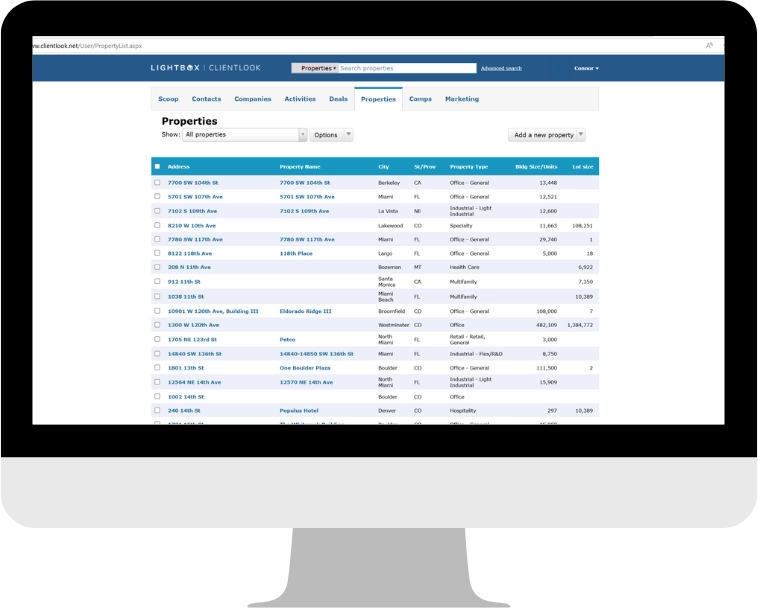
  • MaxHome.AI Review: Residential Back-Office AI Through a CRE Lens

    MaxHome.AI Review: Residential Back-Office AI Through a CRE Lens

    BestCRE 9AI Score

    46/100 · Watch

    MaxHome.AI ranks #581 of 584 commercial real estate AI tools scored on the 9AI Framework. Nine dimensions, each scored out of 10: CRE relevance, data quality, ease of adoption, output accuracy, integration fit, pricing transparency, support, innovation and market reputation.

    Back-office automation is where AI is earning its keep in residential brokerage, and MaxHome.AI is one of the better-funded companies doing that work. The San Francisco startup sells an AI layer that reads transaction documents as they arrive, checks each file for compliance, reconciles commission figures against the settlement statement and drives the follow-up tasks that processors and transaction coordinators otherwise handle by hand. It has raised $7 million, counts affiliates of Berkshire Hathaway and Coldwell Banker among its users according to HousingWire’s coverage of its $5 million seed round, was selected for the National Association of REALTORS’ 2026 REACH Scale-Up cohort, and in June 2026 joined LeadingRE’s Solutions Group program, a preferred vendor list for a network of 500 brokerages. Every one of those signals points at residential real estate.

    That is the tension in a commercial review. The work MaxHome.AI automates (document completeness, signature checks, commission reconciliation and deadline-driven follow-up) exists in every commercial brokerage too. But the rules it applies are written for standardized residential contracts, addenda and disclosures. The hard parts of a commercial deal, the negotiated letter of intent, the purchase and sale agreement drafted by counsel, lease review, estoppels and lender conditions, sit outside anything the company describes.

    9AI Score: 46/100 (Early Stage). The score measures fit for commercial real estate buyers, not the product’s merit for the residential brokerages it was designed to serve. MaxHome.AI earns credit for named customers, a clear product thesis and a founder who has run a brokerage operation, and loses it on CRE relevance, unpublished pricing and the absence of any commercial integration or commercial customer.

    This review is part of BestCRE’s systematic coverage of commercial real estate AI tools across 20 CRE sectors. For the full AI tools directory, see our Best CRE AI Tools hub.

    What MaxHome.AI Does and How It Works

    MaxHome.AI describes itself as an AI-native operating system for residential real estate brokerages. Its September 2025 funding announcement names the core jobs as document management, compliance and transaction coordination, and the company’s partner page in LeadingRE’s Solutions Group breaks the product into eight services: AI-driven document processing, compliance automation, workflow orchestration, transaction data extraction, task automation with automated follow-ups, transaction management, a smart signature platform and voice-enabled transaction creation. The buyer is the brokerage, specifically its processing, compliance and accounting staff. Agents are secondary users who get immediate feedback when a file is missing a document or a signature.

    The mechanics are clearest in founder and CEO Divya Aathresh’s September 2026 interview with REALTOR News. The system reads each document, extracts the relevant data and applies rules that vary by state, brokerage, transaction type and property type. Her example is an inspection addendum: the software recognizes the addendum, reads what it requires, and asks for the repair invoice or reinspection report before the file can be marked complete, instead of running one generic checklist against every file. The same reading powers accounting reconciliation across the commission statement, purchase contract, internal commission calculation and settlement statement, where Aathresh cites a file in which $5,500 given away as credits surfaced as a mismatch. Exceptions route to a human reviewer, and the company says brokerages have cut more than 80 percent of the manual review involved. Because the system builds context on every file, it also prompts timely referrals to affiliated mortgage and title companies.

    The product grew out of operating experience. Aathresh built the real estate business at Better.com to more than 15,000 agents across 22 states, and she told HousingWire in December 2024 that she founded MaxHome.AI that January after concluding that transaction management, not marketing, was the real pain point for brokerages. The first module was a processing copilot. The December 2024 pre-seed announcement, a $2 million round led by BBG Ventures with Power of N and Fortitude Ventures, named Baird & Warner and the Jason Mitchell Group as partners, with Baird & Warner confirming a Processing Copilot already live in its operations. The $5 million seed round in September 2025, led by Fika Ventures with BBG Ventures, 1Sharpe Ventures and Four Acres Capital, brought total funding to $7 million and added The Keyes Company as a named user.

    There is no self-serve tier. The company’s domain, maxhome.ai, opens directly to its web application rather than a marketing site, and the path to a purchase is a custom demonstration booked directly or through partner channels such as LeadingRE. Pricing, security documentation and an integration list are not published, and that shapes several of the scores below.

    9AI Framework: Dimension by Dimension Analysis

    CRE Relevance: 3/10

    MaxHome.AI is built for residential brokerage and says so: the company’s own boilerplate calls it an AI-native platform built for residential real estate brokerages. NAR placed it in the six-company 2026 REACH Scale-Up cohort announced on May 28, 2026, while NAR’s separate REACH Commercial program selected eight different companies in July. The score sits near the bottom of the scale because nothing on the commercial side offsets that residential positioning. Some mechanics do transfer, since a commercial brokerage also has to confirm that every listing agreement, commission agreement and closing statement is signed, complete and reconciled before a file closes. The substance of a commercial deal does not transfer: a negotiated letter of intent, a purchase and sale agreement drafted by counsel, a diligence period that runs on rent rolls, estoppels and title, and a loan closing with its own conditions. In practice: Evaluate it only for the back-office compliance and commission reconciliation step of a commercial desk, never for deal documents.

    Data Quality and Sources: 5/10

    MaxHome.AI works on the brokerage’s own transaction files and correspondence, not on licensed property data, so the familiar CRE problem of stale comparables does not arise. Quality depends instead on document understanding. The company says its models are trained on real estate terminology, processes and local regulations and that its automated checks draw on years of real estate transaction data, and LeadingRE describes the engine as intelligent document understanding that extracts structured data in real time. All of that describes residential paper: state association contracts, addenda, disclosures, commission statements and settlement statements. MaxHome.AI publishes no model documentation, confidence thresholds or extraction error rates, and no commercial form library. The midpoint reflects a credible design on residential documents and an unknown on commercial ones. In practice: Ask which commercial document types, if any, are in its rules library and how low-confidence extractions are surfaced to reviewers.

    Ease of Adoption: 5/10

    Adoption is designed to be light for agents and heavier for the back office. The LeadingRE partner page says MaxHome.AI integrates directly into existing systems so brokerages avoid duplicate data entry, and the service list includes voice-enabled transaction creation and automated follow-ups that ask agents for missing items. Baird & Warner, an early partner, started with a single processing copilot. The configuration burden lands on operations: each brokerage’s checklists, state rules and approval paths have to be encoded, and a commercial desk would need rules for document sets the product was not built around. MaxHome.AI offers no free trial, public onboarding guide or published time to value, so the rollout plan is negotiated in the sales process. In practice: Scope a pilot to one office and one workflow, such as commission reconciliation, with a written go-live date and success measure.

    Output Accuracy: 4/10

    The accuracy evidence is vendor reported. MaxHome.AI says it reduces manual processing time by up to 80 percent, cites caught errors such as unsigned disclosures and the $5,500 commission discrepancy, and its 2024 launch release claimed automation of more than 70 percent of transaction management tasks. Those figures describe early results, but there are no published benchmarks, independent tests or customer-measured error rates. The design choice matters more for a buyer than the claims: the system automates what it can verify and routes exceptions to a person, which is the right posture for compliance work. In commercial real estate the cost of a miss is higher, because a missed diligence expiration can make a buyer’s deposit non-refundable, and heavily negotiated documents are exactly where extraction models fail most often. In practice: Run it against twenty closed commercial files with known answers and count every missed date, signature and dollar figure.

    Integration and Workflow Fit: 4/10

    MaxHome.AI states that it integrates directly into existing brokerage systems but does not publish which ones. For a residential buyer the relevant question is whether it reads from and writes back to the firm’s transaction management platform, such as SkySlope, Dotloop or Lone Wolf, and to its accounting and CRM tools, and the vendor should answer that in writing. For a commercial buyer the anchor systems are different: Yardi and MRI for property and lease accounting, CoStar for listing and comparable data, Argus for valuation, and a commercial CRM or deal pipeline. There is no documented connection to any of them, and the 9AI Framework weighs those connections heavily when scoring a tool for commercial buyers. The 4 reflects an unpublished integration list and a stack built around residential systems. In practice: Require a live demonstration of data moving between MaxHome.AI and your system of record before signing.

    Pricing Transparency: 4/10

    MaxHome.AI publishes no prices, plan structure or trial terms, and its sales motion runs through custom demonstrations. Quote-only vendors typically score 4 or 5 on this dimension, and MaxHome.AI takes the lower figure because even the pricing unit is undisclosed. The product could be priced per transaction, per agent, per office or as an enterprise license, and each produces a very different cost for a commercial desk that closes fewer, larger deals than a residential office of the same headcount. A per-transaction price that looks modest on a single-family resale behaves very differently on a portfolio sale with months of diligence and hundreds of documents. In practice: Ask for a written quote that names the pricing unit, minimum term, implementation fees and the price of each module, and confirm whether reconciliation and signatures are bundled or billed separately.

    Support and Reliability: 5/10

    The company is small and well backed. Two rounds totaling $7 million from BBG Ventures, Fika Ventures, 1Sharpe Ventures, Four Acres Capital, Power of N and Fortitude Ventures, plus selection by NAR’s REACH program and LeadingRE’s preferred vendor list, give a buyer reasonable confidence the company will be operating through a standard contract term. Aathresh told HousingWire she staffed early with colleagues from Better.com who knew the industry, including a head of sales who is a lifelong Realtor. Against that, MaxHome.AI publishes no service level agreement, status page, support hours or security attestation such as a SOC 2 report, which matters for a system that holds client contracts, settlement statements and commission data. In practice: Write uptime, support response times, data export on termination and security documentation into the contract.

    Innovation and Roadmap: 6/10

    This is MaxHome.AI’s strongest dimension. The product has moved from a single processing copilot in 2024 to a platform spanning compliance automation, accounting reconciliation, signatures and voice-driven transaction setup, and its rules respond to what is actually written in a file rather than a static checklist. That is a real advance over checklist-based transaction management. Aathresh’s 2024 plan called for six or seven copilots, and the 2026 service list shows that breadth arriving. The score stops at 6 because there is no public roadmap, release notes or changelog, and nothing the company has said points toward commercial transactions. In practice: Ask whether commercial support is on a dated roadmap with named milestones and commercial design partners, not a general intention to expand.

    Market Reputation: 5/10

    In residential brokerage MaxHome.AI has an enviable early reputation: named partners and users at Baird & Warner, the Jason Mitchell Group and The Keyes Company, affiliates of two national franchise brands, coverage in HousingWire, RISMedia and NAR’s own REALTOR News, and selection by both NAR’s REACH program and LeadingRE. None of that reputation comes from commercial real estate. LeadingRE operates a separate commercial network of 200 firms in 20 countries, and the LeadingRE announcement makes no reference to it. Under the 9AI rules, a vendor with fewer than three named commercial real estate clients is capped at 7 on this dimension, and MaxHome.AI has no named commercial client. In practice: Ask for references from brokerages that run a commercial desk on the platform, and call them before any contract.

    Who Should Use MaxHome.AI

    MaxHome.AI fits residential brokerages with centralized processing or compliance teams, the Baird & Warner and Keyes model, that want to shrink file review time and catch commission errors before money moves. Within a commercial audience the realistic users are narrower. A full-service firm with residential and commercial divisions can deploy it on the residential side and judge whether the compliance engine could extend to the commercial desk. A commercial brokerage’s chief operating officer or controller studying back-office automation should take a demonstration to see document-level compliance review running in production, because the same pattern, reading every document and reconciling the closing statement against the commission agreement, is where commercial transaction software is heading.

    Who Should Not Use MaxHome.AI

    Investment sales teams, leasing brokers, capital markets advisors, owners and asset managers should not buy MaxHome.AI for commercial work. It does not draft or redline letters of intent, purchase and sale agreements or leases, does not run due diligence on rent rolls, estoppels or operating statements, and does not manage an acquisitions pipeline, investor reporting or a loan closing. Firms that need Yardi, MRI, CoStar or Argus connectivity, a published price before a sales conversation, or named commercial references before signing should look to the commercial tools in the Competitive Landscape section below.

    Pricing and ROI Analysis

    MaxHome.AI does not publish pricing, so the return calculation has to be built on the buyer’s own numbers and the vendor’s quote. The company’s headline claim, a reduction of up to 80 percent in manual processing time, is the upper bound for the savings side, and a commercial buyer should discount it heavily because it was earned on residential files with standardized forms.

    For illustration, a commercial desk closing 150 transactions a year with four hours of compliance and commission review per file spends 600 hours on that work. At a fully loaded cost of $60 an hour, that is $36,000 a year. If MaxHome.AI absorbed one third of it, well short of the residential claim, savings would be about $12,000 a year before license fees, configuration and the reviewer time needed to check its output. That is a thin margin, and one missed contingency date or misdirected commission split can erase it. The case strengthens only for firms that run high residential and commercial volume through one shared back office, where the residential savings carry the investment.

    Integration and CRE Tech Stack Fit

    A commercial brokerage stack typically runs on a broker CRM and listing platform, CoStar for comparable and tenant data, Argus or Excel for valuation, an e-signature service, a virtual data room for diligence and, for owner clients, Yardi or MRI. MaxHome.AI’s documented footprint is residential: brokerage transaction management, compliance review, commission accounting and referrals to affiliated mortgage and title companies. Its service list includes its own smart signature platform, so a commercial team already standardized on DocuSign should ask how the two would coexist on a single file.

    In a commercial deployment MaxHome.AI would most likely run as a standalone compliance layer, which creates a second source of truth unless the vendor connects it to the firm’s CRM and accounting system. A vendor serious about commercial would show a live sync with at least one of those systems and a rules library covering commercial commission agreements, co-brokerage splits and closing statements.

    Competitive Landscape

    In residential brokerage MaxHome.AI competes with established transaction management platforms such as SkySlope, Dotloop and Lone Wolf, and with newer AI back-office entrants, including BrokerBot, which NAR selected for the same 2026 REACH cohort. Its edge over the incumbents is that it reads the content of documents and applies file-specific rules rather than simply storing the documents and tracking a checklist.

    Commercial teams should compare the tools BestCRE has reviewed against commercial workflows instead. The closest functional analog BestCRE has reviewed is TurboHome’s deal document and deadline tracking, scored 68, which extracts dates and terms from deal documents into tracked workflows, flags contingency deadlines and drafts notices for approval. For the investment pipeline, Dealpath’s deal management platform (72) tracks acquisitions from sourcing through investment committee approval. Brokerages that want CRM, listings and deal tracking in one system should look at the Buildout broker CRM (69) and ClientLook’s commercial broker CRM (73). The deal documents themselves are better served by Deal Manager AI for drafting LOIs and PSAs (70) and LeasePilot’s commercial lease drafting (79), while DocuSign’s e-signature and deal rooms (72) cover execution.

    None of those tools replicates MaxHome.AI’s file-level compliance review and commission reconciliation for a brokerage back office, and that gap is an opening for whichever vendor builds it for commercial paper first. For now, MaxHome.AI competes in residential brokerage and does not compete in commercial.

    The Bottom Line

    9AI Score: 46/100 (Early Stage). MaxHome.AI is a credible, venture-backed AI back office for residential brokerages, with named customers, a founder who has run a brokerage operation at scale and a product that reads documents rather than merely storing them. The $7 million raised, the NAR REACH selection and the LeadingRE placement show it is taken seriously in the market it serves.

    It is not a commercial real estate tool. Commercial brokerages, investment sales teams, leasing groups and asset managers will not find their documents, systems or deal workflows in it, and its pricing, integrations and commercial references are unpublished. Firms with a residential division should take the demonstration for that side of the business, and commercial operations leaders should study it as a model of where brokerage compliance automation is going. BestCRE will revisit the score if MaxHome.AI publishes pricing, names commercial customers or documents support for commercial agreements and closing statements.

    About BestCRE

    BestCRE.com is the definitive authority on commercial real estate AI, analysis, and investment intelligence. Every article advances the platform’s mission to help CRE professionals identify, evaluate, and adopt the best tools and strategies in the industry. We benchmark platforms using the 9AI Framework so CRE leaders can compare tools with clear evidence. Explore the category map at 20 CRE sectors for deeper coverage across the CRE stack.

    Frequently Asked Questions

    Is MaxHome.AI built for commercial real estate brokerages?

    No. MaxHome.AI describes itself as an AI-native platform built for residential real estate brokerages, and its named customers, including Baird & Warner, The Keyes Company and affiliates of Berkshire Hathaway and Coldwell Banker, are residential firms. The National Association of REALTORS placed it in its six-company 2026 REACH Scale-Up cohort, while a separate REACH Commercial program announced on July 28, 2026 selected eight other companies. Some of its mechanics apply to any brokerage back office, such as confirming that required documents are present and signed and reconciling the commission statement against the settlement statement. Its rules, however, are built around residential contracts, addenda and disclosures, not negotiated letters of intent, purchase and sale agreements or commercial leases. A commercial firm should treat it as a residential compliance tool unless the vendor demonstrates a commercial rules library on real commercial files.

    What does MaxHome.AI automate in a brokerage back office?

    MaxHome.AI automates the document-heavy middle of a transaction. It reads contracts, addenda and disclosures as they arrive, extracts structured data, checks the file against rules that vary by state, brokerage and transaction type, and requests whatever is missing, such as a repair invoice that an inspection addendum calls for. It also reconciles the commission statement, purchase contract, internal commission calculation and settlement statement, and in one file caught $5,500 in credits that would otherwise have slipped through. Its listed services add task automation with follow-ups, transaction management, a smart signature platform and voice-enabled transaction creation. The company says brokerages have cut more than 80 percent of manual review, with exceptions routed to a person for judgment. It does not underwrite, value property or draft deal documents.

    How much does MaxHome.AI cost?

    MaxHome.AI does not publish pricing. There is no public plan structure, free trial or self-serve signup, and buyers reach a price through a custom demonstration with the company or through partner programs such as LeadingRE’s Solutions Group, which serves a network of 500 brokerages. On the 9AI Framework, quote-only vendors typically score 4 or 5 on Pricing Transparency, and MaxHome.AI scores 4 because even its pricing unit is undisclosed. Before a demonstration, ask whether the product is priced per transaction, per agent, per office or as an enterprise license, what the minimum term is, which modules are included and what implementation costs. A commercial desk with fewer, larger deals should model the quote against its own annual closing count, since per-transaction and per-seat pricing produce very different totals.

    Does MaxHome.AI integrate with SkySlope, Dotloop or Yardi?

    MaxHome.AI says it integrates directly into existing brokerage systems to remove duplicate data entry, but it does not publish an integration list, API documentation or a data export policy. Residential buyers should ask the vendor to name and demonstrate its connections to transaction management platforms such as SkySlope, Dotloop and Lone Wolf, and to their accounting and CRM tools. Commercial buyers should expect no connection to Yardi, MRI, CoStar or Argus, because none is documented. That gap, together with the unpublished integration list, is why MaxHome.AI scores 4 out of 10 on Integration and Workflow Fit. The practical test is simple: ask for a live demonstration using your own account, showing a transaction created in your system appearing in MaxHome.AI and its review results flowing back.

    What are the best alternatives to MaxHome.AI for commercial real estate deals?

    The right alternative depends on which part of the commercial deal needs help. For deadline and document tracking, TurboHome, scored 68 by BestCRE, extracts dates and terms from deal documents and flags contingency deadlines. For investment pipelines, Dealpath (72) tracks deals from sourcing through investment committee approval. For brokerage CRM, listings and deal tracking, ClientLook (73) and Buildout (69) are built for commercial brokers. For drafting letters of intent and purchase and sale agreements, Deal Manager AI (70) is the more relevant tool, and LeasePilot (79) drafts commercial leases from a firm’s approved forms. The full Best CRE AI Tools directory lets you filter by workflow and role.

    Related Reviews

    Compare MaxHome.AI with other Brokerage & Transactions tools BestCRE has scored: Deal Ground (76/100), Ten-X (72/100), CommercialEdge (66/100) and Aarden AI (56/100). Browse every review in CRE Brokerage & Transactions, the full Best CRE AI Tools directory, or the 20 CRE Sectors hub.
  • ClientLook Review: Simple CRE broker CRM prioritizing human virtual assistants over generative AI features

    ClientLook Review: Simple CRE broker CRM prioritizing human virtual assistants over generative AI features

    BestCRE 9AI Score

    73/100 · Contender

    ClientLook ranks #50 of 584 commercial real estate AI tools scored on the 9AI Framework. Nine dimensions, each scored out of 10: CRE relevance, data quality, ease of adoption, output accuracy, integration fit, pricing transparency, support, innovation and market reputation.

    ClientLook is a commercial real estate broker CRM owned by LightBox, operating as a centralized database for property, contact, and deal tracking. The platform integrates directly with LightBox’s proprietary data service, allowing users to import from a database of over 155 million property records nationwide. Founded in 2009 and acquired by LightBox in January 2020, ClientLook has maintained a strict focus on simplicity and ease of use for solo brokers and small teams. Rather than deploying complex generative AI models to automate data entry, the company includes a human virtual assistant service that handles listing administration, lead capture, and contact logging on behalf of the user.

    For a commercial real estate principal evaluating AI software in August 2026, ClientLook represents a baseline standard of digitization rather than an advanced automation engine. Analysis indicates that while competitors race to build large language models capable of reading lease documents or underwriting deals, ClientLook relies on its legacy architecture and human-in-the-loop services to maintain data integrity. It serves as a Tier 2 CRE-native database that captures the fundamental mechanics of brokerage, contacts, properties, and pipelines, without overwhelming users with configuration options. While it lacks the advanced artificial intelligence capabilities seen in newer proptech platforms, its high ease of adoption makes it a practical alternative for brokerages struggling with software compliance and basic data hygiene.

    What ClientLook does and how it works

    ClientLook functions as the central nervous system for a commercial real estate broker’s daily activities, linking people, properties, and pipeline stages in a single relational database. Users begin by building their proprietary property database, either through manual entry or by pulling records directly from the LightBox data service. When a broker adds a property, they can track ownership changes, sales history, and financing details, while linking that asset to specific contacts and active deals. The platform includes a dedicated module for tracking sale and lease comparables, allowing brokers to log market transactions and use them for future pricing analysis.

    The deal management mechanics revolve around a consolidated pipeline that tracks various transaction types from initial pitch to signed letter of intent. ClientLook utilizes collaboration hubs, branded as deal rooms, where brokers can share updates, documents, and feedback directly with clients. For marketing and outreach, the system integrates with third-party platforms like Mailchimp and HubSpot, enabling users to create campaigns, manage distribution lists, and identify prospects without leaving the CRM environment. Brokers can access these features on the go via native iOS and Android applications, which include synchronization with Google services.

    The most distinct mechanical feature of ClientLook is its approach to data entry automation. Instead of relying on optical character recognition or AI parsing to update contact records and log meeting notes, the platform provides access to a team of human virtual assistants. Users send business cards, spreadsheets, or dictated notes to this team, who manually input the data into the CRM. Analysis dictates that this human-driven process bypasses the hallucination risks associated with current AI models, ensuring high fidelity in contact and property records, albeit without the instant processing speeds of automated systems.

    9AI Framework: the score, dimension by dimension

    Dimension Score
    CRE Relevance 9/10
    Data Quality and Sources 8/10
    Ease of Adoption 9/10
    Output Accuracy 7/10
    Integration and Workflow Fit 6/10
    Pricing Transparency 9/10
    Support and Reliability 7/10
    Innovation and Roadmap 4/10
    Market Reputation 7/10
    Composite 9AI Score 73/100

    CRE Relevance: 9/10

    ClientLook is entirely dedicated to the commercial real estate sector, functioning as a CRE-native Tier 2 database. Unlike general-purpose CRMs that require extensive customization to understand the relationship between a landlord, a tenant, and a physical asset, ClientLook is built around these specific entities out of the box. The platform natively supports the tracking of sale and lease comparables, property ownership changes, and commercial financing details. Its acquisition by LightBox further cemented its industry relevance by tying the CRM directly into a massive repository of commercial parcel and property data. Analysis shows that this specialized architecture prevents brokerages from having to hire expensive consultants to mold a generic system into a CRE tool. In practice: Brokers can immediately begin logging cap rates, lease expirations, and price-per-square-foot metrics without building custom fields.

    Data Quality and Sources: 8/10

    The platform achieves high data quality through a combination of external data integration and human oversight. Users can import property details directly from LightBox’s database of over 155 million records, ensuring that baseline asset information relies on verified national data rather than manual broker estimates. Furthermore, the inclusion of a human virtual assistant team acts as a quality control layer for user-generated data. Instead of relying on flawed AI transcription that might misinterpret a company name or phone number from a scanned business card, human operators review and enter the information. Analysis indicates that this minimizes the duplicate records and formatting errors that plague highly automated CRMs. In practice: The database remains clean and standardized because dedicated personnel handle the data entry that busy brokers typically rush or skip.

    Ease of Adoption: 9/10

    ClientLook is widely recognized as one of the most accessible platforms in the commercial real estate software market. The vendor explicitly markets the tool as virtually training-free, targeting solo brokers and small teams who lack dedicated IT departments. The interface is straightforward, avoiding the overwhelming menus and complex administrative overhead found in enterprise systems like Salesforce. Furthermore, the onboarding process is highly streamlined, allowing new users to transition their existing spreadsheets into the system with minimal friction. Analysis reveals that the included virtual assistant service drastically lowers the barrier to entry, as users can simply email their historical contact lists to the support team for formatting and upload. In practice: A non-technical broker can transition from a spreadsheet to a fully functioning CRM in a single afternoon.

    Output Accuracy: 7/10

    Because ClientLook relies on human virtual assistants rather than generative artificial intelligence for its automation features, its output accuracy is highly dependable. The system does not attempt to automatically draft complex lease summaries or underwrite properties using probabilistic language models, thereby eliminating the risk of AI hallucinations. When users query the system for sale and lease comparables, the outputs are exact reflections of the data imported from LightBox or manually entered by the brokerage. However, analysis suggests that this reliance on manual and human-assisted entry means the system cannot automatically surface hidden insights or predict market trends with the sophistication of true AI platforms like Dan AI or CompStak. In practice: Users can trust the contact and property reports generated by the system, provided the initial inputs were submitted correctly.

    Integration and Workflow Fit: 6/10

    ClientLook offers a functional but somewhat limited integration ecosystem compared to broader horizontal platforms. Its primary and most valuable integration is the native connection to the LightBox data service, which allows direct importing of property records. For marketing, the system supports two-way integrations with Mailchimp and HubSpot, enabling users to sync distribution lists and track email campaign performance directly within the CRM. It also offers mobile synchronization with Google services. However, analysis of recent technical overhauls indicates that the platform operates on an older architecture that required refactoring to support modern API connections. It lacks deep integration with advanced AI underwriting tools or modern document management systems used in complex deal execution. In practice: The software connects well with basic email marketing tools but struggles to plug into advanced proptech financial stacks.

    Pricing Transparency: 9/10

    The vendor maintains a highly transparent pricing model, publishing exact figures directly on its website and through third-party channels. As of Q3 2026, ClientLook costs $129 per user per month, or a discounted rate of $1,068 per user when billed annually. This flat-rate approach includes access to the mobile applications, the LightBox data integration, and the human virtual assistant service. Analysis indicates that this straightforward pricing structure is a significant advantage over competitors like Apto or enterprise Salesforce builds, which often require custom quoting, hidden implementation fees, and separate licenses for mobile access or data services. Buyers know exactly what their financial commitment will be before initiating a trial. In practice: A principal can accurately budget for their entire team’s software expenses without needing to negotiate with a sales representative.

    Support and Reliability: 7/10

    Support is the defining feature of the ClientLook offering, heavily anchored by the included virtual assistant team. This service goes far beyond traditional technical troubleshooting; the assistants actively perform data entry, listing administration, and lead capture tasks for the users. If a broker encounters a software bug, standard technical support is also available, and the company has a track record of resolving API and data duplication issues swiftly. Analysis shows that this hands-on support model is the primary driver behind the platform’s strong user retention, which the vendor does not quantify, as it directly solves the most common CRM failure point: user abandonment due to data entry fatigue. In practice: Brokers can email a photograph of a sign rider or a stack of business cards to support and have the data accurately logged by the next morning.

    Innovation and Roadmap: 4/10

    ClientLook scores lower on the innovation roadmap, particularly when evaluated as an AI software platform. While the broader proptech market is rapidly deploying large language models for document abstraction and predictive analytics, ClientLook remains firmly rooted in its traditional CRM capabilities. The product roadmap focuses on minor bug fixes, such as correcting price-per-square-foot duplication errors in the LightBox API, rather than introducing advanced machine learning features. Analysis suggests that the parent company, LightBox, views ClientLook as a stable, simple data repository rather than an experimental ground for artificial intelligence. Teams looking for automated due diligence tracking or AI-driven deal execution will find the platform’s future development plans lacking. In practice: Buyers should purchase the software for what it does today, as there are no indications of major AI feature releases on the horizon.

    Market Reputation: 7/10

    Since its launch in 2009, ClientLook has built a solid reputation as a leading CRM for solo brokers and boutique commercial real estate firms. Its acquisition by LightBox in 2020 validated its position in the market and provided it with institutional backing. The platform consistently receives high ratings for user satisfaction and ease of use across software review boards. However, analysis reveals that its reputation is strictly confined to the small-to-medium brokerage space; enterprise firms and capital markets teams often view it as too simplistic for complex, multi-tranche deal management. Compared to peers like Apto, it is celebrated for its stability and the unique value of its human virtual assistants. In practice: The tool is universally respected by independent brokers who prioritize simplicity and outsourced data entry over complex workflow automation.

    Who should use ClientLook

    ClientLook is optimized for commercial real estate professionals who prioritize simplicity and immediate usability over complex automation. It is best suited for individuals and small teams who struggle with the discipline of manual data entry.

    Solo brokers who need a centralized database for contacts and properties but lack administrative support to keep it updated.

    Boutique brokerage firms (4 to 20 agents) without a dedicated IT department to manage complex software implementations.

    Landlord and tenant representation specialists who rely heavily on relationship tracking and basic lease expiration dates.

    Firms that already utilize LightBox data products and want a CRM that natively integrates with that ecosystem.

    Who should look elsewhere

    Firms requiring advanced artificial intelligence capabilities, complex financial modeling, or enterprise-grade custom reporting will find ClientLook insufficient for their needs.

    Capital markets teams that require deep due diligence tracking, secure virtual data rooms for sensitive financials, and multi-stage underwriting workflows.

    Enterprise brokerages that need highly customizable reporting dashboards to track complex commission splits and office-wide performance metrics.

    Analysts looking for generative AI tools capable of automatically parsing lease documents, extracting clauses, or writing property marketing descriptions.

    Firms that require deep integrations with advanced accounting software or complex proprietary back-office systems.

    Pricing and ROI

    ClientLook maintains a highly transparent and straightforward pricing model, which is a rarity in the commercial real estate software market. As of Q3 2026, the vendor publishes its pricing directly on its website. The platform costs $129 per user per month when billed monthly. For firms willing to commit to an annual contract, the price drops to $1,068 per user per year, which effectively reduces the monthly cost to $89 per user.

    This single-tier pricing structure is comprehensive. The fee includes full access to the core CRM functionality, the native iOS and Android mobile applications, and the integration with the LightBox property database. Most importantly, the subscription includes unlimited access to the human virtual assistant team, which handles data entry and listing administration tasks. There are no hidden implementation fees or mandatory paid training sessions, as the software is designed to be adopted without specialized instruction.

    Analysis of the return on investment (ROI) relies on the time saved through the virtual assistant service. If a junior broker or administrative assistant earns $25 per hour, the annual $1,068 subscription pays for itself if the virtual assistant team saves the user just 43 hours of data entry work over the course of a year. For a busy broker logging dozens of business cards and property updates weekly, this break-even point is typically reached within the first two months of deployment.

    Integration and CRE tech stack fit

    ClientLook’s position within the commercial real estate tech stack is highly specialized, serving primarily as a front-office contact and property repository rather than a fully integrated enterprise hub. Its most powerful integration is vertical: the direct connection to its parent company’s LightBox data service, which allows users to directly pull from over 155 million national property records. This eliminates the need for a separate property data subscription for basic asset tracking.

    For marketing execution, ClientLook offers established two-way integrations with Mailchimp and HubSpot. This allows brokers to push contact lists directly into email campaigns and track open rates without leaving the CRM environment. The platform also syncs reliably with Google Workspace, ensuring that calendar events and emails are logged against the correct contact records.

    However, analysis indicates that the platform struggles to integrate with the broader, modern AI proptech stack. Because it operates on an older architectural framework, it does not easily connect with advanced AI underwriting platforms, automated document abstraction tools, or complex back-office commission tracking systems. Firms adopting ClientLook should expect it to operate as a standalone CRM alongside, rather than integrated with, their financial and analytical software.

    Competitive landscape

    The commercial real estate CRM market is heavily fragmented, and ClientLook competes directly with both CRE-native platforms and customized horizontal solutions. Its primary competitors in the Tier 2, broker-focused database category include Apto, Buildout (formerly Rethink), and AscendixRE.

    Compared to Apto (Scored 64), ClientLook (scored 69) offers a much faster implementation process and a simpler user interface. Apto, built on the Salesforce chassis, provides significantly more customization and advanced reporting capabilities, but requires a steeper learning curve and higher administrative overhead. ClientLook wins on ease of adoption and its unique human virtual assistant offering, while Apto wins for firms needing complex, customized deal pipelines.

    Buildout CRM represents another major alternative. Buildout offers a more comprehensive suite that ties the CRM directly into automated marketing brochure generation and financial modeling tools. Brokerages that want a single platform to handle both contact management and the creation of offering memorandums often prefer Buildout, whereas ClientLook is strictly focused on the database and pipeline management aspects.

    AscendixRE, also built on Salesforce, competes with ClientLook by offering a middle ground between simplicity and enterprise power. Ascendix provides better search functionalities and map-based prospecting tools, but again lacks the outsourced data entry service that defines the ClientLook experience.

    Analysis shows that when brokerages outgrow ClientLook, it is rarely because of contact limits; it is typically because they require deeper reporting, advanced due diligence tracking, or AI-driven document analysis. For lean teams prioritizing basic database hygiene over advanced analytics, ClientLook remains the most straightforward option on the market.

    The bottom line

    ClientLook remains the definitive choice for solo commercial real estate brokers and boutique firms that prioritize simplicity and reliable data entry over advanced artificial intelligence. By substituting complex generative AI features with a highly effective human virtual assistant team, the platform guarantees clean contact and property records without requiring brokers to change their daily habits. Its native integration with LightBox data provides immediate value, and the transparent pricing model ensures a clear return on investment. However, firms seeking sophisticated automated underwriting, AI-driven lease abstraction, or highly customizable enterprise reporting will find the platform’s legacy architecture restrictive. Ultimately, buy ClientLook if your primary obstacle is getting brokers to log their activities and update their pipelines; look elsewhere if you want a platform that actively analyzes your data to predict market movements.

    Frequently asked questions

    Does ClientLook include artificial intelligence for data entry?

    No, ClientLook does not rely on generative AI or optical character recognition for data entry. Instead, it includes a human virtual assistant service. Users send business cards or notes to this team, who manually update the CRM, ensuring high accuracy without the hallucination risks of current AI models.

    How much does ClientLook cost in 2026?

    As of August 2026, ClientLook costs $129 per user per month on a month-to-month basis. If billed annually, the price is discounted to $1,068 per user per year, which breaks down to $89 per month. This price includes the virtual assistant service and mobile app access.

    Can I import property data directly into ClientLook?

    Yes, ClientLook natively integrates with its parent company’s LightBox data service. Users can search and import asset details from a database of over 155 million commercial property records nationwide, significantly reducing the time required to build a proprietary market database.

    Does ClientLook integrate with Mailchimp or HubSpot?

    Yes, ClientLook features two-way integrations with both Mailchimp and HubSpot. This allows brokers to manage distribution lists, execute email marketing campaigns, and track prospect engagement directly within the CRM without needing to constantly export and import CSV files.

    Is ClientLook built on Salesforce?

    No, ClientLook is a proprietary, standalone platform built specifically for commercial real estate. Unlike competitors such as Apto or AscendixRE, which are built on the Salesforce architecture, ClientLook utilizes its own codebase to maintain a simpler, more streamlined user interface requiring no specialized training.

    Who owns ClientLook?

    ClientLook is owned by LightBox, a major real estate information and technology platform. LightBox acquired the CRM in January 2020 to integrate it alongside their other commercial real estate tools, including Real Capital Markets and various mapping and demographic data products.

    Related Reviews

    Compare ClientLook with other Brokerage & Transactions tools BestCRE has scored: DocuSign (72/100), Ten-X (72/100), Brevitas (69/100) and TurboHome (68/100). Browse every review in CRE Brokerage & Transactions, the full Best CRE AI Tools directory, or the 20 CRE Sectors hub.
  • Apto Review: A legacy commercial real estate CRM currently operating in maintenance mode under Buildout

    Apto Review: A legacy commercial real estate CRM currently operating in maintenance mode under Buildout

    BestCRE 9AI Score

    64/100 · Niche

    Apto ranks #337 of 450 commercial real estate AI tools scored on the 9AI Framework. Nine dimensions, each scored out of 10: CRE relevance, data quality, ease of adoption, output accuracy, integration fit, pricing transparency, support, innovation and market reputation.

    Apto is a commercial real estate CRM and deal pipeline management platform built on the Salesforce architecture. Originally launched to give brokers a CRE-native alternative to generic sales software, it tracks properties, spaces, tenants, landlords, and comps in a relational database. The hard fact from our research: Apto operates as a paid software tool, but the market reality in August 2026 is that it is no longer sold to new customers. Buildout acquired the company in January 2022 and has since shifted its focus to its own integrated product suite, leaving Apto in maintenance mode for its existing user base.

    For commercial real estate principals and analysts evaluating a CRM purchase today, Apto represents a historical benchmark rather than a viable new deployment. During its peak, it solved the fundamental problem of shoehorning commercial real estate transactions into generic sales pipelines by offering deal stages that matched actual brokerage vocabulary, such as touring, letter of intent, and lease negotiation. However, the platform lacks the modern artificial intelligence layer and automated market signal detection that define current category leaders. Because it relies heavily on manual data entry and requires significant administrative overhead to manage its Salesforce backend, its utility has diminished compared to newer, purpose-built platforms. Buyers looking at Apto are effectively looking at a legacy system that paved the way for the current generation of broker technology.

    What Apto does and how it works

    At its core, Apto functions as a relational database tailored specifically for the commercial real estate brokerage workflow. Instead of forcing brokers to use generic opportunity or account records, the software provides a CRE-native data model. Users create distinct records for properties, spaces, leases, and comps, and the system connects these elements into a coherent graph. For example, a single property record can be linked to its owner, the listing broker, current tenants, and any active deals. This structure allows a broker to view a building and immediately understand its entire history and current pipeline status without navigating through disconnected spreadsheets or disparate contact files.

    The deal pipeline management mechanics in Apto are designed around the actual lifecycle of a commercial transaction. Brokers track deals through specific, customizable stages like prospecting, touring, lease negotiation, and executed contracts. Within these deal records, users can input granular space details, including square footage, asking rent, tenant improvement allowances, and lease expiration dates. The platform also includes basic commission tracking and forecasting tools, allowing principals to project future revenue based on the probability of deals closing in the current pipeline. Because it is built on the Salesforce architecture, Apto provides extensive reporting and dashboard capabilities, enabling managers to monitor broker activity, call volume, and pipeline health at a firm-wide level.

    Despite these structural advantages, Apto operates fundamentally as a static repository rather than an active intelligence tool. It relies entirely on the data that brokers manually input or import into the system. The software does not autonomously scrape market data, generate new leads, or apply artificial intelligence to suggest the next best action for a stalled deal. Furthermore, because it sits on top of Salesforce, modifying workflows, adding custom fields, or integrating third-party marketing tools often requires dedicated administrative support or IT intervention. For existing users, it remains a stable environment for organizing client data, but it lacks the automated data enrichment and unified prospecting workflows found in modern alternatives.

    9AI Framework: the score, dimension by dimension

    Dimension Score
    CRE Relevance 9/10
    Data Quality and Sources 7/10
    Ease of Adoption 6/10
    Output Accuracy 8/10
    Integration and Workflow Fit 7/10
    Pricing Transparency 4/10
    Support and Reliability 6/10
    Innovation and Roadmap 3/10
    Market Reputation 8/10
    Composite 9AI Score 64/100

    CRE Relevance: 9/10

    Apto was designed specifically for commercial real estate, and its data model reflects the realities of the brokerage business. Unlike generic customer relationship management tools, it natively understands the difference between a property, a space, a tenant, and a lease. The platform includes built-in deal stages that align with industry-standard transaction lifecycles, allowing brokers to track square footage, tenant improvement allowances, and lease expirations without custom coding. This structural alignment means that commercial real estate professionals do not have to translate their daily activities into generic sales terminology. The architecture successfully captures the complex, multi-party relationships inherent in commercial transactions, connecting landlords, tenants, and properties in a logical web. In practice: The platform provides a highly accurate digital representation of a commercial real estate broker’s actual workflow and vocabulary.

    Data Quality and Sources: 7/10

    The quality of information within Apto is entirely dependent on the discipline of the brokers using it, as the platform functions as a static database rather than an automated intelligence engine. It does not natively enrich contact records, verify property ownership details, or update lease expirations using external data feeds. When brokers diligently log their calls, update deal stages, and input accurate comp data, the system yields high-quality, actionable insights. However, without automated data validation or artificial intelligence to flag stale records, the database can quickly degrade into a repository of outdated information if users neglect manual entry. The strict relational structure helps prevent duplicate records, but the burden of accuracy remains solely on the human operator. In practice: Firms must enforce strict data entry protocols to maintain the integrity and usefulness of the information stored in the system.

    Ease of Adoption: 6/10

    Because Apto is built on the Salesforce platform, it carries the inherent complexity and administrative weight of enterprise software. Initial deployment requires significant configuration, data mapping, and user training to align the system with a specific brokerage’s operations. The interface is data-dense and can overwhelm new users who are accustomed to simpler, consumer-grade applications. Furthermore, making structural changes to the database, such as adding custom fields or modifying reporting dashboards, typically requires an administrator with specific Salesforce expertise rather than a standard commercial real estate analyst. This steep learning curve often results in low user adoption rates among older brokers who resist transitioning away from familiar spreadsheets or basic contact managers. In practice: Successful implementation demands dedicated IT support and a sustained commitment to training to overcome the initial resistance from brokerage teams.

    Output Accuracy: 8/10

    When correctly populated, Apto delivers highly precise reporting and pipeline forecasting. The platform’s calculation engines accurately compute broker commissions, split distributions, and projected firm revenue based on the active deal stages and assigned probabilities. Its dashboard outputs provide principals with a factual, unvarnished view of team performance, call metrics, and transaction velocity. Because the underlying architecture is highly structured, the reports generated do not suffer from the hallucination or estimation errors sometimes found in newer generative artificial intelligence tools. However, the accuracy of these outputs is strictly limited by the recency and correctness of the manually entered data. If a broker fails to update a lease negotiation status, the resulting pipeline report will be fundamentally flawed despite the system’s mathematical precision. In practice: The software produces exact calculations and reliable reports only when the underlying manual data entry is flawless.

    Integration and Workflow Fit: 7/10

    Operating within the Salesforce ecosystem gives Apto access to a massive marketplace of third-party applications and enterprise integrations. Firms can connect the platform to standard email clients, accounting software, and calendar applications using established application programming interfaces. However, integrating it with modern, commercial real estate-specific marketing and prospecting tools often requires custom development or third-party middleware. Following its acquisition by Buildout, the integration focus shifted toward connecting Apto with Buildout’s proprietary marketing suite, leaving other connections somewhat neglected. For firms running a highly customized tech stack, the platform can be molded to fit, but it rarely offers the plug-and-play simplicity expected from modern software as a service applications. In practice: Connecting the platform to your existing commercial real estate technology stack requires technical expertise and often ongoing administrative maintenance.

    Pricing Transparency: 4/10

    Apto operates on a paid subscription model, but the vendor no longer publishes public pricing tiers for new customers. Historical data indicates the software cost approximately $89 to $129 per user per month, but these figures are irrelevant for a buyer in August 2026. Following the Buildout acquisition, the parent company stopped selling Apto as a standalone product to new brokerages, instead directing prospects toward Buildout’s integrated CRM solutions. Consequently, there is no transparent pricing schedule, return on investment calculator, or standard contract terms available for evaluation. Any firm attempting to purchase the software today would find it impossible to obtain a standard quote, as the product is strictly in maintenance mode for legacy users. In practice: Prospective buyers cannot evaluate the cost of this tool because the vendor no longer offers it for new deployments.

    Support and Reliability: 6/10

    The support infrastructure for Apto has fundamentally changed since it was absorbed by Buildout. While the parent company maintains the servers, patches critical security vulnerabilities, and ensures basic uptime for existing users, active development and proactive support have ceased. Legacy customers report that routine support tickets are addressed, but requests for new features, workflow optimizations, or complex troubleshooting are often met with encouragement to migrate to Buildout’s newer platforms. The system itself remains stable due to its underlying Salesforce architecture, which guarantees high availability and data security. However, the lack of dedicated, ongoing product enhancement means users are operating a depreciating asset with minimal vendor investment. In practice: Users receive adequate technical maintenance to keep the system running, but they should not expect proactive support or feature enhancements.

    Innovation and Roadmap: 3/10

    Apto has no future development roadmap. Following its acquisition in January 2022, the strategic decision was made to sunset the brand’s forward progress and focus engineering resources on Buildout’s native applications. The software receives no artificial intelligence integrations, no new data enrichment partnerships, and no user interface modernization. While competing platforms are actively deploying predictive analytics to identify likely sellers and automating marketing collateral generation, Apto remains frozen in its legacy state. It functions exactly as it did several years ago, serving as a reliable but entirely static database. For a commercial real estate firm looking to future-proof its technology stack, the complete absence of research and development is a critical disqualifier. In practice: The product is functionally obsolete regarding new technology and will never receive modern artificial intelligence or workflow updates.

    Market Reputation: 8/10

    Historically, Apto commanded immense respect as the premier customer relationship management tool for commercial real estate brokers. It educated the industry on the value of a CRE-native data model and successfully transitioned thousands of brokers off basic spreadsheets. However, in August 2026, its reputation is that of a retired champion. Industry principals and technology analysts acknowledge its past contributions but universally recognize that it is a dead product. The market views it as a legacy system that firms are actively migrating away from, rather than a destination for new investment. While legacy users still appreciate its structural reliability, the broader market consensus is that the platform has been permanently surpassed by newer, actively developed alternatives. In practice: The industry respects the software for its historical impact but considers it entirely irrelevant for new technology acquisitions.

    Who should use Apto

    Apto is strictly a legacy maintenance product in August 2026. Therefore, the profile of a successful user is limited entirely to firms that already have it installed and heavily customized.

    Brokerages with deep, existing Apto deployments that lack the budget or administrative bandwidth to execute a complex data migration to a new platform.

    Firms that have built extensive, proprietary Salesforce integrations on top of their Apto instance and rely on those custom workflows for daily operations.

    Principals who prioritize absolute database stability and relational data structure over modern artificial intelligence capabilities or automated lead generation.

    Who should look elsewhere

    Because the software is no longer sold to new customers and lacks an innovation roadmap, almost any firm evaluating a new purchase should look elsewhere.

    New commercial real estate brokerages seeking a modern, actively supported customer relationship management platform to drive their business.

    Firms looking to incorporate artificial intelligence, predictive market analytics, or automated data enrichment into their prospecting workflows.

    Small teams without dedicated IT support or a Salesforce administrator to manage complex database configurations.

    Acquisitions teams looking for a deal management tool tailored to the buy-side, as this platform is strictly oriented toward broker listings and commissions.

    Pricing and ROI

    Apto operates as a paid software product, but it does not publish current pricing because it is no longer available for new purchases in August 2026. Prior to being sunsetted for new sales following its acquisition by Buildout, the platform typically cost between $89 and $129 per user per month, depending on the specific tier and contract length. However, these historical figures do not represent a viable commercial option today. The parent company, Buildout, directs all new inquiries to its own integrated suite, which starts at approximately $125 per user per month plus platform maintenance fees.

    Because a new firm cannot buy Apto, calculating a prospective return on investment is a purely academic exercise. For existing legacy users, the ROI math centers entirely on the cost of retention versus the cost of migration. Maintaining the legacy system requires paying the ongoing subscription fees and potentially funding a part-time Salesforce administrator to manage the technical debt. If a firm pays $1,500 annually per broker for Apto, the system only needs to prevent the loss of one minor deal per decade to justify its retention cost. However, the hidden cost lies in the opportunity lost by not utilizing modern platforms that actively generate new leads and automate administrative tasks. The true ROI calculation for current users must weigh the disruption of migrating to a new system against the long-term competitive disadvantage of operating obsolete software.

    Integration and CRE tech stack fit

    Apto’s integration capabilities are defined by its foundation on the Salesforce architecture. This underlying framework allows the platform to connect with a vast array of enterprise applications, including Microsoft Outlook, Google Workspace, and standard accounting software like QuickBooks. Through the Salesforce AppExchange, firms with dedicated technical resources can build custom application programming interfaces to connect Apto with almost any modern data provider or marketing tool.

    However, within the specific context of a commercial real estate technology stack in August 2026, its integration fit is increasingly fragmented. Following its acquisition, the primary integration focus shifted to connecting the database with Buildout’s marketing and document generation suite. It does not natively connect with modern artificial intelligence prospecting tools, dynamic property data feeds, or contemporary tenant experience platforms without significant custom development. For a brokerage attempting to build a highly automated technology stack, Apto presents a major bottleneck. It requires middleware, custom coding, and constant administrative oversight to force the legacy database to communicate with newer, specialized commercial real estate applications.

    Competitive landscape

    Because Apto is no longer actively sold, firms evaluating it are actually evaluating its modern replacements. The most direct alternative is Buildout’s native CRM, which the parent company actively sells to new brokerages. Buildout offers a similar commercial real estate-native data model but pairs it with an actively developed marketing and back-office suite, making it the natural migration path for teams wanting an all-in-one platform.

    For firms that require a highly customizable, enterprise-grade solution but want modern capabilities, Salesforce Financial Services Cloud customized for real estate is the standard upgrade path, though it requires a massive implementation budget. On the other end of the spectrum, Station CRM has emerged as a strong alternative for brokerages that want a purpose-built commercial real estate data model without the heavy administrative burden of a Salesforce-based system. Station CRM replicates Apto’s relational tracking of properties, spaces, and comps but delivers it in a faster, more modern interface.

    Additionally, tools like CompStak (BestCRE Score: 88) provide the market intelligence and comp data that Apto lacks, though CompStak is a data platform rather than a pipeline manager. Firms focused strictly on transaction execution might consider DocuSign (BestCRE Score: 80) for contract management, though it lacks the prospecting features of a true CRM. Ultimately, the competitive landscape has evolved past static databases, and buyers today must choose between comprehensive marketing suites like Buildout or agile, modern CRMs like Station CRM.

    The bottom line

    Do not attempt to purchase Apto. While it was once the definitive standard for commercial real estate brokerages, the platform is officially a legacy product that has been closed to new customers since its acquisition by Buildout. It possesses no innovation roadmap, lacks modern artificial intelligence capabilities, and requires significant administrative overhead to maintain. If you are an existing user, your decision is simply a matter of timing: you must weigh the immediate operational disruption of migrating against the slow, inevitable degradation of your competitive advantage by staying on static software. If you are a principal evaluating a new CRM deployment in August 2026, cross Apto off your list immediately. Direct your budget toward actively developed platforms like Buildout’s modern suite or agile alternatives like Station CRM that provide the automated intelligence and native integrations required to execute transactions in today’s market.

    Frequently asked questions

    Can I purchase a new subscription to Apto today?

    No, you cannot purchase a new subscription. Following its acquisition by Buildout in January 2022, the software was completely removed from the market for new buyers. It currently operates strictly in maintenance mode, meaning the parent company only supports existing legacy users while directing all new prospects to Buildout’s modern CRM suite.

    Does Apto include artificial intelligence features for lead generation?

    No, the platform does not include artificial intelligence features. It functions as a static relational database that relies entirely on manual data entry from brokers. It lacks the modern AI capabilities, automated market signal detection, and predictive analytics required to autonomously generate new leads or enrich existing contact records.

    How much does Apto cost per user?

    The vendor no longer publishes public pricing because the product is off the market for new deployments. Historically, subscriptions cost between $89 and $129 per user per month. Today, any firm looking for a similar solution from the parent company will be directed to Buildout, which starts at approximately $125 per user monthly.

    Is Apto built on the Salesforce platform?

    Yes, the software utilizes the Salesforce architecture as its underlying foundation. While this provides enterprise-grade stability and extensive reporting capabilities, it also means the platform carries significant administrative weight. Customizing workflows, adding new fields, or managing complex dashboards typically requires dedicated IT support or a certified Salesforce administrator.

    Can Apto track commercial lease expirations and tenant improvements?

    Yes, tracking these specific metrics is a core strength of the platform. Because it features a commercial real estate-native data model, it includes dedicated fields for spaces, lease expirations, asking rents, and tenant improvement allowances, allowing brokers to manage complex transactions without needing to build custom workarounds.

    What is the best alternative to Apto for a commercial brokerage?

    The most direct alternative is Buildout’s native CRM, which serves as the official successor platform following the acquisition. For firms seeking a modern, purpose-built commercial real estate database without the heavy administrative burden of a Salesforce-based system, Station CRM has emerged as a highly capable and agile replacement.

    Related Reviews

    Compare Apto with other Brokerage & Transactions tools BestCRE has scored: Deal Ground (76/100), Ten-X (72/100), Modern Realty (71/100) and AscendixRE CRM (71/100). Browse every review in CRE Brokerage & Transactions, the full Best CRE AI Tools directory, or the 20 CRE Sectors hub.

  • DocuSign Review: The industry standard for electronic signatures and intelligent agreement management

    DocuSign Review: The industry standard for electronic signatures and intelligent agreement management

    BestCRE 9AI Score

    72/100 · Contender

    DocuSign ranks #105 of 584 commercial real estate AI tools scored on the 9AI Framework. Nine dimensions, each scored out of 10: CRE relevance, data quality, ease of adoption, output accuracy, integration fit, pricing transparency, support, innovation and market reputation.

    DocuSign is a publicly traded software company that provides electronic signature and intelligent agreement management solutions for businesses worldwide. According to the BestCRE master database, the platform operates on a paid model, with published eSignature pricing starting at $10 per month for individual users and scaling up to $95 per user per month for advanced enterprise tiers. While originally designed to digitize basic contract execution, the platform has evolved significantly. By August 2026, the company expanded its focus beyond simple electronic signatures to encompass the entire contract lifecycle, introducing its Intelligent Agreement Management suite and an artificial intelligence engine named Iris.

    For commercial real estate professionals, DocuSign serves as the foundational infrastructure for executing leases, purchase agreements, broker commissions, and non-disclosure agreements. The platform is inherently horizontal, meaning it serves all industries rather than focusing exclusively on commercial real estate. However, its widespread adoption makes it a standard utility within the sector. Principals and analysts evaluating the software must understand that while it lacks proprietary property data or native market analytics, its value lies in workflow automation and transaction velocity. The introduction of artificial intelligence capabilities allows users to extract key clauses, track renewal dates, and audit large volumes of contracts during due diligence. This review examines how the platform fits into a modern commercial real estate technology stack, assessing its utility for brokerages, property management firms, and institutional investors who require strict governance over their legal documentation.

    What DocuSign does and how it works

    At its core, DocuSign digitizes the process of sending, signing, and storing legal documents. Users upload a contract, assign signature fields to specific recipients, and route the document via email or SMS. The system tracks the document’s status in real time, capturing a legally binding audit trail of who signed, when, and from what IP address. For commercial real estate transactions, this eliminates the need for physical paperwork, wet signatures, and overnight shipping, directly accelerating the deal cycle.

    Beyond basic signature capture, the platform offers DocuSign Rooms for Real Estate, a specialized workspace designed to manage complex transactions. This feature allows brokers and transaction coordinators to group all documents related to a specific property into a single digital folder. Users can configure task lists, manage broker approvals, and control access permissions for buyers, sellers, and legal counsel. The system also includes digital form libraries, granting agents secure access to current state and local association forms, with data form-fill capabilities that populate information across multiple documents to prevent repetitive data entry.

    In recent updates, the company introduced Intelligent Agreement Management (IAM) powered by its artificial intelligence engine, Iris. This engine transforms static PDF contracts into structured data. During an acquisition or portfolio audit, analysts can run the AI across thousands of historical leases to automatically extract key attributes like expiration dates, rent escalations, and termination clauses. The AI can also suggest document types, validate data inputs, and flag non-standard legal language against a company’s predefined playbook. Instead of manually reading every page of a lease agreement, legal and transaction teams can use these agentic workflows to summarize terms, identify risks, and export the structured data directly into their property management systems or customer relationship management platforms.

    9AI Framework: the score, dimension by dimension

    Dimension Score
    CRE Relevance 5/10
    Data Quality and Sources 7/10
    Ease of Adoption 8/10
    Output Accuracy 7/10
    Integration and Workflow Fit 8/10
    Pricing Transparency 7/10
    Support and Reliability 8/10
    Innovation and Roadmap 8/10
    Market Reputation 7/10
    Composite 9AI Score 72/100

    CRE Relevance: 5/10

    DocuSign is a horizontal software platform built for every major industry, from healthcare to finance. It does not provide proprietary commercial real estate data, market analytics, or property intelligence. Consequently, it operates strictly as a workflow and execution mechanism rather than a source of industry knowledge. While it offers specialized modules like Rooms for Real Estate and integrates with major industry CRMs, the core architecture remains generalized. Users must bring their own contracts, data, and processes to the platform. The software excels at handling leases and purchase agreements, but buyers should not expect native commercial real estate insights or market comparables. In practice: The platform acts as a blank canvas for transaction execution, requiring users to supply the actual real estate content and context.

    Data Quality and Sources: 7/10

    Because the platform does not supply external market data, data quality is measured by the accuracy of its AI extraction and the integrity of its audit trails. The Iris AI engine demonstrates high proficiency in identifying standard contract attributes, such as dates, monetary values, and party names, from uploaded documents. However, complex commercial leases with highly bespoke clauses or nested addendums can occasionally confuse the extraction models, requiring human verification. The system mitigates this by providing an interface where users can easily accept or reject AI recommendations before the data is committed to the system of record. The signature audit trails remain mathematically secure and legally defensible. In practice: Users can trust the signature certificates completely, but should implement a brief human review step for AI-extracted lease clauses.

    Ease of Adoption: 8/10

    The platform is widely recognized for its highly intuitive user interface. Most commercial real estate professionals have encountered the software as a signer, which significantly reduces the friction of adopting it as a sender. Setting up basic templates and routing rules takes only minutes, and the mobile application allows brokers to execute agreements directly from their phones during property tours. Advanced features, such as configuring the Intelligent Agreement Management workflows or training the AI on custom legal playbooks, require more technical configuration and administrative oversight. However, the company provides extensive documentation and onboarding support to guide teams through these complex deployments. In practice: Basic electronic signature functionality can be deployed in a single afternoon, while advanced AI workflows require a dedicated implementation phase.

    Output Accuracy: 7/10

    The primary output of the platform is a legally binding, executed contract accompanied by a comprehensive certificate of completion. This certificate captures timestamps, IP addresses, and authentication methods, ensuring the document holds up under strict legal scrutiny. Regarding its newer artificial intelligence capabilities, the system accurately categorizes document types and extracts standard metadata with good precision, though no accuracy metrics are published. When analyzing commercial real estate documents, the AI performs exceptionally well on standardized association forms but requires careful tuning when processing highly customized institutional lease agreements. The platform includes smart data validation to prevent incorrect data entry, ensuring that extracted attributes match expected formats before triggering subsequent automated actions. In practice: The legal enforceability of the signed documents is absolute, while the AI extraction provides a useful baseline that accelerates manual review.

    Integration and Workflow Fit: 8/10

    The platform offers over a thousand pre-built connections, making it one of the most connected applications in the enterprise software ecosystem. For commercial real estate, it connects directly with major systems like Salesforce, Yardi, and Lone Wolf. Using middleware like Real Synch, brokerages can push transaction data from their CRM into the platform to automatically generate forms, and then push the executed documents back into their accounting systems to trigger commission payouts. The open application programming interface (API) allows institutional investors to build custom connections to proprietary databases. This extensive interoperability ensures that executed contracts do not remain isolated in a separate silo. In practice: The software embeds into many existing commercial real estate technology stacks, sometimes through middleware, eliminating the need for duplicate data entry.

    Pricing Transparency: 7/10

    The vendor publishes its baseline pricing clearly, but the total cost of ownership can become complex for enterprise users. As of August 2026, the eSignature Personal plan costs $10 per month when billed annually, while the Standard plan is $25 per user per month. The Intelligent Agreement Management (IAM) plans start at $65 per user per month. However, buyers must pay attention to envelope limits. The Personal plan restricts users to five envelopes per month, and even unlimited plans often cap automated API sends at 100 per user per year. Additional fees apply for SMS delivery, identity verification, and API overages. In practice: Small teams can rely on the published sticker price, but high-volume brokerages must carefully model their envelope usage to avoid unexpected overage fees.

    Support and Reliability: 8/10

    As a mature, publicly traded enterprise software provider, the company delivers strong system uptime and reliability. The platform rarely experiences unplanned outages, which is critical for brokerages executing time-sensitive purchase agreements or lease renewals. Standard support is included with all paid plans, featuring extensive knowledge bases, community forums, and email assistance. Enterprise customers can purchase premium support packages that provide dedicated account managers, faster response times, and customized training sessions. The sheer size of the user base means that solutions to common configuration issues are readily available online, and third-party consultants frequently specialize in deploying the platform for complex real estate organizations. In practice: The platform provides enterprise-grade stability, which helps keep critical transactions from being delayed by software downtime.

    Innovation and Roadmap: 8/10

    The company has successfully transitioned from a basic electronic signature tool to a comprehensive agreement management platform. The recent introduction of the Iris artificial intelligence engine demonstrates a clear commitment to automating the entire contract lifecycle. The roadmap focuses heavily on agentic workflows, allowing the software to not only extract data but also take independent actions based on predefined triggers, such as automatically routing a lease for legal review if the AI detects a non-standard rent escalation clause. This shift toward intelligent, automated governance positions the platform to remain highly relevant as commercial real estate firms increasingly seek to mine their historical contracts for business intelligence. In practice: Buyers are investing in a platform that will continuously introduce advanced artificial intelligence capabilities to streamline complex legal and administrative tasks.

    Market Reputation: 7/10

    The software holds an undisputed position as the default standard for electronic signatures across the global business landscape. In commercial real estate, it is widely recognized and trusted by brokers, landlords, tenants, and legal counsel, though no named CRE client references are cited here. This ubiquity is a significant asset; clients never question the security or validity of a document sent through the platform. While some competitors offer lower prices or unlimited envelopes, they often lack the same level of instant brand recognition. The company’s reputation for security, compliance, and ease of use makes it the safest choice for institutional players who require strict adherence to data privacy regulations and corporate governance standards. In practice: Sending a contract through this platform signals professionalism and ensures immediate trust from all parties involved in the transaction.

    Who should use DocuSign

    The platform is best suited for organizations that prioritize transaction security, compliance, and workflow automation.

    Commercial real estate brokerages needing a standardized, legally compliant method for executing high volumes of representation agreements and purchase contracts.

    Property management firms looking to automate the lease renewal process and integrate executed documents directly into accounting systems like Yardi.

    In-house legal teams at institutional investment firms who require artificial intelligence to audit historical contracts during portfolio acquisitions.

    Transaction coordinators managing complex deals who need a centralized digital workspace to track document approvals and broker compliance.

    Who should look elsewhere

    Despite its market dominance, the platform is not the right fit for every real estate professional.

    Solo agents or part-time brokers with very low transaction volumes who can utilize free alternatives for occasional signatures.

    Firms seeking a platform that provides native commercial real estate market data, property comparables, or demographic analytics.

    Budget-conscious teams looking for unlimited document sends at a flat monthly rate, as the envelope limits can become cost-prohibitive.

    Pricing and ROI

    As of August 2026, the company publishes its pricing on its website, structured across several tiers based on functionality and user count. The entry-level eSignature Personal plan costs $10 per month when billed annually ($120 per year) but is strictly limited to five envelopes per month. The Standard plan costs $25 per user per month ($300 annually) and includes basic workflows. For advanced features, the Business Pro plan is $40 per user per month.

    The newer Intelligent Agreement Management suite, which includes the Iris artificial intelligence engine and advanced contract lifecycle features, starts at $65 per user per month for the standard tier, with professional tiers reaching $95 per user per month. These plans typically require a minimum of three seats, creating a functional starting floor of $225 to $285 per month.

    For a commercial real estate firm, the return on investment math is straightforward. A brokerage executing 50 leases a month saves dozens of hours previously spent on physical document routing, data entry, and compliance tracking. If the $40 Business Pro license saves an agent just two hours of administrative work per month, the software pays for itself immediately. However, buyers must monitor envelope limits and API usage, as exceeding the annual allowance of automated sends will trigger overage fees that can impact the overall cost-effectiveness.

    Integration and CRE tech stack fit

    The platform’s ability to integrate into the commercial real estate technology stack is one of its strongest competitive advantages. It features over a thousand pre-built integrations with major business applications. For commercial brokers, the software connects directly with Salesforce, allowing agents to generate letters of intent or commission agreements automatically based on CRM opportunity stages.

    In property management, integrations with platforms like Yardi mean that tenant information can be merged directly into lease agreements, and the executed PDF is automatically saved back to the tenant’s ledger. The platform also connects directly with real estate-specific back-office systems such as Lone Wolf, ensuring that transaction data flows directly into accounting modules to expedite broker commission payouts. For firms using custom databases, the open application programming interface enables developers to embed signing experiences directly into proprietary portals. Solutions like Real Synch further expand these capabilities, acting as middleware to connect the software with niche real estate tools, ensuring that data silos are eliminated and manual re-keying is entirely avoided.

    Competitive landscape

    While the platform is the dominant force in the market, several real alternatives exist for commercial real estate professionals. PandaDoc is a strong competitor, particularly for teams focused on document generation and proposal tracking. PandaDoc offers a highly visual document builder and includes a free tier that is often more generous than the entry-level options discussed here. Adobe Sign is another major enterprise alternative, frequently chosen by firms already heavily invested in the Adobe Creative Cloud ecosystem, offering deep native integrations with Acrobat and Microsoft enterprise products.

    For budget-conscious brokerages frustrated by envelope limits, Xodo Sign and Signeasy provide compelling alternatives. These platforms often offer more predictable pricing models with unlimited document sends, making them attractive for high-volume, low-margin leasing operations.

    Within the BestCRE database, artificial intelligence tools like CompStak (Score: 88) and Happenstance AI (Score: 84) serve entirely different purposes, focusing on market data and deal sourcing rather than document execution. However, when comparing pure workflow and contract analysis, the platform’s Intelligent Agreement Management suite competes with dedicated contract lifecycle management tools. While smaller competitors may win on price, they struggle to match the sheer breadth of integrations, the sophisticated artificial intelligence extraction capabilities of the Iris engine, and the universal brand trust that this platform commands during high-stakes commercial negotiations.

    The bottom line

    DocuSign remains the definitive choice for commercial real estate firms that require a highly secure, universally trusted platform for executing and managing contracts. While the pricing structure and envelope limits can frustrate smaller teams, the platform’s evolution into Intelligent Agreement Management justifies the premium for serious operations. The addition of the Iris artificial intelligence engine elevates the software from a simple signature tool to a critical component of transaction due diligence and portfolio management. If you are a solo agent executing a few deals a year, cheaper alternatives will suffice. However, if you are scaling a commercial brokerage, managing a large property portfolio, or operating an institutional investment firm, the workflow automation, extensive CRM integrations, and unparalleled market reputation make this platform a mandatory foundational investment for your technology stack.

    Frequently asked questions

    Does the platform provide commercial real estate market data or comparables?

    No. The software functions strictly as a horizontal workflow and electronic signature platform. It does not provide proprietary property data, market analytics, or demographic information for the sector. Users must upload their own contracts and supply all relevant transaction data to effectively utilize the system for commercial real estate deals.

    What happens if I exceed my monthly envelope limit?

    If you exceed the envelope limit on your specific subscription plan, you may be temporarily restricted from sending new documents or charged a premium overage fee for each additional envelope. High-volume commercial brokerages should proactively negotiate custom enterprise limits with their account representatives to avoid unexpected operational costs.

    Can the artificial intelligence review my commercial leases automatically?

    Yes. The Iris artificial intelligence engine can automatically extract key clauses, expiration dates, and financial terms from uploaded commercial leases. Furthermore, it can compare these extracted terms against your company’s predefined legal playbook, instantly flagging any non-standard language or risky clauses so that your legal team can perform a targeted manual review.

    Does the software integrate with my existing property management system?

    The platform offers extensive, pre-built integrations with major commercial real estate operating systems, including Yardi, Lone Wolf, and Salesforce. Additionally, it features an open application programming interface that allows your internal developers to connect the software directly to custom proprietary databases, ensuring transaction data flows automatically across your entire technology stack.

    Are the electronic signatures legally binding for commercial real estate transactions?

    Yes. The electronic signatures comply fully with major international electronic signature laws, including the ESIGN Act and UETA. The platform automatically generates a comprehensive certificate of completion for every transaction, which tracks exact timestamps, authentication methods, and IP addresses, ensuring strict legal enforceability in the event of a contract dispute.

    Is there a free version available for low-volume agents?

    The company does offer a free plan, but it is primarily designed for individuals who simply need to sign documents sent by others. It only allows you to send a lifetime total of three envelopes, making it entirely insufficient for ongoing commercial real estate business use or active leasing operations.

    Related Reviews

    Compare DocuSign with other Brokerage & Transactions tools BestCRE has scored: Deal Ground (76/100), Ten-X (72/100), TurboHome (68/100) and MaxHome.AI (46/100). Browse every review in CRE Brokerage & Transactions, the full Best CRE AI Tools directory, or the 20 CRE Sectors hub.

  • Happenstance AI Review: Network Intelligence and People Search for CRE Dealmakers

    Happenstance AI Review: Network Intelligence and People Search for CRE Dealmakers

    BestCRE 9AI Score

    62/100 · Niche

    Happenstance AI ranks #376 of 450 commercial real estate AI tools scored on the 9AI Framework. Nine dimensions, each scored out of 10: CRE relevance, data quality, ease of adoption, output accuracy, integration fit, pricing transparency, support, innovation and market reputation.

    Commercial real estate remains a relationship-driven industry where deal flow, capital access, and market intelligence depend heavily on the depth and quality of professional networks. Many CRE transactions are sourced through introductions or referrals from existing professional networks rather than cold outreach or public marketing. Principals with deep, well-maintained professional networks have a built-in advantage in sourcing deal flow. The average CRE professional also maintains active relationships across many communication platforms, including email, LinkedIn, phone, and messaging apps, with contact information and relationship context fragmented across these systems. The inability to quickly search across one’s entire professional network to identify relevant connections for specific deals, capital needs, or market intelligence represents a persistent productivity gap in CRE operations.

    Happenstance AI is a professional network intelligence platform that enables users to search their entire professional network using natural language queries. The platform integrates with Gmail, Outlook, LinkedIn, and X (formerly Twitter), creating a unified, searchable index of all professional connections and interactions. Users can describe the person they are looking for in conversational terms, such as “someone who manages office portfolios in Dallas and has institutional capital relationships” or “a multifamily developer who has done deals over $50 million in the Southeast,” and receive relevant matches from their network with context about the relationship history. For CRE professionals, Happenstance transforms fragmented contact databases and email archives into an intelligent relationship search engine that surfaces the right connections for specific deals, capital needs, or market research questions.

    Happenstance AI earns a 9AI Score of 62 out of 100, reflecting strong CRE relevance for relationship-driven deal workflows, innovative natural language network search capabilities, and solid integration with common communication platforms, balanced by limited enterprise features, a newer market presence, and narrow scope focused exclusively on network intelligence. The result is a specialized tool that addresses a genuine gap in how CRE professionals leverage their professional networks.

    This review is part of BestCRE’s systematic coverage of commercial real estate AI tools across 20 CRE sectors. For the full AI tools directory, see our Best CRE AI Tools hub.

    What Happenstance AI Does and How It Works

    Happenstance AI operates by connecting to a user’s existing communication platforms (Gmail, Outlook, LinkedIn, X) and indexing the professional relationships and interaction history stored across these services. The platform creates a unified knowledge graph of the user’s professional network, capturing not just contact information but also the context of relationships: when interactions occurred, what topics were discussed, mutual connections, professional roles, and organizational affiliations. This indexed network becomes searchable through natural language queries that describe the type of person or expertise the user is seeking.

    The search capability goes beyond simple keyword matching. When a CRE broker searches for “someone who has experience with industrial logistics facilities in the Inland Empire,” Happenstance analyzes email conversations, LinkedIn profiles, and social interactions to identify contacts whose professional context matches the query, even if those specific terms do not appear explicitly in any single communication. The AI interprets the intent behind queries and matches them against the professional profiles it has constructed from interaction data, surfacing connections that the user may have forgotten or not considered relevant to the current need.

    A distinctive feature is the shared networking group capability, which allows team members to pool their collective connections into a searchable master database while maintaining privacy controls over individual relationships. For CRE brokerage teams, investment firms, or property management companies, this means a partner searching for a capital markets contact can access connections from across the entire firm’s network, not just their own address book. Privacy settings ensure that sensitive relationship details remain controlled by the individual while making the existence and relevance of connections discoverable by authorized team members.

    The platform also provides professional discovery capabilities that go beyond the user’s direct network. Happenstance identifies influential individuals based on contextual data about professional impact, helping CRE professionals discover potential partners, investors, or advisors who may not appear in their existing network but whose expertise aligns with current needs. For deal sourcing, capital raising, and market intelligence gathering, this discovery layer extends the platform’s value beyond passive network search to active relationship development.

    9AI Framework: Dimension by Dimension Analysis

    CRE Relevance: 7/10

    Happenstance AI is not CRE-specific, but its network intelligence capability is highly relevant to the relationship-driven nature of commercial real estate. CRE deal flow, capital raising, tenant sourcing, and market intelligence all depend on professional relationships that are often poorly organized across fragmented communication platforms. The platform’s natural language search, shared networking groups, and professional discovery capabilities directly address workflows that CRE principals, brokers, and investment managers perform daily. The ability to search for contacts by deal type, market geography, asset class experience, or capital profile aligns precisely with how CRE professionals think about their networks. While the platform does not include CRE-specific data, property records, or transaction analytics, its focus on relationship intelligence fills a gap that CRE-specific platforms largely ignore. In practice: Happenstance addresses a genuine CRE workflow need at the relationship layer, making it more relevant to CRE operations than most horizontal tools despite lacking real estate-specific features.

    Data Quality and Sources: 6/10

    Happenstance builds its network intelligence from the user’s existing communication data across Gmail, Outlook, LinkedIn, and X. The quality of the network index depends on the richness and recency of the user’s communication history. CRE professionals with years of active email and LinkedIn engagement will have more comprehensive and useful network profiles than those with limited digital communication histories. The platform does not supplement network data with external CRE sources like deal databases, property records, or market analytics. The shared networking group feature improves data quality by aggregating relationship intelligence across team members, providing a more complete picture of the firm’s collective network. The AI-constructed professional profiles may occasionally misinterpret the context of historical interactions, requiring user validation for important relationship decisions. In practice: data quality is strong for professionals with active digital communication histories, and the aggregation across platforms provides a more complete network view than any single source.

    Ease of Adoption: 7/10

    Happenstance adoption involves connecting existing communication accounts (Gmail, Outlook, LinkedIn, X) through secure authentication flows. Once connected, the platform indexes the user’s network automatically without requiring manual data entry. The natural language search interface is intuitive, requiring no training beyond understanding how to describe the type of person being sought. The initial indexing process takes some time depending on the volume of historical communications, but subsequent searches are responsive. The shared networking group setup requires team coordination to establish privacy settings and access controls. The platform’s focused scope means there is less to learn compared with comprehensive CRM or deal management platforms. For CRE professionals, the adoption friction is primarily the initial trust decision of granting access to communication accounts. In practice: adoption is straightforward for individuals, with the primary barrier being the organizational decision to grant communication account access rather than technical complexity.

    Output Accuracy: 7/10

    Happenstance’s search accuracy depends on the quality of its network indexing and the AI’s ability to match natural language queries against professional context. For straightforward searches like “contacts at Blackstone” or “people who work in property management,” accuracy is high because the matching relies on explicit profile data. For more nuanced searches like “someone who could introduce us to family office capital for a $200 million industrial portfolio,” accuracy depends on the AI’s ability to infer investment focus, transaction experience, and relationship depth from communication history. Independent reviews note that the platform surfaces relevant connections that users had forgotten about, suggesting the search capability exceeds simple contact lookup. False positives (irrelevant matches) can occur when communication context is ambiguous. In practice: search accuracy is strong for explicit criteria and progressively variable for nuanced, context-dependent queries, with the platform consistently surfacing connections that manual searches would miss.

    Integration and Workflow Fit: 6/10

    Happenstance integrates with Gmail, Outlook, LinkedIn, and X as data sources for network indexing. The platform does not integrate directly with CRM systems (Salesforce, HubSpot), deal management platforms, or property management systems. For CRE workflows, this means network intelligence discovered through Happenstance must be manually transferred to deal management or CRM systems for follow-up tracking. The platform works alongside existing CRE technology stacks rather than integrating into them, functioning as a standalone network intelligence layer. The shared networking group feature provides team-level functionality but does not sync with enterprise contact databases or deal pipelines. For CRE firms that want to connect network intelligence to deal flow tracking, the current integration surface requires manual bridge steps. In practice: integration with communication platforms is seamless, but the lack of CRM and deal management platform integration creates manual handoff requirements for CRE workflows.

    Pricing Transparency: 6/10

    Happenstance offers a free tier with limited search capabilities and paid Pro plans with expanded features. Published pricing is available on the website, providing basic cost expectations. The Pro tier includes enhanced search capabilities, shared networking groups, and higher usage limits. The pricing structure is accessible for individual CRE professionals and small teams. Enterprise pricing for larger organizations requires direct engagement. The free tier provides genuine evaluation capacity, allowing CRE professionals to test the network search capability before committing to paid features. The per-user pricing model scales predictably for growing CRE teams. In practice: pricing is transparent for individual and small team use, with enterprise pricing requiring direct sales engagement for larger CRE organizations.

    Support and Reliability: 5/10

    Happenstance provides documentation and email support for users. As a relatively newer platform, the support infrastructure is less extensive than established CRE technology vendors. The platform’s reliability for network indexing and search functionality is generally positive based on independent reviews, with users noting consistent search performance and accurate connection surfacing. The privacy controls for shared networking groups receive positive feedback for clarity and granularity. The primary reliability consideration is the dependency on API access to communication platforms (Gmail, LinkedIn), which can be affected by changes in those platforms’ API policies or rate limits. The company’s funding and team size are modestly documented, introducing some uncertainty about long-term platform sustainability for enterprise CRE deployments. In practice: the platform is functionally reliable for network search and management, but the support infrastructure and long-term sustainability signals are less robust than established CRE technology vendors.

    Innovation and Roadmap: 7/10

    Happenstance demonstrates meaningful innovation in applying AI to professional network intelligence. The natural language network search capability, which translates conversational descriptions of desired connections into relevant matches from indexed communication data, addresses a genuine productivity gap that traditional CRM and contact management tools have not solved. The shared networking group concept with privacy controls provides a novel approach to team-level relationship management. The professional discovery feature that identifies influential individuals beyond the user’s direct network extends the platform’s value from passive search to active relationship development. The intersection of network intelligence with AI-powered contextual search represents a relatively uncrowded innovation space. In practice: Happenstance innovates effectively in the network intelligence category, with natural language search and shared networking groups representing genuinely novel capabilities for professional relationship management.

    Market Reputation: 5/10

    Happenstance has built positive awareness among early adopters and professional networking enthusiasts. Independent reviews on platforms like Aloa, AI Apps, and technology blogs rate the platform favorably for its network search capabilities and ease of use. The platform has been recognized in AI tool directories and professional productivity guides. However, the company’s enterprise adoption metrics, CRE-specific client base, and funding details are not extensively documented publicly. The platform’s market visibility is limited compared with established CRM and networking tools, which may require additional evaluation effort for CRE firms with formal vendor assessment processes. The relatively niche positioning on network intelligence provides clear differentiation but limits the addressable audience. In practice: Happenstance has positive early-adopter feedback but limited institutional market presence, requiring CRE teams to evaluate the platform through hands-on testing rather than established market reputation.

    9AI Score Card Happenstance AI
    62
    62 / 100
    Emerging Tool
    Network Intelligence
    Happenstance AI
    Happenstance AI transforms fragmented professional networks into searchable intelligence for CRE deal sourcing, capital raising, and relationship management.
    9 Dimensions, Scored 1 to 10
    1. CRE Relevance
    7/10
    2. Data Quality & Sources
    6/10
    3. Ease of Adoption
    7/10
    4. Output Accuracy
    7/10
    5. Integration & Workflow Fit
    6/10
    6. Pricing Transparency
    6/10
    7. Support & Reliability
    5/10
    8. Innovation & Roadmap
    7/10
    9. Market Reputation
    5/10
    BestCRE.com, 9AI Framework v2 Reviewed April 2026

    Who Should Use Happenstance AI

    Happenstance AI is ideal for CRE principals, brokers, and investment professionals who rely on professional relationships for deal sourcing, capital raising, and market intelligence. Managing directors and partners at CRE investment firms who need to quickly identify which contacts in their network have relevant experience for a specific deal opportunity will find the natural language search capability immediately valuable. Brokerage teams that want to leverage their collective network for client development and deal origination should evaluate the shared networking group feature. Capital markets professionals who regularly need to connect investors with specific asset class preferences to appropriate deal opportunities can use Happenstance as an intelligent matchmaking layer. The platform is also valuable for new hires at CRE firms who need to quickly learn and leverage the firm’s existing relationship network.

    Who Should Not Use Happenstance AI

    Happenstance may not suit CRE teams primarily focused on property-level operations rather than relationship-driven activities. Property managers, maintenance coordinators, and accounting staff whose workflows center on property data rather than professional networking will find limited value. CRE firms with strict data governance policies that prohibit granting third-party access to corporate email and communication accounts should evaluate the privacy implications before adoption. Teams that already maintain well-organized CRM databases with comprehensive contact profiles may find less incremental value than teams with fragmented contact information across multiple platforms. Organizations seeking a comprehensive CRM solution should evaluate Salesforce or HubSpot instead, as Happenstance focuses specifically on network search and discovery rather than full relationship lifecycle management.

    Pricing and ROI Analysis

    Happenstance offers a free tier with basic network search capabilities and paid Pro plans with enhanced features including shared networking groups and expanded search capacity. For CRE professionals, the ROI calculation centers on deal origination value. If the platform helps identify one additional deal opportunity per quarter through better network utilization, the value could range from tens of thousands to millions of dollars depending on deal size and the professional’s compensation structure. A managing director spending 30 minutes per week manually searching email archives and LinkedIn for relevant contacts saves 26 hours annually, which at a loaded cost of $200 to $400 per hour represents $5,200 to $10,400 in time value against a subscription cost of $20 to $50 per month. The relationship discovery value is harder to quantify but potentially far more significant than the time savings.

    Integration and CRE Tech Stack Fit

    Happenstance integrates with Gmail, Outlook, LinkedIn, and X for network data indexing. The platform does not currently integrate with CRM systems, deal management platforms, or property management tools. For CRE workflows, this means network intelligence discovered through Happenstance must be manually transferred to Salesforce, HubSpot, or other CRM systems for deal tracking and follow-up management. The platform operates as a standalone network intelligence layer alongside the CRE technology stack rather than embedding within it. Future CRM integration would significantly enhance the platform’s workflow value for CRE firms that track deal relationships through formal CRM processes.

    Competitive Landscape

    Happenstance competes with LinkedIn Sales Navigator, Clay, and traditional CRM contact search in the professional relationship intelligence space. Against LinkedIn Sales Navigator, Happenstance provides search across multiple communication platforms (email, LinkedIn, X) rather than LinkedIn data alone. Against Clay, Happenstance focuses more narrowly on network search rather than contact enrichment and outreach automation. Against CRM search, Happenstance provides AI-powered natural language queries that go beyond structured field searches. The platform’s unique competitive advantage is the cross-platform network indexing combined with natural language search, which no major competitor currently matches. For CRE professionals, Happenstance fills the gap between LinkedIn’s contact data and CRM relationship tracking by providing intelligent search across the full communication history.

    The Bottom Line

    Happenstance AI addresses a genuine gap in how CRE professionals leverage their professional networks for deal sourcing, capital raising, and market intelligence. Its 9AI Score of 62 reflects strong CRE relevance for relationship-driven workflows, innovative natural language network search, and solid ease of adoption, balanced by limited enterprise features, a newer market presence, and narrow scope focused on network intelligence. For CRE principals and dealmakers whose success depends on activating the right relationships at the right time, Happenstance provides a compelling AI-powered search layer across their fragmented communication platforms.

    About BestCRE

    BestCRE.com is the definitive authority on commercial real estate AI, analysis, and investment intelligence. Every article advances the mission of helping CRE professionals identify, evaluate, and deploy the best technology tools for their operations. We benchmark platforms using the 9AI Framework so CRE leaders can compare tools with clear, evidence-based scoring. Explore the full category map at 20 CRE sectors for deeper coverage across the CRE technology stack.

    Frequently Asked Questions

    How does Happenstance AI search across multiple communication platforms?

    Happenstance connects to Gmail, Outlook, LinkedIn, and X through secure authentication and indexes the professional relationships and interaction history stored across these services. The platform creates a unified network graph that captures contact information, communication frequency, conversation topics, professional roles, and organizational affiliations from each connected platform. When a user performs a natural language search, the AI searches across all connected platforms simultaneously, combining insights from email conversations, LinkedIn profiles, and social media interactions to identify the most relevant matches. For CRE professionals, this means a single search can surface a contact who was discussed in an email thread, connected on LinkedIn, and mentioned in a social media conversation, providing a complete picture of the relationship that no single platform could offer independently.

    Can CRE teams share their collective network through Happenstance?

    Happenstance’s shared networking group feature allows team members to pool their collective connections into a searchable master database while maintaining privacy controls over individual relationships. A CRE brokerage team could create a shared group where each broker’s network is searchable by colleagues, but sensitive conversation details remain private to the individual. This means a junior broker looking for institutional capital contacts can discover that a senior partner has relevant relationships, facilitating introductions without requiring the senior partner to manually review their contact list. Privacy settings allow each team member to control what information is shared at the group level, ensuring compliance with relationship confidentiality expectations. The shared group approach is particularly valuable for CRE firms where deal teams form dynamically and need to quickly identify the best relational pathways to counterparties, investors, or advisors.

    Is Happenstance AI secure for CRE firms handling confidential deal information?

    Happenstance processes communication data through secure integrations with email and social platforms. The platform’s security model involves encrypted data transmission, secure authentication through OAuth, and access controls that limit data visibility to authorized users. For CRE firms handling confidential deal information, the primary security consideration is that email content and communication metadata are processed by a third-party platform to build the network index. Firms should evaluate Happenstance’s data handling policies, retention practices, and compliance certifications against their specific confidentiality requirements. The shared networking group privacy controls provide granular control over what information is visible at the team level. CRE firms with strict information barrier requirements (between advisory and principal investing, for example) should verify that the platform’s privacy controls support appropriate information segregation.

    How does Happenstance compare with LinkedIn Sales Navigator for CRE networking?

    LinkedIn Sales Navigator ($79 to $139 per month) provides advanced search and filtering within the LinkedIn platform, enabling CRE professionals to find potential contacts based on job titles, companies, industries, and geographic criteria. Happenstance provides cross-platform network search that includes LinkedIn data alongside Gmail, Outlook, and X interactions. The key difference for CRE professionals is scope: Sales Navigator searches LinkedIn’s public database, while Happenstance searches the user’s actual relationship network across multiple platforms. A CRE principal searching for “family office investors with multifamily experience” in Sales Navigator would receive LinkedIn profiles matching those criteria. The same search in Happenstance would surface people from the principal’s own email, LinkedIn, and social interactions who match the criteria, providing not just contact information but relationship context including past conversations, mutual connections, and interaction history.

    What types of CRE relationship searches work best with Happenstance?

    Happenstance performs best with natural language queries that describe professional characteristics, expertise areas, or relationship attributes. For CRE professionals, effective search patterns include deal-type queries (“contacts who have done senior housing transactions”), capital-type queries (“people connected to family offices or endowments”), geographic queries (“contacts with experience in the Austin industrial market”), expertise queries (“environmental consultants who have worked on brownfield projects”), and organizational queries (“contacts at CBRE capital markets”). The platform also handles compound queries that combine multiple criteria, such as “someone at a pension fund who focuses on logistics and has done deals over $100 million in the Midwest.” Searches that rely on specific quantitative data (exact transaction volumes, specific property addresses) are less effective because this information is rarely captured in communication metadata. The platform is strongest when used to surface relationship possibilities rather than retrieve specific factual data about contacts.

    Related Reviews

    Compare Happenstance AI with other Workflow & Automation tools BestCRE has scored: Yardi Virtuoso (79/100), Cherre (74/100), Keyway (72/100) and Docsumo (70/100). Browse every review in CRE Workflow & Automation, the full Best CRE AI Tools directory, or the 20 CRE Sectors hub.

PRIME 7.00%FED FUNDS 3.88%5-YR UST 4.59% ▼10-YR UST 4.84% ▼SOFR 30D 3.91%Updated Nov 7, 2026
Talk to a CRE Capital Advisor
Sizing a deal? | Curated capital network Tell Us About Your Deal (307) 439-0410